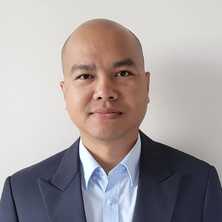
Dr. Donald Baird is a Visiting Research Professor in Biology at the University of New Brunswick and Senior Research Scientist at Environment and Climate Change Canada. As a Fellow of the Canadian Rivers Institute, his research focuses on ecological risk assessment and developing innovative methods for biodiversity observation in freshwater ecosystems using ecogenomics approaches. He leads a national initiative applying DNA-based techniques for monitoring Canada's threatened ecosystems, particularly river floodplains and boreal wetlands. His work addresses the complex stressor regimes affecting aquatic ecosystems in the Anthropocene through integrated assessment approaches that combine traditional ecology with molecular tools. With over 150 publications and 4 books, Dr. Baird has conducted research across five continents and serves as a science advisor for international organizations including WHO-Water, Ramsar, and WWF-Canada.
Yehuda Ben-Shahar is a Professor of Biology at Washington University in St. Louis, where he has served since 2008. His research integrates behavioral, genetic, genomic, and molecular approaches to investigate the genetic architectures underlying animal behavior, primarily using Drosophila melanogaster and honey bees as model systems. He maintains laboratory facilities at the Bayer Laboratory (Room 406) and conducts field research at the Tyson Research Center. Ben-Shahar earned his PhD from the University of Illinois at Urbana-Champaign. His research focuses on how specific genes in neuronal circuits govern behaviors like feeding and mating decisions, with significant contributions to understanding honey bee social behavior evolution. Recent work centers on the gut microbiome's role in nestmate recognition and developing genetic tools for non-model insects. His publication record reveals consistent innovation in behavioral genetics, with recent emphasis shifting toward microbial influences on social behavior and neural circuit analysis. Early work established foundational insights into gene-behavior relationships, while current research explores chemosensory mechanisms across insect and mammalian systems. Scientific recognition includes: Multiple Faculty of 1000 'Must read' designations (2002, 2007, 2009) Cover features in Science (2009) and Journal of Experimental Biology (2002) 'Mutant of the Month' in Nature Genetics (2006) Extensive media coverage including NPR, CBC Radio, and major newspapers Ben-Shahar mentors graduate students including Cassie Vernier (whose 2020 Science Advances paper defined gut microbiome roles in hive membership) and has supervised numerous undergraduates. His lab operates through collaborative grants supporting research at the intersection of genetics, neuroscience, and social behavior. The Ben-Shahar Lab maintains active research teams at the Bayer Laboratory for molecular work and the Tyson Research Center for honey bee studies, with recent projects involving cyborg locust development and odor-guided navigation research.
Dr. Gholamhossein (Mohsen) Bagheri is a Researcher and Group Leader at the Max Planck Institute for Dynamics and Self-Organization , leading the Turbulence and Particles in Fluids group within the Laboratory for Fluid Physics, Pattern Formation and Biocomplexity . His work bridges fluid dynamics , atmospheric physics , and environmental health , focusing on turbulent, particle-laden flows in natural and indoor systems. His research explores how turbulence governs the dispersion of respiratory particles , volcanic ash , microplastics , and cloud microphysics . Key projects include the Max Planck CloudKite (airborne measurements of clouds), HoloTrack (3D droplet tracking), and WinDarts (planetary boundary layer turbulence). His group also investigates indoor aerosol dynamics , contributing critical insights into Covid-19 transmission and ventilation strategies. Publications highlight a broad scope: 2025 papers on Palabos Turret simulations, AeroVolc volcanic ash sampling, and curved fiber torques in turbulence; 2024 studies on microplastic fibers and inertial particle orientation ; 2023 work on respiratory aerosols and wind instrument emissions ; and earlier research on ash aggregation , cloud droplets , and infection risk in indoor spaces . Collaborations span Michael Wilczek , Eberhard Bodenschatz , and interdisciplinary teams. His studies on human exhaled particles (2022) revealed age-dependent emission patterns, while honeybee flight dynamics (2022) demonstrated turbulence adaptation. The CloudKite platform has advanced climate modeling by reducing uncertainties in aerosol-cloud interactions . Despite no listed awards, his work has influenced policy during the pandemic and environmental pollution research .
Robert Gegear is an Associate Professor in the Department of Biology at the University of Massachusetts Dartmouth . His research focuses on the conservation of native pollination systems, neuroecology of plant-pollinator interactions, multi-modal sensory integration, floral evolution, and bumblebee ecology. PhD , Western University (2002) Postdoc , University of Toronto (2006) Postdoc , University of Massachusetts Medical School (2010) His integrative research combines animal behavior, molecular biology, community ecology, and computational biology to study plant-pollinator relationships. Using bumblebees (Bombus spp.) as a model system, he investigates floral display complexity, foraging preferences, global pollinator decline, and conservation strategies. Recent publications highlight his work on anthropogenic impacts on pollination systems (2021), cognition in monarch butterfly migration (2021), and challenges in measuring floral signal honesty (2020). These studies span ecology, neuroscience, and evolutionary biology, with subfields like sensory navigation, biodiversity modeling, and co-evolutionary dynamics. He leads the Beecology Lab , which uses controlled experiments, field studies, and in silico simulations to address biodiversity stressors. Grants include $599,926 from the National Science Foundation for the CUBICS project and smaller awards from Landscape Interactions LLC.
Stacey A. Combes is a Professor in the Department of Neurobiology, Physiology and Behavior at the University of California, Davis, and leads the Combes Lab focused on biomechanics and behavioral ecology of flying insects. Her work bridges lab-based biomechanics with field ecology to study insect flight performance in natural environments. She is affiliated with the Center for Neuroscience and graduate groups in Animal Behavior, Entomology, and Neuroscience. Ph.D. in Zoology, University of Washington (2002) B.A. in Integrative Biology, University of California, Berkeley (1994) Research interests include: Biomechanics of flexible insect wings Flight in complex environments (turbulence, cluttered spaces) Behavioral ecology of pollinators and predators Impact of wing damage on flight performance Recent publications analyze trends in insect flight adaptation to turbulence , energetic efficiency under loads , and 3D trajectory tracking . Articles explore sub-fields like pollination mechanics, collision mitigation, and environmental interaction. Scientific Recognition: 2019 Chancellor's Fellow NSF CAREER grant recipient Combes advises graduate students and postdocs, with notable alumni including James Crall (now Assistant Professor at UW Madison) and Nicholas Burnett (2017-2023 postdoc). Her lab develops innovative tools like BEEtags for tracking and DeepLabCut for flight analysis.
Miriam B. Goodman holds the Mrs. George A. Winzer Professorship of Cell Biology at Stanford University , with affiliations in the Department of Molecular and Cellular Physiology , Bio-X , and the Wu Tsai Neurosciences Institute . As Chair of the Molecular and Cellular Physiology Department (2017–present) and former Deputy Director of the Stanford Neuroscience Institute (2013–2017), she leads interdisciplinary research bridging neuroscience, biophysics, and molecular physiology . Education : Ph.D. in Neurobiology, The University of Chicago (1995) Sc.B. in Biochemistry, Brown University (1986) Her research focuses on molecular mechanotransduction using C. elegans to investigate touch sensation, temperature detection, and neuronal stress resilience . Key methodologies include quantitative behavioral analysis , CRISPR gene editing , and in vivo electrophysiology . Recent work explores mechanical forces in feeding through upconverting microgauges and chemosensory integration of plant-derived molecules. Her publications span neurobiological mechanisms , biomechanical sensor design , and ecological signal processing , with a 2025 Nature study on ingestible nanosensors and a 2024 Current Biology paper on mechanosensory complex organization . Scientific Awards : Distinguished Alumni Award, University of Chicago (2024) Landis Award for Outstanding Mentoring, NIH (2019) Michael and Kate Barany Award, Biophysical Society (2014) Klingenstein Fellow in Neuroscience (2005-2008) McKnight Scholar Award (2005-2008) Prize in Neurobiology, Eppendorf & Science (2004) As an advisor, she mentors doctoral candidates in the Biophysics , Molecular and Cellular Physiology , and Neurosciences Ph.D. programs , including Madeline Cooper and Caroline Arellano-Garcia. Her lab collaborates with UC San Diego's Vergassola Group on mechanosensory physics and Stanford Microsystems Lab on optical sensor design .
Dr T. Thang Vo-Doan is a Lecturer at the University of Queensland in the School of Mechanical & Mining Engineering . He directs the UQ Biorobotics Lab and serves as an affiliate of both the Future Autonomous Systems and Technologies and the Queensland Brain Institute . PhD in Mechanical Engineering, Nanyang Technological University (2016) M.Eng. in Manufacturing Engineering, Ho Chi Minh City University of Technology (2010) B.Eng. in Mechanical Engineering, Ho Chi Minh City University of Technology (2008) His research focuses on biohybrid robotics , integrating biological systems with technology through cyborg insects , bio-inspired robotics , and fast lock-on tracking systems. He explores insect biomechanics and brain imaging in untethered insects , developing platforms for search-and-rescue missions and environmental monitoring. Recent work trends include: 2025: On-demand climbing control for cyborg beetles 2024: High-resolution insect tracking and soft textile muscles 2023: Intelligent insect–computer hybrid robots 2022: Autonomous navigation and robotic leg design 2018: Ultralightweight living robots Scientific honors: Human Frontier Science Program Cross-disciplinary Fellowship (2019-2022) He supervises projects on: Insect-machine hybrid robots Insect-inspired robotics Fast lock-on tracking Insect locomotion biomechanics Current grants include: NHMRC IDEAS Grant (2025-2028): Infrared and AI for Ross River virus surveillance Queensland Corrective Services Grant (2024-2027): Wastewater drug misuse analysis
Charlie Cornwallis is a Professor in the Molecular Ecology and Evolution Lab at Lund University. His research focuses on evolutionary transitions, particularly the emergence and maintenance of complex life forms such as multicellularity, cooperative societies, and symbiotic relationships. Key areas include understanding why transitions occur, how complex systems persist, and factors causing their breakdown. Cornwallis employs experimental and phylogenetic methods, studying systems like cooperative breeding birds (ostriches) and green algae (Volvox/Chlamydomonas). Affiliations: Molecular Ecology and Evolution Lab, Swedish Research Council-funded projects Education: Not explicitly stated in text Research interests span cooperative behavior, thermal adaptation, disease dynamics, and genomic innovations enabling evolutionary transitions. Recent work addresses how fluctuating environments influence cooperation, pathogen-driven breakdown of sociality, and molecular mechanisms underlying cancer resilience via polyploidization. Cornwallis leads projects on ostrich thermal physiology, gut microbiota development, and symbiont-driven ecological diversification. His lab has produced 65+ publications, with notable contributions to Trends in Ecology and Evolution , Proceedings of the National Academy of Sciences , and Cancer Research Communications . Current projects include studying multicellular origins, temperature adaptation in endotherms, and evolutionary plasticity. Grants: Swedish Research Council (2023-2027), multiple international collaborations Labs/Teams: Cornwallis Group focuses on four themes: Cooperation, Evolutionary Innovation, Disease, and Sex
Ken Cheng is a Professor at the School of Natural Sciences, Macquarie University, specializing in animal behavior and spatial cognition. His research focuses on understanding how animals, particularly insects like desert ants (Melophorus bagoti) and bull ants (Myrmecia midas), navigate complex environments using spatial and sensory cues. He has conducted extensive fieldwork in Central Australia and on campus, studying topics such as landmark use, celestial navigation, and learning processes. Cheng's work spans over four decades, with major contributions to understanding insect navigation through experimental and theoretical approaches. His studies integrate behavioral ecology, experimental psychology, and comparative cognition. He has authored influential books, including How Animals Think and Feel (2016) and Biological Basis of Behavior (2018), and pioneered research on spatial reorientation and the role of geometry in animal cognition. Key research themes include the use of panoramic views, celestial cues, and oscillators in navigation, as well as the cognitive mechanisms underlying spatial learning and memory in insects. His team has explored how ants adapt to environmental changes, such as colony relocation during heavy rainfall, and how they integrate sensory information to orient themselves in novel environments. Cheng's publications span over 200 articles, covering topics like ant waste management strategies, the effects of UV light on navigation, and the application of psychophysical methods to study insect behavior. His lab's interdisciplinary approach bridges experimental and theoretical frameworks to advance our understanding of animal cognition and behavior.
Robby Stoks is a Professor and Head of the Division of Ecology, Evolution and Conservation Biology at KU Leuven's Faculty of Science. His research integrates global change ecology, evolutionary ecology, and ecotoxicology to understand how natural populations cope with environmental challenges. Based in Leuven, Belgium, his laboratory focuses on aquatic invertebrates as model systems to study responses to rapid planetary changes. Stoks' research interests center on the intersection of global change ecology, evolutionary responses, and ecotoxicology. His work particularly examines how aquatic invertebrates navigate environmental stressors through the lens of environmental gradients and range expansions. He employs diverse methodologies including field monitoring, ecophysiology, predator-prey interaction studies, gut microbiome analyses, and various omics techniques to unravel complex ecological dynamics. His recent publications reveal a strong focus on microbiome-ecology interactions, particularly how gut microbiomes influence stress responses in damselflies and Daphnia. A clear pattern emerges showing how environmental stressors like pesticides, warming, and invasive species interact in complex ways, with microbiome composition often mediating these responses. His work increasingly addresses multistressor frameworks, demonstrating how evolutionary adaptations to one stressor (like heat tolerance) can be compromised by exposure to pollutants. Stoks leads the Laboratory of Evolutionary Stress Ecology and Ecotoxicology, which conducts research on environmental gradients, range expansions, and stressor interactions. His team's approach combines field-based natural experiments with controlled laboratory studies to understand both immediate and evolutionary responses to environmental change. Current projects appear to focus on microbiome-mediated stress responses, multistressor interactions, and the ecological consequences of body size reductions under warming.
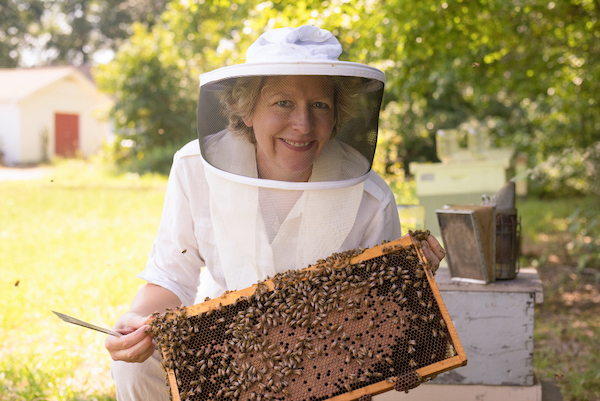
Jennifer A Berry serves as an Adjunct Professor in the Department of Entomology within the College of Agricultural & Environmental Sciences at the University of Georgia. With over 25 years of experience as the Apicultural Research Professional and Lab Manager for the UGA Honey Bee Program, she maintains a prominent role in both research and education. She teaches the UGA Entomology course 'Bees, Beekeeping and Pollinator Conservation' following her recent completion of a PhD in Entomology. Her educational background includes: PhD, 2024, University of Georgia, Entomology M.S., 2000, University of Georgia, Entomology B.S., 1997, University of Georgia, Entomology Berry's research spans honey bee health, queen breeding, pesticide effects on beneficial insects, and integrated pest management techniques for varroa mites and small hive beetles. Her work extends to pollinator conservation through habitat restoration and identifying optimal plantings for non-traditional horticultural landscapes. She has published extensively on practical beekeeping topics, with recent articles focusing on seasonal management, pest control, and international beekeeping practices. Her publications reveal a consistent focus on practical apicultural solutions, with particular emphasis on sustainable pest management and educational outreach. The trend shows increasing attention to social aspects of beekeeping, including prison rehabilitation programs and international education initiatives. Berry has made significant contributions to community engagement through multiple high-impact initiatives: Founding the Georgia Beekeeping Prison Program, certifying over 200 inmates through the UGA Master Beekeeper Program International volunteer work teaching beekeeping to women and teens in Central and South America Extensive public education on pollinator importance and native habitat restoration Regular column in Bee Culture magazine since 2005 with over 50 published articles As Lab Manager for the UGA Honey Bee Program, she oversees research operations while actively participating in field studies on queen breeding, pesticide effects, and IPM techniques. Her international speaking engagements reach diverse audiences from local beekeeping associations to international conferences, making her a prominent figure in both academic and practical apiculture circles.
Dr James Knight is a Senior Research Fellow in Informatics at the School of Engineering and Informatics, University of Sussex. He is currently an EPSRC Research Software Engineering Fellow (2022–2026), leading research in neuromorphic computing and spiking neural networks. His work bridges computer science, neuroscience, and robotics, with a focus on bio-inspired artificial intelligence and computational modeling of insect cognition. Education: PhD in Computer Science, University of Manchester (2013–2016) MPhil in Advanced Computer Science, University of Cambridge (2012–2013) BEng in Electronic Engineering, University of Warwick (2003–2006) His research interests center on neuromorphic computing , spiking neural networks , and bio-inspired AI , particularly drawing insights from insect neuroscience to develop efficient and robust machine learning systems. He explores event-based vision, neural hardware acceleration, and computational models of insect navigation and perception. The 15 most recent publications (2024–2025) reflect a strong trend in developing and benchmarking neuromorphic algorithms, including training methods like Eventprop, hardware-software co-design (e.g., FeNN processor), and modeling biological systems such as insect central complex and mushroom bodies. These works span journals like Nature Communications , PLoS Computational Biology , and Neuromorphic Computing and Engineering , as well as IEEE and Springer conferences. Scientific Grants: Unlocking spiking neural networks for machine learning research (EPSRC, 2022–2026) – Principal Investigator ActiveAI – active learning and selective attention for robust, transparent and efficient AI (EPSRC, 2019–2022) – Research Team Member Dr Knight actively collaborates with leading researchers including Thomas Nowotny, Andrew Philippides, and Paul Graham. His work contributes to both theoretical advances in neural computation and practical applications in robotics and AI. He is involved in developing frameworks such as NeuroBench for standardized evaluation of neuromorphic systems. Laboratories and Research Teams: He is part of the neuromorphic computing and computational neuroscience research groups at the University of Sussex, contributing to interdisciplinary projects that integrate software engineering, AI, and biological modeling.
Susanne Åkesson is a Professor at Lund University's Department of Biology, where she leads the Animal Navigation Lab and serves as Principal Investigator at the Center for Animal Movement Research (CAnMove), which she has directed since 2008. She is also a member of Lund University's Profile Areas: Natural and Artificial Cognition and Light and Materials, as well as part of eSSENCE: The e-Science Collaboration. Her research focuses on animal navigation and migration, particularly in birds, with expertise spanning sensory ecology, movement patterns, and the intersection of biology and physics. She studies how animals navigate using skylight polarization and Earth's magnetic field, with notable projects including continental-wide tracking of common swifts documenting their 10-month non-stop flights. Her work connects biology with physics through studies on Viking navigation, zebra coat coloration, and animal navigation mechanisms. Her 215+ publications reveal a strong focus on migration phenotypes, endogenous migration programs, and how animals adapt to long migrations. Recent work emphasizes conservation applications, with studies mapping migratory routes using pan-European telemetry networks and assessing threats to migratory species in the Anthropocene. Her research combines large-scale field experiments, tracking technology, and innovative remote sensing methods like lidar systems for monitoring insect movement. Awarded the Silver medal for excellence in research and communication from the Swedish Ornithological Society (2009), she is also a Fellow of the Royal Institute for Navigation in London (2006), the Royal Physiographic Society in Lund (2010), and the Royal Academy of Sciences in Stockholm (2016). Her popular science communication includes books nominated for the August Prize and regular contributions to Swedish National Radio's 'Naturmorgon' program since 2002. She teaches undergraduate courses in Evolutionary Animal Ecology and Ornithology and has developed Lund University's international PhD course on 'Ecology of Animal Migration' since 1999. Her current research projects include evolutionary ecology of avian migration (Swedish Research Council, 2023-2027) and species-specific adaptations to migration in songbirds (Carl Tryggers Foundation, 2024-2026).
Professor Jessica Fox is a faculty member in the Department of Biology at Case Western Reserve University, where she conducts cutting-edge research on insect sensory systems and flight control mechanisms. Her work bridges neuroscience, biomechanics, and ethology to unravel how flies process sensory information for navigation and behavior. Her research program focuses on: Neural encoding in dipteran sensory systems Integration of haltere mechanosensation and visual inputs Flight stability and gaze control mechanisms Evolutionary adaptations in insect sensory organs Neuromodulation of sensorimotor pathways Recent publications demonstrate a consistent emphasis on haltere function as a biological gyroscope, revealing how flies dynamically tune sensory processing during flight. Her experimental approaches combine tethered flight assays, optogenetics, high-speed videography, and neural recordings to dissect sensorimotor transformations across diverse dipteran species. Professor Fox leads the Fox Lab at Case Western Reserve University, which maintains active collaborations with neuroscience and engineering groups to develop bio-inspired robotics models based on insect flight principles. The lab emphasizes comparative studies across fly species to identify conserved and specialized neural mechanisms.
Román Corfas is an Assistant Professor of Instruction and Neuroscience Education Fellow at the University of Texas at Austin’s Department of Neuroscience. He transitioned to full-time neuroscience pedagogy in 2021, focusing on undergraduate curriculum development and teaching. Previously, his research explored insect behavior and sensory systems, including mosquito thermotaxis and fly navigation. Education: Bachelor’s in Neuroscience, Oberlin College Ph.D. in Neuroscience, Rockefeller University (2010) Postdoctoral Research, Caltech (2015–2021) Research Interests: Neuroscience education innovation, neuroethology of insect behavior, and sensory integration mechanisms in mosquitoes and fruit flies. His work bridges basic research on animal behavior with educational strategies to enhance STEM accessibility and engagement. Publications: Recent work emphasizes behavioral neuroscience (e.g., Drosophila navigation) and mosquito host-seeking mechanisms, reflecting his dual focus on research and pedagogy. Teaching & Curriculum: Leads introductory neuroscience courses and collaborates with the Neuroscience Department to modernize undergraduate curricula.



/prod01/production-cdn-pxl/media/umassdartmouth/profiles/arts-and-sciences/Gegear_pic.jpg)