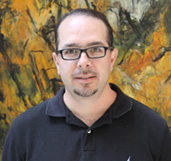
Kevin Myles is a Professor in the Department of Entomology at Texas A&M University's College of Agriculture & Life Sciences. His research investigates mosquito antiviral immunity and genetic control strategies for arbovirus vectors. With a Ph.D. in Microbiology from Colorado State University, his work integrates molecular virology, genomics, and bioinformatics to develop novel vector control methods. Research focuses on RNA interference pathways in mosquito defense, CRISPR-based gene drives for population control, and temperature effects on vector competence. Current projects engineer self-eliminating transgenes and characterize tissue-specific antiviral responses. Analysis of 15 publications reveals emphasis on genetic control technologies (53% of articles), mosquito immunity (27%), and climate-vector interactions (13%). Recent work increasingly addresses safety mechanisms for field applications. Leads development of computational tools like MGDrivE for simulating gene drive efficacy. Research has produced multiple genetic systems for precise modification of mosquito populations, with applications in dengue, Zika, and chikungunya control.
Simon Sponberg is the Dunn Family Associate Professor at Georgia Institute of Technology, holding joint appointments in the School of Physics and School of Biological Sciences within the College of Sciences. He directs the Agile Systems Lab and serves as Physics & Biological Sciences Director. His research bridges physics, biology, and engineering to understand the principles of animal locomotion. Dr. Sponberg received his Ph.D. in Integrative Biology from UC, Berkeley and completed postdoctoral research at the University of Washington. His academic journey began with undergraduate studies at Lewis & Clark College, where he first explored biomechanics research focusing on gecko adhesion. Dr. Sponberg's research centers on neuromechanics - an integrative science examining how physics and physiology enable animals to achieve remarkable stability and maneuverability. His work specifically investigates insect flight mechanics, particularly in hawkmoths (Manduca sexta), exploring how nervous systems interact with muscle mechanics to produce locomotion. Key research areas include: Mechanisms of Maneuverability: How animals maintain stable flight during perturbations Sensing in Complex Environments: Multisensory integration of vision and mechanosensation Multiscale Physics of Muscle: How muscle structure relates to function across scales Evolution of Flight: Comparative studies of different insect flight strategies His publication record reveals a strong focus on the intersection of biomechanics, neuroscience, and physics, with recent work emphasizing resonant mechanics in insect flight, precise neural control of movement, and multisensory integration for robust performance across varying environmental conditions. A notable trend is the integration of experimental biology with computational modeling and robotics to extract general principles of movement. Dr. Sponberg's scientific achievements have been recognized with numerous awards and fellowships: Hertz Fellow (since 2002) National Science Foundation Fellowships American Physical Society Awards Society of Integrative and Comparative Biology Awards Woods Hole Marine Biological Institute Fellowships University of California Fellowships International Association of Physics Students Awards As an advisor, Dr. Sponberg mentors a diverse team of graduate students and postdoctoral researchers through the Quantitative Biosciences Graduate Program, Neuroscience and Neurotechnology Graduate Program, and Bioengineering Graduate Program. His lab has received significant funding, including an NSF-funded Biological Integration Institute (the Integrative Movement Sciences Institute) and a FLAP MURI grant. His mentoring philosophy emphasizes interdisciplinary collaboration and hands-on research experience, with over 120 undergraduate students having participated in his lab through Georgia Tech's Vertically Integrated Projects program. The Agile Systems Lab, housed in the Howey Physics Building at Georgia Tech, brings together researchers from physics, biology, engineering, and neuroscience to study the fundamental principles of movement. The lab features state-of-the-art equipment for high-speed videography, electrophysiology, robotic flower tracking systems, and X-ray diffraction studies of living muscle. Current collaborative projects include the NSF-funded Integrative Movement Sciences Institute, which explores movement across scales from molecules to organisms, and the FLAP MURI grant investigating resonant mechanics in flapping flight.
Dr. Christopher Hassall is an Associate Professor of Animal Biology at the School of Biology, University of Leeds , with research spanning entomology, climate change impacts, urban ecology, and conservation science. He leads the Hassall Lab and the BioDAR Project , which uses weather radar for biodiversity monitoring. Research Interests Quantifying insect abundance via weather radar (BioDAR/PestDAR/DRUID projects) Urban freshwater ecosystems and socio-ecological dynamics Evolution of insect camouflage/mimicry and flight behavior Climate change impacts on pollinators and invasive species Shadow diversity and extinction studies (Leverhulme DTP Co-Director) Scientific Awards Fellow of the Higher Education Academy Fellow of the Royal Entomological Society Advising : Supervises postgraduate researchers including Sicily Fiennes , Isabella Flowers , and Mx Solanum Foulstone , with a focus on interdisciplinary extinction studies and urban entomology.
Mary Caswell Stoddard is a Professor of Ecology and Evolutionary Biology at Princeton University, affiliated with the High Meadows Environmental Institute (HMEI). Her research focuses on sensory ecology, animal coloration, and the evolution of avian traits, particularly eggshell morphology and visual communication. She employs interdisciplinary approaches, combining computer science, optics, and fieldwork to study topics like plumage evolution, brood parasitism, and camouflage. Stoddard’s lab integrates cutting-edge tools such as hyperspectral imaging and 3D modeling to analyze animal coloration and behavior. Her work spans global field sites, including the Rocky Mountain Biological Laboratory and the Mountain Lake Biological Station. She collaborates with institutions like the American Museum of Natural History to leverage museum collections for comparative studies. Research interests include avian vision, eggshell structure-function relationships, and the evolutionary drivers of phenotypic diversity. Recent studies explore how egg shape correlates with flight ability, the role of egg patterns in parental recognition, and the dynamics of cuckoo-host coevolution. Her team develops open-source software for color analysis and imaging. Stoddard advocates for biodiversity conservation through initiatives like the Princeton Better for Birds Project, which includes community outreach and bird-safe window decal contests. Her findings have been featured in major media outlets, emphasizing the ecological and evolutionary significance of avian traits.
Professor David Towers is the Head of the School of Engineering at the University of Warwick and holds the position of Professor of Mechanical Engineering. With over 30 years of combined academic and industry experience, he leads a dynamic research group focused on optical sensing technologies, fluid mechanics, and structural assessment. His work bridges engineering, biology, and clinical practice, with significant contributions to malaria control strategies through mosquito behavior analysis. Education: BSc (1st Class) in Mechanical Engineering Science from the University of Warwick PhD in Optical Engineering from the University of Warwick Royal Society Fellowship at ETH Zürich Research Interests: Professor Towers’ research spans three core areas: fluid mechanics (turbulent flows, sprays, multi-phase mixing), structural assessment (optical interferometry for deformation and stress measurement), and clinical optical systems (mosquito tracking for malaria intervention). His multi-disciplinary approach emphasizes collaboration with end-users, particularly in developing novel optical instruments for industrial and healthcare applications. Grants & Projects: AI for Mosquito Trajectory Understanding (£X, 2022–Present) Bill & Melinda Gates Foundation: Next-Gen LLIN Development (£X, 2019–2023) MRC: Indoor Mosquito Behavior Mapping (£X, 2019–2022) Awards: Athena SWAN Silver Award (2021) for promoting gender equality in STEM. Labs & Teams: Leads the Applied Optics Laboratory and collaborates with the Vector Control Research Group, focusing on AI-driven solutions for vector-borne disease control.
Dr. Jorn Cheney is a Lecturer in Natural Sciences at the University of Southampton, specializing in animal biomechanics, particularly focusing on vertebrate flight mechanisms and soft tissue dynamics. He is affiliated with the Ecology & Evolutionary Biology theme and supervises PhD students in related fields. His research explores the evolutionary and aeromechanical principles of flight in bats, birds, and gliding mammals, with applications to bio-inspired technology development. He teaches 'Principles of Neuroscience' and oversees the Natural Sciences degree program. Education: Graduated from Lewis & Clark College (Portland, OR, USA) with a multidisciplinary background in biology, chemistry, physics, and mathematics. Conducted doctoral research on bat flight biomechanics in Kellar Autumn's lab, culminating in a dissertation on bat wing tissue mechanics and muscle dynamics. Research Interests: Includes wing morphing, membrane wings, tissue mechanics, evolutionary convergence in gliding mammals, and developing technologies inspired by biological flight systems. Notable projects investigate how bat wing compliance influences flight efficiency and how raptors optimize tail posture during gliding. Publications span aerodynamics, biomechanics, and evolutionary biology, with recent work published in Physics of Fluids , Journal of the Royal Society Interface , and Science . His work bridges biological inquiry with engineering applications, such as autonomous vehicle sensors inspired by mosquito flight. Grants and Collaborations: Engaged in interdisciplinary projects with engineers and biologists, including studies on avian gust rejection and wing suspension systems. Actively accepts PhD applicants interested in vertebrate flight biomechanics and bio-inspired design. Labs/Teams: Collaborates within the Institute for Life Sciences and Ecology and Evolution Research groups at the University of Southampton.
J. Sean Humbert is a Professor at the University of Colorado Boulder, holding a courtesy appointment in the College of Engineering and Applied Science (AES). He serves as Director of the Robotics Program and Faculty Director for the Aerospace and Defense Western Colorado University Partnership Program. His research focuses on bio-inspired robotics, autonomous systems, and advanced control methodologies. Key research areas include flight dynamics, bio-inspired perception, micro-robotics, and soft robotics. He leads the Robotics and Systems Design group, affiliated with the Hypersonic Vehicles IRT. His work integrates bio-mimetic principles with engineering challenges, emphasizing robust control in unstructured environments. Recent publications span topics like soft robotic actuators, distributed sensing, and neural dynamics in robotics. His lab develops cutting-edge technologies for subterranean exploration, UAV navigation, and bio-inspired sensor systems. Collaborations include industry partnerships and interdisciplinary projects at the intersection of robotics, biology, and control theory. Awards and recognitions are not explicitly mentioned in the provided texts. Sean Humbert’s lab is located at ECES 1B14, with an office in ECES 146. His academic contributions bridge theory and application, addressing real-world challenges in autonomous systems and robotics innovation.
Timothy Sparks is a Research Fellow at Coventry University's Department of Engineering and Computing, affiliated with the TUM Institute for Advanced Study (TUM-IAS) as a 2010 Hans Fischer Senior Fellow. His research focuses on detecting climate change impacts through long-term ecological data, particularly in phenology and biodiversity. He holds visiting professorships at Poznań University of Life Sciences and the University of Liverpool. Notable awards include the 2007 British Ecological Society Award and the Royal Meteorological Society Margary Lecturer (2002). Sparks' work emphasizes interdisciplinary collaboration, especially with Central/Eastern European researchers. His studies explore phenological shifts in plants, animals, and ecosystems, with contributions to global change biology. He has edited Climate Research and served on editorial boards of five journals, reflecting his leadership in ecological science. Recent publications highlight climate-driven changes in plant and animal behavior, invasive species resilience, and museum data applications for historical trends. His TUM-IAS fellowship advanced projects like biodiversity indicators and phenological forecasting for pests like bark beetles. Awards include recognition for ecological engagement and contributions to climate science. His research bridges data-driven methods with practical conservation, addressing urgent environmental challenges.
Dr. Swathi Krishna is a Lecturer (Assistant Professor) in the Aerodynamics and Flight Mechanics Group at the University of Southampton since August 2021. She holds a B.E. in Mechanical Engineering from Visvesvaraya Technological University (2009), an M.Sc. in Aerospace Engineering from TU Delft (2012), and a Ph.D. in Mechanics from EPFL, Switzerland (2017). Her research focuses on experimental fluid mechanics, unsteady vortex-dominated flows, and bioinspired engineering solutions for sustainable aeronautical and marine technologies. Her work spans aerodynamics of vertical axis turbines, propeller-wing interactions in novel VTOL aircraft, flapping wing kinematics inspired by insects, and morphing wing designs. Utilizing advanced facilities like recirculating water channels, wind tunnels, and robotic systems, her group explores fluid-structure interactions to optimize engineering systems. Current projects include EPSRC equipment maintenance collaborations and Royal Society-funded studies on water surface locomotion. Dr. Krishna supervises PhD students in topics ranging from cyclorotor aerodynamics to bioinspired robotics. Her teaching includes modules on aerodynamics and design activities, integrating cutting-edge research into academic instruction.
Dr. Paul Cross is a Senior Lecturer in the Environment and Senior Tutor at the School of Environmental and Natural Sciences, Bangor University, UK. He is actively involved in research, teaching, and public engagement, with a strong focus on environmental science, pollinator conservation, and sustainable agriculture. His work bridges ecology, engineering, and socio-economic modeling, contributing significantly to understanding pollinator health and agricultural sustainability. His research interests include UAV-based tracking of insect pollinators, beekeeping as a tool for poverty alleviation, zoonotic diseases (particularly E. coli O157), bee morphometrics, and socio-economic methodologies for estimating disease and illegal behaviors. He employs advanced technologies such as radar, machine learning, and UAVs to study pollinator behavior and environmental impacts. His recent publications highlight a strong trend in integrating engineering and ecological sciences, particularly through the development of energy-harvesting bee tracking devices and radar-based monitoring systems. His work spans disciplines from entomology and soil science to public health and climate change, reflecting a highly interdisciplinary approach to environmental challenges. Senior Lecturer in the Environment, Bangor University Senior Tutor Course Director for MSc Conservation and Land Management Member of SENRGy Teaching and Ethics Committees Dr. Cross has supervised multiple PhD students on topics ranging from beekeeping in Tanzania to UAV-based bee tracking and neonicotinoid impacts. He has led or contributed to numerous research projects funded by the Welsh Government, RCUK, and the British Academy, focusing on pesticide hazards, greenhouse gas emissions, and food safety. He is actively involved in public outreach, with media appearances on BBC Countryfile and contributions to The Conversation. His work contributes to UN Sustainable Development Goals related to poverty reduction, climate action, and life on land.
Dr. Cameron Jack is an Assistant Professor in the Entomology and Nematology Department at the University of Florida. He specializes in honey bee toxicology and apiculture education, focusing on developing programs to address beekeeping challenges and workforce training. His research emphasizes pesticide impacts on honey bees, varroa mite control, and small hive beetle management. Dr. Jack teaches courses related to honey bees and maintains an active research lab at the University of Florida, with a focus on practical solutions for bee health. Research interests include: Pesticide exposure pathways in beeswax, pollen, and sucrose Development of novel varroa destructor control methods Toxicology of common hive treatments and their safety to honey bees Behavioral studies using smoke and essential oils Recent work highlights seasonal efficacy of chemical treatments, in vitro rearing methods for parasites, and evaluation of new compounds for pest control. His publications span over 15 years, addressing both applied and theoretical aspects of honey bee health challenges. Dr. Jack operates the UF Honey Bee Lab, focusing on education and field-ready solutions for beekeepers.
Myles Menz is a Senior Lecturer in Zoology and Ecology at James Cook University (JCU), specializing in movement ecology, insect migration, and pollination conservation. He holds a PhD from The University of Western Australia and has conducted postdoctoral research at institutions such as the Max Planck Institute of Animal Behavior and the University of Bern. His work integrates field observations, laboratory experiments, and advanced technologies like radar and radio-telemetry to study ecological processes. Menz teaches courses including Tropical Entomology and Biological Invasions, emphasizing hands-on fieldwork in tropical ecosystems. Education: Habilitation (Venia Docendi), University of Bern (2013–2018) PhD, The University of Western Australia (2009–2013) MSc in Ecology and Evolution, University of Bern (2006–2008) Bachelor of Science, The University of Western Australia (2000–2003) Research Interests: Myles Menz’s research focuses on migration mechanisms of insects, conservation of rare plants (e.g., orchids), and the impacts of global change on ecosystems. He explores how light pollution and urbanization affect insect behavior and community structure. His group employs cutting-edge tools like radar entomology and genetic analysis to address these questions. Awards: Perth Zoo Prize for Conservation Research (2013) JCU Inclusive Practice Award (2023) Teaching & Grants: Menz coordinates courses such as Field Studies in the Equatorial Tropics: Borneo and leads the ARC Industrial Transformation Training Centre in Plant Biosecurity (2024–2029). He mentors students in tropical ecology and conservation, emphasizing field-based learning. Labs & Teams: His research group collaborates with global institutions, leveraging interdisciplinary approaches to address ecological challenges. Key projects include studying pollination networks of endangered orchids and migratory pathways of insects using radar and tracking technologies.
Eric Darrouzet is a Lecturer-researcher at the University of Tours, affiliated with the Insect Biology Research Institute (IRBI, UMR CNRS 7261) and the Professional Agrosciences Department. He specializes in chemical ecology, particularly focusing on social insects like the Asian hornet ( Vespa velutina nigrithorax ), invasive species dynamics, and the development of selective control tools. His administrative roles include director of the Professional Agrosciences Department and responsibility for the Master 1 Agrosciences program. Research Themes: Chemical communication in social insects, multi-trophic relationships, invasive species impact, and ecological control methods. Teaching: Physiology, microbiology, animal production, and communication techniques in professional licenses and masters. Public Engagement: Maintains websites ( frelonasiatique.univ-tours.fr ) and a YouTube channel ( YouTube ) to disseminate research on hornets and insect constructions. His work on the Asian hornet includes studies on its biology, thermal tolerance, venom composition, and control strategies. Collaborations include roles in the ADAPIC steering committee and CS3D scientific board. Research outputs span over 50 peer-reviewed articles, focusing on chemical ecology, invasive species management, and insect behavior.
Dr. Gholamhossein (Mohsen) Bagheri is a Researcher and Group Leader at the Max Planck Institute for Dynamics and Self-Organization , leading the Turbulence and Particles in Fluids group within the Laboratory for Fluid Physics, Pattern Formation and Biocomplexity . His work bridges fluid dynamics , atmospheric physics , and environmental health , focusing on turbulent, particle-laden flows in natural and indoor systems. His research explores how turbulence governs the dispersion of respiratory particles , volcanic ash , microplastics , and cloud microphysics . Key projects include the Max Planck CloudKite (airborne measurements of clouds), HoloTrack (3D droplet tracking), and WinDarts (planetary boundary layer turbulence). His group also investigates indoor aerosol dynamics , contributing critical insights into Covid-19 transmission and ventilation strategies. Publications highlight a broad scope: 2025 papers on Palabos Turret simulations, AeroVolc volcanic ash sampling, and curved fiber torques in turbulence; 2024 studies on microplastic fibers and inertial particle orientation ; 2023 work on respiratory aerosols and wind instrument emissions ; and earlier research on ash aggregation , cloud droplets , and infection risk in indoor spaces . Collaborations span Michael Wilczek , Eberhard Bodenschatz , and interdisciplinary teams. His studies on human exhaled particles (2022) revealed age-dependent emission patterns, while honeybee flight dynamics (2022) demonstrated turbulence adaptation. The CloudKite platform has advanced climate modeling by reducing uncertainties in aerosol-cloud interactions . Despite no listed awards, his work has influenced policy during the pandemic and environmental pollution research .
Dr. Franz Hölker is a Senior Scientist and Research Group Leader at the Leibniz-Institute of Freshwater Ecology and Inland Fisheries (IGB Berlin) and holds the position of Associate Professor (Privatdozent) in Zoology at the Department of Biology, Chemistry and Pharmacy, Freie Universität Berlin. Since 2022, he has served as Programme Area Speaker for 'Aquatic Biodiversity in the Anthropocene' at IGB Berlin, leading research on ecological responses to anthropogenic pressures. Leibniz-Institute of Freshwater Ecology and Inland Fisheries (IGB Berlin): Senior Scientist, Research Group Leader since 2008 Freie Universität Berlin: Associate Professor (Privatdozent) for Zoology since 2009 2012-2017: Deputy Head of Department Ecohydrology, IGB Dr. Hölker earned his Diploma in Biology from the University of Hamburg in 1992, completed his doctorate there in 1999 on fish bioenergetics in eutrophic lakes, and achieved his Habilitation at Humboldt-Universität zu Berlin in 2007 with research bridging ecology, behavior, physiology, and modeling in aquatic food webs. Dr. Hölker's research primarily focuses on freshwater ecology with particular expertise in light pollution, ecophysiology, night ecology, ecological modeling, and citizen science. His work investigates how artificial light at night (ALAN) affects aquatic ecosystems, including impacts on fish physiology, insect behavior, and broader ecological community dynamics. He has pioneered research on the ecological consequences of skyglow and developed methodologies for measuring and assessing ecological light pollution. His research group at IGB Berlin employs a combination of field measurements, laboratory experiments, and modeling approaches to understand how light pollution alters species interactions, community composition, and ecosystem functioning in aquatic environments. His extensive publication record demonstrates a consistent focus on understanding anthropogenic impacts on freshwater systems. Recent work shows increasing emphasis on interdisciplinary approaches, combining ecological field studies with modeling techniques to address complex environmental challenges. His research spans from organism-level physiological responses to ecosystem-level consequences of light pollution, with growing attention to conservation applications and citizen science engagement. The trend in his publications reveals expanding scope from fish ecology to broader ecosystem impacts, with increasing international collaboration and policy relevance. Dr. Hölker has led significant research projects examining the impacts of artificial light at night on freshwater ecosystems, often involving international collaborations across Europe. His work has contributed to policy discussions on sustainable lighting practices through participation in projects like the 'White Paper Citizen Science Strategy 2030 for Germany' and collaborations with lighting professionals to develop ecologically sustainable outdoor lighting guidelines. He leads a research team investigating the ecological impacts of light pollution, with particular focus on how artificial lighting affects nocturnal processes in freshwater ecosystems. His group has developed innovative methodologies for measuring ecological light pollution and has conducted extensive field and laboratory studies to document the impacts of different light spectra and intensities on aquatic organisms. The team's work has significant implications for conservation biology, particularly regarding the protection of nocturnal biodiversity in increasingly illuminated landscapes.