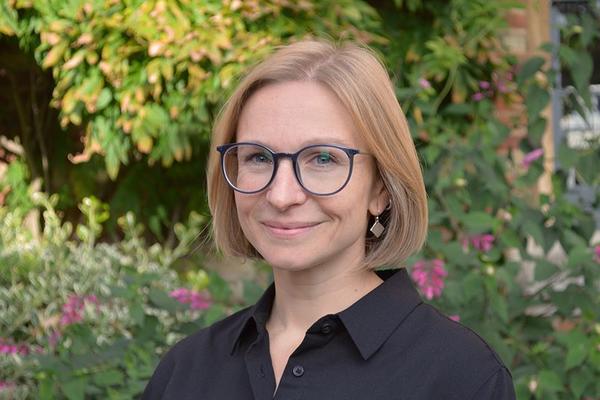
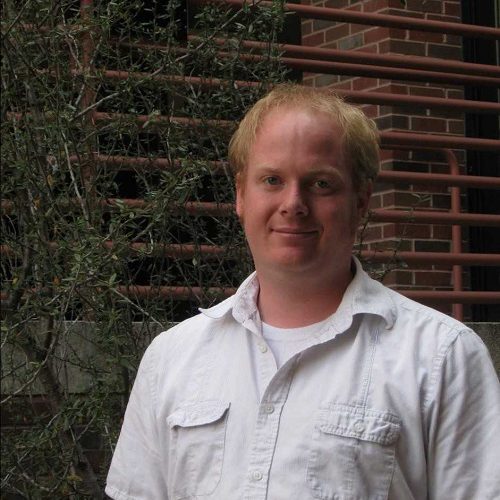
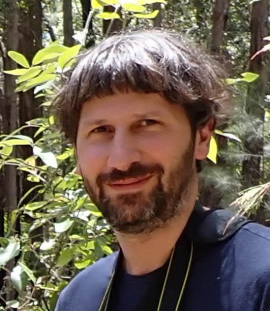
David Lentink is a Full Professor of Biomimetics at the University of Groningen , leading the Biomimetics Group within the Faculty of Science and Engineering. His research bridges biomechanics, aerospace engineering, and robotics, focusing on avian flight mechanics and bio-inspired aerial robotics . Previously at Stanford University, he pioneered the development of the Aerodynamic Force Platform and low-turbulence wind tunnels for animal flight studies. Education : PhD in Aerospace Engineering (Stanford), MSc in Mechanical Engineering (Delft), BSc in Mechanical Engineering (Delft). Research Interests : Understanding bird flight biomechanics to design advanced drones, studying evolutionary adaptations in flight, and developing biohybrid robots with real feathers. Scientific Awards : Dutch Academic Year Prize for the Flight Artists (2013). World Economic Forum Young Scientist under 40 (2013). Alumnus of the Young Academy of The Royal Netherlands Academy of Arts and Sciences. Labs : The Lentink Lab at Groningen’s Linnaeusborg campus integrates bird aviaries, wind tunnels, and maker spaces for bio-inspired robotics development. His team collaborates globally with institutions like Stanford, TU/e, and Sorama.
Professor Matt Garratt is a faculty member at the University of New South Wales (UNSW Canberra), School of Engineering and IT, serving as AI theme lead for the Defence Trailblazer Universities initiative with over $200 million in funding. His primary research focuses on sensing, guidance, and control for autonomous systems within robotics and unmanned aerial vehicles. Garratt's research spans robotics, swarm intelligence, and autonomous systems with emphasis on bio-inspired navigation techniques and adaptive flight control. His work addresses critical challenges including terrain following using vision systems, landing UAVs on moving platforms, and developing self-organizing swarms. He integrates artificial intelligence, computer vision, and machine learning to advance unmanned systems capabilities in complex environments. Analysis of his recent publications reveals strong trends in bio-inspired UAV navigation (particularly honeybee behavior modeling) and swarm robotics applications. His work increasingly incorporates deep learning for perception tasks while addressing real-world challenges like gas plume detection and adversarial robustness in 3D vision systems. The research demonstrates consistent progression toward practical implementation of autonomous systems in dynamic environments. Professor Garratt has secured over $7.7 million in external research funding as Chief Investigator on 33 grants. He actively mentors graduate students with scholarships available for Masters and PhD research in robotics and AI, focusing on: UAV path planning and adaptive control systems Swarm robotics collective motion optimization Bio-inspired autonomous navigation techniques Computer vision for robotic perception He co-founded the UNSW Canberra AIR (AI and Robotics) Group (AIR Lab), which drives research in trusted autonomy, swarm intelligence, and AI integration for defense applications. The lab develops practical solutions for autonomous systems operating in complex, real-world environments while maintaining ethical AI frameworks.
Katrin Vogt is a Group Leader at the University of Konstanz and an Affiliated Scientist at the Max Planck Institute of Animal Behavior. She serves on the IMPRS Board and Faculty, focusing on behavioral neuroscience in Drosophila larvae. Her research explores how social context and internal states (e.g., hunger) modulate neural circuits and behavior, utilizing genetic tools like optogenetics, RNAi, and CRISPR. Key Research Areas: Behavioral flexibility under internal state changes Neural integration of sensory and state signals in the antennal lobe Role of serotonin (CSD neuron) in modulating output pathways Computational modeling of state-dependent circuit dynamics Notable Achievements: Discovered state-dependent olfactory valence switching (e.g., geranyl acetate shifts from aversion to attraction under food deprivation) Elucidated glutamatergic inhibition mechanisms in picky local interneurons Identified 5-HT7 receptor's role in upregulating uniglomerular projection neuron activity Recent Publications: 2025: PLoS Biology on multimodal sensory neurons 2024: Current Biology commentary on behavioral neuroscience 2023: Current Biology on multisensory memory merging Academic Affiliations: University of Konstanz (Group Leader, Department of Collective Behavior) Max Planck Institute of Animal Behavior (Affiliated Scientist) IMPRS for Organismal Biology (Faculty Member) Scientific Awards: DFG Research Fellowship (Project No. 345729665) Students & Collaborators: PhD students: Hari P. Narayanan, Akhila Mudunuri Research assistants: Nora Tutas, Julius Klein, Constantin Dyroff DAAD summer student: Élyse Zadigue-Dubé Recent graduates: Amelie Edmaier (BSc 2023), Constantin Dyroff (BSc 2023)
Affiliations and Roles Professor Wang holds dual appointments as Professor of Physics and Mechanical and Aerospace Engineering at Cornell University. She is affiliated with the Sibley School of Mechanical and Aerospace Engineering and the College of Arts and Sciences. Education B.S. in Physics, Fudan University, Shanghai, China (1989) Ph.D. in Physics, University of Chicago (1996) NSF-NATO Postdoctoral Fellow, Theoretical Physics, Oxford University (1997) Visiting Member, Courant Institute of Mathematical Sciences, NYU (1997-1999) Research Her research focuses on the physics of living organisms, particularly insect flight dynamics , biophysics , and computational modeling . Key projects include: Dragonfly righting reflex mechanisms Neuro-mechanical control in fruit flies Unsteady aerodynamics and fluid-structure interactions Awards and Honors Simons Fellowship in Theoretical Physics (2020) Radcliffe Fellowship (2007) Cornell Provost's Award for Distinguished Scholarship (2005) David and Lucile Packard Fellowship (2002) Labs and Collaborations Her work integrates experimental and computational approaches, often conducted in collaboration with institutions like the Janelia Research Campus (HHMI) and the Joint Texas Experimental Tokamak (J-TEXT).
Dr. Rachel Parkinson is a Research Fellow at Wolfson College, University of Oxford, and holds a Lecturer position in Biology at Keble College. She is also an Eric & Wendy Schmidt AI in Science Postdoctoral Fellow. Her research focuses on insect sensory processing, particularly how pollinators like bees perceive environmental stressors such as pesticides. She develops AI-driven tools to diagnose sublethal toxicity and leads projects using large language models for systematic reviews of pesticide risks. Her work aims to assess environmental threats to pollinators and devise mitigation strategies. Her research interests include neuroethology, pesticide impacts on insect behavior, and AI applications in ecological research. She collaborates with the Bee Lab to advance understanding of pollinator health and ecological resilience. Her interdisciplinary approach bridges biology, neuroscience, and computational methods to address global environmental challenges. Awards: Eric & Wendy Schmidt AI in Science Postdoctoral Fellow Labs/Teams: Bee Lab, University of Oxford
Nick Brandley is an Associate Professor of Biology at the College of Wooster. He holds a Ph.D. from Duke University (2015) and a B.S. from the University of Michigan (2008). His research focuses on sensory biology, color vision, and animal behavior, particularly in insects. He actively involves undergraduates in his research, as evidenced by multiple co-authored publications with student contributors marked with an asterisk (*). Dr. Brandley’s work explores topics such as rapid coloration shifts in grasshoppers during flight, sexual dimorphism in spatial vision, and the evolutionary implications of visual acuity in signaling. His studies bridge ecology, evolutionary biology, and behavioral science. He maintains an active research program emphasizing hands-on student participation. Currently based in Williams 184 (office) with contact details available via email and his professional website, Brandley contributes to the College of Wooster’s academic mission through teaching and mentoring. His research group likely focuses on insect sensory systems and their ecological adaptations.
Dr. DeAnna E. Beasley is an Associate Professor in the Department of Biology, Geology, and Environmental Science at the University of Tennessee at Chattanooga (UTC). She holds a PhD from the University of South Carolina (2013) and specializes in integrative ecology, focusing on how environmental changes—particularly urbanization—affect insect development, behavior, and biodiversity. Her research bridges ecological and social sciences to address urban resilience and biodiversity conservation. Teaching responsibilities include courses such as Ecology, Evolution, and Ant Ecology, along with supervising thesis projects and individual studies. She actively mentors undergraduate and graduate students in field and lab research, emphasizing community engagement and citizen science. Key research interests include urban ecology, insect-fungal interactions, and the socio-ecological dynamics of urban systems. Notable projects investigate honey bee health in urban environments and biodiversity patterns in green infrastructure. Her work frequently involves interdisciplinary collaborations and public outreach, including initiatives to promote diversity in STEM. Dr. Beasley is committed to equity, diversity, and inclusion in academia, serving on UTC's DEI committee and the Africana Studies Advisory Committee. She also contributes to professional societies such as the Ecological Society of America and engages communities through science education and media outreach.
Dina Dechmann is Group Leader at the Max Planck Institute of Animal Behavior, Department of Migration in Radolfzell, Germany. She leads the Ephemeral Resource Adaptations Research Group, focusing on how animals adapt to fluctuating resource availability through behavioral, morphological, and physiological strategies. Her educational background includes: Ph.D. in Animal Behavior from University of Zürich (2005) MS in Systematics & Ecology from ETH Zürich (1999) Habilitation at University of Konstanz (2018) Dr. Dechmann identifies as a classical behavioral ecologist with a passion for evolution, increasingly focusing on how resource distribution in time and space influences animal adaptations. Her research examines movement patterns (particularly in flying foxes and bats), energetics, information transfer during foraging, and morphological adaptations like wing shape. A significant focus involves seasonal phenological changes, especially in brain structure, as seen in her work on Dehnel's Phenomenon in shrews. She is actively involved in the ICARUS satellite tracking initiative to monitor bat migration. Her recent publications reveal consistent themes across animal behavior, neuroecology, and conservation biology. The work demonstrates sophisticated integration of field studies with molecular and physiological approaches, particularly in studying how animals navigate resource ephemerality. Key trends include bat migration patterns, brain plasticity in response to seasonal changes, and methodological innovations in wildlife tracking. Her research bridges fundamental behavioral ecology with practical conservation applications, especially regarding common bat species. Dr. Dechmann mentors a diverse international team including postdocs, doctoral students, and technical staff. Her group maintains strong collaborations across European institutions and with international partners, particularly in Panama where some field studies occur. While specific grant details aren't provided, her work on the ICARUS initiative and extensive publications suggest substantial research funding. The Ephemeral Resource Adaptations Group operates as a small, international team focused on resource distribution challenges for animals. Current projects examine migration as an adaptation to seasonal change, hibernation energetics in climate change contexts, social information sharing for ephemeral resources, alternative wintering strategies in small mammals, and impacts of research methodologies on animal behavior.
Andrea Perna is an Assistant Professor at the IMT School for Advanced Studies in Lucca, Italy, with a background in theoretical biology and biophysics. Previously, he held a Senior Lecturer position at the University of Roehampton, UK, and conducted research across Europe and Australia. His work focuses on collective animal behavior, pattern formation in biological systems, and ecology, combining experimental, computational, and mathematical approaches. Education: Degree in Biological Sciences from Scuola Normale Superiore and University of Pisa (Italy), followed by a PhD in Psychophysics (neurobiology) from Scuola Normale Superiore, Pisa. Research Interests: Collective behavior in fish schooling, termite nest architecture, biophysical principles of animal group cohesion, and the interplay between individual behavior and ecosystem properties. Notable projects include modeling trail networks in ants and exploring how environmental factors influence nest construction in termites. Labs/Teams: Leads the Networks Unit at IMT School, collaborating with institutions like the Hawk Conservancy Trust and international researchers in ecology, mathematics, and physics. Active in mentoring PhD and post-doctoral researchers in complex systems and ecological modeling. Grants/Funding: Secured funding for post-doctoral positions studying termite nest evo-devo and collaborative projects on raptor flight mechanics.
Wei-Chung Allen Lee, PhD, is an Associate Professor of Neurology and Neurobiology at Harvard Medical School. His research focuses on understanding how neural circuits enable behavior through functional connectomics, combining advanced imaging, machine learning, and computational modeling. The Lee Lab develops tools like X-ray holographic nanotomography and GridTape for high-resolution neural structure analysis. Key interests include circuit principles in Drosophila, cerebellar interneurons, and synaptic wiring in decision-making regions. His work explores structural-functional relationships in networks, conservation across species, and developmental constraints on neural architecture. Recent studies highlight connectomic reconstructions in Drosophila, cerebellar disinhibition mechanisms, and blood-brain barrier heterogeneity. Methodological innovations in microscopy and image restoration underscore his lab’s interdisciplinary approach. The Lee Lab is located at 220 Longwood Avenue, Boston, MA, and collaborates on large-scale neuroimaging pipelines like the Open Connectome Project.
Frank van Langevelde is a Full Professor in Wildlife Ecology and Conservation at Wageningen University & Research, affiliated with the PE&RC and WIAS institutes. His research focuses on ecological interactions, savanna ecosystems, and animal behavior, with a strong emphasis on conservation biology. He has supervised over 20 PhD candidates, mentoring projects on topics like predator-prey dynamics, pollinator ecology, and wildlife management in human-dominated landscapes. His work integrates field studies, experimental approaches, and computational models to address pressing environmental challenges. Research interests include scavenger ecology, savanna dynamics, pollinator health (e.g., honeybees and stingless bees), and the impacts of anthropogenic activities on wildlife. His studies often involve interdisciplinary collaborations, such as analyzing the effects of fire regimes on seedling survival or modeling collective decision-making in animal groups. Notable contributions include investigations into cheetah behavior, hyena coexistence, and the socio-economic dimensions of illegal wildlife trade in urban areas. Frank van Langevelde’s recent publications highlight trends in animal behavior under environmental stress, the ecological consequences of land-use changes, and innovative approaches to biodiversity conservation. His datasets, such as those on hyena population dynamics and pollinator effectiveness, underscore his commitment to open science. Beyond academia, he engages in public outreach, discussing topics like tick-borne disease control and the link between biodiversity loss and zoonotic diseases.
Vincent Foray is a Researcher at the University of Tours, affiliated with the Research Institute on Insect Biology (IRBI) and the Department of Animal Biology and Genetics. He specializes in thermal biology, symbiotic interactions, and the impacts of climate change on insects. His work focuses on how temperature and endosymbiotic bacteria influence insect phenotypes and fitness, particularly in aphids. Research themes include: (1) Thermal biology, exploring how temperature fluctuations affect insect performance and adaptation, and (2) Symbiotic interactions, studying the role of endosymbionts like Serratia symbiotica and Wolbachia in thermal tolerance and host-symbiont dynamics. He teaches courses in population genetics and organism biology. Publications span topics like aphid-parasitoid dynamics, microbial symbiont effects on host fitness, and thermal adaptation mechanisms. Collaborations include studies on Drosophila suzukii invasions and metabolic impacts of dietary shifts. His work is grounded in integrative approaches combining molecular, physiological, and behavioral data.
Dr. Michael Dillon is Professor and L. Floyd Clarke Chair in Zoology and Physiology at the University of Wyoming. He studies insect responses to environmental challenges across elevation gradients. Education includes a PhD in Biology from the University of Washington. Research integrates field studies with physiological measurements to understand thermal adaptation, flight energetics, and overwintering strategies in bumble bees. Current NSF-funded projects investigate molecular mechanisms of cold tolerance and climate impacts on alpine insects. Recent publications demonstrate advances in microclimate modeling, metabolomic profiling, and functional genomics in ecophysiology. Research consistently addresses how climate variability affects insect persistence across spatial scales. Awards include the Presidential Scholarly Achievement Award and endowed chair recognition. Current advisees include doctoral candidates studying overwintering physiology, flight adaptations, and thermal performance.
Henry Fadamiro is a Professor at Texas A&M University, affiliated with the College of Agriculture & Life Sciences and Texas A&M AgriLife. He holds administrative roles as Associate Vice President for Strategic Initiatives and is part of AgriLife Extension/Research divisions. His expertise spans insect behavior, chemical ecology, neurobiology, biological control, and integrated pest management. He earned a BSc (First Class Honors in Biology) from Federal University of Technology, Akure, Nigeria, and a PhD in Entomology from the University of Oxford. His research focuses on parasitoid biology, pest management strategies, and plant-insect-microbe interactions. Key projects involve optimizing biological control agents (e.g., Aprostocetus hagenowii), analyzing insect behavior via chemical cues, and developing sustainable pest control methods. Recent work highlights include 3D flight analysis of parasitoids, bacterial effects on insect larvae, and weather-driven pest emergence modeling. His articles emphasize parasitoid-host dynamics, chemical ecology applications, and agricultural biotechnology. He collaborates on projects addressing invasive species like the kudzu bug and explores plant growth-promoting rhizobacteria for crop resilience. Grants and strategic initiatives under his leadership target translational research in agroecology and pest management.
Kevin Myles is a Professor in the Department of Entomology at Texas A&M University's College of Agriculture & Life Sciences. His research investigates mosquito antiviral immunity and genetic control strategies for arbovirus vectors. With a Ph.D. in Microbiology from Colorado State University, his work integrates molecular virology, genomics, and bioinformatics to develop novel vector control methods. Research focuses on RNA interference pathways in mosquito defense, CRISPR-based gene drives for population control, and temperature effects on vector competence. Current projects engineer self-eliminating transgenes and characterize tissue-specific antiviral responses. Analysis of 15 publications reveals emphasis on genetic control technologies (53% of articles), mosquito immunity (27%), and climate-vector interactions (13%). Recent work increasingly addresses safety mechanisms for field applications. Leads development of computational tools like MGDrivE for simulating gene drive efficacy. Research has produced multiple genetic systems for precise modification of mosquito populations, with applications in dengue, Zika, and chikungunya control.