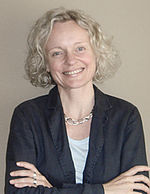
Sandra Tretter is a Doctoral Researcher affiliated with the Lise Meitner Research Group Social Behaviour at the Max Planck Institute for Chemical Ecology , associated with Friedrich Schiller University Jena (Department of Biology). Her research focuses on the chemical and sensory ecology of disease in clonal raider ants. Research Interests Chemical communication in social insects Disease transmission dynamics Eco-evolutionary interactions Ant colony behavior and sensory systems Supervisors Prof. Dr. Martin Kaltenpoth Dr. Yuko Emilie Ulrich Prof. Dr. Silke Sachse Dr. Daniel Kronauer She began her PhD thesis in 2024, combining interdisciplinary approaches from ecology, chemistry, and behavioral biology.
Liang Li is a Group Leader at the Max Planck Institute of Animal Behavior , leading the Embodied Collective Intelligence Lab . Her research bridges biology and robotics to study collective behavior through physical agent-environment interactions. Current position: Group Leader, Department of Collective Behavior Past roles: Project Leader at University of Konstanz and MPI Education: Ph.D. in Robotics and Control, College of Engineering, Peking University Research Interests Dr. Li's work focuses on embodied cognition , swarm intelligence , and fluid dynamics in biological and robotic systems. Key areas include hydrodynamic interactions in fish schooling, bio-inspired robotics design, and translating biological principles into robotic applications. Article Trends : Recent publications emphasize energy efficiency in swimming systems, hydrodynamic modeling for collective behavior, and virtual reality tools for behavioral studies. Interdisciplinary themes span robotics, fluid dynamics, neuroscience, and evolutionary ecology. Collaborations & Grants Her research involves international collaborations with institutions like University of Konstanz and Peking University. Grants include funding for robotic platforms (RoboTwin) and advanced pose estimation tools (DeepPoseKit). Labs & Teams The Embodied Collective Intelligence Lab is a small, interdisciplinary team specializing in bio-robotic systems. The group develops experimental robotic platforms and computational models to decode collective behavior rules.
Prof. Dr. Roland Strauss is a faculty member at the University of Mainz, focusing on Drosophila as a model organism for neurodegenerative diseases, depression, motivation, stress resilience, memory, and complex motor behavior. His work explores dietary supplements (e.g., Centella asiatica , Withania somnifera ) for stress and age-related behavioral phenotypes, using neurogenetic tools to identify active compounds and mechanisms. Recent publications (2022-2023) investigate chlorogenic acids, calcineurin pathways, and octopamine's role in stress-induced depression-like states.
Dr. Joseph Colgan is an Assistant Professor and Group Leader at the Institute of Organismic and Molecular Evolution at Johannes Gutenberg-Universität Mainz, Germany. His research group focuses on ecological and evolutionary genomics of social insects, particularly bumblebees and mason bees, using integrative approaches combining behavioral, molecular, genomic, immunological, and computational techniques. Dr. Colgan's educational background includes: PhD in Zoology from University of Dublin, Trinity College (2008-2014) MSc in Immunology and Global Health from Maynooth University (2007-2008) BSc in Zoology from University College Dublin (2003-2007) Postgraduate Certificate in Teaching & Learning in Higher Education from University College Cork (2018-2019) His research program centers on three interconnected themes. His work on phenotypic plasticity examines how single genotypes produce multiple phenotypes in social insects, particularly focusing on the genomic architecture underlying caste differentiation. In ecological and evolutionary genomics, he investigates how pollinators respond to environmental challenges including habitat loss, pesticide exposure, and climate change, with recent work applying population genomics to assess genetic diversity in wild bee populations. His immunogenomics research explores host-parasite interactions, examining molecular mechanisms of immune responses to pathogens and environmental stressors, with particular focus on how mating, diapause, and nematode infections alter immune gene expression in bumblebees. Analysis of Dr. Colgan's publication record reveals a consistent focus on insect genomics with increasing specialization in social insect systems. His early work included salmonid genomics, but his research has increasingly concentrated on bumblebees and other pollinators, with a growing emphasis on pesticide impacts, immune system evolution, and evolutionary adaptations. His recent publications demonstrate sophisticated integration of genomic, transcriptomic, and proteomic approaches to address fundamental questions in evolutionary biology and pressing concerns in pollinator conservation. Dr. Colgan supervises a diverse research team including six PhD students (Jannik Möllmann, Max Bolder, Hongfei Xu, Safira Moog, Dean Hodapp, and Eva Baumgarten), four Master's students, and multiple Bachelor's students. His group actively pursues projects in population and comparative genomics of wild bees, evolution of dormant phenotypes, signatures of sexual antagonism, queen specialization in social insects, insect immune system evolution, and genomic approaches to bee conservation. The research group maintains strong international collaborations, particularly with institutions in Ireland and the UK where Dr. Colgan previously conducted postdoctoral research.
Prof. Tim Landgraf is a Professor of Computer Science at Freie Universität Berlin, affiliated with the Dahlem Center for Machine Learning and Robotics. He specializes in artificial intelligence, robotics, and biohybrid systems, focusing on collective behavior, machine learning, and animal-robot interactions. His work bridges computational methods with biological systems, as seen in studies of honeybee communication and fish behavior. Key research interests include self-supervised learning algorithms, robotic swarm dynamics, and applications of AI in education and healthcare. Prof. Landgraf has led projects like the Biorobotics Lab and contributed to initiatives such as the H2020-funded HIVEOPOLIS. He has been honored with the 'Hochschullehrer des Jahres' (Professor of the Year) award in 2020. Recent publications emphasize biohybrid systems, explainable AI, and counterfactual explanations, reflecting his commitment to interdisciplinary innovation. His courses, such as 'Self-Supervised Learning,' highlight theoretical and practical aspects of cutting-edge machine learning techniques.
Dana Reichmann is an Associate Professor at the Hebrew University of Jerusalem in the Department of Biological Chemistry . Her research focuses on protein plasticity under stress conditions , redox biology , and structural mass spectrometry to study protein dynamics and interactions. Previously, she held postdoctoral positions at the University of Michigan and the Weizmann Institute of Science . Education: PhD in Biological Chemistry (2007), Weizmann Institute MSc in Molecular Genetics (2002), Weizmann Institute BSc in Biochemistry (1997), Tel Aviv University Her research spans redox-regulated chaperones , protein homeostasis , and redox-dependent cellular heterogeneity , with applications in aging , stress responses , and oxidative signaling . Recent work highlights the role of Cdc48 in redox homeostasis and Spy chaperone in membrane protein folding. She employs cutting-edge techniques like hydrogen-deuterium exchange mass spectrometry and redox-sensitive GFP fusions to map protein interactions and redox states. Her publications (46 total) emphasize redox biology , molecular chaperones , and structural proteomics , with collaborations across biochemistry , microbiology , and cancer therapy . Contact: danare@mail.huji.ac.il .
Dr. Mohammed Elbediwi is a Research Fellow in the Rolff Group - Evolutionary Biology at the Institute of Biology, Freie Universität Berlin. His research focuses on evolutionary processes in animal systems, particularly examining how ecological interactions shape phenotypic traits and population dynamics. Current interests include phylogeographic patterns in insects, pathogen virulence evolution, and predator-driven morphological adaptations. Recent work includes studies on damselfly wing shape variation across European populations, decomposition of virulence in bifurcating infections, and ontogenetic shifts in antipredator defenses. No scientific awards or grants are explicitly mentioned in the profile. He is affiliated with the Department of Biology within the Department of Biology, Chemistry, Pharmacy faculty. His contact details include an institutional email address.
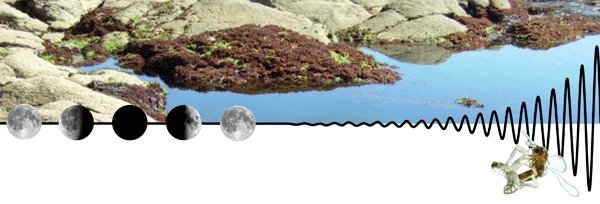
Dr. Tobias Kaiser is the Max Planck Research Group Leader of the Biological Clocks group at the Max Planck Institute for Evolutionary Biology in Plön, Germany. His research integrates chronobiology, evolutionary genomics, and ecological adaptation to understand how organisms like the marine midge Clunio marinus synchronize their life cycles with environmental rhythms such as tides, lunar phases, and daily cycles. Research Interests: His work centers on chronobiology and evolutionary genomics , particularly the molecular basis of circalunar and circadian clocks. He investigates how genetic variation underlies local adaptations in timing mechanisms across different populations. A key focus is temporal niche differentiation , where strains of Clunio marinus coexist by occupying distinct timing windows for reproduction, reducing competition. Publication Trends: Recent articles highlight how temporal niches influence species coexistence and habitat use. His studies combine field observations with genetic analysis to explore how time-based adaptations affect ecological dynamics and evolutionary trajectories in marine environments. Scientific Awards: No awards mentioned in the text. Advising and Grants: While specific students and grants are not listed, Dr. Kaiser leads an independent Max Planck Research Group, indicating significant research funding and likely mentorship of PhD and postdoctoral researchers. His group conducts genetic mapping and molecular analyses to uncover clock genes involved in lunar and tidal timing. Labs and Teams: He leads the Max Planck Research Group Biological Clocks, based at the Max Planck Institute for Evolutionary Biology. The team studies Clunio marinus as a model organism to decode the molecular architecture of non-circadian biological clocks, leveraging natural variation across coastal populations.
Jürgen Deckert is a researcher and curator at the Museum of Natural History, Leibniz Institute for Evolution and Biodiversity Research in Berlin. His work focuses on the taxonomy, zoogeography, and biodiversity of Hemiptera, particularly Afrotropical and Palearctic Heteroptera. He oversees the Hemimetabola collection, which includes Hemiptera, Thysanoptera, Phtiraptera, Isoptera, and related groups. Research Projects: Biodiversity of insects in arid and semiarid biomes of Namibia and South Africa (BIOTA Africa 2007-2010, funded by BMBF). General distributional patterns and endemism of Heteroptera in Namibia. Studies on the genus Pyrrhocoridae (Probergrothius) in Namibia. Development of a field guide to True Bugs of southwestern African arid biomes. Publications: Deckert has contributed to key taxonomic works, including the "Bugs, Volumes 1-4" series in the Wildlife of Germany collection and studies on Namibian lace bugs, vibrational signaling in Peloridiidae, and African Rhyparochromini systematics. Other Contributions: He has authored a German textbook on Heteroptera morphology, biology, and phylogeny, and participated in cataloging insect collections.
Elena Simone is a Full Professor at the Department of Applied Science and Technology (DISAT) of Politecnico di Torino, Italy, where she serves as Vice Coordinator of the PhD programme in Chemical Engineering. She holds an ERC fellowship and leads the Crystallization & Crystal Engineering Laboratory. Her research integrates crystal engineering, process technology, and materials science for applications in food and pharmaceutical industries. Research Interests: Fundamental crystallization mechanisms and polymorph control Food and pharmaceutical crystal engineering Process analytical technology development Sustainable manufacturing of functional crystalline materials Particle design for emulsion stabilization and delivery systems Her recent publications (2023-2025) demonstrate strong focus on experimental and computational approaches to crystallization control, with applications spanning confectionery fats, pharmaceutical polymorphs, electrocatalysts, and emulsion systems. The work frequently employs advanced characterization techniques including synchrotron X-ray scattering. Awards & Leadership: Excellence Award in Crystallization 2017 (EFCE) Steering Committee Member: EFCE Crystallization Working Party Steering Committee Member: British Association of Crystal Growth Editor: Food and Bioproducts Processing Guest Editor: Crystal Growth & Design She currently supervises five PhD students and leads multiple research projects including the ERC-funded CryForm (2021-2026) on crystallization fundamentals, AdvinPro (2024-2026) on insect processing, and NewOilFactory (2024-2026) on crystalline oleogels.
Prof. Dr. Martin Paul Nawrot is a faculty member at the Institute of Zoology , University of Cologne . His research focuses on neural information processing , reinforcement learning , and synaptic plasticity in biological and artificial systems. He also develops large-scale brain simulations to study attractor dynamics for sensory-motor integration, motor control, and decision-making in primates and insects. Current research areas include neuromorphic computing , spiking neural networks , and computational neuroscience Key projects involve modeling insect behavior , neural coding , and cross-species AI applications His recent publications (2023-2025) explore Drosophila larva locomotion , synaptic plasticity mechanisms , and neuromorphic hardware for real-time simulations. These works span neural circuits , behavioral modeling , and computational tools like GeNN and NEST. Despite his academic prominence, no scientific awards are mentioned in the available texts.
Dr. Juliane Yildiz is a qualified academic advisor and researcher affiliated with the Karlsruhe University of Education , where she contributes to the Institute for Everyday Culture and Health . Her work bridges nutritional science, counseling, and sustainability education through teaching and research.
Prof. Dr. Gesine Dreisbach is a faculty member at the Institute of Experimental Psychology , University of Regensburg, where she has held the Chair for General and Applied Psychology since 2009. Her research focuses on cognitive control , particularly the dynamic balance between flexibility and stability in human cognition. Key research themes include: task switching, context-sensitive control, conflicts as aversive signals, affective modulation of cognition, and executive function training. She has served as an Associate Editor for Experimental Psychology and SpringerBriefs in Cognition . Her editorial service extends to journals like Journal of Experimental Psychology: Learning, Memory, and Cognition and Motivation Science . Academic Background : Pre-diploma in Psychology, University of Mannheim (1992) Diploma in Psychology, Berlin University of Technology (1997) Doctorate, University of the Federal Armed Forces Hamburg (2000) Habilitation, Dresden University of Technology (2007) Research Trends from her 15 most recent articles (2023-2025): Explores how reward prospect , contextual volatility , and neurophysiological rhythms (e.g., theta waves) modulate cognitive flexibility. Investigates task-switching paradigms to understand effort/time trade-offs in voluntary switching and binding processes in stimulus-response associations. Examines conflict adaptation across species (e.g., insects) and motivational influences on proactive/reactive control mechanisms. Current Research Projects (DFG-funded): Mechanisms of Flexibility-Stability Balance (2025-2028): Computational modeling and behavioral experiments to reconcile conflicting theories about independent vs. shared control mechanisms. Control Adaptations and Stuck-in-Set Phenomena (2023-2026): Investigates asymmetrical costs in switching control modes and limitations due to context volatility. Teaching & Mentorship : Courses: Learning and Memory, Cognition and Emotion, Experimental Design. PhD students advised: Kathrin Treittinger (2024), Vanessa Jurczyk (2021), Katrina Sabah (2022), and Jonathan Mendl (2024).
Dr. Brendon Boudinot serves as the Head of Entomology II at the Senckenberg Society for Nature Research, leading research in evolutionary and systematic morphology with a focus on insects, particularly ants. His work integrates advanced techniques like micro-CT scanning and phylogenetic statistics to study insect anatomy and evolutionary history. Dr. Boudinot is known for his contributions to understanding ant evolution through fossil analysis, including seminal studies on Cretaceous ants and their morphological adaptations. His research spans formicidae systematics, fossil insect morphology, and the evolutionary origins of parasitoid wasps and other hexapods. He frequently publishes in peer-reviewed journals and collaborates on interdisciplinary projects involving amber fossils, as seen in his co-hosting of the podcast 'Weird Species' discussing entomological curiosities. Dr. Boudinot’s expertise also extends to insect genital homology, functional morphology, and the application of phenomics in entomology. His work bridges paleontology and modern systematics, providing critical insights into the biodiversity of Mesozoic insects and their descendants.
Kirstin Petersen is an Associate Professor in the Department of Information Science at Cornell University's Bowers College of Computing and Information Science. She leads the Collective Embodied Intelligence Lab, focusing on collective robotic systems that exhibit emergent intelligent behaviors through local interactions. Her research interests center on collective robotic construction, swarm robotics, soft robotics, and human-robot interaction. Petersen's work explores how groups of simple robots can collaborate to build complex structures, with applications ranging from construction to agriculture. She investigates the principles of embodied intelligence, where the physical form and environment of robots contribute to their capabilities, reducing the need for complex centralized control. Her publication trends show a consistent focus on distributed robotic systems, with recent work expanding into agricultural robotics, human-drone interaction, and novel actuation methods using phase-changing materials. Her research bridges theoretical principles of collective behavior with practical implementations in soft and modular robotic systems. Petersen has advised numerous graduate students who have become prominent researchers in robotics, including Steven Ceron, Nialah Wilson-Small, and Jiahe Chen. Her lab has secured funding for projects related to swarm construction, agricultural monitoring, and soft robotic systems. She leads the Collective Embodied Intelligence Lab at Cornell, which brings together researchers from computer science, mechanical engineering, and biology to develop novel approaches to collective robotic systems. The lab emphasizes both theoretical foundations and practical implementations, with projects ranging from tiny modular robots to agricultural drones.