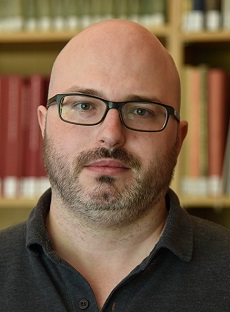
Jeremy Melius is a Lecturer in the Department of History of Art at the University of York, specializing in modern British art and criticism since the 1840s. His research explores the entanglements of word and image, particularly in anglophone art writing, and examines themes such as affect, ethics, environment, and empire. He joined the university in 2024 and holds a BA from Yale University and a PhD from the University of California, Berkeley. His work has been supported by institutions like the Huntington Library, the American Council of Learned Societies, and the Clark Art Institute. He focuses on figures such as John Ruskin and Walter Pater, alongside topics like the history of connoisseurship and the relationship between photography and sculpture. Current projects include The Invention of Botticelli , reinterpreting the artist’s rediscovery in the 19th century, and a study on Ruskin’s complex engagement with art history. Jeremy’s articles and book projects reflect his interdisciplinary approach, blending art history with literary and cultural studies. He has organized conferences, such as Description and the Art of Response at the University of Oxford and a Study Day on John Ruskin at the Morgan Library & Museum. His invited lectures include the Tomás Harris Lectures at University College London and the Richard McDougall Lecture on British Watercolour at The Courtauld Institute of Art.
Matthew Evans is a Leverhulme Early Career Fellow at the University of Leicester's School of Archaeology and Ancient History. His research focuses on the Hellenistic and Roman Aegean, blending classical archaeology and ancient history. He employs machine learning to analyze stone inscriptions and identify workshops in Ionia, Turkey, aiming to uncover the human processes behind inscription creation. He also participates in field surveys on Samos and Chios. Education: Bachelor of Arts (BA) in Ancient History, Cardiff University Master of Studies (MSt) in Classical Archaeology, University of Oxford Doctor of Philosophy (PhD) in History and Archaeology of Gymnasia, University of Warwick Research Interests: Evans studies short-distance mobility in Ionia, epigraphy, and digital methodologies. He combines textual analysis with archaeological fieldwork, emphasizing material culture's role in understanding ancient societies. His work bridges traditional archaeology and computational tools to explore stone cutters' networks and inscription production. Awards: Leverhulme Early Career Fellowship (current) Advising & Grants: While no specific grants or student names are listed, his fellowship supports his current research trajectory. He likely advises students in archaeology and ancient history, though details are not provided here. Labs/Teams: Engaged in field projects on the Greek islands of Samos and Chios, collaborating with archaeological teams to conduct surveys and excavations, contributing to broader regional studies.
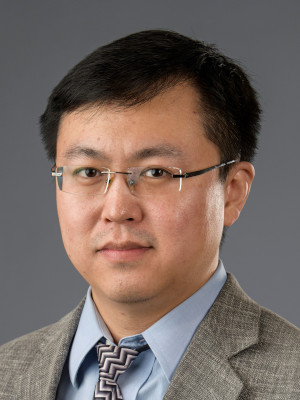
Dr. Jie Huang, the Roy A. Wilkens Endowed Associate Professor in the Department of Electrical and Computer Engineering at Missouri University of Science and Technology, leads cutting-edge research in sensor technologies for extreme environments. As founder of the Lightwave Technology Laboratory (LTL), his work focuses on optical and microwave sensors with applications in energy, infrastructure, and biomedical diagnostics. Ph.D. in Electrical Engineering, Clemson University (2015) M.S. in Electrical Engineering, Missouri S&T (2012) B.S. in Opto-electronics Information Engineering, Tianjin University (2009) His research spans fiber optic sensors , microwave photonics , and machine learning-enhanced sensing , with over 150 refereed articles and 10 US patents. Key areas include: High-temperature sensing in steel manufacturing Biomedical wearable devices Distributed sensing for industrial safety Novel photonic/microwave micro/nano sensors Recent publications emphasize hybrid microwave-photonics sensing for extreme environments, machine learning integration for accuracy, and miniaturized biosensors for health monitoring. Scientific recognition includes: Top 2% Scientists in Optoelectronics & Photonics (2021-2023) Faculty Excellence and Research Awards at Missouri S&T Best Paper Awards at ASME and IEEE conferences Endowed professorship and travel grants As mentor to multiple award-winning students, Dr. Huang's work is funded by DOE, DOD, NSF, NIH, DARPA, and national laboratories. His lab's innovations in femtosecond laser inscription and metal-organic frameworks have transformed industrial and biomedical sensing.
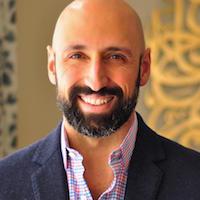
Elias I Muhanna is an Associate Professor of Comparative Literature and History at Brown University, where he also serves as the Director of Middle East Studies. He is affiliated with the Department of Comparative Literature and the Department of History within the School of Humanities. His scholarship bridges classical Arabic literature, medieval Islamic history, and digital humanities. PhD, Near Eastern Languages & Civilizations, Harvard University (2012) AM, University of Pennsylvania (2004) AB, Duke University (2000) Muhanna’s research centers on encyclopedic traditions in the Islamic world, with a focus on figures like al-Nuwayri and the cultural dynamics of the Mamluk Empire. His work explores the intersections of book history, intellectual history, linguistic development, and the vernacular in premodern Arabic literature. He is particularly interested in how knowledge was organized, transmitted, and transformed in classical and medieval Islamic contexts. His recent publications reflect a strong engagement with both academic and public audiences. The articles span topics from medieval information systems to contemporary cultural criticism, revealing a consistent thread of intellectual inquiry into how knowledge and culture are shaped across time. His work in digital humanities highlights the evolving nature of scholarship in the 21st century, especially in relation to Middle Eastern studies. John Nicholas Brown Prize (2021) Morris D. Forkosch Prize (2018) British-Kuwait Friendship Society Book Prize (runner-up, 2019) Margaret B. Sevcenko Prize (2008) Whiting Fellowship (2010–11) ACLS Fellowship (2015–16) Muhanna has advised graduate students in areas such as encyclopedism, Arabic literary theory, and the history of the Arabic language. His research has been supported by major grants from the Whiting Foundation and the American Council of Learned Societies. He is also active in public intellectual life, contributing essays to The New Yorker , The New York Times , and The Nation . He leads initiatives connecting digital tools with traditional scholarship in Islamic and Middle East studies. He is involved in academic and public-facing projects that promote the digital humanities, including editorial work on the intersection of technology and Middle Eastern scholarship. His teaching at Brown includes courses on the 1001 Nights, pre-Wikipedia knowledge systems, and Orientalism.
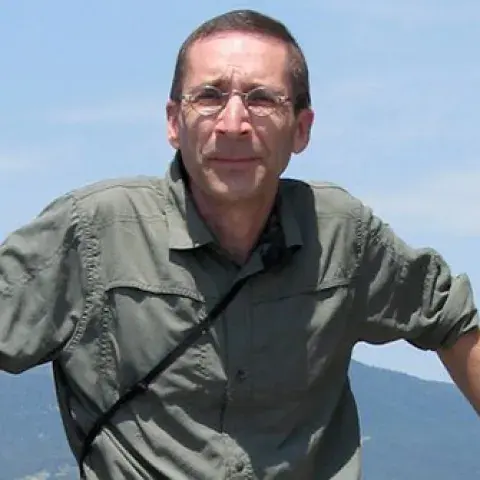
Buzz Brookman is an Adjunct Professor in the Humanities Department at Flagler College since 2019. A veteran educator with over four decades of teaching experience, he holds a Ph.D. in Ancient Studies from the University of Minnesota and served as an Andrew W. Mellon Faculty Fellow at Harvard University's Department of Ancient Near Eastern Languages and Cultures (1990–91). His career includes visiting professorships in Bulgaria, China, Kenya, and Ethiopia, alongside roles at North Central University, Bethel College, and the University of Minnesota. Brookman's research interests span antiquity, ancient languages, and biblical studies. His work bridges scholarship and creativity, including a forthcoming archaeological thriller novel. He has authored books like Orange Proverbs and Purple Parables (2015) and peer-reviewed articles on cuneiform collections and biblical narratives. His academic contributions also include pioneering educational software for ancient language learning, such as HyperSumerian (1991) and Antiquitas (2002). Brookman has presented widely at conferences including the Society of Biblical Literature (SBL) and the American Anthropological Association, focusing on topics like Bethsaida archaeology, midrashic interpretations, and ethno-linguistic boundaries. His awards include the National Endowment for the Humanities Grant (1986) and the Mellon Fellowship. He has held leadership roles in professional organizations, notably serving as President of the Upper Midwest SBL Region (1995–97).
Dr. Julia Hamilton is a Lecturer in Egyptology at Macquarie University's School of Humanities, Department of History and Archaeology, where she joined in September 2022. She is also affiliated with the Global Indigenous Futures Research Centre. Dr. Hamilton's academic journey includes a DPhil in Oriental Studies from the University of Oxford (awarded 2020), an MA (First Class) in Ancient History from the University of Auckland (2014), and a BA (Hons) (First Class) in Ancient History from the University of Auckland (2013). Her educational background includes: DPhil in Oriental Studies, University of Oxford (Awarded April 5, 2020) MA (First Class) in Ancient History, University of Auckland (Awarded November 1, 2014) BA (Hons) (First Class) in Ancient History, University of Auckland (Awarded May 1, 2013) Dr. Hamilton's research sits at the intersection of multiple sub-fields within Egyptology, including philology, art history, and archaeological and anthropological theory. Her work focuses on Old Kingdom Saqqara, where she works with the Oxford Expedition to Egypt. She has a particular interest in the materiality and multi-modality of ancient Egyptian language, with ongoing work on a monograph titled "Lives and afterlives of ancient Egyptian names." Her research also encompasses graffiti on Old Kingdom monuments of the late 3rd Millennium BCE and the multisensoriality and haptics of the graffiti-making process. Her extensive publication record demonstrates consistent scholarly output across multiple disciplines within Egyptology. Her most recent works (2023-2025) focus on ancient Egyptian personal names, graffiti studies, and social history, particularly examining the lives of women and girls in ancient Egypt. Earlier works (2021-2022) explore Saqqara necropolis, tomb inscriptions, and religious practices during the Old Kingdom period. Her research shows a clear trajectory from technical epigraphic studies toward broader anthropological and social interpretations of ancient Egyptian culture. Dr. Hamilton has received several prestigious awards: Faculty of Arts Teaching Excellence Award (December 2024) Faculty of Arts Early-Career Research Fellowship ($5,000) (June 2023) SEDA (Staff and Educational Development Association) UK Supporting Learning Award (October 2020) University of Oxford Clarendon Scholarship (£108,049) (2015) Institut français d'archéologie orientale (IFAO) Cairo doctoral bursary (€1,000) (2019) Dr. Hamilton actively supervises MRes and PhD candidates whose research interests align with her expertise, particularly in the art, language, and material culture of Egypt in the 3rd Millennium BCE. Her supervision spans archaeological semiotics, multimodality in art and language, and social anthropological theory in Egyptology. She is also open to co-supervising topics on museology, archival studies, and histories of archaeology. Dr. Hamilton has been involved in multiple research projects, including "Lives and afterlives of ancient Egyptian names" (2021-present), "Writing the self into history: Graffiti in Old Kingdom Saqqara" (2020-2022), and "Ancient Egyptian personal names of the Old Kingdom" (2015-2020). Dr. Hamilton is actively involved with the Oxford Expedition to Egypt at Saqqara, working under Dr. Yvonne Harpur and Paolo Scremin. From 2025, she will also work on the Old Kingdom site of Tehnā al-Gabal in Egypt, north of Minya. She has organized international conferences on graffiti in ancient Egypt and serves in various academic community roles, including as a Faculty of Arts ECR Representative at Macquarie University (2024-present) and mentor for Australasian ancient history graduate students.
Gwen Le Cor is a Professor of American Literature and Specialized English at Université Paris 8. She leads the Communicating in and about Sport project (2024) and co-leads the Hydrology of Media (HOM) project (2020–2022), exploring water’s cultural and scientific representations. She is a member of MULTICOM (ERUA-funded) and the Collège de Terminologie du Sport since 2024. Research Focus: Literature and Science, Contemporary American Literature, Specialized English (scientific/sports), E-learning, and AI applications in language education. Her work bridges arts, sciences, and humanities through projects like HOM and Text/ures (2014–2016). Grants & Projects: Labex Arts-H2H (2014–2016), EUR ArTeC (HOM), and ERUA initiatives. Organized 37th GERAS conference (2016) and international symposia on digital media and literature. Awards: None explicitly listed. Academic Contributions: Advises three ongoing doctoral theses. Authored/co-edited works like What Makes an Image? (2020) and Genres in Specialized English (2023). Her research spans trauma aesthetics, posthumanism, and interdisciplinary methodologies.
Dr. Moritz J. Kleinaltenkamp is an Assistant Professor of Strategy & Entrepreneurship at NEOMA Business School , specializing in the interplay between technological innovation, organizational transformation, and societal change. His research examines how emerging technologies reshape institutional fields through performativity and resource entanglement. Fields of Expertise: Emerging Technologies, Institutional Change, Resource Performativity Academic Awards: Nominated AOM Louis Pondy Best Dissertation Paper Award (2023), Runner-Up AOM OMT Best Paper Award (2021) Professional Experience: Consultant for global tech firms and EU government ministries Recent research explores blockchain's sociotechnical impact, quantum-inspired organizational theory, and temporal dynamics in institutional transformation. His work combines philosophical approaches (e.g., Karen Barad's agential realism) with empirical studies of digital innovation. Scientific Recognition Nominated for AOM Louis Pondy Best Dissertation Paper Award (2023) Runner-Up for AOM OMT Division Best Paper Award (2021)
Valentina Mignosa is a Researcher in Greek History at Ca' Foscari University of Venice's Department of Humanities. She serves as Principal Investigator for the TES project on Eastern Sicily's networks and collaborates with initiatives like AncLa and Crossreads. Her research focuses on Archaic/Classical Western Greece, digital epigraphy, and ancient territorial studies. Education includes a PhD from Ca' Foscari (2020) and master's/undergraduate degrees in Classics. She has taught Greek Epigraphy across multiple degree programs, blending traditional scholarship with digital methods. Recent work includes contributions to SCIENCE AND TECHNOLOGY FOR CULTURAL HERITAGE and PELARGÒS journals. Active in archaeological missions at Selinunte and digital heritage projects like Mapping Ancient Sicily. Member of Oxford's Centre for the Study of Ancient Documents and Axon journal editorial board.
Marta Blasco Martín is an Assistant Professor in the Department of Prehistory, Archaeology and Ancient History at the Faculty of Geography and History, Universitat de València. She is a member of the GRAM Archaeological Research Group on the Mediterranean and holds a PhD from the same university, awarded in 2020 for her thesis on Iberian bone, antler, and ivory artifacts. Her work spans prehistoric and early historic periods in the Iberian Peninsula and Mesoamerica, with a strong focus on organic material culture and experimental archaeology. Her research interests include Iberian Iron Age craftsmanship, the use of bone, antler, and ivory in ancient societies, ritual practices, ancient literacy, and the socio-political dimensions of craft production. She employs interdisciplinary methods such as pXRF, FT-NIR, DNA analysis, and experimental replication to study artifact manufacture and cultural transmission. Her work often highlights marginalized or under-researched materials in archaeology, advocating for their significance in understanding daily life and social structure. The trends in her recent publications show a consistent focus on material culture analysis, particularly the technological and symbolic aspects of bone and ivory objects. She frequently collaborates with experts in bioarchaeology, epigraphy, and geospatial analysis, contributing to a holistic understanding of ancient societies. Her research bridges the Iberian Peninsula and Mesoamerica, reflecting a comparative and global archaeological perspective. Faculty Member, Universitat de València PhD in Prehistory, Universitat de València (2020) Member, GRAM Archaeological Research Group on the Mediterranean She has not received any publicly listed scientific awards. Her academic advising and grant involvement are not explicitly detailed, but her participation in research projects such as 'Wood, Bone, Ivory, Antler and Shell. Marginal or marginalized crafts?' (HAR2013-45770-P) suggests active grant-funded research. She has contributed to teaching innovation, particularly in experimental archaeology and gender studies in higher education. Marta is affiliated with the GRAM research group, which focuses on Mediterranean archaeology, and has participated in fieldwork and excavation projects in Spain and Mexico. Her work integrates laboratory analysis, field archaeology, and pedagogical innovation, positioning her as a multidisciplinary scholar in contemporary archaeology.
Alvise Mattozzi is an Associate Professor in the Department of Environmental, Land and Infrastructure Engineering (DIATI) at Politecnico di Torino, where he contributes to interdisciplinary research through the FULL Interdepartmental Center – Future Urban Legacy Lab. His work bridges the social sciences and design, focusing on socio-technical systems, urban sustainability, and public engagement with science. His research interests include Actor-Network Theory, design ethnography, semiotics, qualitative research, social design, and the social studies of science and technology (STS) . He investigates the social role of artifacts, interdisciplinary design practices, and socio-technical-environmental controversies, often integrating cultural theory with practical design applications. His methodological focus includes controversy mapping and ethnographic approaches to innovation. His recent publications reflect a strong engagement with inclusive mobility planning, citizen science in hydrology, climate change communication through theater, and critical reflections on STS concepts such as hybridity and translation. These works span computer interaction, environmental science, cultural studies, and philosophy, demonstrating his interdisciplinary reach. His scientific recognition includes being a Fellow of STSItalia (2011–2013) and Vice President of the Italian Association of Semiotic Studies (AISS) (2008–2010). He has also served on the editorial board of Tecnoscienza . Mattozzi teaches courses such as Science and Technology Studies , Systemic Food Design , and Sustainable Urban Mobility across Architecture, Design, and Environmental Engineering programs. He supervises PhD students, including Ludovica Moro , and leads or participates in externally funded research projects like DSooE (Scientific Director) , LIBRA , and SCoolAir , supported by EU, PNRR, and private foundations. He is also affiliated with the tdpLAB (DAD) , contributing to design and ethnography-based research.
Petra Goedegebuure is an Associate Professor of Hittitology and Director of Undergraduate Studies at the University of Chicago , affiliated with the Institute for the Study of Ancient Cultures and the Near Eastern Languages and Civilizations (NELC) department. She specializes in the intersection of linguistics , philology , and cultural analysis of ancient Anatolian societies. Research Focus: Syntactic alignment, discourse cohesion, information structure, language change in contact situations (Hattic-Hittite, Hittite-Luwian, Hittite-Hurrian), and semiotic analysis of Hittite texts. Advising: Works with students on topics spanning Anatolian languages, West-Semitic languages, and extinct language analysis. Scientific Awards: Netherlands Organisation for Scientific Research Fellowship Franke Institute of the Humanities Fellowship American Council of Learned Societies Fellowship Recent Publications: Focus on Hittite demonstratives, core case semantics, Luwian hieroglyphs, and language communities in colonial Anatolia.
Antonio Castillo Gómez is a Full Professor in the Department of History and Philosophy at the University of Alcalá, Spain. He is a leading scholar in the social history of writing and reading, with a focus on the Early Modern and Contemporary periods. He coordinates the Research Group 'Lectura, Escritura, Alfabetización' (LEA) and is the Scientific Director of the Seminario Interdisciplinar de Estudios sobre la Cultura Escrita (SIECE). His research centers on written culture, particularly the practices of common people, subaltern literacy, autobiographical texts, and the role of writing in public spaces. He explores how writing was used in everyday life, from personal letters to prison graffiti, and how literacy intersected with gender, class, and power. His work spans multiple countries and languages, reflecting a comparative and interdisciplinary approach. The recent articles highlight a consistent focus on ephemeral and public writings in the early modern Hispanic world, including graffiti, posters, and inscriptions. These works examine the materiality, visibility, and social function of writing in urban spaces, often emphasizing the voices of marginalized groups. The research demonstrates a deep engagement with paleography, cultural history, and memory studies, frequently drawing on archival sources from the Inquisition and other institutions. Coordinator, Research Group LEA (Lectura, Escritura, Alfabetización) Scientific Director, Seminario Interdisciplinar de Estudios sobre la Cultura Escrita (SIECE) Principal Investigator, 'Egodocumentos de la pandemia' teaching innovation project Castillo Gómez has not received any explicitly mentioned scientific awards in the provided text, but his extensive publication record and leadership roles indicate significant academic recognition. His work bridges historical research with pedagogical innovation, as seen in projects connecting student experiences with the UN 2030 Agenda. He supervises no named students in the provided information, but his research group and teaching projects involve collaboration with students and junior scholars. His academic network includes international researchers in the fields of paleography, cultural history, and literacy studies. His laboratory or research team includes the LEA group and SIECE, both dedicated to interdisciplinary studies of written culture. These teams produce scholarly publications, organize academic events, and develop educational initiatives focused on recovering and analyzing everyday writing practices across history.
Anthony Hatfield is a Senior Lecturer at the School of Architecture and Built Environment within the University of Wolverhampton. He serves as Subject Award Leader for BSc (Hons) Building Surveying and HNC/D Construction and Built Environment courses, with extensive teaching experience including international engagements in Hong Kong and Qatar. Chartered member of the Chartered Institute of Building (CIOB) Fellow of the Higher Education Academy (FHEA) STEM Ambassador promoting Architecture and Built Environment careers His research focuses on Built Heritage conservation , particularly moisture protection in Medieval structures using soft capping technology and the impact of World Heritage inscription on urban regeneration. Recent publications highlight innovative approaches to post-disaster shelter, sustainable conservation methods, and educational technology in construction pedagogy. Investigated soft capping for historic building preservation Explored green roofs as alternative conservation methods Evaluated sustainable communities in social housing Developed computer-aided assessment frameworks for construction students Recognized for his teaching excellence through multiple Inspirational Lecturer of the Year nominations, he also serves as a Student Enabling Tutor (SET) and actively promotes practical industry knowledge through site visits and real-world case studies.
Prof. Dr. Corinna Reinhardt is the Chair of Mediterranean Archaeology with a focus on Greek and Roman Antiquity at the University of Zurich since August 1, 2023. Formerly a W1 Junior Professor at Friedrich-Alexander University Erlangen-Nuremberg (2017–2023), she has held research positions at Heidelberg, Leipzig, and Munich universities. PhD in Classical Archaeology (LMU Munich, 2015) on Greek akroterion sculpture Master's degree in Classical Archaeology, Ancient History, and Law/Media Law (LMU Munich, 2010) University of Zurich: Leads Digital Visualization Lab, Monte Iato excavation projects Her research focuses on: Materiality of Greek sculpture and architecture Text-image relationships in Archaic/Classical periods Digital methods (Computer Vision, 3D scanning, Deep Learning) History of antiquity reception in 19th-century Europe Key article themes (2018–2024) show interdisciplinary work combining: Archaeological analysis with digital humanities Funerary monument studies Vase painting narrative strategies Neoclassical emulation of antiquity Epigraphic materiality Iconographic interpretation Scientific Awards : Teaching Award, Faculty of Philosophy at FAU Erlangen-Nuremberg (2021) She co-organized virtual and physical exhibitions, developed digital teaching frameworks, and contributed to museum catalogues including Berlin Antikensammlung and Munich Staatliche Antikensammlungen.