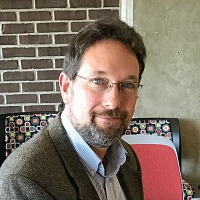
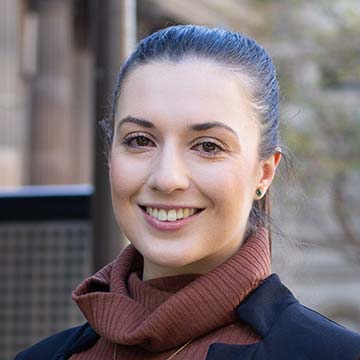
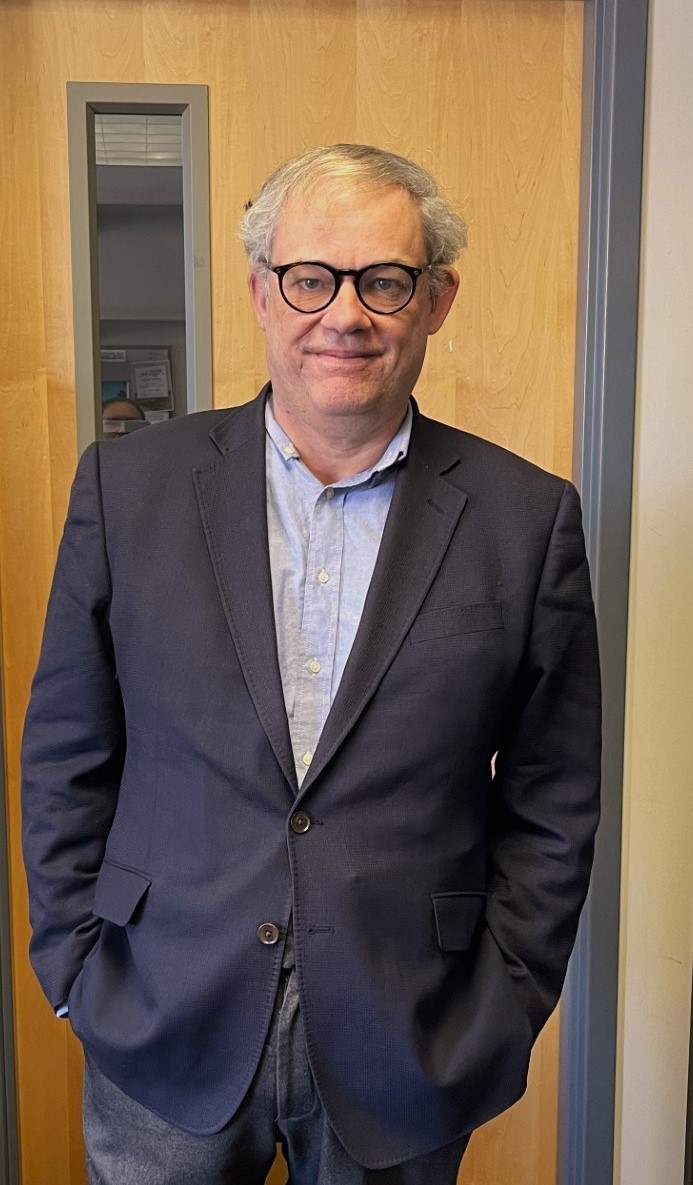
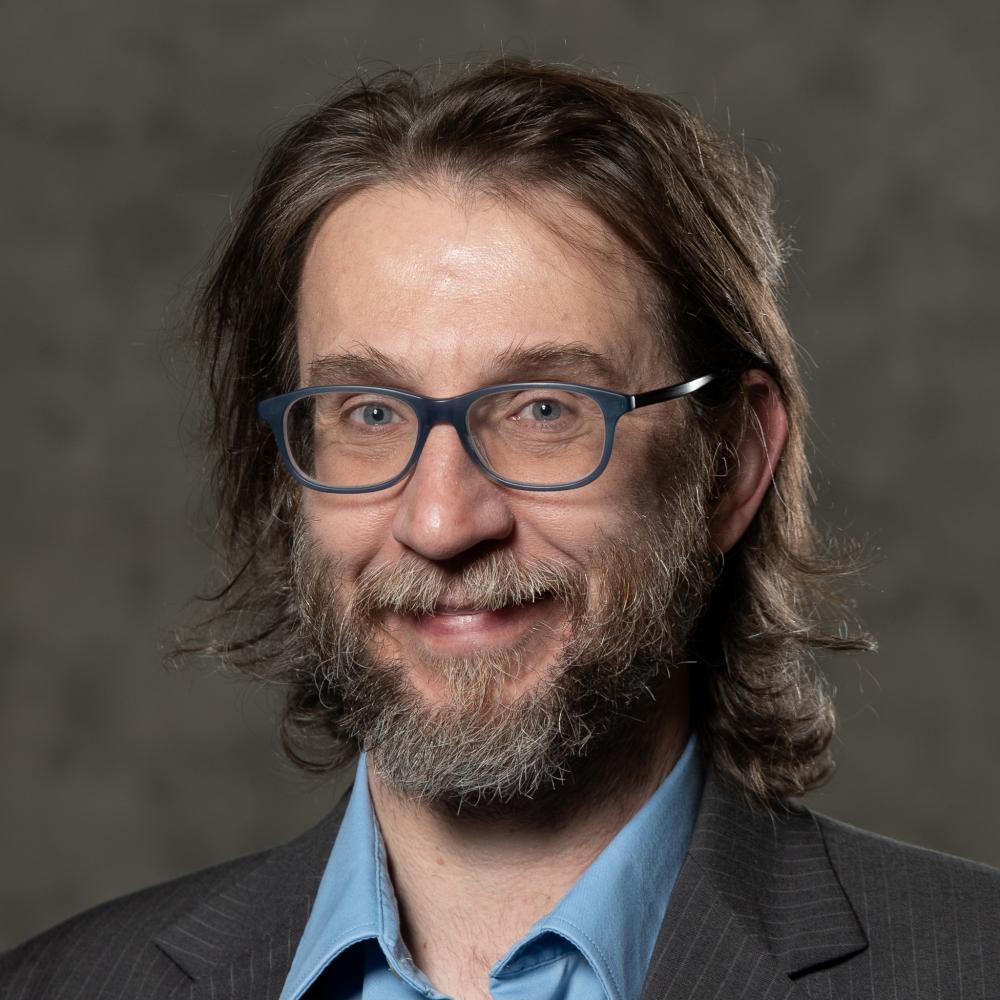
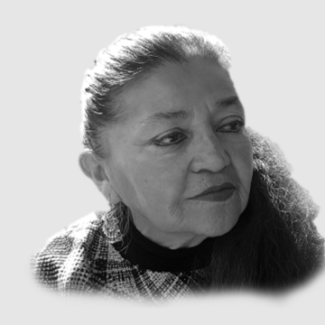
Leo J. Garofalo is the Virginia Eason Weinmann '51 Professor of History at Connecticut College, where he joined in 2002. He coordinates the Social Justice and Sustainability Pathway and co-directs the Mellon Mays Undergraduate Fellowship program. His scholarship focuses on colonial Latin America with emphasis on racial dynamics and cultural exchange. Education: B.A. in History and Hispanic Studies from Brown University M.A. from Boston College Ph.D. from University of Wisconsin at Madison Research Focus: Garofalo investigates the intersection of African and Indigenous cultures in colonial Peru, examining how marketplaces, taverns, and religious practices shaped Afro-Andean identities. His current work traces West African diaspora routes to the Andes and analyzes Afro-Iberian influences on witchcraft traditions. He utilizes Inquisition records and Spanish imperial archives to reconstruct transatlantic cultural networks. Awards: Virginia Eason Weinmann '51 Professorship (endowed chair) Social Science Research Council Grant Fulbright-Hays Research Grant Academic Leadership: Garofalo has organized campus events featuring Afro-Peruvian performers (Negrura Peruana) and activists like former Colombian Governor Luis Murillo. In 2010, he co-led a Study Away Teach Away program in Oaxaca, Mexico, examining immigration and indigenous rights movements.
John H. Arnold is Professor of Medieval History at the University of Cambridge and Fellow of King's College. Educated at the University of York (BA History, D.Phil Medieval Studies), his academic career includes positions at University of East Anglia and Birkbeck, University of London before joining Cambridge in 2016. He holds editorial roles at Cultural and Social History, Past & Present, and directs publication series at both York Medieval Press and Cambridge University Press. Arnold's research centers on medieval religious culture, particularly lay belief, heresy, inquisition, and the history of gender. His monograph 'The Making of Lay Religion in Southern France' (2024) exemplifies this focus. Current projects investigate the social history of confession and the repression of usury. Analysis of Arnold's 15 most recent publications reveals consistent engagement with medieval religious dissent and belief systems. Key themes include: reinterpretations of heresy trials (2019), sensory dimensions of faith (2018), historiographic debates about Catharism (2016), and methodological examinations of archival sources (2022). His work frequently employs theoretical frameworks from sociology and philosophy to reinterpret medieval religious conflict. Arnold maintains active research networks through editorial leadership and supervision. His Cambridge Studies in Medieval Life and Thought series promotes innovative scholarship in medieval history.
Giuseppe Marcocci serves as Professor of Early Modern Global History at the University of Oxford and holds the position of Official Fellow at Exeter College. His academic career spans institutions across Italy and the United Kingdom, with a focus on transnational historical frameworks connecting Iberian empires to global developments. Marcocci completed his undergraduate education at the University of Pisa before earning his PhD from the Scuola Normale Superiore in 2008. His doctoral research examined early modern Portuguese imperial ideology, establishing the foundation for his subsequent scholarly trajectory. His research interrogates power dynamics within Iberian global empires through three interconnected lenses: imperial ideology and visual dissent (particularly political iconoclasm in colonial contexts), religious transformations (centering on the Inquisition, missionary activity, and convert agency), and global knowledge production. Marcocci employs microhistorical approaches to reveal transnational networks, as evidenced by his current projects on Portuguese mercenary systems in India and the material dimensions of heresy. Analysis of his publication record reveals a consistent methodological innovation—bridging archival discoveries from five continents with theoretical frameworks that challenge Eurocentric narratives of early modernity. His work consistently demonstrates how marginalized voices and visual practices shaped imperial structures across Portuguese and Spanish domains. Marcocci actively mentors the next generation of historians through supervision of eight doctoral candidates whose research spans Iberian global history. He contributes significantly to Oxford's academic infrastructure as Chair of the Oxford Centre for European History and convenor of the Iberian History Seminar series. His collaborative initiatives—including international workshops on visual dissent and material culture—demonstrate commitment to building interdisciplinary research communities. Current projects examining same-sex marriage memory distortion and revising Portuguese Inquisition historiography further extend his impact across gender studies and religious history.
Mauro Calcagno is an Associate Professor of Music at the University of Pennsylvania, specializing in opera studies, early modern music, performance studies, critical theory, and digital humanities. He holds a Ph.D. in Music from Yale University (2000) and previously taught at Harvard University (until 2008) and Stony Brook University (until 2013). His research focuses on Baroque opera, Monteverdi’s works, and digital editions of early music. Notable publications include From Madrigal to Opera: Monteverdi's Staging of the Self and contributions to the Journal of the American Musicological Society . His edition of Cavalli's Eliogabalo has been internationally performed and critically praised. He co-directs the Marenzio Online Digital Edition (MODE), funded by a NEH grant, and is involved in initiatives like the Bibliotheca Dantesca online journal and the Music in the Pavilion concert series. His awards include the Alfred Einstein Award for an essay on 17th-century vocal aesthetics. At Penn, he directs undergraduate education in the Music Department, chairs the Center for Italian Studies (2017–2021), and co-leads the Rodin Arts Collective. His teaching spans doctoral seminars on opera theory, Baroque music, and digital editing, as well as undergraduate courses on opera history. He actively collaborates with institutions like the Juilliard School and the Centre for Baroque Music in Versailles, offering workshops on Baroque performance practices. His current projects include a book on modern stagings of Baroque opera and a comparative literature initiative through Penn’s graduate programs.
Javier Villa-Flores is an Associate Professor and Associate Director of the Graduate Division of Religion at Emory University. He holds a PhD in Latin American History from UC San Diego (2001), an MA (1998) from the same institution, and a BA in Sociology from the University of Guadalajara (1990). His research focuses on religion, colonialism, and social history in colonial Mexico, particularly examining the intersections of power, language, and legal systems. His major works include *Dangerous Speech: A Social History of Blasphemy in Colonial Mexico* (2006) and his current project on trust and risk in Bourbon New Spain through analysis of 'crimes of falsity.' He has contributed to journals like *Colonial Latin American Review* and co-edited volumes on archives, emotions, and colonial libraries. Teaching specialties include millenarian movements and religious martyrdom in Latin America. Villa-Flores has held fellowships from institutions including the NEH, Huntington Library, and Max Planck Institute. His work explores how colonial authorities used legal frameworks to enforce social control through concepts like blasphemy, forgery, and perjury, revealing how marginalized groups navigated these systems. Recent publications highlight the role of trust and its betrayal in shaping colonial governance and identity formation. Collaborative projects include special journal issues on archives and edited volumes on emotional history and library destruction. His research bridges historiography with interdisciplinary methods, emphasizing archival material and performative aspects of colonial power.
Farren Yero is an Assistant Professor in the History Department at Lehigh University's College of Arts and Sciences, where she specializes in the history of health, medicine, and gender with a focus on Latin America and the Caribbean. Her interdisciplinary scholarship bridges medical history, gender studies, and Atlantic world history, examining how race, gender, and power have shaped health experiences and medical practices in the early modern period. Dr. Yero received her Ph.D. in History and Gender, Sexuality and Feminist Studies from Duke University in 2020, an M.A. in History from Duke University in 2016, an M.A. in Latin American Studies from Tulane University in 2013, and a B.A. in Anthropology from the University of Florida in 2010. Her academic journey began with archaeological work at the Kingsley Plantation in Jacksonville, Florida, which shaped her interest in Atlantic history and the transatlantic slave trade. Yero's research focuses on health disparities, care practices, and disease experiences in the early modern Atlantic world, with particular attention to smallpox vaccination history. Her current book project, Atlantic Antidote: Race, Gender, and the Birth of the First Vaccine , explores racial and gendered intersections of labor, childrearing, and disease prevention in the Spanish Americas. She is also developing a history of the Caribbean's earliest smallpox epidemic (1519) through the life of America's first "patient zero." Her work consistently examines how marginalized communities navigated health challenges within colonial contexts. Her publications reveal a strong emphasis on vaccine history, gender and medicalization, Afro-Caribbean religious practices during epidemics, and the intersections of race, citizenship, and public health. Yero's scholarship demonstrates how medical history provides critical insights into broader social structures, particularly regarding race, gender, and power dynamics in colonial societies. Nineteenth Century Studies Dissertation Award from the Latin American Studies Association (LASA) Richmond Brown Dissertation prize, Honorable Mention, from the Latin American and Caribbean Section of the Southern Historical Association Dr. Yero has received significant research support from the National Endowment for the Humanities, American Council of Learned Societies, Fulbright-Hays program, Andrew W. Mellon Foundation, John Carter Brown Library, Newberry Library, Institute of Advanced Studies in the Humanities at the University of Edinburgh, and Omohundro Institute of Early American History and Culture. She previously held postdoctoral positions at Binghamton University, College of William and Mary, University of Edinburgh, and Duke University. At Lehigh, she teaches courses on health and society in Latin America, gender and medicine, pandemics, and digital/public history methods.
Dr Jessica O'Leary is a Research Fellow at the Gender and Women's History Research Centre within the Institute for Humanities and Social Sciences at Australian Catholic University. She specializes in gender and cultural history of the early modern period, with a focus on global encounters, colonization, and intercultural dialogues in the Portuguese Empire and Japan. In 2024, she will hold the Harold S. Williams Fellow in Japanese Studies at the National Library of Australia. Her research explores women and children in Jesuit missions, cultural transfer through diplomacy, and emotional landscapes of early modern encounters. Current projects include collaborative initiatives on women in the Global Portuguese Empire, child slaveries in the early modern world, and gender dynamics in Japanese Christianity. Scientific Awards: Philippa Maddern ECR Publication Prize (2024) Harold S. Williams Fellow in Japanese Studies (2024) DAAD Bilateral Exchange Award (2023) RSA Kristeller Fellow (2022) Maria Sibylla Merian Junior Fellow (2022) ACIS Publishing Grant (2021) Royal Studies Journal Prize (2018) Monash Masters' Prize (2017) Cassamarca Scholarship (2016) DAAD Award (2016) Dr O'Leary contributes to public engagement through platforms like The Conversation and Medieval Warfare Magazine. Her recent publications in Renaissance Quarterly and Past & Present examine gendered colonization, missionary practices, and emotional histories, with a monograph on Renaissance masculinities and diplomacy published in 2024.
Hannah Marcus is a historian of science at Harvard University , currently serving as Professor of the History of Science and Faculty Director of the Collection of Historical Scientific Instruments . Her research focuses on early modern European science and medicine (1400-1700), particularly examining censorship practices, the history of aging, and Galileo's epistolary networks. Department of the History of Science, Harvard University Director, Collection of Historical Scientific Instruments Co-director, History of Contagion in Harvard Library Collections Research Interests include: Scientific censorship in Counter-Reformation Italy Material history of medical books Gerontology in Renaissance thought Galileo's communication strategies Digital humanities approaches to historical contagion Scientific Awards : Winner of the Helen and Howard R. Marraro Prize Recipient of Morris D. Forkosch Prize Honorable Mention for Scholarly Edition in Translation Award Everett Mendelsohn Excellence in Mentoring Award Education : Ph.D. from Stanford University (2016), BA from University of Pennsylvania . She teaches courses on medieval-to-early-modern scientific transformations and supervises graduate research on premodern science.
Damian J. Smith is a Professor of History at Saint Louis University's College of Arts and Sciences, specializing in Medieval Europe. His expertise spans the Iberian Peninsula (particularly the Crown of Aragon), Papacy (Eugenius III to Gregory X), heresy/inquisition practices before the mid-14th century, and cross-cultural interactions in the Mediterranean World. He teaches courses on Medieval Survey 1100-1500, The Pontificate of Innocent III, and The Medieval Idea of the University. Ph.D. in History, University of Birmingham (1997) M.A. in History, University of London (1991) B.A. in History, University of London (1990) Currently writing a history of James I of Aragon (1213-76) and essays on Catalonia-France medieval treaties for the Institut d’Estudis Catalans. As series editor for Church, Faith and Culture in the Medieval West , he promotes interdisciplinary studies of monastic life, Church-State relations, and textual transmission. His research bridges cultural history, law, and ritual across Latin Christendom. Recent publications analyze papal letters to Iberia, Albigensian Crusade dynamics, and heresy prosecution mechanics. Key themes include papal authority limits, cross-cultural negotiations, and ecclesiastical responses to heterodoxy. Carpenter Fellowship (2019) National Endowment for the Humanities Fellowship (2015-16) Fellow of the Royal Historical Society (2005) British Academy Research Grant (2004) Batista i Roca Fellowship (2001-03) Leverhulme Study Abroad Fellowship (1999-2001) Advises Ph.D. candidates such as Joel Cerimele (Saracen imagery in Joachimite tradition) and Judith Nelams (Cecco d’Ascoli’s astrology). Past students include Erin Abraham (Irish penitential literature) and Emily Henry (royal female emotion in Castile). His grants supported research in Spain, France, and medieval manuscript studies.
Thomas Ferguson is an Associate Professor in the Department of Cognitive Science at Rensselaer Polytechnic Institute (RPI), where he contributes to interdisciplinary research at the intersection of philosophy, logic, and cognitive science. He holds a PhD in Philosophy from the City University of New York Graduate Center and a Dr. Habil. from Ruhr-Universität Bochum, with postdoctoral experience at the University of Amsterdam, University of St. Andrews, and the Czech Academy of Sciences. Education: Dr.Habil., Philosophy, Ruhr-Universität Bochum Ph.D., Philosophy, City University of New York Graduate Center His research focuses on philosophical, mathematical, and computational logic , with specializations in non-classical logics, formal epistemology, and the philosophy of mathematics. He investigates foundational issues in reasoning, language, and truth, particularly through truthmaker semantics, relevance logic, and variable-sharing principles. His work bridges abstract logical theory with applications in artificial intelligence and cognitive modeling. His recent publications (2024–2025) reflect a strong trend in topic theory, relevance logic, modal logic, and non-classical systems , often exploring the interplay between logical structure, information content, and subject-matter. These works appear in leading journals such as Review of Symbolic Logic , Erkenntnis , and Journal of Logic and Computation , demonstrating sustained scholarly impact across logic, philosophy, and computer science. Scientific Awards: Springer Prize for Best Paper at Artificial General Intelligence 2024 for "A Universal Intelligence Measure for Arithmetical Uncomputable Environments" (with James Oswald and Selmer Bringsjord) Thomas Ferguson teaches advanced courses such as Philosophy of Mathematics and Non-Classical Logic , indicating an active role in mentoring graduate and advanced undergraduate students. Although no specific advisees are listed, his teaching and research leadership suggest involvement in student supervision and academic advising. There is no mention of external grants, but his publication record and award suggest competitive research activity. He has no listed labs or research teams in the provided text, but his work is highly collaborative, as seen in co-authored publications.
Patrick Nold serves as Professor and Chair of the Department of History at the University at Albany, State University of New York, with his office located in Social Science 145C. His scholarly focus centers on medieval intellectual history, particularly the thirteenth and fourteenth centuries, with specialized expertise in mendicant orders and papal studies. Education: D. Phil., Oxford University BA, University of Michigan Nold's research examines the intellectual frameworks of medieval Europe, emphasizing the Franciscan Order's theological conflicts and papal authority during the Avignon period. He investigates how mendicant spirituality intersected with ecclesiastical power structures, particularly through the lens of Pope John XXII's reign and the apostolic poverty controversy. His methodological approach combines archival analysis of Vatican manuscripts with critical examination of theological treatises from the era. Analysis of his 2014-2023 publications reveals persistent engagement with 14th-century ecclesiastical politics, papal administration, and heresy trials. Key thematic clusters include papal-concordat negotiations, inquisitorial procedures in Italy, and the political philosophy of figures like John of Paris. His work consistently utilizes primary sources from Vatican archives, demonstrating rigorous paleographic engagement with manuscripts such as BAV Borgh. 280. Professor Nold actively supervises graduate research on medieval intellectual history, specifically welcoming projects concerning mendicant orders, papal authority, and 13th-14th century theological controversies. His sustained publication record indicates continuous research activity, though specific grant details remain unmentioned in available materials.
Carmel Ferragud Domingo is an Associate Professor in the Department of History of Science at the Universitat de València, affiliated with the Faculty of Medicine and Odontology. She is a member of the HCMT (History of Science, Medicine and Technology) research group and the Inter-university Institute López Piñero, a leading center for historical research on science and medicine. Her research focuses on the social, institutional, and cultural history of medicine and science in the medieval Crown of Aragon, particularly in the Kingdom of Valencia. Key areas include the professionalization of medical practitioners (physicians, surgeons, barbers, apothecaries, farriers), forensic medicine, urban health, the role of medicine in religious practices, and the history of veterinary science. She has extensively studied the impact of the Black Death on medical structures and the integration of Galenic traditions in Iberian societies. Her recent publications reveal a consistent interest in expert medical roles in legal contexts, the material culture of healing, and the transmission of scientific knowledge through vernacular texts. She frequently analyzes archival documents to reconstruct the lives and practices of medieval medical professionals, contributing to broader understandings of healthcare, social hierarchy, and institutional development. She has authored and co-authored significant works on the Libre de la menescalia , a key medieval veterinary text, and has published in leading journals such as Asclepio , Sefarad , and Urban History . Her work bridges social history, legal history, and the history of science, offering nuanced perspectives on medieval Iberian societies.
Antonio Irigoyen López is a Professor of Modern History at the University of Murcia, affiliated with the Faculty of Arts and Humanities. He specializes in the social history of the Catholic Church, the clergy, and family dynamics in Early Modern Spain. Since 1992, he has been a member of the 'Seminario Familia y Elites de Poder' and co-founded the international research network REFMUR (Red Internacional de Estudios de Familia) in 2010. Education: PhD in History from the University of Murcia (1998), focusing on the cathedral chapter of Murcia in the 17th century, titled *Entre el cielo y la tierra, entre la familia y la institución. El cabildo de la catedral de Murcia en el Siglo XVII*. Research Interests: His work examines the intersection of family strategies, religious institutions, and social mobility in early modern Spain and its colonies. Key themes include clerical domestic life, Trent reforms' implementation, and the role of the family in power elites. Recent Publications Highlight: Analysis of secular clergy preaching practices in 17th-century Castilian cities, domestic life of lower clergy in Murcia (17th-18th centuries), and socio-demographic studies of colonial Buenos Aires households (1744 census). Academic Contributions: Over 70 publications, including studies on clergy merit systems, inquisitorial networks, and family strategies in noble lineages. His work bridges historiography and social analysis, emphasizing kinship and institutional power dynamics.
University of California , Santa Barbara (UCSB)United States
Sara Poot-Herrera is a distinguished Professor at the University of California, Santa Barbara, affiliated with the Department of Spanish and Portuguese within the College of Letters and Science. Her research focuses on Mexican Literature, Spanish-American Literature, and the works of Sor Juana Inés de la Cruz, alongside studies on women writers, colonial theater, and contemporary narratives. She holds a Ph.D. from El Colegio de México and was awarded a Doctor Honoris Causa by the Universidad Autónoma de Yucatán. Her notable awards include the 'Woman of the Year' (1997) from the Mexican-American Opportunity Foundation, the Literary Medal 'Antonio Mediz Bolio' (2000), and the State Parliament Medal 'Héctor Victoria Aguilar' (2008). She has contributed to over 100 publications, including books like Un giro en espiral and Los guardaditos de Sor Juana , and co-edited volumes such as Y diversa de mí mísma entre vuestras plumas ando . Her research spans Sor Juana's literary legacy, colonial Mexican theater, and the analysis of 17th- and 18th-century texts. She co-founded the UC-Mexicanistas Association, an interdisciplinary program dedicated to Mexican Studies. Her recent work includes investigations into Sor Juana's engagement with 19th-century periodicals and interdisciplinary projects like the 'Fastos, simulacros y saberes en la América Virreinal' study. Professor Poot-Herrera has served on academic juries, including the 2001 Juan Rulfo Latin-American and Caribbean Prize, and has engaged with contemporary authors like Elena Poniatowska and Sergio Pitol. Her scholarship bridges historical analysis, feminist critique, and cultural preservation, emphasizing Mexico’s literary heritage and its global resonances.
Prof. Dr. Benjamin Scheller serves as Professor of Late Medieval and Early Modern History at the Historical Institute within the Faculty of Humanities at the University of Duisburg-Essen. His distinguished academic career spans over two decades, with significant contributions to medieval history, religious conversion studies, and risk cultures in pre-modern societies. Prior to his current position, he held appointments as Visiting Professor at the University of Vienna and conducted extensive research at Humboldt University of Berlin. His academic credentials include: Doctorate from Humboldt University of Berlin (2002) on 'Memoria at the Turn of the Century. The Foundations of Jacob Fugger the Rich before and during the Reformation (c. 1505 to 1555)' Habilitation in Medieval History at Humboldt University of Berlin (2009) on 'The City of the New Christians. Converted Jews and their Descendants in Late Medieval Trani between Inclusion and Exclusion (1267 to 1514)' Master of Arts from Humboldt University of Berlin (1995) Prof. Scheller's scholarly work centers on religious conversion in medieval Europe, with particular focus on converted Jews and their descendants in southern Italy. His research explores how these 'Cristiani Novelli' (New Christians) navigated complex social landscapes through mobility and strategic identity management. He has developed innovative frameworks for understanding historical ambiguity and distinction, examining how medieval societies managed religious uncertainty and social differentiation. His extensive publication record reveals consistent expertise in analyzing how pre-modern societies conceptualized risk, contingency, and uncertainty. His groundbreaking work argues that the concept of 'risk' as a calculable entity emerged in the medieval Mediterranean world, particularly within maritime trade contexts. His scholarship connects historical analysis with contemporary theoretical concerns, as evidenced by his comparative pandemic analysis published during the Covid-19 crisis. Among his notable achievements: Spokesperson of the DFG Research Group 2600 'Ambiguity and Distinction. Historical-Cultural Dynamics' (since 2018) Spokesperson (deputy) of the DFG Graduate School 1919 'Precaution, Foresight, Prediction: Coping with Contingency through Future Action' (since 2013) Recipient of the Feodor-Lynen Fellowship from the Alexander von Humboldt Foundation Research Fellow at the Historical College in Munich Prof. Scheller has secured substantial third-party funding for research projects and currently leads the DFG Research Group 2600, demonstrating his leadership in advancing interdisciplinary approaches to historical ambiguity. His current project 'The Sea of New Christians' examines how mobility enabled religious minorities to navigate ambiguous social statuses in the Adriatic region during the late Middle Ages, continuing his long-standing investigation into religious conversion and social integration in medieval Europe.