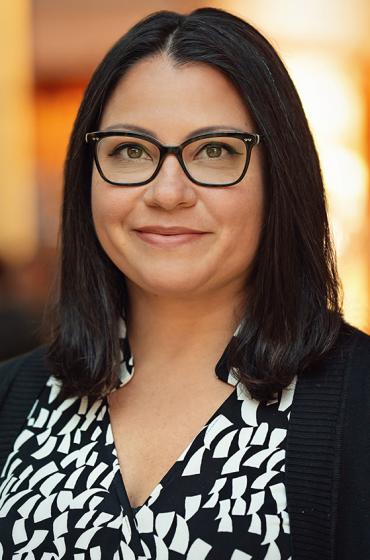
Dr. Alexa Quinn is an Assistant Professor in the Department of Early, Elementary, and Reading Education at James Madison University's College of Education. Her research focuses on culturally responsive teaching, family-school interactions, and inclusive education practices. She holds a terminal degree in Education and is dedicated to preparing future educators to address the diverse needs of students, particularly in early childhood and elementary settings. Her work emphasizes the importance of teacher training programs that foster cultural competence and self-efficacy, alongside strategies for supporting students with disabilities. Dr. Quinn’s scholarship bridges theory and practice, advocating for policies that prioritize equitable educational access and family engagement. Her publications span topics such as inquiry-based learning, morning meeting practices in social studies, and the role of wordless picturebooks in multilingual families. While no formal awards are listed, her contributions to teacher education and policy-relevant research reflect her commitment to impactful educational solutions. Dr. Quinn advises no listed students and does not mention current grants or labs, though her research interests suggest involvement in collaborative projects focused on early childhood education equity and teacher development.
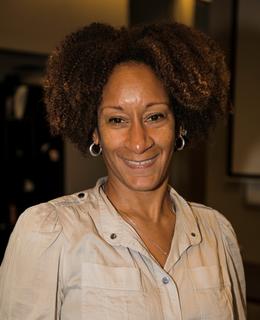
Dr. Marguerite Muller is a Lecturer in Education and Society at King's College London, leading the MA Education Management program. She holds degrees including a PhD in Higher Education Studies (University of the Free State, 2016) and a BA in Fine Arts (University of Pretoria, 2004). Her research focuses on arts-based methodologies, educator subjectivity, and social justice in education, employing post-qualitative, narrative, and participatory approaches. Teaching Responsibilities include modules on Education Leadership, Gender, Power, and Inequality in Education Leadership (MA level), and 'Education for the 21st Century: A Global Perspective' (BA level). She actively supervises PhD students exploring arts-based research, decolonial education, and social justice. Key affiliations include the Centre for Public Policy Research at King's College London and prior roles at the University of the Free State (South Africa). Her work emphasizes interdisciplinary collaboration, global South perspectives, and accessible, socially engaged scholarship. Notable recognitions include the NRF South Africa Y Rating (2023). Current research projects explore educator identity, participatory arts-based inquiry, and decolonization in higher education.
Prof. Dr. Marco Rieckmann is a Professor of Higher Education Didactics with a focus on key competencies at the Department of Educational Sciences, Faculty of Education and Social Sciences, University of Vechta, Germany. He is also the Co-Chair of the UNESCO Chair ‘Physical Education and Sport Pedagogy for Sustainable Development’ at the University of Limerick since 2024. His work centers on education for sustainable development (ESD), transformative learning, and sustainable university development. His research interests include: Education for Sustainable Development (ESD) and Teacher Education Service Learning and Civic Engagement Curriculum Development for Sustainability Higher Education Governance and Institutional Transformation Digitalization and Serious Games in Sustainability Education Global Learning and Intercultural Education His recent publications and projects reflect a strong trend toward assessing the impact of sustainability education, developing innovative teaching formats (e.g., Minecraft-based learning), and fostering whole-institution approaches in schools and universities. He emphasizes participatory, transdisciplinary, and transformative methods to empower learners and institutions. Scientific awards and recognitions include: Best Doctoral Researcher of the Year 2008 (2nd place, Leuphana University) Innovative Teaching Award (2010) Multiple DAAD and ERASMUS guest lectureships UNESCO recognition for HOCH-N and LeNa projects (2018) Prof. Rieckmann actively advises and collaborates with students and researchers, leads major funded projects (e.g., IMP>ACT, Senatra, HOCH-N), and contributes to national and international policy development. He is a key figure in advancing sustainability in higher education through research, teaching, and institutional leadership. He leads and participates in various research labs and networks, including the UNESCO Chair, the LeNa network, the HOCH-N consortium, and multiple EU-funded projects focusing on co-learning labs, digital tools, and service learning for sustainability.
Samar Sabie is an Assistant Professor at the Institute of Communication, Culture, Information and Technology (ICCIT) at the University of Toronto, where she also serves as Program Director for the Technology, Coding, and Society (TCS) program. She holds a graduate appointment at the Daniels Faculty of Architecture, Design, and Landscape, reflecting her interdisciplinary work bridging technology, design, and social justice. She leads the Open Design Collaboratory, a research space focused on critical and community-centered design practices. Education: Doctor of Philosophy, Department of Information Science, Cornell University/Cornell Tech, 2022 Master of Science, Department of Computer Science, University of Toronto, 2017 Master of Architecture, John H. Daniels Faculty of Architecture, Landscape, and Design, University of Toronto, 2015 Honors Bachelor of Science (Architecture and Computer Science), University of Toronto, 2011 Her research investigates design as a socio-material practice that fosters community adaptive capacity toward sustainable change. Drawing from architecture, software engineering, ethnography, and philosophy, she explores participatory design , unmaking , and design for social justice . Her work critically engages with how communities resist, adapt, and reimagine technology in contexts of displacement, scarcity, and inequality. Her recent publications, appearing in top venues like CHI , CSCW , and DIS , reveal a strong thematic focus on unmaking as a design strategy for emancipation and agonism, mobility justice , e-waste practices , and cultural memory through design. These works collectively emphasize community agency, ethical ambiguity, and the political dimensions of design. Scientific Contributions: Director, Open Design Collaboratory Program Director, Technology, Coding, and Society (TCS) Graduate Faculty, Daniels Faculty of Architecture, Design, and Landscape Current Courses: CCT204 Design Thinking I, CCT477 Understanding Users Samar Sabie actively mentors students and collaborates on research focused on humanitarian technology, critical making, and design education. Her projects often involve community engagement, participatory methods, and interdisciplinary teams. She has collaborated with and advised early-career researchers such as Dina Sabie, Awais Hameed Khan, and Taneea Agrawal on topics ranging from IDP shelter dynamics to mobility justice advocacy. Her research is supported by her deep engagement with socio-technical challenges in marginalized contexts, and she continues to push the boundaries of how design can serve as a tool for equity, care, and resistance. Future work appears to be evolving toward deeper philosophical inquiries into destruction, care, and the limits of technology.
Bic Ngo is a Professor and Director of Graduate Studies in the Department of Curriculum and Instruction at the University of Minnesota . She is also the Rodney S. Wallace Professor for the Advancement of Teaching and Learning . Her research and leadership center on culturally relevant pedagogy, urban and multicultural education, and immigrant education, with a deep focus on Hmong American and Lao American communities in the Twin Cities. Education: PhD, University of Wisconsin-Madison Research Interests: Bic Ngo’s scholarship critically examines how culture, race, class, and gender shape the educational experiences of immigrant students. Her work explores how schools and educators can adopt anti-oppressive and culturally responsive practices to mitigate inequality. She draws on critical, cultural, and feminist theories, engaging with scholars like Homi Bhabha, Michel Foucault, and Judith Butler. Her ethnographic studies with Hmong and Lao American youth reveal the complexities of identity, cultural difference, and the impact of schooling on community and family life. Research Projects & Grants: Project Thrive (2020–2026): $1.5 million AANAPISI grant from the U.S. Department of Education Asian American College Excellence (AACE) Project (2016–2021): $1.75 million AANAPISI grant from the U.S. Department of Education Editorial & Leadership Roles: Co-Editor-in-Chief, Educational Studies Associate Editor, American Educational Research Journal Associate Editor, Anthropology & Education Quarterly Courses Taught: CI 8146 – Critical Ethnography in Education CI 8156 – Asian American Education CI 8155 – Immigrant Families and U.S. Schools CI 8154 – Culturally Relevant Pedagogy CI 8148 – Conducting Qualitative Studies in Educational Contexts CI 8131 – Critical Examination of Curriculum in Context
Dr. Anne-Kathrin Fett is a Senior Lecturer in the Department of Psychology within the School of Health and Psychological Sciences at City St George's, University of London. She is Co-director of the Research Centre for Clinical, Social and Cognitive Neuroscience (CSCN) and holds a secondary affiliation with King’s College London. Her research integrates clinical, biological, and cognitive neuroscience approaches to understand social functioning in psychosis and mental health. Research Interests: Her research focuses on the psychological, epidemiological, and neuroscientific mechanisms underlying social functioning, loneliness, and social isolation in both the general population and individuals with psychotic disorders. Key areas include student mental health, especially during the COVID-19 pandemic, and the neurocognitive basis of social cognition in psychosis. Recent Research Trends: Her recent publications highlight a consistent focus on social cognition, particularly in schizophrenia and early psychosis. Themes include emotion recognition, theory of mind, metacognition, and the impact of environmental and biological factors. There is a growing emphasis on longitudinal and population-based studies, including the mental health effects of global crises such as the pandemic. Scientific Awards and Honors: Dutch Research Council Veni Fellow Brain and Behaviour Foundation (NARSAD) Young Investigator Grant Fellow of the Higher Education Academy Teaching and Supervision: Dr. Fett leads and teaches on core psychology modules including Biological Approaches to Mind and Behaviour (PS1005) and Introduction to Clinical Psychology (PS2008), as well as the CSCN MSc program. She supervises BSc, MSc, PhD, and DPsych (counselling) dissertation projects and welcomes inquiries for PhD and internship positions. Research Leadership: She is Co-director of the Research Centre for Clinical, Social and Cognitive Neuroscience, fostering interdisciplinary research in clinical and cognitive neuroscience. She is also an editorial board member of Schizophrenia Research: Cognition and actively contributes to the Schizophrenia International Research Society, the International Early Psychosis Association, and UKRI networks on loneliness and student mental health.
Dr. Janet Firth is a Senior Lecturer at the University of Wolverhampton Business School , specializing in Human Resource Development (HRD), cross-cultural knowledge transfer, and organizational change. With a career spanning decades, she has held leadership roles such as Head of the HR and Leadership Department (2006-2022) and currently serves as chair of the School Sustainability Committee and co-leader of the People, Organisations, Work and Place research hub. PhD in Cross-Cultural Knowledge Transfer (University of Wolverhampton Business School) Senior Fellow of the Higher Education Academy (SFHEA) Fellow Member of the Chartered Institute of Personnel and Development (FCIPD) Her research focuses on organizational development through collaborative co-inquiry, critical reflective practice, and methods for capturing experiential learning (e.g., journals, action learning). She has led international projects, including EU-funded initiatives like the Frontex consultancy (2008) and a leadership program for senior university leaders (2017). Her recent publications explore digital transformation, leadership in Nigeria, and HRD in transitional societies. Dr. Firth co-edits the International Journal of HRD Policy Practice and Research and has served as external examiner for multiple universities. Her teaching expertise includes organizational change, leadership, and qualitative research methods at postgraduate levels. She has provided consultancy to Dudley Community Services, Wolverhampton Council, and Assa Abloy, with a focus on HRM and innovation.
Eli Blevis is a Professor of Informatics at Indiana University's Luddy School of Informatics, Computing, and Engineering, with a joint appointment as Visiting Professor at Hong Kong Polytechnic University's School of Design. His research focuses on Sustainable Interaction Design, Visual Thinking, and Transdisciplinary Design Theory. He is renowned for integrating sustainability principles into HCI practices and exploring the role of visual media in design and education. Affiliations: Luddy School of Informatics, Computing, and Engineering, Indiana University Visiting Professor, School of Design, The Hong Kong Polytechnic University Research Interests: Sustainable Interaction Design (SID) Visual Thinking in HCI (e.g., photographic ethnography) Design Pedagogy (e.g., Design Challenge-Based Learning) Sustainability in Digital Infrastructure Cross-Cultural Design Practices His work spans over 50 publications, with awards including the CHI Best Paper and Computing Reviews Notable Paper. He advises students on projects like visible mending, nonlinear design thinking, and sustainable food systems. Blevis also curates the Visual Thinking Gallery and contributes to international conferences like NordiCHI and DIS. His lab explores tangible interfaces (e.g., MemoryReel) and eco-conscious design strategies. Awards: CHI Best Paper Award CCC Sustainability Award ACM Computing Reviews Notable Paper DIS Best Paper Award Grants and Funding: Research supported by NSF and industry partnerships.
Erin Manning is a Professor in the Department of Studio Arts within Concordia University's Faculty of Fine Arts, holding a research chair in Speculative Pragmatism, Art and Pedagogy. Her work bridges philosophy, aesthetics, and politics through alter-pedagogical and alter-economic practices, with deep engagement in participatory art and theoretical inquiry. Manning's research centers on process philosophy, neurodiversity, research-creation, and the ProTactile movement for DeafBlind culture. She explores material complexity through textile-based relational art, emphasizing sideways perception and textural engagement with life. Her practice investigates Black Studies, ecology, radical pedagogy, and choreographic experimentation, often manifesting in tactile propositions using tufting, hooking, and weaving techniques that challenge conventional sensory hierarchies. Her recent publications and exhibitions reveal a trajectory toward the transversality of three ecologies—social, environmental, and conceptual—through the 3Ecologies Project. This work trends toward interdisciplinary collaborations that dissolve boundaries between art, philosophy, and activism, with increasing focus on more-than-human encounters and collective fabulation in social dreaming. Manning leads the 3Ecologies Project (3e), which includes a land-based initiative north of Montreal for experimenting with living and learning. Legacies of SenseLab inform her approach to crafting collectivity through experimental pedagogy. She co-edits the Inflexions journal and the 3E Books imprint, fostering platforms for research-creation that integrate theoretical and artistic practices.
Victor R. Lee serves as an Associate Professor at Stanford University's Graduate School of Education, with his office located at CERAS Building (520 Galvez Mall, Suite 531) in Stanford, California. He is actively affiliated with the Center for Studies in Education and Technology (CSET), where he conducts interdisciplinary research at the intersection of technology and learning. Dr. Lee holds a Ph.D. in Learning Sciences from Northwestern University and earned dual Bachelor's degrees in Cognitive Science and Mathematics from the University of California, San Diego. His academic trajectory bridges technical disciplines with educational research, establishing a foundation for his work in data-intensive learning environments. His research program centers on two interconnected domains: data literacy development in K-12 contexts and STEM education innovation across diverse learning spaces. He investigates how individuals make meaning from data during inquiry-based learning, with particular emphasis on self-collected student data and the epistemological challenges of data sense-making. Concurrently, his STEM education work spans traditional classrooms, makerspaces, computer labs, and school libraries, examining engaged learning practices and conceptual change in mathematics and science. Current projects focus on identifying the specialized knowledge teachers require to effectively scaffold student interactions with complex real-world datasets. Recent publications (2023-2024) reveal a strategic pivot toward artificial intelligence education, examining both teacher preparation and student understanding of AI systems. His work demonstrates consistent methodological rigor through design-based research, classroom implementations, and analysis of student reasoning patterns, particularly regarding how learners conceptualize algorithmic processes in platforms like YouTube. As a core faculty member within CSET, Dr. Lee collaborates with multidisciplinary teams to develop and evaluate educational interventions that bridge theoretical learning sciences with practical classroom applications, with recent emphasis on AI literacy tools and data-enabled pedagogical approaches.
Franz Huber is an Associate Professor in the Department of Philosophy at the University of Toronto (St. George campus). He holds an MA from the University of Salzburg, Austria, and a PhD from the University of Erfurt, Germany. His primary research areas include Formal Epistemology, Philosophy of Science, Philosophical Logic, and Metaphysics. Huber’s work focuses on belief revision, counterfactual reasoning, and means-end rationality, often employing formal methods to address philosophical problems. His publications include influential books like A Logical Introduction to Probability and Induction (2018) and Belief and Counterfactuals (2021), as well as numerous peer-reviewed articles in journals such as Synthese and Journal of Philosophical Logic . His research explores the foundations of epistemology and metaphysics, particularly through ranking theory and its applications to belief change, counterfactuals, and causal reasoning. Huber has also contributed to the philosophy of science, examining confirmation theory and the logic of scientific reasoning. His recent work emphasizes a means-end approach to philosophical problems, integrating instrumental rationality with normative theory. Huber’s publications demonstrate a commitment to bridging formal methods with traditional philosophical inquiry. His academic contributions include editing volumes on belief revision and co-authoring works on ranking theory. He maintains an active research agenda, reflected in his latest book Causality, Counterfactuals, and Belief (2025). His office is located in the Jackman Humanities Building, and he is affiliated with the University of Toronto’s philosophy faculty and research initiatives such as the Balzan Research Project on Styles of Reasoning.
Deborah Rivas-Drake is the Stephanie J. Rowley Collegiate Professor in the Marsal Family School of Education and a Professor of Psychology in the College of Literature, Science, and the Arts at the University of Michigan. Her research focuses on how educational, familial, and community contexts shape adolescents’ racial and ethnic identity, socioemotional well-being, and civic engagement. She co-directs the Contexts of Academic + Socioemotional Adjustment (CASA) Lab, emphasizing practices that disrupt racism and xenophobia. Her work is funded by NSF, Spencer Foundation, and W.T. Grant Foundation. She has authored/co-authored influential books like Below the Surface: Talking with Teens about Race, Ethnicity, and Identity , which won major awards. She holds leadership roles in SRCD and SRA committees, advocating for equity in education and youth development. Her research highlights the role of ethnic-racial socialization, discrimination, and intergroup contact in youth outcomes. She collaborates with educators and policymakers to translate research into practical tools for schools and families. Key contributions include frameworks for equity-focused social-emotional learning (SEL), strategies for undocumented families, and interventions to foster civic responsibility. Her grants include initiatives like the 'INVITE: Inclusive and Innovative Intelligent Technologies for Education' project and measures of equity-based SEL practices. Rivas-Drake’s awards reflect her impact on developmental science and policy. She bridges academia with community engagement, advising school districts and organizations like CASEL and Sesame Workshop. Her work underscores intersectionality, emphasizing how race, class, and immigration status interact to shape youth experiences. The CASA Lab’s interdisciplinary approach addresses systemic inequities through rigorous research and actionable solutions.
Dr. Jennifer Adams is a Professor at the University of Calgary with dual appointments in the Werklund School of Education and the Faculty of Science’s Department of Chemistry. She holds a Tier II Canada Research Chair in Creativity, Equity, and STEMM. Her work focuses on equity in STEM education, postsecondary faculty education, and transdisciplinary approaches. Dr. Adams earned her PhD in Urban Education from The Graduate Center, CUNY, and has prior roles including Associate Professor at Brooklyn College and leadership in informal science institutions like the American Museum of Natural History. Education: PhD Urban Education (2006), MS Nutrition (1996), MA Education (1995), BA (not specified) Her research emphasizes anti-deficit and justice-oriented pedagogies, with a focus on marginalized communities. Key areas include racial equity in STEM, sociocultural theory, and critical transdisciplinary methods. Dr. Adams leads the Creativity, Equity, and STEM Lab, advancing equity through community-based and arts-infused approaches. She edits academic journals such as the International Journal of Informal Science and Environmental Learning and has collaborated on projects like the Resilient Schools Consortium (RiSC). Recent publications explore belonging in STEM, anti-racist education frameworks, and transdisciplinary methodologies. Her work bridges formal and informal learning environments to address systemic inequities. Dr. Adams actively engages in policy advocacy and community partnerships to foster inclusive STEM ecosystems globally.
Laura K. Nelson is an Associate Professor of Sociology at the University of British Columbia , where she also directs the Centre for Computational Social Science . Her work bridges computational methods with sociological inquiry, focusing on gender inequality, social movements, and organizational dynamics. She previously held faculty roles at Northeastern University and affiliated with institutions like the NULab for Texts, Maps, and Networks and the Network Science Institute . Education: PhD in Sociology (2014), University of California, Berkeley MA in Sociology (2009), University of California, Berkeley BA in Sociology (2006), University of Wisconsin-Madison (Phi Beta Kappa) Research Interests span computational sociology, social movement strategy, intersectionality, and STEM equity. She pioneered frameworks like computational grounded theory and radical objectivity , integrating machine learning with qualitative paradigms. Recent publications analyze gender dynamics in emergency medicine, feminist movement histories, and the NSF ADVANCE program’s impact on equity. Her 2024 Social Science Quarterly paper quantifies ADVANCE’s interdisciplinary reach. Awards include the 2020 Best Meta-Reviewer at SocInfo20 and Outstanding Faculty of the Year at Northeastern University. She serves on editorial boards for American Journal of Sociology , Poetics , and Acta Sociologica . She co-PIs a National Science Foundation grant studying gender-equity dissemination in higher education networks and supervises graduate student Jinyang Yu . Her lab, Centre for Computational Social Science , drives open-source methodological innovation.
Dr. Jeffrey Morgan is a Researcher at Cardiff University's School of Social Sciences, specializing in multidisciplinary research at the intersection of computer science, social science, and geography. His work emphasizes human-computer interaction, visualization, and big data analytics. He holds a Research Software Engineer role, combining technical expertise with academic inquiry. Key research interests include AI-driven patent analysis, IoT applications in rural citizen science, and geospatial Twitter demographics. He has contributed to studies on Hadoop infrastructure optimization and social media conflict detection, often collaborating with institutions like Xiamen University and the University of Bremen. His publications span topics like energy-efficient big data processing, digital geography of Welsh identity, and scalable social media analysis frameworks. Notable projects include COSMOS (a cloud-based social media analysis platform) and studies on post-devolution cultural narratives in Wales. Award-winning work includes computational Twitter analysis for detecting online community tensions and geotagging behavior patterns. His research often bridges technical innovation with societal impact, addressing challenges in rural technology deployment and digital sociology.