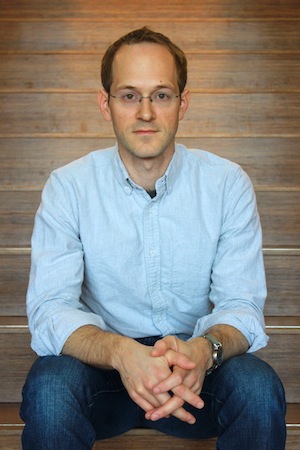
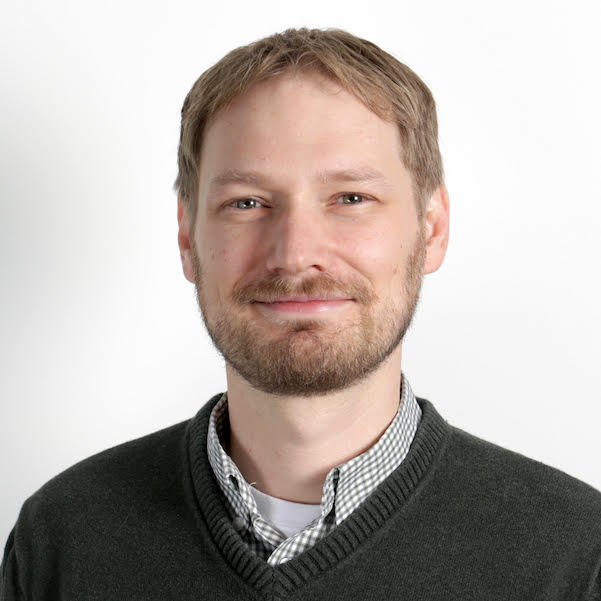
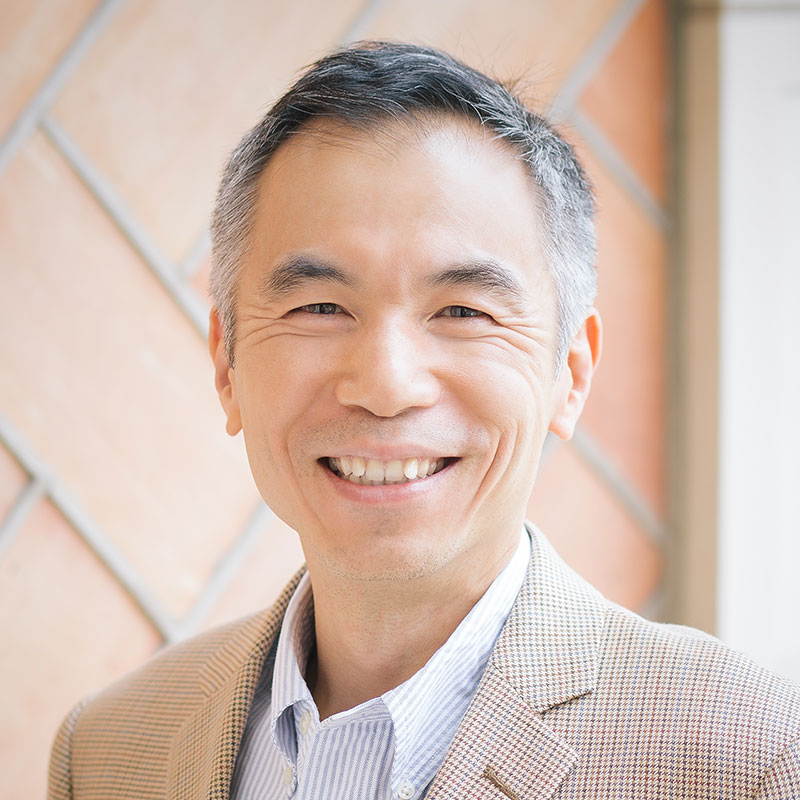
Andrew Childs is a Professor at the University of Maryland, affiliated with the Department of Computer Science and the Institute for Advanced Computer Studies (UMIACS). He serves as Director of the NSF Quantum Leap Challenge Institute for Robust Quantum Simulation (RQS) and is a Fellow at the Joint Center for Quantum Information and Computer Science (QuICS). His research focuses on quantum algorithms for simulating physical systems, algebraic problems, and quantum walk protocols, with applications in quantum computing and computational complexity. University of Maryland Institute for Advanced Computer Studies (UMIACS) Joint Center for Quantum Information and Computer Science (QuICS) NSF Quantum Leap Challenge Institute for Robust Quantum Simulation Childs' research spans quantum simulation, quantum Fourier transform, phase estimation, and Hamiltonian dynamics. He has developed techniques to reduce quantum computational resources for simulating quantum systems and explored limitations of quantum computers through hidden subgroup problems and non-unitary dynamics. His publications cover diverse areas including quantum walk optimization, Hamiltonian simulation methods, and applications to cryptography and condensed matter physics. Recent works address spatial search algorithms, product formulas for commutators, and quantum routing protocols. As an educator, Childs has taught courses on quantum algorithms and information processing at both the University of Maryland and University of Waterloo, with lecture notes and materials spanning multiple years. Contact: amchilds@umd.edu | Office: ATL 3359 | Affiliated with University of Maryland's quantum research institutes.
Alanson Sample is an Associate Professor in the Department of Electrical Engineering and Computer Science at the University of Michigan (since 2018), leading the Interactive Sensing and Computing Lab. His research focuses on Human-Computer Interaction, Cyber-Physical Systems, and wireless technology innovations. He holds a PhD in Electrical Engineering from the University of Washington (2011), with prior postdoctoral work there developing implantable medical devices. Before academia, Sample held senior roles at Disney Research (2013-2018) as Executive Lab Director and Principal Research Scientist, leading teams in Robotics, AI, Computer Vision, and HCI. Earlier, he worked at Intel Labs (2008-2013) on energy harvesting for wearables and IoT. Key research themes include wireless power systems, embedded sensing, and privacy-aware technologies. Over 150+ publications span topics like magnetic sensing (MagDesk), acoustic gesture recognition (HandSAW), and privacy-preserving activity tracking (PrivacyMic). His work bridges academic and industry innovation, particularly in scalable interactive systems and medical technology. Notable projects include the Quasistatic Cavity Resonance wireless charging system, RFID-based sensing platforms (WISP), and wearable health monitoring devices. His lab develops hardware-software co-design frameworks for energy-efficient embedded systems. Current research emphasizes medical applications, smart infrastructure, and ubiquitous computing interfaces.
Kimon Fountoulakis is an Associate Professor at the University of Waterloo. His research focuses on Machine Learning on Graphs and Numerical Optimization, with a strong emphasis on algorithmic methods for graph-structured data. He holds a Ph.D. from The University of Edinburgh (2015), an M.Sc. from The University of Edinburgh (2010), and a B.Sc. from Athens University of Economics and Business (2009). His work spans theoretical foundations and practical applications in graph algorithms, optimization, and machine learning. Research interests include graph neural networks, local graph clustering algorithms, and algorithmic reasoning. His contributions address challenges in graph representation learning, message-passing architectures, and scalable optimization methods. Notable themes in his publications include improving counting abilities of vision-language models, analyzing graph convolutions, and developing flow-based clustering techniques with statistical guarantees. His work often bridges theory and practice, with applications in network analysis, pandemic containment strategies, and high-performance computing. While no specific grants or awards are listed, his research demonstrates significant contributions to graph-based machine learning and optimization. He maintains a research group at the University of Waterloo, with a focus on developing open-source tools and frameworks for graph algorithms. His lab’s work emphasizes local graph clustering methods and their scalability in real-world networks.
Jonathan T. Barron is a Researcher at Google DeepMind in San Francisco, specializing in Computer Vision , Neural Rendering , and 3D Scene Reconstruction . He earned his PhD at UC Berkeley under Jitendra Malik and has pioneered advancements in NeRF (Neural Radiance Fields) and diffusion-based 3D generation. Research Interests : Computer Vision, Deep Learning, Generative AI, Image Processing, and 3D Reconstruction via Radiance Fields. His work includes Bolt3D for rapid 3D scene generation, CAT3D/CAT4D for text-to-3D/4D, and Zip-NeRF for anti-aliased radiance fields. He has also developed real-time rendering frameworks like SMERF and NeRF-Casting for reflections. Scientific awards: PAMI Young Researcher Award He has served as Area Chair for CVPR, ICCV, and NeurIPS, and his research is widely adopted in applications like Google's Lens Blur , Portrait Mode , and Jump VR .
Andreas Geiger is a Professor and Head of the Department of Computer Science at the University of Tübingen, Germany. He leads the Autonomous Vision Group (AVG) within CyberValley and is a core faculty member of the Tübingen AI Center. His roles also include PI in the ML in Science Excellence Cluster and the CRC Robust Vision, as well as ELLIS Fellow and coordinator of the ELLIS PhD program. He specializes in machine learning models for computer vision, robotics, and autonomous systems, with applications in self-driving cars, VR/AR, and scientific document analysis. Educational background: While not explicitly detailed, his positions imply a Ph.D. in Computer Science or related field. His work spans interdisciplinary collaborations with institutions like ETH Zürich, Microsoft, and the University of Bonn. Research focuses on 3D scene understanding, Gaussian splatting, generative models, and reliable autonomous systems. Notable contributions include the KITTI dataset and foundational work in neural radiance fields. Awards include the Sage 10-Year Impact Award (2024), ERC Starting Grant (2019), and IEEE PAMI Young Researcher Award (2018). Key projects include the Scholar Inbox paper recommender platform, ReSim (reliable world simulation), and advancements in 3D scene generation (e.g., UrbanCAD, PrITTI). His lab maintains a strong focus on open-source tools and datasets, such as the CARLA Route Generator. Grants and funding include support from Vector Stiftung (MINT innovation program) and EU initiatives like the ML in Science Cluster. His team collaborates internationally, with recent work presented at CVPR, SIGGRAPH, and NeurIPS.
Pepa Kostadinova Atanasova is a Tenure Track Assistant Professor in the Natural Language Processing Section of the Department of Computer Science , University of Copenhagen. She co-leads the CopeNLU group with Isabelle Augenstein and has special teaching duties for industry practitioners. Research Interests: Interpretability of Language Models Explainability Methods Factuality in Language Models Parametric Knowledge Analysis Human-AI Alignment Trustworthy AI Scientific Awards: Marie Skłodowska-Curie Fellowship ELLIS Best PhD Thesis Award Informatics Europe Best PhD Thesis Award Collaborations: Active in interdisciplinary research, including partnerships with Meta and Google, and a postdoctoral project combining language model explanations with trading behavior analysis.
Jörg F. Löffler is a Full Professor of Metal Physics and Technology at the Department of Materials, ETH Zürich , where he has been since 2003. He previously served as Chairman of the Department (2010–2013) and holds Adjunct Professor positions at Tohoku University (Japan) and a Visiting Faculty role at Caltech. His research focuses on bulk metallic glasses , metallic biomaterials , and magnetic materials , combining synthesis, characterization, and applications in biomedical and structural contexts. Educations : Studied Physics and Materials Science at Saarland University (Germany), earned his doctorate at ETH Zurich and Paul Scherrer Institute on magnetism and neutron scattering (1997). Research Trends : Recent work explores additive manufacturing (e.g., laser powder bed fusion), biodegradable magnesium alloys for implants, and magneto-structural coupling in metallic glasses. Collaborative efforts integrate in situ analysis with computational modeling. Scientific Awards : International Magnesium Science and Technology Award (2023) MRS Fellow (2021) DGM 'Breakthrough' Prize (2016) Masing Memorial Prize (2005) ETH Zurich Medal (1998) Alexander von Humboldt Fellowship (1998-2001) Löffler advises the Department of Materials Science and Engineering at UC Davis and serves on editorial boards. His group at ETH Zürich investigates advanced metallic materials using synchrotron radiation and neutron scattering facilities.
Yaser Sheikh is an Associate Professor at the Robotics Institute of Carnegie Mellon University (on leave) and Director of the Facebook Reality Lab, Pittsburgh . He holds appointments in the Mechanical Engineering Department and focuses on ' metric telepresence ' for AR/VR interactions. His research spans machine perception , computer vision , computer graphics , and machine learning , with applications in social behavior modeling and dynamic 3D reconstruction. University: Carnegie Mellon University Roles: Associate Professor (Robotics Institute), Director (Facebook Reality Lab) Contact: yaser@cs.cmu.edu, yasers@fb.com Research Interests include: Computer Vision: Pose estimation, 3D reconstruction, camera calibration Computer Graphics: Face/Hand animation, photorealistic rendering Machine Learning: Neural rendering, unsupervised learning for landmark detection AR/VR: Telepresence, immersive social interactions Notable Trends in Publications reveal a focus on real-time pose estimation (e.g., OpenPose), dynamic 3D reconstruction , and codec avatars for VR/AR. Recent works emphasize universal priors and neural rendering for photorealistic avatars. Scientific Awards include: Popular Science’s Best of What’s New Award Honda Initiation Award (2010) Best Paper Awards: WACV (2012), SCA (2010), ICCV THEMIS (2009) Hillman Fellowship for Excellence in Computer Science Research (2004) Advising and Grants: He has advised numerous PhD students (e.g., Hanbyul Joo, Tomas Simon) and received funding from the National Science Foundation , DARPA, and industry partners like Intel , Disney , and Honda . Labs & Teams: Leads the Facebook Reality Lab in Pittsburgh, collaborating with institutions like Carnegie Mellon University and Disney Research.
Joseph Bentsman is a Professor in the Department of Mechanical Science and Engineering at the University of Illinois at Urbana-Champaign's Grainger College of Engineering. He also holds affiliate appointments in the Department of Aerospace Engineering (since 2015) and the Department of Electrical and Computer Engineering (since 2018). His academic journey began with an M.S. from Byelorussian Polytechnic Institute in Minsk, USSR (1979), followed by a Ph.D. in Electrical Engineering from Illinois Institute of Technology (1984). Professor Bentsman's research focuses on control of nonlinear and distributed parameter systems, nonlinear oscillations, network control, stability theory, and stochastic multiscale methods. He pioneered a new class of dynamical systems with active singularities that admit control actions during singular phases of motion, which represent a novel category of hybrid systems characterized by impulsively controlled discrete transitions. His recent work has expanded into biomedical applications, particularly thermophysical modeling of tissue during electrosurgery and control of phase change processes. His recent publications (2021-2024) reveal a strong trend toward biomedical applications of control theory, particularly in modeling heat conduction in biological tissues, electrosurgical processes, and phase change phenomena. Approximately 60% of his recent work focuses on biomedical applications, while the remainder continues his foundational work on nonlinear control systems, distributed parameter systems, and systems with active singularities. Key subfields include Stefan problems, enthalpy-based control, telegraph equation modeling, and PDE-based control of complex physical processes. NSF Presidential Young Investigator Award (1989) Life Fellow of American Society of Mechanical Engineers Life Senior Member of IEEE IEEE Control Systems Society Technical Committee Chair on Power Generation (2015-2019) International Society of Automation POWID Achievement Award (2014) 2018 AIST Computer Applications Best Paper Award Featured in 'People in Control', IEEE Control Systems Magazine (2018) Professor Bentsman has been instrumental in developing educational approaches that integrate signal processing, instrumentation, control, and machine learning, as evidenced by his two textbooks. His work on the steel continuous casting process, particularly the mold oscillation system, has led to practical industrial applications. He has also made significant contributions to power plant control systems and boiler/turbine control. His research group appears to focus on both theoretical control systems development and practical implementation in industrial and biomedical settings, with strong connections to steel manufacturing, power generation, and medical device industries.
James C. Hoe is Professor of Electrical and Computer Engineering at Carnegie Mellon University (College of Engineering). He is on sabbatical at MangoBoost and directs research in computer architecture, reconfigurable computing, and high-level hardware design. Education Ph.D., Electrical Engineering and Computer Science, MIT (2000) M.S., Electrical Engineering and Computer Science, MIT (1994) B.S., Electrical Engineering and Computer Science, UC Berkeley (1992) Research Interests Professor Hoe’s work spans computer architecture , reconfigurable computing , FPGA architectures , and high-level hardware synthesis . His group created the CoRAM abstraction for virtualized FPGA computing and leads efforts in power-efficient accelerators, in-network computing, and security-oriented FPGA systems. Scientific Awards IEEE Fellow (2013) Intel Outstanding Researcher Award (2021) Research Funding & Projects Intel / VMware Crossroads 3D-FPGA Academic Research Center – co-leading exploration of FPGA roles in future datacenters. DARPA BRASS program ($2.7 M, 4 years) – ensuring long-lived software systems remain robust to resource changes. Pigasus open-source IDS – world’s fastest FPGA-accelerated intrusion-detection system (100 Gb/s on one server). Labs & Teams He heads activities within the Computer Architecture Lab at Carnegie Mellon (CALCM) , supervising graduate researchers on CoRAM++, SPIRAL autotuning, and FPGA overlays for stream processing.
Gavin McNicol is an Assistant Professor in the Department of Earth and Environmental Sciences at the University of Illinois at Chicago (UIC). His research focuses on soil biogeochemistry and its connection to Earth’s climate system, particularly methane emissions from wetlands, temperate rainforests, and waste systems. He employs field measurements, laboratory experiments, and data science to study greenhouse gas dynamics across scales. McNicol teaches courses on data science (EAES 420) and climate-ecosystem interactions (EAES 579). His work integrates machine learning with satellite remote sensing to monitor global wetland methane emissions. Key collaborations include FLUXNET-CH4, CRMRCN, and the SOIL NGO in Haiti. McNicol holds a BS from the University of Stirling (2010) and a PhD from UC Berkeley (2016). Research interests span wetland methane budgets, carbon cycling in coastal ecosystems, and climate impacts of sanitation systems. He has secured grants from NASA, DOE, and NSF, totaling over $87,000. His team, the McNicol Lab, emphasizes interdisciplinary approaches combining fieldwork, lab analysis, and computational modeling. Recent publications (2023–2025) address global methane upscaling, tropical wetland monitoring gaps, and boreal-Arctic methane feedbacks. McNicol’s work bridges local measurements to global climate models, with applications in climate change mitigation and sustainable development.
Brendan O'Connor is an Associate Professor in the Manning College of Information and Computer Sciences (CICS) at the University of Massachusetts Amherst. His research focuses on computational social science and natural language processing (NLP), particularly exploring how social factors influence language technologies and using text analysis to understand societal trends. His work includes studies on racial bias in NLP, political event analysis, and social media linguistics. He holds a PhD in Machine Learning from Carnegie Mellon University (2014) and dual MS/BS in Symbolic Systems from Stanford University (2006). Education: PhD in Machine Learning, Carnegie Mellon University (2014) MS in Symbolic Systems, Stanford University (2006) BS in Symbolic Systems, Stanford University (2006) Research interests span AI ethics, social media analysis, and computational methods for studying language and society. Notably, he investigates racial disparities in NLP systems, linguistic variation in African American English, and event detection in news and social media. His work has been recognized with NSF CAREER and Google Faculty awards, and his research has been cited thousands of times. His lab, the Statistical Social Language Analysis Lab, develops tools for analyzing large-scale text data. He is affiliated with the Center for Data Science, Center for Intelligent Information Retrieval, and Computational Social Science Institute. Recent projects include analyzing global news coverage of critical events and developing frameworks for zero-shot argument explication. Awards and Honors: NSF CAREER Award Google Faculty Research Award Best Paper Award Advising and Grants: O'Connor has advised projects on social media polling representativeness and demographic analysis. His grants include collaborative research on sociopolitical event extraction and bias mitigation in AI systems. He has also contributed to platforms like Rookie for news archive exploration and ezCoref for coreference resolution. Labs/Teams: Leads the Statistical Social Language Analysis Lab and collaborates with the UMass NLP Group and Harvard Institute for Quantitative Social Science. His work bridges NLP with social science methodologies, emphasizing transparency in algorithms and causal inference using text data.
Charles F. Harvey is a Professor in the Department of Civil and Environmental Engineering at the Massachusetts Institute of Technology (MIT), where he investigates hydrology, carbon cycling, and groundwater contamination. His work spans tropical peatlands, arsenic pollution in South Asia, and coastal groundwater dynamics, with field sites in Borneo, Bangladesh, and Vietnam. Education: B.A. in Mathematics (Oberlin College, 1986), M.S. in Applied Earth Science (Stanford University, 1992), Ph.D. in Geological and Environmental Sciences (Stanford University, 1996). Harvey’s research focuses on hydrogeology , carbon sequestration , and contaminant transport . He explores how groundwater flow and biogeochemical processes interact in tropical peatlands and coastal systems, with significant implications for climate change and water security. His recent publications emphasize tropical peatland hydrology , arsenic mobilization , and coastal groundwater exchange , integrating field experiments, remote sensing, and computational models. Scientific Awards AGU Fellow GSA Fellow Meinzer Award (GSA) Prince Sultan bin Abdulaziz International Prize for Water M. King Hubbert Award for Hydrology NSF Young Investigator Award Harvey leads the Harvey Lab , mentoring students and researchers in projects ranging from groundwater arsenic mitigation to coastal marsh biogeochemistry . His work bridges terrestrial and marine systems , addressing critical planetary challenges.
Roberto Manduchi is a Professor of Computer Science and Engineering at the University of California, Santa Cruz, within the Baskin School of Engineering. His primary affiliation is with the Computer Science and Engineering department where he leads research in assistive technology for visual impairments. He holds a Dottorato di ricerca in Electrical Engineering from the University of Padova, Italy, and previously worked at Apple and NASA JPL before joining UCSC in 2001. His research focuses on mobile computer vision, inertial sensors, and location-aware systems to enhance spatial awareness and information access for blind and low-vision individuals. Key research areas include indoor navigation systems, screen magnification for low-vision readers, obstacle detection using augmented reality, and text accessibility assessment through specialized OCR pipelines. His work bridges computer vision, human-computer interaction, and accessibility design. Analysis of his recent publications (2022-2025) reveals strong emphasis on inertial-based indoor navigation (e.g., PALMS localization system, backtracking algorithms), screen magnification usability studies, and novel approaches to scene text access for blind users. His research consistently targets practical applications for visual impairment, with significant contributions to pedestrian dead reckoning, magnetic signature localization, and gaze-contingent interfaces. Manduchi serves on the scientific advisory board of Aira and is a board member of the Vista Center for the Blind and Visually Impaired. He leads the UCSC Computer Vision Lab where his team develops accessible computing solutions. His work includes both theoretical contributions to computer vision and tangible assistive applications, with recent projects focusing on smartphone-based inertial odometry, multi-scale tactile maps, and real-time obstacle cueing systems.
Monika Henzinger is Professor at the Institute of Science and Technology Austria (ISTA), heading the research group of Theory and Applications of Algorithms. She also serves as Vice President for Technology Transfer at ISTA since 2024. Previously, she held professorships at the University of Vienna (2009-2023) and EPFL, Switzerland (2005-2009), was Director of Research at Google (1999-2005), and served as Assistant Professor at Cornell University. Professor Henzinger's research centers on efficient algorithms and data structures with three main thrusts. First, she investigates dynamic settings where program inputs are repeatedly updated, seeking solutions faster than restarting computations. Second, she develops privacy-preserving algorithms that add minimal noise to protect input data while maintaining efficiency. Third, she translates theoretically optimal algorithms into practical implementations for dynamically changing inputs. Her work consistently addresses resource conservation in data processing, particularly computing time and memory space, while exploring the theoretical limits of possible savings. Henzinger's recent publications (2024-2025) reveal strong trends in dynamic algorithms, differential privacy, and graph theory. Her research consistently bridges theoretical computer science with practical applications, focusing on algorithms that adapt to changing inputs while preserving computational efficiency and data privacy. She has made significant contributions to problems like dynamic matching, minimum cut computation, and privacy-preserving data analysis across various domains. Professor Henzinger has received numerous prestigious awards and honors: Wittgenstein Award (2021) Two ERC Advanced Grants (2014, 2021) Carus Medal of the German Academy of Sciences Leopoldina (2019) SIGIR Test of Time Award Fellow of the Association of Computing Machinery (2016) Member of the Austrian Academy of Sciences (2017) CAREER Development Award of the National Science Foundation Best paper Award at the Symposium on Discrete Algorithms (2024) Professor Henzinger currently advises PhD students Bardiya Aryanfard, Antoine El-Hayek, and Roodabeh Safavi Hemami, along with postdocs Anamay Chaturvedi and Niklas Hahn. Her research is supported by multiple significant grants including an ERC Advanced Grant for 'Design and Evaluation of Modern, Fully Dynamic Data Structures,' the FWF Wittgenstein Prize, and the WEAVE Project on 'Static and dynamic hierarchical graph decompositions.' She also serves as Principal Investigator for the FWF project 'Fast algorithms for a reactive network layer,' providing substantial funding for her innovative work in algorithms and data structures. Professor Henzinger leads the Theory and Applications of Algorithms research group at ISTA, which focuses on developing practical algorithms for dynamic environments. Her team investigates resource conservation in data processing, specializing in dynamic algorithms that efficiently handle changing inputs, privacy-preserving algorithms that minimize noise while protecting data, and translating theoretical algorithms into practical implementations. The group maintains a strong presence in theoretical computer science through regular publications in top conferences and journals, and collaborates extensively with institutions worldwide to advance algorithmic research.