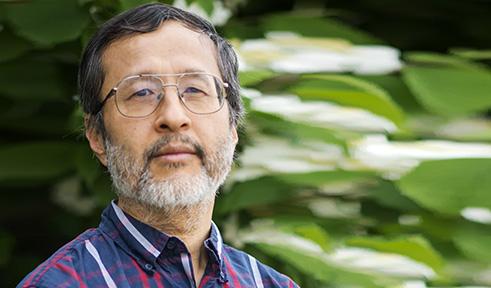
Hiroyuki Oshita is an Associate Professor of Linguistics and Japanese at Ohio University's College of Arts and Sciences, where he also serves as Graduate Chair and Coordinator of the Japanese Program. His primary academic affiliations are within the Department of Linguistics and the International Studies and Asian Studies programs. His educational background includes: Ph.D. in Linguistics, University of Southern California (1997) M.A. in Applied Linguistics, Southern Illinois University at Carbondale (1989) M.A. in English, University of Canterbury, New Zealand (1987) B.Ed., Hiroshima University, Japan (1984) His research focuses on second language acquisition, particularly the acquisition of intransitive verbs, unaccusativity, and syntactic development. Key themes include U-shaped development, lexical conceptual structure, null expletives, and the syntax-semantics interface in L2 English and Japanese. His work bridges theoretical linguistics and applied SLA, examining how learners process and internalize complex syntactic structures. The 15 most recent publications reflect a sustained focus on the acquisition of split intransitivity, resultative constructions, and overpassivization errors. These works span both empirical and theoretical domains, with a strong emphasis on developmental patterns, crosslinguistic influence, and the psychological reality of syntactic phenomena in non-native grammars. The articles collectively demonstrate a deep engagement with both native and non-native syntax, particularly in English and Japanese. While no formal scientific awards are listed in the provided text, his extensive publication record in leading journals such as Studies in Second Language Acquisition and Second Language Research , as well as repeated presentations at major conferences like the Second Language Research Forum and AAAL, attest to his scholarly recognition. Dr. Oshita advises graduate students and leads the Japanese program at Ohio University. He has been involved in numerous professional development workshops, including the Summer Japanese Institutes at the University of Hawaii and ACTFL OPI training, indicating active engagement in pedagogical development and language program leadership. His research has been supported through conference presentations and collaborative projects with students and colleagues. He is affiliated with research teams focused on second language syntax and acquisition, particularly through ongoing collaborations on transitive predicates, locational change, and resultative constructions. His lab or research group appears to involve graduate and undergraduate researchers, as seen in co-authored presentations with students on topics like change of state and overpassivization.