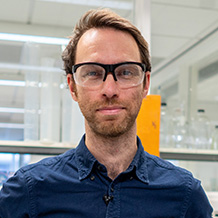
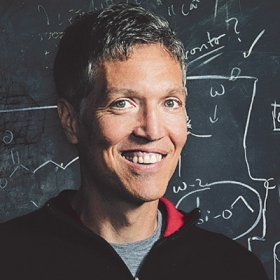
Michael McAlpine is a Professor in the Mechanical Engineering department at the University of Minnesota . He also holds affiliations with the Biomedical Engineering and Electrical and Computer Engineering departments. His research focuses on 3D printing functional materials & devices , Nanoscale inks , Biomedical devices , Bioelectronics , and Flexible Microsystems . Research Interests : 3D Printing, Biomedical Engineering, Nanotechnology, Flexible Electronics, Microfluidics Labs : ME 361/363 Contact : mcalpine@umn.edu , (612) 626-3303, ME 117 Recent Research Trends include 3D Printed Biomedical Devices , Flexible Electronics , and Bioprinting Applications . His work spans from Spinal Organoid Formation to Programmable Drug Release Capsules . Scientific Award : Circulation Research 2020 Best Manuscript Award
John A. Rogers is the Louis Simpson and Kimberly Querrey Professor at Northwestern University, holding joint appointments in Materials Science and Engineering, Biomedical Engineering, Mechanical Engineering, Chemistry, and Neurological Surgery. He directs the Querrey-Simpson Institute for Bioelectronics. His work bridges soft materials science, bio-integrated electronics, and nanotechnology, with a focus on wearable medical devices, bioresorbable systems, and neural interfaces. Educations: B.A. & B.S. from University of Texas Austin (1989), S.M. from MIT (1992), Ph.D. in Physical Chemistry from MIT (1995). Prior roles include Director of Bell Labs' Condensed Matter Physics Department and faculty positions at University of Illinois at Urbana-Champaign. Research emphasizes soft materials for bio-inspired electronics, including flexible sensors, microfluidic platforms, and bioresorbable implants. His lab has pioneered epidermal electronics, injectable optoelectronics, and neural interfacing systems. Over 1000 peer-reviewed publications and 100+ patents highlight his contributions to nanotechnology and biomedical engineering. Awards include the Benjamin Franklin Medal (2019), MRS Medal (2018), and MacArthur Fellowship (2009). He is a member of the National Academies of Sciences, Engineering, and Medicine. Current projects span bioelectronic medicines, wearable health monitors, and advanced medical imaging tools.
Natalie Banerji is a Full Professor in the Department of Chemistry and Biochemistry at the University of Bern, Switzerland. She previously held positions as Associate Professor (2015–2017) and Assistant Professor (2014–2015) at the University of Fribourg, and was an Ambizione Fellow at EPF Lausanne (2011–2014). Her research focuses on organic electronics, photovoltaic materials, and charge transport dynamics in conjugated polymers and perovskites. She has pioneered studies on electrochemical doping mechanisms, materials engineering for organic electrochemical transistors, and the interplay between material structure and optoelectronic properties. Education: PhD in Physical Chemistry (2009, University of Geneva), Diploma in Chemistry (2003, University of Geneva). Her work integrates advanced spectroscopic techniques like terahertz conductivity, transient absorption, and sum frequency generation to explore ultrafast charge dynamics. Key areas include optimizing polymer side-chain engineering for enhanced device stability and performance, and understanding charge separation in organic solar cells. Her recent articles emphasize advances in flexible electronics, biocompatible materials for bioelectronic devices, and perovskite-based optoelectronics. She has been funded by SNSF grants and collaborations with institutions like UCSB and EPFL.
Dr. Yu Zhong is an Assistant Professor in the Department of Materials Science and Engineering at Cornell University's College of Engineering, where he leads the Yu Zhong Group. His research laboratory focuses on the design and synthesis of novel soft materials and nanomaterials for applications in electronics, energy, healthcare, and sustainability. As a principal investigator, he oversees a dynamic research team comprising postdoctoral associates, graduate students, and undergraduate researchers working on cutting-edge materials science projects. Dr. Zhong received his educational training at prestigious institutions, earning his B.S. in Chemistry from the University of Science and Technology of China (USTC) in 2011, followed by a Ph.D. in Chemistry from Columbia University in 2017 under the supervision of Prof. Colin Nuckolls. His doctoral research centered on designing contorted molecules for electronic and energy applications including organic solar cells, photodetectors, and gas sensors. He then conducted postdoctoral research at the University of Chicago in Prof. Jiwoong Park's group, where he worked on the design and synthesis of 2D polymers for ultrathin electronic circuits and energy conversion. Dr. Zhong's research program spans three primary directions: (1) the bottom-up synthesis of ultrathin nanoporous membranes using techniques like laminar assembly polymerization (LAP) for applications in water desalination, nanofiltration, and gas separation; (2) the study of transport behaviors in hybrid organic-inorganic 2D heterostructures created through layer-by-layer assembly for use in optical, electronic, and thermal management devices; and (3) the development of mixed ionic-electronic materials for bio-inspired and bioelectronic devices. His group employs advanced synthesis methods including organic/polymer synthesis, supramolecular and reticular chemistry, and 2D materials characterization to explore novel scientific phenomena and technological applications. An analysis of Dr. Zhong's recent publications reveals a strong focus on the synthesis and characterization of 2D polymers and organic-inorganic hybrid materials. His work bridges fundamental materials science with practical applications in energy conversion, electronics, and separation technologies. A notable trend is his development of innovative synthesis techniques like laminar assembly polymerization that enable precise control over material structure at the molecular level, leading to breakthroughs in areas such as lithium-ion transport, osmotic power generation, and ultra-narrowband photodetection. Dr. Zhong's scientific achievements have been recognized with several prestigious awards: Pegram Award for Meritorious Graduate Research, Columbia University (2016) Camille and Henry Dreyfus Postdoctoral Fellowship, Dreyfus Foundation (2016) Arun Guthikonda Memorial Fellowship, Columbia University (2015) Jack Miller Award for Excellence in Teaching, Columbia University (2014) As an advisor, Dr. Zhong mentors a diverse group of researchers including postdoctoral associate Qiyi Fang, multiple Ph.D. students (Yuhe Zhang, Kaushik Chivukula, William Xie), M.S. students, and undergraduate researchers. His group has secured funding for research on soft and nanomaterials, with projects spanning organic electronics, 2D materials synthesis, and biomimetic membranes. Dr. Zhong actively seeks motivated graduate students and postdoctoral fellows to join his research team, emphasizing the importance of interdisciplinary collaboration in advancing materials science. The Yu Zhong Group operates state-of-the-art laboratories in Bard Hall at Cornell University, equipped for organic synthesis, materials characterization, and device fabrication. The research team works collaboratively across disciplines, partnering with experts in physics, chemistry, and engineering to tackle complex challenges in materials science. Current projects focus on developing novel synthesis methodologies and exploring structure-property relationships in soft materials to enable next-generation electronic, energy, and healthcare technologies.
Dr Andrew Thomas is a Senior Lecturer in the School of Materials at The University of Manchester, based in the Photon Science Institute. He holds a PhD in Adsorbate Studies of Titanium Oxides from the University of Liverpool (1994) and an MSc in Instrumentation and Analytical Science from UMIST (1990). His roles include Research Fellow and membership in professional committees such as the Thin Films and Surfaces Group of the Institute of Physics and the Diamond Light Source User Committee. His research focuses on surface science, biomaterials, catalysis, and photovoltaic materials. He has led projects like the £2 million bid to the Sir Henry Royce Institute for advanced spectroscopy instruments. Education: PhD (University of Liverpool), MSc (UMIST), BSc (University of Manchester) Research Groups: Biomaterials, Corrosion and Protection, Ceramics and Inorganics Key Projects: Manchester Bioelectronics Network, development of novel spectroscopy instruments His research interests span organic molecule interactions with surfaces, corrosion mechanisms, and solar energy materials. He has published over 119 articles and contributed to datasets on material characterization. Thomas is actively involved in outreach, including lectures and partnerships with schools for science education initiatives.
Polina O. Anikeeva is a Professor of Materials Science and Engineering and Associate Director of the Research Laboratory of Electronics (RLE) at MIT. She leads the Bioelectronics Group, focusing on developing minimally invasive neural interfaces and neuroprosthetics using advanced materials. Her work integrates materials chemistry, nanotechnology, and microfabrication to enhance biocompatibility and signal quality in neural devices for conditions like Parkinson’s disease and major depressive disorder. Education: Bachelor of Science in Physics, St. Petersburg State Polytechnic University (2003) PhD in Materials Science, MIT (2009) Postdoctoral Fellowship in Bioengineering, Stanford University Her research emphasizes hybrid organic-inorganic materials and optoelectronic systems for neural recording/stimulation. Key innovations include magnetically actuated sensors, wireless neuromodulation, and flexible optoelectronic fibers. Notable achievements include the NIH Director’s Pioneer Award (2021) and collaborations with the Fashion Institute of Technology on smart textiles. Lab Focus: Bioelectronics Group at RLE develops next-generation neural interfaces, with applications in brain-machine interfaces and paralysis treatment. Recent advances include magnetoelectric nanodiscs for transgene-free neuromodulation and remotely controlled chemomagnetic neural circuits.
Dr Christopher Spicer is a Lecturer in Chemistry at the Department of Chemistry, University of York. His research focuses on developing synthetic biomolecules and materials to modulate biological systems, with particular emphasis on tissue regeneration and biomaterial design. The Spicer Lab employs interdisciplinary approaches combining chemical biology, materials chemistry, and bioengineering to create platforms that mimic natural regenerative processes. Key research areas include bioconjugation chemistry, dynamic material systems, and the design of 3D scaffolds for controlled cellular behavior. The lab's work bridges chemistry, biology, and materials science to address challenges in regenerative medicine. Current PhD opportunities are available in these fields. Dr Spicer's research emphasizes modular biomaterial platforms, enzymatically triggered delivery systems, and the development of novel bioactive materials. His work is supported by cutting-edge techniques such as solid-phase peptide synthesis, metadynamics simulations, and advanced microscopy. Contact: chris.spicer@york.ac.uk / Spicer Lab Website
Caroline Ajo-Franklin is a Professor of BioSciences and Director of the Rice Synthetic Biology Institute at Rice University. She is also a CPRIT Scholar in Cancer Research. Her research focuses on the interface between living microbes and inorganic materials, with applications in carbon capture, bio-solar energy, and nanostructure assembly. Education: B.S. in Chemistry, Emory University (1998) Ph.D. in Chemistry, Stanford University (2004) Research Interests: Her interdisciplinary team explores bioelectronics and biomaterials, combining microbial systems and designer proteins to engineer functional living materials. Key areas include charge transfer mechanisms at living/non-living interfaces and hierarchical material assembly. Awards: CPRIT Scholar in Cancer Research Labs/Teams: She leads the Ajo-Franklin Lab, which emphasizes collaboration and diversity in advancing synthetic biology and bio-material interfaces. The lab’s work bridges biophysics, microbiology, and materials science.
Dr. Yue (Jessica) Wang is an Associate Professor of Chemical and Materials Engineering at the University of California, Merced. She holds additional appointments in the Chemistry and Biochemistry and Bioengineering departments, reflecting her interdisciplinary expertise. Her research focuses on creating biomimetic electronic materials that replicate biological systems' mechanical and physiological properties. Ph.D., Inorganic Chemistry (2014) - University of California, Los Angeles B.S., Chemistry (2008) - University of California, Los Angeles Dr. Wang's laboratory develops advanced materials with four core research areas: (1) dynamically adaptive electronic materials, (2) additive manufacturing of functional metamaterials, (3) organic reconfigurable materials, and (4) slime mold-aided bio-designed networks. These innovations enable patient-specific biomedical devices capable of detection, sensing, and stimulation, while prioritizing environmental and intellectual sustainability. The lab's recent research trends include 3D-printed conductive polymers, strain-invariant electronic foams, and graphene-based nanomaterials. This work intersects soft electronics, biomimicry, and advanced manufacturing techniques to create materials with unprecedented mechanical and electrical properties. Dr. Wang's team combines expertise in polymer synthesis, device fabrication, and mechanical characterization, operating at the intersection of chemistry, engineering, and biotechnology. She can be reached at yuewang@ucmerced.edu or +1 (209) 228-3611.
Tero-Petri Ruoko is an Assistant Professor at the University of Tampere , affiliated with the Faculty of Engineering and Natural Sciences and the Materials Science and Environmental Engineering department. He leads the Spectroscopy and Light-Active Materials (SLAM) research group, which is part of the Chemistry and Advanced Materials (CAM) cluster and the PREIN photonics flagship initiative. Research Interests: Ruoko specializes in photochemistry , electrochemistry , and organic electronics , with a focus on light-emitting materials , time-resolved spectroscopy , and electrochemical systems . His work includes organic electrochemical transistors , solar energy conversion , and smart materials for actuation and self-healing . He investigates charge transport mechanisms, defect engineering in semiconductors, and interfacial phenomena in conducting polymers. Recent Publications demonstrate expertise in halogen bonding for material control, oxygen reduction catalysis with doped polymers, and self-healing liquid crystal elastomers . His research spans organic semiconductors , perovskite solar cells , and supramolecular interactions in biohybrid systems. Grants: He has received funding from the EU Horizon 2020 MSCA-IF and the Academy of Finland Postdoc programs, supporting his work on sustainable energy and advanced materials.
Dr. Qianbin Wang is an Assistant Professor in the Department of Biomedical Engineering at Binghamton University. He holds a Ph.D. in Material Physics and Chemistry from Beihang University (2015) and has conducted postdoctoral research at New York University, Harvard Medical School (Boston Children's Hospital), and the University of Massachusetts Amherst as a Research Assistant Professor. His research focuses on biomechanical platforms to study neural degeneration and regeneration, particularly in glaucoma and spinal cord injury models. Key projects include developing polymeric viscobeads for ocular hypertension studies, non-invasive electroretinography for early glaucoma detection, and ultrasonic gene delivery systems to bypass retinal barriers. Educational Background: Ph.D. in Material Physics and Chemistry, Beihang University (2015) Postdoctoral Training: New York University, Harvard Medical School, UMass Amherst (Research Assistant Professor) Research Interests: Mechanotransduction in neuronal systems Non-invasive bioinstrumentation for early disease detection Gene delivery for ocular applications Neuroinflammation mechanisms in glaucoma Advising & Students: Eunji Hong (non-viral gene delivery) Wenjie (biomedical imaging materials) Ian Kim (glaucoma diagnostics) Chen Lin (hydrogel contact lenses) Labs/Teams: Neuromechanics Lab at Binghamton University, focusing on interdisciplinary approaches to neurodegenerative mechanisms and therapeutic development.
Professor Dagou Zeze is a Professor of Nanotechnology & Microsystems and Director of International Engagement in the Department of Engineering at Durham University. He also serves as Deputy Executive Dean for Research in the Faculty of Science. Professor Zeze has established himself as a leading researcher in nanotechnology and microsystems, with significant contributions to the field of nanomaterials device integration. His educational background includes a BSc in Physics from the University of Abidjan, Ivory Coast (1990), followed by MPhil and PhD in Electronics from the Université of Clermont-Ferrand, France (1996). He completed postdoctoral research at the University of Ulster (2000) on thin amorphous carbon films and at the University of Surrey (2003) on microfabrication. Professor Zeze's research focuses on nanostructured materials, micro and nanofabrication, and the integration of nanomaterials (particularly carbon nanotubes and semiconductor nanowires) in devices. His current research themes include integration of nanostructured materials in device fabrication, nanofabrication & microfabrication, carbon nanotubes, smart devices, semiconductor nanowires, and multifunction devices. He has also explored thin films technology, organic electronics, and liquid handling robotic system design. His publication record shows a strong focus on nanomaterials for electronic and sensing applications, with recent work emphasizing piezoelectric sensors, ZnO nanowires, metasurfaces for structural color, and in-materio computing approaches. His research demonstrates a consistent trajectory toward practical applications of nanotechnology in sensors, electronics, and energy conversion devices. Senior Research Fellow of the Royal Academy of Engineering/The Leverhulme Trust (2013-14) Fellow of the World Academy of Materials and Manufacturing Engineering (2015-) Fellow of the Institute of Engineering and Technology External Degree Programme Examiner: University of Exeter (2016-2020) External Degree Programme Examiner: University of Bangor (2017-21) Professor Zeze has supervised numerous postgraduate students including Grainne Gilleece, Luis Ceron Oliver, Mana Saeed, and Shixian Sun. He has secured substantial research funding, having contributed to seven European Framework programme FP7 and Horizon 2020 projects totaling over €12.5 million. He serves as the scientific coordinator for three Marie Curie Actions international consortia on semiconductor nanowires (FUNPROB, NanoEmbrace, and H2020 INDEED ITN), which involve significant international academic and industrial collaboration across Europe. His leadership extends to his role as Chair of the Durham University EU Liaison Group (2018-2023) and as Director of Postgraduate Studies (2014-2017). Professor Zeze leads research activities in the Next Generation Materials & Microsystems Research Challenge and has established collaborative networks across Europe through his involvement in major EU-funded projects.
Shuo Li is a Professor in the Department of Macromolecular Engineering at ETH Zürich, Switzerland. His research focuses on innovative biomaterials, bioelectronic systems, and implantable medical devices. Key areas include bioresorbable materials for transient electronics, flexible/stretchable sensors, and soft robotics applications. His work integrates materials science with biomedical engineering to address challenges in tissue integration, real-time diagnostics, and programmable drug delivery. Recent projects emphasize wireless implantable sensors for continuous monitoring of physiological parameters such as blood flow, oxygen saturation, and pH levels in surgical flaps and organ grafts. He has pioneered 3D shape-morphing displays using liquid metal actuators and developed self-healing elastomeric switches for haptic interfaces. His research spans biomaterial synthesis, optoelectronics, and additive manufacturing of soft materials. Publications highlight advancements in bioresorbable platforms for drug delivery, light-controlled actuation systems, and optical probes for in vivo pharmacology. His interdisciplinary approach bridges material design, device fabrication, and clinical applications, with a focus on translating lab innovations into practical medical solutions. Advising and grants: No specific advisees or grant details listed in the provided text. However, his extensive publication record indicates active collaboration with research groups in bioelectronics, soft robotics, and biomedical engineering. Labs/Teams: Likely affiliated with ETH's Macromolecular Engineering lab and collaborate with multidisciplinary teams in materials science, robotics, and medical device development.
Natalie Stingelin is a Professor at the Georgia Institute of Technology, holding the chair of the School of Materials Science and Engineering since 2022. She is also affiliated with the University of Bordeaux (since 2017) and Imperial College London (since 2009). Her work spans organic electronic materials, bioelectronics, and hybrid systems, focusing on microstructure-property relationships and advanced processing techniques. PhD in Materials Science from ETH Zurich (2001), awarded ETH Medal Her research explores organic photovoltaics, thin film transistors, and inorganic-organic frameworks. She develops models linking charge transport to polymer disorder and investigates materials for sustainable energy and flexible electronics. Her recent publications highlight innovations in polymer characterization, photovoltaic efficiency, and light-matter coupling. Stingelin serves as Editor-in-Chief for the Journal of Materials Chemistry C and Materials Advances . She has secured major grants including ERC Starting and Proof-of-Concept Grants, and led the Marie Curie INFORM network. Fellow of the Materials Research Society (2019) Fellow of the Royal Society of Chemistry (2012) National Academy of Inventors Fellow (2021) Rosenhain Medal (2014) Suffrage Science Award (2021) Her contributions to polymer science, optoelectronics, and sustainable materials are recognized globally, including participation in the World Economic Forum (2016) and editorial leadership roles.
Michael G. Hill is a Professor in the Department of Chemistry at Occidental College, where he has been a faculty member since 1994. He holds a B.A. from Macalester College and a Ph.D. from the University of Minnesota. His research focuses on the electrochemistry and photochemistry of transition-metal complexes, activation of small molecules via transition-metal catalysis, and bioinorganic chemistry. His recent publications highlight applications of electrochemical methods in medical contexts, including Electrochemical lipolysis for adipose tissue modification Electrochemical corneal reshaping for vision correction Bioelectrochemical DNA sensing platforms Scientific awards include the Fletcher Jones Foundation Professorship. His work often involves collaborations with biomedical researchers and engineers, spanning DNA charge transport mechanisms, protein electrochemistry, and clinical electrochemical therapies.