Andrea Megela Simmons is a Professor at Brown University in the Department of Cognitive, Linguistic, and Psychological Sciences with a secondary appointment in the Department of Neuroscience . She is a member of the Carney Institute for Brain Science and serves as a Principal Investigator on an ONR MURI project. Education : A.B. from the University of Pennsylvania (1973), Ph.D. from Harvard University (1978), Postdoctoral research at Cornell University Simmons specializes in cognitive and neural mechanisms of sound perception and communication across species including frogs, bats, dolphins, and humans. Her work bridges behavioral neuroscience, comparative neurology, and developmental studies to explore auditory processing, echolocation, and sensory integration. Her recent publications highlight interdisciplinary trends in auditory neuroscience, focusing on sound exposure effects, metamorphic neurodevelopment, and sensory-motor coordination in cluttered environments. Key subfields include echolocation, lateral line function, tectal connectivity, and acoustic adaptation across species. Scientific Awards : Fellow, Acoustical Society of America Simmons has received grants from the Office of Naval Research (ONR) for MURI projects and has taught courses such as Animal Behavior , Evolution and Development of the Brain , and Auditory Perception Laboratory .
Maja Adamska is an Associate Professor and ARC Future Fellow at the Australian National University (ANU) in the Research School of Biology. She serves as Associate Director of Education and Head of the Biology Teaching and Learning Centre. Her primary research affiliation is with the Division of Biomedical Science and Biochemistry, where she leads the Adamska Group focused on the genomic and evolutionary basis of animal development. She is based in Room 2.022, Level 2, Linnaeus Building at ANU. Dr. Adamska studied biology with a focus on embryology and evolutionary biology at Jagiellonian University in Krakow, Poland. She completed her PhD in Germany working with Eva Bober and Thomas Braun on homeobox genes in inner ear development using vertebrate models from medaka fish to mice. Her postdoctoral work included research at the University of Michigan in Miriam Meisler's laboratory studying mouse mutants for limb patterning, followed by work at the University of Queensland with Bernie Degnan analyzing developmental signaling pathways in the sponge Amphimedon queenslandica. She was a group leader at the Sars International Centre for Marine Molecular Biology in Bergen, Norway from 2007-2015 before joining ANU in 2015. Her research addresses fundamental biological questions about how complex animals develop from single cells and how the first multicellular animals evolved from single-cell ancestors. She uses calcareous sponges to investigate the evolutionary origins of key developmental processes including germ layer segregation and axial patterning. Her work spans multiple areas including evolutionary developmental biology, comparative genomics, and the study of major transitions in animal evolution such as the emergence of multicellularity and morphological complexity. Her research has revealed surprising similarities between sponge and higher animal embryonic development, challenging traditional views of animal evolution. Analysis of Dr. Adamska's recent publications shows a strong focus on sponge and coral biology, with increasing attention to conservation and sustainability issues related to marine ecosystems. Her work combines molecular, genomic, and evolutionary approaches to understand fundamental biological processes, with particular emphasis on gene regulatory networks, developmental signaling pathways, and the genomic basis of morphological complexity in early-branching animals. ARC Future Fellow (since 2017) h-index of 32 with 3,990 citations according to Scopus Multiple research grants including ARC Centre of Excellence for Integrated Coral Reef Studies (2014-2021) Dr. Adamska supervises research on multiple projects including coral regeneration, molecular mechanisms of developmental signaling pathways in sponges, identification of target genes for developmental transcription factors, skeleton formation in corals and sponges, and sponge and coral microbiomes. She also serves as Convenor for BIOL2174 and has developed innovative educational approaches including the Digital Marine platform for blended learning in marine biology. Her research group, the Adamska Group, focuses on the genomic and evolutionary basis of animal development, using calcareous sponges as model organisms to gain insights into the evolutionary origins of complex developmental processes. The group collaborates with international researchers across multiple institutions to advance understanding of early animal evolution and development.
Heike Rowold is a Lecturer and Study Coach affiliated with the Jazz & Pop and Music in Education departments at ArtEZ Conservatory in Zwolle. She specializes in mindfulness, meditation, time surfing, and vocal coaching with over 35 years of experience. Additionally, she teaches at the Lichtenberg Institute for Applied Voice Physiology in Germany. Her educational background includes studies under notable figures such as Riekje Bakker, Aafje Heynis, and Cora Canne-Meijer. She has collaborated on opera productions, lieder recitals, and theater projects. Her research emphasizes the intersection of artistic practice with mindful time management, as seen in her contributions to the Studium Generale archive on time-related themes. Rowold co-curated selections from the archive’s 'TIME' series, focusing on intuitive time management and the role of 'white spaces' in creativity. Her work integrates philosophical and practical approaches to time, emphasizing calmness and intuition. Her collaborations include an interview with her son Geert Pfeiffer on grief and art, reflecting her engagement with personal and artistic narratives. She also contributed to reading lists exploring time’s philosophical and artistic dimensions.
Agnieszka Matusik is an Assistant Professor at the Department of Urban Planning and Architecture of Urban Structures, Faculty of Architecture, Jagiellonian University. Her work focuses on urban transformation, waterfront development, and heritage conservation with emphasis on Polish cities like Kraków, Gdańsk, and Łódź. She holds a PhD in Architecture (2008) and a BEng degree. Research interests include: Climate-resilient urban design Revitalization of post-industrial sites River systems in urban contexts Public space quality assessment Urban heritage preservation Urban density analysis Recent publications analyze waterfront spaces in Kraków's historic core (2024), climate adaptation strategies for coastal cities (2023), and adaptive reuse of industrial heritage sites (2022). Her work often combines spatial analysis with cultural narratives, particularly in river valley dynamics and industrial legacy transformations. She has contributed to urban resilience frameworks for Gdańsk and Łódź, emphasizing hydrological-urban integration. Academic activities include pedagogical research on teamwork-based architecture education (2020) and institutional impacts on urban design education quality (2021). Professional networks include collaborations with municipal planning institutions in Poland.
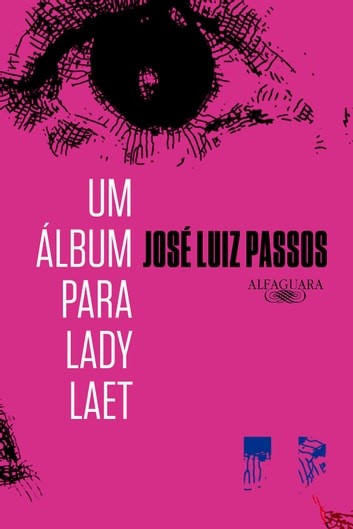
Professor José Luiz Passos is a distinguished literary scholar and novelist specializing in Brazilian literature, particularly the works of Machado de Assis. His research delves into cultural studies, moral philosophy in literature, and the interplay between history and fiction. His 2022 novel Um álbum para Lady Laet explores themes of cultural displacement, gender relationships, and Brazil's social-political transformations through an absorbing family saga. His academic contributions span over two decades, analyzing Brazilian national identity, literary realism, and cultural modernization. Key works include Machado de Assis and the Question of Brazilian National Identity (2006) and Romance com Pessoas: A Imaginação em Machado de Assis (2014). His publications blend narrative experimentation with rigorous literary critique, often addressing ethical dilemmas and existential themes. Themes recurring in his articles include the transformation of Brazilian cultural identity, the role of music and literature in sociopolitical contexts, and the intersection of personal and national narratives. His work bridges academic analysis with creative storytelling, offering fresh perspectives on Brazil’s literary heritage and its global relevance.