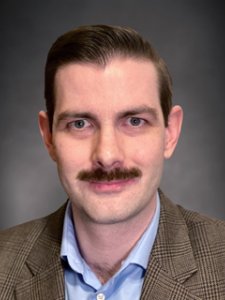
Nicolas Binder is a Professor and Head of the Turbomachinery and Propulsion Research Group at ISAE-SUPAERO . His research focuses on turbomachinery aerodynamics, unsteady flow analysis, and innovative propulsion systems for aerospace applications. Member of EuroTurbo executive committee ASME Member Associate Editor, Journal of Turbomachinery Research expertise in off-design operations and windmilling flows Research Interests : Aerodynamics of turbomachinery in severe off-design conditions Unsteady flow dynamics in turbines Innovative propulsion methods including magneto-hydrodynamics Flow analysis techniques for compressors and fans Recent publications (2024-2021) emphasize transient flow modeling in turbines, windmilling operation optimization, and variable geometry turbine performance. Articles span experimental validation of numerical models, shock wave interactions, and novel propulsion concepts like plasma-thrusters for drones.
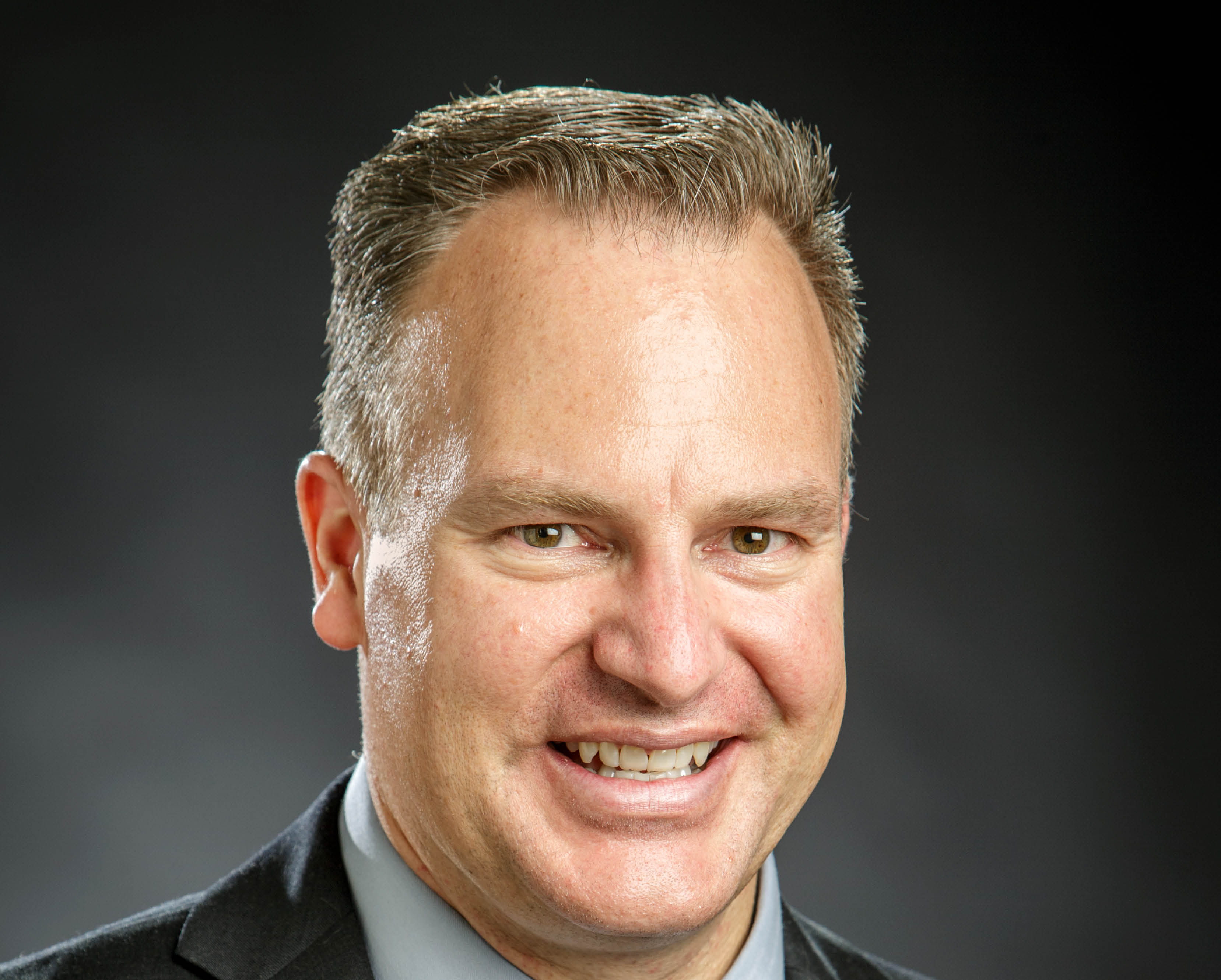
David K. Hall is an Assistant Professor in the Department of Aerospace Engineering at Pennsylvania State University, College of Engineering. His research focuses on advanced propulsion systems and aerodynamic integration for next-generation aircraft. He is actively involved in projects related to electric and hybrid-electric propulsion, boundary layer ingestion, and sustainable aviation technologies. Assistant Professor, Department of Aerospace Engineering, Penn State Researcher in Electrified Propulsion and Airframe Integration Contributor to NASA-affiliated research initiatives Dr. Hall's research interests center on improving aircraft efficiency and reducing environmental impact through innovative propulsion technologies. His work emphasizes boundary layer ingestion , distributed electric propulsion , and conceptual aircraft design optimization . He investigates how integrating propulsion systems with airframes can reduce fuel consumption and emissions, particularly in transport aircraft. The recent publications demonstrate a strong trend toward electrified and hybrid-electric aircraft systems, with a focus on mitigating flow distortion, optimizing fan-motor co-design, and assessing the environmental and economic viability of liquid hydrogen-fueled aircraft. His work bridges fundamental fluid dynamics with practical engineering applications in sustainable aviation. Dr. Hall has contributed to significant advancements in understanding the benefits and challenges of boundary layer ingestion, collaborating with leading researchers from MIT and NASA. While no formal scientific awards are listed, his publications in top-tier journals such as Journal of Turbomachinery and AIAA Journal reflect high research impact. He is likely involved in federally funded research projects, particularly through Penn State’s Vertical Lift Research Center of Excellence. He advises graduate students in aerospace research, particularly in propulsion and aerodynamics, though specific names are not listed. His lab or research group likely focuses on computational and experimental analysis of advanced propulsion concepts, possibly involving partnerships with industry and government agencies. Future work may explore cryogenic fuels, supersonic sustainable flight, and autonomy in electric aircraft.
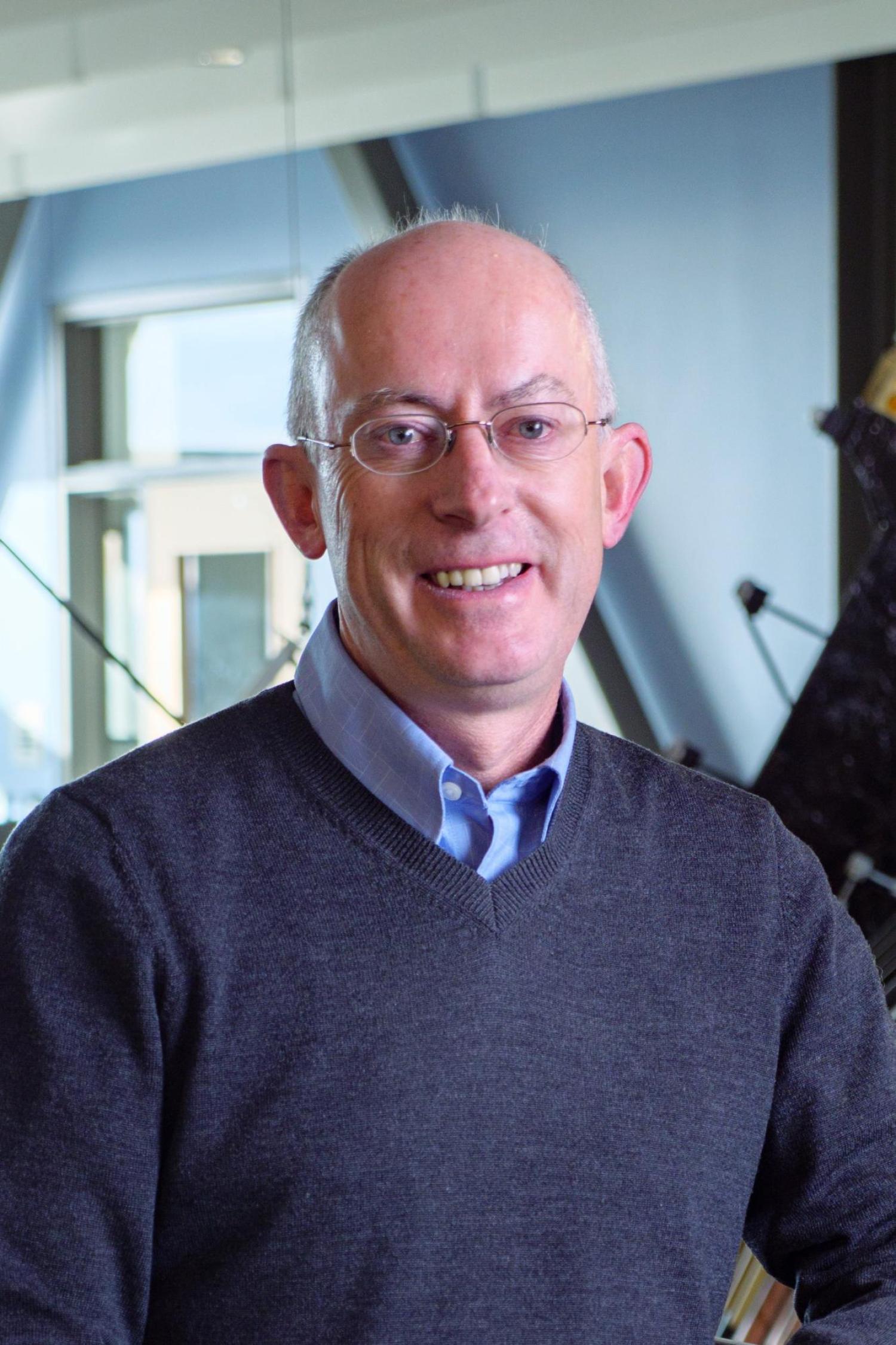
Lt Col Darrell S. Crowe, PhD, is an Assistant Professor of Aerospace Engineering in the Department of Aeronautics and Astronautics at the Air Force Institute of Technology (AFIT), part of the Graduate School of Engineering and Management at Air University. He is an active military officer and educator contributing to advanced aerospace research and graduate education within the U.S. Air Force. Education: PhD in Aeronautical Engineering, Air Force Institute of Technology, 2014 MS in Aeronautical Engineering, Air Force Institute of Technology, 2008 BS in Aerospace Engineering, Texas A&M University, 2003 Dr. Crowe's research focuses on propulsion aerodynamics, computational fluid dynamics (CFD), supersonic and hypersonic flows, jet interaction effects, and store separation dynamics. His work involves high-fidelity simulations of exhaust nozzles, thermal distortion modeling, and active flow control, often in collaboration with military and aerospace applications. He investigates complex phenomena such as hot streaks in serpentine nozzles, film cooling, and cavity acoustics, contributing to improved aircraft and propulsion system design. His recent publications demonstrate a strong trend in advancing CFD methodologies for defense-related aerospace problems, particularly in propulsion-airframe integration, weapon bay aerodynamics, and supersonic/hypersonic flow control. The articles span both experimental validation and numerical modeling, emphasizing accuracy, turbulence modeling, and multi-physics coupling in extreme environments. Scientific Awards and Honors: AFIT Dean's Distinguished Teaching Professor, 2023 AIAA Associate Fellow, 2020 Air Force Meritorious Service Medal (2018, 2021) Joint Service Commendation Medal, 2017 Southwestern Ohio Council for Higher Education Faculty Excellence Award, 2015 Field Grade Officer of the Quarter, Air University, 2015 Air Force Commendation Medal, 2011 Company Grade Officer of the Quarter (2005, 2009) Air Force Achievement Medal, 2006 Dr. Crowe advises MS thesis students in aerospace engineering and teaches graduate-level courses in his domain. He has been involved in flight testing and simulation projects, often funded through U.S. Air Force research programs. His work supports critical defense capabilities in aircraft performance, propulsion efficiency, and weapon system integration. He is actively involved in professional organizations such as the American Institute of Aeronautics and Astronautics (AIAA) and contributes to major conferences and workshops, including the Propulsion Aerodynamics Workshops. His research is conducted within AFIT’s advanced simulation and modeling environment, leveraging tools like Kestrel and BCFD for high-fidelity analysis.
Kurt Rouser is an Assistant Professor in the Department of Mechanical and Aerospace Engineering at Oklahoma State University (OSU), part of the College of Engineering, Architecture and Technology (CEAT). He holds a Ph.D., M.S., and B.S. in Aeronautical/Mechanical Engineering from institutions including the Air Force Institute of Technology and the US Air Force Academy. His research focuses on thermodynamics, aerospace propulsion systems, gas turbine engines, and pressure gain combustion. Rouser has received numerous awards, including the 2020 Golden Torch Faculty Award and the Frank J. Seiler Award for Research Excellence. He teaches advanced courses such as MAE 5343 (Advanced Aircraft Propulsion & Power) and MAE 4374 (Aerospace System Design). He serves as faculty advisor for Tau Beta Pi and Sigma Gamma Tau honor societies. His work spans academic teaching, military engineering roles, and contributions to propulsion system design and validation. Rouser’s publications address topics like turboelectric power systems, pulsed detonation turbines, and unmanned aircraft inlet design. His career combines academic research with practical engineering experience, emphasizing both technical innovation and educational excellence.
Pierre Sagaut is a Professor at Aix-Marseille Université , leading research in the Instabilities, Turbulence and Couplings team. He serves as Editor-in-Chief of the Journal "Computers and Fluids" and holds editorial roles at Journal of Computational Physics , Journal of Turbulence , and Journal of Scientific Computing . His academic leadership extends to roles in the Scientific Council of the AFM (President) and ERCOFTAC (Vice-President). Research Interests focus on Lattice Boltzmann Method (LBM) for compressible/turbulent flows Aerodynamics, aeroacoustics, and aerothermics Uncertainty quantification and data assimilation Immersed boundary techniques for complex geometries Scientific Awards include the 2024 CNRS Bronze Medal Senior Member, Institut Universitaire de France Article Trends highlight LBM applications in nuclear reactor safety, urban pollutant dispersion, helicopter intake dynamics, and transonic flows. Recent works address mass leakage correction, hybrid RANS/LES turbulence modeling, and quantum-inspired lattice gas algorithms. Grants & Collaborations involve partnerships with CNRS, ERCOFTAC, and AFM, focusing on computational fluid dynamics and turbulence modeling.
Iain Boyd is the H.T. Sears Memorial Professor of Aerospace Engineering Sciences at the University of Colorado Boulder and Director of the Center for National Security Initiatives. He holds a PhD in Aeronautics and Astronautics (University of Southampton, 1988) and a BSc in Mathematics (University of Southampton, 1985). His research focuses on hypersonic aerothermodynamics, electric propulsion, rocket plumes, and computational modeling of nonequilibrium gas and plasma dynamics. Boyd has held academic positions at the University of Michigan (2010–2019 as James E. Knott Professor), Cornell University (1993–2002), and NASA Ames Research Center (1989–1992). He leads the Nonequilibrium Gas and Plasma Dynamics Laboratory (NGPDL) and contributes to the Aerospace Mechanics Research Center (AMREC). His awards include the AIAA Thermophysics Award (2018), Fellowships from the Royal Aeronautical Society (2017) and American Physical Society (2014), and the Chief of Staff of the Air Force Award (2017). His research emphasizes advancing hypersonic vehicle technologies, plasma-based propulsion systems, and computational methodologies for extreme aerodynamic environments. Recent work addresses aerocapture trajectory optimization, plasma-driven cooling systems, and sensitivity analysis of hypersonic flow phenomena.
Dr. Imran Qureshi is an Associate Professor in the Department of Mechanical Engineering at the University of Birmingham Dubai Campus, part of the School of Engineering. He previously served as an Assistant Professor at the American University of Sharjah, UAE, before joining the University of Birmingham. His academic and industrial expertise lies in mechanical and aerospace engineering, particularly in gas turbine systems and sustainable energy technologies. BEng (Hons) in Aerospace Engineering, NUST, Pakistan MSc in Mechanical Engineering, University of Leeds, UK DPhil in Engineering Science, University of Oxford, UK Chartered Engineer (CEng), IMechE UK Dr. Qureshi's research focuses on experimental and computational fluid dynamics , gas turbine engines , heat transfer , and sustainable energy systems . His work bridges industrial applications and academic inquiry, particularly in improving turbine performance and advancing renewable energy technologies. He has investigated aggressive inlet swirl effects, combustor temperature nonuniformity, and dynamic engine modeling using artificial intelligence. His recent publications reflect a growing emphasis on sustainability, with studies on net-zero energy buildings , photovoltaic and concentrated solar technologies , and hydrogen propulsion . The integration of AI in turbine diagnostics and performance monitoring marks a significant trend in his scholarly output. His work spans both fundamental aerothermal investigations and applied sustainability solutions. Dr. Qureshi has no listed scientific awards in the provided text. He teaches undergraduate modules including Thermodynamics and Fluid Mechanics , Sustainable Energy and Environment , Engineering Mathematics , Powertrain and Vehicle Engineering , and supervises final-year individual engineering projects. There is no mention of students he has advised or research grants he has led. No specific lab or research team is referenced in the text.
Jeff Defoe is a Professor in the Department of Aerospace Engineering at the University of Windsor's Faculty of Engineering. His research focuses on advancing aerospace and mechanical engineering through computational fluid dynamics (CFD), turbomachinery optimization, and aeroacoustics. He collaborates with jet engine manufacturers to enhance aircraft efficiency and has pioneered low-cost ventilator designs for global health applications. Defoe is a recipient of the 2016 Medal of Excellence for dedication to the Faculty of Engineering. His work integrates theoretical, numerical, and experimental methods to address challenges in fan/compressor performance, automotive thermal management, and crosswind effects on aerodynamic systems. Defoe has mentored the University of Windsor Rocketry Team, which achieved third place in an international competition in 2017. His research spans applications from aerospace propulsion systems to sustainable automotive engineering solutions. Key contributions include body-force modeling techniques for turbomachinery, nonlinear control systems for automotive air conditioning, and predictive models for gas turbine dynamics. His publications emphasize innovations in CFD algorithms, turbulence modeling, and noise reduction strategies for high-performance systems.
Professor Jongguen Lee is a faculty member at the University of Cincinnati, specializing in combustion and propulsion systems. His research focuses on combustion dynamics in gas turbines, ramjets, and rocket propulsion, with expertise in laser-based diagnostics, supersonic combustion, and combustion control. He collaborates with major industries like GE Aviation, Pratt & Whitney, and NASA. His work addresses challenges in combustion instability, fuel-air mixing, and multi-phase combustion processes. Recent projects include studies on O2-CO2 combustion for carbon capture and satellite data analysis for riverine phosphorus quantification using machine learning. He has secured federal and industry grants totaling over $140,000, including roles as PI in programs like the Aerospace Propulsion Outreach Program (APOP). His publications span journals such as Flow, Turbulence and Combustion and Atomization and Sprays , with a focus on jet dynamics, spray characterization, and combustion diagnostics. Notable collaborations include AFRL-Wright Patterson, NASA-GRC, and DOE NETL. His research bridges theoretical models and practical applications in aerospace propulsion and environmental sustainability.
Professor Mathioudakis Konstantinos holds a prestigious position at the School of Mechanical Engineering, National Technical University of Athens (NTUA), leading the Laboratory of Thermal Turbomachines. His academic journey includes a Doctorate in Applied Sciences from the Catholic University of Leuven (Belgium) with highest distinction, alongside advanced studies from the Von Karman Institute and NTUA. He has over 35 years of professional experience in academia and industry, including roles as Secretary General for Energy (2009–2015) and professorships since 1990. His research focuses on gas turbine performance optimization, turbomachinery diagnostics, and energy systems, with notable contributions to fault detection algorithms, combustion chamber modeling, and alternative fuels. Key areas include aero-engine preliminary design, marine propulsion systems, and solar hybrid technologies. He has authored over 150 peer-reviewed papers and received multiple awards, including best paper honors from ASME and ImechE. Education: PhD in Applied Sciences (1985), Catholic University of Leuven Fluid Dynamics Diploma (1981), Von Karman Institute Mechanical Engineering (1980), NTUA Awards: ASME Best Paper Awards (2012, 2004, 2003, 2002) PE Publishing Award (2004) Outstanding Service Award (ASME, 2002) Professor Mathioudakis has pioneered diagnostic methodologies combining probabilistic reasoning and neural networks, enhancing fault localization accuracy. His work on transient modeling and steady-state diagnostics improves engine operability and maintenance strategies. He actively contributes to international committees, including leadership roles in ASME’s Controls and Diagnostics Committee. Current duties include coordinating Erasmus programs and advising on propulsion systems for next-generation aircraft. His lab develops tools for turbine disk design, contra-rotating propeller modeling, and solar hybrid gas turbines, bridging academic research with industrial applications.
Dr. Jun Yao serves as a Senior Lecturer in Aerospace Engineering at the School of Engineering, University of the West of England (UWE Bristol), within the Department of Engineering, Design and Mathematics. His research leverages computational fluid dynamics to address industrial flow challenges across renewable energy systems, turbomachinery, and aerospace applications, with significant contributions to REF2021 impact case studies. Education: PhD MPhil MSc BEng Dr. Yao specializes in multiphase flow dynamics, heat transfer phenomena, and aerodynamic optimization. His work pioneers flow control techniques for vertical axis wind turbines (VAWTs) using Gurney flaps, investigates hydrogen combustion and fuel cell electrocatalysts, and models thermal systems for building ventilation and turbine blade cooling. Recent publications demonstrate strong interdisciplinary focus on sustainable energy solutions through advanced CFD methodologies and experimental validation. Analysis of Dr. Yao's 2020-2025 publications reveals three dominant research thrusts: (1) VAWT performance enhancement via passive flow control devices across operational regimes, (2) multiphase flow modeling in industrial processes (laser cladding, sludge discharge, heat exchangers), and (3) turbulence simulation techniques for aerodynamic prediction. His work consistently bridges fundamental fluid dynamics with practical energy applications. Scientific Awards: Fellow of the Higher Education Academy (FHEA) Dr. Yao leads collaborations with Mitsubishi Electric R&D Centre (MERCE-UK) on hydrogen combustion and turbomachinery projects. His teaching portfolio spans Thermofluids, Fluid Mechanics, CFD, Sustainable Energy, Aerodynamics, and Aero-propulsion courses, integrating cutting-edge research into curriculum development for aerospace engineering students. His research group maintains experimental facilities for laser diagnostics in multiphase flows and computational resources for high-fidelity CFD simulations, supporting innovations in wind energy harvesting, thermal management systems, and clean combustion technologies through industry-academia partnerships.
Steve Gorrell is a Professor in the Department of Mechanical Engineering at Brigham Young University (BYU), College of Engineering. He holds a Ph.D. in Mechanical Engineering from Iowa State University (2001), an M.S. from Virginia Tech (1990), and a B.S. from BYU (1988). Prior to his academic career, he served as a Senior Aerospace Engineer at the Air Force Research Laboratory (AFRL) from 1989 to 2007, where he conducted advanced research in propulsion and turbomachinery. Ph.D., Mechanical Engineering, Iowa State University, 2001 M.S., Mechanical Engineering, Virginia Tech, 1990 B.S., Mechanical Engineering, Brigham Young University, 1988 His research is centered on experimental and computational fluid dynamics (CFD), with a strong focus on turbomachinery systems including compressors, turbines, and fans. He investigates unsteady flow phenomena such as stator-rotor interactions, inlet distortion, wake-shock dynamics, and cavitation. His work integrates high-fidelity CFD simulations with experimental techniques like Particle Image Velocimetry (PIV) to validate models and improve design methodologies. He also contributes to engineering education, particularly in collaborative and multi-university design projects. The most recent publications highlight a consistent trend in high-fidelity, time-accurate CFD analysis of unsteady flows in turbomachinery. Key themes include blade-row interactions, inlet distortion transfer, vortex dynamics, and feature extraction in simulations. His work frequently appears in ASME and AIAA journals and conferences, emphasizing both experimental validation and computational innovation. Notable awards include the Department of the Air Force Award for Civilian Achievement (2007), AIAA Associate Fellow (2007), AFRL Scientific/Technical Achievement Award (2006), and multiple honors for engineering education and collaboration (2013–2015). He also received the NASA Group Achievement Award (2003) and the Dayton-Cincinnati Aerospace Science Symposium Best Turbomachinery Paper (2002). Department of the Air Force Award for Civilian Achievement, 2007 AIAA Associate Fellow, 2007 AFRL Scientific/Technical Achievement Award, 2006 NASA Group Achievement Award, 2003 Best Paper, Dayton-Cincinnati Symposium, 2002 Outstanding Faculty Award, BYU ME, 2015 Best Overall Award, ASME IAM3D Challenge, 2014 AFOSR Summer Faculty Fellowship, 2013 Steve Gorrell has advised numerous graduate students on theses related to CFD, compressor and turbine design, and flow simulation. He has served as a principal investigator or collaborator on various research grants, particularly in high-performance computing and propulsion systems. His professional service includes editorial roles (Associate Editor, ASME, 2014–2018), committee leadership in AIAA and ASME, and extensive peer review for NSF, DOE, and other agencies. He has been actively involved in multi-university collaborative education initiatives, such as the PACE program. He leads a research group focused on computational and experimental fluid dynamics in turbomachinery, often collaborating with national labs and industry partners. His team employs advanced CFD solvers and data mining tools to extract meaningful features from complex simulations. The integration of computational science with engineering education remains a key component of his lab’s mission.
Jose Maria Sierra Fernandez serves as Professor in the Department of Automation, Electronics, Architecture and Computer Networks Engineering at the University of Cadiz, Spain. He maintains dual affiliations with the Institute of Viticulture and Agri-Food Research (IVAGRO) and leads the TIC168 Computational Instrumentation and Industrial Electronics research group, focusing on power quality instrumentation and renewable energy integration. His institutional email address is josemaria.sierra@uca.es. He earned his PhD from the University of Cadiz in 2017 with the thesis "Techniques and measurement procedures based on spectral kurtosis. An application in the analysis of electrical power quality," supervised by Dr. Juan José González de la Rosa and Dr. Jose Carlos Palomares Salas. This foundational work established his expertise in higher-order statistics for power system analysis. His research centers on power quality monitoring using higher-order statistics (HOS), with significant contributions to voltage supply characterization, photovoltaic transient analysis, and real-time synchronized sensor networks. Key innovations include HOS-based instrumentation for detecting voltage sags, frequency deviations in hydropower systems, and cloud-induced photovoltaic transients. His work bridges theoretical signal processing with practical smart grid applications, emphasizing renewable energy integration and grid stability. Recent publications (2022-2025) demonstrate consistent output in power quality instrumentation, with 15+ annual papers showing evolution from foundational HOS techniques toward meteorological integration for solar forecasting and ESP32-based real-time monitoring systems. His research increasingly addresses practical grid challenges through virtual instruments, measurement campaigns, and publicly available weather data utilization. Scientific Awards: No awards or fellowships were documented in the provided materials. Advising and Grants: Thesis supervision activities are indicated through "Theses" section references, though specific student names and grant details remain undisclosed. Labs and Teams: Leads TIC168 Computational Instrumentation and Industrial Electronics research group at IVAGRO Develops instrumentation for voltage/frequency monitoring, irradiance networks, and power quality event detection Collaborates on measurement campaigns using Python/Grafana systems and wireless sensor networks
Virginia Polytechnic Institute and State UniversityUnited States
Dr. Alexandrina Untaroiu is an Associate Professor in the Department of Mechanical Engineering at Virginia Tech, part of the College of Engineering. She holds a Ph.D. in Mechanical and Aerospace Engineering from the University of Virginia (2006) and has held academic positions since 2001, including roles at the University of Virginia and Virginia Tech’s Biomedical Engineering and Mechanics department. Her research focuses on fluid-structure interactions, turbomachinery seals, rotordynamics, and biomedical applications such as cardiac-assist devices. She leads the Advanced Power and Propulsion Lab and has extensive expertise in computational fluid dynamics, machine learning applications, and soil-tire interaction modeling. Her research interests span aerodynamics, biomechanics, and renewable energy systems like wind turbines. She has contributed to studies on oxyfuel cutting processes, e-scooter safety, and medical device design. Dr. Untaroiu’s work integrates experimental and computational methods, emphasizing practical applications in engineering and healthcare. Her publication trends highlight advancements in turbomachinery efficiency, plasma physics modeling, and sustainable technologies. While no awards are explicitly listed, her prolific output (over 70 publications since 2001) reflects significant contributions to mechanical and biomedical engineering. No student advising details are provided in the text.
Massachusetts Institute of TechnologyUnited States
Edward M. Greitzer is the H. N. Slater Professor of Aeronautics and Astronautics at the Massachusetts Institute of Technology (MIT), where he has served in multiple leadership roles including Interim Department Head (2018), Founding MIT Pillar Head for the Engineering Product Development Pillar at Singapore University of Technology and Design (2009-2016), and Director of the Gas Turbine Laboratory (1986-1996). His research spans gas turbines, turbomachinery, propulsion system-airframe integration, active control of fluid systems, and vortex flows, with significant contributions to industry-university collaboration initiatives. Education: B.A. in Physics, Harvard College, 1962 M.S. in Engineering, Harvard University, 1964 Ph.D. in Mechanical Engineering, Harvard University, 1970 Dr. Greitzer's research focuses on fundamental and applied fluid dynamics in propulsion systems, particularly compressor instabilities (surge and rotating stall), boundary layer phenomena, and aeromechanical control systems. His work bridges theoretical fluid mechanics with practical engineering applications, emphasizing industry-academia partnerships. He pioneered research on active stall control, boundary layer ingestion for aircraft efficiency, and surface waviness effects on fan performance. His leadership in the Cambridge-MIT Silent Aircraft Initiative and NASA-sponsored D8 "double-bubble" aircraft project demonstrates his commitment to sustainable aviation solutions. The integration of experimental methods with computational modeling remains central to his approach, as reflected in his seminal textbook Internal Flow: Concepts and Applications . His publication record shows consistent focus on turbomachinery fundamentals evolving toward system-level integration and environmental impact reduction. Recent work (2015-2022) emphasizes boundary layer control, surface imperfection effects, and propulsion-airframe integration for next-generation aircraft, indicating sustained relevance in addressing aerospace efficiency challenges. Awards and Honors: National Academy of Engineering Member AIAA Honorary Fellow Royal Academy of Engineering International Fellow US Air Force Exceptional Civilian Service Award AIAA Reed Aeronautics Award ASME R. Tom Sawyer Award Four-time ASME Gas Turbine Award recipient MIT Everett Moore Baker Teaching Award ASME Freeman Scholar Award Dr. Greitzer has secured significant research funding through NASA-sponsored projects (including the D8 "double-bubble" aircraft) and industry partnerships via the Gas Turbine Laboratory. His advising philosophy emphasizes hands-on experimental projects and close mentorship, reflected in his two-time receipt of departmental teaching awards. He has trained numerous engineers through MIT's graduate programs and industry collaborations, with research supported by NASA, the US Air Force, and major aerospace corporations. His industry-university collaboration framework has become a model for technology transfer in propulsion research. He founded and directed MIT's Gas Turbine Laboratory, establishing it as a premier research hub for turbomachinery and propulsion systems. The lab fostered deep partnerships with Pratt & Whitney, Rolls-Royce, and other industry leaders, facilitating joint research on compressor stability, novel aircraft configurations, and sustainable propulsion technologies. His leadership in the Singapore University of Technology and Design initiative extended this collaborative model internationally.