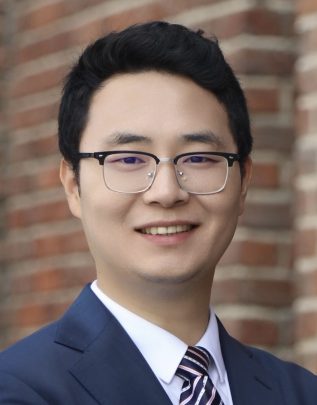
Dr. Sam Grimshaw is a Senior Research Fellow at the Whittle Laboratory, University of Cambridge, specializing in turbomachinery research with Mitsubishi Heavy Industries (MHI) and Reaction Engines. His work bridges industrial gas turbine optimization, electric aircraft propulsion, and advanced measurement techniques. He contributes to undergraduate mathematics and compressible flow supervisions at Girton College. Research Focus: Compressor aerodynamics and bleed system efficiency Stall inception mechanisms in axial compressors Electric vertical take-off and landing (e-VTOL) aircraft design Innovative pneumatic probe development for non-uniform flow fields Scientific Recognition: Three-time ASME Best Paper Award recipient (2014, 2016, 2017) Lead author in 15+ high-impact publications on turbomachinery systems Educational Contributions: Supervises 4th Year Masters students Develops international research opportunities through Clifton Scientific Trust programs Mentors PhD projects on cricket ball aerodynamics and turbomachinery
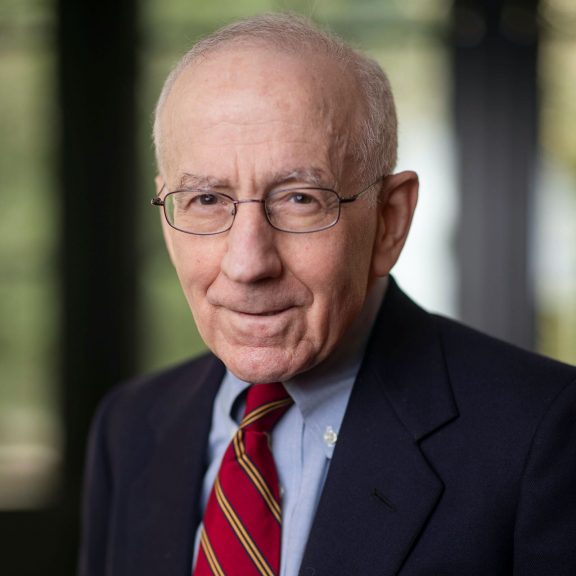
Edward M. Greitzer is the H. N. Slater Professor of Aeronautics and Astronautics at the Massachusetts Institute of Technology (MIT), where he has served in multiple leadership roles including Interim Department Head (2018), Founding MIT Pillar Head for the Engineering Product Development Pillar at Singapore University of Technology and Design (2009-2016), and Director of the Gas Turbine Laboratory (1986-1996). His research spans gas turbines, turbomachinery, propulsion system-airframe integration, active control of fluid systems, and vortex flows, with significant contributions to industry-university collaboration initiatives. Education: B.A. in Physics, Harvard College, 1962 M.S. in Engineering, Harvard University, 1964 Ph.D. in Mechanical Engineering, Harvard University, 1970 Dr. Greitzer's research focuses on fundamental and applied fluid dynamics in propulsion systems, particularly compressor instabilities (surge and rotating stall), boundary layer phenomena, and aeromechanical control systems. His work bridges theoretical fluid mechanics with practical engineering applications, emphasizing industry-academia partnerships. He pioneered research on active stall control, boundary layer ingestion for aircraft efficiency, and surface waviness effects on fan performance. His leadership in the Cambridge-MIT Silent Aircraft Initiative and NASA-sponsored D8 "double-bubble" aircraft project demonstrates his commitment to sustainable aviation solutions. The integration of experimental methods with computational modeling remains central to his approach, as reflected in his seminal textbook Internal Flow: Concepts and Applications . His publication record shows consistent focus on turbomachinery fundamentals evolving toward system-level integration and environmental impact reduction. Recent work (2015-2022) emphasizes boundary layer control, surface imperfection effects, and propulsion-airframe integration for next-generation aircraft, indicating sustained relevance in addressing aerospace efficiency challenges. Awards and Honors: National Academy of Engineering Member AIAA Honorary Fellow Royal Academy of Engineering International Fellow US Air Force Exceptional Civilian Service Award AIAA Reed Aeronautics Award ASME R. Tom Sawyer Award Four-time ASME Gas Turbine Award recipient MIT Everett Moore Baker Teaching Award ASME Freeman Scholar Award Dr. Greitzer has secured significant research funding through NASA-sponsored projects (including the D8 "double-bubble" aircraft) and industry partnerships via the Gas Turbine Laboratory. His advising philosophy emphasizes hands-on experimental projects and close mentorship, reflected in his two-time receipt of departmental teaching awards. He has trained numerous engineers through MIT's graduate programs and industry collaborations, with research supported by NASA, the US Air Force, and major aerospace corporations. His industry-university collaboration framework has become a model for technology transfer in propulsion research. He founded and directed MIT's Gas Turbine Laboratory, establishing it as a premier research hub for turbomachinery and propulsion systems. The lab fostered deep partnerships with Pratt & Whitney, Rolls-Royce, and other industry leaders, facilitating joint research on compressor stability, novel aircraft configurations, and sustainable propulsion technologies. His leadership in the Singapore University of Technology and Design initiative extended this collaborative model internationally.
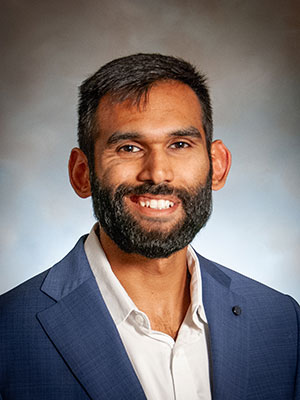
Dr. Farhan Siddiqui is a Research Professor in the Department of Aerospace Engineering at Texas A&M University, affiliated with the College of Engineering. His research focuses on experimental and computational studies of hypersonic flows, aerothermodynamics, and advanced flow diagnostics. He holds an office in the Harvey R. Bright Building (HRBB 743D) and can be contacted at siddiqui@tamu.edu. His research interests center on hypersonic boundary layer transition, shock wave physics, and innovative optical measurement techniques such as infrared thermography, nitric-oxide ionization induced flow tagging (NiiFTI), and laser-based velocimetry. He explores phenomena in high-enthalpy flows, ground test facility distortions, and flow instability interactions in quiet and roughness-dominated environments. Dr. Siddiqui has contributed to advancements in multi-point velocimetry systems (e.g., FLEET, laser spark velocimetry) and their application in Ludwieg tubes and expansion tunnels. His work addresses challenges in hypersonic inlet design, surface heating prediction, and non-equilibrium flow characterization. Key experimental tools include absorption spectroscopy, schlieren imaging, and temperature-sensitive paint (TSP) measurements. No scientific awards are explicitly mentioned in the provided materials. His research aligns with Texas A&M's broader efforts in aerodynamics, propulsion, and aerospace systems. No formal advisees are listed in the current dataset, though his involvement in collaborative projects and facility development is evident. He participates in experimental infrastructure such as the UTSI Mach 7 Ludwieg tube and leverages high-frequency diagnostics (e.g., 250 kHz systems) to study transient flow phenomena. His work bridges laboratory-scale experiments with real-world hypersonic flight conditions, emphasizing data-driven validation of aerodynamic models.
Tamy Guimarães is an Assistant Professor in the Department of Mechanical Engineering at Pennsylvania State University, College of Engineering. Her research focuses on experimental fluid dynamics and aerodynamics, particularly in turbomachinery applications for propulsion and power generation. She is affiliated with Penn State's Integrated Energy Systems research initiative. Her research interests lie at the intersection of advanced instrumentation and fluid mechanics. She develops and applies measurement techniques such as Particle Image Velocimetry (PIV) to study complex flows in engine inlets, swirling flows, vortex dynamics, and flow distortion in turbofan systems. Her work aims to improve engine efficiency, reduce emissions, and enhance fuel economy through precise flow characterization. The recent publications highlight a strong focus on experimental analysis of vortical and swirling flows in ducts and turbofan inlets, with increasing interest in sensor technologies and environmental monitoring. Her research bridges fundamental fluid mechanics with practical aerospace and energy applications. Scientific Awards and Recognition: Cocoziello Institute of Real Estate Seed Funding (2025) Penn State Global Award (2024–25) Recognized for building academic bridges between Brazil and the U.S. (2023) Dr. Guimarães has secured competitive research funding and leads projects such as the floatplane optimization initiative in the Amazon. She mentors students in experimental techniques and collaborates internationally, particularly with Brazilian institutions. While specific advisees are not listed, her role involves graduate student supervision and research team leadership. She contributes to the advancement of measurement science in turbomachinery through her participation in key conferences and her work on full-scale inlet flow experiments.
Professor Grant Ingram is a faculty member in the Department of Engineering within the Faculty of Science at Durham University. His research focuses on turbomachinery, wind turbine aerodynamics, and computational fluid dynamics. With over 70 research outputs spanning more than two decades, his work demonstrates sustained contribution to engineering science. Dr. Ingram's research interests center on turbomachinery aerodynamics , wind turbine design (particularly H-Darrieus vertical axis turbines), computational fluid dynamics , and renewable energy systems . His work often addresses practical engineering challenges through both experimental and computational approaches. Recent publications show his expanding interest in applying machine learning techniques to traditional fluid dynamics problems and improving engineering education through advanced computational tools. Analysis of his 15 most recent publications reveals a consistent focus on turbomachinery optimization, with particular attention to endwall contouring, sealing technologies, and wind turbine aerodynamics. His research shows strong industrial relevance, particularly in power generation and renewable energy applications. The work frequently employs advanced computational methods alongside experimental validation, demonstrating a comprehensive approach to engineering problems. Professor Ingram maintains an active research program with consistent publication output, including multiple publications in 2024 that demonstrate his continued contribution to the field. His collaborative work with researchers such as R.J. Williams, S.I. Hogg, and T.P. Breckon indicates strong research networks within and beyond Durham University. While specific details about teaching responsibilities and supervision are limited in the available information, his 2024 publication on updating turbomachinery teaching methods using 3D design tools suggests active engagement in engineering education. His research has practical applications across multiple energy sectors, from conventional power generation to offshore wind and tidal stream technologies.
Aretakis Nikolaos is a Professor in the Department of Mechanical Engineering at the National Technical University of Athens (NTUA), affiliated with the School of Mechanical Engineering and the Section of Fluids. His research focuses on engine monitoring, fault diagnosis for turbomachines, and performance modeling of gas and steam turbines, with applications in aerospace, marine, and power generation systems. Education: PhD in Mechanical Engineering (2000), NTUA BSc in Mechanical Engineering (1994), NTUA His expertise spans experimental techniques in turbomachines, vibration analysis, and techno-economic power plant assessments. Recent research trends include machine learning integration for turbofan diagnostics, alternative fuel modeling, and multi-disciplinary aero-engine design optimization. Scientific Awards: 2012 Best Paper Award, Cycle Innovations Committee of IGTI/ASME 2002 Best Paper Award, Controls and Diagnostics Committee of IGTI/ASME At NTUA, he teaches undergraduate courses on jet propulsion and gas turbine diagnostics, and postgraduate courses on thermal machines. He serves as Deputy Representative in the Library Senate Committee and coordinates Erasmus programs for international students.
Associate Professor Nicholas Lawson is affiliated with the University of Sydney's School of Aerospace, Mechanical and Mechatronic Engineering, specifically within the Department of Aerospace Engineering. His academic rank is Associate Professor. Previously, he held a Chair in Aerodynamics and Airborne Measurement at Cranfield University (UK), where he also served as Head of the National Flying Laboratory Centre. He is a Visiting Professor at Cranfield and a member of the Sydney Nano Institute and the Net Zero Institute. Education: PhD in Optics and Fluid Mechanics from Loughborough University (UK), supported by Rolls-Royce plc. Post-doctoral research at the University of Melbourne (2000-2004), followed by roles at Cranfield University from 1999 to 2021 before moving to Sydney. Research focuses on optical methods (PIV, LDA, FRS), unsteady aerodynamics, fiber-optic sensors for airborne measurements, and collaboration with industry partners like Rolls-Royce, Airbus, and Meggitt. Key projects include EU SINATRA (aircraft intake flow measurement) and Defense Innovation Network-funded initiatives. Teaching: Leads undergraduate modules AERO2703 and AERO2710 at Sydney. Supervises 5 PhD students (as of 2023). Over 150 MSc projects supervised at Cranfield. Awards: Queens Anniversary Prize (2020) for contributions to higher education. Professional affiliations include Fellowships with the Royal Aeronautical Society and Higher Education Academy. Grants: Includes Wind Tunnel Upgrade (2024), UAV Failure Mode Recognition (2022), and E2EEHM (2016). Active in flight-testing and sensor development for aerospace applications.
Dr. Ali Abdul-Aziz is an Associate Professor in the College of Aeronautics & Engineering at Kent State University, specializing in applied engineering with expertise in nondestructive evaluation (NDE), materials characterization, and structural analysis. He holds leadership roles in curriculum development for the Aerospace Program and manages the Materials Research Lab, supported by NASA Glenn Research Center contracts. Education: PhD Mechanical Engineering, Cleveland State University (1985) MS Mechanical Engineering, Cleveland State University (1981) BS Mechanical Engineering, Cleveland State University (1980) Research Focus: His work spans composites, propulsion health monitoring, experimental mechanics, and finite element analysis. Recent projects include turbine engine diagnostics and ceramic matrix composites durability, often integrating NDE techniques like digital image correlation for aerospace applications. Publications: His recent articles (2017-2022) show a strong emphasis on structural health monitoring, turbine engine failure simulations, and sensor technologies, reflecting interdisciplinary approaches combining mechanics, materials science, and computational modeling. Awards and Recognition: No major scientific awards listed in provided materials. Academic Leadership: Actively involved in ABET accreditation processes, laboratory development, and advising for aerospace engineering initiatives. Administers collaborative research through the Materials Research Lab.
Ulrich Doll is a Tenure Track Assistant Professor at the Department of Mechanical and Production Engineering, Aarhus University's College of Engineering. His research focuses on experimental fluid mechanics, laser-optical flow diagnostics, and turbomachinery flows. Key expertise: Flow distortion measurement, turbulent combustion, and machine learning integration Primary affiliation: Fluids and Energy section Techniques used: Filtered Rayleigh Scattering (FRS), Laser-Induced Fluorescence (LIF), CFD validation Recent work demonstrates trends in hydrogen fuel combustion , non-intrusive aero-engine diagnostics , and machine learning-assisted flow analysis . Publications span fluid dynamics, gas turbine technology, and nuclear safety radiation modeling.
Paul Beard is an Associate Professor in the Department of Engineering Science at the University of Oxford, managing the Oxford Turbine Research Facility (OTRF)—a Ministry of Defence-funded test facility for advanced turbine research. His educational background includes: MEng from Exeter College, University of Oxford DPhil from Exeter College, University of Oxford Research focuses on turbomachinery with expertise in computational fluid dynamics, numerical analysis, heat transfer, and instrumentation for turbines. He pioneers high-speed infrared thermography to study transonic turbine rotor blade heat transfer and investigates temperature distortion impacts using combined experimental and computational approaches. Recent publications reveal consistent themes in turbine aerodynamics, emphasizing experimental techniques like infrared thermography and static pressure measurements to analyze tip designs, gap effects, and inlet profiles in high-pressure turbines, alongside combustor turbulence control research. No specific scientific awards are documented in the source material. As a college lecturer at Exeter College, Beard likely mentors students though no advisees are listed. His OTRF leadership indicates involvement in major defense-funded research projects requiring substantial grant support. He directs the Oxford Turbine Research Facility and contributes to the Oxford Thermofluids Institute group, leading a specialized team advancing gas turbine technology through experimental and computational thermofluids engineering.
Nobumichi Fujisawa is an Associate Professor at Waseda University, School of Fundamental Science and Engineering, specializing in Fluid Engineering and Turbomachinery . His research focuses on unsteady flow phenomena in centrifugal and axial compressors, including stall inception mechanisms, tip leakage vortices, and vortex-induced noise reduction strategies. Current affiliations: Waseda University (2024–present), Leibniz Universität Hannover (Visiting Researcher, 2025–2026) Past roles: Waseda University (2015–2024) Research interests span computational fluid dynamics (CFD) applications in turbomachinery, flow separation analysis, and aerodynamic stability enhancement through geometric modifications like tapered diffuser vanes and bleed slots. His work reveals flow blockage dynamics in diffuser passages and their correlation with stall development. Scientific awards include: 2024 Turbomachinery Society of Japan Best Paper Award 2021 JSME Paper Award 2018 ASME Turbo Expo Best Paper 2016 Turbomachinery Society Young Researcher Award
Professor Yufeng Yao is a Professor in Aerospace Engineering at the School of Engineering , University of the West of England (UWE Bristol). He leads the Engineering Modelling and Simulation (EMS) research group and specializes in high-fidelity flow physics simulations (DNS, LES) and industry-standard turbulent flow modeling (RANS, URANS). His research spans Turbulent wake dynamics Shock-wave/boundary-layer interactions Morphing winglet design Turbine blade cooling Supersonic combustion with applications in aerospace, automotive, and built environment systems. Recent publications highlight his work in aerodynamic optimization (e.g., morphing aerofoils, microjet inlets) alongside unexpected interdisciplinary contributions in biomedical genetics (e.g., miRNA polymorphism in cervical cancer, lipid metabolism in ferroptosis). This diversity reflects collaborations across fields.
Kewei Xu is an Assistant Professor of Mechanical Engineering at the University of Maine , affiliated with the College of Engineering and Computing. His research focuses on fluid mechanics, aerodynamics, and active flow control technologies applied to ships, aircraft, and wind turbines. Ph.D. in Mechanical Engineering from University of Miami (2021) Postdoctoral researcher in machine-learning-driven active flow control at Chalmers University of Technology Researcher in wind propulsion technology at Chalmers University of Technology and RISE (Sweden) His research areas include: Bluff body airwakes (ships and vehicles) Co-flow jet active flow control Turbomachinery and engine inlet optimization Wind turbine efficiency enhancement Recent publications highlight collaborations with Chalmers University of Technology and RISE, focusing on: LES simulations of ship airflow control Wake bi-stability analysis Wind turbine power optimization Engine inlet distortion suppression Professional memberships include: American Institute of Aeronautics and Astronautics (AIAA) American Society of Mechanical Engineers (ASME)