
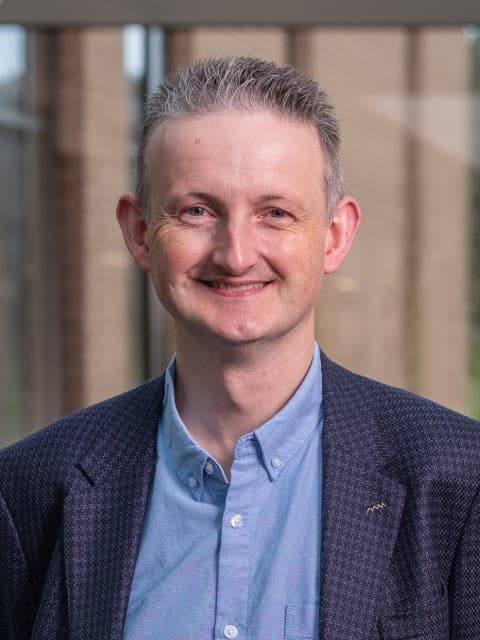
Professor Mark King is a leading academic in Sports Biomechanics at Loughborough University, affiliated with the School of Sport, Exercise and Health Sciences, where he serves as Lead for the Sport Performance Research Theme. He holds a BSc (1993) and PhD (1998) in Mathematics and Sports Science from Loughborough, with career progression from Lecturer (1999) to Senior Lecturer (2006), Reader (2012), and Professor (2019). He is also Warden of Royce Hall since 1999, overseeing 375 students' welfare. Education: BSc in Mathematics and Sports Science (1993), PhD in subject-specific computer simulation of dynamic jumping (1998). Affiliations: England and Wales Cricket Board (ECB), International Cricket Council (ICC), Badminton World Federation, Lawn Tennis Association. His research focuses on optimizing elite sport performance through biomechanical analysis, particularly in cricket and badminton. Key areas include injury prevention (e.g., ACL risks in badminton, lumbar stress injuries in cricket bowlers) and technique optimization. He has pioneered ICC-accredited testing for illegal bowling actions and explored machine learning applications in data collection. His work highlights trends in cricket fast bowling kinematics, racket sports smash mechanics, and gender-specific performance metrics. He actively collaborates with national and international sports organizations to translate research into practical guidelines for athletes and coaches. Awards: None explicitly mentioned in the text. Grants/Advising: No listed advisees, but extensive industry partnerships support his research. Labs/Teams: National Centre for Sport and Exercise Medicine (NCSEM), part of his research infrastructure.
جستجوی استاد راهنمای دانشگاهی
برای مسیر پژوهشیتان، استاد راهنما، استاد دانشگاه و پژوهشگر مناسب را پیدا کنید و با آنها ارتباط بگیرید.
نمایش ۱-۱۵ از ۶۱۳ استاد راهنما
اطلاعات پروفایلها از صفحات عمومی دانشگاهها گرفته شده و ممکن است بهروز نباشد.
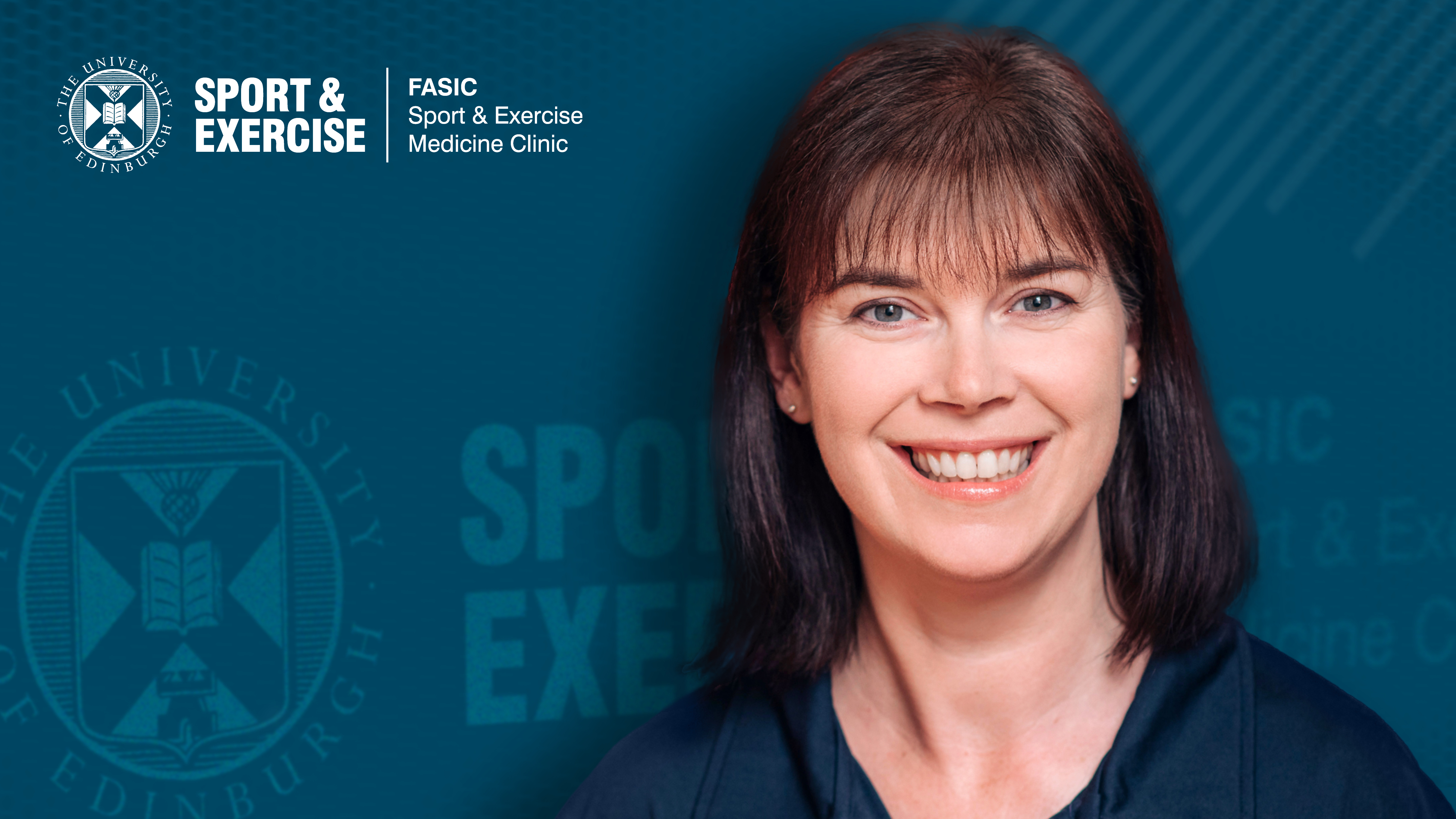
Linda Lintonمشاهده پروفایل
مدرس پزشکی
Linda Linton is an Advanced Practice Sports and Musculoskeletal Physiotherapist and Medical Educator at Queen Margaret University, with a career spanning over 25 years. She serves as clinical lead at FASIC Sport & Exercise Medicine Clinic for back, neck, and pelvic/hip conditions and supervises PhD students in aquatic therapy research. Her work bridges clinical practice, education, and research in injury prevention and rehabilitation. BSc(HONS) Physiotherapy (University of Ulster, 1994) PG Cert Sports Physiotherapy (Manchester Metropolitan University, 1997) MMACP (Glasgow Caledonian University, 2000) MSc Manual Therapy (Glasgow Caledonian University, 2005) PG Cert Diagnostic Musculoskeletal Ultrasonography (University East London, 2018) Injection Therapy (Queen Margaret University, 2022) Linton’s research focuses on running-related injury prevention, aquatic therapy for low back pain, and physical activity promotion. Her work includes scoping reviews on injury risk reduction practices, meta-analyses of exercise-based prevention programs, and qualitative studies on community aquatic therapy. She pioneered Prehabilitation for Runners Workshops and investigates neuromuscular training, gait re-education, and aquatic muscle activity patterns. Her publications span journals like Journal of Sports Rehabilitation , Physiotherapy , and Physical Therapy in Sport , with recent 2024-2025 studies addressing aquatic therapy mechanics, running injury prevention frameworks, and swimmer injury risk factors. She collaborates with Edinburgh Sports Medicine Research Network and Bath Research Centre in the IOC Research Centre. Linton supervises PhD students in aquatic therapy projects and integrates load management, strength training, and running biomechanics into her clinical education. Her work emphasizes practitioner-patient collaboration and evidence-based strategies to reduce injury risks across athletic populations.
Professor Guy Williams is a leading academic at the University of Cambridge with a focus on imaging science and clinical neurosciences, affiliated with Downing College and the Wolfson Brain Imaging Centre . Holding a PhD in Physics from his initial Natural Sciences degree, he specializes in nuclear magnetic resonance (NMR) and MRI techniques for brain imaging. Education: BA, PhD in Physics His research centers on non-invasive imaging of brain structure and function, particularly in traumatic brain injury (TBI) and dementia. His work involves developing novel MRI pulse sequences and advanced data analysis algorithms, including AI-based diagnostic tools. He leads studies on white matter integrity post-trauma, longitudinal dementia assessment, and applications of MRI in disorders of consciousness and addiction. Recent publications highlight collaborations in traumatic brain injury outcomes, AI-guided dementia prediction, and neuroimaging of post-COVID cognitive deficits. His team's work on ultra-high field laminar fMRI and distortion correction methods has advanced clinical neuroscience applications. Key techniques include diffusion tensor imaging (DTI), 7 Tesla MRI, and positron emission tomography (PET/MR). His research spans from basic NMR physics to clinical translation, with a strong emphasis on multi-site studies and real-world diagnostic implementation.
Amir Farokh Payamمشاهده پروفایل
مدرس ارشد
Amir Farokh Payam is a Senior Lecturer in Electronics and Software at the School of Engineering, Ulster University, UK since 2019. He holds a PhD in Electronics Engineering-Nanotechnology and has previously worked at Instituto de Ciencia de Materiales de Madrid (2012–2015), Durham University (2016–2018), and University of Bristol (2018–2019). Education: B.Sc. and M.Sc. in Electrical and Electronics Engineering, PhD in Electronics Engineering-Nanotechnology His research focuses on dynamic Atomic Force Microscopy (AFM) , NEMS/MEMS , Surface Science , and Applied Nonlinear Control . Recent work explores nonlinear harmonics in AFM, solid-liquid interfacial dynamics, and single-cell biomechanical profiling. He leads projects on quantum sensor fabrication and cancer cell viscoelasticity analysis. Key trends in his 15 most recent publications (2025–2023) include advancements in nanoscale imaging , multifrequency AFM , viscoelastic material analysis , and biomedical applications such as viral protein sensing and corneal cell profiling. Collaborative projects span institutions in Ireland, Spain, and the UK. Scientific Awards: Editor's Highlights in Journal of Applied Physics (2018) and Nanotechnology (2015) Best Innovative Idea, Second International R&D Award of Iran (2012) Distinct Graduate Student, University of Tehran Visiting Study Scholarship, Instituto de Microelectronica de Madrid (2010) M.Sc. First Class Student (top among 15) He serves as Unit Director for Mechatronics II and Electronics II modules and supervises BEng/MEng research projects. Active research grants include Royal Society funding (2024–2026) for cancer cell biomechanics and an ongoing 2022–2026 project on solid-liquid interface dynamics.

Ezio Preatoniمشاهده پروفایل
مدرس ارشد
Ezio Preatoni is a Senior Lecturer in the Department for Health at the University of Bath, where he serves as Director of Internationalisation and Biomechanics Group coordinator. He holds affiliations with the Centre for Health and Injury and Illness Prevention in Sport, Bath Institute for the Augmented Human, and Centre for Bioengineering & Biomedical Technologies. His educational background includes a Master of Engineering in Biomedical Engineering and Doctor of Engineering in Bioengineering from Politecnico di Milano. Dr. Preatoni's research focuses on biomechanical analysis of human movement, motor coordination, and variability in relation to athletic performance and injury prevention. His work integrates neuro-motor assessment, sports biomechanics (rugby, walking, jumping), footwear technology, and health-focused wearable sensors. He employs dynamical systems approaches to understand movement adaptation and injury mechanisms. Recent publications demonstrate strong emphasis on wearable sensor validation (2025), including ear-based inertial measurement units for gait analysis, deep learning applications for joint moment estimation, and fatigue effects on movement coordination. This research advances quantitative methods for sports performance monitoring and clinical movement assessment. Awards & Honors: 2017 Internship Grant, International Society of Biomechanics in Sports Faculty Recognising Excellence Award (2022) Best Student Presentation Award at MobiUK 2025 (co-author) ISBS New Investigator Award finalist (2021) He leads multiple funded projects including FAL-VITAE (falls assessment using video/IMU technology) and Texo-Skeleton (textile-based exoskeletons). Currently accepting PhD students for projects in applied biomechanics, motor control, and sports technology. External roles include Board membership at International Society of Biomechanics in Sports and academic boards at University of Brescia.
- Biomechanics
- Motor Control
- Injury Prevention
- +۵ مورد دیگر

Professor Mauricio Villarroel is an Associate Professor of Biomedical Engineering at the University of Oxford's Institute of Biomedical Engineering and a Fellow of Magdalen College. He leads the Laboratory for Computational Medicine and Technology (LCMT), which focuses on improving clinical decision-making through digital health innovations for both high-income and low- or middle-income countries. Villarroel was born in Bolivia where he completed his undergraduate engineering degree before obtaining his doctoral degree in Engineering Science from the University of Oxford. He previously worked as a research scientist at the Health Sciences and Technology department at MIT and Harvard University, collaborating with multidisciplinary teams from academia, hospitals, and industry to develop advanced monitoring algorithms for intensive care. He returned to Oxford as a post-doctoral research assistant in Data Fusion & Telehealth and later served as a Senior Researcher in Next Generation of Digital Health. His research focuses on developing non-contact video-based physiological monitoring technologies to create personalized biomarkers of health. He has founded the spinout company OxeHealth based on his early work. Currently, his laboratory develops AI models to identify meaningful physiological changes using multimodal sensing technologies including video cameras, wearable devices, wireless technologies, smartphones, and body-worn sensors. His primary research areas include cardiovascular disease and neurodegenerative diseases, spanning from early detection of chronic conditions to in-hospital monitoring and remote management in community settings. He is also the first academic appointment of The Podium Institute for Sports Medicine and Technology, where he develops technologies to monitor factors leading to sports injuries in young athletes aged 11-18 years. Analysis of his recent publications reveals a strong focus on non-contact physiological monitoring, particularly using photoplethysmography and video-based technologies. His work spans cardiovascular monitoring (blood pressure estimation, circadian rhythms), neurological applications (movement disorders), respiratory monitoring (particularly in infants), and sports medicine (athlete screening). A consistent theme across his research is the development of AI-driven, multimodal approaches to extract meaningful clinical information from non-invasive or contactless monitoring systems. Villarroel has received significant recognition for his work, with multiple publications referenced in patents and clinical guidelines. His research has been picked up by news outlets and widely shared on social media platforms, indicating substantial impact in both academic and practical domains. His work on non-contact monitoring has particularly gained attention for its potential applications in resource-limited settings. As a research leader, Villarroel collaborates extensively with clinicians, engineers, and industry partners. His laboratory offers DPhil opportunities at the intersection of medicine, engineering, and technology. His research has led to practical applications including technologies for monitoring post-operative patients, detecting apnea in infants, and screening athletes for cardiac conditions that could lead to sudden death. The Laboratory for Computational Medicine and Technology maintains strong connections with Oxford's Medical Sciences campus, adjacent to the Churchill Hospital, facilitating direct translation of engineering innovations into clinical practice. The lab's work bridges multiple domains including computer vision, signal processing, AI, and clinical medicine to address significant healthcare challenges.
John MacLeanمشاهده پروفایل
دانشیار بالینی
Dr. John MacLean is an Honorary Clinical Associate Professor at the University of Glasgow's School of Cardiovascular & Metabolic Health. His research focuses on understanding health outcomes for professional athletes, particularly neurodegenerative diseases, mental health, and injury patterns in soccer and rugby players. He has contributed to landmark studies like the FIELD project, examining lifelong health risks among former footballers. Key research interests include epidemiology of athlete health, long-term neurological risks in contact sports, and preventive strategies for sports-related injuries. Collaborations with institutions like the Gardiner Institute of Medicine highlight his interdisciplinary approach. Publications span 2008 to 2024, addressing topics such as dementia risk in soccer players, lower limb osteoarthritis in athletes, and mental health challenges post-retirement. His work combines clinical insights with large-scale cohort studies to inform athlete healthcare policies.

James Hardy is a Professor in Sport & Exercise Science at Bangor University's School of Psychology and Sport Science , with a career spanning elite sports psychology research and teaching. He holds a BSc (First Class) from the University of Birmingham, and MA/PhD from the University of Western Ontario under Prof. Craig Hall. Key roles: Senior Lecturer, Deputy Head of School, Associate Editor for Journal of Applied Sport Psychology , and editorial board member for multiple journals. Research focuses on self-talk/imagery and group dynamics (team cohesion, leadership), funded by ECB, UK Sport, and Manchester City FC. Recent publications highlight his interdisciplinary approach, examining leadership effects, pressure training protocols, narcissism in teams, and injury risk factors via pattern recognition. Notable work includes Psychosocial Characteristics of Elite Rugby Players and Individualized Talent Development in beach sprint rowing. Scientific contributions include a Bangor University Teaching Fellowship and 30+ peer-reviewed articles . Grants like £80k from ECB and £56k from City Football Services underscore his applied impact.

Steffi Colyerمشاهده پروفایل
مدرس ارشد
Steffi Colyer is a Senior Lecturer in Biomechanics at the Department for Health, University of Bath. She is affiliated with the Centre for Health and Injury and Illness Prevention in Sport and the Bath Institute for the Augmented Human. Her research is supported by major grants from EPSRC and ESA, focusing on elite athletic performance, rehabilitation, and motion analysis technologies. Her research interests center on biomechanics of athletic performance, particularly in sports such as skeleton, badminton, and sprinting. She investigates the kinetic and kinematic determinants of elite performance, develops markerless motion capture systems for real-world analysis, and applies musculoskeletal modelling to understand internal loading and adaptation in normal and simulated gravity environments. Her work bridges sports science, engineering, and rehabilitation. The recent trend in her publications shows a strong focus on markerless motion analysis, pose estimation, musculoskeletal modelling, and the biomechanics of sprinting and racket sports. She leverages advanced computational methods, including deep learning and in silico simulations, to improve performance analysis and injury prevention. Her scientific awards include: ISBS New Investigator Award finalist (oral) (co-author), 2022 Departmental Staff Award for Innovation in Learning and Teaching, 2025 She has supervised multiple research students and projects, including PhD and postdoctoral work, and is actively involved in peer review for journals such as Journal of Sports Sciences , Scientific Reports , and Journal of Biomechanics . She leads the IAA project on markerless motion capture for skeleton push-start analysis and contributes to the CAMERA initiative, a major interdisciplinary research center focused on motion analysis and virtual reality applications. Her research is conducted within the Centre for the Analysis of Motion, Entertainment Research and Applications (CAMERA), where she collaborates with computer scientists, engineers, and sports scientists to develop and apply cutting-edge motion capture technologies in real-world settings.
- Biomechanics
- Sports Biomechanics
- Motion Analysis
- +۷ مورد دیگر
Iain Spearsمشاهده پروفایل
مدرس ارشد
Iain Spears holds dual academic appointments as Senior Lecturer in Sport & Exercise Science at Newcastle University's Faculty of Medical Sciences (Department of Biomedical Sciences) since May 2020, and as Lecturer in Biomedical/Sports Engineering at Nottingham Trent University's Department of Engineering since August 2019. His interdisciplinary position bridges sports science, biomechanics, and engineering applications in athletic performance. Dr. Spears' research focuses on several interconnected areas: Sports biomechanics and movement analysis Training load monitoring and performance assessment methodologies Injury prevention and rehabilitation strategies Technological applications in sports performance Physiological responses to exercise His publication record demonstrates methodological innovation, with recent work employing point-cloud processing for motion analysis, low-cost depth-sensing camera systems, and exergaming solutions for high-intensity training. Key research themes include differential ratings of perceived exertion, environmental effects on athletic performance, and cooling methodologies for endurance exercise. Dr. Spears' collaborative research network includes frequent co-authors Matthew Weston, Thomas Macpherson, and Sean McLaren, with publications appearing in high-impact journals such as Journal of Biomechanics, Sports Medicine, and Medicine and Science in Sports and Exercise. His work has practical applications across team sports, military training contexts, and rehabilitation programming.
Theocharis Kyriacou is a Reader in Computer Science at Keele University, School of Computer Science and Mathematics. He holds roles as Director of Education and Programme Director for undergraduate and postgraduate Computer Science programmes since 2018. Educated at the University of Sheffield (BEng, 2000) and University of Plymouth (PhD in Computer Science, 2004), his research focuses on Data Science and Machine Learning applied to healthcare, robotics, education, and sports science. He has led a 3-year Knowledge Transfer Partnership (KTP) with Bentley Motors and supports local SMEs through consultancy. His work spans academic research collaborations across disciplines and organizational roles in curriculum development. Research interests include machine learning applications in cardiology (predicting cardiovascular risks), wearable electronics for neurological conditions, and educational technology for curriculum design. He has published widely in journals like International Journal of Cardiology and BMJ Open Sport and Exercise Medicine , with a focus on interdisciplinary problem-solving. Awards and recognitions are not explicitly listed, but his contributions include impactful collaborations with medical institutions and industry partners. Advising and grants include guiding students in KTP projects and securing funding for robotics and healthcare-related research. He has developed new academic programmes in computer science apprenticeships and cross-school initiatives. His involvement in labs/teams includes collaborations with Keele’s pharmacy, sports science, and medicine departments, as well as international partners.
- Data Science
- Machine Learning
- Robotics
- +۴ مورد دیگر
David W. Evansمشاهده پروفایل
استادیار
Dr David W. Evans is an Assistant Professor in Musculoskeletal Health Care at the School of Sport, Exercise and Rehabilitation Sciences, University of Birmingham, where he has been a faculty member since 2017. He serves as Programme Lead for the MSc Physiotherapy (pre-registration) programme and teaches across multiple physiotherapy degrees including MSci and MSc programmes. Education: PhD in Low Back Pain, Keele University (2007) BSc (Hons) in Osteopathy, Health Sciences University (formerly British School of Osteopathy), London (1998) His research focuses on understanding and measuring disabling musculoskeletal pain, particularly low back pain, with an emphasis on improving patient outcomes through better treatment matching. His work spans pain mechanisms, measurement of disability, and the effectiveness of physical interventions. He has maintained a clinical practice in musculoskeletal health since 1998. Dr Evans's recent publications (2022–2025) reflect a strong trend in quantitative and clinical research, utilizing wearable technology for lumbar mobility assessment, analyzing pain drawings and spatial pain patterns, and investigating psychological factors such as fear of movement. His work integrates biomechanics, neuroscience, and clinical rehabilitation, often through large-scale studies and systematic reviews. He has also contributed to advancing definitions and educational approaches in manual therapy. Professional Memberships and Roles: Member, Society for Back Pain Research (since 2001) Lead, Pain-focused PPIE Group (since 2021) Member, University of Birmingham REDCap Committee (since 2022) Dr Evans has secured over £2 million in research funding as lead or co-applicant and has published over 50 peer-reviewed papers. He is actively involved in research leadership and has contributed to major clinical trial protocols and systematic reviews in pain and rehabilitation. He is affiliated with research platforms including ORCID, Google Scholar, and ResearchGate, and his work is supported by institutional and national research infrastructures. He coaches javelin throwing at a local athletics club, reflecting a personal commitment to physical activity and sports.
Dr. Manuela Angioi is a Reader in Sports and Exercise Medicine Education at Queen Mary University of London's Faculty of Medicine and Dentistry, leading the iBSC Sports and Exercise Medicine Course. She specializes in curriculum development for intercalated degrees, supervising student research projects and managing academic modules. Her research focuses on injury prevention in performing arts, particularly dance and judo, and the application of exercise in healthcare, such as dementia care. She collaborates with organizations like the National Centre for Circus Arts and Dancefit Prime. Teaching includes modules on research methods, exercise physiology, and dance medicine at levels 6 and 7. Research interests span physiological determinants of performance, musculoskeletal injury risk in dancers, and cardiovascular health interventions. She has contributed to high-impact journals and international conferences. Collaborations include the Royal Ballet School and NHS projects on dance-based therapies.
- Sports Medicine
- Dance Medicine
- Exercise Physiology
- +۳ مورد دیگر
Stuart Millerمشاهده پروفایل
دانشیار
Dr Stuart Miller is an Associate Professor (Reader) in Human Biomechanics and Academic Lead for Equality, Diversity, and Inclusion (EDI) at Queen Mary University of London's William Harvey Research Institute, Faculty of Medicine and Dentistry. He leads the Sports and Exercise Medicine Centre, managing the Human Performance Lab and teaching biomechanics, research methods, and rehabilitation modules. His academic background includes a BSc from Bath University and a PhD from Brunel University focusing on EMG-driven modeling of tibialis anterior force. He is a Fellow of the Higher Education Academy since 2012. Research focuses on neuromuscular and biomechanical aspects of human movement, particularly in populations with musculoskeletal injuries/diseases like tendinopathy, knee injuries, and post-traumatic osteoarthritis. He collaborates with internal researchers (Dr Ildar Farkhatdinov, Prof Francesco Dell'Accio) and external experts (Prof Anthony Blazevich). His work integrates clinical biomechanics, sports science, and statistical analysis to improve diagnostic frameworks and rehabilitation strategies. Teaching includes coordinating the Medical pathway for MSc Sport and Exercise Medicine and leading modules on Biomechanics and Rehabilitation (iBSc), Research Methods, and Research Projects (MSc). His applied research bridges theory and practice, addressing real-world sports medicine challenges through innovative technologies like robotic balance augmentation and advanced kinematic analysis.
Alan McCallمشاهده پروفایل
پژوهشگر ارشد
Dr Alan McCall is a Research Fellow at the School of Applied Sciences , Edinburgh Napier University. His work focuses on injury prevention , epidemiology , and athlete recovery in professional football, with a particular emphasis on psychological readiness and physical load monitoring . Research Interests: Dr McCall investigates the factors influencing injury incidence and burden in football, including the impact of pandemic-related disruptions , recovery protocols, and gender-specific differences in injury mechanisms. His studies often utilize large-scale epidemiological data and qualitative analysis of clinical practices. Current Projects: He is involved in supervising doctoral research on return-to-sport decision-making and the effectiveness of prehabilitation methods to reduce lower limb injuries. His work also supports initiatives like the UEFA Elite Club Injury Study and FIFA projects on women’s football. Advising and Collaborations: Dr McCall collaborates with institutions such as Italian Serie A clubs, UEFA, and FIFA, and serves as a second supervisor for PhD candidates including Colin McLelland and Francesco Aiello .
- Sports Medicine
- Epidemiology
- Injury Prevention
- +۳ مورد دیگر