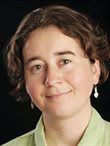
Dr. Kathrin Weidacker is a Lecturer in Psychology at Swansea University's School of Psychology, part of the Faculty of Medicine, Health and Life Sciences. She holds a PhD from Swansea University (2017) following degrees from Maastricht University (BSc Biological Psychology) and the University of Amsterdam (MSc Brain and Cognition/Clinical Psychology). Her expertise spans impulsivity, psychopathic traits, paedophilia, and gambling, utilizing neuroimaging techniques like EEG, fMRI, and MRS. She teaches modules such as EEG Analysis and Cognitive Forensic Neuroscience. Previously, she served as a Post-doctoral Research Associate at Cambridge University's Department of Psychiatry (2017–2020). Her research focuses on neural underpinnings of forensic populations and addiction-related behaviors, with over 30 peer-reviewed publications. She supervises postgraduate research, including a recent PhD on video game impacts on executive functions (co-supervised with Drs. Rob Lowe and Stephen Johnston).
Sophie Jacques is an Associate Professor in the Department of Psychology and Neuroscience at Dalhousie University, located in Halifax, Nova Scotia. She holds a BA from McGill University, MA and PhD from the University of Toronto, and a Postdoctoral Fellowship from Université de Montréal. Her research focuses on self-control development in children and adults, including cognitive control, behavioral control, and emotion regulation, with a particular interest in how language influences these processes and their long-term outcomes. She uses experimental and longitudinal methods, including studies with typically developing children and domestic dogs. Dr. Jacques has received significant funding including the Public Health Agency of Canada’s SEAK project (Associate Lead) and NSERC grants. Her work has been recognized through awards like the APA Div.7 Dissertation Award. She serves on the editorial board of the Journal of Cognition and Development and has contributed to seminal frameworks like the Flexible Item Selection Task (FIST). Education: BA, McGill University MA, University of Toronto PhD, University of Toronto Postdoctoral Fellowship, Université de Montréal Key Research Themes: Developmental trajectories of executive functions Language’s role in cognitive flexibility Animal cognition (canine behavioral studies) Grants & Awards: Public Health Agency of Canada Innovation Strategy Phase II ($2.76M) NSERC Discovery Grant (2003-2012) NSERC Postdoctoral Fellowship (2001-2003) Her research bridges developmental psychology and applied methodologies, with a focus on interventions that improve cognitive and emotional outcomes in children. Recent work explores the predictive power of executive functions on academic performance and anxiety development. Collaborations extend to animal behavior studies, examining parallels between human and canine socio-cognitive processes.
Robert Rosenbaum is an Associate Professor and Director of Graduate Studies in the Department of Applied and Computational Mathematics and Statistics at the University of Notre Dame’s College of Science. His research focuses on computational and mathematical modeling of neural circuits, particularly examining excitatory-inhibitory balance in cortical circuits and the intersection of neuroscience with artificial intelligence. He holds a PhD in Mathematics from the University of Houston (2011), following a BS in Computer Science and Mathematics (2006). After postdoctoral work at the University of Pittsburgh, he joined Notre Dame in 2014. Education: PhD in Mathematics, University of Houston, 2011 MS in Mathematics, University of Houston, 2008 BS in Computer Science and Mathematics, 2006 Research interests include understanding how neural circuits process information, particularly through mechanisms like synaptic plasticity and network dynamics. Recent work explores how biological principles can inform AI and vice versa. His models bridge theoretical neuroscience with practical applications, emphasizing computational tools like Python-based simulation frameworks. His most recent articles (2020–2025) highlight advancements in neural circuit modeling, predictive coding-AI links, and plasticity mechanisms. He has contributed to understanding high-dimensional dynamics in low-dimensional networks and functional connectomics in visual cortex studies. His work on Oja’s plasticity rule and meta-learning algorithms demonstrates efforts to align biological plausibility with machine learning. Rosenbaum’s lab focuses on interdisciplinary approaches to neural computation, leveraging mathematical rigor and computational methods. He directs graduate studies, fostering training in applied mathematics and computational neuroscience.
Marc LAVOIE is a Full Professor and Researcher in the Department of Psychiatry and Addictology at the Université de Montréal. He leads the Cognitive Psychophysiology Laboratory at the Centre de Recherche de l’Institut Universitaire en Santé Mentale de Montréal (IUSMM), specializing in neurocognitive and psychophysiological research. His work focuses on Tourette syndrome, obsessive-compulsive disorder (OCD), and schizophrenia, with a particular interest in non-pharmacological treatments and sex differences in brain function. Education: BSc in Psychology (Moncton), MSc in Psychoeducation (Montréal), PhD in Biomedical Sciences (Montréal), postdoctoral training in neuropsychology and psychophysiology (Montréal and Lille, France). Promoted to Full Professor in 2016. Research involves evaluating cognitive-behavioral therapy (CBT) outcomes, emotional memory processing, and the neurophysiological basis of motor control. His lab integrates EEG, biofeedback, infrared oculometry, and biotelemetry technologies. Over 50 publications in high-impact journals, with media attention for his work on behavioral interventions and neuroplasticity in neuropsychiatric disorders. Current projects include psychophysiological treatments for tic disorders, sex differences in schizophrenia, and cognitive remediation strategies. Supervising PhD and Master’s students on topics like ERP correlates of inhibition, motor planning, and emotional regulation. Collaborates on grants from CIUSSS de l’Est-de-l’Île-de-Montréal and Fonds de recherche du Québec. Laboratory facilities include advanced psychophysiological platforms for ERP analysis, EMG, and EEG studies. Active in academic service as Chair of the Scientific Evaluation Committee at IUSMM’s research center. Recruiting students for studies on electrophysiological and motor processes in Tourette syndrome.
Doug Saddy is Professor of Language Sciences and Founding Director of the Centre for Integrative Neuroscience and Neurodynamics (CINN) at the University of Reading. As Director of the MSc in Cognitive Neuroscience program, he promotes interdisciplinary research bridging psychology, neuroscience, and linguistics. Research combines behavioral experiments, neurocognitive methods, and computational modeling to investigate language processing mechanisms. Current projects examine cognitive effects of multilingualism, hierarchical structure learning, and neural dynamics of language comprehension using Lindenmayer grammars. Publication output demonstrates consistent focus on neurocognitive aspects of language processing across typical and clinical populations. Recent work explores multilingual brain restructuring, rhythmic influences on syntax processing, and computational models of hierarchical learning. Leadership includes establishing two university research centers: the Centre for Literacy and Multilingualism and CINN. These initiatives foster collaboration across psychology, neuroscience, and computational disciplines to address complex questions in cognitive science.
Overview Dr. Bornali Bhattacharjee is an Associate Research Scientist in the Department of Immunobiology and Associate Director at the Center for Infection & Immunity at Yale School of Medicine. Her work focuses on understanding immune trajectories in post-acute infection syndromes, particularly Long COVID and myalgic encephalomyelitis/chronic fatigue syndrome (ME/CFS). She leads multidisciplinary projects integrating pathogen genomics, evolutionary biology, and host-pathogen interactions. Education PhD in Molecular Epidemiology & Virology (Indian Statistical Institute & University of Calcutta) MS in Biochemistry (University of Calcutta) Postdoctoral Training: Viral Genomics & Evolution (University of Massachusetts Medical School) Research Interests Dr. Bhattacharjee’s research bridges genomic analysis of pathogens with immune profiling in chronic post-infectious conditions. Central themes include: Deciphering immune signatures in Long COVID through multi-omic approaches Characterizing viral evolution and host adaptation mechanisms Evaluating therapeutic interventions for post-acute sequelae of infections Key Publications Her recent work includes landmark studies on: Distinct immunotypes in ME/CFS identified via cerebrospinal fluid analysis Impact of nirmatrelvir/ritonavir in Long COVID patients (PAX LC trial) Vaccination effects on immune phenotypes in Long COVID cohorts Awards Ramanujan Fellowship (2014), Department of Science & Technology, India Collaborations & Trials Leads the PAX LC trial evaluating antiviral treatments for Long COVID, collaborating with experts like Dr. Akiko Iwasaki and Dr. Harlan Krumholz. Engages in translational research to bridge basic science findings to clinical applications. Labs & Teams Associated with the Center for Infection & Immunity, a hub for global health research and pathogen discovery.
Joo-Hyun Song is an Associate Professor in the Department of Cognitive and Psychological Sciences at Brown University, affiliated with the Brown Institute for Brain Science. She holds a B.A. from Seoul National University (1998) and a Ph.D. from Harvard University (2006), followed by postdoctoral training at the Smith-Kettlewell Eye Research Institute. Her research focuses on integrating cognitive processes like attention and decision-making with visually-guided actions, using behavioral, fMRI, EEG, and neurophysiological methods. Key areas include sensorimotor learning, action selection biases, and perceptual decision-making dynamics. Her work has been supported by NIH, NSF, and the Rhode Island Foundation, earning awards such as the NSF CAREER Award and Salomon Faculty Research Award. She teaches courses on perception, visual action, and cognitive processes. Her lab, the Perception, Action & Cognition Lab, has trained numerous graduate and undergraduate students, many of whom have pursued academic and industry roles. Recent research emphasizes individual differences in motor learning and human-robot interaction dynamics. Notable collaborations include studies on radial bias in perception, inhibitory control in children, and temporal orienting of attention. Her articles span journals like Psychological Science, Journal of Neuroscience, and Attention, Perception & Psychophysics, reflecting her interdisciplinary approach to understanding brain-behavior relationships.
Krishnan Padmanabhan is an Associate Professor in the Department of Neuroscience and Biomedical Engineering at the University of Rochester School of Medicine and Dentistry (SMD). He holds joint appointments in both departments and leads the Neural Circuits and Computation Laboratory. Padmanabhan earned his BS in Biology and History and MS in Physiological Sciences from UCLA, followed by a PhD in Neuroscience from Carnegie Mellon University. He was a Francis Crick-Irwin Jacobs Junior Fellow at the Salk Institute before joining URMC. His research focuses on understanding neuronal function in the mammalian brain, particularly how neural circuits underlie computations disrupted in psychiatric and neurological disorders. Techniques include multi-electrode electrophysiology, induced pluripotent stem cells (iPSCs), and computational modeling. Recent work explores representational stability in olfactory systems, rigor in brain organoid research, and Alzheimer’s disease impacts on hippocampal coding. His lab investigates how biophysical neuron properties influence circuit function and disease mechanisms. Padmanabhan collaborates across disciplines, affiliated with the Center for Visual Science and involved in training programs like NBA and NSC tracks. The lab’s projects span sensory processing, iPSC-based disease modeling, and algebraic approaches to neural coding.
Damon A. Clark is a Professor of Molecular, Cellular and Developmental Biology, Physics, and Neuroscience at Yale University. He is co-Director of Undergraduate Studies (co-DUS) for the Neuroscience Major and co-Director of Graduate Studies (co-DGS) for the Interdepartmental Neuroscience Program. Clark is affiliated with the Quantitative Biology Institute and the Wu Tsai Institute. He earned his PhD in 2007 from Harvard University, focusing on physics and neuroscience. Research Interests: His lab investigates how neural circuits perform computations, particularly in the fruit fly's visual system. Using genetic tools, they study how neurons contribute to motion detection and decision-making. The lab employs experimental techniques including electrophysiology, imaging, and behavioral analysis. Awards: Clark has been recognized with the Alfred P. Sloan Research Fellowship (2015), Searle Scholar Award (2014), and Smith Family Award (2013). Students and Trainees: Clark has mentored numerous students, including PhD candidates in Neuroscience, Physics, and interdisciplinary programs, as well as undergraduates contributing to projects in the lab. Notable alumni include Bara Badwan (PhD '20) and Jacob Zavatone-Veth (PhD '19). Labs and Collaborations: The lab collaborates with researchers at Yale and institutions like Harvard and Princeton, focusing on topics ranging from circuit dynamics in flies to comparative studies with mice and humans. Recent work explores collision avoidance, visual adaptation, and the neural basis of motion illusions. Publications: Over 50 peer-reviewed articles, including high-impact studies in Neuron , Current Biology , and Nature , highlight his contributions to understanding neural computation in naturalistic contexts.
Ryne Estabrook is a Clinical Assistant Professor at the University of Illinois Chicago , specializing in quantitative psychology and longitudinal modeling. He contributes to the Statistics, Methods, and Measurement Core and focuses on advanced psychometric techniques. Education : PhD (2010), MA (2007) in Quantitative Psychology from University of Virginia; BS (2005) in Psychology from Arizona State University. His research emphasizes: Longitudinal latent variable modeling Measurement invariance across age groups Statistical programming frameworks Developmental psychopathology Behavioral genetics applications Recent work explores prenatal behavioral influences, neurophysiological development, and psychosocial interventions in oncology, employing growth mixture models and computational approaches. He contributes to OpenMx software development for structural equation modeling.
Dr. Hannah Kirk is a Senior Lecturer in Developmental Psychology at Monash University's Turner Institute for Brain and Mental Health in Melbourne. She leads the Child Development and Digital Technologies (CDDT) Lab and serves as Deputy Director of the Neurodevelopment Research Theme. With a PhD in Psychological Sciences from Monash, her research focuses on how digital technologies and environmental changes impact children’s mental health, cognitive development, and learning, particularly for neurodivergent and rural/remote children. She co-invented a FDA-approved digital attention intervention for neurodivergent children and pioneered eco-anxiety assessment tools for primary schoolers. Dr. Kirk has held roles like Chief Research Officer at Tali Digital (2016–2018), advancing digital health tools. Her awards include the NHMRC Early Career Fellowship (2018–2022) and ABC Radio National’s Top 5 Scientists (2019). She actively collaborates on projects like ADHD studies in Indigenous Australian children and youth mental health programs in Malaysia. Her research spans 25+ publications, with recent work on post-pandemic cognition recovery and ADHD’s social impacts. She supervises Honours and HDR students, mentors through PsychSec, and engages in public outreach via media interviews and conferences.
Megan Spencer-Smith is a Senior Lecturer in Developmental Psychology and Director of Undergraduate Education (on campus) at the School of Psychological Sciences, Monash University, Melbourne, Australia. Her research focuses on cognitive training in pediatric populations and developmental outcomes in children with agenesis of the corpus callosum. She holds a PhD from the University of Melbourne (2008) and has held postdoctoral fellowships at institutions such as the Karolinska Institute and Murdoch Childrens Research Institute. Education: PhD in Child Neuropsychology, University of Melbourne (2008) Visiting Research Fellowships: Hospital for Sick Children (Toronto, Canada), Inselspital (Bern, Switzerland), and Karolinska Institute (Sweden) Research interests revolve around: Cognitive training efficacy and sustained benefits in children Developmental differences in cognitive, academic, and behavioral functions in typically developing children and those with agenesis of the corpus callosum Notable awards include the Harold Mitchell Travelling Fellowship (2011) , Monash University’s Jenny Redman Prize (2016) , and multiple competitive fellowships. She contributes to global efforts aligned with UN Sustainable Development Goals, particularly in health and education equity. Advising and grants: She supervises PhD students and leads projects such as Understanding ADHD in Indigenous Australian children and Digital Training Technology for Cognitive Skills . Her lab at Monash investigates neurodevelopmental outcomes and intervention strategies for pediatric populations.
Erin Mckay is a Research Fellow at the Turner Institute for Brain & Mental Health, Monash University. Her research focuses on understanding and addressing cognitive and emotional challenges in adolescents with neurodevelopmental disorders, particularly Attention Deficit Hyperactivity Disorder (ADHD). She investigates social motivation deficits, emotion regulation impairments, and the efficacy of innovative interventions like virtual reality (VR) training programs. Her work contributes to UN Sustainable Development Goals related to mental health and well-being. Key research areas include the interplay between ADHD traits, social anxiety, and inhibitory control. She has led randomized controlled trials (RCTs) evaluating interventions such as the Alfi VR program for inhibitory control training and the TALI program for attention rehabilitation in children with brain injuries. Collaborations with co-authors like Prof. Kirk and Dr. Cornish highlight her interdisciplinary approach to clinical psychology and neuroscience.
Dr. Jackie Chappell is an Associate Professor in Animal Behaviour at the University of Birmingham and Deputy Head of the School of Biosciences. She holds a DPhil from the University of Oxford (1996) and has been at the University of Birmingham since 2004. Her research focuses on animal cognition, particularly tool use in New Caledonian crows, and practical applications of cognition in captive animal welfare. She collaborates with institutions like Twycross Zoo and the Bornean Orangutan Survival Foundation to improve enclosure design for great apes and parrots. Her academic roles include teaching modules such as 'Animal Behaviour: From Theory to Application' and supervising student projects, often involving fieldwork at zoos. She has secured grants from NERC, the ARCUS Foundation, and the Royal Society. Dr. Chappell’s work extends to editorial roles in journals like Animal Behaviour and Learning & Behavior , and she engages in public outreach through podcasts and media. Key research projects include the Enclosure Design Tool (EDT) , which uses wild ape behavior data to optimize zoo enclosures, and studies on parrot cognition and welfare. Her interdisciplinary collaborations span computer science, psychology, and conservation biology.
Stefan Pulver is a Senior Lecturer at the School of Psychology and Neuroscience, University of St Andrews, where he leads research in the neuroethology of movement in small animals. He is affiliated with the Centre for Biophotonics, Centre for Higher Education Research, and the Institute of Behavioural and Neural Sciences. He is currently accepting postgraduate research students and supervising PhD projects in insect movement neurobiology. BA, Colby College, USA (1999) PhD, Brandeis University (2009) His research centers on understanding how insect brains control complex locomotion across varied terrains, using integrative methods spanning genetics, anatomy, electrophysiology, live imaging, biomechanics, and field behavior. He works with species such as flies, beetles, and aquatic invertebrates, with findings relevant to vertebrate neuroscience and bio-inspired robotics. His lab emphasizes sustainable and accessible science practices. The recent publications reflect a strong focus on motor control in Drosophila and Tribolium larvae, with themes including neural circuit motifs, locomotor variability, force sensing technologies, and computational modeling of neuronal memory. His work frequently combines cutting-edge optical and genetic tools to decode movement at neural and biomechanical levels. Stefan Pulver has been involved in multiple research projects funded by BBSRC and NERC, including those on neural network resilience, open-source microscopy (STRÏMM), and rapid imaging technologies. He serves as Principal Investigator and Co-Investigator on several grants, supporting students and collaborative research. He is actively engaged in teaching and academic leadership: he founded and coordinates the MRes in Neuroscience program and advises the Students Teaching Teachers Teaching Students (ST3S) initiative. He has also co-directed major training workshops such as the Neurobiology of Drosophila Summer Course at Cold Spring Harbor and the CrawFly neurophysiology workshop. His lab collaborates with external partners including BugLife Scotland and Cairn Research, and his work contributes to UN Sustainable Development Goals in areas like sustainable science and biodiversity. He has served as an editor for Scientific Reports and is a member of the Education Committee for the Faculty for Undergraduate Neuroscience.