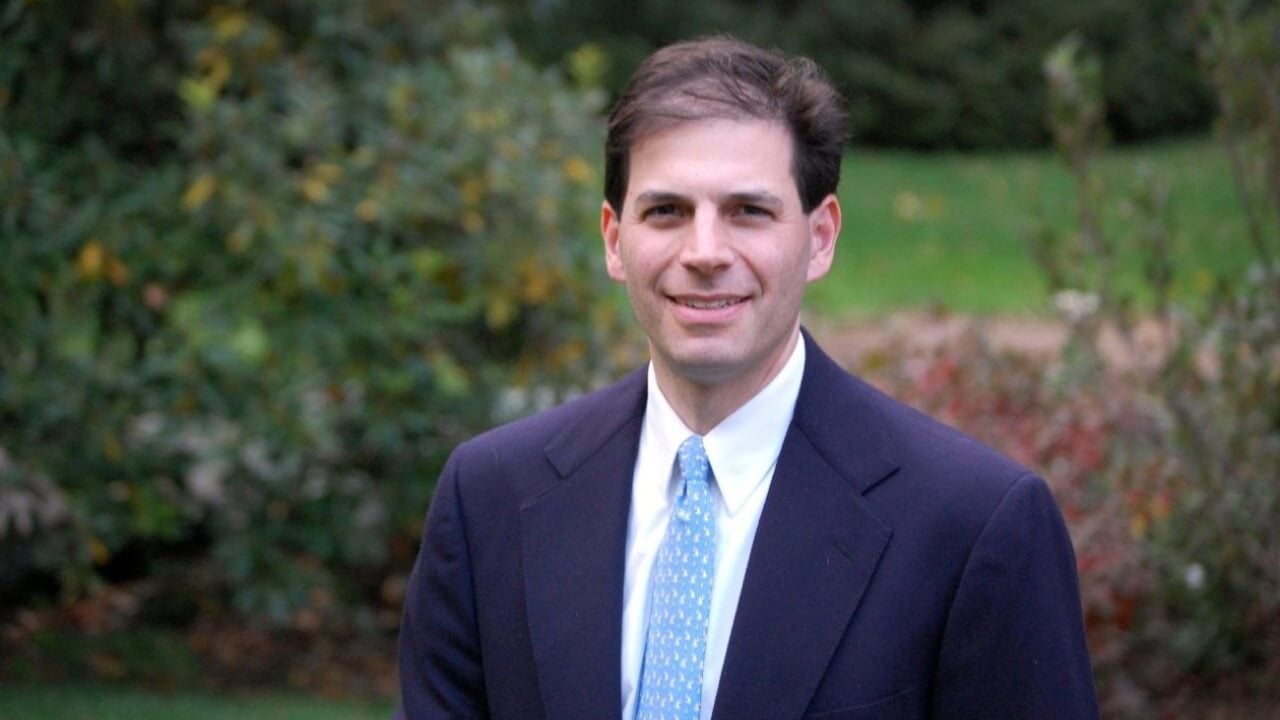
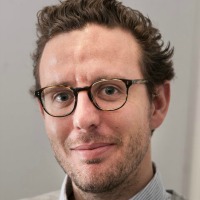
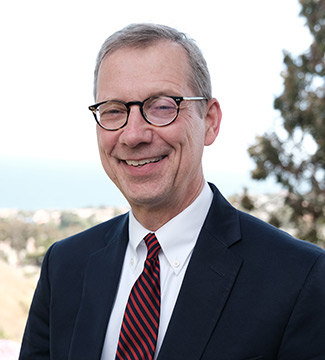
Jeffrey A. Cooper is a Professor of Law at Quinnipiac University School of Law , where he teaches courses in estate planning, wills and trusts, and taxation. He previously served as Associate Dean for Research and Faculty Development and is currently faculty adviser to the Quinnipiac Probate Law Journal . Education: AB from Harvard University, JD from Yale University, LLM from New York University Research Interests: His work focuses on tax policy , estate and gift taxation , and the intersection of federal tax law with state probate systems . He specializes in trust enforceability , uniform trust code , and historical analysis of tax legislation. Publications: Recent articles address perpetual trusts , state death tax decline , and curriculum reforms in estate planning education. His scholarship is widely published in national law journals and cited in casebooks. Scientific Awards: Academic Fellow, American College of Trust and Estate Counsel (ACTEC) Faculty Scholar, Quinnipiac University Professional Background: Before academia, Cooper practiced law for over a decade as a principal at Cummings & Lockwood, senior officer at United States Trust Company, and special counsel to Shipman & Goodwin. He also served as a senior adviser to Fiduciary Trust Company International.
Dr. Julian Limberg is a Senior Lecturer in Public Policy at the Department of Political Economy, King’s College London. He previously held a post-doctoral position at Ludwig Maximilian University of Munich and earned his PhD in Political and Social Sciences from the European University Institute. His research focuses on public policy and political economy, particularly inequality dynamics, tax policy, and environmental governance. Education: PhD in Political and Social Sciences (European University Institute), Post-doctoral Research (Ludwig Maximilian University). Affiliations: Public Policy and Regulation Research Group, Quantitative Political Economy Research Group, Global South Research Group. His work examines the causes and consequences of progressive taxation, climate policy effectiveness, and public perceptions of fiscal fairness. Recent studies include the impact of dedicated climate ministries on emissions reduction and the link between financial sector growth and tax policies. Limberg is also engaged in projects analyzing how technological changes influence tax preferences and the societal consequences of major tax cuts for the wealthy. Key articles highlight his contributions to understanding taxation trends, climate policy implementation, and the interplay between economic shifts and fiscal strategies. He collaborates across disciplines, bridging political science and economics to address contemporary governance challenges.
Camille Landais is a Professor of Economics at the London School of Economics and Political Science (LSE), where she leads the Department of Economics. She serves as Director of STICERD (Suntory and Toyota International Centres for Economics and Related Disciplines) and Co-Director of the LSE-Gates Hub for Equal Representation in the Economy (H.E.R.). Additionally, she is a member of the French Council of Economic Advisers (CAE). Her research expertise spans Public Finance, Labour Economics, Applied Microeconomics, and Microeconometrics, with a focus on gender inequality, taxation policies, and child penalties. Landais holds a PhD in Economics from the Paris School of Economics. Her research interests include optimizing public spending efficiency, analyzing the economic impacts of family policies, and addressing wealth inequality through tax reforms. Recent work emphasizes the 'child penalty' phenomenon, migration responses to wealth taxation, and strategies for achieving full employment. She has contributed to high-impact publications such as the Review of Economic Studies and collaborates internationally on projects like the Child Penalty Atlas. Landais teaches advanced courses in public economics and actively engages in policy advising. She directs research centers that prioritize interdisciplinary approaches to economic challenges and inequality reduction. Her work frequently involves large-scale data analysis, including banking data and microsimulation techniques, to evaluate policy outcomes. Education: PhD in Economics, Paris School of Economics Research Centers: Director of STICERD, Co-Director of H.E.R., International Inequalities Institute Associate Teaching: EC325/EC426/EC534 (Public Economics modules) Professional Roles: Member of French Council of Economic Advisers, Editor of LSE Public Policy Review
Nora Waitkus is a Professor of Sociology at Heidelberg University's Max-Weber Institute of Sociology and an Assistant Professorial Research Fellow at the London School of Economics' International Inequalities Institute. Her research focuses on socio-economic stratification, wealth inequality, class dynamics, housing inequalities, and economic elites. She holds a PhD in Sociology from the University of Bremen, an M.A. in Political Science from Freie Universität Berlin, and a B.A. in Political Science from the University of Hamburg. Key research areas include: wealth concentration mechanisms, institutional drivers of inequality, cross-national comparative analysis, and media portrayals of economic elites. She employs methods like longitudinal household surveys, media data analysis, and survey experiments. Her recent work emphasizes how redistribution policies moderate income-wealth linkages, the role of inheritance in wealth legitimacy, and gender disparities in wealth accumulation across occupational classes. Awards: RC28 Significant Scholarship Award, Aleida Hagenaars Memorial Award, NWO Talent Grant (VENI) Grants: VENI project on Varieties of Wealth , Wealth Conflicts within Families (TiU Grant) She leads the Chair of Comparative Social Stratification at Heidelberg University and maintains active collaborations with institutions like Tilburg University and the University of Michigan.
Frank Cowell is a Professor of Economics at the London School of Economics (LSE), where he serves as a CASE (Centre for Analysis of Social Exclusion) and STICERD (Suntory and Toyota International Centres for Economics and Related Disciplines) Associate. His academic work spans several decades with publications dating from the early 1990s through to 2018, demonstrating sustained scholarly contribution to the field of economics. Professor Cowell's research primarily focuses on inequality and poverty measurement, income and wealth distribution, taxation, and social mobility. His work combines theoretical economic analysis with empirical applications across different countries and contexts. His research interests include methodological approaches to measuring inequality, particularly addressing challenges related to top incomes and wealth concentration, as well as examining the relationship between social identity and redistributive preferences. His publication record reveals consistent engagement with methodological issues in inequality measurement, with numerous papers addressing statistical robustness, decomposition techniques, and comparisons of income and wealth distributions across countries. His more recent work has increasingly focused on wealth distribution, inheritance, and intergenerational mobility, reflecting evolving scholarly interest in these areas. He has collaborated extensively with researchers across Europe, particularly on cross-national comparative studies using datasets like the Luxembourg Wealth Study. Professor Cowell has made significant contributions to the theoretical foundations of inequality measurement, developing alternative approaches that address limitations in conventional indices. His work on median-normalized inequality measures represents an important methodological innovation aimed at better capturing changes at the top of the income distribution. Throughout his career, Cowell has examined the relationship between economic theory and empirical measurement, often bridging gaps between abstract welfare economics and practical policy applications. His research has implications for tax policy design, social welfare programs, and understanding the dynamics of economic inequality across different populations and time periods. As a CASE and STICERD Associate, Professor Cowell contributes to LSE's research environment focused on social exclusion, inequality, and public policy analysis. His work has been published in numerous discussion papers, journal articles, and book chapters, establishing him as a significant contributor to the field of distributional economics.
Jeffrey R. Brown is the Josef and Margot Lakonishok Professor of Business and Dean of the Gies College of Business at the University of Illinois at Urbana-Champaign. He also serves as Director of the National Bureau of Economic Research (NBER) Retirement Research Center and previously led the Center for Business and Public Policy. His expertise spans macroeconomics, finance, and political economy, with a focus on retirement security, public insurance markets, and policy design. Education: Brown holds a PhD in Economics from MIT (1999), an M.P.P. from Harvard (1995), and B.A. degrees in Economics and Political Science from Miami University (1990). He has held roles at the White House Council of Economic Advisers, the Social Security Advisory Board, and as a consultant to federal agencies and financial firms. Research Interests: His work examines the intersection of public and private insurance markets, particularly retirement-related topics like annuities, pensions, Social Security, and long-term care. He explores behavioral economics barriers to optimal retirement planning and the impact of tax policies on savings behavior. Publications: Brown’s recent work analyzes trends in retirement income strategies, political connections and firm value, and the effects of policy interventions on consumer decisions. His articles appear in leading journals such as the Review of Economics and Statistics and Journal of Financial Economics . Awards: He has received prestigious honors including the Paul A. Samuelson Award and Lumina Award. His leadership roles include trustee positions at TIAA and advisory roles at the Brookings Institution’s Tax Policy Center. Administration & Governance: As Dean, Brown oversees strategic initiatives and academic programs. He also chairs the TIAA Audit Committee and contributes to policy discussions through roles at the Center for Audit Quality and UI Singapore Research LLC.
Paul L. Caron is the Duane and Kelly Roberts Dean and Professor of Law at Pepperdine University Caruso School of Law. He joined the faculty in 2013 after serving as a Distinguished Visiting Professor from 2010-2013. Previously, he was Associate Dean for Research and Faculty Development at Pepperdine (2015-2017) and Associate Dean of Faculty at the University of Cincinnati College of Law. Juris Doctor (J.D.), Cornell Law School, 1983 Master of Laws (LL.M.), Boston University, 1988 A.B., Georgetown University, 1979 Dean Caron is a leading tax scholar with over 50 publications on estate taxation, wealth transfer, and inequality. He pioneered the use of blogs in legal education, founding Tax Prof Blog , the most popular tax blog globally. His recent works focus on estate tax policy, tax compliance, and the intersection of taxation and economic equity. Key trends include analysis of the sharing economy, tax regulation, and Piketty's inequality theories. Named 3rd Most Influential in Legal Education (The National Jurist, 2015) Top 100 Influential in Tax & Accounting (Accounting Today, 2006-present) Dean Caron has served as Series Editor for over 50 law student books and edits three tax journals via SSRN. He has advised on tax policy and legal education reforms, contributing to national debates on fiscal responsibility and equity.
Miranda Perry Fleischer is a Professor at the University of San Diego School of Law, serving as the Richard and Kaye Woltman Professor in Finance and Herzog Endowed Scholar. She holds an LLM from New York University School of Law, a JD from the University of Chicago Law School, and a BA from Duke University. LLM, New York University School of Law (2003) JD, University of Chicago Law School (1996) BA, Duke University (1993) Her research focuses on tax law, charitable giving, universal basic income, and wealth redistribution. She has published extensively on topics including dynastic wealth transfers , libertarian perspectives on basic income , and the morality of charitable bequests . Her work bridges legal scholarship with political philosophy and economic policy. Miranda Perry Fleischer has received multiple honors, including: University Professor (2020-2021) Thorsnes Prize for Excellence in Teaching (2014-2015) Provost’s Achievement Award (University of Colorado, 2011) Herzog Endowed Scholar (2024-2025, 2017-2018) She previously practiced estate planning at Shaw Pittman LLP and litigated for the Institute for Justice. Her scholarly work appears in journals such as Southern California Law Review and University of Chicago Law Review .
Thilo R Huning is a Senior Lecturer in Economics at the University of York, specializing in economic history, political economy, and economic geography. His research explores the long-run determinants of modern economic growth and inequality, focusing on Germany and Central Europe. B.Sc. Business Computing (University of Paderborn) M.Sc. Information Systems (Humboldt-Universität zu Berlin) Dr Economics (Humboldt-Universität zu Berlin) His work combines data science with historical analysis, addressing topics such as: Geographic impacts on state capacity and taxation Inheritance traditions and industrialization Customs unions and trade route dynamics Regional identity effects on investment Agglomeration economies in post-WWII Germany Social media influence on political outcomes like Brexit Key publications include studies on the Zollverein’s formation, historical viticulture’s economic legacy, and the role of soil observability in early state development. He teaches undergraduate and postgraduate courses in economic history and development economics.
Dr. Daniel J. Carr is a Senior Lecturer in Private Law at the Edinburgh Centre for Private Law within the School of Law at the University of Edinburgh. He joined the School of Law in August 2011 after completing his doctoral studies at the University of Cambridge. His academic career includes previous positions as a lecturer at the University of Dundee (2009-2011) and research assistant for Neil Walker's report on final appellate jurisdiction in Scotland. Dr. Carr's educational background includes an LLB (Hons) and MSc by research from the University of Edinburgh, followed by a PhD from the University of Cambridge with his dissertation titled "Equity in Scots Law." He has also conducted research at the Max Planck Institute for International and Comparative Private Law as part of an exchange with the University of Cambridge. Dr. Carr's research focuses on Equity Law, Private Law, Scots Law, Trust Law, Property Law, Succession Law, Fiduciary Duties, and Civil Law. His scholarly work examines the historical development and contemporary application of equity principles within the Scottish legal system, comparative analysis of property and succession laws across jurisdictions, and emerging legal issues related to digital assets. He has made significant contributions to understanding the relationship between law and equity in Scotland, the evolution of fiduciary duties, and the application of equitable remedies in modern contexts. His extensive publication record demonstrates a consistent scholarly output across multiple legal domains, with particular emphasis on the intersection of historical legal principles and contemporary legal challenges. Dr. Carr's work often bridges theoretical legal concepts with practical applications in Scottish courts and comparative legal systems, showing particular expertise in property law, succession law, and the application of equitable principles to modern legal problems. Over 40 research outputs spanning 2007-2025 Multiple book publications including "Ideas of Equity" (2017) and "Property" (3rd edition, 2018) Regular contributor to the Edinburgh Law Review Dr. Carr has contributed significantly to legal education through his textbook "Property" (now in its 3rd edition) and has engaged with the legal community through reviews of major legal texts and participation in scholarly discussions on evolving legal frameworks. As a dedicated educator, Dr. Carr maintains regular office hours on Tuesdays from 16:00-17:00 and is actively involved in the academic life of the University of Edinburgh's Law School. His research continues to shape understanding of private law principles in Scotland and their relationship to broader common law traditions.
Elena Korchmina is a tenure-track Assistant Professor in the Department of Economics at the University of Bologna. Her research focuses on the Economic History of Early Modern Europe, particularly the Fiscal History of European Elites and the Economic History of Eastern Europe. She holds a PhD in Russian History and has specialized in Russian economic history, analyzing topics such as serfdom, taxation, and elite behavior. Her work explores the interplay between fiscal systems, social structures, and economic development in historical contexts. Notable research areas include the impact of serfdom on economic growth, tax compliance mechanisms among aristocrats, and the conceptual evolution of terms like 'profit' and 'luxury' among Russian elites. Korchmina has received multiple awards from the Higher School of Economics (HSE), including recognitions for academic excellence in publications and teaching. Her research has been published in leading journals such as The Journal of Economic History, The Economic History Review, and The Journal of the History of Economic Thought. She has also contributed to collaborative projects comparing historical agricultural policies between Denmark and Russia, and analyzing corruption dynamics in the Russian Empire. Her recent studies include groundbreaking work on income inequality in Moscow Province during the early 19th century and the role of gender in wealth accumulation among Russian nobility. Korchmina's interdisciplinary approach combines archival research with quantitative methods to shed light on long-term economic and social processes.
Dr. Lucie Laumonier (she/her) is a historian specializing in late medieval France, particularly focusing on Languedoc and Montpellier. Holding a PhD from Université de Sherbrooke & Université Montpellier 3 (2013), she completed postdoctoral fellowships at Concordia University (2015-2016) and University of Minnesota - Twin Cities (2014-2015). Her research spans gender roles, family structures, fiscal systems, and religious practices in urban medieval contexts. 2020: Graduate Diploma in Journalism, Concordia University 2015-2016: FRQSC Postdoctoral Fellow, Concordia University 2014-2015: FRQSC Postdoctoral Fellow, University of Minnesota - Twin Cities 2013: PhD in History, Université de Sherbrooke & Université Montpellier 3 Her publication record (2010-present) demonstrates expertise in medieval urban economies, gendered labor dynamics, inheritance systems, and religious institutions. Recent works (2024) on "Women and Work" and "Women in Trade" highlight her ongoing analysis of economic participation in medieval societies. Earlier studies examine tax policies, childcare practices, and family networks across 14th-15th century France. Scientific contributions include fellowships from the Fonds de recherche du Québec – Société et culture. Her email address lucie.laumonier@concordia.ca indicates continued affiliation with Concordia University. While specific laboratory or team affiliations aren't detailed in available records, her collaborative editorial work (e.g., co-editing Montpellier au Moyen Âge ) suggests interdisciplinary engagement.
Prof. Dr. Martin Abraham holds the Chair of Sociology and Empirical Social Research at Friedrich-Alexander University Erlangen-Nuremberg (FAU). After earning his doctorate and habilitation in sociology, he served as a research assistant at the University of Leipzig, a visiting professor at the University of Munich, and a full professor at the University of Bern before returning to FAU in 2007. His work spans labor market sociology, organizational research, and social norms, with a focus on reputation dynamics, family-work reconciliation, and digital monitoring systems. Education: University of Erlangen-Nuremberg (doctorate) Academic Journey: University of Leipzig, University of Munich (visiting), University of Bern (2005-2007), FAU (2007-present) Research Collaborations: Institutions in Germany, UK, Netherlands, USA His research explores labor market sociology through lenses like: Occupational structures and mobility Regional labor market dynamics Reputation mechanisms in economic contexts Family-work balance and gender norms Acceptance of digital monitoring systems Experimental analysis of social norms Key publication trends include experimental methods (factorial surveys), social norm analysis in tax/labor contexts, and digital workplace technologies. He frequently collaborates with researchers like Claus Schnabel, Christian Schnabel, and Markus Rudolf. As a leader in FAU's Work in Transition research focus area, he works with strategic partners like the IAB and LASER center, addressing global labor market shifts from sociological and policy perspectives.
Dr April Pudsey is a Reader in Roman History and Deputy Director at Manchester Metropolitan University's interdisciplinary Manchester Centre for Youth Studies . Her work focuses on children's and women's lives in Graeco-Roman Egypt through papyrology and material culture analysis, connecting ancient childcare practices to broader demographic and environmental patterns. Key research areas: Roman Egypt, child slavery, breastfeeding practices, ancient demography Leadership roles: Founding Chair of Post92classics, Co-Chair of Women's Classical Committee Major grants: €280,000 Marie-Sklodowska Curie Fellowship (2021-23), AHRC £380,000 project co-Investigator Her Children of Oxyrhynchos book (Palgrave MacMillan, 2025) synthesizes research on youth cultures from thousands of papyri. She also served as Historical Consultant for Ladybird Books and Hachette Children's Group publications. Recent publications span topics including: 2023 : Global history of youth 2022 : Enslaved children's experiences 2021 : 3D-replicated Roman musical instruments 2017 : Disability studies in antiquity Scientific awards include: Leverhulme Early Career Fellowship (2009-11) AHRB Studentships (2001-2006, 2003-06) External examiner roles at Exeter University and Birkbeck College
Ronald Brinkman is a Lecturer at the Faculty of Law, University of Groningen, specializing in Private Law and Notary Law. He holds a Ph.D. on 'Het fideicommis in de notariële praktijk' (2014) and has been affiliated with the university since 2010. His expertise includes family law, inheritance law, notarial legislation, and tax law. Positions: Public Notary, Substitute Judge at the Arnhem-Leeuwarden Court of Appeal, Editor of Tijdschrift Erfrecht, and contributor to the Fiscaal Tijdschrift Vermogen. Education: Doctoraal Notarieel Recht from the University of Groningen (1994–1998), VWO Diploma (1988–1994). His research focuses on inheritance rights, civil law, and notarial practices. Recent publications address inheritance law complexities, tax calculations in estate contexts, and legal safeguards in estate planning. He actively contributes to legal journals and professional organizations like the KNB (Royal Dutch Notarial Association). Brinkman has held roles in notarial firms since 1999, including partnership positions, and has served on local and national boards, reflecting his dual academic and professional expertise.