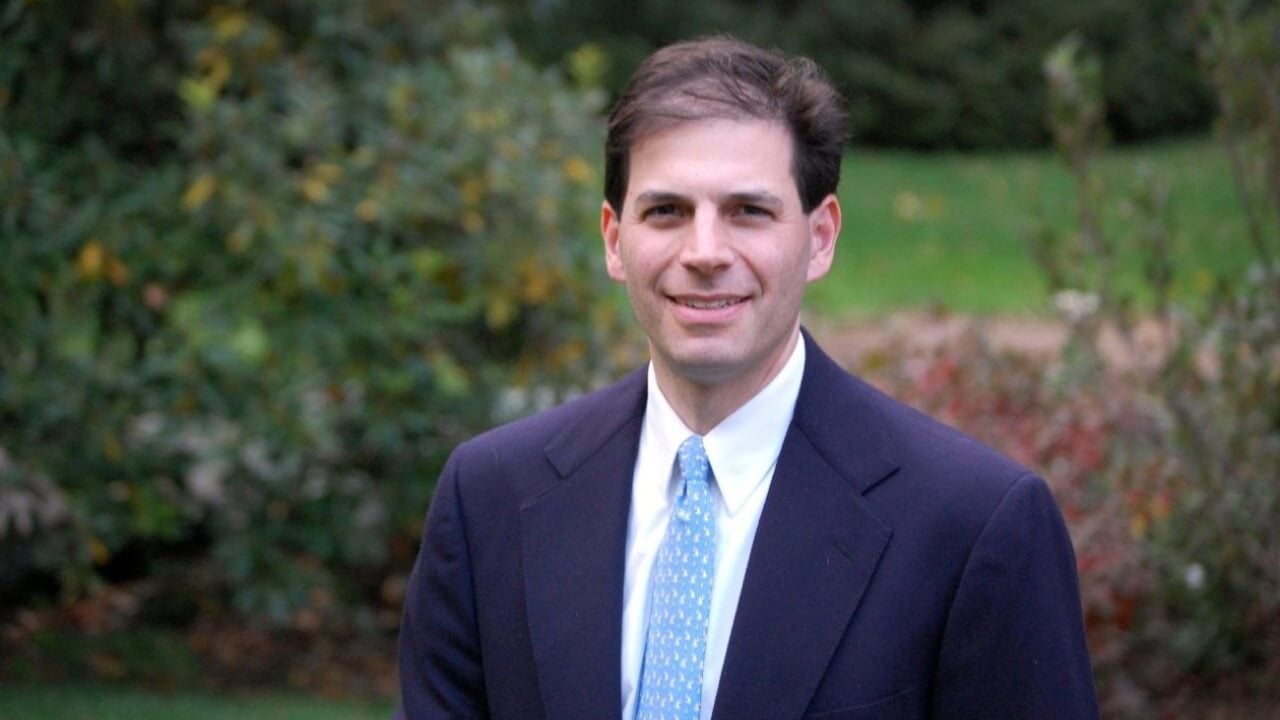
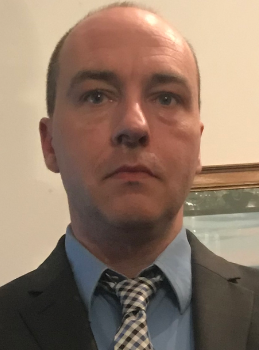
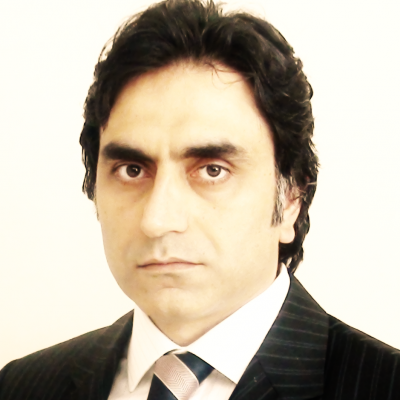
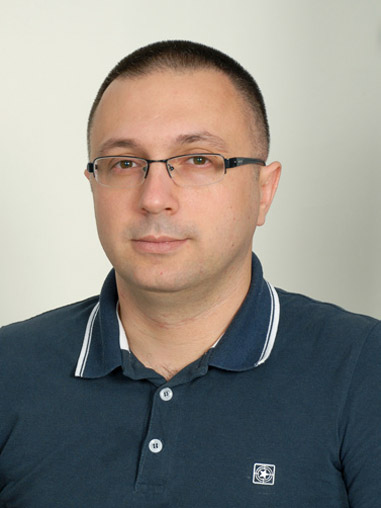
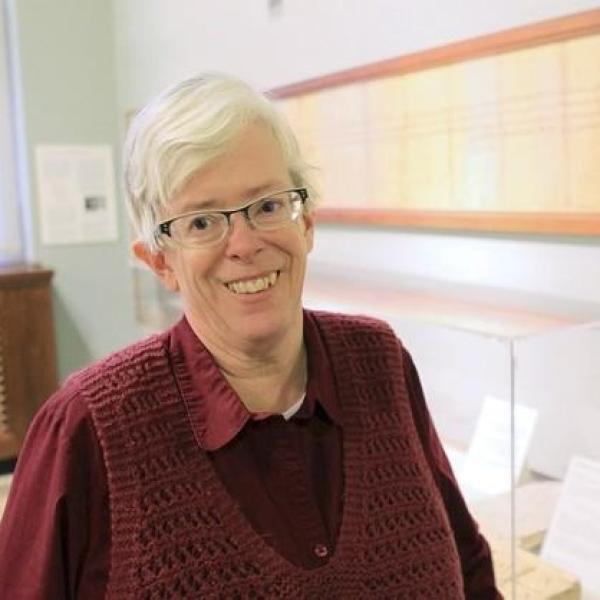
Jeffrey A. Cooper is a Professor of Law at Quinnipiac University School of Law , where he teaches courses in estate planning, wills and trusts, and taxation. He previously served as Associate Dean for Research and Faculty Development and is currently faculty adviser to the Quinnipiac Probate Law Journal . Education: AB from Harvard University, JD from Yale University, LLM from New York University Research Interests: His work focuses on tax policy , estate and gift taxation , and the intersection of federal tax law with state probate systems . He specializes in trust enforceability , uniform trust code , and historical analysis of tax legislation. Publications: Recent articles address perpetual trusts , state death tax decline , and curriculum reforms in estate planning education. His scholarship is widely published in national law journals and cited in casebooks. Scientific Awards: Academic Fellow, American College of Trust and Estate Counsel (ACTEC) Faculty Scholar, Quinnipiac University Professional Background: Before academia, Cooper practiced law for over a decade as a principal at Cummings & Lockwood, senior officer at United States Trust Company, and special counsel to Shipman & Goodwin. He also served as a senior adviser to Fiduciary Trust Company International.
David Arbesú is Professor of Spanish at the University of South Florida, serving as Head of the Spanish Section and Graduate Program Director for the MA in Spanish within the Department of World Languages. He has presented at over 70 national and international conferences on medieval and Golden Age Spanish literature. His research specializes in manuscript studies, codicology, and palaeography, with significant contributions to Golden Age textual scholarship and Florida colonial history. Arbesú has discovered key historical manuscripts including Pedro Menéndez de Avilés' conquest records and legal proceedings concerning colonial Florida, demonstrating interdisciplinary expertise in literary analysis and historical documentation. Recent publications (2018-2023) reveal sustained focus on critical editions of medieval Spanish texts like Sendebar and Libro de los gatos , alongside colonial Florida manuscripts. His work consistently bridges philological precision with historical context, producing authoritative editions that illuminate textual transmission and cultural frameworks of Iberian literature. Arbesú serves on the Editorial Board of Harvard UP’s Dumbarton Oaks’ Medieval Library Spanish Series and as Book Review Editor for La corónica: A Journal of Medieval Hispanic Languages, Literatures, and Cultures , maintaining active leadership in scholarly publication standards.
Prof. Dr. Halis Aydemir is a Professor at the Department of Basic Islamic Sciences in Dumlupınar University's Faculty of Theology. He holds concurrent administrative roles including Vice Rector (2015–2019), Dean of the Faculty of Islamic Sciences (2015–2020), and Head of the Hadith Department. His academic journey includes a BSc in Electrical Engineering (Istanbul Technical University, 1995) and a PhD in Basic Islamic Sciences (Uludağ University, 2004). His research focuses on applying probability theory to Hadith transmission systems, developing mathematical models for inheritance calculations in Islamic law, and Arabic language education. Notable projects include the 'Al-Musnad al-Sahih' manuscript verification (2002–2012) and multiple inheritance calculation software projects. He has authored over 80 publications including critical editions of Hadith collections and theoretical works on Hadith reliability. Awards: No scientific awards explicitly mentioned. Administrative roles include leadership in religious affairs projects and educational software initiatives. Research highlights include probabilistic analysis of narrator reliability, isnad model evaluation, and digital tools for Islamic legal calculations. His work bridges traditional Islamic scholarship with modern quantitative methods.
Michael Lampson is Professor of Biology at the University of Pennsylvania's School of Arts and Sciences, with secondary appointments in the Department of Cell and Developmental Biology. He serves as faculty in the Cell and Molecular Biology (CAMB) and Biochemistry and Molecular Biophysics (BMB) Graduate Groups, and is affiliated with the American Society for Cell Biology (ASCB). Ph.D., Cornell University, Weill Medical College, 2002 AB, Harvard College, 1994 Dr. Lampson's research program focuses on fundamental mechanisms of chromosome biology, with particular emphasis on cell division, centromere inheritance, and meiotic drive. His lab investigates how selfish genetic elements can violate Mendel's First Law through meiotic drive, the stability of centromere chromatin through the germline, and the role of repetitive satellite DNA in chromosome segregation. Using innovative approaches including mouse model systems, optogenetic tools, and biochemical techniques, his work bridges cell biology, genetics, and evolutionary biology to address questions with implications for reproductive biology, cancer, and genetic inheritance. Analysis of Dr. Lampson's recent publications reveals a strong focus on the intersection of centromere biology, meiotic drive, and chromosome segregation mechanisms. His work increasingly incorporates computational approaches alongside experimental systems to study evolutionary aspects of centromere function. The research demonstrates consistent innovation in methodology, particularly in developing optogenetic tools for precise manipulation of cellular processes. Key themes include the role of satellite DNA variation, mechanisms of non-Mendelian inheritance, and the stability of chromatin structures through cell division and development. Searle Scholar Award American Association for the Advancement of Science (AAAS) fellow Dr. Lampson's research is supported by multiple NIH grants including from NIGMS, NHGRI, NICHD, and NCI, as well as University of Pennsylvania funding sources including the University Research Foundation, Abramson Cancer Center, and several specialized research centers. He collaborates extensively with researchers across disciplines, including Ben Black (Biochemistry), Dennis Discher (Chemical Engineering), Dave Chenoweth (Chemistry), and Roger Greenberg (Cancer Biology), reflecting the interdisciplinary nature of his work. His lab has trained numerous graduate students and postdocs who have gone on to successful careers in academia and industry. The Lampson Lab maintains state-of-the-art facilities for cell biological, genetic, and biochemical research, with specialized equipment for live-cell imaging, optogenetic manipulation, and mouse genetics. The lab fosters a collaborative environment that bridges molecular, cellular, and evolutionary perspectives on chromosome biology.
Mashood Baderin is a Professor at SOAS University of London's School of Law, where he has established himself as a leading scholar in Islamic law, international law, and human rights. With over 90 publications spanning more than two decades, Professor Baderin has made significant contributions to bridging Islamic legal traditions with contemporary international legal frameworks. Professor Baderin's research interests focus on the intersection of Islamic jurisprudence with modern legal challenges. His work explores how Islamic legal principles can inform contemporary human rights frameworks, international criminal justice systems, and social reform initiatives in Muslim-majority countries. He has extensively examined Islamic legal theory (usul al-fiqh), the application of Islamic law in modern contexts, and the relationship between Islamic law and international legal norms. His most recent publications reveal a continued focus on the universality of international law from Islamic perspectives, the application of Islamic law in African contexts, and the relationship between Islamic principles and human rights frameworks. Professor Baderin has edited significant works including 'Islamic Legal Theory' (2014) and authored the widely recognized 'Islamic Law: A Very Short Introduction' (2021). Professor Baderin has supervised numerous doctoral students working on Islamic law topics with regional focus on Nigeria, Saudi Arabia, and the UAE. His students' research often examines gender issues, legal reform, and the practical application of Islamic law in contemporary settings.
Wolfgang Forster is a Professor of Civil Law, Comparative Legal History and Legal Philosophy at the University of Tübingen, where he has been teaching since 2011. He served as Dean of the Faculty of Law from October 2020 to September 2022. Prior to his appointment at Tübingen, he was Professor of Civil Law and Legal Philosophy at the University of Giessen from 2007 to 2011. He completed his habilitation at LMU Munich in 2005 with a thesis on insolvency law history and earned his doctorate in 2000 with research on Karl Christian Friedrich Krause's legal philosophy. Forster studied law and philosophy at the Ludwig Maximilian University of Munich from 1987 to 1992, supported by the German Academic Scholarship Foundation and the Bavarian Scholarship for Gifted Students. He passed his first state examination in law in 1992 and his second in 1995. Between 1995 and 2000, he served as a research assistant at KU Eichstätt/Ingolstadt before becoming a research assistant at FAU Erlangen from 2000 to 2003 and at LMU Munich from 2003 to 2007. His research focuses on Civil Law, particularly the general part of the law of obligations, contract law, and family law; German and Spanish legal history, especially regarding insolvency law; History of Canon Law; and Legal philosophy and history of legal philosophy, with special emphasis on Karl Christian Friedrich Krause's legal philosophy. His work bridges historical legal scholarship with contemporary legal theory, examining how historical legal concepts inform modern jurisprudence. Forster's approach combines meticulous historical research with philosophical analysis, revealing continuities and transformations in legal thought across centuries. His publications demonstrate a consistent focus on the intersection of legal history, philosophy, and practical application. Forster has published extensively on Krausist legal philosophy, Spanish legal history, insolvency law development, and historical aspects of family law. His work shows particular strength in analyzing how legal concepts migrate across national boundaries and historical periods, with recurrent attention to German-Spanish legal connections. Hermann Conring Prize 2010 (for his habilitation thesis) Max Weber Prize of the Bavarian Academy of Sciences (for his dissertation) Faculty Prize of the Faculty of Law of the LMU Munich (for his dissertation) Forster has received significant research funding, including publishing support from the German Research Foundation for his habilitation thesis. He co-organized the 40th German Legal Historians' Day in 2014 and was a co-applicant for the interdisciplinary research training group 'Ambiguity: Production and Reception' approved by the DFG in 2013. He has also served as a visiting professor at the University of Wisconsin Law School in Madison, USA. His work demonstrates strong institutional support and recognition within the German and international legal academic community.
Bonnie Honig, Nancy Duke Lewis Professor at Brown University, holds joint appointments in Modern Culture and Media and Political Science , with courtesy roles in Religious Studies and Theater and Performance Studies . Her scholarly work intersects democratic theory , feminist critique , and cultural analysis , examining how inherited political narratives shape collective action. Education: PhD (Johns Hopkins, 1989), MSc (London School of Economics, 11981), BA (Concordia University, 1980) Central to her research is a reexamination of classical texts like Sophocles' Antigone and Euripides' Bacchae to develop agonistic democratic models . Her Antigone, Interrupted (2013) challenges heroic readings of Antigone, proposing instead a collective feminist politics rooted in textual counter-interpretations. Public Things: Democracy in Disrepair (2017) argues for shared objects as democratic orientation devices , while Emergency Politics (2009) analyzes crisis responses beyond Schmittian frameworks. The 2021 dual publications A Feminist Theory of Refusal and Shell Shocked: Feminist Criticism After Trump extend these themes through Trump-era analysis and queer theoretical lenses . Scientific Awards: 2023-24 Guggenheim Fellowship 2012 David Easton Prize 2012 Okin-Young Award 2007-08 American Philosophical Society Fellowship 1994 Scripps Prize Affiliated with the American Bar Foundation and Digital Democracy Group at Simon Fraser University, Honig's teaching spans feminist theory , Politics and Film , and advanced seminars on Arendt . Her Shell Shocked analysis of Trump-era disaster patriarchy connects classical feminist frameworks to contemporary political crises.
Aglaia McClintock is an Associate Professor of Roman and Ancient Law (IUS/18) in the Department of Law, Economics, Management and Quantitative Methods at the University of Sannio. Her research examines Roman legal institutions through interdisciplinary lenses including anthropology, gender studies, and symbolic analysis. Research Focus: She specializes in archaic Roman criminal law, gender dynamics in legal systems, the evolution of punitive practices, and cross-cultural juridical symbolism. Her work frequently intersects with: Anthropological interpretations of legal concepts Historical analysis of women's rights and social weapons Ritual aspects of justice administration Comparative Indo-European legal traditions Publication Trends: Her recent articles (2016-2024) demonstrate concentrated scholarship on: 1) deconstruction of archaic penal systems and social control mechanisms, 2) gender-focused reexamination of Roman legal anthropology, and 3) symbolic analysis of justice iconography in classical civilizations. Methodologically, she employs textual analysis, linguistic etymology, and socio-legal contextualization. Awards & Recognition: No scientific awards or fellowships are documented in available sources. Academic Service: She has contributed to international conferences on Roman law and authored commemorative works for legal scholars like Francesco Salerno. No information regarding student advising, grants, or laboratory leadership is present.
Prof. Dr. Dimitrije Ćeranić is an Associate Professor of Civil Law at the Faculty of Law, University of East Sarajevo. He has been a faculty member since 2005 and was promoted to Associate Professor in 2021. His primary teaching focuses on Inheritance Law, Family Law, Property Relations of Spouses, Children's Rights, and Notarial Law across undergraduate and graduate programs. He also guest lectures at the University of Belgrade and teaches Social Work at the Faculty of Philosophy in East Sarajevo. Education: LL.B. (2005) from University of East Sarajevo. Master’s (2008): University of Belgrade on will validity. PhD (2016): University of Kragujevac on inheritance effects of adoption. Research Interests: Civil Law with emphasis on family law, inheritance rights, adoption law, property rights, and legal conventions. He has published 42 articles, a monograph on inheritance legal consequences of adoption (2020), and a co-authored handbook on domestic violence protection (2021). Administrative Roles: Vice Dean for Research (since 2018), Head of Civil Law Department (since 2022), Editorial Secretary of the Faculty Yearbook, and former Library Board President. He actively contributes to legal reforms in Republika Srpska, including drafting family law and higher education legislation. Professional Activities: Member of national/international legal associations, trade unions, and supervisory boards. Serves as a reviewer for legal journals and proceedings. Fluent in English and Russian.
Sue Mialon is an Associate Professor in the Department of Economics at Emory University. Her research focuses on Law and Economics, Industrial Organization, and Microeconomic Theory. She holds a PhD from the University of Texas, Austin (2002), alongside advanced degrees from Korea University (MA, 1996; BA, 1992). Her work analyzes regulatory frameworks, market competition dynamics, and the intersection of legal systems with economic behavior. Notable themes include net neutrality, discrimination incentives, and the economic impacts of legal standards. Recent studies address abortion policy, inheritance inequality, and counterterrorism strategies. Mialon’s research often bridges theoretical models with real-world policy implications, contributing to fields like antitrust enforcement and public policy evaluation. Her publications span journals such as the Journal of Regulatory Economics, Labour, and the Journal of Economic Behavior and Organization. She maintains a website at Emory and can be contacted via smialon@emory.edu.
Full Professor Cristina Coppola teaches at the Department of Law, Political and International Studies at the University of Parma . She obtained her Law degree (1999) and PhD in Private Law (2004) before being hired as a University Researcher (2005) and promoted to Associate Professor (2006) and Full Professor (2019). She has served as President of the Master's Degree in Law (2017-2019 and 2020-2023). Her research focuses on Private Law with special attention to Family Law and Succession Law , including topics like inheritance renunciation, testamentary interpretation, and civil unions. She has participated in doctoral examination commissions and served on the editorial board of Famiglia, persone e successioni (2005-2013). Recent publications address contractual assistance obligations, civil union annulment for consent defects, and pre-divorce agreements. She regularly presents at national legal conferences and teaches Civil Law II (Contracts) and Private Law Institutions to Law and Political Science students. Contact: cristina.coppola@unipr.it . Office hours: Tuesdays 11:30-13:30 (in person/Teams) at University Street, 7, Parma (43121).
Alessio Reali is a Lecturer at Università Carlo Cattaneo - LIUC , specializing in Law Sciences . His academic work focuses on Trust Law , Private Law , and Intergenerational Wealth Transfer , with a particular emphasis on the application of the Hague Convention on Trusts within Italian legal systems and cross-border contexts. 2023 : Analyzed express trusts for intergenerational wealth transfers in Italian corporate/family contexts, stressing alignment with Hague Convention. 2022 : Critiqued Swiss trust law proposals as foreign-focused, warning against civil law system conflicts. 2021 : Explored Italian private law fundamentals and transnational testamentary substitution mechanics. 2020 : Addressed restitution law, mutual dissent in banking contracts, and real estate trust formalities. 2019 : Investigated collation waivers and irrevocable donor acts in inheritance disputes. His research bridges Italian Civil Code interpretations with international fiduciary frameworks, advocating for systematic legal harmonization over ad hoc solutions like 'internal trusts'. Publications demonstrate expertise in reconciling common law and civil law systems, particularly in trust instruments and transnational succession cases.
Janet H. Johnson is the Morton D. Hull Distinguished Service Professor of Egyptology at the University of Chicago, affiliated with the Oriental Institute. She has been teaching and researching at UChicago since 1971. Her expertise spans Egyptian language, particularly Demotic, and the history of Egypt's Late Period (1st millennium B.C.). Education: Ph.D. in Egyptology, University of Chicago, 1972 Research Interests: Johnson focuses on Demotic grammar, legal texts, gender studies in ancient Egyptian society, and economic practices. She directs the Chicago Demotic Dictionary Project , a foundational resource for studying this ancient language. Her work bridges linguistic analysis with social history, particularly examining women’s roles, property rights, and legal frameworks in Late Period Egypt. Teaching & Contributions: She teaches courses on Middle Egyptian hieroglyphs, ancient Near Eastern history, and gender in Egyptology. Her publications include Thus Wrote 'Onchsheshonqy (a Demotic grammar) and analyses of Demotic verbal systems. She frequently collaborates on projects involving Demotic papyri and museum artifacts. Labs/Teams: Lead director of the Chicago Demotic Dictionary Project , an interdisciplinary effort to document and analyze Demotic language materials.
Stefan Gosepath is a Professor of Practical Philosophy at the Institute of Philosophy, Faculty of Humanities, Free University of Berlin. He serves as Principal Investigator for multiple major research projects including the Volkswagen Foundation's 'The Deserving Rich' and the Excellence Cluster 'Contestations of the Liberal Script' (SCRIPTS), where he coordinates the Research Unit 'Order'. His academic affiliations include membership in the Academy of Sciences and Literature Mainz and participation in the Berlin-Potsdam Research Group on International Rule of Law. His research spans political philosophy with particular focus on theories of justice (global and intergenerational), equality, democracy, human rights, and responsibility. Key areas include social and legal philosophy, action theory, meta-ethics (particularly rationality and normativity), and theories of the good life. His work critically examines meritocracy, inheritance systems, and wealth distribution within liberal democracies. Notable publications demonstrate evolving focus from foundational theories of egalitarian justice to contemporary challenges including pandemic ethics, digital governance, and contestations of liberal democracy. His recent work analyzes merit systems, inheritance justice, and global philosophical frameworks through interdisciplinary lenses combining philosophy, sociology, and political science. Opus Magnum Stipendium der VW Stiftung (2021/22) Ordinary Member, Academy of Sciences and Literature Mainz (since 2020) Principal Investigator, Excellence Cluster SCRIPTS (since 2019) Gosepath leads multiple collaborative research initiatives including 'Transforming Solidarities' (Berlin University Alliance) and 'Liberal Order, Legitimate Authority and Disagreement' (with Mattias Kumm). His work connects theoretical frameworks with practical policy challenges, particularly regarding social cohesion in migration societies and democratic resilience. He maintains active engagement with public discourse through media appearances and policy-relevant interventions on issues of justice and democratic governance.
Robert Glenn Howard is a Professor of Communication, Religious Studies, and Folklore at the University of Wisconsin–Madison , directing the Digital Studies program and DesignLab . He holds affiliations with the Information School, School of Journalism and Mass Communication, Religious Studies Program, and Folklore Program. His research explores empowerment through digital expression, focusing on vernacular authority, communication technologies, and firearms discourse. Recent work emphasizes how everyday people use technology to shape identities and challenge institutional authority. Education: Ph.D. in Communication, University of Oregon, 2001 M.A. in Communication, UCLA, 1996 B.A. in Communication, UC Berkeley, 1993 Research Interests: Howard investigates participatory performance, rhetorical theory, and digital ethnography. He examines how vernacular forms of authority interact with institutional frameworks, particularly in discourses around firearms and internet communities. Recent projects include 'GunTalk: Everyday Discourse and Weaponized Expertise.' Publications Overview: His work spans books like Gunlore: American Traditions about Firearms (2024) and Digital Jesus (2011), alongside over 20 peer-reviewed articles analyzing digital networks, vernacular authority, and gun culture. His writing bridges folklore studies, communication theory, and digital humanities. Labs & Initiatives: He leads the Digital Studies Program , fostering interdisciplinary research in digital culture, and oversees DesignLab , which explores human-centered design for communication challenges.