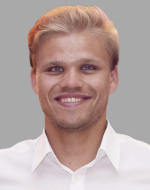
Daniel S. Berger is a Principal Researcher at Microsoft's Azure Systems Research Group in Redmond, focusing on the efficiency, sustainability, and reliability of cloud platforms . He is also an Affiliate Assistant Professor at the Paul G. Allen School of Computer Science at the University of Washington, where he teaches graduate classes. His research spans systems stack innovations for sustainability , including work on memory tiering , repair operations , and cooling systems (Zissou). He leverages system prototyping , simulation , and statistical modeling in his work, often collaborating with PhD students and postdocs from institutions like Columbia, University of Toronto, CMU, and Princeton. Recent publications highlight his leadership in CXL-based memory management , carbon-efficient cloud design , and latency-aware caching . His tools, such as Belatedly and FOO , have demonstrated significant improvements in cache performance and latency optimization. Best Paper Awards: USENIX OSDI 2023, HotCarbon 2023, ACM SOSP 2021. Distinguished Paper: ASPLOS 2023. His work has been integrated into Apache Traffic Server and Microsoft production systems , with open-source tools and datasets released for reproducibility. Collaborations include hardware and OS development teams within Azure and academia.
Friedrich Jasper is a Doctoral student and Scientific staff member at the Institute for Technology Assessment and Systems Analysis (ITAS) within the Karlsruhe Institute of Technology (KIT), actively contributing to the Research group 'Research for Sustainable Energy Technologies' and the POLiS Cluster of Excellence on Post Lithium Storage. His educational background includes: M.Sc. in Industrial Engineering from Karlsruhe Institute of Technology (2021-2023) B.Sc. in Industrial Engineering from Karlsruhe Institute of Technology (2016-2021) Semester abroad at Université Grenoble Alpes (2023) Semester abroad at Universidad del Pais Vasco (2019) Jasper's research centers on system analysis and life cycle assessment (LCA) of Post-Lithium Battery technologies, with emphasis on sodium-ion systems. He investigates environmental impacts of cathode materials like Prussian White and NVP/C using primary data, identifying sustainability hotspots across battery lifecycles. His work integrates techno-economic and socio-environmental dimensions to support climate-friendly energy storage development and policy decisions, addressing challenges in data availability and interdisciplinary collaboration. Analysis of his publication trends reveals consistent focus on prospective sustainability assessment of emerging battery technologies, particularly sodium-ion systems. His research bridges early-stage development with real-world applications, emphasizing circular economy principles, resource criticality, and environmental impact quantification. Key methodological contributions include primary-data-driven LCA frameworks and interdisciplinary integration approaches for battery sustainability evaluation. Scientific awards: None documented in available information. Jasper has no recorded advisees or formal student supervision. His research is embedded within the POLiS Cluster of Excellence and 'Sustainable and safe concepts for climate-friendly shipping' project, though specific grant details are not publicly enumerated. Collaborative work spans institutions including KIT, Université Grenoble Alpes, and international networks. He operates within ITAS's 'Research for Sustainable Energy Technologies' group, which conducts interdisciplinary systems analysis for energy transition challenges. Current work includes sodium-ion battery LCA, sustainable shipping concepts, and hybrid energy storage assessment, leveraging KIT's infrastructure for sustainable technology development.
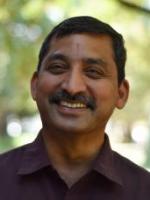
Kamesh Namuduri is a Professor in the Department of Electrical Engineering at the University of North Texas. He leads the Autonomous Systems Laboratory (ASL), focusing on cooperative decentralized systems, UAV networks, and advanced air mobility solutions. Key Research Areas: Autonomous Systems UAV Networks and Communications Collision Avoidance Strategies Disaster Recovery Applications Digital Twin Airspace Management Recent work examines advanced air mobility through vehicle-to-vehicle communication frameworks, wireless localization challenges, and air corridor traffic control. The ASL investigates mobility, security, and cooperative control in airborne networks with applications to surveillance, planetary exploration, and emergency response. Laboratory Facilities: The Autonomous Systems Laboratory supports research in robotic systems, wireless sensor networks, and decentralized consensus-building algorithms.
Dr. Ali Nabavi is a Reader in Energy Systems and Head of the Centre for Energy Decarbonisation and Recovery at Cranfield University . He serves as Director of the Advanced Chemical Engineering Course and has made significant contributions to low-carbon energy systems through experimental and computational research. PhD in Energy (Cranfield, 2016) MSc in Thermal Power and Fluid Engineering (Manchester, 2012) Research Areas: Carbon capture, utilization, and storage (CCUS) Reversible solid oxide fuel cells Hydrogen purification technologies Process intensification for energy efficiency Microfluidic particle formulation Hydrogen social acceptance modeling Recent Publications: Focus on sorption-enhanced reforming, hydrogen social dynamics, and catalyst development for gas processing. His work spans experimental validation and computational modeling across multiple energy systems. Scientific Contributions: Development of novel adsorbents for CO2 capture and optimization of solid oxide fuel cell integration in transportation applications. Facilities: Utilizes Cranfield's High-Performance Computing (HPC) systems and advanced material synthesis labs with pilot-scale reactor infrastructure.
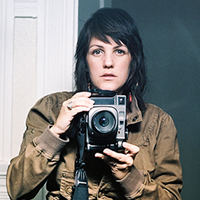
Dr. Heather M. O'Brien-Takahashi is a multidisciplinary artist and academic currently serving as Assistant Professor of Cinema within the School of Media Arts at Southern Illinois University Carbondale. With an MFA from California Institute of the Arts, her artistic practice spans film/video, photography, and installation art that critically examines familial archives, nationhood constructs, and memory accuracy illusions. Educational background Teaching experience across four continents International exhibition history Research focus areas Her creative research explores intersections between expanded cinema, psychoanalysis, and decolonial theory through experimental formats. Recent projects like like the delayed rays of a star (2024) investigate Lebanese temporal politics while older works such as Where this photograph was found (2017) interrogate WWII legacy through family archives. Funded by organizations including The Mellon Foundation, European Commission ERASMUS+, and American University of Beirut Research Board, her practice incorporates diverse methodologies like FLOATS' maritime anthropology and Byrdcliffe Guild's ecological engagement. Collaborations with artist Jonathan Takahashi and scholars like Juli Carson demonstrate her interdisciplinary approach.
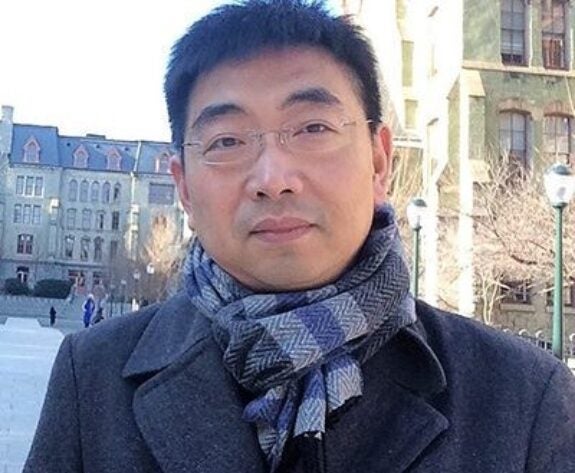
Chenyi Ma is a Research Assistant Professor at the University of Pennsylvania's School of Social Policy & Practice. Collaborating with the Department of Housing and Urban Development and the US Census Bureau, he co-leads the national Homeless Desistance project and works as a statistician at the Center for Guaranteed Income Research. His work bridges social and spatial epidemiology to advance disaster risk reduction and sustainable development. Research Focus: Social determinants of health in disasters, social vulnerability in preparedness, resilience in recovery, policy-oriented risk analysis, and philanthropy dynamics post-disasters. Key Projects: Co-Principal Investigator for Homeless Desistance (funded by HUD/Census Bureau), statistician roles in disaster policy research. Methodology: Integrates epidemiological frameworks with behavioral and spatial analysis to address systemic inequities. Article Trends: 15 recent publications emphasize disaster epidemiology, income inequality, housing vulnerability, and psychosocial responses. Topics span Hurricane Harvey housing needs, pandemic mental health disparities, and resilience frameworks.
Bülent Bakar is a Professor at Marmara University , specializing in Turkish history with a focus on the Republican era, Ottoman history, and World War II. He holds a PhD in History of the Republic of Türkiye from Marmara University (2003) and has served as Assistant Professor (2005) and Associate Professor (2012) before attaining his current rank. Education: Licence in History, Marmara University (1992) Master's in History of the Republic of Türkiye, Marmara University (1996) Doctorate in History of the Republic of Türkiye, Marmara University (2003) Bakar’s research bridges press history , economic policies , and migration dynamics . His work examines Turkish-German relations, wartime media narratives, and public health initiatives during crises. He has supervised numerous theses on topics ranging from Istanbul’s political structure to Turkish-Russian POW exchanges. His publications span journals and edited volumes, analyzing themes like WWII rationing , refugee movements , and minority policies in the Ottoman and Republican eras. He has taught courses at both undergraduate and graduate levels at Marmara University and Yeditepe University, including Turkish Economic History and Ottoman Settlement Policies.
Genda Chen is a Professor and the Robert W. Abbett Distinguished Chair in Civil Engineering at Missouri University of Science and Technology. He serves as Director of the System and Process Assessment Research Laboratory, Director of the INSPIRE University Transportation Center, and Associate Director of the Mid-America Transportation Center. Dr. Chen's research spans multiple domains in civil and structural engineering with a strong emphasis on integrating advanced technologies for infrastructure assessment and resilience. His work prominently features structural health monitoring, smart infrastructure systems, bridge engineering, and the application of machine learning and computer vision techniques to civil infrastructure problems. Specific research interests include ultra-high performance concrete applications, structural connections, resilient infrastructure design for extreme events, unmanned vehicle systems for infrastructure inspection, and digital twinning of civil infrastructure. Analysis of Dr. Chen's recent publications reveals a strong trend toward integrating artificial intelligence and machine learning with traditional civil engineering practices. His work increasingly focuses on computer vision applications for infrastructure inspection, including crack detection, bridge element segmentation, and delamination detection using thermal imaging. There's also a significant emphasis on developing resilient infrastructure systems, particularly for bridges, with research on SMART shear keys for recovery after extreme events. His publications demonstrate a multidisciplinary approach that bridges civil engineering, materials science, robotics, and data science. Robert W. Abbett Distinguished Chair in Civil Engineering As Director of the System and Process Assessment Research Laboratory and the INSPIRE University Transportation Center, Dr. Chen leads research initiatives focused on transportation infrastructure assessment and innovation. His work with the Mid-America Transportation Center involves regional transportation research and technology transfer, with numerous projects addressing bridge inspection, structural monitoring, and resilient infrastructure design. Dr. Chen's laboratory work centers on structural assessment technologies, with particular emphasis on sensor development, unmanned systems for infrastructure inspection, and digital twin applications for civil infrastructure. His research team appears to be actively engaged in developing next-generation tools for bridge inspection, structural health monitoring, and resilient infrastructure design, with strong connections to transportation agencies and industry partners.
Yoichi Sato is a Professor at Waseda University's School of Social Sciences, where he has been a full-time faculty member since 2010, directing research on urban space, photographic documentation, and historical urban transformation. His academic journey began with engineering studies at Waseda University, culminating in a Master's and Doctorate in Engineering, establishing his interdisciplinary foundation. Professor Sato's research interests span urban space documentation through photography, visual archives of urban history, and the analysis of post-war urban reconstruction, particularly focusing on Tokyo during the Occupation period. His work uniquely bridges architectural planning with visual studies, exploring how photographic evidence reveals historical urban transformations that official records often miss. His recent publications demonstrate a clear trend toward repatriating and analyzing American-held photographic archives of occupied Japan, with significant focus on Ginza district in 1945 Tokyo. These works combine historical urban studies with archival science, creating new methodologies for understanding urban space through photographic evidence. Best Presentation Award, 5th Digital Archive Society Research Conference (2020.10) for research on Oliver L. Austin bird collection photographs Best Presentation Award, 4th Digital Archive Society Research Conference (2020.04) for research on repatriating US-held post-war Japanese photographs Professor Sato leads significant research grants including the Japan Society for the Promotion of Science's 'Examining Diverse Perceptions and Memories of the Cold War from the Perspective of Local Communities' (2021-2025) and 'Vernacular Art Theory' project (2019-2022), demonstrating his leadership in interdisciplinary research. He directs Waseda's Institute of Participatory Design (2024-2025), where his team develops innovative approaches to community-based urban research through visual documentation and participatory methods.
Mitsuru Yamada is a Professor at the Faculty of Social Sciences, Waseda University , specializing in International Relations and Peacebuilding with a focus on Southeast Asia . His work examines post-conflict democratization, civil society's role in peace processes, and ASEAN dynamics. PhD in Political Science (Kobe University) MA in International Affairs (Ohio University) His research interests span conflict resolution, nation-building, and non-traditional security in Asia-Pacific. Recent publications analyze East Timor's democratic challenges, ASEAN's expansion, and pandemic impacts on social cohesion. Key trends in his articles include: comparative studies of Southern Thailand and Mindanao; ASEAN's evolving role in regional integration; and civic engagement in post-conflict recovery. He emphasizes socio-economic disparities, cultural identity, and international mediation in peacebuilding frameworks. Professional memberships: Japan International Relations Association , Asia-Pacific Society Authored books: "Peacebuilding Trilogy" , "Understanding Regional Dynamics in Asia-Pacific" His research projects include JSPS-funded studies on cross-border peacebuilding and refugee policy reform. He actively engages in public discourse through media contributions and international symposiums.
Eiichiro Tanaka is a Professor at Waseda University's Faculty of Science and Engineering , specializing in Medical Assistive Technology , Robotics , and Design Engineering . His research focuses on developing wearable robotic systems for gait training, neuro-rehabilitation, and elderly mobility assistance. Key Research Areas : 1. Human-Robot Interaction for emotion-adaptive assistive devices. 2. Biomechanical Modeling of lower-limb assistance. 3. Ontological Frameworks for academic emotion analysis. 4. Non-Powered Exosuits for muscle fatigue reduction. His work integrates deep neural networks and physiological signal processing to create emotion-aware walking aids. Recent studies (2022-2020) demonstrate 24% fatigue delay and 16% walking distance improvement using RE-Gait® devices. Earlier projects include guide-dog robots and self-contained gear diagnostics . All publications employ 3D motion analysis , Wearable Sensors , and torque control algorithms .
Professor Jerry Knox is a leading academic in Agricultural Water Management at the Cranfield Water Science Institute, Cranfield University. He holds the rank of Professor and is actively engaged in research, consultancy, and project leadership in water resources, irrigation, and climate resilience in agriculture. Research Interests: Agricultural water management and irrigation systems Climate change impacts and adaptation in farming Biophysical and water resource modeling Drought resilience and risk management Sustainable food production and net zero agriculture Water-energy-food-environment (WEFE) nexus His recent publications (2022–2024) reflect a strong focus on modeling climate impacts, developing decision support tools (e.g., D-Risk), promoting sustainable irrigation, and addressing water scarcity in both temperate and tropical regions. These works span disciplines including environmental science, agronomy, hydrology, and policy, with a geographic scope covering the UK, Africa, South America, and South Asia. Scientific Contributions: Principal Investigator on multiple high-impact projects funded by FCDO, Innovate UK, Defra, and British Council Author of over 100 peer-reviewed journal papers Google Scholar h-index: 40; Scopus h-index: 31 Developed tools for drought risk assessment and irrigation planning Advising and Funding: He leads and co-leads multiple research grants focusing on climate resilience, irrigation innovation (e.g., floatovoltaics), and sustainable agrifood systems. While specific students are not listed, his collaborative publications suggest active mentorship and research leadership. Labs and Teams: Jerry Knox is affiliated with the Cranfield Water Science Institute and contributes to research communities such as 'Water for Food in a Changing Climate' and 'Resource Recovery'. He collaborates with industry partners (e.g., Dyson Farming, Berryworld) and NGOs, integrating academic research with real-world applications.
Dr. Polly Smith is a research-focused academic affiliated with the Department of Mathematics and Statistics at the University of Reading, within the School of Mathematical, Physical and Computational Sciences. She has been actively publishing since 2007, with a strong emphasis on data assimilation techniques applied to environmental and geophysical systems. Her research interests center on data assimilation , parameter estimation , and model predictability in complex dynamical systems. These include sea-ice models, fluvial inundation forecasting, morphodynamic modeling of coastal systems, and strongly coupled atmosphere-ocean models. Her work combines advanced numerical methods with real-world environmental data to improve forecasting accuracy and model reliability. The recent publications show a trend toward interdisciplinary applications, integrating satellite remote sensing, image-based monitoring, and hybrid variational-ensemble data assimilation methods. Her work spans climate science, hydrology, and coastal engineering, demonstrating a consistent focus on improving predictive capabilities in Earth system modeling. Scientific Awards: No awards explicitly mentioned in the provided text. Dr. Smith has collaborated extensively with leading researchers such as Sarah L. Dance, Nancy K. Nichols, and Andrew S. Lawless. While no formal students or advising roles are listed, her frequent first-author status and technical reports suggest a leadership role in research projects. There is no mention of specific grants, but her work aligns with major environmental modeling initiatives. She has contributed to both peer-reviewed journals and conference proceedings, including the International Conference on Coastal Engineering. Dr. Smith's research is supported by the computational and mathematical infrastructure at the University of Reading. Her work is part of a larger effort in environmental prediction, likely involving collaborations within the university’s meteorology and climate research groups. While no dedicated lab is named, her research falls within the scope of data-driven environmental modeling teams at Reading.
Professor Tim Ryley is a leading academic in aviation and transport planning at Griffith University's School of Engineering and Built Environment. He joined Griffith University in March 2015 as the inaugural Professor of Aviation and has held significant leadership roles including Head of Griffith Aviation and Head of the School of Natural Sciences, managing approximately 100 staff members and over 1,500 students. He is currently a member of both the Cities Research Institute and the Griffith Institute for Human and Environmental Resilience. Professor Ryley has extensive academic experience from previous positions at Loughborough University, Edinburgh Napier University, and the University of Ulster in the United Kingdom. His educational background includes a BSc (Hons) in Geography from the University of Bristol and a PhD in transport planning from Edinburgh Napier University. With over twenty-five years of transport research experience, Professor Ryley's work is industry-linked, transdisciplinary, and problem-based, focusing on aviation sustainability and environmental issues. His research spans four key areas: environmental impacts of air transport, development of alternative air transport solutions (particularly electric aircraft), user attitudes and behavior in aviation, and responses to broader transport challenges. His work involves collaborations with major airports, airlines, and government partners across multiple continents. Professor Ryley has led research projects totaling over $5 million throughout his career, with eleven projects at Griffith University amounting to approximately $500,000 in external funding. He serves on the Editorial Advisory Board of two leading international transport journals: Journal of Transport Geography and Transportation Research Part D: Transport and the Environment. Fellow of the Higher Education Academy (FHEA) Member of the Griffith Learning & Teaching Academy His recent publications demonstrate strong trends toward sustainable aviation solutions, circular economy applications in construction, and aviation's role in climate change mitigation. Professor Ryley's work bridges academic research with practical industry applications, addressing critical challenges in aviation sustainability through innovative approaches to electric aircraft, hydrogen fuel systems, and virtual reality training solutions. As an educator, Professor Ryley serves as Program Director for multiple aviation-related degrees and currently supervises six doctoral students across diverse aviation research topics. His research aligns with several United Nations Sustainable Development Goals, particularly focusing on Quality Education, Affordable and Clean Energy, Decent Work and Economic Growth, Industry Innovation and Infrastructure, Sustainable Cities and Communities, and Climate Action.
Charlotta Turner is a Professor at the Centre for Analysis and Synthesis , Lund University , and serves as Vice Dean of the Faculty of Science . Her research focuses on analytical chemistry for sustainable development , particularly the use of green solvents such as supercritical carbon dioxide and subcritical water in extraction and separation methods. UN Sustainable Development Goals (SDGs) contributor Manager of High Pressure Fluid Facility and Mass Spectrometry Infrastructure Principal Investigator (PI) for projects like Miljövänlig superkritisk process för växtoljor and Quantitative fingerprinting of chemical contaminants in pollinating insects Her work addresses sustainable extraction of valuable substances from food, forest, agricultural, and marine industries . Recent publications highlight advancements in phlorotannin characterization , berry bioactives , and lignin molecular weight analysis . She has supervised 12 research projects and leads teams in KILU/CAS infrastructure . Turner has received multiple awards, including the Svante Arrhenius Award (2017) and Herbert Dutton Award (2015) .