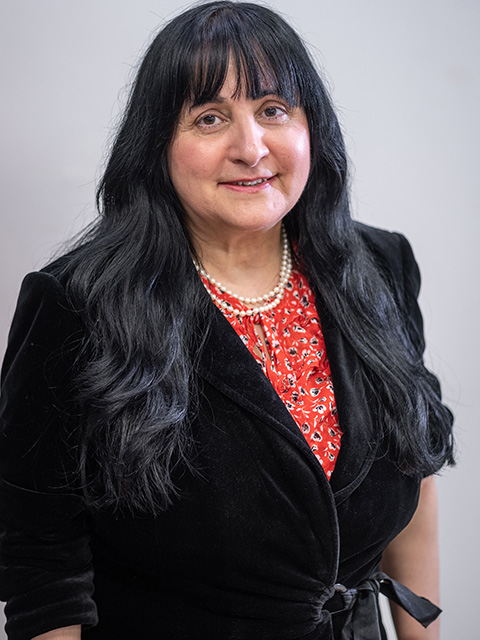
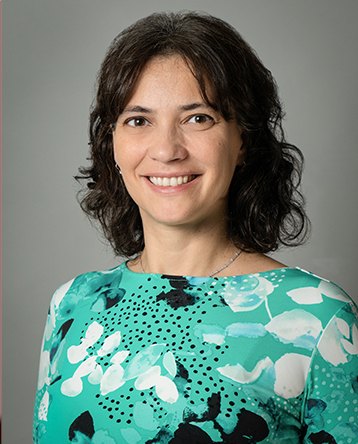
Professor Darren Robinson holds the Chair in Architectural and Urban Sciences at the University of Sheffield 's School of Architecture and Landscape, where he serves as Director of Research. His work bridges social, building, and urban physics through multiscale modeling approaches. RCUK Innovation Fellowship (2018-2021, £268k) Leverhulme Research Programme Grant (2015-2020, £3.4M) EPSRC grant for Model-Predictive Control in buildings (2016-2019, £541k) His research focuses on statistical modeling of human behavior in buildings, urban energy simulation , and integrated assessment modeling for climate policy. Key contributions include stochastic occupant behavior models and urban metabolism frameworks. Notable awards include the Sustainability Science Best Paper Award (2020) , CIBSE Napier-Shaw Medal (2007), and Fellowships from FIBPSA and the Research Council of Norway. He leads the People, Environments and Performance and Multiscale Simulation research groups.
Dr. Maria Anna Polak is a Professor in the Department of Civil and Environmental Engineering at the University of Waterloo, cross-appointed in the Faculty of Engineering. Her research focuses on advanced structural analysis, composite materials, and innovative construction technologies. She specializes in concrete structures, fiber-reinforced polymers (FRP/GFRP), and nondestructive evaluation methods. Her work addresses challenges in structural safety, durability, and sustainable design through computational modeling and experimental validation. Research Interests: Finite Element Analysis of Reinforced Concrete Structures FRP/GFRP Reinforcement for Concrete Applications Punching Shear Behavior and Design 3D-Printed Construction Materials Nondestructive Testing (NDT) with LiDAR and Ultrasonics Time-Dependent Behavior of Polymers and Composites Her recent publications emphasize advancements in computational modeling (FEA) for complex structural systems, material characterization of novel composites, and optimization of concrete components under seismic and environmental loads. Notable trends include integration of emerging technologies like smartphone LiDAR for on-site assessment and development of predictive models for FRP-degraded systems. Grants & Collaborations: Her work has been supported by industry partnerships (e.g., Horizontal Directional Drilling research) and academic initiatives. She contributes to international standards through experimental validation of design methods for modern construction materials. Labs/Teams: Active in the University of Waterloo's Structural Engineering and Applied Mechanics research group, focusing on smart infrastructure and material innovation.
Babak Moaveni is a Professor in the Department of Civil and Environmental Engineering at Tufts University, serving as the Associate Chair since September 2024. He also holds a joint appointment as a Professor in Electrical and Computer Engineering. His research focuses on structural health monitoring, Bayesian inference, earthquake engineering, and offshore wind energy systems. Moaveni earned his Ph.D. in Structural Engineering from the University of California San Diego (2007), following an M.S. (2001) and B.S. (1999) from Sharif University of Technology in Tehran, Iran. His research interests span probabilistic system identification, signal processing, uncertainty quantification, and verification/validation of computational models. Notable grants include leadership in the PIRE project on offshore wind energy digital twins and the Coastal Virginia Offshore Wind Pilot Project. He has supervised multiple Ph.D. and M.S. students, with current advisees including Mehdi Akhlaghi and Nasim Partovi-Mehr. Moaveni has received the Best Presentation Award at the 2022 EDGE Symposium and serves on editorial boards for journals like Structural Health Monitoring and Frontiers in Built Environment . His lab, the Structural Health Monitoring Lab, specializes in infrastructure management and offshore wind energy systems. Key professional activities include membership in the American Society of Civil Engineers (ASCE) and roles on Tufts' Tenure and Promotion Committee. His teaching includes courses on structural health monitoring, numerical methods, and structural reliability.
David Henderson is the Director of the Cyclone Testing Station (CTS) in the School of Engineering and Physical Sciences at James Cook University, Australia. He has over two decades of experience as a research engineer specializing in the performance of low-rise buildings under extreme wind conditions. He previously served as the CTS Research Fellow and Manager, and was seconded as a Postdoctoral Researcher at the University of Western Ontario, Canada, working on full-scale house testing under simulated wind loads. His work bridges engineering research, disaster assessment, and policy development. David's research focuses on wind engineering, structural resilience, and disaster mitigation. His key interests include cyclonic wind loading, internal and external pressure dynamics in buildings, fatigue failure of structural connections, and the vulnerability of housing to severe wind events. He has conducted post-disaster surveys across Australia and Canada, assessing damage from cyclones, tornadoes, and earthquakes. His research has direct applications in building codes, retrofitting strategies, and community risk reduction. The recent publications highlight a strong trend in understanding and mitigating wind-induced damage to residential structures, particularly through full-scale testing, modeling of pressure dynamics, and fragility assessment of roofing systems. His work spans experimental, theoretical, and policy-oriented domains, with a growing emphasis on climate change adaptation and community resilience. Topics such as internal pressure design, load sharing in roof frames, and retrofitting for wind resistance are central to his contributions. 14 research awards (specific names not listed) Active member of Standards Australia code committees Invited speaker at national and international conferences Media contributor on storm damage and building safety David has led multiple research projects funded by councils and agencies focused on extreme wind mitigation, data systems (SWIRLnet), and community risk reduction. While formal student supervision is not explicitly listed, he collaborates extensively with researchers such as John Ginger, Korah Parackal, and Daniel Smith. He has contributed to major studies involving wind load testing, housing vulnerability modeling, and climate adaptation planning. David is a key figure in the Cyclone Testing Station, leading its full-scale testing program and contributing to the development of software for controlled load and measurement systems. His team conducts wind risk assessments for communities and large installations, incorporating terrain analysis and retrofitting evaluations. The CTS serves as a national resource for wind engineering research and disaster resilience innovation.
Emanuele Naboni is an Associate Professor in the Department of Engineering and Architecture at the University of Parma, Italy. He teaches in the Second Cycle Degree program in Architecture and City Sustainability, offering courses such as Architectural Technologies for the Built Environment , Environmental and Outdoor Comfort Assessment , and Innovative Technologies for Sustainable Design from academic year 2019/2020 through 2025/2026. His research focuses on sustainable and climate-responsive architecture, with particular emphasis on urban microclimates, passive design strategies, and building performance optimization in Mediterranean environments. Key areas include facade engineering, thermal comfort, and computational simulation of localized climate impacts. The recent publications (2024–2025) highlight a strong trend in climate change adaptation through architectural and urban interventions. Topics span from simulating hyperlocal temperature variations to optimizing courtyard microclimates using evaporative cooling and adaptive shading, as well as retrofitting modernist urban forms for improved climate resilience. These works reflect interdisciplinary engagement with urban climatology, building physics, and environmental design. Scientific Awards: No awards mentioned in the provided text. Prof. Naboni is actively engaged in teaching and research. There is no mention of formal advising roles, grants, or leadership in labs or research teams within the available information. His scholarly output demonstrates consistent collaboration with researchers such as Marcello Turrini, Barbara Gherri, Carlos Alberto Rivera Gómez, and Carmen Galán-Marín. He contributes to advancing sustainable design practices through empirical and simulation-based studies, particularly focused on urban and architectural responses to climate change in Southern Europe.
Michelle Laboy is an Associate Professor in the School of Architecture at Northeastern University, with affiliate appointments in Civil & Environmental Engineering and the School of Public Policy and Urban Affairs. She holds a Master of Architecture and Urban Planning from the University of Michigan (2005) and a Bachelor of Science in Civil Engineering from the University of Puerto Rico (2001). Her research focuses on transdisciplinary design methods that integrate socio-ecological systems with built environment resilience, emphasizing material circularity and long-term sustainability. Key projects include the Boston LightWells initiative and Common SENSES, which explore community-driven solutions for urban resilience. Laboy has received prestigious awards including the Latrobe Prize (2017 and 2022) and Excellence in Teaching (2020). She co-founded FieLDworkshop, a design research practice addressing ecological and cultural regeneration in cities. Her work bridges architecture, engineering, and policy through projects funded by NSF, DOE ARPA-E, and Autodesk. Research themes include green infrastructure planning, climate-resilient building systems, and participatory modeling for equitable urban development. Laboy has authored/co-authored books such as *The Architecture of Persistence* and over 30 peer-reviewed articles in journals like *Journal of Industrial Ecology* and *Journal of Architecture*. Her teaching spans comprehensive design studios and systems integration courses, emphasizing transdisciplinary collaboration. Education: MArch/MUP, University of Michigan, 2005 BSc Civil Engineering, University of Puerto Rico, 2001 Key Awards: 2022 Latrobe Prize (AIA College of Fellows) 2020 Excellence in Teaching Award (CAMD) 2017 Latrobe Prize (AIA College of Fellows) Grants & Projects: Principal Investigator: Boston LightWells (Autodesk/ Boston Groundwater Trust) Co-PI: Community Resilience in Extreme Temperatures (Northeastern) DOE ARPA-E grant for carbon-negative timber construction Laboy’s practice, FieLDworkshop, operationalizes research into built projects ranging from residential designs to urban-scale interventions. Her scholarly contributions highlight the interplay between technical innovation and social equity in achieving sustainable urban futures.
Professor Michael Davies is Professor of Building Physics and the Environment at the UCL Institute for Environmental Design and Engineering (IEDE) within The Bartlett School of Environment, Energy & Resources at University College London. He is also a member of the UK Climate Change Committee. With over two decades of academic experience, Professor Davies leads research at the critical intersection of building physics, environmental design, and public health, focusing on how the built environment impacts human well-being. His educational background includes: Doctor of Philosophy from the University of Westminster (1994) Postgraduate Certificate in Education from the University of York (1990) Bachelor of Science from the University of Manchester (1986) Professor Davies has pioneered transdisciplinary research methods, particularly in modeling health impacts and applying system dynamics approaches to address urban health challenges. His work demonstrates how healthy sustainable development can be achieved through innovative stakeholder participation and methodological advancements. His research spans building physics, climate change adaptation, indoor environmental quality, and the health implications of urban design, with particular attention to vulnerable populations and environmental justice considerations. His extensive publication record (over 300 outputs) reveals a consistent evolution toward more integrated approaches that connect building science with public health and climate policy. Recent work shows growing emphasis on health equity in climate adaptation, advanced modeling of complex urban systems, and the application of system dynamics to understand interconnected challenges in housing and urban environments. His research bridges technical building performance analysis with broader policy implications, reflecting his commitment to solutions that address both environmental sustainability and social equity. Professor Davies has secured significant research funding, including the prestigious EPSRC Platform Grant funding the Complex Built Environment Systems group at UCL (awarded only to "world leading" centers) and the Wellcome Trust-funded 'CUSSH' project. In total, he has served as PI or Co-I on approximately 50 research projects, demonstrating exceptional ability to lead large-scale, transdisciplinary research initiatives addressing critical urban challenges. As an educator, Professor Davies leads the 'Energy Context' module in the Environmental Design and Engineering MSc course and supervises EngD and PhD students. His teaching emphasizes the integration of energy systems within broader environmental, social, and policy contexts, preparing students to address complex sustainability challenges in the built environment sector.
Marco Barla is a Full Professor of Geotechnical Engineering at the Department of Structural, Building and Geotechnical Engineering (DISEG) at the Polytechnic of Turin, where he also leads a research group focused on energy geostructures, tunneling, slope stability, and numerical modeling. He serves as Editor-in-Chief of the ASCE International Journal of Geomechanics and holds leadership roles in international organizations such as the International Society for Energy Geostructures (President, 2025–2029) and ELGIP (Past President). He is actively involved in multiple EU and national research projects, including GEOREFIT, REGENERATE, and FOLIAGE. Research Interests: Thermoactive geostructures for shallow geothermal energy Tunnel design and construction under challenging conditions Real-time detection of debris flows and snow avalanches using fiber optics Numerical modeling of geotechnical systems Energy retrofitting of existing underground infrastructure His recent publications (2024–2025) demonstrate a strong focus on sustainable urban development through geothermal energy integration, particularly in tunnels and buildings. Key themes include energy geostructures, thermal storage, landslide monitoring, and climate resilience, reflecting his commitment to SDGs 7, 9, 11, and 13. He frequently publishes in top venues such as Tunnelling and Underground Space Technology , Geothermics , and Landslides . Scientific Awards: Telford Premium, Institution of Civil Engineers (2016) IACMAG Excellent Contributions Award (2011) Best Paper, 11th ISRM Congress (2007) Iacmag Award (2005) Top 5 Project Nominee, European Geothermal Innovation Award (2018) Advising and Grants: He supervises multiple PhD students in civil and environmental engineering and has led over 70 research projects, securing more than 2 M€ in funding from national and international sources. His projects span fundamental research (e.g., PRIN, H2020) and applied consulting (e.g., tunnel safety, landslide risk, structural monitoring). He is the scientific responsible for numerous contracts with public and private entities, including Autostrade per l’Italia and regional governments. Labs and Teams: He leads the Rock Mechanics and Rock Engineering research group at Politecnico di Torino ( www.rockmech.polito.it ), which conducts laboratory testing, field monitoring, and numerical simulations. The team is active in international collaborations and coordinates the COST Action FOLIAGE, dedicated to scaling up energy geostructure deployment.
Roles and Affiliations: Dibs Sarkar is a Professor in the Department of Civil, Environmental, and Ocean Engineering at Stevens Institute of Technology. He serves as the Founding Director of the Stevens Center for Sustainability and the Sustainability Management MS and dual-degree MS-MBA programs. He is also an Adjunct Research Professor at Michigan Technological University and has held prior positions at Montclair State University and the University of Texas at San Antonio. Education: PhD (1997) in Geochemistry from the University of Tennessee at Knoxville MS (1991) and BS (1988) in Geology from the University of Calcutta Research Interests: Dr. Sarkar’s work focuses on environmental sustainability through a multidisciplinary lens, including soil/water chemistry, green technology development, and risk assessment. His research integrates geochemical, biological, and engineering principles to address environmental contamination, sustainable remediation of PFAS, phytoremediation, and stormwater management. He emphasizes holistic approaches to environmental problems, such as using vetiver grass for lead and TNT cleanup and developing biochar-based solutions. Grants and Funding: He has secured over $17 million in grants as PI/Co-PI for projects like PFAS remediation, sustainable stormwater management, and acid mine reclamation. Recent funding includes DOE projects on phytoextraction and NJDEP-supported studies on PFAS in wastewater. Awards and Recognition: Fellow of the Geological Society of America (2011) Fellow of the Soil Science Society of America (2019) Research Excellence Award (2022) Top 40 Under 40 San Antonio Rising Star Award (2004) Advisory and Editorial Roles: He chairs the Sustainability Minor at Stevens, edits multiple journals (e.g., Current Pollution Reports ), and serves on panels for NSF, NIH, and professional societies like SETAC and AGU. He is a founding member of SIROM Scientific Solutions, an environmental R&D firm. Labs and Teams: His research group collaborates on projects at the Stevens Center for Sustainability, focusing on green technologies, sustainable infrastructure, and environmental policy. The group emphasizes interdisciplinary innovation, from lab-scale studies to field demonstrations.
Scott Walbridge is the Chair of the Department of Civil and Environmental Engineering at the University of Waterloo, where he has been actively teaching and researching since 2006. He holds a Doctorate in Civil Engineering from the Swiss Federal Institute of Technology (EPFL), a Master's from the University of Alberta, and a Bachelor's in Civil Engineering from the same institution. His research focuses on enhancing structural safety and durability through fatigue assessment, retrofitting of welded metal structures, modular construction, and life-cycle cost analysis. He chairs the CSA aluminum structures technical subcommittee for bridge design codes (S6) and actively contributes to code development for structural welding and aluminum design. Walbridge has been Program Director for Waterloo’s Architectural Engineering program (2018–2022) and serves on editorial boards for journals like Structural Engineering International and ASCE Journal of Bridge Engineering . Education: PhD, Civil Engineering (Steel Structures), EPFL, Switzerland (2005) MSc, Structural Engineering, University of Alberta (1998) BSc, Civil Engineering, University of Alberta (1996) Research Interests: Fatigue assessment, welded metal structures, modular construction, structural reliability, fracture mechanics, and life-cycle cost analysis. His work bridges theoretical frameworks with practical applications, such as improving fatigue life prediction for aluminum bridge decks and optimizing material selection for corrosion resistance. Professional Engagement: Chair of CSA S6 Aluminum Structures Subcommittee, active member of welding code committees (W59, W59.2), and contributor to national bridge design standards. His leadership in code development ensures alignment with modern material technologies and sustainability goals. Teaching & Advising: Recently taught courses like CIVE 512 (Rehabilitation of Structures) and CIVE 704 (Bridge Design). He is currently accepting graduate students in structural engineering and bridge design.
Keunhyun (Keun) Park is an Assistant Professor of Urban Forestry at the University of British Columbia (UBC), affiliated with the Department of Forest Resources Management . He also holds an Adjunct Professor position at Utah State University in the Department of Landscape Architecture and Environmental Planning. Education: BSc and MSc in Landscape Architecture from Seoul National University; PhD in Urban Planning and Design from the University of Utah Research Lab: Faculty lead of the Urban Nature Design Research Lab ( under_lab ) His research focuses on designing healthy, just, and resilient cities through urban nature , with particular emphasis on: Environmental justice and equitable access to urban green spaces Human behavior in public spaces using drone/sensor/VR technology Smart growth urban design impacts on public health and ecological systems Recent publications demonstrate expertise in GIS applications , pedestrian behavior analysis , and urban planning across 20+ studies from 2013-2025. Collaborations include the Vancouver Park Board , Metro Vancouver , and Wasatch Front Regional Council .
Leonardo Rosado is an Associate Professor at the Department of Water Environment Technology (School of Architecture and Civil Engineering) at Chalmers University of Technology . His work focuses on Urban Metabolism , developing methods to analyze cities' resource flows through the Urban Metabolism Analyst framework. His research spans: Circular Economy implementation Waste Management systems Household consumption modeling Agent-based urban scenario analysis Recent publications (2025–2021) cover geospatial sharing economy frameworks, behavioral modeling of waste sorting, and machine learning applications for infrastructure analysis. Major funded projects include: Digital Twin Cities Centre (VINNOVA, 2020–2024) CREATE (Swedish Energy Agency, 2022–2025) SEsam (Kamprad Family Foundation, 2020–2023) Contact: rosado@chalmers.se | ORCID
Giacomo Chiesa is a Full Professor at the Department of Architecture and Design (DAD) at Politecnico di Torino. He is a member of the Interdepartmental Center Ec-L - Energy Center Lab. His research focuses on Architectural Technology , Bioclimatic Design , Building Performance , and Urban Climate . Research Interests : Building Simulation, Passive Cooling, Smart Buildings, Digital Twin, Climate Change Adaptation Recent publications analyze urban weather datasets for energy simulations, shading control thresholds , and ventilation strategies in educational buildings. His work covers energy renovation roadmaps , thermal comfort , and climate-resilient building systems . Teaching : PhD courses in Human-Centric Methodologies and MSc courses in ICT in Building Design Research Leadership : Scientific Director for projects like Urban Generation and Prelude , EU-funded initiatives
Professor Mahroo Eftekhari is a Professor in Building Services Engineering at Loughborough University, leading the Low Energy Building Services Engineering MSc programme. Her research focuses on energy-efficient building systems, thermal comfort, HVAC optimization, and renewable integration. She has pioneered control systems for airports and buildings, including MPC-based strategies to reduce energy use while enhancing occupant well-being. Notable contributions include the development of BISPA (Building & Industrial Services Pipework Academy), a national center for BIM and pipework training. Education: Holds qualifications including CEng (Chartered Engineer), DPhil (Doctor of Philosophy), FCIBSE (Fellow of Chartered Institution of Building Services Engineers), and SFHEA (Senior Fellow of the Higher Education Academy). Her academic career is marked by collaborations with Tata Steel, Mitsubishi R&D, and Vexo, yielding applied research in sustainable building technologies. Research Interests: Indoor Air Quality, Thermal Comfort Modeling, Zero Energy Buildings, Digital Twins, and Advanced Control Systems. She has developed innovative solutions like AI-driven thermal management for Building Energy Management Systems (BEMS) and interfaces to synchronize airport operations with energy systems. Awards & Grants: Secured funding from diverse bodies for projects such as adaptive thermal comfort models, BISPA infrastructure, and energy-efficient HVAC strategies. Her work emphasizes practical applications, including reducing CO₂ emissions via airport terminal optimization and improving renewable energy use in buildings. Lab & Teams: Leads the Building Energy Research Group, managing projects in closed-loop heating systems, IEQ monitoring, and hydronic system efficiency. The Civil Engineering labs house interactive BIM rigs launched with institutional and industry support.
Ana Inés Torres is an Associate Professor in the Department of Chemical Engineering at Carnegie Mellon University's College of Engineering. She leads an active research group focused on sustainable process systems engineering, with affiliations at the Center for Advanced Process Decision-Making and the Wilton E. Scott Institute for Energy Innovation. Her work bridges chemical engineering with sustainability challenges, particularly in decarbonization and circular economy applications. Dr. Torres earned her educational credentials from Universidad de la República Oriental del Uruguay and the University of Minnesota: Ph.D. in Chemical Engineering, University of Minnesota (2013) Diploma in Chemical Engineering, Universidad de la República Oriental del Uruguay (2005) B.S. in Chemistry, Universidad de la República Oriental del Uruguay (2003) Her research interests span process systems engineering with a sustainability focus, particularly in chemical industry decarbonization through electrification and biomass utilization, circular economy network analysis, and environmentally-friendly rare earth element recovery processes. She integrates modeling, analysis, and optimization to design clean and sustainable chemical processes, with growing emphasis on machine learning applications in process optimization. Analyzing her recent publications reveals a strong focus on decarbonization strategies for existing industrial infrastructure, particularly oil refineries, and circular economy network design. Her work demonstrates increasing integration of machine learning with traditional process systems engineering approaches to tackle complex sustainability challenges across multiple scales, from molecular recovery processes to entire supply chain networks. Dr. Torres has received several prestigious recognitions: NSF CAREER award (2024) Dean's Early Career Fellowships award (2025) Consultant for United Nations Industrial Development Organization (UNIDO) (2024) Associate editor of Clean Technologies and Environmental Policy She actively mentors a diverse group of graduate students working on cutting-edge sustainability challenges, with recent projects focusing on circular economy networks, rare earth element recovery, and bio-refinery design. Her research has attracted significant funding, including the NSF CAREER award, and she participates in multiple collaborative initiatives through CMU's energy research centers. Dr. Torres also serves as an invited speaker at major conferences including FOCAPD and FOCAPO/CPC. Dr. Torres leads the Torres Research Group at CMU, which maintains strong connections with industry partners and international organizations including UNIDO. The group operates within CMU's robust energy research ecosystem, collaborating with the Wilton E. Scott Institute for Energy Innovation and the Center for Advanced Process Decision-Making to address complex sustainability challenges through interdisciplinary approaches.