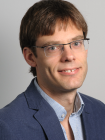
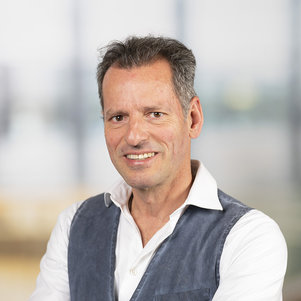
Professor Ruerd Ruben is an external academic expert in Development Economics with over 300 research outputs spanning food systems, smallholder livelihoods, and rural poverty alleviation. His work focuses on value chain transformation, nutrition, and sustainable agricultural practices in Africa, Latin America, and Asia. Research Pillars: Food systems optimization Smallholder economic empowerment Value chain governance Sustainable diets and nutrition Rural development strategies Ruben's recent publications examine midstream actors in informal economies (2025), market-based poverty reduction (2024), and fair trade limitations (2023). His editorial work includes contributions to Food Security journal, and he has supervised 19 PhD projects on topics ranging from Ethiopian potato chains to climate-resilient East African agribusinesses. Scientific Leadership: Contributed to 300+ academic works Received 7 Scopus citations for key publications Active in global food systems discourse
Katrin Schollbach is an Assistant Professor in the Building Materials department at Eindhoven University of Technology's School of Built Environment . Her research focuses on sustainable utilization of industrial by-products in construction materials, particularly steel slags from fossil-free steelmaking processes. Expertise: BOF slag activation, carbonation resistance, heavy metal immobilization, eco-friendly binders Projects: Leading the SLAK project (2023-2029) on future slags from fossil-free steelmaking Collaborations: Active international collaborations in construction materials research Schollbach's work explores the chemical and mineralogical properties of industrial waste materials, optimizing their performance in building applications. Key research themes include chemical activation techniques, carbonation processes, and material characterization using scanning electron microscopy and X-ray diffraction. Recent publications highlight her innovative approaches to BOF slag activation, sewage sludge-based sealing materials, and marine infrastructure applications. Her research output demonstrates consistent growth with 89 total publications and collaborations across multiple disciplines. She contributes to education through courses like Climate-responsive Building Design and Masterproject BPS Research , and maintains active research partnerships with institutions worldwide.
Gamze Z. Dane is a tenured Assistant Professor at the Department of Built Environment of Eindhoven University of Technology (TU/e), affiliated with EAISI Mobility and EAISI Health. She leads the Digital City Program (2020-2024) and specializes in decision-support systems, GIS, urban informatics, and data analytics for sustainable urban development. Her research integrates citizens into urban decision-making using digital tools like VR twins and data-driven approaches. Education: PhD in Urban Planning, MSc in Geographical Information Systems (GIS) and Decision Making. Research Interests: Focuses on human-environment interaction, transdisciplinary urban projects, and the impact of digitalization on cities. She develops tools for public participation and uses big data to analyze citizen behavior and urban experiences. Projects: Principal Investigator for EU/national projects involving cities like Eindhoven, Bologna, and Lisbon. Notable projects include UBeX Urban Behavior eXtended reality lab (2024-2026) and ROCK (2017-2020). Awards: Cuperusprijs 2020 (2nd place for student thesis) Drivers of Change Exhibition 2021 ISPRS International Journal Cover Story (2020) Teaching & Innovation: Coordinates courses like Smart Cities and Urban Redevelopment. Developed online teaching materials using VR, drones, and mobile apps. Guest lectures at Istanbul Technical University and visiting scholar at National University of Singapore. Labs & Networks: Leads the UBeX lab exploring immersive technologies for urban analysis. Active in academic networks including Urban Planning journals and international conferences.
Theo Hofman is an Associate Professor and Program Director in the Mechanical Engineering Department at Eindhoven University of Technology (TU/e). He specializes in integrated design methods for complex engineering systems, focusing on powertrain systems for automotive, maritime, and aerospace applications. His work emphasizes computational design synthesis, machine learning, and model-based optimization. Education: Hofman holds an MSc (1999) and PhD (2007) in Mechanical Engineering from TU/e. He has held roles at Thales Cryogenics and Drivetrain Innovations before joining TU/e. He also served as an Invited Professor at ETH Zurich and Université Polytechnique Hauts-de-France. Research Interests: His research spans hybrid electric vehicles, powertrain design, energy management systems, and sustainable transportation. Key areas include automated design tools, thermal management, and co-design of plant and control systems. Applications include electric trucks, ships, and aircraft. Articles Trends: His recent publications (2021–2025) emphasize electric vehicle infrastructure optimization, battery systems, and control strategies. Key themes include energy efficiency, thermal management, and co-design methodologies for automotive and mobility systems. Scientific Awards: IEEE VPPC 2024 Best Paper Award. Advising & Grants: He has supervised over 104 MSc, 14 PDEng, and 10 PhD students. Active projects include the 'Green Transport Delta' initiative (2021–2024) and Bosch Transmission collaborations. His courses include 'Electric and Hybrid Vehicle Powertrain Design' and 'Automotive Systems Engineering Project.' Labs/Teams: He leads the Group Hofman and collaborates with the MEGEVH (France) and TU/e’s EAISI Mobility initiative. His work contributes to UN Sustainable Development Goals related to affordable and clean energy, industry innovation, and climate action.
Maarten Kroesen is an Associate Professor in the Transport and Logistics group at Delft University of Technology's Faculty of Technology, Policy and Management. His research focuses on travel behavior analysis, sustainable transport, and quantitative methods. He earned his PhD cum laude in 2011 with work on aircraft noise annoyance and has since shifted to mobility patterns and policy analysis. Kroesen teaches courses on statistics, data analysis, and travel behavior research, and has received multiple awards including the Best Teacher of the Year (2016) and Henk Sol Award (2011). His work bridges behavioral theory with policy implications, emphasizing longitudinal panel data methods. Education: PhD (cum laude) in Transport Policy and Management (TU Delft, 2011), MSc in Systems Engineering (TU Delft) Research Interests: Travel behavior dynamics, sustainable mobility transitions, latent class models, accessibility disparities Awards: Over six major accolades, including best thesis and innovation awards Expertise: Policy advising on aviation, transport equity, and behavioral modeling Recent work explores emerging time-use patterns, zero-emission flight impacts, and bidirectional effects between accessibility and travel behavior. He actively contributes to Dutch policy discussions on aviation and transport infrastructure.
Dr. Jennifer Koch is an Associate Professor at the Laboratory of Geo-information Science and Remote Sensing, part of Wageningen University & Research. Previously, she served as an Associate Professor and Associate Research Director at the University of Oklahoma's Data Institute for Societal Challenges. Her research integrates data-driven methods like simulation modeling to address socio-economic and climate change challenges, focusing on sustainable urbanization and environmental management. Education: She holds a Diplom (Univ.) in Geoecology from the University of Bayreuth and a Dr.-Ing. in Electrical Engineering/Computer Science from the University of Kassel. She teaches courses on geo-information management and data analytics. Research emphasizes multi-scale modeling, stakeholder engagement, and participatory approaches to socio-ecological systems. Recent work explores urban growth in Africa, methane emission monitoring, and renewable energy siting. Articles highlight interdisciplinary methods in GIS, climate policy, and community geography. Professional service includes roles with iEMSs, IALE, and the AAG. No ancillary activities reported. Her work bridges technical geospatial tools with societal challenges, emphasizing practical policy applications.
Miguel Mujica Mota is a Senior Lecturer at the Faculty of Technology, National Autonomous University of Mexico (UNAM), and a member of the Centre of Applied Research Technology. His research focuses on airport operations, multimodal transport systems, and simulation modeling. He has expertise in analyzing capacity challenges in multi-airport systems, particularly in Mexico City, and developing decision support systems for airport security and resource allocation. His work integrates sustainability and efficiency, addressing topics like environmental reporting in airlines and post-pandemic airport recovery strategies. Research Contributions: Dr. Mujica Mota has published extensively on airport capacity optimization, multimodal transport integration, and simulation-based methodologies. Key projects include the X-TEAM D2D initiative for door-to-door travel and the IMHOTEP project for smart passenger flow management. His work often involves collaboration with institutions like Schiphol Airport and the H2020 EU framework. Research Interests: Airport terminal design, air traffic management, simulation modeling, multimodal logistics, and sustainable aviation. Awards: A-BOOST Research Fund (2020) Beste paper award EMM2018 X-TEAM D2D Project Recognition (2020) Activities: Organized conferences like the 2023 EUROSIM Simulation Seminar and served on committees for events such as the 2024 Multilog Conference. Grants & Projects: Involved in EU-funded initiatives like H2020, focusing on multimodal integration and sustainable transport solutions. His research also explores climate change impacts on infrastructure and simulation-based validation approaches.
Hens Runhaar is Professor of Policy and Governance for Sustainable Food Systems at Utrecht University's Copernicus Institute of Sustainable Development. He holds positions as Chair of the Examination Committee for Sustainable Development and is a member of the Core Team of Future Food Utrecht. Additionally, he serves on the Editorial Board of Earth System Governance Journal and as Associate Editor of Frontiers in Sustainable Food Systems journal. His research focuses on sustainable food systems, policy and governance for biodiversity conservation, and nature-inclusive agriculture. Runhaar's research interests center on understanding the connectivity issues in Western food systems that lead to sustainability challenges including biodiversity loss, climate change, and food-related diseases. He investigates the decoupling of food production from environmental conditions, disconnects between feed production and livestock farming, and the separation between food production and consumption areas. His work emphasizes biodiversity as a key indicator of sustainable food systems, with special interest in scaling up agroecology, regenerative agriculture, and nature-inclusive agriculture. He delivered his inaugural lecture on January 17, 2025, titled 'Governing towards sustainable food systems: new connections for more diversity'. His recent publications demonstrate a strong focus on biodiversity policy integration, nature-based solutions, and transformative food system changes. Runhaar has been instrumental in special issues on biodiversity governance and environmental policy integration. His research projects include COMBINED (2025-2031), REWIRE, DivGrass, and work on the Water Framework Directive after 2027. Editorial Board Member of Earth System Governance Journal Associate editor of Frontiers in Sustainable Food Systems journal Member of the Scientific Advisory Committee of Dutch Bird Protection Association Senior Research Fellow of Earth System Governance research network Fellow of Wageningen School of Social Sciences Runhaar actively supervises numerous PhD students and postdoctoral researchers, with a focus on sustainable food systems, biodiversity conservation, and nature-inclusive agriculture. He has contributed significantly to societal debates through media appearances in NRC, De Volkskrant, and EenVandaag, addressing topics like nitrogen policy, nature restoration, and the role of farmers in sustainability transitions. Beyond academia, he volunteers with the Badger Working Group Utrecht and 't Gooi Foundation, monitoring badgers since 2012 and contributing to nature conservation efforts.
Prof. Wouter Roos is a Professor at the University of Groningen's Faculty of Science and Engineering, affiliated with the Molecular Biophysics department at the Zernike Institute for Advanced Materials. His research focuses on viral dynamics, membrane assemblies, and protein mechanics, utilizing advanced techniques like High Speed Atomic Force Microscopy (HS-AFM) and optical tweezers. Education: Studied Physics at the Universiteit van Amsterdam, earned a PhD from the Universität Heidelberg under Joachim Spatz. Conducted postdoctoral research at Max-Planck-Institut, Institut Curie, and Vrije Universiteit before joining Groningen in 2015. Research Interests: Physical Virology (viral material properties and dynamics), membrane biophysics (synthetic cells and lipid interactions), and molecular motor systems. His work bridges physics, chemistry, and biology to understand nanoscale biological processes. Recent Article Trends: Studies on hybrid membranes for synthetic cells, leukemic cell mechanics, and antibiotic-membrane interactions highlight his interdisciplinary approach. Key techniques include HS-AFM and single-particle tracking. Awards: Received a VIDI grant and multiple national/international grants. His lab leads the oLife Co-Fund consortium and participates in the MOSBRI research infrastructure. Grants & Leadership: Coordinates the oLife Fellowship Programme and chairs the Molecular Biophysics Lab. Active in steering committees for EU-funded initiatives. Labs/Teams: Heads the Molecular Biophysics Lab, focusing on viral dynamics and membrane systems. Collaborates globally on projects like ESCRT-III polymerization and antibiotic mechanisms.
Dr. Ilias Gerostathopoulos is an Assistant Professor at the Faculty of Science, Vrije Universiteit Amsterdam, affiliated with the Network Institute and the Department of Information Management & Software Engineering. He specializes in self-adaptive systems, cyber-physical systems, and machine learning operations (MLOps). His work focuses on software architectures for autonomous systems, decision-making under uncertainty, and experiment-driven adaptation frameworks. He teaches courses such as 'Fundamentals of Adaptive Software' and 'Information Management', emphasizing practical applications of adaptive systems and data-driven decision-making. Gerostathopoulos has been awarded the Best Presentation Award (2021) for contributions to evaluating self-adaptive systems. His research addresses challenges in industrial self-adaptation, MLOps architectures, and robotics. Key research themes include: Architecture-based self-adaptation in robotics and CPS MLOps frameworks and systematic analysis of AI systems Uncertainty management in autonomous systems Experiment-driven learning and tool development Notable contributions include the ExpEngine tool for workflow optimization and the ReBeT framework for robotic systems. His work bridges theoretical software engineering with practical industrial implementations.
Prof. Dr. Ir. Andy van den Dobbelsteen is a Professor of Climate Design & Sustainability at Delft University of Technology's Faculty of Architecture and the Built Environment . His work focuses on integrating sustainable energy systems , climate adaptation strategies , and urban development through innovative design solutions. Department: Architectural Engineering + Technology Expertise: Energy systems, climate-responsive architecture, urban sustainability He actively translates research findings into actionable concepts for heritage building retrofitting , data center energy alternatives , and vertical urban farming , emphasizing interdisciplinary collaboration and knowledge transfer. His recent publications explore parametric modeling for energy efficiency, renewable backup systems , and synergetic urban design . He received prestigious awards including the edX Prize and Knight of the Netherlands Lion . 2020 edX Prize for Zero-Energy Design MOOC 2020 Golden Heron for educational film 'Energy Slaves' 2019 Solar Decathlon Europe 2nd prize As a dedicated educator, he supervises students in user-centred sustainability projects while maintaining active industry partnerships through secondary roles as speaker and columnist.
Khiet P. Truong is an Associate Professor affiliated with the Digital Society Institute and the Human Media Interaction group. Their research focuses on the intersection of artificial intelligence, robotics, and human-computer interaction, with particular emphasis on speech emotion recognition, conversational agents for children, and multimodal interaction analysis. Recent work includes exploring how robots can restore trust through apologies, benchmarking Dutch automatic speech recognition systems, and developing child-friendly interfaces for cultural heritage archives. Truong has also investigated physiological signals like laughter and stress markers in speech across diverse contexts. Scientific Awards : Best Functional Design Award (2019) Research Trends : Analysis of speech patterns, emotion recognition, robot-human dialogue, and multimodal behavioral cues dominate their recent publications. Key subfields include Dutch language processing, laughter classification, trust indicators in child-robot interactions, and healthcare applications of speech technology. Academic Activities : Chair of the 26th ACM International Conference on Multimodal Interaction (2024) Examiner roles for PhD defenses and research evaluations (2024–2023) Contributions to workshops on emotion representation and social signal processing
Alejandro Tirachini is an Associate Professor in Transport Planning at the University of Chile, specializing in transportation systems research with emphasis on public transport optimization, emerging technologies, and socio-economic impacts. His work bridges engineering, urban planning, and policy analysis to address global mobility challenges. His research spans public transport operations, road transportation systems, autonomous vehicle integration, and sustainable mobility solutions. Key methodologies include agent-based modeling, statistical analysis, and mathematical programming for optimization. Tirachini investigates environmental externalities, economic systems in transport, and behavioral responses to innovations like real-time information apps and teleworking. Analysis of his 2023-2025 publications reveals a strong focus on practical transport solutions: bus scheduling algorithms, electrification barriers, real-time information impacts, and railway barrier effects. His work consistently compares developed and developing country contexts, with significant Chilean case studies. Methodologically, he combines quantitative techniques with socio-technical analysis to evaluate policy interventions across environmental, economic, and behavioral dimensions.
Zoë Robaey is an Assistant Professor in Ethics of Technology at Wageningen University’s Philosophy Group. Her work focuses on moral responsibility in uncertain technological contexts, particularly in biotechnology and agriculture. She holds a PhD from Delft University of Technology (2017) and prior roles include postdoctoral research at Delft and work at the Rathenau Institute. She currently serves on the Management Team of the 4TU Centre for Ethics and Technology, is an Associate Editor at Science and Engineering Ethics , and actively advises on synthetic biology competitions like iGEM. Her research integrates conceptual ethics with empirical studies, addressing challenges like GMO ownership, inclusive biobased innovations, and biomimetic design. Awards include a VENI Grant (2019) and recognition in the 'Young Philosophers' program (2017). She engages widely in public debates on agriculture and technology through platforms like Pakhuis de Zwijger. Education: BA Biology (University of Ottawa, 2007), MA Science and Technology Studies (Maastricht University, 2008), MA Public Policy (Hertie School of Governance, 2011). Research interests span ethical governance of emerging technologies, responsible innovation frameworks, and the intersection of biotechnology with societal values. Recent work explores biomimetic ethics, climate change education, and safe-by-design approaches in synthetic biology. Grants include the VENI Grant (2019) supporting her work on virtues in innovation. She has advised the Dutch Ministry of Infrastructure and Water Management and collaborates internationally on projects like the Inclusive Biobased Innovations initiative (2017–2019). Labs/Teams: Active in the 4TU Centre for Ethics and Technology, contributing to interdisciplinary ethics research networks. Teaches courses on ethics of food systems, synthetic biology, and molecular life sciences.
Dongsheng Yang is an Assistant Professor with the Electrical Energy Systems Group at the Department of Electrical Engineering of Eindhoven University of Technology (TU/e). He has been working at TU/e since 2019, focusing on power electronics and renewable energy integration, and previously served as Assistant Professor at Aalborg University's Department of Energy Technology (2018-2019). Dr. Yang received his B.S., M.S., and Ph.D. degrees in electrical engineering from Nanjing University of Aeronautics and Astronautics, Nanjing, China, in 2008, 2011, and 2016, respectively. His academic journey progressed from postdoctoral researcher at Aalborg University (2016) to faculty positions at both institutions. Dr. Yang's research focuses on the modeling, analysis, control, and design of power electronics dominated power systems , with the goal of safely accommodating high-penetrations of renewable energy sources and energy-efficient end-uses. His work spans several critical areas in modern power systems: Power electronics dominated grid stability and control Renewable energy integration and grid synchronization EV fast-charging infrastructure development Hydrogen production systems Medium-frequency transformer design and modeling AI applications in power electronics Analysis of Dr. Yang's recent publications reveals a strategic research trajectory toward developing advanced control strategies for power converters, improving modeling techniques through AI approaches, and addressing practical implementation challenges for renewable energy systems. His work spans both theoretical developments and practical applications, with increasing emphasis on neural network frameworks for magnetic modeling, safety boundaries for EV charging architectures, and enhanced fault ride-through capabilities for grid-connected systems. This progression demonstrates his commitment to solving real-world engineering challenges in the transition to renewable energy. Dr. Yang has received professional recognition including: Senior Member of IEEE Corresponding Member of CIGRE Working Group C4.56 Topic chair, technical committee member, and reviewer for top-level conferences and journals in power electronics Dr. Yang actively supervises doctoral candidates and postdoctoral researchers, including Xiao Yang (working on AI for power electronics), Saizhao Yang (postdoc), and L.A. Vlaar. He serves as project manager for multiple significant research initiatives totaling over €5 million in funding: REDCON (2023-2028) - Reconfigurable power electronics testbench Flexible Offshore Wind Hydrogen Power Plant Module (2022-2026) Sectorplan-DCES-Y.D.inv.: Reconfigurable power electronics testbench (2021-2029) E2GO-RDC Cost-reduction of EV fast-charging station (2021-2026) CW620863 System impact analysis for large scale renewable hydrogen production (2022-2023) Dr. Yang leads research within the Electrical Energy Systems group at TU/e's High Tech Systems Center, focusing on power conversion technologies. His work connects with multiple research teams across Europe through collaborative projects focused on renewable energy integration, EV infrastructure, and hydrogen production systems. He also teaches the course 'Dynamic control of power conversion in renewable energy systems' and contributes to the UN Sustainable Development Goals related to affordable and clean energy.