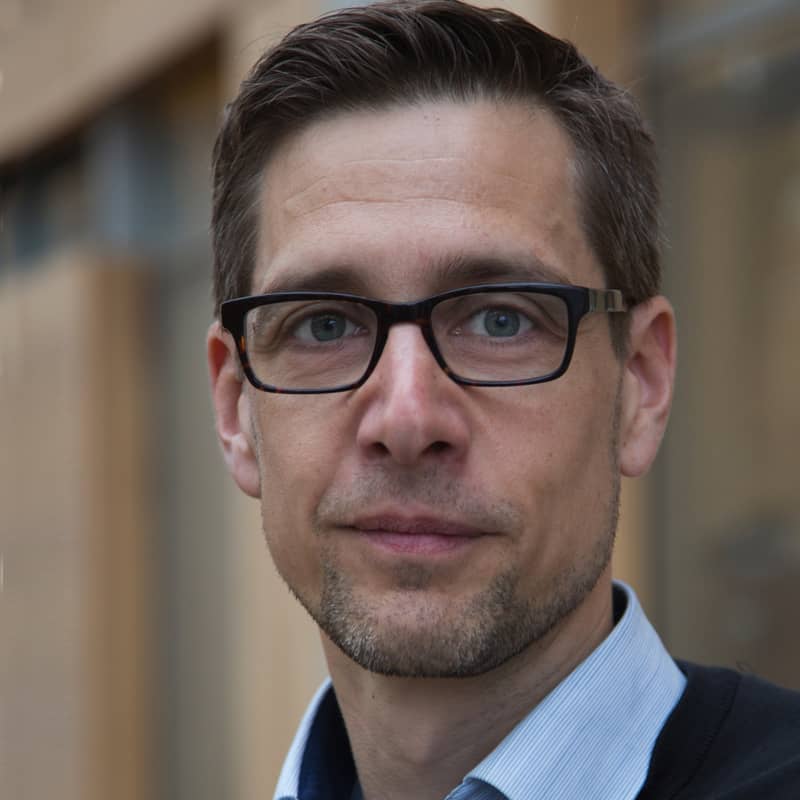
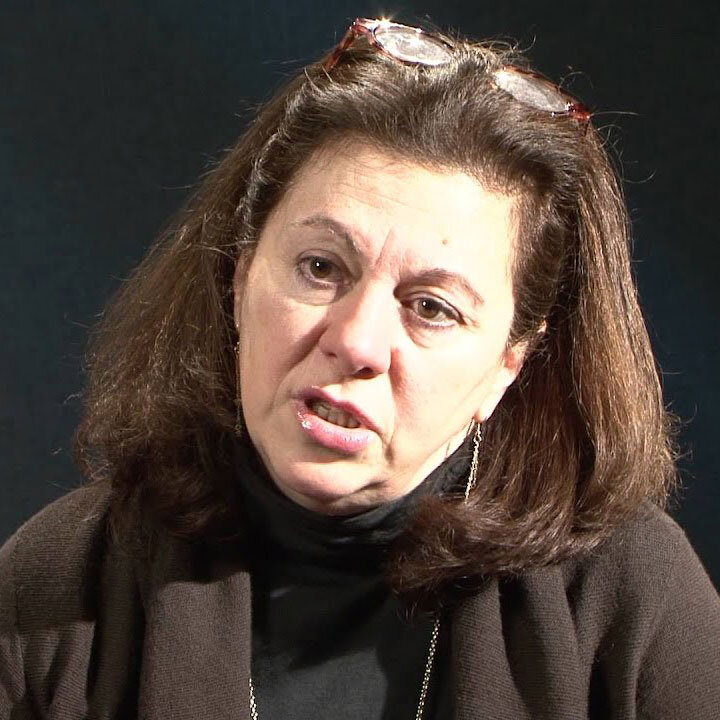
Dr. Charles Rougé is a Senior Lecturer in Water Resilience at the Department of Civil and Structural Engineering, School of Mechanical, Aerospace and Civil Engineering, University of Sheffield. He holds an MSc and PhD, and his career spans top institutions in France, the US, Canada, and the UK. 2018–present: University of Sheffield (Lecturer → Senior Lecturer) 2023–2026: Principal Investigator, EPSRC-funded project on water-energy systems under climate change and energy transition Research Focus: Modelling complex water resource systems to enhance resilience against climate change, with a growing emphasis on water-energy nexus challenges. His work integrates hydrology, power systems engineering, economics, and decision theory. Key Trends: 15 most recent articles span climate-perturbed hydrological models, water-energy system coupling, socio-hydrology applications, and transboundary water governance. Many showcase interdisciplinary approaches to water infrastructure flexibility and uncertainty quantification. Scientific Awards: 2019 Quentin Martin Best Practice Award (JWRPM) 2015 Editor's Citation for Excellence (WRR) Grants: EPSRC grant (UKRI) for 'Flexible design and operation of water resource systems' (2023–2026) Team Leadership: Leads the 'Water resilience' research group at Sheffield, mentoring early-career researchers in water system sustainability and low-carbon energy transition.
Emin Gün Sirer is an Associate Professor at the Department of Computer Science , College of Engineering , Cornell University . He co-directs the Initiative for Cryptocurrencies and Smart Contracts and leads the Meridian and HyperDex projects. Research in operating systems, networking, and distributed systems Focus on secure operating systems, high-performance cloud infrastructure, and peer-to-peer networks Developed systems like Nexus (secure OS), OpenReplica (Paxos implementation), and Trickles (stateless network protocol) Prominent Projects : Meridian - Lightweight network location service without virtual coordinates Cubit - Decentralized peer-to-peer search Kimera - Network-centric Java verification SPIN - Extensible microkernel for application-specific services Scientific Contributions : Leading work in blockchain security and peer-to-peer systems Patents in executable content rewriting and distributed virtual machines Advising & Collaborations : Advises projects in network positioning and content distribution Collaborates with institutions like Usenix , SIGCOMM , and NSDI Personal Background : Ph.D. and M.S. in Computer Science from the University of Washington B.S.E. in Computer Science from Princeton University High school at Robert College
Dominik Roeser is a Professor and Associate Dean of Research Forests & Community Outreach at the University of British Columbia's Faculty of Forestry, Department of Forest Resources Management. With over 21 years of experience in forest research and innovation, he has built a comprehensive forest operations research program since joining UBC in 2018, following his tenure as Senior Director at FPInnovations where he managed multidisciplinary teams focused on improving forest sector competitiveness and wildfire management solutions in Western Canada. Professor Roeser's research interests center on sustainable forest management and the bioeconomy, with specific expertise in forest bioproduction, supply chain design, steep slope harvesting, and biomass operations. His work through the Forest Action Lab applies diverse research methods including productivity studies, field trials, and modeling to address sustainability challenges across different operational environments. His research portfolio spans sustainable forest biomass utilization, harvesting in difficult terrain, innovative forest planning tools, operational productivity, carbon management, and community sustainability impacts from reforestation. His publication record shows a strong focus on practical applications of forest science, with recent work emphasizing wildfire management, remote sensing technologies for precision forestry, biomass energy systems, and the socio-ecological dimensions of forest management. His research increasingly integrates advanced technologies like LiDAR and drone-based systems with traditional forest operations to address contemporary challenges in sustainable forest management. Roeser has received the Recognition Award from the Canadian Forest Service (2017) for his contributions to forest science and innovation. His work demonstrates significant impact on both academic understanding and practical implementation of sustainable forest operations across North America and Europe. As an educator, Professor Roeser teaches several key courses including FOPR 264 Introduction to Forest Operations, FOPR 362 Harvesting systems and forest access, FOPR 464 Operational planning and management, and FRST 452 Coastal field school. He considers educating the next generation of forestry professionals one of his passions, bridging theoretical knowledge with practical industry applications. The Forest Action Lab, led by Professor Roeser, represents a multidisciplinary research hub applying diverse methodologies to address forestry stakeholders' needs across British Columbia, Canada, and globally. The lab's work connects academic research with industry implementation, focusing on practical solutions for sustainable forest utilization in varied operational environments.
Associate Professor Emily Jones is a political economist at the Blavatnik School of Government, University of Oxford, and Director of the Global Economic Governance Programme. Her work focuses on international trade, financial regulation in developing countries, and post-Brexit policy analysis. University of Oxford, DPhil in International Political Economy School of African and Oriental Studies, MSc in Development Economics University of Oxford, BA in Philosophy, Politics, and Economics Her research explores the political economy of global trade , Basel banking standards , and digital economy governance , with an emphasis on asymmetric negotiations and developing country agency . Recent projects examine cross-border data flows and regulatory competition . Notable publications include the 2020 book The Political Economy of Bank Regulation in Developing Countries and the 2019 Global Policy article on Europe-Africa relations. Her work has attracted ESRC Impact Acceleration Award DFID-ESRC Growth Research Grant and engages with the UK Parliament as a Special Advisor to the International Trade Committee.
Lilyan Fulginiti is a Roy Frederick Professor of Agricultural Economics at the University of Nebraska-Lincoln. Her work focuses on agricultural productivity, climate change impacts, irrigation policies, and sustainable resource management, particularly in regions like the Ogallala Aquifer and South America. Research areas include agricultural economics, environmental economics, and climate policy. Her recent publications address gene-edited crops, carbon farming, and productivity disparities linked to trade and climate. Her scholarly output spans topics such as irrigation efficiency, biofuel economics, and conflict impacts on agriculture, reflecting a commitment to integrating economic theory with pressing environmental challenges. While no specific awards or student advisement details are listed, her extensive publication record underscores her contributions to advancing sustainable agricultural practices and policy analysis.
Christopher Kopper is an Associate Professor in the Department of History at Bielefeld University's Faculty of History, Philosophy and Theology. His academic career spans over three decades with significant contributions to economic history, banking history, and transport history. Appointed as an extraordinary professor at Bielefeld University in April 2012, he has held various research and teaching positions including visiting professorships at Charles University in Prague, University of Siegen, University of Münster, and West Virginia University. His research interests focus on German economic history, particularly banking systems during the Nazi era, transport policy, corporate history, and European economic integration. Kopper has led and participated in numerous research projects including 'From the Reichsbank to the Bundesbank' and served as Project Manager for Subproject 6 on infrastructure buildings during National Socialism. He has been a member of the Historikerkommission (History Commission) for the German Federal Ministry of Economics since 2012 and the Selection Committee of the Friedrich Ebert Foundation since 2013. Kopper's publication record demonstrates consistent scholarly output with recent works focusing on corporate responsibility under military dictatorships (particularly Volkswagen in Brazil), monetary policy consequences of German occupation in Greece, and the internationalization of German banks. His research shows a trend toward examining corporate ethics in authoritarian regimes and the long-term economic consequences of historical events. As a member of multiple academic committees and research networks, Kopper maintains active engagement with the historical research community. His work bridges economic, political, and social history with particular attention to institutional development and policy impacts. Professor Kopper supervises research projects and collaborates with international scholars, contributing significantly to contemporary historical scholarship through his expertise in German economic and business history. His current research continues to explore the intersections of corporate behavior, political regimes, and economic policy across different historical periods.
Prof. Dr. Claudia Neu is a Professor of Rural Sociology at the Department of Agricultural Economics and Rural Development (Georg-August-University Göttingen) and the Department of Rural Sociology (University of Kassel). Her work focuses on demographic change, civil society, and public services in rural areas. Deputy Chair, Expert Council on Rural Development, Federal Ministry of Food, Agriculture, and Consumer Protection (2016–2019) Member, Working Group "More Security with Security?", Hamburg Academy of Sciences (2016–) Scientific Advisory Board, German Volunteer Survey (2012–2016) Commission "Art for the Village - Villages for Art", German Foundation for Cultural Landscapes (2009, 2012) Her research examines how demographic shifts impact rural democracy and social cohesion, emphasizing equitable living conditions and participatory governance. Recent analyses link rural loneliness to populist susceptibility and declining institutional trust. Publications include studies on regional services of public interest and structural policy investments. She contributes to public discourse through media engagements (ARD Audio Library, Frankfurter Allgemeine Zeitung) and policy statements, notably advocating for EU rural development funding independent of agricultural policy. Legal victories highlight her commitment to academic freedom.
David Amborski is a Professor at Toronto Metropolitan University’s School of Urban and Regional Planning, specializing in urban planning economics. He founded the Centre for Urban Research and Land Development (CUR) and previously led the City Building Institute. His work focuses on municipal finance, land development, housing markets, and land value capture tools. Education: BA MSc MA Research interests include infrastructure finance, property tax reform, and strategic planning practices in Ontario and Eastern Europe. He advises government bodies like the National Treasury of South Africa and collaborates with international organizations such as the OECD and World Bank. Key Contributions: Consulted on Toronto’s Smart Track financing and MPAC’s property tax assessment processes Authored works on suburban policy challenges and livable cities Presented globally at UN Habitat III, Medellín, and across Eastern Europe/Latin America Awards: Lambda Alpha Honourary Land Economics Society membership. Advisory Roles: Google Sidewalk Affordable Housing Advisory Committee City of Toronto Inclusionary Zoning Advisory Committee Metrolinx Project Evaluation Advisory Panel Editorial boards of Town Planning Review and Journal of European Research and Spatial Policy Labs/Initiatives: Active in CUR and the City Building Institute, advancing land value capture and urban policy innovations.
Prof. Karst Geurs is a Full Professor of Transport Planning at the Department of Civil Engineering and Management, Faculty of Engineering Technology, University of Twente. He chairs the examination board of Civil Engineering and Management and serves as department portfolioholder for education. His research focuses on accessibility analysis, land-use-transport interactions, sustainable mobility, and transport policy evaluation. Geurs holds a PhD (cum laude) from Utrecht University (2006) and has led major projects like the SmartHubs initiative. He is currently vice-chair of NECTAR (Network of European Communications and Transport Activities Research), previously chair from 2014–2024, and served as Editor-in-Chief of the European Transport Research Review (2017–2023). His work addresses cycling safety, mobility hubs, and urban resilience. Key contributions include studies on shared mobility, 15-minute city concepts, and post-pandemic transport trends. He has published over 200 articles and datasets, including work on accessibility equity in São Paulo favelas. Awards include the Gouden RAI Wiel (2015). Geurs actively engages in policy dialogues, media appearances (e.g., Radio 1 interviews), and international conferences. Research interests span transport innovation, spatial equity, and smart infrastructure. Recent projects explore digital mobility skills, teleworking impacts, and cycling safety metrics. His work integrates interdisciplinary approaches to address urban challenges, emphasizing sustainable and equitable mobility solutions.
John Aloysius Zinda is an Associate Professor in the Department of Global Development at Cornell University and Director of the Polson Institute for Global Development. His research focuses on socio-environmental interactions, particularly flood risk management in the U.S. and rural development/conservation in China. He is affiliated with the East Asia Program and the Cornell Atkinson Center for Sustainability. Educated at Vanderbilt University (B.A.), Johns Hopkins-Nanjing (Certificate), University of Michigan (M.S.), and the University of Wisconsin-Madison (Ph.D.), Zinda teaches courses on environmental sociology, disaster risk, and GIS methods. His work bridges conceptual frameworks with empirical analyses of social-environmental systems, emphasizing equity and policy impact. Research emphasizes how marginalized communities navigate environmental risks and policies, including flood mitigation in New York and reforestation in China. Recent studies highlight racial disparities in flood preparedness and the tensions between authoritarian governance and ecological conservation. His publications span journals like Environmental Sociology , Society & Natural Resources , and World Development . Teaching includes GDEV 3240: Environmental Sociology and DSOC 6340: Risk and Disaster , fostering analytical skills for social-environmental advocacy. His research teams collaborate with governments and NGOs, producing actionable insights for sustainable development. Zinda's work addresses global challenges through interdisciplinary approaches, linking local practices to macro-level policies.
Professor Washington Yotto Ochieng serves as Head of the Department of Civil and Environmental Engineering and Chair Professor in Positioning and Navigation Systems at Imperial College London. He directs the Centre for Active Resilience and Security (CARS) and maintains key affiliations with the Centre for Systems Engineering and Innovation, Centre for Transport Engineering and Modelling, Institute for Molecular Science and Engineering, and Space Lab. His extensive advisory roles include the Science Museum Group Board of Trustees, Royal Institute of Navigation Presidency, and Royal Academy of Engineering Africa Steering Committee. His educational background includes a BSc (First Class) in Engineering from the University of Nairobi and MSc (Distinction) and PhD in Civil Engineering from the University of Nottingham. He received an honorary DSc from Technical University of Kenya in 2023. Ochieng's research pioneers critical infrastructure resilience, user-centric mobility, and positioning/navigation/timing (PNT) systems. He has designed satellite navigation systems (including Europe's EGNOS and GALILEO) for multi-domain applications and advanced Air Traffic Management and Intelligent Transport Systems. His work integrates geomatics, transportation engineering, and sustainable mobility to solve global urban infrastructure challenges, with recent emphasis on decarbonization and AI-driven solutions. His 2024-2025 publications reveal strong trends in sustainable transportation decarbonization, AI-optimized traffic management, and resilient urban positioning systems. Research focuses on hydrogen fuel cell trains, carbon-efficient aviation, and deep reinforcement learning applications for emission reduction, demonstrating interdisciplinary integration of engineering, environmental science, and artificial intelligence to address climate challenges. Fellow of the Royal Academy of Engineering (2013) Harold Spencer-Jones Gold Medal from Royal Institute of Navigation (2019) Doctor of Science (honoris causa) from Technical University of Kenya (2023) Elder of the Order of the Burning Spear (EBS) from Kenya (2023) Commander of the Order of the British Empire (CBE) (2024) Ochieng provides strategic guidance to UK Government bodies (Government Office for Science, Department for Transport, FCDO), European Parliament, and European Court of Auditors. His advisory work shaped the Blackett Review on Satellite-derived Time/Position, UK Space Strategy, and Future of Mobility report. He chairs the Science Museum London Advisory Board and leads FCDO's Sustainable Urban Economic Development program in Africa, with significant grant influence through UK National Physical Laboratory and Department for International Development. He directs the Centre for Active Resilience and Security (CARS) and leads Space Lab initiatives, focusing on mission-critical PNT systems and infrastructure resilience. His teams collaborate with international consortia including RTCM Special Committee 134 and US Institute of Navigation, developing next-generation navigation solutions for safety-critical applications across transport, aviation, and urban environments.
Mia Fuller is the Gladyce Arata Terrill Distinguished Professor of Italian Studies at the University of California, Berkeley. A cultural anthropologist and urban-architectural historian, she explores connections between physical space and political power, particularly in the context of Italian colonialism and fascism. Her work has earned the International Planning History Society book prize. Current projects include a revised Italian edition of Moderns Abroad and a new book Monuments and Mussolini . On sabbatical leave during Fall 2024. Research focuses on: Colonial architecture and urban planning in Italian colonies (Libya, Ethiopia, Eritrea) Memory studies and fascist-era monuments Discourse on modernism under authoritarian regimes Cultural identity formation through built environments Postcolonial mobility and architectural legacies Her recent publications (2015-2025) analyze Italian colonial cities, fascist architecture, and postcolonial urban studies, demonstrating consistent engagement with architectural history, urban planning, and political power dynamics. Key themes include colonial memory, modernist design's politicization, and spatial manifestations of authoritarianism. Scientific awards: International Planning History Society book prize for Moderns Abroad: Architecture, Cities, and Italian Imperialism Contact: miafull@berkeley.edu
Dr. Arash Beidollahkhani is a Research Fellow at the Global Development Institute, University of Manchester. His work focuses on Middle Eastern politics, authoritarian regimes, and the intersection of social media with socio-political movements. Key research areas include Iranian political dynamics, Afghan governance structures, and Central Asian geopolitical strategies. His interdisciplinary approach integrates cultural studies, political theory, and international relations to analyze issues like religious extremism, secular identity formation, and biopolitical state control. Recent research highlights include analyzing gender dynamics in Iranian revolutionary discourse via Twitter, exploring national identity through Persian literary classics, and examining geopolitical tensions in energy security and cross-border relations. His work contributes to UN Sustainable Development Goals through critical analysis of authoritarian governance and socio-cultural transformations. Notable collaborations include studies on Russia-EU energy politics and Iran-Pakistan security dynamics. He holds an ORCID identifier (0000-0002-8295-7142) and actively publishes in peer-reviewed journals like Feminist Media Studies and National Identities .
Koray Caliskan is a tenured Professor and Co-Director of the MS Strategic Design and Management program at the School of Design Strategies, Parsons School of Design, The New School. He also serves as Editor-in-Chief of the Journal of Design Strategies and Associate Editor of the Journal of Cultural Economy . His interdisciplinary work bridges economic sociology, strategic design, and digital platforms, focusing on cryptocurrencies, online advertising, and market agencement. Education: PhD in Politics, New York University (2005) MA in Politics, New York University (1999) Certificate in Commodity Options and Futures Trading, Rhodes College (2001) BA in Political Science, Boğaziçi University, Istanbul (1995) Research Interests: Caliskan explores digital economies through lenses of economic sociology and design methodologies. Key areas include cryptocurrency regulation, platform economization, online advertising politics, and strategic design frameworks. His book Data Money (2023) analyzes blockchain markets and communities, earning the 2021 Falling Walls Scientific Breakthrough Award. Awards: Scientific Breakthrough of the Year Award (Social Sciences, 2021) ESRC Grant (£720,000, 2021) Microsoft Entrepreneurship of the Year (2017) Malcolm H. Kerr Dissertation Award (2005) Grants & Collaborations: Current research examines the economic sociology of online ads under an ESRC grant. Upcoming books (2025) include Economization (with Callon & MacKenzie) and Inside Digital Advertising (with MacKenzie). Co-founded The Wrong Department , a strategic design studio, and advises projects like MaMame (social innovation for women’s labor). Labs & Exhibitions: Organized Good Interventions exhibitions (2022–2024) showcasing economic-design intersections. Active in film production (e.g., Esma , Cannes Film Festival) and policy advocacy, emphasizing design’s role in socio-economic systems.
Dr. Sylvie Albert is a Professor of Strategy and Leadership at the University of Winnipeg, former Dean of the Faculty of Business and Economics, and past Associate Dean of Laurentian University's Faculty of Management. With 15 years in academia, she has extensive experience in municipal/provincial governance, management consulting, and economic development. A leading expert in smart cities and digital urban innovation, her work bridges academia, policy, and practice through roles like Senior Advisor to Infrastructure Canada's Smart Cities Challenge and lead jurist for the Intelligent Community Forum. Her research focuses on sustainable urban development, digital governance, and community telecommunication networks, informed by activism on local-to-international boards and think tanks. She is authoring her fourth book on smart cities and has led projects nationwide through her consultancy, Planned Approach Inc. Education & Experience: 12 years in government roles 10 years in management consulting Founder/owner of Planned Approach Inc. (economic development consulting) Leadership roles in Northern Ontario economic development corporations Research Interests: Her interdisciplinary work examines strategy development , entrepreneurship , innovation ecosystems , and the intersection of digitalization with urban policy. Key themes include: Smart/intelligent/sustainable city frameworks Community wireless networks and ICT adoption Online learning pedagogy in business education Labour market barriers for immigrant professionals Grants & Advising: Her advisory contributions include: Global Forum on Digitalization in Europe (yearly participation) Infrastructure Canada's Smart Cities Challenge (Senior Advisor) UN Voluntary Local Reviews methodology development Her consultancy work emphasizes economic development projects and smart community planning across Canada. Labs & Collaborations: Engaged with global networks like the Intelligent Community Forum and cross-sectoral partnerships to advance urban innovation, digital equity, and participatory governance models.