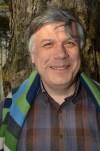
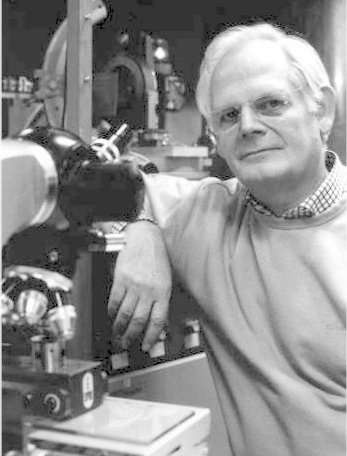
Marek Kostrzewa is a Lecturer in the Department of Physics at the Faculty of Production Engineering and Logistics, Opole University of Technology. His research focuses on materials science, particularly in glass ceramics, dielectric properties, and nanomaterials. Recent publications highlight his expertise in positron annihilation lifetime spectroscopy, doping effects on oxide glasses, and applications in solid-state batteries and optical materials. His work explores nano-sized defects, photoluminescence efficiency, and polaronic conduction mechanisms. For details, contact Marek Kostrzewa at m.kostrzewa@po.edu.pl.
Agata Andrzejewska is an Assistant Professor at the Department of Anesthesiology and Intensive Care within the Faculty of Medicine at Pomeranian Medical University in Szczecin. Her research focuses on medical sciences, particularly in spectroscopy, neuroprotection, and subarachnoid hemorrhage, with applications in near-infrared techniques and human physiology. Her work is documented through 10 publications, contributing to a total impact factor of 24.595 and a ministry score of 890. Specific areas of interest include Near-infrared spectroscopy Neuroprotective strategies Subarachnoid hemorrhage management .
Simone Vejlgaard Holm is a PhD Fellow at the Niels Bohr Institute , University of Copenhagen, affiliated with the Cosmic Dawn Center (DAWN) . Her research focuses on astrophysics, cosmology, and galaxy formation at high redshifts. Research Interests : High-redshift galaxies, Lyman-α absorption/emission, interstellar medium, quasar-galaxy interactions, and early universe structure formation. Email : simone.vejlgaard@nbi.ku.dk Contact : +4535323108 | Jagtvej 155A, 2200 København N. Recent Publications (2023–2024) 2024: Study of radio-bright quasars and damped Lyman-α absorption in early galaxies. 2024: JWST analysis of obscured AGN and star-forming hosts at z ∼ 4.53. 2023: X-shooter spectroscopy of GRB 210905A host galaxy at z=6.3. Collaborations She collaborates with international researchers such as Johan Peter Uldall Fynbo , Darach Watson , and Gabriel Brammer , focusing on cosmic dawn, galaxy formation, and AGN studies.
Nazzareni Sabrina is an Associate Professor at the University of Perugia , Department of Physics and Geology, specializing in mineralogy, geochemistry, and experimental petrology. Since 2007, she has held a permanent researcher position and has been actively involved in teaching, research, and academic service. Education: PhD in Mineralogy and Petrology (1994–1998), University of Florence and University of Perugia Degree in Geology (summa cum laude), University of Perugia, July 1994 Post-doctoral fellowship in Mineralogy and Crystal Chemistry, University of Padua (1998–2000) Research Interests: Her research focuses on the experimental study of natural and synthetic minerals , particularly the effects of pressure, temperature, and trace elements on mineral stability and crystal chemistry. She uses advanced techniques such as synchrotron X-ray diffraction, Raman spectroscopy, and electron microscopy to study minerals from volcanic systems, subduction zones, and mantle environments. Recently, she has also investigated rare earth element incorporation in minerals for sustainable resource recovery. Her work bridges mineralogy with geodynamic processes, including magma evolution, fluid transport, and planetary analogs like asteroid Vesta. Scientific Awards: 2001: Scholarship from Italian Society of Mineralogy and Petrology for study abroad at University of Leoben 2004: Winner of the IMA logo contest Supervision & Teaching: She has supervised 19 theses at the bachelor’s and master’s levels and teaches courses such as Mineralogy , Geomaterials for Sustainability , and Raw Materials for Energy Transition . She also leads interdisciplinary field excursions and has served on doctoral committees. Labs & Collaborations: She collaborates with international institutions including ESRF (France), ILL (France), Elettra (Italy), and universities across Europe, Russia, and the USA. Her lab work includes high-pressure diamond anvil cell experiments and synchrotron-based spectroscopy.
Darin Zimmerman serves as Dean and Traubert Chair at The Citadel's Swain Family School of Science and Mathematics , and holds a Professor of Physics position in the Department of Physics. With prior roles as Associate Dean at Penn State Altoona, his career spans academic leadership and experimental physics research. Education: Ph.D. in Physics – Texas A&M University (2003) B.S. in Physics – University of California, Irvine (1998) Research Focus: His work primarily addresses Nanomaterials and Microwave Physics , with key contributions in: Plasmonic nanoantenna arrays for electro-optical sensing Atomic-layer deposition for tunable nanoscale light-harvesting devices Magnetorheological nanofluids and elastomer composites Photon-assisted tunneling in asymmetric junctions Microwave absorption mechanisms in metal-insulator composites Publication Trends: Recent articles emphasize Nanoscale Energy Conversion through rectenna systems, plasmonic tuning, and geometrically asymmetric devices. Earlier works focus on Percolation Transitions in nanocomposites, Microwave Absorption studies, and Tunneling Spectroscopy techniques. Departments: Department of Physics Swain Family School of Science and Mathematics Research Grants: NSF RUI: Single Molecule Vibrational Spectra NSF RUI: Microwave Heating of Powdered Metals Technological Innovations: Invented adjustable oxide-free tunnel junctions for Vibrational Spectroscopy and developed Self-Assembling Tunnel Junctions for molecular studies. His work extends to cavity perturbation techniques for permittivity measurements.
Ozanam François is a CNRS Researcher at the Condensed Matter Physics Laboratory (PMC, UMR 7643) at École polytechnique, where he has been active since 1988. He served as director of PMC from 2005 to 2014 and has been president of the Chemistry Department at École polytechnique since 2012. His work is centered in the Electrochemistry and Thin Films group, focusing on semiconductor/electrolyte interfaces and functional materials. Engineer, École polytechnique (1984) DEA in Solid State Physics, Paris-Sud University (1985) Doctorate, Paris-Sud University (1988) His research spans the physics and electrochemistry of semiconductors , with emphasis on porous silicon , surface functionalization , and vibrational spectroscopy at interfaces. He explores applications in bio-sensing and lithium-ion batteries , particularly through surface modifications to enhance electrode stability and performance. His recent publications reflect a strong trend in operando characterization of battery materials using infrared spectroscopy, surface functionalization for biosensing, and the physics of nanostructured semiconductors. His work bridges fundamental surface science with practical energy and biomedical applications. While no formal awards are listed, his sustained leadership and publication record in high-impact journals signify recognition in the field. He mentors students through collective scientific projects and Master’s programs in Quantum Devices and Molecular Chemistry. He has not received mention of specific grants, but his CNRS affiliation implies sustained research funding. His work is conducted within the multidisciplinary PMC laboratory, which fosters collaboration across solid-state chemistry, surface physics, and electrochemistry.
Michael A. Troxel is an Associate Professor of Physics at Duke University's Department of Physics within Trinity College of Arts & Sciences. He earned his Ph.D. and M.S. from the University of Texas, Dallas, and dual B.A./B.S. in Physics from the University of Oklahoma. His research focuses on cosmology, dark matter, and galaxy evolution through advanced surveys like the Dark Energy Survey (DES) and the Nancy Grace Roman Space Telescope missions. Ph.D., University of Texas, Dallas (2014) M.S., University of Texas, Dallas (2011) B.A./B.S., University of Oklahoma (2008) Troxel's work leverages weak gravitational lensing, galaxy clustering, and multiwavelength observations to map cosmic structure and constrain dark energy models. His recent studies simulate next-generation telescopes' capabilities for redshift measurement and cosmic shear analysis, aiming to resolve non-linear matter suppression from baryonic feedback. He contributes to major collaborations like DES, SPT, and ACT, integrating machine learning for galaxy classification and cosmological inference. His publications highlight trends in cosmic structure mapping, Roman Space Telescope simulations, and baryonic feedback modeling. Awards include the Department of Energy's Early Career Award (2020). Troxel leads grants from Jet Propulsion Lab and DOE for cosmological software development (2020-2027) and Roman Survey optimization (2024-2026). He co-chairs the DES Science Committee and serves as Associate Chair of Duke's Physics Department (2025-present).
Toni Petteri Emil Eskelinen serves as a Postdoctoral Researcher within the Chemistry and Materials department at Aalto University, Finland. His academic profile centers on advanced photophysical materials research, with specialization in computational and experimental studies of luminescent systems. He actively contributes to the Inorganic Materials Modelling research group, focusing on molecular design for next-generation optoelectronic applications. Dr. Eskelinen's research expertise spans inorganic chemistry, materials science, and photophysics. His work encompasses transition metal complexes (Cu, Pt, Bi), organic dyes, and hybrid inorganic-organic systems. Key areas include thermally activated delayed fluorescence (TADF), room-temperature phosphorescence, and near-infrared emission mechanisms. He employs quantum chemical methods and experimental characterization to establish structure-property relationships in photofunctional materials, with emphasis on energy transfer processes and aggregation effects. Analysis of his 2022-2025 publications reveals a cohesive research trajectory centered on luminescent materials. His contributions bridge fundamental coordination chemistry with applied materials development, particularly in platinum-bismuth systems and organic ionic crystals. A significant portion involves computational benchmarking of photophysical properties, while experimental work advances understanding of through-space sensitization and solvent-dependent luminescence. These studies collectively target applications in OLEDs, bioimaging, and solid-state lighting technologies. He maintains active collaboration within Aalto University's research ecosystem and with international partners including Igor O. Koshevoy, Antti J. Karttunen, and Pi-Tai Chou, as evidenced by his co-authorship across multiple high-impact journals in inorganic and materials chemistry.
Prof. Gönül BAŞAR is a distinguished academic at Istanbul University's Faculty of Science, Department of Physics, where she has served as a Professor since 2004. Her academic career at Istanbul University spans from Research Assistant (1986-1995), to Assistant Professor (1995-1998), Associate Professor (1998-2004), and finally to her current position. She has also held significant administrative roles, serving as Head of the Physics Department continuously since 2007 (with a specific term from 2008-2011) and as a Member of the Scientific Research Projects Committee (2007-2009). Her research expertise lies in atomic and molecular physics, with a focus on atomic spectra and photon interactions. Prof. BAŞAR's work primarily involves laser spectroscopy, Fourier transform spectroscopy, and hyperfine structure investigations of various elements including thulium, holmium, lanthanum, vanadium, and niobium. She has made significant contributions to the understanding of atomic energy levels, spectral line identification, and hyperfine structure measurements across visible and near-infrared wavelength ranges. Prof. BAŞAR's publication record is impressive with 148 publications indexed in Web of Science and 45 in Scopus, accumulating 46 citations in WoS and 14 in Scopus, with corresponding H-indices of 446 and 449 respectively. Her most recent work (2020-2024) continues to advance the field of atomic spectroscopy, particularly in the study of rare earth elements. Her research demonstrates a consistent focus on precise spectroscopic measurements and the identification of new energy levels in atomic systems. Among her notable scientific contributions are the discovery of new energy levels in holmium and lanthanum atoms, detailed hyperfine structure investigations of thulium, and advancements in laser-induced fluorescence spectroscopy techniques. Her work has applications in both fundamental atomic physics and astrophysical spectroscopy. Throughout her career, Prof. BAŞAR has supervised 13 theses, mentoring numerous graduate students in atomic physics research. Her educational background includes a Doctorate (1987-1994), Postgraduate (1985-1987), and Undergraduate (1981-1985) degrees, all from Istanbul University's Faculty of Science in Physics-related fields. Her doctoral dissertation focused on isotope shifts and hyperfine structure separations of Rhenium and Platinum elements using laser and interferometric spectroscopy.
Professor Tim Roberts is a distinguished faculty member in the Department of Physics at Durham University, where he serves as Director of Education. His academic career spans over two decades of research in high-energy astrophysics with a specialization in X-ray astronomy. Professor Roberts' research primarily focuses on ultraluminous X-ray sources (ULXs) , which represent some of the most extreme accretion phenomena in the universe. His work encompasses the X-ray emission properties of nearby normal galaxies, starburst galaxies, and low-luminosity active galactic nuclei. His research contributes significantly to our understanding of super-Eddington accretion processes, neutron star systems, and black hole physics in extreme environments. Through extensive observational work with major X-ray observatories including Chandra, XMM-Newton, and NuSTAR, he has advanced our knowledge of accretion disk physics, pulsating ULXs, and the nature of extreme X-ray sources. The analysis of Professor Roberts' recent publications (2022-2025) reveals a strong emphasis on multi-wavelength studies of ULXs, with particular attention to quasi-periodic oscillations, transient phenomena, and spectral-timing analysis. His work often involves international collaborations investigating the nature of super-Eddington accretion, neutron star pulsations, and the relationship between ULXs and intermediate-mass black holes. The research demonstrates a consistent focus on observational constraints for theoretical models of extreme accretion physics. Professor Roberts actively supervises graduate students, including Aldric Wong, and has held numerous teaching and administrative positions within the department. His teaching responsibilities have included advanced courses in Radiative Processes in Astrophysics and supervision of Level 4 projects. Previously, he has taught courses on Phases of Matter, Astrobiology, Thermodynamics, and served as course director and committee chair for various departmental activities.
Claire Greenwell is a Postdoctoral Research Associate (PDRA) in the Department of Physics, specializing in astrophysics with a focus on active galactic nuclei (AGN) and quasars. Her research examines obscured AGN populations, high-energy emission characteristics, and infrared surveys. Recent work includes: 4MOST IR AGN survey design for quasar census NuSTAR Local AGN NH Distribution Survey (NuLANDS) for column density analysis Studies on Compton-thick AGN and optically quiescent quasars Investigations into extreme compact starbursts obscuring infrared quasars She contributes to major astrophysical journals including Monthly Notices of the Royal Astronomical Society and Astrophysical Journal , often collaborating with international teams on X-ray and infrared astronomy projects.
Casper Vindahl Jensen is a Postdoctoral Researcher in the Department of Chemistry at the University of Copenhagen's Faculty of Science. His work focuses on advanced spectroscopic techniques for analyzing molecular structures and dynamics, particularly in gas-phase systems. His research interests center on physical chemistry and molecular spectroscopy , with expertise in hydrogen-bonded species, OH-stretching dynamics, and gas-phase equilibrium studies. Key methodologies include cavity ring-down spectroscopy, infrared-visible absorption measurements, and overtone spectroscopy for precise molecular characterization. Analysis of his recent publications reveals a strong emphasis on hydrogen bonding networks (methanol clusters, hydroperoxides), temperature-dependent molecular behavior , and gas-phase photophysics . The 2022 high-impact paper in Current Biology (150+ citations) demonstrates interdisciplinary work in environmental DNA monitoring, though his core research remains in physical chemistry. Notable scientific contributions include: First gas-phase detection of tert-butyl hydroperoxide dimer (2023) Room-temperature equilibrium constants for methanol clusters (2024) High-precision OH-stretching dynamics in hydrogen-bonded systems (2025) Jensen actively collaborates with Prof. Henrik G. Kjaergaard's research group and maintains technical partnerships across atmospheric chemistry and environmental monitoring fields. His laboratory work utilizes advanced laser spectroscopy setups at the University of Copenhagen's Department of Chemistry facility (Universitetsparken 5, Copenhagen).
Henrik Grum Kjærgaard is a Professor in the Department of Chemistry at the University of Copenhagen's Faculty of Science, where he leads an active research group focused on molecular spectroscopy and atmospheric processes. His work bridges experimental gas-phase studies with advanced computational chemistry to investigate fundamental molecular interactions. His research centers on physical chemistry phenomena including OH-stretching dynamics, hydrogen bonding networks, and atmospheric reaction mechanisms. Specializing in high-resolution infrared and visible spectroscopy of gas-phase systems, he examines water clusters, atmospheric oxidants, and molecular vibrations with particular emphasis on temperature-dependent effects and quantum mechanical behavior. His group frequently combines experimental measurements with multireference and coupled-cluster theoretical methods. Analysis of his recent publications (2024-2025) reveals consistent focus on spectroscopic characterization of molecular complexes relevant to atmospheric chemistry, with recurring themes of hydrogen bonding thermodynamics, vibrational overtone spectroscopy, and radical formation mechanisms. His work demonstrates strong integration of experimental spectroscopy with quantum chemical calculations across diverse systems from water-dimethyl ether complexes to atmospheric oxidation products. Professor Kjærgaard maintains the Kjaergaard Group research laboratory at the University of Copenhagen, utilizing advanced spectroscopic instrumentation for gas-phase molecular studies. His research facility supports ongoing investigations into molecular clusters and atmospheric reaction pathways through both experimental and computational approaches.
Prof. Dr. Jürgen Evers is a distinguished Professor at the Department of Chemistry and Biochemistry, Ludwig-Maximilians-Universität München (LMU Munich) . His career spans over five decades, with pivotal contributions to high-pressure materials science , Zintl phases , and intermetallic compounds . He earned his doctorate in 1974 under Alfred Weiss and habilitated in 1982, focusing on pressure-temperature effects in disilicides and digermanides. Academic Timeline: Chemical laboratory technician (1958-1961), evening gymnasium (1962-1966), chemistry studies (Free University Berlin 1967-1968, LMU Munich 1968-1971), research at ETH Zurich (1972-1975), Heisenberg Fellowship (1984), Priv.-Doz. (1987), Associate Professor (1994), Cornell University research stay (1997). Research Focus: High-pressure synthesis and crystallography of Zintl phases (e.g., MSi 2 ), transformation of three- to four-connected networks in elements like silicon and nitrogen, and metallization under extreme conditions. His work on trivalent nitrogen networks under 5 Mbar pressure mirrors earlier Zintl phase discoveries in BaSi 2 . Scientific Awards: Recipient of the Heisenberg Fellowship (1984), reflecting his foundational role in high-pressure solid-state chemistry. Publications: Over 40 years, his 15 most recent articles (2007-2023) span molecular structures (mercury fulminate, hydrazoic acid), high-pressure phase transitions (cesium azide), reactive materials (ZrW 2 , HfW 2 ), and historical analyses (Wittelsbach Diamond, Czochralski Process). Collaborations with Thomas M. Klapötke and Gilbert Oehlinger dominate recent work. Advising: Mentored key researchers including Gerhard Sextl (Fraunhofer Institute), Bernd Sendlinger (University of Applied Management), and Gerhard Nuspl , contributing to structural studies in CeCu 2 -type compounds.
Dr. Nikae te Moller is an Assistant Professor at the Department of Clinical Sciences, Faculty of Veterinary Medicine, Utrecht University. Her research focuses on equine musculoskeletal health , combining gait analysis (kinematics/kinetics), osteoarthritis progression in equine joints, and longitudinal data analysis . She employs advanced techniques like facial electromyography (fEMG) and R programming for statistical analysis, with applications in science communication (e.g., public dance demonstrations of joint dynamics). Expertise in equine cartilage injury models (blunt vs. sharp lesions) Developed equine carpal groove model for osteoarthritis studies Innovator in optical coherence tomography (OCT) and near-infrared spectroscopy for cartilage assessment Recent publications (2024-2023) emphasize quantitative MRI , micro-CT , and infrared spectroscopy for early detection of cartilage defects. Her work bridges regenerative medicine and equine locomotion , with collaborations across biomedical engineering (e.g., 3D T1 relaxation time studies) and veterinary science. Awards include the Public Engagement Seed Fund . Current projects involve objective pain quantification and biomechanical response to treadmill exercise in horses.