Michael Dickey is a Professor of Chemical and Biomolecular Engineering at North Carolina State University. His research focuses on studying materials with remarkable properties to enable new applications in energy harvesting, sensors, soft electronics, and robotics through simple, scalable methods. His group emphasizes interdisciplinary collaboration and participates in science outreach activities. Research interests include liquid metals, stretchable electronics, soft robotics, interfacial phenomena, and micro/nanofabrication. The lab explores fundamental material properties and their practical applications in wearable devices, energy systems, and smart materials. Recent work highlights advancements in liquid metal-based technologies, including pH-responsive nanozymes, phase-change inks, and soft actuators. Collaborations span academia and industry to address challenges in materials science and engineering. Advising and training: The group recruits 1–2 Ph.D. students annually and engages undergraduates in research. Postdoctoral positions are posted via NC State’s job portal. No specific grants or awards are listed in the provided text. Labs/teams: The Dickey Group operates within NC State’s College of Engineering, fostering a collaborative environment for postdocs, graduate students, and visiting researchers.
Professor Michael Fuhrer is a leading academic in the School of Physics and Astronomy at Monash University, where he holds the position of ARC Laureate Fellow. He directs the ARC Centre of Excellence for Future Low-Energy Electronics Technologies (FLEET) and co-founded the Monash Centre for Atomically Thin Materials. Previously, he led the Center for Nanophysics and Advanced Materials at the University of Maryland. His research focuses on novel two-dimensional materials such as graphene, topological insulators, and layered semiconductors, with contributions to understanding electronic and optical properties at the nanoscale. Professor Fuhrer has received prestigious recognitions including Fellowships from the Australian Academy of Science, American Association for the Advancement of Science, and American Physical Society. His work addresses UN Sustainable Development Goals related to affordable and clean energy through innovations in low-energy electronics. Recent projects include investigations into twisted 2D semiconductor heterostructures, nano-IR material characterization, and electric/magnetic probes for extreme condition studies. Over 247 research outputs highlight his expertise in optoelectronics, quantum phenomena, and material engineering. Collaborations span global institutions, reflecting his role as a key figure in advancing 2D and topological materials research.
Michael Kudenov is a Professor in the Department of Electrical and Computer Engineering at North Carolina State University. His research focuses on developing novel imaging systems, interferometers, detectors, and anisotropic materials for polarization and spectral sensing applications across ultraviolet to thermal infrared wavelengths. Key areas include biomedical imaging, remote sensing, food safety, and atmospheric monitoring. He holds a Ph.D. in Optical Sciences from the University of Arizona (2009) and a B.S. in Electrical Engineering from the University of Alaska Fairbanks (2005). Education: Ph.D. Optical Sciences, University of Arizona (2009) M.S. Optical Sciences, University of Arizona (2007) B.S. Electrical Engineering, University of Alaska Fairbanks (2005) Dr. Kudenov’s research interests center on advancing snapshot imaging systems to maximize spatial, spectral, and polarimetric data capture. Recent work includes hyperspectral imaging for crop phenotyping, AI-driven disease detection in plants, and flexible organic photodetectors for continuous environmental sensing. He has authored 13 journal articles, 15 conference proceedings, and patents in optical systems design. His funded projects include high-throughput phenotyping for peanut leaf spot resistance and collaborations with agricultural stakeholders. Awards include the 2023 SPIE Fellowship, 2021 University Faculty Scholar recognition, and the 2009 UA Graduate Valedictorian honor. He actively mentors students in undergraduate and graduate research, emphasizing interdisciplinary applications of optical engineering. Notable contributions include a bio-inspired spectropolarimetric sensor and Mueller matrix imaging systems for plant health monitoring. His lab develops technologies for field-deployable platforms, advancing precision agriculture and environmental monitoring through innovative optical instrumentation.
Masaru Kuno is a Professor of Chemistry and Biochemistry at the University of Notre Dame, concurrently serving as a Professor in the Department of Physics and Astronomy within the College of Science. His research focuses on nanoscale materials, semiconductor quantum dots, and their applications in renewable energy. He holds a Ph.D. in Physical Chemistry from MIT (1998) and a B.A. in Chemistry from Washington University in St. Louis (1993). Research Interests: Single molecule microscopy, fluorescence intermittency, colloidal semiconductor synthesis, and photothermal imaging techniques. His work emphasizes low-dimensional materials for energy solutions and optical refrigeration. Recent Publications (2024–2025) : Highlighting advancements in condensed-phase optical refrigeration, anion segregation dynamics in perovskites, and novel imaging technologies. Key contributions include laser cooling of nanocrystals and superresolution infrared imaging. Group Activities : The Kuno Group develops materials and optical tools for probing nanoscale phenomena, with a focus on semiconductor nanocrystals and perovskite systems. Collaborations span chemistry, physics, and engineering disciplines.
Dr. Ardalan Armin is an Honorary Research Fellow in the School of Biosciences, Geography and Physics at Swansea University. His research focuses on advancing optoelectronic technologies including organic photovoltaics, perovskite solar cells, and photodetectors. Research spans fundamental charge transport phenomena to applied device engineering for energy harvesting and sensing. Recent work establishes frameworks for understanding recombination losses and stability limitations in next-generation semiconductors.
Jeffrey Pyun is a Professor at the University of Arizona, holding dual appointments in the Department of Chemistry & Biochemistry and the College of Optical Sciences. He earned his B.A. from Northwestern University (1997), Ph.D. from Carnegie Mellon University (2002), and completed postdoctoral research at IBM Almaden Research Center and UC Berkeley (2002-2004). His research focuses on synthetic polymer chemistry, advanced materials, and nanocomposites, with applications in photonics, energy, sustainability, and defense. His group is internationally recognized for developing organic/inorganic hybrid polymers, including chalcogenide hybrid inorganic/organic polymers (CHIPs) for infrared imaging and energy storage. Research areas include energy science, materials and polymer chemistry, surface/solid-state chemistry, and synthetic methods development. The Pyun Group utilizes interdisciplinary approaches, combining polymer synthesis, nanotechnology, and materials science. Their lab facilities include NMR spectroscopy, thermal analysis, SEM, and imaging cores. Research is supported by collaborations with the W.M. Keck Center for Nano-Scale Imaging and other advanced facilities. Current projects explore sustainable polymers, electrocatalysts for water splitting, and high-refractive-index materials for photonics. His work addresses global challenges in sustainable materials and energy systems. The group’s innovations span from fundamental polymer chemistry to applied technologies like lithium-sulfur batteries and infrared optical devices.
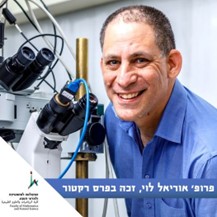
Uriel Levy is a Professor at the Department of Applied Physics of The Hebrew University of Jerusalem (HUJI), where he serves as director of the Harvey M. Krueger Family Center for Nanoscience and Nanotechnology. His research focuses on nanophotonics, silicon photonics, plasmonics, and light-matter interactions for applications in communication, sensing, and energy systems. PhD in Electrical Engineering from Tel Aviv University Postdoctoral work at University of California, San Diego Levy’s research spans advanced photonic technologies, including metasurface design, terahertz imaging, and quantum sensing. His work integrates theoretical and applied approaches to develop novel optical devices with applications in healthcare, automotive, and industrial systems. His recent publications highlight innovations in: tunable metasurfaces, SWIR sensing, photonic integrated circuits for quantum applications, and nonlinear optical devices. These contributions demonstrate his focus on scalable, CMOS-compatible photonic platforms. Elected Fellow of the Optical Society of America (OSA) Associate Editor for Science Advances (AAAS) ERC grant recipient Levy co-founded TriEye, an Israeli startup commercializing automotive sensing technology from his lab. His work also explores atomic-scale interactions in nanophotonic systems, including magnetometer development and light-vapor coupling for quantum applications.
Sanje Mahasivam is a Research Fellow at RMIT University's School of Science in Melbourne, Australia. His research focuses on advanced materials and nanotechnology with applications in environmental monitoring, food safety, and clinical diagnostics. Institution: RMIT University School: School of Science Campus: City Campus Australia Email: sanje.mahasivam@rmit.edu.au Dr. Mahasivam's research interests span nanotechnology, materials chemistry, and biosensor development, with particular expertise in nanozymes, plasmonic nanoparticles, and point-of-care diagnostic systems. His work bridges the gap between fundamental materials science and practical applications in healthcare and environmental monitoring. An analysis of his recent publications reveals a strong focus on developing nanoscale sensors for environmental, food, and clinical applications. His research demonstrates expertise in plasmonics, nanozyme catalysis, and materials engineering for sensor development. The publications cover diverse applications including CO 2 capture, kidney disease diagnostics, glucose monitoring, and environmental pollutant detection, highlighting the interdisciplinary nature of his work. Dr. Mahasivam has received recognition through numerous publications in high-impact journals across materials science, chemistry, and biomedical engineering fields. He actively supervises multiple research projects focused on nanosensor development, including several titled 'NanoZyme sensors for Color-based Environmental, Food, and Clinical Analytes' with various project dates from 2023-2025. His supervision portfolio indicates a strong commitment to training the next generation of researchers in nanotechnology and sensor development. His research laboratory appears to focus on developing practical nanoscale solutions for real-world diagnostic challenges, with particular emphasis on color-based detection systems that enable point-of-care applications without complex instrumentation.
Associate Professor Ajay Pandey holds an appointment at the School of Electrical Engineering and Robotics at Queensland University of Technology (QUT). He earned his PhD in Physics from the University of Angers, France, focusing on Molecular Semiconductor Heterojunctions. His career includes prestigious fellowships such as the QUT Vice Chancellor’s Senior Research Fellowship in Medical Robotics and an ARENA Research Fellowship in Next-Generation Photovoltaic Technology. Pandey leads research in Advanced Optoelectronics, Quantum Sensing, Medical Robotics, and Energy Up-Conversion. Research Interests: Pandey’s work spans Condensed Matter Physics, Molecular Electronics, Materials Robotics, and Neuroengineering. Recent projects include developing bio-inspired optoelectronic devices for applications in neuroscience, bionics, and robotic vision. He is a Program Leader at QUT's Centre for A Waste Free World and serves on the editorial board of Scientific Reports . Education: PhD in Physics (University of Angers) Awards: Bionics Innovation Award 2020, ARENA Fellowship, Vice Chancellor’s Fellowship Supervision: Has graduated 8 PhD and 2 M.Phil students, currently supervising 12 PhD candidates. Teaches Electronics in undergraduate engineering programs. Labs/Teams: Leads the Integrated Photonics and Quantum Sensing group. Collaborates with QUT's Centres for Materials Science and Biomedical Technologies. Research emphasizes interdisciplinary projects like robotic imaging systems for keyhole surgeries and energy-efficient photovoltaics.
Minhee Yun is a Professor affiliated with the Swanson School of Engineering at the University of Pittsburgh . Her research focuses on nanotechnology, biosensors, and advanced materials science, with a particular emphasis on graphene-based devices and conductive polymer applications. She collaborates with the Young Hee Lee lab at Sungkyunkwan University, Suwon, Korea, and has pioneered innovative fabrication techniques for nanowire sensors and flexible electronics. Education highlights include the Micron Fellowship (1999) and ERI Graduate Fellowship (1995) from Arizona State University, along with a Scholarship for Studying Abroad from Chonbuk National University (1994). Her research interests span Biosensor development for medical diagnostics Graphene and 2D material integration into electronic systems Optoelectronic modulation of nanomaterials like MoS₂ Hybrid sensor arrays for VOC/toxic gas detection Mechanisms of resistive switching in perovskite and TiO₂ films Advanced fabrication techniques for nanoscale devices Awards include multiple NASA Tech Brief Awards (2007, 2005, 2004), the Jet Propulsion Laboratory Team Leader Award (2003), and the Korea Brain Pool Scholar (2011). Her work emphasizes practical applications in healthcare, energy systems, and electronic devices. As a Principal Investigator (PI), she has led projects such as the Planck Project and collaborates on grants involving microbial fuel cells and bolometer arrays. Her labs specialize in Microfluidic biosensor integration Graphene transfer implementations Electrochemical nanowire sensor arrays and maintain active partnerships with institutions globally.
Dr. Dali Sun is an Associate Professor in the Department of Physics at North Carolina State University (NC State), part of the College of Sciences. His research focuses on spintronic and optoelectronic materials, particularly organic semiconductors, magnetic thin films, and hybrid perovskites. He leads the Sun Research Group, exploring novel spin injection techniques, spin Hall effects, and magneto-optical phenomena in advanced materials. Dr. Sun holds a PhD from the Chinese Academy of Sciences (2009), followed by postdoctoral work at Oak Ridge National Laboratory (2009–2011) and the University of Utah (2012–2014). He served as a Research Assistant Professor at the University of Utah (2015–2016) before joining NC State in 2016. His research interests span device physics for hybrid perovskite spintronics, organic light-emitting diodes, and magneto-electric coupling. Recent work emphasizes chiral materials, phonon dynamics in heterojunctions, and terahertz emission from spintronic systems. Over 150 publications highlight his contributions to spintronic interfaces, magnon-photon coupling, and energy-efficient spintronic devices. Labs/Teams: Sun Research Group focuses on quantum materials and spin-based technologies.
Dr. Akhil Rajan is a Research Fellow at the School of Physics and Astronomy, University of St Andrews, affiliated with the Centre for Designer Quantum Materials. His research focuses on quantum materials, condensed matter physics, and epitaxial growth, with particular emphasis on monolayers, transition metal dichalcogenides, and charge density wave phenomena. Key research interests include the electronic structure of 2D materials, epitaxial growth techniques (Molecular Beam Epitaxy), and the manipulation of material properties through band gap engineering. He has contributed to studies on ferromagnetic semiconductors, antiferromagnetic metals, and valley-Zeeman coupling in intercalated materials. Rajan’s work bridges experimental and theoretical approaches, utilizing techniques like scanning tunneling microscopy, angle-resolved photoemission, and tomographic mapping. His publications span high-impact journals such as Nature Materials , Nano Letters , and Chemistry of Materials , reflecting expertise in both material synthesis and fundamental physics. His research also extends to astrophysics, including exoplanet spectroscopy and brown dwarf atmosphere studies, showcasing interdisciplinary collaboration. Despite no listed awards, his prolific publication record and affiliations with top-tier institutions underscore his academic impact.
Professor Duncan Billson is a faculty member at the University of Warwick's School of Engineering, leading the Electrical and Electronics Discipline Stream. He specializes in ultrasonics, non-destructive testing, optoelectronics, and sensor technology. His research focuses on advanced materials, structural health monitoring, and acoustic innovations. He has spun out Warwick Acoustics Limited, commercializing his research. His grants include projects funded by EPSRC and the Leverhulme Trust, addressing topics like thermosonics for composite inspection and lithium-ion battery monitoring. Recent work emphasizes airborne ultrasonic techniques, corrosion detection, and sensor development for industrial applications. His publications span ultrasonic propagation, battery defect identification, and novel transducer designs. Grants: Includes NDE techniques for composites, lithium-ion battery monitoring, and offshore structural health. Awards: Not explicitly mentioned in the provided texts. Labs/Teams: Leads the Electrical and Electronics Discipline Stream and collaborates with Warwick Acoustics Limited.
Ramon Cusco Cornet is a Permanent Researcher at GEO3BCN-CSIC, part of the Spanish National Research Council (CSIC), Spain's premier public research institution. His work is centered on the physical characterization of crystalline materials using advanced optical spectroscopy techniques. Educational Background: Ph.D., 1994, Electronics and Electrical Engineering, University of Glasgow Ph.D., 1993, Physics, Universitat Autònoma de Barcelona M.Sc., 1987, Physics, Universitat Autònoma de Barcelona B.Sc., 1986, Physics, Universitat de Barcelona His research focuses on the macroscopic and microscopic physical properties of crystals, particularly through Raman scattering and photoluminescence. He investigates lattice vibrations, disorder, strain, impurity effects, and their influence on electrical and optical behavior in materials like In₂O₃, CdO, and hexagonal boron nitride. He has developed modeling tools to extract electrical charge information from Raman data non-invasively. His current efforts aim to extend Raman spectroscopy to novel bulk and nanostructured crystals and refine theoretical models of scattering processes. The analysis of his recent publications (2020–2025) reveals a consistent emphasis on phonon dynamics, anharmonicity, isotopic effects, and optical properties in semiconductors and insulators. His work bridges fundamental condensed matter physics and applied materials science, with increasing interdisciplinary applications, including archaeology. He frequently collaborates with international teams from Japan, the U.S., and Europe. Scientific Awards and Recognition: No specific awards listed, but notable metrics include: 172 publications, 3982 total citations, h-index of 28, and high international collaboration (internationalization index: 1.88). ORCID: 0000-0001-9490-4884 Multiple Research IDs: WOS, Scopus (7004258253), DVI, etc. Ramon Cusco Cornet leads and contributes to significant research projects in crystal physics. While no formal advising role is explicitly stated, his collaborations—especially on interdisciplinary studies—suggest mentorship of junior researchers. His work is supported by CSIC and likely national or EU-level grants, though specific funding sources are not detailed. He is actively involved in experimental and theoretical investigations of novel materials, with future work expected to further explore quantum and anharmonic phenomena in low-dimensional systems. Laboratories and Research Groups: Permanent Researcher, GEO3BCN-CSIC Specializes in optical spectroscopy laboratories for crystal characterization Collaborates with international labs in Japan (e.g., on In₂O₃) and the U.S. (e.g., on h-BN and hyperbolic materials)
Nina Vaidya is a Lecturer and Assistant Professor in Astronautics and Spacecraft Engineering at the Faculty of Engineering and Physical Sciences, University of Southampton. She leads the Vaidya Research Group, which specializes in optics and material design with applications in nano-photonics, metamaterials, nano-fabrication, energy materials, 3D printing of functional components, and high-specific power space-based systems. Dr. Vaidya's educational background includes: Undergraduate degree in Engineering from the University of Cambridge, England, UK Ph.D. in Electrical Engineering from Stanford University, CA, USA Dr. Vaidya's research focuses on concepts to break optics and optoelectronic limits and developing new fabrication techniques to implement them. Her work has the potential to revolutionize how we conceptualize, fabricate, and deploy engineering systems. Key research areas include: Nano-photonics and metamaterials for advanced optical applications Nano-fabrication techniques for high-precision optical devices 3D printing of functional optical components with nanometer-smooth surfaces Graded index immersion optics for solar concentration Space-based solar power systems and related technologies Space sustainability and debris management solutions Dr. Vaidya's recent publications demonstrate a strong focus on space-based solar power technologies and advanced optical systems. Her work spans fundamental physics of light manipulation to practical engineering applications for space systems. A notable trend is the integration of novel optical concepts with lightweight, high-efficiency designs specifically for space applications. Her research bridges theoretical physics, materials science, and practical engineering to address challenges in renewable energy and space technology. Dr. Vaidya has received recognition for her innovative work: Stanford DARE (Diversifying Academia, Recruiting Excellence) scholarship recipient BBC World Service interview feature for her space-based solar power work Successful space launch of SBSP prototypes with SpaceX Transporter 6 As an academic advisor, Dr. Vaidya currently supervises multiple PhD students including Megan Perks and Diptendu Mandal. Her research is supported by significant projects including the Space Solar Power Initiative, which has progressed from concept to functional space prototypes. She has been instrumental in developing lightweight space-based solar power systems that have successfully demonstrated in-orbit operation. The Vaidya Research Group serves as a bridge between novel concepts to break opto-electronic and photonic limits and the fabrication techniques needed to implement them. The group actively participates in major conferences including the Materials Research Society (MRS) conference, Space Power Workshop (SPW), and SPIE Optics and Photonics conference.