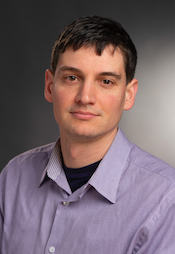
Matthew Louis Mauriello is an Assistant Professor in the Department of Computer and Information Sciences at the University of Delaware , where he directs the Sensify Lab . He holds a PhD in Computer Science from the University of Maryland (2018) and completed postdoctoral work at Stanford University (School of Medicine, 2020; School of Public Policy & Environmental Engineering Department, 2019). Research interests span Human-Computer Interaction (HCI), Ubiquitous Computing, and User-Centered Design with applications in: Sustainability Human-Building Interaction Wearable Technology Personal Informatics Educational Game Design Mental Health Interventions Recent publications highlight trends in stress monitoring (skin-like biosensors, workplace wellbeing), energy auditing (thermography systems), and educational technology (block-based programming tools for teachers). His work appears in ACM CHI, ACM Human-Computer Interaction, and Building and Environment. Scientific awards include: Best Paper Honorable Mention, CHI 2016 Best Paper Honorable Mention, CHI 2015 Best of WebSci'18 Teaching at University of Delaware encompasses courses like Educational Game Design Operating Systems Advanced Web Technologies Computing for Social Good with a focus on project-based learning and systems thinking.
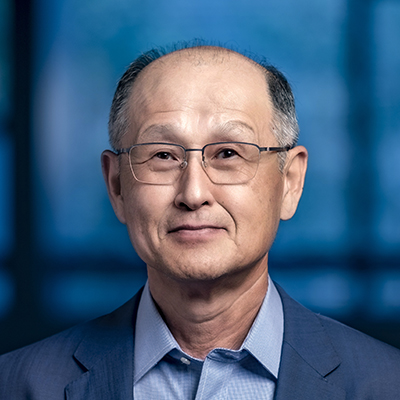
Jean Oh is a Researcher at the Robotics Institute of Carnegie Mellon University (CMU) , leading the interdisciplinary Bot Intelligence Group (BIG) . Her work focuses on developing persistent robots that co-exist and collaborate with humans in shared environments, emphasizing continuous improvement through training, exploration, and human interaction. Education: Ph.D. in Language and Information Technologies, CMU M.S. in Computer Science, Columbia University B.S. in Biotechnology, Yonsei University Oh's research integrates vision, language, and planning systems in robotics, with applications in human-robot teaming , self-driving cars , disaster response , eldercare , and creative robotics . She has pioneered projects like socially-compliant robot navigation in human crowds and AI-driven robotic painting systems. Recent publication trends highlight her work in vision-language planning , social navigation , computational creativity , and human-robot collaboration . Notable contributions include the StyleCLIPDraw algorithm for text-to-art generation and Social-PatteRNN for human-like trajectory prediction. Scientific Awards: Best Paper Award in Cognitive Robotics (ICRA'18, ICRA'15) Best Systems Paper Finalist (HRI'25) Best Oral Paper Finalist (Humanoids'24) Best Paper in Entertainment (IROS'24) Argoverse Challenge Winner (CVPR'24) Best Student Paper (AIAA'24) Best Demo Finalist (RoboSoft'24) Oh mentors a diverse team of PhD, MS, and undergraduate students from CMU departments including Robotics, Computer Science, and Mechanical Engineering. Her research is funded by US Army Research Lab , DiDi Chuxing , and DARPA , with collaborations across industry and academia .
Daniel Krutz is an Associate Professor in the Department of Software Engineering at Rochester Institute of Technology (RIT) , with a secondary appointment as Courtesy Associate Professor at the University of Florida's Department of Computer & Information Science & Engineering. He directs the AWARE Lab , focusing on Autonomous Systems, Warfare Applications, and Software Engineering , supported by $6M+ in federal grants from NSF, NSA, DOD, and AFRL. His research spans AI/ML, Self-Adaptive Systems, Decision Support Systems, and Accessibility in Computing Education . He holds a PhD from Nova Southeastern University and has taught courses including Software Engineering Freshman Seminar and Capstone Research Project . He is an NSF CAREER Award recipient (2022) and former AFRL Fellow (2018). Educations: BS, St. John Fisher College MS, Rochester Institute of Technology PhD, Nova Southeastern University Labs: AWARE Lab (Autonomy, Warfare, and Engineering) Awards: NSF CAREER Award (2022) AFRL Research Faculty Fellowship (2018) Teaching: Undergraduate/Graduate courses in software engineering, accessibility, and AI/ML Research Interests: Focus on experiential learning in computing education, neuroevolutionary algorithms, and AI ethics. Recent projects address empathy-building interventions for inclusive software development and context-aware decision support systems . Grants & Funding: Over $6M secured since 2018 from NSF, DOD, and NSA for projects in AI/ML, cybersecurity, and adaptive systems. Current work explores AI-driven stock trading frameworks and accessibility education modules.
Insup Lee is the Cecilia Fitler Moore Professor in the Department of Computer and Information Science and Director of the PRECISE Center at the University of Pennsylvania's School of Engineering and Applied Science. He holds a secondary appointment in the Department of Electrical and Systems Engineering and the Perelman School of Medicine’s Department of Biostatistics, Epidemiology, and Informatics. IEEE TCCPS Distinguished Leadership Award (2023) Fellow of the AAAS (2022) Test of Time Award, Runtime Verification (2019) Fellow of the ACM (2017) Best Paper Awards at IEEE ICPS, ACM/IEEE ICCPS, and MEMOCODE His research focuses on cyber-physical systems , real-time and embedded systems , safe autonomy , and internet of medical things , with applications in healthcare and connected systems. He advises PhD students including Eric Lu, Kaustubh Sridhar, Sooyong Jang, and Jean Park (co-advised with Kevin Johnson). Recent publications address safety monitoring for learning-enabled systems, model-free control synthesis using reinforcement learning, and multilingual toxicity guardrails for large language models. His team collaborates with institutions like Hillrom and Penn Nursing to optimize medical device usage in clinical settings.
Stefanos Zenios is Professor at Stanford Graduate School of Business with dual appointments in Entrepreneurship and Operations, Information & Technology . He directs Stanford GSB’s Center for Entrepreneurial Studies and co-directs the Doerr School of Sustainability ’s Program in Ecopreneurship. His Startup Garage course has launched companies like DoorDash while alumni have raised over $3B in venture capital. He co-authored the foundational Biodesign textbook and previously served as Editor-in-Chief of Operations Research . PhD, MIT Operations Research (1996) MA, University of Cambridge (1996) BA, University of Cambridge (1992) Research Focus Dr. Zenios’ work bridges operations research and innovation management , with significant contributions to: Healthcare operations : Administrative cost reduction, organ allocation optimization, and clinical workflow improvements Entrepreneurship : Venture creation frameworks and experiential education Ecopreneurship : Sustainable business model innovation His Precedents Thinking framework (HBR 2025) has gained global recognition for solving systemic inefficiencies. Current research includes the biennial Search Fund Study with Peter Kelly. Scientific Recognition INFORMS Fellow Multiple Best Paper Awards, INFORMS CAREER Award, National Science Foundation (2000) Dhirubhai Ambani Faculty Fellow (2017–2020) George E. Nicholson Award (1997) He has received extensive media coverage in Fast Company , Time Magazine , and Stanford Business . His research has been featured in over 150 press mentions including JAMA , Harvard Business Review , and Health Affairs .
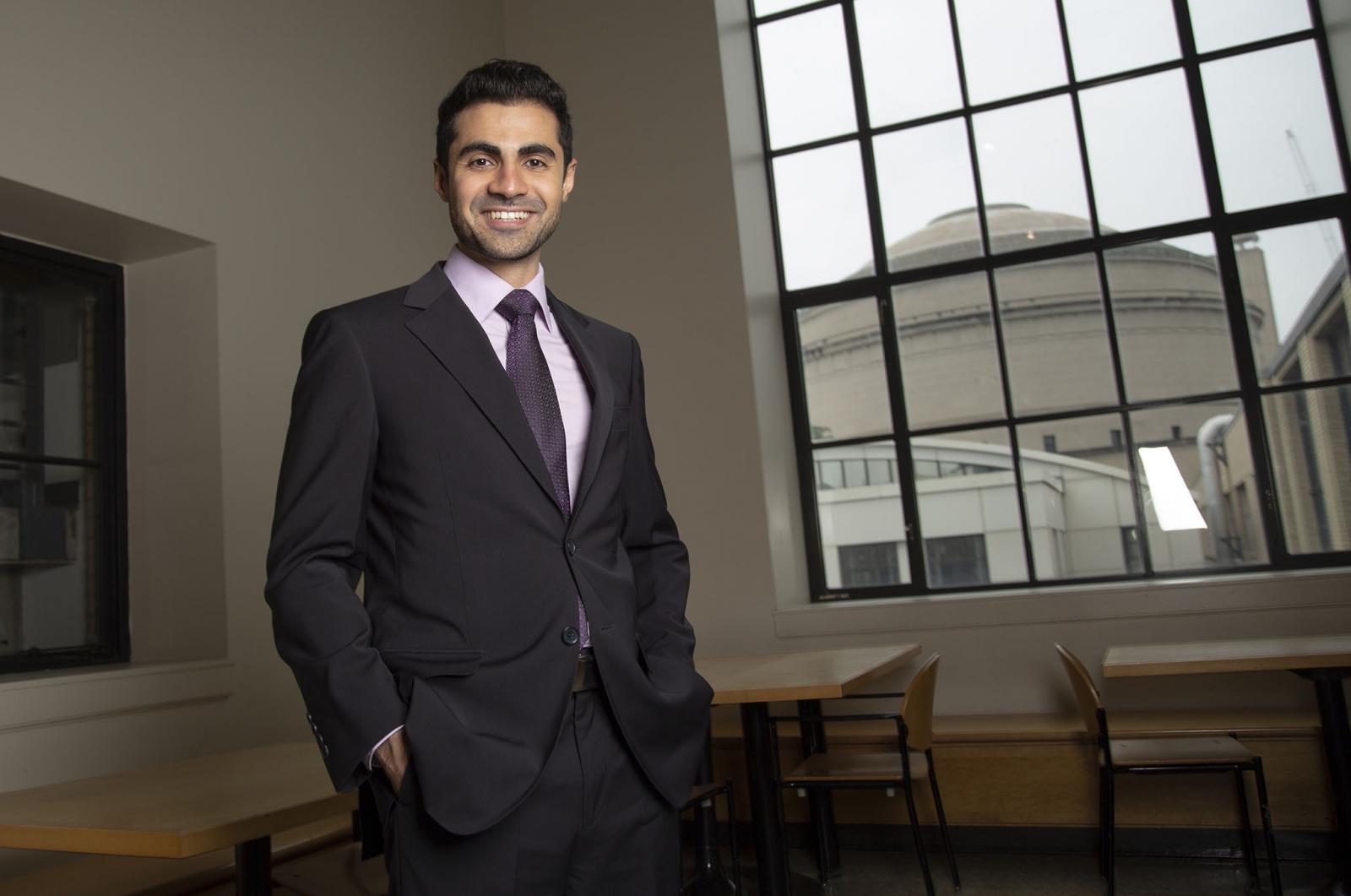
Navid Azizan is the Alfred H. (1929) and Jean M. Hayes Career Development Assistant Professor at Massachusetts Institute of Technology (MIT), holding dual appointments in the Department of Mechanical Engineering (in Control, Instrumentation & Robotics) and the Schwarzman College of Computing's Institute for Data, Systems & Society (IDSS). He is also a Principal Investigator in the Laboratory for Information & Decision Systems (LIDS), and a faculty member of the MIT Statistics and Data Science Center, the Center for Computational Science and Engineering, and the Operations Research Center. Dr. Azizan received his PhD in Computing and Mathematical Sciences from the California Institute of Technology (Caltech) in 2020, his MSc in Electrical Engineering from the University of Southern California in 2015, and his BSc in Electrical Engineering with a minor in Physics from Sharif University of Technology in 2013. Prior to joining MIT, he completed a postdoc at Stanford University's Autonomous Systems Laboratory and was a research scientist intern at Google DeepMind. His research spans the intersection of machine learning, systems and control, mathematical optimization, and network science. Dr. Azizan's work focuses on developing principled learning and optimization algorithms for reliable intelligent systems, with applications to autonomy and sociotechnical systems. His research has significant implications for creating trustworthy AI systems that can operate effectively in complex, uncertain environments. Dr. Azizan's recent publications demonstrate a strong focus on uncertainty quantification, reliable AI systems, constrained optimization, and control-oriented learning. His work bridges theoretical foundations with practical applications, particularly in autonomous systems where safety and reliability are paramount. His research group has made notable contributions to areas including neural network verification, multi-agent reinforcement learning, and adaptive inference techniques for large language models, with several papers featured on MIT News and selected for oral presentations at top conferences. Alfred H. (1929) and Jean M. Hayes Career Development Professorship (2025-present) Frank E. Perkins Award for Excellence in Graduate Advising (2025) List of Outstanding Academic Leaders in Data from the CDO Magazine (2024, 2023) Amazon Science Hub Research Award (2023) Outstanding UROP Faculty Mentor (2023) Esther and Harold E. Edgerton (1927) Career Development Chair (2022-2025) Information Theory and Applications (ITA) Gold Graduation Award (2020) Dr. Azizan has been recognized for his excellence in graduate advising, receiving the Frank E. Perkins Award for Excellence in Graduate Advising in 2025. During the pandemic, he founded and co-organized the 'Control meets Learning' virtual seminar series, connecting researchers across disciplines. His work has attracted significant research funding from industry partners including Google, Amazon, and MathWorks, supporting both fundamental research and practical applications in reliable intelligent systems. The Azizan Lab at MIT brings together researchers from mechanical engineering, computer science, and applied mathematics to tackle challenges at the intersection of learning and control. The lab emphasizes both theoretical foundations and practical implementations, with a particular focus on developing algorithms that provide guarantees of performance and safety. Current research directions include uncertainty quantification in AI systems, constrained optimization for neural networks, and control-oriented learning for autonomous systems, with applications spanning robotics, transportation, and complex sociotechnical systems.
Prasanna (Sonny) Tambe is a Professor at the Wharton School of the University of Pennsylvania, specializing in the economics of technology and labor markets. His research explores AI’s impact on workforce dynamics, HR algorithms, and the gender wage gap in tech industries. Education: Ph.D. in Managerial Science and Applied Economics (Wharton, UPenn); S.B. and M.Eng. in Electrical Engineering and Computer Science (MIT). His work leverages internet-scale data from job platforms and patent databases to analyze trends in skill acquisition, remote work diversity, and algorithmic bias in hiring. Recent studies examine AI’s role in HR decision-making, the economics of emerging technologies, and labor market responses to IT innovation. Scientific Awards: Best Undergraduate Professors (Poets & Quants, 2020) Best Paper Awards (Management Science, Information Systems Research) ISS Sandra A. Slaughter Early Career Award (2016) Tambe co-directs Wharton Human-AI Research, focusing on ethical AI integration in organizations. His teaching includes award-winning courses on AI’s societal implications and data-driven business strategies.
Dr. Alyas Widita is an Assistant Professor in the Urban Design program at Monash University, Indonesia. He is actively involved in research and teaching, focusing on urban planning, transportation, and smart city technologies. He serves as the Program Coordinator for Urban Design and teaches courses such as Urban Design Studio: Smart City and Smart City Technologies. Education: Ph.D. in City and Regional Planning, Georgia Institute of Technology, United States Dr. Widita's research centers on the built environment, transportation systems, and urban analytics, with a strong emphasis on developing Asian cities. His work explores congestion impacts of mass transit, ride-hailing effects on vehicle ownership, rural-urban migration, walking behavior, and spatial patterns of MSMEs. He employs advanced data analytics and causal evaluation methods to inform urban policy. His recent publications span high-impact journals such as Transport Reviews , Journal of Planning Education and Research , and Travel Behaviour and Society . The research trend shows a consistent focus on data-driven urban policy, sustainable mobility, and equity in urban development across Indonesia and Southeast Asia. Scientific Awards and Recognition: No specific awards listed, but research widely cited and featured in media outlets. Dr. Widita has secured and contributed to multiple research projects funded by international and national agencies, including the World Bank, Korea Transport Institute (KOTI), Central Bank of Indonesia, and Georgia Department of Transportation. He is currently leading or co-leading projects on Jakarta’s subsidence, flood risk management using remote sensing, and the Citarum River revitalization. He collaborates extensively with researchers across disciplines and institutions. His work contributes to UN Sustainable Development Goals, particularly those related to sustainable cities and communities. He is accepting PhD students interested in the built environment, transportation, and urban analytics in developing Asia. He is involved in key labs and research teams including the Citarum Action Research Program (CARP), Intelligent and Dynamic Remote Sensing for Flood Risk, and interdisciplinary urban analytics initiatives at Monash Indonesia.
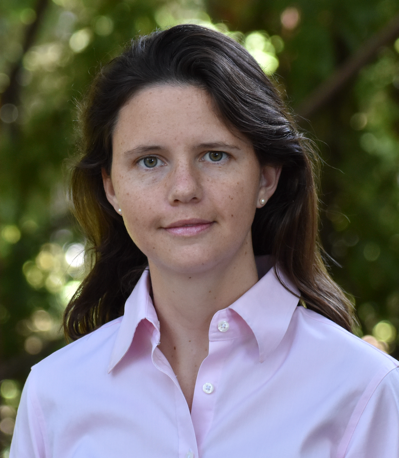
Margaret P. Chapman is an Assistant Professor in the Department of Electrical and Computer Engineering at the University of Toronto's Faculty of Applied Science and Engineering. She leads the DATA Lab (Decision Analysis for Trustworthy Autonomy), focusing on risk-averse and stochastic control theory with applications to environmental and human health. Education: B.S. and M.S. in Mechanical Engineering from Stanford University (2012, 2014), Ph.D. in Electrical Engineering and Computer Sciences from UC Berkeley (2020, advised by Claire Tomlin) Her research bridges robust and stochastic optimal control via risk measure theory, emphasizing safety-critical applications in healthcare and sustainable cities. Key challenges include scalable risk-sensitive control methods, integrating physics-based and data-driven models for safety analysis, and promoting technologies that enhance planetary and human well-being. Recent publications focus on risk-averse autonomous systems, CVaR-based safety analysis, and multi-time-scale modeling for cancer treatment. She has advised students in both graduate and undergraduate research roles, including NSERC awardees and thesis participants. Awards: US National Science Foundation Graduate Research Fellowship, Berkeley Fellowship, Terman Engineering Scholastic Award, Leon O. Chua Award She teaches courses like ECE 557 (Linear Control Theory) and ECE 1643 (Risk-Averse Control with Learning). Her invited talks span institutions such as MIT, Princeton, and Georgia Tech, highlighting risk-sensitive analysis and control for trustworthy autonomy.
Professor Anil Seth is a leading cognitive and computational neuroscientist at the University of Sussex, where he holds a professorship in the School of Engineering and Informatics. He is Director of the Sussex Centre for Consciousness Science and Co-Director of the CIFAR Program on Brain, Mind, and Consciousness and the Leverhulme Doctoral Scholarship Programme. His research bridges neuroscience, psychology, philosophy, and AI to investigate the biological basis of consciousness and selfhood. His research interests include: Predictive processing approaches to perception Virtual and augmented reality in self-experience studies Mathematical modeling of perception and emergence Machine learning applications in subjective perception modeling Interoception and selfhood Neural mechanisms of conscious experience The recent publications reflect a strong focus on consciousness, neural dynamics, predictive models, and interdisciplinary approaches. Trends include the use of computational modeling, neurophenomenology, causal analysis, and the ethical implications of emerging neurotechnologies. His work increasingly integrates large language models and data-driven methods for analyzing subjective experience. His scientific awards include: Segerfalk Award Perspectives Award Highly Cited Researcher (Web of Science, 2019–2022) Royal Society Michael Faraday Prize (2023) Seth has secured substantial research funding from the European Research Council (ERC), EPSRC, Wellcome Trust, CIFAR, and the Sackler Foundation. He has supervised numerous research projects and doctoral students through interdisciplinary programs. He leads the Dreamachine project and has been an Engagement Fellow with the Wellcome Trust. He serves on editorial boards including Philosophical Transactions of the Royal Society B and is Editor-in-Chief of Neuroscience of Consciousness . He leads a multidisciplinary research group at the Sackler Centre, bringing together psychologists, mathematicians, neuroscientists, computer scientists, and philosophers. His team conducts innovative research using virtual reality, neuroimaging, and computational modeling to explore the nature of consciousness and self.
Laurent DUPONT is a Research Engineer and Co-coordinator of the IUVTT Master’s program at ENSGSI (École Nationale Supérieure de Géologie et de Sciences Industrielles), part of the Groupe INP in Nancy, France. He also serves as Scientific Manager of the Lorraine Fab Living Lab. His work focuses on user-driven innovation, smart and sustainable territories, collaborative engineering, and immersive environments. He holds a PhD in Industrial Systems Engineering from INPL (2009), a DEA (2004), and a degree in Industrial Systems Engineering (2003) from ENSGSI. Research interests include innovation lab strategies, open innovation spaces, territorial resilience, and digital twin applications in manufacturing. He leads projects like INEDIT, exploring co-design frameworks and circular economy solutions. His articles highlight trends in collaborative innovation networks, systemic impact mapping, and the integration of extended reality in industrial contexts. Key contributions include frameworks for evaluating territorial resilience and tools for monitoring innovation lab networks. He has been involved in initiatives such as the DHDA Project for resilience assessment and the Smagrinet project on smart grid training. His work bridges academia and practice through participatory methods and cross-sector collaborations. Current projects emphasize Industry 5.0, open manufacturing, and community-driven innovation.
Søren Holm is a Professor at the Center for Medical Ethics , University of Oslo. His work spans medical ethics, bioethics, and research ethics , with a focus on artificial intelligence in healthcare, pandemic ethics, and organ transplantation . Primary Affiliation: University of Oslo, Faculty of Medicine Research Themes: AI diagnostics, informed consent, research integrity, end-of-life ethics Key Collaborations: Thomas Ploug, Bjørn Hofmann, Daniel Warrington Recent Publications (2023-2025) analyze ethical challenges in AI-driven healthcare regulation, pandemic research ethics, and data governance . Notable topics include contestable AI diagnostics , equipoise in clinical trials , and conflict of interest disclosure . Contact: Email via soren.holm@medisin.uio.no . No scientific awards or student advisement details explicitly mentioned in the scraped text.
Thomas Grote is a Research Fellow at the University of Tübingen's Ethics and Philosophy Lab within the Cluster of Excellence 'Machine Learning: New Perspectives for Science'. His research focuses on philosophical and ethical dimensions of artificial intelligence, particularly interpretability, fairness, and reliability in medical and social contexts. He co-supervises the Carl-Zeiss-Stiftung-funded project 'Certification and Foundations of Safe Machine Learning Systems in Healthcare' and co-organizes the 'Philosophy of Science Meets Machine Learning' conference series. Research Focus Grote's interdisciplinary work bridges philosophy of science and applied AI ethics. Key areas include: Methodological foundations of AI ethics and epistemology Clinical reliability and safety of ML systems Fairness metrics in sociotechnical healthcare systems Interpretability requirements for medical AI Computational psychiatry and evolving mental health frameworks His recent publications demonstrate strong emphasis on healthcare applications, with critical analyses of reliability in foundation models, ethical paradigms for LLMs, and rethinking evaluation methodologies at the epistemology-ethics interface.
Barbara Given is a University Distinguished Professor in the College of Nursing at Michigan State University. Her research focuses on the interplay between formal healthcare systems and informal caregiver networks, particularly in oncology and geriatric populations. She has secured over 34 years of NIH funding, including grants from the National Cancer Institute, NIMH, and others. Dr. Given earned her Ph.D. at MSU, following a BSN and MSN from Ohio State University. Her work centers on caregiver burden, symptom management in chronic disease, and caregiver-patient communication. She developed the Caregiver Burden Instrument, widely used in research and clinical settings across multiple languages. Key research interests include: 1) caregiver stress and support systems, 2) symptom management in cancer patients, and 3) healthcare coordination challenges in aging populations. Her NIH-funded projects address adherence to oral chemotherapy, fall prevention in cancer survivors, and psychosocial outcomes post-treatment. Recent articles emphasize innovation in symptom tracking (e.g., text messaging for adherence), caregiver mental health barriers, and longitudinal symptom analysis. Awards/fellowships are not explicitly stated, though her sustained NIH support reflects significant recognition. Dr. Given advises on grants and mentors nurse researchers. She collaborates on interdisciplinary teams focused on palliative care, gerontology, and technology-based interventions. Her work bridges clinical practice and policy, advocating for integrated care models to reduce caregiver burden.
Dr Vera Axyonova is an Assistant Professor at the University of Birmingham's Department of Political Science and International Studies within the School of Government. Holding a PhD from the University of Bremen and Jacobs University Bremen, she has held prestigious positions including Marie Skłodowska-Curie REWIRE Fellow at the University of Vienna and Hurford Next Generation Fellow at the Carnegie Endowment. PhD: University of Bremen & Jacobs University Bremen (2013) MA: Fulda University of Applied Sciences (2008) Diploma: East Kazakhstan State University (2006) Her research focuses on international crisis management, cross-border norm transfer, and knowledge production in conflict environments. Recent projects examine European normative engagements in Eastern Europe and academic freedom challenges during forced migration. Her publications appear in top-tier journals like Peacebuilding and European Security . Notable awards include the Marie Skłodowska-Curie REWIRE Fellowship and Carnegie Endowment's Hurford Next Generation Fellowship. She co-chairs the ECPR Research Network on Statehood and Sovereignty and has held visiting positions at European University Institute, Freie Universität Berlin, and George Washington University.