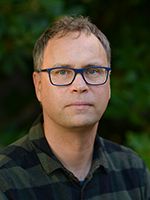
Kjetil Rødje is a faculty member at the University of Oslo, affiliated with the Department of Media and Communication. He holds the academic rank of Professor and has served as Head of Studies since January 2020. His current research focuses on film, visual culture, affect theory, and media theory, with additional interests in media aesthetics, media use, and racialization studies. Education: PhD (2011) from Simon Fraser University, Canada; Cand.Polit. (2002) from the University of Oslo. His work explores intersections between media, culture, and affect, including analyses of film technology, horror cinema, and societal impacts of media representation. Recent publications address topics like intra-diegetic cameras in found footage horror and racialization in Nordic contexts. Key Themes: Cinematic perception, affective media, healthcare communication, racialization, and technology discourse. Work Experience: Lecturer (2015-2017), Postdoctoral Fellow (2013-2015), and External Lecturer (2012) at the University of Copenhagen; Researcher roles in health institutions (2002-2005).
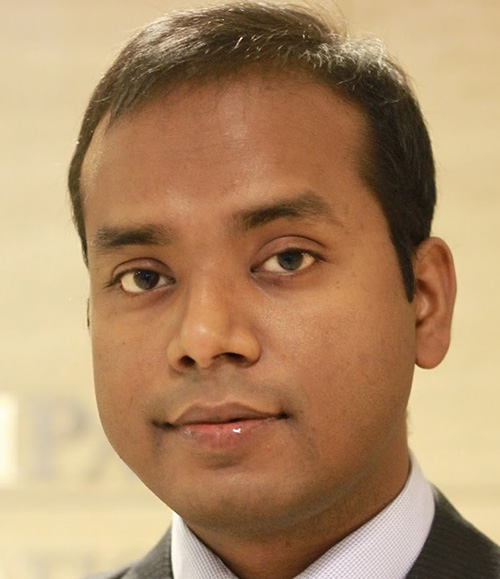
Prabhat Barnwal is an Associate Professor in the Department of Economics at Michigan State University's College of Social Science. His research focuses on development economics, energy and environment, and public economics, with particular emphasis on improving public programs in developing countries, understanding the impact of modern agricultural technologies, and assessing environmental information's role in household decision-making. Dr. Barnwal's educational background includes: Ph.D. in Sustainable Development from the School of International and Public Affairs at Columbia University (2010-2015) M.A. from the International University of Japan Bachelor's degree from the National Institute of Technology - Surat, India His research employs experimental and quasi-experimental methodologies to address critical questions in economic development and environmental economics. Dr. Barnwal's work spans multiple dimensions of development challenges, with a strong focus on energy transition, environmental risk mitigation, and public program efficiency in low-income settings. His research often combines field experiments with rigorous econometric analysis to provide evidence-based policy recommendations. A significant portion of his work examines energy transition challenges in developing countries, particularly India, analyzing subsidy design, electrification sustainability, and the efficiency of energy programs. His environmental research focuses on localized environmental risks, particularly water quality issues and household responses to environmental information. His development economics work investigates welfare delivery systems, bureaucratic incentives, and the impact of agricultural technologies on human welfare. Dr. Barnwal has received recognition for his research, including: Global Drinking Water Best Paper Award 2020 from TU Delft His research has been published in top economics journals including the American Economic Review, Review of Economics and Statistics, Journal of Development Economics, Journal of Health Economics, and JAMA Network Open. His work often involves collaborations with researchers across multiple institutions and countries, reflecting the international scope of his research interests. Dr. Barnwal's projects frequently address pressing policy questions related to poverty reduction, environmental sustainability, and effective governance in developing contexts. Dr. Barnwal maintains active research collaborations and has several ongoing projects examining women's work and energy efficiency, ICT for environmental adaptation, household investment against environmental risks, and bureaucracy and governance issues. His research demonstrates a consistent commitment to addressing real-world development challenges through rigorous empirical analysis.
Dr. Anna Sidis is a Senior Lecturer at the University of Wollongong's School of Psychology within the Faculty of the Arts, Social Sciences and Humanities. With over 20 years of clinical experience as a Clinical Psychologist specializing in youth mental health, she holds dual appointments as both Senior Lecturer and Deputy Director of Postgraduate Psychology Programs (since January 2024). She serves as Chair of the Social Sciences Human Research Ethics Committee, demonstrating significant institutional leadership. Her educational background includes a Doctorate of Clinical Psychology (2001-2004) and Bachelor of Arts (Hons) from the University of Sydney. Her teaching portfolio spans undergraduate and postgraduate programs covering Family Therapy, Narrative Therapy, Psychosis assessment, Suicide Prevention, Grief counseling, and Critical Psychology. Dr. Sidis' research focuses on dialogical and community approaches to mental health care, with particular expertise in co-production methodologies, qualitative research, and critical psychology. Her work addresses critical areas including youth mental health, early psychosis intervention, suicide prevention, bereavement support (especially cancer-related grief), and service user involvement in care design. Analysis of her 22 publications reveals consistent emphasis on qualitative methodologies, therapist-client interaction dynamics, and innovative service delivery models like Open Dialogue. Her funded research includes projects examining barriers to mental health access for youth with co-morbid substance use, dialogical therapy implementation ('Always opening and never closing' grant), and community-based suicide prevention initiatives. She actively supervises five higher degree research students working on topics ranging from virtual reality exposure therapy to sports-based suicide prevention. Barriers to access and engagement of young people with co-morbid substance use (2022-2024) 'Always opening and never closing' dialogical therapy study (2022) Innovation and Evaluation Grant for youth mental health access (2022) Dr. Sidis maintains active clinical research networks through her role as Deputy Director of Postgraduate Programs and Ethics Committee leadership, while her 15 most recent publications demonstrate growing international impact with citations across multiple platforms including Wikipedia references and social media engagement.
Jenny Hallgren is an active Associate Professor of Nursing at the University of Skövde's School of Health Sciences, where she conducts research and teaches in the field of nursing with a strong focus on geriatric care and healthcare innovation. Her work spans multiple collaborative projects including the long-term Reflective STRENGTH initiative (2017-2028) which supports older adults with long-term health problems, the Food–Gut–Brain–Mind–Health project (2020-2025) examining ketogenic diet effects, and the Simulation in age-suit project (2022-2025) studying how age suit simulation impacts nursing students' understanding of aging. Her research interests center on improving care for older adults through digital health innovations, nursing education advancements, and mobile integrated care models. She has published extensively on topics including age suit simulation in nursing education, digital health technologies for elderly care, workplace experiences of healthcare professionals, and patient safety in geriatric settings. Her work frequently employs qualitative methodologies to explore the lived experiences of patients, healthcare providers, and students. Analysis of her recent publications (2023-2025) reveals a strong emphasis on digital health interventions for older adults, nursing education innovations using simulation technology, and workplace dynamics in healthcare settings. Her research consistently addresses the intersection of technology and human factors in healthcare delivery, particularly focusing on how digital tools can enhance rather than hinder patient-centered care for aging populations. As a dedicated researcher, she collaborates extensively with colleagues across multiple institutions, particularly with Catharina Gillsjö, Lina Emmesjö, and others in the Digital HEAlth Research (DHEAR) group. Her work has appeared in reputable journals including BMC Digital Health, BMC Health Services Research, Nordic Journal of Nursing Research, and International Emergency Nursing.
Christopher G. Chute, MD, DrPH, MPH, serves as Bloomberg Distinguished Professor at Johns Hopkins University with joint appointments in the School of Medicine (Divisions of General Internal Medicine and Health Sciences Informatics), Bloomberg School of Public Health (Department of Health Policy and Management), and School of Nursing (Division of Health Informatics). He concurrently holds the position of Chief Health Research Information Officer for Johns Hopkins Medicine. Dr. Chute obtained his medical degree from Brown University, completed internal medicine residency at Dartmouth, and earned a doctorate in Epidemiology from Harvard University. He is board-certified in Internal Medicine and Clinical Informatics. His research focuses on biomedical terminologies, health information technology standards, big data analytics in healthcare, and electronic medical record systems. He leads major initiatives including the World Health Organization's ICD-11 revision as Chair of the Revision Steering Group. His work bridges clinical informatics, public health surveillance, and computational approaches to healthcare data. Analysis of recent publications reveals concentrated research in pandemic informatics, particularly leveraging large-scale EHR data from the National COVID Cohort Collaborative (N3C). Key themes include: long COVID characterization, health disparities in rural populations, AI/ML applications for clinical prediction, antiviral treatment outcomes, and data standardization methodologies. Scientific Awards and Honors Elected to National Academy of Medicine (2024) Bloomberg Distinguished Professor (2015) President, American College of Medical Informatics (2015-2020) Inaugural Fellow, International Academy of Health Sciences Informatics (2017) HL7 Fellow (2017) AMIA President's Award (2002) IBM Faculty Award (2005) Homer Warner Award for Most Outstanding Contribution (1998) Dr. Chute directs substantial research programs including NIH-funded projects on EHR data reuse, Beacon Community initiatives, LexGrid terminology infrastructure, and clinical-translational informatics. As Chief Research Information Officer, he oversees enterprise data governance and research computing infrastructure at Johns Hopkins Medicine.
Professor Naomi Allen is a Professor in Epidemiology at the University of Oxford, based in the Clinical Trial Service Unit and Epidemiological Studies Unit (CTSU). She joined UK Biobank as Senior Epidemiologist in 2011 and became Chief Scientist in 2019, where she oversees participant follow-up through linkage with routine health-related datasets and web-based questionnaires. She plays a key role in developing the scientific strategy for future enhancements of the UK Biobank study, one of the world's largest prospective cohort studies with half a million participants. Professor Allen's research program centers on the role of diet, obesity, and circulating biomarkers in cancer development. As co-Principal Investigator of the Endogenous Hormones, Nutritional Biomarkers and Prostate Cancer Collaborative Group, she leads international pooled analyses of biomarker-prostate cancer relationships. Her work spans epidemiology, oncology, metabolic disorders, and biomarker research, with particular emphasis on investigating how obesity causes cancer through metabolomics approaches. Her recent publications demonstrate extensive utilization of the UK Biobank resource across diverse health domains. Analysis of her 15 most recent articles reveals strong focus areas in cancer biomarker discovery, metabolic syndrome and dementia risk, cardiovascular disease mechanisms, ophthalmological conditions, and innovative data linkage methodologies. The publications collectively showcase how large-scale biobank resources enable cross-disciplinary research to uncover novel disease associations and biological pathways. Professor Allen's leadership as Chief Scientist of UK Biobank positions her at the forefront of population health research. While specific awards aren't detailed in available information, her work has garnered significant attention with multiple publications being picked up by numerous news outlets, blogged about, and widely shared across social media platforms, indicating substantial scientific impact. Through her role at UK Biobank, Professor Allen supports thousands of researchers worldwide by maintaining and enhancing this critical resource. Her strategic vision ensures continued scientific value through innovative data collection methods, advanced analytical approaches, and strategic partnerships that maximize the study's utility for discovery and translation research across multiple disease areas.
William Culhane is a Post-doctoral Research Associate working with the Large-Scale Distributed Systems (LSDS) research group at Imperial College London under Dr. Peter Pietzuch. His research focuses on big data processing in cloud computing environments, with expertise spanning distributed systems architecture, network-aware algorithms, and practical implementation of theoretical models. His academic credentials include: PhD in Computer Science from Purdue University (2015), Thesis: "Optimal 'Big Data' Aggregation Systems – From Theory to Practical Application" Masters in Computer Science from Purdue University (2011) BS in Computer Science and Engineering with Music minor from Ohio State University (2008), Cum Laude with Distinction Culhane's research program bridges theoretical computer science with practical systems implementation. His early work established mathematical models for optimal aggregation overlays, demonstrating how specific properties of aggregation functions guide theoretically optimal overlay construction. This evolved into practical systems like LOOM that implement these models for real-world big data processing. His current research on Meta-Dataflows (MDF) enables users to specify solution spaces of data analysis approaches and automatically discover optimal outcomes without code changes. The SquirrelJoin project addresses network skew in distributed joins by dynamically rerouting traffic to underutilized network segments. His publication record shows consistent progression from theoretical foundations (INFOCOM'15, SIGCOMM'14) to applied systems (VLDB 2017, Middleware'14) with practical impact. His professional trajectory includes significant industry exposure through a Google Techstop internship and research at Qatar University, where he explored anonymized database relations for third-party cloud processing. These experiences informed his approach to balancing theoretical purity with practical constraints in distributed systems design. Culhane has developed numerous open-source tools for the research community including LaTeX macros for consistent document formatting, Linux deployment scripts for distributed system management, and JavaScript interactive graphing utilities. These practical contributions demonstrate his commitment to improving research infrastructure beyond his primary publications.
Dr David Adams is a Lecturer in Urban Planning at the School of Geography, Earth and Environmental Sciences, University of Birmingham. His research focuses on urban planning, urban geography, and sustainable city development, with a strong emphasis on historical preservation, post-war reconstruction, and the integration of green spaces into urban environments. Education: BSc (Hons) in Geography from Loughborough University (2002) MA in Spatial Planning from Birmingham City University (2008) PhD in Planning from Birmingham City University (2014) His scholarly work explores urban heritage, counter-terrorism measures in public spaces, and innovative approaches to sustainable urban food systems. Recent publications highlight collaborations with co-authors like P Larkham, M Hardman, and L Melgaco Silva Marques, focusing on themes such as edible gardens, city-centre sustainability, and the internationalization of planning curricula. Dr Adams' research trends include analyzing post-war architectural legacies, advocating for inclusive urban design, and examining the socio-political dimensions of guerrilla gardening. His work bridges historical analysis with contemporary urban challenges, emphasizing adaptive reuse and community-driven planning. Contact: d.adams.4@bham.ac.uk
Prof. Dr. Igor Lesanovsky is a leading researcher in quantum physics at the University of Tübingen, where he heads the Arbeitsgruppe (Research Group) Lesanovsky within the Institute of Theoretical Physics, part of the Faculty of Mathematics and Natural Sciences. His research focuses on quantum many-body systems, particularly utilizing Rydberg atoms for quantum simulation, quantum information processing, and exploring non-equilibrium phenomena. His research interests span quantum many-body physics, Rydberg atom systems, quantum simulation techniques, non-equilibrium quantum dynamics, quantum thermodynamics, and quantum soft-matter physics. His group investigates how highly excited Rydberg atoms can be used to simulate complex quantum processes, study phase transitions, and develop applications for quantum information processing. They're particularly interested in emergent phenomena such as time-crystals, quantum glassiness, and non-ergodic behavior in quantum systems. The publication record shows a consistent stream of high-impact research, primarily in Physical Review Letters, Physical Review A, and other top physics journals. The research trends indicate a strong focus on quantum simulation with Rydberg systems, quantum non-equilibrium dynamics, quantum information applications, and increasingly on the intersection of quantum physics with machine learning. Recent work explores quantum neural networks, quantum measurement theory, and the application of large-deviation methods to quantum trajectory ensembles. Prof. Lesanovsky's research is supported by multiple prestigious projects including the BMBF Quantum Technology project 'Neural quantum networks on NISQ quantum computers', the DFG Excellence Cluster 'Machine Learning: New Perspectives for Science', DFG Research Units on long-range interacting quantum spin systems and quantum thermalization, the EU EIC Pathfinder Project 'Brisk Rydberg Ions for Scalable Quantum Processors', the QuantERA Project CoQuaDis, and The Center for Integrated Quantum Science and Technology (IQST). The group maintains strong connections with experimental teams, particularly in the areas of quantum simulation of interacting many-body systems and the development of matter wave interferometers and collectively enhanced electric field sensors. They collaborate extensively across Germany and internationally, with publications showing co-authorship with researchers from multiple institutions worldwide.
Kirsikka Riekkinen is an Assistant Professor at Aalto University in the Built Environment domain, specializing in land administration , cadastral systems , and property rights . Her research bridges technological innovation with policy analysis, focusing on digitalization , security implications , and climate impacts of land governance frameworks. Research Focus Development of holistic cadastral frameworks for mature systems Land consolidation in Finland and Africa, including climate effects Security-based property restrictions in Northern Europe Integration of blockchain , text mining , and 3D modeling into land administration Comparative analysis of Nordic and African land policies Scientific Trends in Publications Her article corpus (2012-2025) reveals a sustained focus on land consolidation (with climate implications), cadastral modernization (digitalization, blockchain), and cross-national policy analysis (Finland, Nigeria, Rwanda). Recent works emphasize public value perspectives and security challenges in cadastral systems. Teaching & Professional Role As an Assistant Professor, she contributes to academic discourse in land governance. Contact: kirsikka.riekkinen@aalto.fi
Aarushi Goel is an Assistant Professor of Computer Science at Purdue University's Department of Computer Science, part of the College of Science. She joined the department in Fall 2024 and is affiliated with Purdue's main campus in West Lafayette, Indiana. Her research focuses on cryptographic protocols, with a strong emphasis on secure multiparty computation (MPC), zero-knowledge proofs, and distributed systems security. Her work addresses challenges in privacy-preserving computation, Byzantine fault tolerance, and efficient cryptographic systems. Notable research directions include optimizing MPC protocols for dynamic environments, minimizing communication overhead in distributed systems, and developing practical zero-knowledge proof frameworks. Recent publications explore topics like homomorphic secret sharing, sublinear prover protocols, and Byzantine agreement with polylogarithmic communication complexity. Dr. Goel's contributions often bridge theoretical cryptography with real-world applications, such as secure machine learning training and verifiable computation. Her work has implications for decentralized systems, blockchain technology, and privacy-enhancing technologies. No awards or grants are explicitly listed in the provided materials, but her prolific publication record indicates active engagement in cutting-edge research. She holds no listed advisees or students in the current data. Lab and team affiliations are not specified in the provided text, though her research likely involves collaborations within Purdue's computer science department and external institutions. Her office is located in LWSN 2142D on the Purdue campus.
Ninghui Li is the Samuel D. Conte Professor and Associate Department Head in the Department of Computer Science at Purdue University. He holds a B.S. from the University of Science and Technology of China and a Ph.D. from New York University. His research focuses on information security, privacy, and database systems, with notable contributions to differential privacy and secure data publishing. He has authored over 200 papers, including influential works like the 2007 t-Closeness paper, and has received multiple awards, including being named an ACM and IEEE Fellow. Li’s academic roles include Editor-in-Chief of ACM Transactions on Privacy and Security (TOPS) and leadership in organizations like ACM SIGSAC. He advises over 30 graduate students and has been instrumental in coaching Purdue’s ICPC teams to top global rankings. His current projects include NSF-funded initiatives like the Center for Distributed Confidential Computing (CDCC) and privacy-focused AI research. Key contributions span privacy-preserving data synthesis, federated learning security, and cybersecurity for IoT systems. He actively contributes to conferences as a program chair and through editorial roles, ensuring advancements in both theoretical and applied security domains.
Christopher D. Harvey is a Professor of Neurobiology at Harvard Medical School and Director of PiN Admissions. His research focuses on understanding how neuronal circuits in the mammalian cortex perform computations related to decision-making, working memory, and spatial navigation. He utilizes advanced techniques including virtual reality, optogenetics, and computational modeling to study neural dynamics in mice. Harvey earned his Ph.D. from Cold Spring Harbor Laboratory and his B.S. from Vanderbilt University. He has received numerous awards, including the NIH Director’s Pioneer Award and the National Academy of Sciences Troland Research Award. His lab investigates cortical circuits using state-of-the-art imaging and behavioral paradigms to link neural activity to behavior. Education: Ph.D., Cold Spring Harbor Laboratory, 2008 B.S., Vanderbilt University, 2003 (Biomedical Engineering and Molecular/Cellular Biology) Research Interests: Harvey's work combines experimental and theoretical approaches to study how cortical circuits encode information during navigation and decision-making. His lab develops tools like the Harvey Lab miniaturized VR rig and DeepEthogram for automated behavior analysis. Current projects include investigating error-correction signals in inhibitory neurons and the functional architecture of posterior cortical networks. Awards: National Academy of Sciences Troland Research Award (2024) NIH Pioneer Award (2020-2025) Harvard Medical School Harold Amos Award (2022) Society for Neuroscience Young Investigator Award (2018) Advising & Grants: Harvey mentors a diverse team of postdocs and graduate students focusing on neurobiology and computational neuroscience. His funding includes NIH grants for studying cortical networks and mechanisms of decision-making. He has pioneered projects linking synaptic wiring to behavior and developed novel viral drivers for cell-type-specific studies. Labs & Collaborations: The Harvey Lab at Harvard Medical School collaborates with institutions like Janelia Research Campus and Cold Spring Harbor Laboratory. Their work is supported by resources such as the DANDI Archive for open data sharing and GitHub repositories for code and experimental protocols.
Drew Fudenberg is the Paul A. Samuelson Professor of Economics at MIT, where he has made significant contributions to economic theory, game theory, and behavioral economics. He received his A.B. in applied mathematics from Harvard College in 1978 and his Ph.D. in economics from MIT in 1981. His research focuses on several key areas: Game theory, including foundational work on learning and equilibrium, repeated games, and reputation effects Theoretical industrial organization, analyzing competition between firms and market dynamics Behavioral economics and decision theory, particularly self-control and stochastic choice Fudenberg's recent publications reveal a continued focus on learning under misspecification, strategic behavior in complex environments, and the intersection of behavioral economics with traditional game theory. His work often combines theoretical rigor with practical applications to real-world economic phenomena. His notable scientific achievements include: Fellow of the Econometric Society (and President in 2017) Member of the National Academy of Sciences Member of the American Academy of Arts and Sciences Recipient of fellowships from the Guggenheim Foundation and Alfred P. Sloan Foundation Past editor of Econometrica Co-founder of the open access journal Theoretical Economics Fudenberg has advised numerous doctoral students who have gone on to prestigious academic and industry positions. His research has been supported by various grants throughout his career, though specific grant details are not provided in the source material. He has also authored four influential books in his field.
Dr. Sandra Saperstein is a Lecturer in Behavioral and Community Health at the University of Maryland School of Public Health. Her work focuses on digital health applications and accessible public health education. Her research examines technology-based health interventions, health informatics solutions, and accessibility in online learning environments. She investigates how digital tools can enhance public health education and program evaluation. Publications demonstrate consistent focus on digital health implementation, health communication technologies, and accessibility in public health contexts. Recent work explores mindfulness-based online programs and digital health adoption patterns.