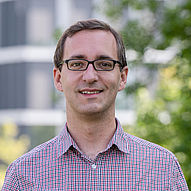
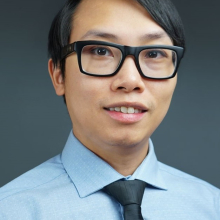
Dr Olly Bartlett is a Senior Lecturer in Remote Sensing and Geography at the University of Hertfordshire , affiliated with the Department of Psychology, Sport and Geography within the School of Life and Medical Sciences. His work focuses on planetary-scale remote sensing analysis of the cryosphere, with field campaigns in Greenland, Nepal, Svalbard, and the Peruvian Andes. Education: PhD in Physical Geography (University of Exeter, 2020); MSc in Polar and Alpine Change (University of Sheffield, 2016); BSc in Physical Geography (University of Sheffield, 2015) Dr Bartlett specializes in UAV-based remote sensing and Google Earth Engine , holding a UK GVC for UAV operations. His research tracks environmental changes in polar and alpine regions, including quantifying Antarctic Peninsula greening (1986–2021) and glacier dynamics in the Himalayas and Canadian Arctic. Recent publications highlight his methodological innovations in radar surveying and supraglacial hummock morphology studies. His work bridges glaciology and geospatial analysis , focusing on climate-induced glacial retreat impacts. He supervises PhD student Lottie Pearson on pan-Arctic permafrost thaw projects and collaborates internationally on cryospheric studies.
Soumya Dutta is an Assistant Professor in the Department of Computer Science and Engineering at the Indian Institute of Technology Kanpur (IITK), where he leads the INSIGHT: Intelligent Scientific and Visual Computing of Big Data Research Group. He joined IIT Kanpur in October 2022 after working as a Scientist II at Los Alamos National Laboratory (LANL) from July 2019 to August 2022, and previously as a Postdoctoral Research Associate at LANL from June 2018 to July 2019. His educational background includes a Ph.D. and M.S. in Computer Science and Engineering from The Ohio State University (2011-2018), where he was part of the GRAVITY research group, and a B.Tech. in Electronics and Communication Engineering from West Bengal University of Technology, India (2005-2009). Research Interests: Dr. Dutta's research focuses on the intersection of machine learning, visual computing, big data, and high-performance computing. His primary research areas include Machine Learning for Visual Computing and Image Analysis, Big Data Visualization and Analytics, Data Science and HPC, Machine Learning for Scientific Computing, and Explainability and Interpretability of AI Models. His work addresses various big data characteristics including the 5 Vs: Volume, Velocity, Variety, Veracity, and Value. He develops techniques that make complex machine learning models more interpretable and explainable, enabling their effective adoption in real-life applications across scientific domains, social media, IoT, healthcare, and industry applications. Dr. Dutta's research group has secured multiple funded projects including: DAVi: An Intelligent Data Analytics and Visualization Framework (funded by ISRO), Intelligent Visual Computing of Extreme-scale Data for Accelerating Scientific Discovery (IIT Kanpur Initiation Grant), Enabling Interactive Big Data Analytics and Visualization at Exascale (SERB), Development of AI-Enabled National Portal for Efficient Search of Missing People (C3iHub), and Proactive and Generalized Deepfake Defense Mechanisms (C3iHub). Best Reviewer, Honorary Mention Award for IEEE Transactions on Visualization & Computer Graphics (TVCG), 2021 Best Paper Award at ISAV 2021, co-located with Supercomputing (SC) LAAP Award at Los Alamos National Laboratory, 2021 Best Paper Award at TopoInVis 2019 Best Paper Award at ISAV 2018, co-located with Supercomputing (SC) Best Poster Award in 12th Annual CSE Student Poster Exhibition, The Ohio State University, 2018 Best Poster Award in 11th Annual CSE Student Poster Exhibition, The Ohio State University, 2017 Best Paper Honorable Mention Award at IEEE Visualization Conference (IEEE VIS) 2016 Dr. Dutta actively mentors a large group of students including Ph.D., M.Tech., and B.Tech. students. His current Ph.D. students include Shanu Saklani, Sankhadeep Bhowmick, Ananya Chaturvedi, Arpita Santra, Anubhav Dixit (co-supervised), and Robin Shah. He has supervised numerous M.Tech. students with thesis topics ranging from uncertainty-aware neural networks to deepfake detection. Dr. Dutta currently teaches courses including CS360 - Introduction to Computer Graphics and CS661 - Big Data Visual Analytics. The INSIGHT research group collaborates internationally with researchers from Meta, Oak Ridge National Laboratory, and National Taiwan Normal University. The group's work focuses on building machine learning and data science-based solutions to analyze large-scale multifaceted data in a scalable way, enabling interactive and interpretable analytics of complex data from scientific simulations, social media, IoT, healthcare, and other application domains.
John Baillieul is Distinguished Professor at Boston University with joint appointments in Mechanical Engineering, Systems Engineering and Electrical & Computer Engineering. He directs experimental laboratories for real-time control of lightweight robotic systems and applies nonlinear control theory to complex multi-body, networked, and bio-inspired systems. Education: Ph.D., Harvard University Research Interests: Baillieul’s work spans robotics, nonlinear control, and networked systems. Early contributions resolved motion-planning for kinematically redundant manipulators; current themes include neuromimetic learning, vision-based navigation, and resilience of infrastructure networks such as power grids. His group couples rigorous geometric control with real-time hardware to create lightweight, high-performance robots and to uncover fundamental information limits in feedback systems. Recent Publication Trends (2021-2025): Over the past five years his output has concentrated on three synergistic directions: (i) neuromimetic and Koopman-based data-driven methods for estimating and controlling nonlinear systems, (ii) vision-based guidance and sparse optical-flow primitives for agile autonomous flight, and (iii) network-theoretic decomposition and information-rate studies for resilient operation of power grids and collective dynamics. Honors & Awards: IEEE Fellow 2025 Roger W. Brockett Control Systems Award Former Editor-in-Chief, IEEE Transactions on Automatic Control Affiliations & Service: He is a member of Boston University’s Center for Information and Systems Engineering (CISE), has served as Editor-in-Chief of IEEE Transactions on Automatic Control, and remains active in editorial and organizational roles across the IEEE control systems community.
Claudia R. Binder is Full Professor at EPFL's School of Architecture, Civil and Environmental Engineering, leading the Laboratory for Human-Environment Relations in Urban Systems (HERUS) since 2016. Previously, she held professorships at the University of Munich (2011-2016), University of Graz (2009-2011), and University of Zurich (2006-2009). She served as Dean of EPFL's ENAC School from 2020-2023 and holds advisory roles with Swiss federal institutions including the Mercator Foundation since 2024. Her academic foundation includes a Biochemistry degree and PhD in Environmental Sciences from ETH Zurich, followed by postdoctoral research at the University of Maryland. This interdisciplinary background underpins her research approach spanning natural and social sciences. Professor Binder's work centers on urban sustainability transitions, examining urban metabolism dynamics through systems science frameworks. She investigates energy-food-transport interdependencies in cities using transdisciplinary methods that integrate material flow analysis, spatial modeling, and socio-technical assessments. Her research particularly emphasizes regulatory mechanisms and transformation drivers in human-environment systems, with case studies across Swiss and global urban contexts. Recent publications reveal evolving focus from foundational urban metabolism studies toward actionable transition strategies. Her 2024-2025 work increasingly addresses social tipping dynamics, circular decarbonization, and spatially explicit waste management, demonstrating methodological innovation through geo-referenced material flow analysis and participatory backcasting frameworks. Key thematic clusters include energy innovation diffusion, plastic waste governance, and demand-side flexibility in residential systems. She actively mentors 7 current PhD candidates while supervising 11 graduates since 2018, with research spanning urban metabolism modeling, sustainability assessment, and transition governance. Her leadership extends to Swiss National Science Foundation committees and National Research Program 71 on energy consumption management. At EPFL, she directs the HERUS laboratory which develops the Sustainability Solution Space methodology for urban assessment. The lab operates at the intersection of data science, environmental engineering, and social theory, maintaining strong field connections in Switzerland, Indonesia, and Germany for empirical validation of transition models.
Fabio Miranda is an Assistant Professor at the Department of Computer Science, University of Illinois at Chicago (UIC) . His research bridges visualization , machine learning , data management , and computer graphics to enable interactive visual analysis of large-scale urban datasets . He has developed systems like UrbanRama (for VR navigation) and The Urban Toolkit (a grammar-based framework), which have been deployed in academia, industry, and government agencies. Education: Ph.D., Computer Science , New York University (2018) M.S., Computer Science , Pontifical Catholic University of Rio de Janeiro (2011) B.S., Computer Science , Federal University of Minas Gerais (2009) Research Interests center on urban visual analytics , 3D analytics , and machine learning for accessibility . His work addresses challenges like sunlight access , sidewalk quality assessment , and commuting flow modeling , often collaborating with urban planners, climate scientists, and occupational therapists. Scientific Recognition includes awards at IEEE VIS , SIBGRAPI , and SIGMOD . His research is funded by NSF , NIH , DOT , and DPI , with media coverage in The New York Times , The Economist , and Architectural Digest . Teaching includes courses like CS 524: Big Data Visualization and Analytics and CS 424: Visualization and Visual Analytics . He emphasizes web-based systems, dataflow frameworks, and interdisciplinary collaboration, with open positions for PhD , MSc , and undergraduate researchers .
Prof. Dr. Sebastian Steinhorst is an Associate Professor (W3-level with tenure) at the Technical University of Munich (TUM) within the Embedded Systems and Internet of Things group at the TUM School of Computation, Information and Technology . His research focuses on advancing the security, predictability, reliability, and interoperability of smart connected and autonomous systems, particularly for applications in Internet of Things (IoT) , Industry 4.0 , and automotive systems . PhD in Computer Science (2011) from Goethe University Frankfurt Postdoctoral roles at TUMCREATE Singapore (2011-2016) and Aarhus University (2016) Joined TUM in 2016 as Rudolf Moessbauer Tenure Track Professor His research areas include decentralized embedded systems, hardware/software co-design, modeling and verification of cyber-physical systems, security protocols for automotive networks, and time-sensitive networking (TSN) for industrial applications. Recent work explores blockchain-based data sovereignty, zero-knowledge proofs for vehicle authentication, and resilient architectures for autonomous systems. Key scientific contributions include the 2019 ACM TODAES Best Paper Award and pioneering work on CyberSecDome , LeapChain , and Simutack frameworks. He serves on editorial boards and conference committees, including co-organizing the Autonomous Systems Design initiative at DATE. His teaching portfolio spans lectures on System Design for IoT , Software Architecture for Distributed Systems , and IoT Security across multiple semesters. He also leads advanced seminars on embedded systems and IoT.
Alfred O. Hero, III is the John H. Holland Distinguished University Professor of Electrical Engineering and Computer Science and the R. Jamison and Betty Williams Professor of Engineering at the University of Michigan, Ann Arbor. He is currently on leave from the University of Michigan as a Program Director in the CISE Directorate at the National Science Foundation. His primary appointment is in the Department of Electrical Engineering and Computer Science (EECS), with secondary appointments in the Department of Biomedical Engineering and the Department of Statistics. He is also affiliated with the UM Center for Computational Medicine and Bioinformatics (CCMB), the UM Graduate Program in Applied and Interdisciplinary Mathematics (AIM), the UM Applied Physics Program, and the Michigan Institute for Data Science (MIDAS), which he co-founded from 2015-2018. Hero's research focuses on data science, developing theory and algorithms for multimodality data collection, fusion, analysis and visualization that use statistical machine learning and distributed optimization. His work has applications in wearable technologies for personalized health and predictive medicine, spatio-temporal networks in biology, climate, and social discourse, anomaly detection, and data analysis for international security. His recent research interests include high dimensional spatio-temporal data analysis, multimodal data integration, statistical signal processing, and machine learning, with particular emphasis on predictive mathematical models for biological and physical sciences, social networks, network security and forensics, and personalized health and disease. His recent publications demonstrate a strong focus on high-dimensional statistical methods, contrastive learning, neural network optimization, change detection in temporal graphs, and applications in microbiome analysis and epidemic modeling. The research spans theoretical foundations in information theory and statistical learning while addressing practical applications across multiple domains. Scientific Awards: IEEE Signal Processing Society Best Paper Award (1998) Best Original Paper Award from Journal of Flow Cytometry (2008) Best Magazine Paper Award from IEEE Signal Processing Society (2010) SPIE Best Student Paper Award (2011) IEEE ICASSP Best Student Paper Award (2011) IEEE Signal Processing Society Technical Achievement Award (2014) IEEE Signal Processing Society Society Award (2015) IEEE Fourier Award (2020) University of Michigan Distinguished Faculty Achievement Award (2011) Hero has advised over 60 PhD students and 30 postdocs in areas including modeling, computation, and inference for large scale time varying data in the biosciences. He has received significant research funding from the Department of Energy, Army Research Office, Air Force Office of Scientific Research, and National Science Foundation. He has held leadership positions including President of the IEEE Signal Processing Society (2006-2007), Director of Division IX (Signals and Applications) on the IEEE Board of Directors (2009-2011), and Chair of the Committee on Applied and Theoretical Statistics of the US National Academies (2018-2020).
Professor Guy Williams is a leading academic at the University of Cambridge with a focus on imaging science and clinical neurosciences, affiliated with Downing College and the Wolfson Brain Imaging Centre . Holding a PhD in Physics from his initial Natural Sciences degree, he specializes in nuclear magnetic resonance (NMR) and MRI techniques for brain imaging. Education: BA, PhD in Physics His research centers on non-invasive imaging of brain structure and function, particularly in traumatic brain injury (TBI) and dementia. His work involves developing novel MRI pulse sequences and advanced data analysis algorithms, including AI-based diagnostic tools. He leads studies on white matter integrity post-trauma, longitudinal dementia assessment, and applications of MRI in disorders of consciousness and addiction. Recent publications highlight collaborations in traumatic brain injury outcomes, AI-guided dementia prediction, and neuroimaging of post-COVID cognitive deficits. His team's work on ultra-high field laminar fMRI and distortion correction methods has advanced clinical neuroscience applications. Key techniques include diffusion tensor imaging (DTI), 7 Tesla MRI, and positron emission tomography (PET/MR). His research spans from basic NMR physics to clinical translation, with a strong emphasis on multi-site studies and real-world diagnostic implementation.
Niels Henze is a Professor at the Chair of Media Informatics within the Faculty of Languages, Literature and Cultural Studies at the University of Regensburg, where he has been serving since May 2018. His research centers on human-computer interaction, with a strong focus on predictive models in interactive systems, mobile interaction, augmented and virtual reality, and attention-aware computing. His research interests include: Human-Computer Interaction (HCI) Predictive modeling for runtime adaptation Mobile and wearable interaction Augmented and Virtual Reality (AR/VR) Attention-aware and context-sensitive systems Sociocognitive aspects of interactive technologies The analysis of his recent publications reveals a consistent focus on leveraging user behavior and contextual cues to build intelligent, adaptive interfaces. His work integrates machine learning with interaction design, emphasizing real-time model updates, implicit feedback, and cognitive load awareness to improve usability and user experience across mobile and immersive platforms. Scientific awards: No awards mentioned in the provided text. Niels Henze leads research in adaptive interactive systems and advises students in the field of media informatics. He has previously held a junior professorship at the University of Stuttgart and completed his doctorate at the University of Oldenburg under Susanne Boll. He is actively involved in advancing the theoretical and practical foundations of predictive and attention-aware computing. Grants and funding sources are not specified in the text. He is associated with the Institute for Information and Media, Language and Culture (I:IMSK) at the University of Regensburg, contributing to a multidisciplinary environment that bridges informatics with cultural and linguistic studies.
Dr. Steven H. H. Ding is an Assistant Professor at McGill University's School of Information Studies, specializing in cybersecurity, machine learning, and data mining. His research focuses on AI-driven solutions for malware detection, software vulnerability analysis, and reverse engineering. He holds a PhD from McGill University and has been supported by BlackBerry Cylance and DRDC. His work bridges theoretical advancements with practical applications in military systems and avionics cybersecurity. Dr. Ding earned his PhD in 2019 with notable awards including the FRQNT Doctoral Research Scholarship and McGill's Dean’s Graduate Award. His educational background includes degrees from McGill, Concordia University, and the University of Shanghai for Science and Technology. His research interests span cybersecurity domains such as zero-day malware identification, code obfuscation countermeasures, authorship verification for digital forensics, and AI applications in avionics anomaly detection. He actively contributes to open-source tools like the Kam1n0 MapReduce-based assembly clone search system. Recent work emphasizes adversarial machine learning for evasive malware generation, transformer-based anomaly detection in avionics, and automated SBOM generation for firmware analysis. His publications reflect a focus on real-world cybersecurity challenges in both civilian and defense sectors. Dr. Ding leads the L1NNA Lab and collaborates with industry partners on cutting-edge projects. His contributions include novel techniques for phishing detection leveraging large language models and innovative approaches to reverse engineering software composition in JavaScript applications.
Leo Schwinn is a Lecturer at the Technical University of Munich (TUM) within the Department of Computer Science (I26), working in the Data Analytics and Machine Learning group supervised by Prof. Stephan Günnemann at the TUM School of Computation, Information and Technology. His research focuses on robust machine learning with particular emphasis on data-efficient learning and robustness vulnerabilities of Large Language Models (LLMs). Dr. Schwinn's research interests span multiple critical areas in contemporary machine learning including: Robustness against adversarial attacks in LLMs Embedding space vulnerabilities and defenses Model unlearning and privacy preservation Efficient training methodologies for large models Time-series forecasting with probabilistic frameworks Graph-based machine learning approaches His work bridges theoretical understanding with practical security implications of modern AI systems. Analysis of his recent publications (2023-2025) reveals a strong focus on LLM security, with multiple papers accepted at premier conferences including ICML, CVPR, ICLR, and NeurIPS. His research demonstrates consistent innovation in identifying novel attack vectors while developing practical defense mechanisms, particularly through embedding space manipulation techniques. The work shows increasing sophistication in handling both theoretical aspects of model robustness and practical deployment concerns. His notable scientific achievements include: Receiving the ATE dissertation price for his PhD work at FAU Securing an oral presentation at ICLR 2025 Organizing the ICLR BlogPost Track Becoming a member of ELLIS (European Laboratory for Learning and Intelligent Systems) Dr. Schwinn has served as review process chair for the 2024 Conference on Lifelong Learning Agents (CoLLAs) and actively collaborates with researchers at Mila Quebec AI Institute. His research group at TUM focuses on addressing fundamental challenges in machine learning robustness, particularly as they apply to real-world deployment scenarios where security and reliability are paramount. He maintains active GitHub repositories related to LLM security research, including circuit-breakers-eval and LLM_Embedding_Attack, demonstrating his commitment to open science and reproducible research in the field of AI security.
Timo Minssen is Professor of Law at the University of Copenhagen (UCPH) and the Founding Director of UCPH's Center for Advanced Studies in Bioscience Innovation Law (CeBIL). He also holds affiliations as an LML Research Affiliate at the University of Cambridge and an Inter-CeBIL Research Affiliate at Harvard Law School's Petrie-Flom Centre. With extensive expertise in Intellectual Property, Competition, and Regulatory Law, Minssen focuses on the legal aspects of emerging health and life science technologies, including genome editing, big data, artificial intelligence, and quantum technology. His educational background includes a German law degree (Staatsexamen) from Georg-August-University in Göttingen, and Swedish biotech & IPR related LL.M., LL.Lic., and LL.D. degrees from Lund University and Uppsala University. His PhD thesis on the patentability of biopharmaceutical technology in the US & Europe received the prestigious Swedish King Oscar award. 2024: TUM Global Visiting Professor, Technical University of Munich (Germany) 2016: Visiting Research Fellow, University of Cambridge (UK) 2014: Visiting Research Fellow, University of Oxford (UK) 2013-14: Visiting Scholar, Harvard Law School (US) 2012: LL.D. - Doctor of Laws (Swedish "juris doktor"), EU/US patent law, Lund University, Sweden Minssen's research spans AI & Big Data in Health & Life Sciences, Sustainable and responsible innovation & tech transfer, Pharmaceutical-, Life Science- & Biotech Law, Comparative European & US Patent Law, Intellectual Property Law & Open Innovation, and EU Competition- & US Antitrust Law. His work addresses legal issues throughout the lifecycle of health and life science products and processes, from R&D regulation to technology transfer and commercialization. His extensive publication record includes 7 books and over 200 articles and book chapters published in leading journals such as Science, Nature Biotechnology, JAMA, and Harvard Business Review. His research has been featured in The Economist, Financial Times, and other major media outlets. Minssen's recent work shows a strong focus on AI regulation, quantum technology law, and data governance in health contexts, reflecting the evolving landscape of technology and law. Scientific Awards and Recognition King Oscar award for best Jur. Dr. thesis (2014) Jorcks Fonds Forsknings Pris (Jorck's Foundation Research Prize) (2017) Awapatent Research Prize (2009) Max Planck Research Scholarship (2005) Visiting Scholar appointments at Harvard Law School, University of Oxford, and University of Cambridge Recipient of a Novo Nordisk Foundation Grant for a "Collaborative Research Program in Biomedical Innovation Law" (2018) As an advisor, Minssen serves international organizations including the WHO, WIPO, and EU Commission. He has supervised numerous PhD students in areas including pharmaceutical law, biotechnology patents, and antimicrobial resistance. His current research projects include the Novo Nordisk Foundation's International Collaborative Bioscience Innovation & Law (Inter-CeBIL) Programme (50 million DKK), CLASSICA: EU Horizon Project on AI-assisted surgery, and AI@Care: Law and Ethics and Algorithmic Bias in Healthcare. Minssen leads the Center for Advanced Studies in Bioscience Innovation Law (CeBIL), which serves as a hub for interdisciplinary research on the intersection of law, technology, and innovation in the health and life sciences. The center collaborates with institutions worldwide to address pressing legal challenges in emerging technologies.
Prashant Mehta is a Professor of Mechanical Science and Engineering at the University of Illinois at Urbana-Champaign , affiliated with the Coordinated Science Laboratory . His research focuses on controlled interacting particle systems and machine learning applications , particularly in human activity recognition using motion sensors. Education: Ph.D. in Mathematics, Cornell University (2004) M.S. in Electrical & Computer Engineering, University of Massachusetts Amherst (1996) B.E. in Electrical & Electronics Engineering, Birla Institute of Technology & Sciences (1993) Mehta's work has pioneered the feedback particle filter (FPF) algorithm for nonlinear estimation, applied in robotic systems and gesture recognition. His research spans control of combustion instabilities in jet engines, mean-field games , and dynamical systems in aerospace engineering. His publications emphasize nonlinear control theory and stochastic filtering , with recent trends in sensor data pattern recognition and cyber-physical systems . He has received multiple scientific awards , including the MURI award for the Cyberoctopus project and Excellence in Undergraduate Advising Awards . Scientific Honors: MURI Award (2019) for Cyberoctopus Excellence in Undergraduate Advising (2010, 2008) Outstanding Teaching Assistant Award (1994) Senior Member, IEEE Control Systems Society Member, ASME Energy Systems Subcommittee Member, SIAM Dynamical Systems Group Mehta has supervised students like Jin Kim (IEEE CDC Best Student Paper, 2019) and co-founded the startup Rithmio , acquired by Bosch Sensortec . His laboratory develops gesture-detection filters for applications in soft robotics and human-machine interfaces .
Valerie Viet Triem Tong is a Research Professor at the Paris Institute of Electrical and Electronic Engineering, School of Electrical and Electronic Engineering. She has established herself as a leading researcher in cybersecurity with a particular focus on information flow control systems, Android security, and malware analysis. Her work spans both theoretical foundations and practical security tools development. Her research interests center on Information Flow Control , where she has developed frameworks for monitoring and enforcing security policies at both operating system and application levels. She has made significant contributions to Android Security , creating tools for detecting malicious behavior in mobile applications and addressing privacy concerns in smartphone environments. Her work in Malware Analysis includes developing advanced techniques for tracking and visualizing malware behavior, with emphasis on evasive Windows malware and Android malware in the wild. She also investigates Peer-to-Peer Network Security , focusing on Sybil attack resistance and distributed identity management. Analysis of her publication record reveals a consistent trajectory from foundational work in information flow theory to increasingly applied security research. Her recent work shows a strong emphasis on practical security tools (DaViz, GUI-Mimic, BAGUETTE), security evaluation methodologies (Digital twin, CERBERE), and addressing contemporary challenges in malware analysis (debiasing datasets, handling obfuscated applications). A notable trend is her integration of visualization techniques with security analysis to make complex security data accessible to both experts and machine learning systems. As an advisor, she has mentored numerous researchers who have become first authors on significant publications, including Radoniaina Andriatsimandefitra, Tomás Concepcion Miranda, and Cedric Herzog. Her research has been supported by multiple grants focused on cybersecurity infrastructure, though specific grant details are not provided in the available information. Dr. Tong is actively involved with the CIDre security research group in Rennes, contributing to collaborative projects that bridge theoretical security models with practical implementation challenges. Her work on information flow monitoring has evolved from basic research to applied systems that address real-world security concerns across multiple platforms.
Dr. Jiahong Chen is a Lecturer in Law at the University of Sheffield School of Law . His research focuses on the intersection of law and technology, particularly Data Protection Law , Cybersecurity Law , Law and AI , and Internet Regulation . He serves as Departmental EDI Director and Deputy LLM Programme Director. PhD, University of Edinburgh LLM, China University of Political Science and Law LLB, China University of Political Science and Law His research examines regulatory challenges in smart homes , large language models , and data ethics . Current projects include the ESRC-funded "The Internet of Tactical Engagement (IoTE)" and RAI UK's "Addressing Socio-technical Limitations of Large Language Models" . Publications span GDPR interpretation, health data regulation, and smart device accountability. He teaches modules on Information Technology Law , Data Privacy and Governance , and Consumer Law .