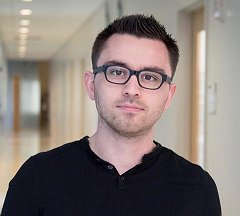
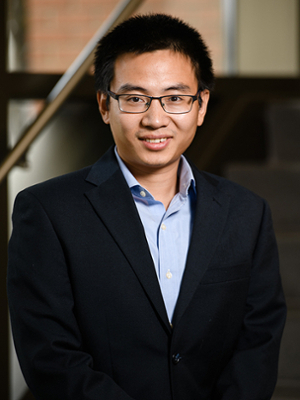
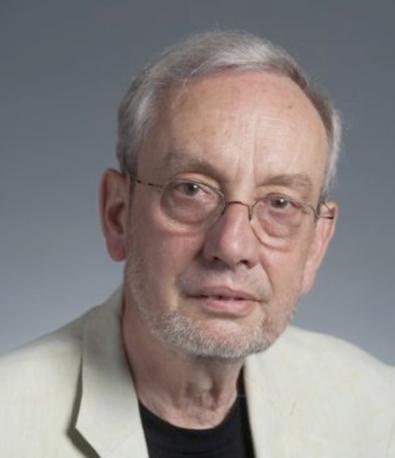
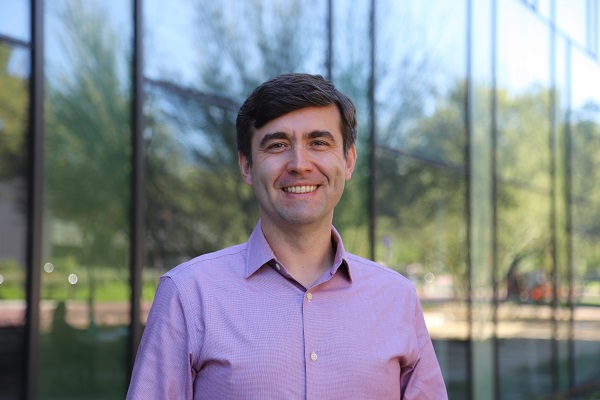
Illya V. Hicks is a Professor in the Computational and Applied Mathematics Department at Rice University. He holds a PhD from Rice University (2000) and a BS from Texas State University (1995). His research focuses on combinatorial optimization, integer programming, graph theory, and matroid theory, with applications in social networks, cancer treatment, and network design. He has advised numerous doctoral, post-doctoral, and masters students. Education: PhD and MA in Computational and Applied Mathematics, Rice University, 2000 BS in Mathematics, Texas State University, 1995 Research Interests: Utilizing graph decomposition techniques to solve NP-complete problems, including branch decompositions and matroid circuit problems. Applications include sensor network design, healthcare logistics, and algorithmic graph theory. Awards: Recognized with the 2015 Presidential Mentoring Award (Rice University), 2010 Forum Moving Spirit Award (INFORMS), and the 2005 Optimization Prize for Young Researchers. Grants and Projects: Includes NSF-funded research on branch decomposition techniques, submodular optimization, and healthcare service distribution. Active in promoting minority participation in operations research through travel grants and mentoring initiatives. Labs/Teams: Engaged in collaborative research on graph algorithms, combinatorial optimization, and interdisciplinary applications in healthcare and engineering.
Demetris Christodoulou is an Associate Professor in Accounting, Governance and Regulation at the University of Sydney. He holds a BEcon from Piraeus University, an MSc(Fin) from the University of York (UK), and a PhD from Athens University of Economics and Business (AUEB). His research focuses on applying data analytics, econometrics, and visualization techniques to financial analysis, equity valuation, life insurance, and financial advice. He co-directs the PEMA research group, specializing in productivity and performance measurement analytics, and previously led the MEAFA research group (2007–2022). He has collaborated extensively with industry partners including Deloitte and Australian insurers, and developed training programs for over 1,000 executives. His work includes open-source contributions to Stata software and the Graph Workflow platform, alongside $662k in workshop-generated funds supporting academic programs. He has advised multiple PhD students and taught at leading universities globally. Education: BEcon in Economics (Econometrics), Piraeus University MSc in Finance, University of York (UK) PhD in Accounting and Financial Analysis, Athens University of Economics and Business His research interests span financial reporting models, life insurance underwriting strategies, and behavioral finance. Recent projects address dishonesty mitigation in insurance disclosures and the adviser effect on customer disclosures. He has published widely in top journals like the Review of Accounting Studies and Stata Journal , and his work was featured in The Australian for insights on insurance fraud reduction. He maintains international collaborations, including visiting roles at Columbia Business School and the University of Cyprus, and serves on advisory boards for organizations like Behaviour.ai. Publications highlight methodological innovations in econometrics and visualization, with 2025's upcoming Stata Journal paper advancing time-series analysis techniques. His grants include partnerships with industry on longitudinal studies of insured lives, aiming to improve risk modeling and public policy insights.
Dr. Jérôme Verny is an Associate Professor specializing in transport, logistics, and supply chain management. He is the founder and director of the research institute in innovative transport and logistics, as well as the co-founder of the DISC Master's program (Digital & Innovative Supply Chain) in Paris and the Mobility Accelerator. His expertise spans digitalization in logistics, blockchain applications, and sustainable development. Educated at the University of Lille Nord de France (PhD in Economics and Management) and engineering schools like École Nationale des Ponts et Chaussées, he advises both public institutions (OECD, EU) and private enterprises on transportation strategies. Research Interests: Dr. Verny focuses on supply chain innovation, digital transformation, and strategic logistics. His work integrates blockchain technology for supply chain transparency, optimizes last-mile delivery in urban environments, and analyzes the impact of geopolitical actors like China on global trade networks. He also explores sustainable practices in transportation, including CO2 reduction strategies and pandemic response logistics. Awards: Recipient of the 2009 OECD-FIT Young Researcher Prize in Transport. His contributions bridge academic research with practical applications in industry, policy, and international trade. Key Activities: Co-founded the DISC Master’s program and leads research initiatives on blockchain adoption, Arctic shipping routes, and Mediterranean trade dynamics. He actively contributes to conferences such as the International Association of Maritime Economists (IAME) and publishes in journals like Structural Change and Economic Dynamics and International Journal of Shipping and Transport Logistics . Labs/Teams: Directs the Institut de Recherche en Transport et Logistique Innovante and collaborates with institutions like the OECD and European Commission on transport policy. His interdisciplinary approach involves engineering, economics, and data science to address global supply chain challenges.
Huamin Qu is a Chair Professor in the Department of Computer Science and Engineering at the Hong Kong University of Science and Technology (HKUST). He serves as the Founding Dean of the Academy of Interdisciplinary Studies (AIS), Founding Head of the Division of Emerging Interdisciplinary Areas (EMIA), and was the Founding Acting Head of Computational Media and Arts (CMA) at HKUST(GZ). Qu directs the VisLab and coordinates the Human-Computer Interaction (HCI) group. He obtained his BS in Mathematics from Xi'an Jiaotong University and MS/PhD in Computer Science from Stony Brook University. Qu's research integrates Data Visualization , Human-Computer Interaction , and Human-Centered AI , with applications in urban informatics, social networks, and explainable AI. His work focuses on developing interactive systems for big data analytics, visual storytelling, and AI-driven decision support. Research extends to multimodal communication, fintech, and augmented reality applications. His publications emphasize visual analytics for complex datasets (mobility, social media, financial), interaction techniques for immersive environments, and AI-enhanced visualization tools. Recent works explore explainable AI interfaces and large-scale data communication frameworks. IEEE Visualization Academy (2020) IEEE VGTC Technical Achievement Award AI 2000 Most Influential Scholar (2019, 2023, 2024) 21 Best Paper/Honorable Mention awards IBM Faculty Award (2009) APICTA Merit Award (2015) Yelp Dataset Grand Prize (2018) Qu has advised 48 PhD graduates (21 now faculty at institutions like UC Davis, University of Minnesota, Texas A&M) and 30 MPhil students. He secured major grants including RGC theme-based projects (digital citizenship, air pollution), UGC AoE (slope safety), and China's 973 Program. As VisLab director, he leads 20+ researchers in visualization/HCI projects adopted by Microsoft, IBM, Huawei, and Tencent.
Paolo Gardoni is the Alfredo H. Ang Family Professor and an Excellence Faculty Scholar in the Department of Civil and Environmental Engineering at the University of Illinois Urbana-Champaign, with additional professorial appointments in Industrial & Enterprise Systems Engineering and Biomedical & Translational Sciences. He also serves as Director of the MAE Center and Editor-in-Chief of Reliability Engineering & System Safety. Education Ph.D. in Civil Engineering, University of California, Berkeley (2002) M.A. in Statistics, University of California, Berkeley (2001) M.Eng. in Structural Engineering, University of Tokyo (1997) Laurea (BS+MS equivalent) in Structural Engineering, Politecnico di Milano (1997) Research Interests Gardoni’s scholarship integrates probabilistic methods with large-scale infrastructure systems to advance reliability, risk, and life-cycle analysis. His work quantifies the performance of deteriorating systems under natural and anthropogenic hazards, models societal impacts of disasters, and develops decision frameworks for sustainable and resilient infrastructure. He also examines ethical, social, and legal dimensions of risk, and investigates optimal strategies for hazard mitigation, disaster recovery, and climate adaptation. Across more than 250 refereed journal papers, he has advanced sub-fields ranging from probabilistic mechanics and earthquake engineering to catastrophe bond pricing and engineering ethics, leveraging tools such as stochastic differential equations, Bayesian networks, and physics-informed machine learning. Awards & Honors Alfredo Ang Award on Risk Analysis and Management of Civil Infrastructure (ASCE, 2021) Best Paper Awards in ASCE Journal of Sustainable Water in the Built Environment (2019) and Geotechnical Research (2018 Telford Premium Prize) Fellowships and named professorships: Alfredo H. Ang Family Professor, Excellence Faculty Scholar, and courtesy or honorary professorships at Tsinghua, IIT Guwahati, Tongji, Jianghan, and Loughborough universities. Research Leadership & Funding Gardoni has secured over $58 million in research funding from NSF, DHS, NIST, USAID, Qatar National Research Fund, and other agencies. He directs the MAE Center—formerly an NSF Engineering Research Center—focused on multi-hazard engineering approaches, and is Editor-in-Chief of Reliability Engineering & System Safety (Elsevier, IF 9.4). He founded and formerly led the journal Sustainable and Resilient Infrastructure (Taylor & Francis) and serves on editorial boards of nine additional journals. Advising & Mentorship He has graduated 27 PhD and 35 Master’s students, many of whom now hold faculty positions worldwide. His group maintains an active pipeline of doctoral and post-doctoral researchers working on resilience analytics, infrastructure monitoring, and risk-informed decision-making. Laboratories & Collaborations He leads the MAE Center and is affiliated with the Critical Infrastructure Resilience Institute (CIRI) and the Biomedical and Translational Sciences group. International collaborations span the UK (Loughborough), India (IIT Guwahati), and China (Tsinghua, Tongji, Jianghan), fostering cross-disciplinary research in reliability and resilience engineering.
Associate Professor Ng Bing Feng leads research in Additive Manufacturing, Aerospace Engineering, and Thermofluids at Nanyang Technological University's School of Mechanical & Aerospace Engineering. As Cluster Director for Smart & Sustainable Building Technologies at NTU's Energy Research Institute, he oversees projects spanning energy-efficient cooling technologies, advanced filtration systems, and bio-inspired materials. His interdisciplinary work integrates advanced manufacturing with environmental engineering, focusing on sustainable solutions for air quality management and thermal regulation. Current research explores radiative cooling technologies, acoustic agglomeration for emissions control, and crashworthy structures via biomimetic design. Professor Ng's publications demonstrate consistent innovation in multi-scale manufacturing and fluid dynamics, with growing emphasis on sustainable urban technologies. Methodologies combine experimental fluid dynamics with computational modeling and AI-driven design. Leadership Roles: Cluster Director, Energy Research Institute @ NTU Principal Investigator for multiple industry collaborations in sustainable materials Research Output: 42+ publications in high-impact journals Multiple patents in filtration technologies and cooling systems
Deian Stefan is an Associate Professor at the University of California San Diego (UCSD) in the Department of Computer Science and Engineering . His research spans security , programming languages , and systems , with a focus on building principled and practical secure systems. He has served as a co-founder and Chief Scientist at Intrinsic (acquired by VMWare) and contributed to standards bodies like the W3C WebAppSec and Node.js Security Working Groups . His research interests include: Secure Systems : Web frameworks, browser designs, sandboxing, runtime systems Language-Based Security : Constant-time programming, memory safety, information flow control Verification : Security verification, static/symbolic analysis tools WebAssembly and JavaScript JITs security Deian Stefan has received multiple scientific awards , including several Distinguished Paper Awards at venues like POPL, ICFP, and USENIX Security, as well as the IEEE Cybersecurity Award for Practice (2022) and CSAW 2020 First Place for Applied Research. He has taught courses on Computer Security (CSE 127, CSE 227) and advanced topics in Building Secure Systems (CSE 291) using Rust, WebAssembly, and blockchain security. His work has been supported by collaborations with industry and academia, including projects like RLBox and COWL .
Prof. Dr. André Bardow is a Full Professor in Energy and Process Systems Engineering at ETH Zurich , leading research at the intersection of thermodynamics, machine learning, and sustainable energy systems. Previously, he held professorships at RWTH Aachen University (2010-2020) and TU Delft (2007-2010). He also served as part-time director at Forschungszentrum Jülich (2017-2022) and visiting professor at UC Santa Barbara (2015/16). His work focuses on energy systems optimization , computer-aided molecular design , and CO2 capture & utilization . PhD from RWTH Aachen University Current ETH Zurich affiliation Former roles at RWTH Aachen, TU Delft, Jülich Research Center His research integrates machine learning with thermodynamic modeling to optimize processes like crystallization and electrochemical cooling . Recent publications demonstrate advancements in solvent design, CO2 transport LCA, and ORC working fluid optimization. He chairs the VDI Technical Committee for Thermodynamics (2016-2024) and has received multiple awards including the Covestro Science Award and Arnold-Eucken-Award . Current projects address carbon circular economies , electrified chemical production , and AI-driven process optimization . His lab at ETH Zurich develops cutting-edge technologies like ML-CAMPD frameworks for sustainable separation processes and photoacid-based CO2 capture systems. Funding from the H2020 Systemic Expansion of Circular Ecosystems (grant 101036854) supports these initiatives. 2024 Clarivate Highly Cited Researcher 2022 Inaugural Lecture: "To sustainability and beyond: A computer-animated story on energy & chemicals" Recipient of multiple teaching and research excellence awards
Debmalya Panigrahi is a Professor and Associate Chair in the Department of Computer Science at Duke University. He holds a PhD in Theoretical Computer Science from MIT and has prior affiliations with Microsoft Research, Bell Labs, and the Simons Institute for Theory of Computing. His research focuses on algorithms, particularly graph algorithms, algorithms under uncertainty, and learning-augmented methods. He has received NSF CAREER and other awards, and his work spans peer-reviewed publications in top venues like STOC, FOCS, and SODA. He advises PhD students and mentors postdocs, emphasizing theoretical contributions with practical applications. His teaching includes courses on approximation algorithms, graph algorithms, and discrete mathematics. Education: PhD (MIT, advised by David Karger), MSc (Indian Institute of Science, advised by Ramesh Hariharan), BSc (Jadavpur University). Research highlights include fastest algorithms for graph connectivity, learning-augmented approximation methods, and online algorithms. Funded by NSF, ARO, Google, and others. Current projects explore network reliability, hypergraph algorithms, and algorithmic fairness. His lab collaborates across theory, AI/ML, and databases at Duke. Recent Grants: NSF CCF-2006512, CCF-1618286, CCF-1350537 Labs/Teams: Duke Algorithms Lab, Theory Group, Collaborations with CS-Econ and AI/ML groups Publications span 150+ papers, with 5+ journal articles in SIAM Journal of Computing and ACM Transactions. Recent focus on integrating machine learning into classical algorithms to improve worst-case performance bounds. Advised 10+ PhD students, many now in academia (e.g., UI Chicago, UT Dallas) and industry (Google, Microsoft).
Prof. Karen Alim is a Professor of Biological Physics and Morphogenesis at the Department of Physics, Technische Universität München (TUM), affiliated with the TUM School of Natural Sciences. She holds a PhD from the Ludwig-Maximilians-Universität München (2010) and conducted postdoctoral research at Harvard University (2010–2015) before leading a Max Planck Research Group in Göttingen. Her research focuses on non-neuronal information processing in living systems, particularly using Physarum polycephalum to study physical principles of network adaptation, fluid dynamics, and morphogenesis. Education: PhD in Physics, Ludwig-Maximilians-Universität München (2010) Studies at Universität Karlsruhe, LMU München, and University of Manchester Research Interests: Prof. Alim explores how biological systems process information without neurons, emphasizing adaptive flow networks, mechanical signaling in plants, and collective behavior in active matter. Her work combines theoretical modeling with experimental systems like slime molds and plant tissues. Awards: ERC Starting Grant (2020) Elisabeth-Schiemann-Kolleg Fellowship (2013–2018) DAAD Stipendium (2011–2014) John Birks Award (2004) Advising & Grants: While specific grant details beyond the ERC award are not listed, her research has been supported by major funding bodies. No student advisees are explicitly listed in the provided materials. Labs/Teams: Leads the Biological Physics and Morphogenesis group at TUM, focusing on interdisciplinary studies of living systems' physical principles.
Dr. Yongjia Song is an Associate Professor in the Department of Industrial Engineering at Clemson University's College of Engineering, Computing and Applied Sciences. His research focuses on optimization under uncertainty, stochastic programming, and network interdiction with applications in disaster logistics, energy systems, and humanitarian operations. BS in Computational Mathematics (2009), Peking University MS in Industrial Engineering (2012), University of Wisconsin-Madison MS in Computer Sciences (2012), University of Wisconsin-Madison PhD in Industrial Engineering (2013), University of Wisconsin-Madison His work addresses complex systems under uncertainty through: Stochastic and robust optimization frameworks Integer programming for discrete decision problems Applications in disaster response and transportation networks Evacuation planning and shelter management Human trafficking disruption modeling Recent publications demonstrate trends in: Multistage stochastic programming for dynamic disaster response Bayesian preference elicitation for complex design problems Network interdiction models for security and trafficking disruption Integration of logistics and evacuation planning under uncertainty Adaptive algorithms for large-scale optimization Professional affiliations include: Institute for Operations Research and the Management Sciences (INFORMS) Mathematical Optimization Society (MOS) Society for Industrial and Applied Mathematics (SIAM) He teaches graduate courses in risk modeling (IE 8090) and actively works on practical implementations of optimization techniques in real-world systems.
John Baillieul is Distinguished Professor at Boston University with joint appointments in Mechanical Engineering, Systems Engineering and Electrical & Computer Engineering. He directs experimental laboratories for real-time control of lightweight robotic systems and applies nonlinear control theory to complex multi-body, networked, and bio-inspired systems. Education: Ph.D., Harvard University Research Interests: Baillieul’s work spans robotics, nonlinear control, and networked systems. Early contributions resolved motion-planning for kinematically redundant manipulators; current themes include neuromimetic learning, vision-based navigation, and resilience of infrastructure networks such as power grids. His group couples rigorous geometric control with real-time hardware to create lightweight, high-performance robots and to uncover fundamental information limits in feedback systems. Recent Publication Trends (2021-2025): Over the past five years his output has concentrated on three synergistic directions: (i) neuromimetic and Koopman-based data-driven methods for estimating and controlling nonlinear systems, (ii) vision-based guidance and sparse optical-flow primitives for agile autonomous flight, and (iii) network-theoretic decomposition and information-rate studies for resilient operation of power grids and collective dynamics. Honors & Awards: IEEE Fellow 2025 Roger W. Brockett Control Systems Award Former Editor-in-Chief, IEEE Transactions on Automatic Control Affiliations & Service: He is a member of Boston University’s Center for Information and Systems Engineering (CISE), has served as Editor-in-Chief of IEEE Transactions on Automatic Control, and remains active in editorial and organizational roles across the IEEE control systems community.
Dr. Konstantin (Kostia) M. Zuev serves as Teaching Professor in the Computing + Mathematical Sciences Department at California Institute of Technology , where he has made significant contributions to network science and computational statistics since 2016. His dual PhDs in Mathematics (Moscow State University, 2008) and Civil Engineering (HKUST, 2009) underpin his interdisciplinary research spanning differential geometry, stochastic simulation, and network dynamics. Education PhD in Mathematics, Lomonosov Moscow State University (2008) PhD in Civil Engineering, Hong Kong University of Science & Technology (2009) His research focuses on network science , particularly course-prerequisite networks and complex financial systems , with recent work extending to network navigability in cosmological models and rare event simulation. Over his career, he has developed innovative Bayesian inference methods and geometric preferential attachment theories while maintaining active collaborations across mathematics, physics, and biomedical domains. Recent publications highlight network analysis in education ( 2023 ), hyperbolic graph theory ( 2024 ), and pandemic-informed cancer mortality studies ( 2023 ). His 15 most recent articles demonstrate methodological innovations across disciplines including statistics, physics, finance, and cosmology. Scientific recognition includes Humboldt Research Fellowship (2021) Carver Mead Seed Fund Grant (2023) ASCIT Teaching Award (2018, 2023) Northrop Grumman Teaching Excellence Prize (2019) As Graduate Option Representative for Information and Data Sciences at Caltech and faculty advisor for multiple student organizations including the Caltech Karate Club and Caltech Chess Club , he actively bridges academic rigor with community engagement through outreach initiatives like the virtual math education channel and university math circles for K-12 students.
Georgia Perakis is the John C Head III Interim Dean of MIT Sloan School of Management and a Professor of Operations Management and Operations Research & Statistics. She has been on MIT Sloan's faculty since 1998, contributing extensively to research in analytics/AI, optimization, and machine learning applications in pricing, supply chains, healthcare, and energy. Recognized as a leading academic, she has won numerous awards, including the INFORMS Fellow and Distinguished MSOM Fellow, along with multiple best paper awards. Perakis has supervised 30 PhD and 59 master's students, fostering lifelong academic relationships. Her administrative roles include co-director of the Operations Research Center and Associate Dean for Social and Ethical Responsibilities of Computing. She currently serves as Editor-in-Chief of M&SOM and has held editorial leadership roles in top journals like Operations Research and Management Science. Her education includes a BS in Mathematics from the University of Athens and advanced degrees in applied mathematics from Brown University. Research Interests : Perakis focuses on solving complex problems at the intersection of optimization and machine learning, with applications in retail promotions, healthcare operations (e.g., emergency department management), and energy systems. Her work emphasizes practical solutions to real-world challenges, leveraging data-driven analytics and prescriptive models. Recent projects include optimizing patient placement in emergency departments and modeling demand for new products in retail. Grants & Awards : Her accolades include the NSF CAREER Award, PECASE Award, and over a dozen best-paper recognitions. Notable contributions include a finalist position in the JD.com Competition (2019) and winning first place for Johnson & Johnson’s demand-prediction work (2018). She has also pioneered methodologies for equitable resource allocation in healthcare. Education & Leadership : Perakis holds leadership roles in interdisciplinary initiatives like the MIT Initiative on the Digital Economy and the Food Supply Chain Analytics and Sensing Initiative. Her teaching excellence is underscored by awards such as the Jamieson Prize and Teacher of the Year (MIT Sloan). She has directed major programs like the MIT Leaders for Global Operations and the Executive MBA program. Labs & Teams : She is affiliated with the Operations Research Center (an interdepartmental PhD program) and collaborates with institutions like UMass Memorial Hospital on healthcare optimization projects. Her work integrates ethics into AI development, emphasizing fairness, bias mitigation, and societal impact.
Dr. Yunjie Yang is an Associate Professor at the University of Edinburgh's School of Engineering, with affiliations at the Edinburgh Futures Institute (EFI), the Edinburgh Generative AI Laboratory (GAIL), and the Edinburgh Centre for Robotics. He previously held the Chancellor's Fellow in Data Driven Innovation (2018-2023) and Bayes Innovation Fellow (2023-2024) positions. His research focuses on AI-powered sensing and imaging, machine learning, and soft sensors & electronics for robotics. Yang received his PhD in Engineering Electronics from the University of Edinburgh, MSc in Control Science & Engineering from Tsinghua University, and BEng in Measurement & Control Engineering from Anhui University. After his PhD, he worked as a Postdoctoral Research Associate in Chemical Species Tomography before securing his lectureship. His research interests center on developing intelligent sensing systems that replicate human perception capabilities for robotics and intelligent systems. He pioneers flexible sensing and imaging technologies across various scales through innovative multi-modal sensors, soft electronics, and their modeling using machine learning approaches. His work aims to enable autonomous physical artificial intelligence by bridging the gap between robotic systems and human-like perception. Analysis of his recent publications reveals a strong focus on soft robotics perception, particularly through electrical impedance tomography (EIT) and transformer-based architectures. His research spans medical imaging applications, digital twin modeling for industrial processes, and machine learning approaches for sensor data interpretation. The trend shows increasing integration of physics-informed deep learning with traditional tomographic techniques to achieve higher accuracy and efficiency. European Research Council (ERC) Starting Grant (2024) IEEE J. Barry Oakes Advancement Award (2024) IEEE I&M Society Graduate Fellowship Award (2015) Multiple Best Paper Awards Senior Member of IEEE Fellow of the International Society for Industrial Process Tomography Fellow of the Higher Education Academy ESI highly cited papers Dr. Yang serves as Associate Editor for IEEE Transactions on Instrumentation and Measurement and holds editorial positions with Scientific Reports and IEEE Sensors Journal. His research has been licensed to overseas research institutes and industry partners and received wide media coverage including BBC, EFE, USA Today, and STV. He has secured significant grant funding including the prestigious ERC Starting Grant. He leads the Edinburgh SMART Lab (Sensing/imaging + Machine Learning + Robotics), which aims to replicate human perception capabilities for robotics and advance flexible sensing technologies through innovative multi-modal sensors and machine learning approaches. The lab focuses on enabling autonomous physical artificial intelligence with applications spanning medical diagnostics, industrial monitoring, and advanced robotics systems.