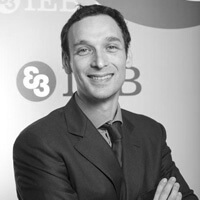
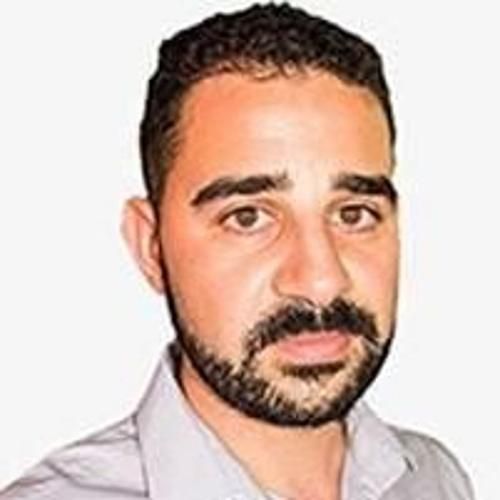
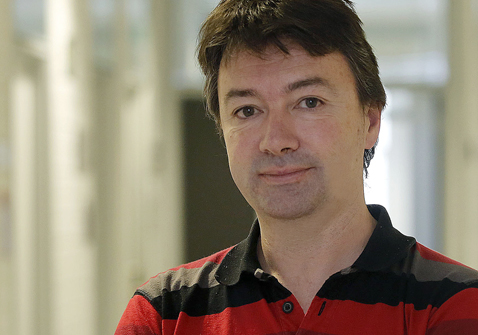
Xavier Serra is a Full Professor at the Department of Engineering at Universitat Pompeu Fabra (UPF), Barcelona. He is the founder and director of the Music Technology Group (MTG), and leads the UPF-BMAT Chair on AI and Music. He also coordinates the Master in Sound and Music Computing and serves as President of the Phonos Foundation. His research focuses on audio signal processing, sound and music computing, and computational musicology, emphasizing open science and open innovation. Education: BSc in Biology, University of Barcelona (1981) Master in Music, Florida State University (1983) PhD in Computer Music, Stanford University (1989) Research Interests: Audio Signal Processing Data-Driven and Knowledge-Driven Methodologies Music Information Retrieval Cultural Music Analysis (e.g., Carnatic/Turkish/Andalusian Music) Music Education Technology Notable Projects: CompMusic (ERC Advanced Grant, 2010-2017): Multicultural computational music analysis Open datasets: Freesound, Saraga, FSD50K Technologies: Reactable, Vocaloid, Essentia API Recent Trends in Articles: Focus on AI-driven audio processing (neural fingerprints, generative models), cross-cultural music analysis, and explainable music difficulty estimation. Awards: ERC Advanced Grant (2010) for CompMusic Project. Labs/Teams: Director of MTG, Phonos Foundation, and UPF-BMAT Chair. Active in open-source projects and international collaborations.
Amir Sufi is the Bruce Lindsay Distinguished Service Professor of Economics and Public Policy at the University of Chicago Booth School of Business, where he has been a faculty member since 2005. He serves as a Research Associate at the National Bureau of Economic Research and co-director of its Corporate Finance Program. Bachelor’s Degree, Walsh School of Foreign Service, Georgetown University (1999) PhD in Economics, Massachusetts Institute of Technology (2005) His research focuses on finance , macroeconomics , and corporate finance . Key areas include household debt dynamics , credit market structure , income inequality , and interest rate impacts on productivity growth . Recent work examines customer capital investment and low-interest rate effects on market concentration . Selected scientific awards include the 2017 Fischer Black Prize, Econometric Society Fellow (2022), and American Academy of Arts and Sciences Fellow (2024). His peer-reviewed publications and working papers span topics from syndicated loans to global household debt cycles , with notable contributions to understanding credit-driven business cycles and government-led consumer credit programs . He teaches courses in leveraged finance , private credit , and corporate restructuring .
Gonzalo Manzano Paule is a Ramón y Cajal tenure-track researcher at IFISC (Instituto de Física Interdisciplinar y Sistemas Complejos), a joint research institute of CSIC (Consejo Superior de Investigaciones Científicas) and UIB (University of the Balearic Islands), where he has been working since January 2023. He previously held a Juan de la Cierva Incorporation fellowship (2021-2023), was an ESQ Postdoc at IQOQI Vienna (2020-2021), and a Postdoc at ICTP Trieste (2018-2020) funded by Scuola Normale Superiore. He obtained his PhD in Physics from Universidad Complutense de Madrid in July 2017, followed by a short Postdoc at IFISC (2017-2018). His research interests focus on quantum and stochastic thermodynamics, open quantum systems, information theory, and the foundations of nonequilibrium statistical physics and quantum mechanics. He is particularly interested in applying concepts from nonequilibrium thermodynamics to understand classical and quantum complex systems. While his work is primarily theoretical, he actively seeks collaborations with experimentalists. His research has been featured in popular science journals including Physics, Quanta Magazine, and Diario de Mallorca. He has also collaborated with artist Evarist Torres to merge art and science and has written a popular science article for Investigación y Ciencia (Scientific American). Manzano Paule's recent publications demonstrate a strong focus on quantum thermodynamics, fluctuation theorems, and quantum information processing. His work spans theoretical foundations of quantum thermodynamics to applications in quantum heat engines and molecular motors. A notable pattern in his research is the exploration of how quantum effects can enhance thermodynamic processes and the relationship between information theory and thermodynamics. His scientific achievements have been recognized through prestigious fellowships including the Ramón y Cajal program, Juan de la Cierva Incorporation fellowship, and ESQ Postdoc fellowship. His work has also garnered attention in popular science media, indicating its broader impact beyond academic circles. As an educator, Manzano Paule supervises Master's students and teaches advanced courses including Open Quantum Systems for the Master's Degree in Advanced Physics and Applied Mathematics and the Master's Degree in Physics of Complex Systems. His teaching portfolio also includes Quantum Collective Phenomena, Quantum and Nonlinear Optics, Thermodynamics, and Atomic and Molecular Physics. He currently leads the research project 'QTD-InFlexity Quantum thermodynamics: information, fluctuations and complexity' and participates in the 'CoQuSy Complex Quantum Systems' project. He is also part of the María de Maeztu Unit of Excellence at IFISC, which has received continuous funding since 2008.
Piotr Przybyła is a tenure-track Assistant Professor at Universitat Pompeu Fabra in Barcelona, Spain, where he researches in the TALN (Natural Language Processing) Research Group. He maintains a significant affiliation with the Linguistic Engineering Group at the Institute of Computer Science, Polish Academy of Sciences (ICS PAS) in Warsaw, Poland, where he completed his PhD in Computer Science. Previously, he worked as a research fellow at the National Centre for Text Mining (NaCTeM) at the University of Manchester. Przybyła's research focuses primarily on Natural Language Processing with particular emphasis on misinformation detection, adversarial attacks on text classifiers, text simplification, and Polish language processing. His work bridges theoretical NLP with practical applications for credibility assessment and language understanding. He has developed innovative approaches for testing the robustness of text classifiers against adversarial examples and has made significant contributions to Polish language resources and processing tools. His recent publications demonstrate a strong trajectory in examining the robustness of NLP systems, particularly in the context of misinformation detection and credibility assessment. His work spans from foundational research on language model behavior to practical applications in Polish language processing and text simplification. The ERINIA project, funded by a prestigious Marie Skłodowska-Curie Postdoctoral Fellowship, represents a significant contribution to understanding how misinformation detection systems can be made more robust against adversarial attacks. Marie Skłodowska-Curie Postdoctoral Fellowship for the ERINIA project Computing grant of 10,000 hours on the Athena supercomputer for accelerating work in the ERINIA project Przybyła actively contributes to the NLP community through conference organization, shared tasks (such as coordinating the InCrediblAE shared task for CheckThat! 2024), and developing open-source tools like Plainifier for multi-word lexical simplification. His work demonstrates a commitment to both advancing NLP research methodology and addressing practical challenges in misinformation detection and language understanding across multiple languages, with special attention to Polish language processing.
Horacio Saggion is the Chair in Computer Science and Artificial Intelligence at the Department of Information and Communication Technologies, Universitat Pompeu Fabra. He leads the TALN Group and the Large Scale Text Understanding Systems Lab. His research focuses on Computational Linguistics, with specialties in Text Summarization, Information Extraction, and Semantic Analysis. He coordinates the Horizon Europe iDEM project on inclusive democratic spaces and previously led the SignON project for Sign Language Translation. Key technologies include the SUMMA Summarization system and the Dr Inventor Text Mining Library. Education: PhD, MSc, and Licenciatura in Computer Science. Research Interests: Text simplification for accessibility, sign language translation, misinformation detection, and ethical AI applications. His work bridges natural language processing with societal needs such as clear communication in public administration. Grants & Projects: Coordinator of iDEM (Horizon Europe), PI of SignON, Simplext, and Able to Include. Involved in BEA shared tasks and CLEF labs. Active in organizing workshops like TSAR at EMNLP. Labs & Teams: Head of TALN Group and Text Understanding Lab. Collaborations include Universitat Pompeu Fabra's interdisciplinary initiatives and industry partnerships for technology commercialization.
Domingo Savio Rodríguez Baena is a Professor at Pablo de Olavide University, affiliated with the Department of Computer Languages and Systems. His research focuses on data mining, bioinformatics, and computational biology, with a particular emphasis on biclustering algorithms, gene co-expression networks, and high-performance computing applications. PhD in Engineering, Data Science, and Bioinformatics (2012) from Pablo de Olavide University His work spans interdisciplinary domains, including recommender systems , livestock behavior analysis , and biological data interpretation . Recent articles highlight his contributions to multi-GPU optimization , ensemble learning , and historical database construction . Key collaborations include the DATAi Intelligent Data Analysis and DASE Data Analytics Science & Engineering research groups. He has developed tools like the CyEnGNet–App for gene network visualization and BIGO for gene enrichment analysis. Contact: dsrodbae@upo.es
Pablo Calleja is a Research Fellow at the Faculty of Computer Science, Polytechnic University of Madrid (UPM), where he has been a member of the Ontology Engineering Group (OEG) since March 2014. His research focuses on Natural Language Processing (NLP), medical terminology mapping, and legal domain applications. He holds a degree in Computer Engineering from San Pablo CEU University (2013) and has prior industry experience as a software developer at IECISA (2008–2011) and a collaboration grant at the Open Access Classroom, San Pablo CEU University (2011–2013). Key contributions include projects like Drugs4covid for pandemic drug discovery, TermitUp for terminological enrichment, and esT5s , a Spanish text summarization model. His work spans legal knowledge graphs, multilingual compliance systems, and NER techniques for academic content analysis. He has also explored accessibility multimedia services and semantic graph applications in tourism ( DBtravel ). Professional roles include collaboration grants at UPM and active participation in interdisciplinary projects such as SNOMED-CT annotation for medical technical sheets. Research trends emphasize cross-domain adaptation (e.g., K-Flares), data augmentation (Widaug), and multilingual NLP solutions. Advising and grants: His current position is supported by a collaboration grant at OEG. Earlier grants include work at San Pablo CEU University. No formal advisees are listed, but he contributes to collaborative research teams. Labs and teams: Core member of the Ontology Engineering Group (OEG), focusing on knowledge representation, NLP, and applied informatics in healthcare and law domains.
Ahmed AbuRa'ed is a Researcher at the Department of Information and Communication Technologies (DTIC) at Universitat Pompeu Fabra (UPF), Barcelona. He is affiliated with the TALN research group and the Large-Scale Text Understanding Systems Lab. His work focuses on advancing knowledge in scientific text summarization, information extraction, and machine learning. Education: PhD in Computer Science (2020), UPF, Barcelona, Spain M.Sc. in Computer Science (2015), University of Trento, Italy B.Sc. in Computer Information Systems (2007), An-Najah University, Nablus, Palestine Research Interests: Natural Language Processing (NLP), Machine Learning/Deep Learning, Semantic Web, Information Extraction, Data Mining, and Scientific Document Summarization. His projects include developing systems for automatic generation of state-of-the-art reports, scientific text summarization, and cross-document relation discovery. Publications Focus: His 15 most recent articles (2016–2021) emphasize advancements in scientific literature analysis, including citation detection, text simplification, and cross-document summarization. Notable works involve systems like LaSTUS/TALN for scientific text processing and OlloBot for Arabic health dialogue agents. Labs & Teams: Active member of the TALN research group and the Large-Scale Text Understanding Systems Lab at UPF's DTIC department. Open to collaborations in NLP, Machine Learning, and related fields via email or Skype.
Jose Manuel Herrero Martinez is a Professor in the Department of Analytical Chemistry at the Universitat de València's Faculty of Chemistry. His research focuses on advanced analytical methodologies, including capillary electrophoresis, mass spectrometry, and sustainable sample preparation techniques. Education: PhD in Analytical Chemistry from Universitat de València (2004), thesis on capillary electrophoresis for environmental/industrial quality control. His research spans green analytical chemistry , aptamer-based extraction , metal-organic frameworks (MOFs) , and miniaturized paper-based devices . Recent work emphasizes 3D printing applications, eco-friendly solvents, and innovative sorbent materials for drug/environmental contaminant analysis. Key trends in his publications include solid-phase microextraction advancements , allergen detection in food , and AI integration in scientific research . Collaborative projects highlight cross-disciplinary approaches with materials science and environmental toxicology. As a supervisor, he has mentored researchers like M. Vergara-Barberán and H. Martínez-Pérez-Cejuela, with a focus on translating theoretical concepts into practical analytical tools.
Amedeo Piolatto is an Associate Professor (with tenure) in the Department of Economics and Economic History at the Autonomous University of Barcelona (UAB), where he also serves as Co-director of Graduate Studies (IDEA) and Chair of the Hiring Committee. He is an Affiliated Professor at the Barcelona School of Economics (BSE) and a Research Affiliate at the Barcelona Institute of Economics (IEB), maintaining a strong presence in the European economics research community. Research Interests: Industrial Organisation Microeconomic Theory Political Economy Public Economics Federalism and Fiscal Federalism Media, Information, and Piracy Taxation and Tax Evasion Political Centralization and Accountability Education Economics His research employs applied theoretical models to study interactions between firms, governments, and citizens. The 15 most recent publications reflect a consistent focus on institutional design, regulatory policy, and strategic behavior in political and market environments. Key themes include the economics of digital platforms, political business cycles in federations, partisan bias in disaster relief, and the role of information in media and electoral systems. His work frequently appears in top journals such as the Quarterly Journal of Economics , Journal of Public Economics , and Regional Science and Urban Economics . Scientific Awards and Recognition: Ramón y Cajal Fellowship (2018–2023) BBVA Foundation Grant for Researchers and Cultural Creators (2016–2018) Advising and Grants: Piolatto has advised PhD students, including Francisco de Lima Cavalcanti. He has secured significant competitive funding as Principal Investigator, including grants from the Spanish Government (Generación de conocimiento, Consolidación investigadora), the Ramón y Cajal program, and BSE Seeds. He has also been a team member on multiple national and regional research projects. He actively organizes academic events, serves on editorial boards (including as Co-editor of Economics ), and participates in PhD juries and institutional governance at UAB, BSE, and other universities. Labs and Teams: He is affiliated with the Barcelona Institute of Economics (IEB) and the Barcelona School of Economics (BSE), where he contributes to research workshops and collaborative initiatives in public economics and political economy.
Manuel Jesus Espinosa Gavira is a researcher at the Department of Automation, Electronics, Architecture and Computer Networks Engineering at the University of Cádiz, Spain. He is affiliated with the TIC168 Computational Instrumentation and Industrial Electronics research group under the Information and Communication Technologies PAIDI area. Research Focus: His work centers on power quality analysis, wireless sensor networks, and smart grid technologies. Key contributions include developing instrumentation systems for voltage supply characterization, cloud-induced photovoltaic transient analysis, and synchronized sensor networks for industrial applications. His PhD thesis (2023) explored sensor networks for short-term solar prediction in microgrids and smart cities. Publications Trends: Recent work focuses on higher-order statistics (HOS) for power quality monitoring, photovoltaic plant optimization using weather forecasts, and frequency domain analysis for grid stability. These publications reflect expertise in computational instrumentation, renewable energy integration, and real-time monitoring systems.
Cristina Tejedor Martínez is a Professor at the University of Alcalá , Department of Modern Philology . She serves as First Deputy Director of the Doctoral School and coordinates the Linguistic Analysis Research Group , focusing on lexicology, semantics, and translation terminology. Her research spans Anglicisms in Spanish , corpus pragmatics , applied linguistics , and technological tools in language education , with significant projects funded by the Spanish Ministry of Science and European Commission . She has directed studies on tourism language , medical terminology , and dictionary training in pedagogy. Key projects include PRAGMACOR (2022-2026) (corpus pragmatics in telephone interpretation) and Organic.Lingua (2011-2014) (multilingual web portal for agricultural education). She advises PhD students like Soraya García Esteban and collaborates with researchers across Europe. Her publications (15+ peer-reviewed articles) analyze semantic borrowing , machine translation , color metaphors , and neologisms in specialized domains , reflecting her interdisciplinary approach at the intersection of language, technology, and culture.
Juan Manuel Toro Soto is an ICREA Research Professor at the Department of Information and Communication Technologies, Pompeu Fabra University (UPF), Spain. He holds a BSc in Psychology from Universidad Nacional de Colombia and a PhD in Psychology from Universitat de Barcelona. His postdoctoral research included work at SISSA (Trieste, Italy) under Jacques Mehler, Harvard University (Primate Cognitive Neuroscience Lab), University of Rochester (Center for Language Sciences), and University College London (Institute of Cognitive Neuroscience). His research focuses on language and music processing in humans and non-human animals. Key interests include how infants and animals extract linguistic and musical patterns, comparative cognition, and the biological foundations of language acquisition. Notable findings include demonstrating that rats can perceive prosodic speech cues similarly to human infants (earning an Ig Nobel Prize) and showing that non-human species outperform humans in certain rule-learning tasks. Research Grants : European Research Council (ERC) Starting Grant Ministerio de Ciencia e Innovación (Spain) Bial Foundation (Portugal) AGAUR (Generalitat de Catalunya) Awards : Ig Nobel Prize in Linguistics (2023, for the rat speech study) Premio Extraordinario de Doctorado (Universitat de Barcelona) Cambio magazine '50 personajes de Colombia' (2020) His work bridges cognitive science and neuroscience, employing behavioral, neuroimaging, and computational approaches. Current projects explore cross-species auditory processing mechanisms and their implications for artificial language learning systems.
Eneko Agirre is a Full Professor at the Faculty of Computer Science of the University of the Basque Country UPV/EHU, where he serves as the director of the HiTZ Centre on Language Technology. He is an active member of the Ixa Research Group and has established himself as a leading figure in Natural Language Processing, particularly in multilingual and low-resource language settings. His work bridges theoretical advances with practical applications for language technology. Agirre received his PhD from the University of the Basque Country in 1999 with a thesis on conceptual relationships and ontologies, supervised by Dr. Kepa Sarasola Gabiola and Dr. Arantza Díaz de Ilarraza Sánchez. His academic journey has been marked by significant contributions to computational linguistics and language technology. His research primarily focuses on Natural Language Processing challenges, with special emphasis on Word Sense Disambiguation, cross-lingual transfer learning, dialogue systems, and Large Language Models for low-resource languages. He has pioneered work on Basque language technology and has consistently addressed the challenges of multilingual AI systems, particularly examining how language models perform across different linguistic contexts and cultural settings. Analysis of his recent publications reveals a strong trajectory toward advancing Large Language Models for low-resource languages, with particular attention to Basque. His work spans vision-language models, information extraction techniques, and rigorous evaluation methodologies for NLP systems. A recurring theme is the exploration of how language models handle low-resource languages compared to high-resource ones, with groundbreaking findings about cultural knowledge transfer between languages. Fellow of the ACL (2021), one of only 74 research leaders worldwide National Research Prize on Informatics (2021) Best resource paper award at ACL 2024 Honourable mention paper award (top 1%) at EMNLP (2020) Outstanding Paper award (top 2%) at COLING (2020) Recipient of three Google Faculty Research Awards (2017, 2018, 2019) Agirre has supervised over 25 PhD students, many of whom have received prestigious awards including the EurAI Artificial Intelligence PhD Dissertation Award. His research has been supported by numerous European projects including LIHLITH (2018-2020) on lifelong learning for dialogue systems, and he has served as principal investigator for multiple CHIST-ERA and FP7 projects. His work with Google includes collaborative projects on entity dictionaries and conversational question answering systems. As director of the HiTZ Centre on Language Technology and member of the Ixa Research Group, Agirre leads a vibrant team focused on advancing language technology for Basque and other under-resourced languages. The center has developed significant resources including Latxa, an open language model for Basque, and has established itself as a hub for multilingual NLP research. His group actively collaborates with international institutions including Stanford, NYU, and various European universities, fostering a global network for language technology research.
Mariano Rico is an Associate Professor at the Polytechnic University of Madrid (UPM), affiliated with the OEG research group in the Artificial Intelligence Department. Previously, he served as a Senior Researcher at OEG (2016-2020) and held teaching roles at the Autonomous University of Madrid (UAM). His primary affiliations include the UPM's Faculty of Computer Science and the UAM's Computer Engineering Department. Education: PhD in Computer Science (UAM, 2009), MSc in Physics (UAM, 1992), and postgraduate studies in Telecommunications Engineering. He conducted research stays at DERI (Ireland) and Freie Universität Berlin, focusing on Semantic Web and Linked Data. Research interests center on Linked Open Data, Natural Language Processing (NLP), and Semantic Web technologies, with contributions to DBpedia's Spanish branch and projects like Wf4Ever and LIDER. He actively collaborates with institutions in Leipzig, Bielefeld, and Berlin on Linked Data and linguistic applications. Teaching: Coordinates courses in NLP, Linguistic Engineering, and Big Data Visualization at UPM and online programs. Has instructed over 300 UAM faculty through teacher training programs on LaTeX, bibliographic management, and digital scholarly practices. Projects: Lead roles in European and national initiatives including SlideWiki, UpGrid, and Neptune. Current work focuses on NLP applications like text summarization (esT5s) and terminology tools (TermInteract). Labs/Teams: Core member of the OEG group, contributing to semantic web infrastructure and NLP tool development. Maintains international collaborations through AKSW and CITEC groups.