Jeremy J. Michalek is a Professor of Mechanical Engineering and Engineering and Public Policy at Carnegie Mellon University. He serves as Director of the Design Decisions Laboratory and co-Director of the Vehicle Electrification Group, with affiliations in multiple sustainability-focused institutes including the Center for Climate and Energy Decision-Making. Education: Ph.D. in Mechanical Engineering (University of Michigan, 2005) Research spans vehicle electrification , life cycle analysis , consumer behavior , and green design . His recent publications focus on battery economics, charging infrastructure impacts, and equity considerations in transportation technologies. Key awards include the NSF CAREER Award , ASME Best Paper Award , and George Tallman Ladd Research Award . Michalek's work has been featured in major media outlets including The New York Times , The Atlantic , and BBC , with policy briefings presented on Capitol Hill. Current research explores EV supply chains, climate resilience, and transportation equity.
Ankush Agarwal is an Associate Professor in the Department of Statistical and Actuarial Sciences at the University of Western Ontario. His research focuses on mathematical finance, financial statistics, and Monte Carlo methods, with applications to risk management and derivatives pricing. He supervises PhD students in quantitative finance and has taught courses on Monte Carlo methods and advanced financial modeling at Western University. Education: PhD in Mathematics from Tata Institute of Fundamental Research (2015) Research interests span regime-switching models, longevity risk hedging, stochastic differential equations, and rare event simulation. His work combines theoretical probability with computational techniques for financial applications. Recent publications include studies on McKean-Vlasov SDEs, implied Sharpe ratio estimation, and optimal portfolio strategies under stochastic volatility. These works demonstrate his expertise in stochastic processes and financial engineering. Supervision: Current PhD advisees include Ying Liao, Buchun Wang, and Shuya Zhang at the University of Glasgow. Former advisees include Yongjie Wang and Yihan Zou.
Professor Rosa María Lastra is the Sir John Lubbock Chair in Banking Law at Queen Mary University of London’s Centre for Commercial Law Studies (CCLS). She holds affiliations with the School of Law and leads the Institute of Banking and Finance Law. Her expertise spans financial regulation, central banking, and international monetary law. She advises global institutions like the IMF, ECB, and European Parliament, contributing to policy on banking union, climate finance, and central bank independence. Educated at institutions including Harvard Law School (Fulbright Fellow) and the LSE, she has authored influential works on banking law, sovereign debt, and monetary policy. She chairs key initiatives like the Sovereign Debt Forum and co-directs the Queen Mary-UNIDROIT Institute. Recent roles include advising the House of Lords on the Bank of England’s independence and serving on expert panels for the European Parliament’s Monetary and Banking Union committees. Her research explores legal frameworks for financial stability, climate-related financial risks, and the evolving role of central banks in global governance. **Education**: LLB/MA (University of Valladolid), LLM (Harvard University, Fulbright Fellow), PhD (Universidad Complutense de Madrid, with LSE research stay). **Research Interests**: Financial regulation, central banking, climate law and finance, bank resolution, EU financial law, and sovereign debt restructuring. Recent projects include the ESRC-funded 'Legal and Economic Conceptions of Money' and analysis of climate-related legal issues for the IMF. **Key Roles**: Vice-Chair of the International Law Association’s Monetary Committee (MOCOMILA), member of the European Banking Institute (EBI), and advisor to the Banco de España on central bank independence. She has testified in international arbitrations and contributed to policy reforms post-2008 crisis and Brexit. **Grants & Collaborations**: Co-led the EU-funded project on Banking Union resolution mechanisms (2016–present), collaborated with the IMF on climate finance legal frameworks, and co-organized major conferences on central banking and financial stability. **Labs/Teams**: Leads the Sovereign Debt Forum (Georgetown/Queen Mary), co-directs the Queen Mary-UNIDROIT Institute, and chairs CCLS-Bank of England research initiatives.
Miguel Leon-Ledesma is a Professor of Economics at the Department of Economics , University of Exeter Business School , joining in September 2024. Previously, he held a Professorship at the University of Kent . A macroeconomist, he specializes in Economic Growth , International Economics , and Business Cycles , with affiliations as Research Fellow at the Centre for Economic Policy Research (CEPR) and Fellow at the National Institute for Economic and Social Research (NIESR). He has advised international organizations like the European Central Bank and Asian Development Bank and serves as a committee member and trustee for the UK's Money Macro and Finance Society (MMF) . Research Interests : His work bridges macroeconomic theory and empirical analysis , focusing on growth volatility, trade dynamics, labor share trends, and structural transformation. He explores how monetary policy interacts with labor markets, the role of technology frontiers in productivity, and the impact of import elasticities and network effects on development. Article Trends : His recent publications and working papers emphasize growth convergence , DSGE model innovations , factor substitution in production, and trade-policy linkages , reflecting a thematic focus on macroeconomic stability, structural change, and globalization's economic implications. Scientific Awards : Research Fellow, Centre for Economic Policy Research (CEPR) Fellow, National Institute for Economic and Social Research (NIESR) Grants & Projects : Funded by the Leverhulme Trust , Nuffield Foundation , and ESRC , his work includes projects on pensions and health economics, oil shocks' network amplification, and UK firm creation during the pandemic. Labs & Teams : Collaborates with international researchers (e.g., Mathan Satchi, Laura Puzzello) and contributes to policy-oriented networks like the Money Macro and Finance Society , integrating academic research with institutional policy advice.
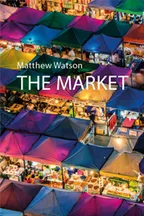
Matthew Watson is a Professor of Political Economy at the University of Warwick's Department of Politics and International Studies, and an ESRC Professorial Fellow (2013-2019). His work explores the intersection of political economy and the history of economic thought, focusing on how markets are ideologically framed as naturalized institutions and the political implications of such framing. He leads the 'Rethinking the Market' project and serves as Department REF Lead and Director of Academic Staff Development. PhD from University of Birmingham Joined Warwick in 2007 Watson's research investigates the cultural and political evolution of market ideology, tracing its roots in economic theory and its pervasive influence on public discourse. He challenges the dominance of mathematical market models across social sciences, critiques the historical underpinnings of comparative advantage theory, and examines the role of narratives like Robinson Crusoe in shaping economic subjectivity. His work also extends to analyzing austerity policies post-financial crisis and the politicization of economic expertise. His recent publications include False Prophets of Economics Imperialism (2024), which critiques the ontological separation between abstract economic models and empirical realities, and The Market (2018), which unpacks the ideological construction of market forces. Articles span topics such as epistemic injustice in budgetary politics, financialization's impact on state action, and the raced market frames in economics education. ESRC Professorial Fellow (2013-2019) Over 20 years of academic leadership Watson supervises PhD and postdoctoral researchers in political economy and history of thought, emphasizing alignment with his 'Rethinking the Market' project. He has mentored 20 postdoctoral fellows and 38 PhD students to completion, with six current supervisees. His insights are disseminated through academic presentations, blog posts, and podcasts.
Dr. Joshua M. Pearce is a Professor at Western University, holding appointments in the Department of Electrical & Computer Engineering and the Ivey Business School. He is the John M. Thompson Chair in Information Technology and Innovation at the Thompson Centre for Engineering Leadership & Innovation and a Fellow of the Canadian Academy of Engineering. His research focuses on open-source appropriate technology for sustainability and poverty reduction, spanning solar photovoltaics, 3D printing, distributed recycling, and policy analysis. Ph.D. in Materials Engineering from Pennsylvania State University Former Richard Witte Professor at Michigan Tech Editor-in-Chief of HardwareX Author of multiple open-source sustainability books His work integrates engineering, economics, and policy to solve global sustainability challenges. Recent projects include agrivoltaic systems, open-source medical devices, and climate-resilient food production frameworks. He leads the Free Appropriate Sustainability Technology (FAST) research group, which has produced over 200 open-access publications cited in top-tier journals like Renewable and Sustainable Energy Reviews (IF=16.3) and HardwareX (IF=2). Dr. Pearce's scientific contributions include: Fulbright-Aalto University Distinguished Chair Top 0.06% most cited scientist (Elsevier metrics) Leading open-source hardware certification frameworks Developing low-cost scientific instruments His research team includes cross-disciplinary collaborators from Mechanical Engineering, Environmental Science, and Policy Studies. The FAST group emphasizes practical open-source solutions for energy, water, and food security in both developed and low-resource contexts.
Professor Alicia Rambaldi is Director of Research at the School of Economics, Faculty of Business, Economics and Law at the University of Queensland. She is also an Affiliate of the Centre for Efficiency and Productivity Analysis. Her academic career spans decades of research in econometric methodologies with applications to real-world economic problems. Professor Rambaldi's research interests focus on applied econometrics, time series econometrics, state-space models, and spatial time series models. She has made significant contributions to economic measurement, particularly in developing methodologies for computation of price indices for land and property, estimation with linked administrative data, and smoothing methodologies combining spatial and temporal information. Her work bridges theoretical econometrics with practical applications in housing markets, climate adaptation, and international economic comparisons. Her recent publications demonstrate a consistent focus on housing economics, with numerous papers on hedonic pricing models, property valuation, and the impact of environmental factors on real estate markets. She has also maintained a strong research program in international comparisons, purchasing power parity, and productivity analysis, often collaborating with leading researchers in these fields. Professor Rambaldi is actively involved in research supervision, currently advising on topics including language barriers faced by immigrants, distributive politics, and copula models. Her completed supervision includes significant work on purchasing power parities, development indexes, trade studies, and spatial analysis of tourism employment. Her current research projects include spatial time series models with applications to housing and land prices, transport demand modeling, and international comparisons. She has secured substantial funding from diverse sources including the Australian Research Council, Natural Hazards Research Australia, and government departments, demonstrating the applied relevance of her work. Professor Rambaldi leads an active research group within the Centre for Efficiency and Productivity Analysis, focusing on developing and applying advanced econometric techniques to address pressing economic measurement challenges. Her work often involves interdisciplinary collaboration with researchers in environmental science, urban planning, and transportation studies.
Dr. Sudhir R. Paul is a Professor in the Department of Mathematics and Statistics at the University of Windsor, Faculty of Science. He holds a Ph.D. from Wales and has received prestigious awards including Fellowships from the American Statistical Association (2006) and the Royal Statistical Society (1982). His research focuses on Biostatistics and Statistical Inference, with expertise in areas such as Generalized Linear Models, Clustered/Longitudinal Data Analysis, and Categorical Data Analysis. He has supervised numerous graduate students and maintains an active research program addressing topics like risk difference estimation, bias correction in statistical models, and applications in environmental and medical contexts. Education: Ph.D. (Wales). Research interests span advanced statistical methodologies, including zero-inflated models, measurement error correction, and dose-response modeling. His work bridges theoretical development and practical applications in epidemiology, clinical trials, and environmental studies. His publications reflect contributions to clustered data analysis, interval estimation, and generalized estimating equations. Awards highlight his impact in advancing statistical science through teaching, research, and service. Advising: Over 30 M.Sc. and Ph.D. students have been supervised, with current students engaged in doctoral and master’s research. Postdoctoral fellows include experts in statistical theory and applications.
Dr Christine Guo is a Senior Lecturer at Birkbeck Business School, University of London, with expertise in Financial Economics. She holds a PhD from Imperial College London and has taught at the University of Newcastle. Her research focuses on market microstructure, asset pricing, stochastic differential equations, and inflation targeting. Notably, her paper Constructing Asset Pricing Models with Specific Factor Loadings won the ABACUS Best Paper Award. Dr Guo supervises PhD students and teaches modules like Financial Management (ACCA-accredited) and Introduction to Accounting. She has published extensively in top journals including Abacus , European Journal of Finance , and Pacific Basin Finance Journal . Education: PhD in Economics, Imperial College London MSc in Economics and Financial Economics, University of Nottingham BSc in Economics and Econometrics, University of Nottingham Research Interests: Dr Guo’s work bridges theoretical and applied finance, with emphasis on: - Quantitative financial modeling - Market efficiency and regulatory frameworks - Inflation dynamics and monetary policy - ESG transparency and firm valuation Recent Publications Trends: Her articles analyze market structure (e.g., ETFs, multilateral trading facilities), Chinese financial markets, and ESG impacts. Methodologically, she applies stochastic models and spatial econometrics. Awards: ABACUS Best Paper Award (2012) for groundbreaking asset pricing methodology critiques Supervision & Teaching: Supervised 4 doctoral researchers (e.g., Stella Zhixin Xu on urban sustainability). Teaches BUMN145S5 (Financial Management) and BUMN131H4 (Accounting). Actively engages in PhD mentorship. Labs/Teams: Collaborates with interdisciplinary teams on financial regulation and ESG metrics through her research network.
Jonathan Cylus is an Honorary Assistant Professor at the London School of Hygiene and Tropical Medicine and Adjunct Associate Professor of Health Services, Policy, and Practice at Brown University's School of Public Health. He leads the London Hub of the European Observatory on Health Systems and Policies, based at LSE and LSHTM, and serves as a Senior Health Economist at the WHO Barcelona Office for Health Systems Financing. His research focuses on health financing policy, health system performance, and the role of social determinants in health. Education: BA in Economics from Johns Hopkins University, MSc and PhD from LSE. Key expertise includes Universal Health Coverage, Health System Efficiency, and Social Determinants of Health. His research outputs emphasize resilience of health systems during crises, cross-country analysis of healthcare price trends, and the socio-economic impacts of population ageing. Recent work addresses inflation's threat to NHS sustainability and evaluates pandemic preparedness metrics in Europe. He has advised institutions like the European Commission, OECD, and WHO on health financing reforms. Professional networks include affiliations with ISGlobal and leadership roles in global health initiatives. No specific grants or awards are listed in the provided texts.
Roslyn C. Murray is an Assistant Professor of Health Services, Policy and Practice at Brown University's School of Public Health. She is affiliated with the Center for Advancing Health Policy through Research. Her research focuses on healthcare prices, private insurance markets, and policies to improve affordability in the U.S. healthcare system. Education: Ph.D. in Health Services Organization and Policy (2024) - University of Michigan MPP (2020) - Georgetown University BA in Human Biology (2015) - Stanford University Research Interests: Health economics, healthcare pricing power, Medicare Advantage, state-level healthcare price regulation, and the impact of payment policies on affordability and access. Publications Trends: Her work evaluates state-level interventions like Oregon's hospital payment caps and examines Medicare Advantage payment systems. Recent studies highlight cost reductions for enrollees and hospitals, with minimal adverse effects on care access. She also analyzes benchmark inflation and overpayments in Medicare Advantage. Awards: AcademyHealth 2025 Outstanding Dissertation Award, Honorable Mention Teaching & Grants: Taught microeconomics at Georgetown. Her grants include studies on healthcare cost containment and value-based payment models. She is part of the Center for Advancing Health Policy through Research, collaborating on policy-relevant studies. Labs/Teams: Active in the Center for Advancing Health Policy through Research (CAHPR), focusing on translating research into actionable policy recommendations.
Alan Sutherland is a Professor of Economics at the University of St Andrews' Business School. He specializes in international macroeconomics, monetary economics, and financial market integration. His research focuses on the macroeconomic implications of exchange rate policies, monetary policy regimes, and cross-country financial linkages. He leads projects funded by the Economic & Social Research Council, including 'The Macroeconomics of Financial Globalisation' (2011-2015) and 'Monetary Policy Welfare and International Financial Markets' (2006-2007). Research Interests: International macroeconomic policy design Exchange rate determination Financial market integration effects Numerical methods for macroeconomic modeling His recent work emphasizes the role of international financial flows in transmitting economic shocks between countries. He has developed influential solution methods for analyzing multi-country general equilibrium models. Key contributions include frameworks for understanding optimal monetary policy under incomplete financial markets and asymmetric information conditions. Scientific Recognition: 2013 Fellow of the Royal Society of Edinburgh Recipient of 2 ESRC-funded research grants
Marielle De Jong is an Associate Professor at Grenoble Ecole de Management, serving as the Academic Director of the USA DBA program. Her expertise spans portfolio management, fixed income, and sustainable investing, with a focus on bond portfolio construction and liquidity scoring. MSc in Econometrics from Erasmus University of Rotterdam MSc in Operational Research from Cambridge University PhD in Finance from the University of Aix-Marseille Defended HDR in 2022 Her research integrates quantitative finance with sustainability, addressing topics like ESG investing, derivatives in asset management, and risk modeling. She has extensive industry experience in investment management, notably with HSBC Sinopia and Amundi, where she led fixed-income quant research teams. Marielle's publications highlight trends in bond risk assessment, CDS applications, and green finance. She is Editor-in-Chief of the Journal of Asset Management, emphasizing rigorous quantitative methodologies and sustainable investment frameworks.
Konrad Czernichowski is an Assistant Professor at the Department of World Economy and European Integration, Faculty of Economics, Maria Curie-Skłodowska University in Lublin, Poland. He also serves as a Visiting Professor at the Department of Economics, Mathematics and Statistics, Faculty of Commerce, Jordan University College in Morogoro, Tanzania. His academic career includes positions at the University of Wrocław and extensive research on African economic development. Dr. Czernichowski's research focuses on African economic development , particularly in East Africa and Tanzania. His expertise spans economic integration, banking systems, labor markets, and development challenges in Sub-Saharan Africa. He has conducted extensive research on the East African Community's integration processes, the impact of global crises on African economies, and regional monetary cooperation. His 18 publications demonstrate consistent research output with a focus on practical economic challenges facing African nations. The research shows a clear trajectory from theoretical integration models toward applied policy analysis, particularly regarding the East African Community's development. His work bridges academic research with practical policy implications for developing economies. Member of editorial board, Journal of Economic Integration (2024-2025) Member of board, Polish African Studies Society (since 2021) Member of editorial board, Afryka journal (since 2021) Member of editorial board, Business Education Journal (since 2022) Dr. Czernichowski actively engages with international academic communities through his editorial roles and maintains research connections with African institutions. His work with the 'Maitri' movement center in Lublin (2014-2021) demonstrates practical engagement with development issues. His multilingual abilities (Polish, English, French, German, and Swahili) facilitate direct research engagement across multiple African contexts.
Lindsey Gallo is the Coopers and Lybrand, Norman E. Auerbach Assistant Professor of Accounting at the Ross School of Business, University of Michigan. Her research focuses on the intersection of firm-level information with macroeconomic trends, corporate governance, and financial reporting practices. She holds a Ph.D. from the University of Maryland's Smith School of Business and dual degrees (BBA and MAcc) from the University of Michigan’s Ross School of Business. A former NCAA champion in track and field, her academic excellence is complemented by teaching awards. Education: Ph.D. in Accounting, University of Maryland (2014) MAcc, University of Michigan (2005) BBA, University of Michigan (2004) Her research explores how corporate disclosures and governance structures influence macroeconomic uncertainty, with publications in top journals like Journal of Accounting Research and Review of Accounting Studies . She serves on the editorial board of The Accounting Review and is recognized for teaching excellence, receiving the Neary Teaching Excellence Award in 2021 and 2023. Her recent work addresses topics such as government-appointed corporate monitors, inflation news processing, and supply chain transparency, reflecting her expertise in bridging accounting practices with broader economic and governance frameworks. She actively contributes to academic discourse through editorial roles and peer reviews. Awards: Neary Teaching Excellence Award (2021, 2023) Gallo advises on curriculum development for the MBA and Master of Accounting programs at Ross, emphasizing practical applications of accounting principles. Her research frequently intersects with real-world policy implications, particularly in regulatory oversight and investor behavior analysis.