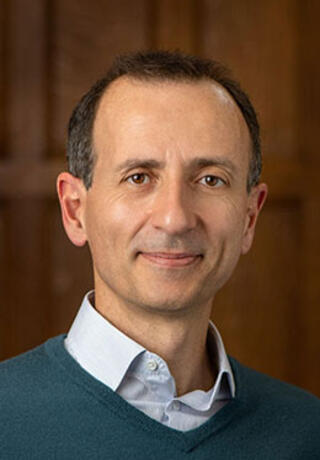
Erik Hjalmarsson is a Professor of Banking and Financial Economics at the Department of Economics, University of Gothenburg. He holds the Felix Neubergh Chair and previously served as Director of the Centre for Finance. His research focuses on empirical asset pricing, financial econometrics, and long-run stock returns. Hjalmarsson earned his PhD from Yale University and has held roles at the Federal Reserve Board and Winton Capital Management. Education: PhD (Yale University, 2005), M.Sc. in Econometrics (London School of Economics, 2000), B.Sc. in Mathematical Statistics (University of Gothenburg, 1999). Research interests include stock return predictability, high-frequency trading, and econometric methods. His work has been published in top journals like the Journal of Finance and Journal of Financial Economics . Key grants include funding from the Swedish Research Council and Marianne and Marcus Wallenberg Foundation. Awards include the Carl Anderson Prize (2004) and multiple stipends for doctoral education. He supervises PhD students and advises on central bank policies. His recent studies explore long-horizon returns, inflation expectations, and portfolio strategies. Teaching includes PhD courses in econometrics and financial economics. He serves on editorial boards and as a referee for leading journals.
Peter Ireland is the Murray and Monti Professor of Economics at Boston College, specializing in Macroeconomics and Monetary Economics. He holds a B.A., M.A., and Ph.D. from the University of Chicago. His work focuses on monetary policy transmission mechanisms, inflation dynamics, and the historical evolution of central bank strategies. Ireland has contributed extensively to understanding the effects of interest on reserves, the Barnett critique, and the implications of New Keynesian models for policy analysis. His research spans topics such as money growth rules, nominal GDP targeting, and the role of monetary aggregates in policy frameworks. Ireland has published in leading journals like the Journal of Econometrics and Journal of Money, Credit, and Banking , and his recent work addresses modern challenges such as the zero lower bound and post-crisis monetary policy strategies. His teaching includes courses on Financial Economics and Mathematics for Economists. Notably, Ireland’s work often critiques traditional policy approaches, advocating for clearer nominal anchors and rule-based frameworks. He collaborates frequently with Michael T. Belongia and others on projects analyzing the Federal Reserve’s strategy, Greenbook forecasts, and historical policy decisions. His contributions highlight the importance of monetarist principles in contemporary economic debates.
Giuseppe Moscarini is the Philip Golden Bartlett Professor of Economics at Yale University and a Research Associate at the National Bureau of Economic Research (NBER). He co-chairs the Micro and Macroeconomic Perspectives on the Aggregate Labor Market working group at NBER and serves as Co-Director of the Research Program in Macroeconomics at the Cowles Foundation. Previously, he held the Henry Kohn Associate Professorship at Yale and was a Sloan Foundation Research Fellow. His research focuses on labor markets, unemployment, wage inequality, and business cycles, with recent work analyzing labor market flows and employer-to-employer transitions. He has developed methodologies to measure and predict wage inflation dynamics, including a novel Phillips curve framework. Education: Ph.D. in Economics from MIT (1996), Laurea in Economia e Commercio from Università di Roma La Sapienza (1991). Research emphasizes theoretical and empirical labor market dynamics, including pricing, monetary policy, and information economics. His work bridges macroeconomic and microeconomic perspectives, with contributions to understanding firm size impacts on job creation and cyclical job ladder dynamics. Articles highlight employer mobility, wage dispersion, and post-recession labor market challenges. Awards: None explicitly listed. Editorial roles include co-Editor of Theoretical Economics and Associate Editor of the Journal of Economic Theory. Grants and lab affiliations include the Cowles Foundation and Federal Reserve Bank collaborations. Advising includes PhD student Francesco Beraldi.
Ricardo Reis is the Arthur Williams Phillips Professor of Economics at the London School of Economics and Political Science (LSE), Department of Economics. He specializes in macroeconomics, monetary economics, financial economics, international macroeconomics, and time-series econometrics. His research bridges macroeconomic theory with empirical applications, focusing on inflation dynamics, central bank policies, and financial stability. Reis holds a PhD in Economics from Harvard University. As Director of the Centre for Macroeconomics (CFM), he leads interdisciplinary research initiatives in macroeconomic policy and analysis. He teaches EC210: Macroeconomic Principles and EC539: Macroeconomics for Research Students at LSE, emphasizing rigorous theoretical frameworks and empirical methods. His research explores central bank tools, inflation expectations, and global financial systems. Key themes include the effectiveness of liquidity provision during crises, the design of fiscal-monetary policies, and the implications of long-run interest rate trends. Articles such as Jumpstarting an International Currency and How Likely is an Inflation Disaster? highlight his focus on systemic risks and policy responses. Awards and recognitions are not explicitly listed, but his extensive publications and leadership roles reflect his academic influence. He advises on monetary policy frameworks and contributes to debates on the future of international financial architectures. Reis collaborates with institutions like the Bank of Canada and the Central Bank of Chile, emphasizing practical policy applications of his research. His work often addresses historical crises (e.g., Portugal’s economic history) and contemporary challenges like post-pandemic debt management. Reis’ research datasets and videos, such as his keynote lectures on inflation credibility, underscore his commitment to disseminating economic insights to broader audiences.
Alan J. Auerbach is the Robert D. Burch Professor of Economics and Law, and Director of the Burch Center for Tax Policy and Public Finance at the University of California, Berkeley. He holds a PhD in Economics from Harvard University (1978) and has served as Chair of Berkeley's Economics Department and previously at the University of Pennsylvania. His research focuses on public policy, tax policy design, fiscal sustainability, and economic inequality. He advises governmental bodies and international institutions, and has authored numerous influential papers on fiscal multipliers, tax reforms, and long-term budgetary challenges. Key affiliations include the National Bureau of Economic Research (Research Associate), American Economic Association (Distinguished Fellow), and Econometric Society (Fellow). Awards include the Daniel M. Holland Medal from the National Tax Association and fellowships in prestigious academies. His work addresses global tax policy, intergenerational equity, and macroeconomic frameworks under demand shocks. Current courses taught include Law 260.1 (Tax Policy and Public Finance) and Economics 230A (Public Economics). His recent research emphasizes fiscal stimulus effectiveness, inflation's fiscal impacts, and the implications of low interest rates for tax policy. He advocates for addressing U.S. fiscal imbalances through structural reforms and sustainable budget practices.
Phillip B. Levine serves as the Katharine Coman and A. Barton Hepburn Professor of Economics at Wellesley College, with active affiliations as a Nonresident Fellow at the Brookings Institution and Research Associate at the National Bureau of Economic Research (NBER). His academic home is firmly within Wellesley's Department of Economics, where he teaches core statistics and econometrics courses alongside specialized policy-focused seminars. Levine's research spans critical social policy domains including fertility economics, college pricing systems, and childhood poverty interventions. His methodological signature involves rigorous statistical analysis of real-world policy impacts, particularly regarding disadvantaged youth. Key contributions include seminal work on abortion policy effects, retirement behavior during economic crises, and the disconnect between college sticker prices and actual affordability. His influential publications include the books Sex and Consequences: Abortion, Public Policy, and the Economics of Fertility , Targeting Investments in Children (co-edited), and A Problem of Fit: How the Complexity of College Pricing Hurts Students . Recent scholarship (2022-2025) reveals intensifying focus on declining US fertility rates, racial wealth gaps in college access, and post-pandemic birth trends, with frequent appearances in top economics journals. As founder and CEO of MyinTuition Corp., Levine bridges academic research and practical application through a simplified financial aid calculator now adopted by dozens of institutions. His policy commentary reaches broader audiences via New York Times , Washington Post , and major broadcast networks, demonstrating exceptional translation of complex economics into public discourse.
James Mitchell is a Professor of Public Policy at the University of Edinburgh’s School of Social and Political Science . He holds a MA (Political Studies) from the University of Aberdeen and a D.Phil. (Oxford). His research focuses on British politics, devolution, public policy, territorial politics, and Scottish nationalism. He has supervised over 30 years of PhDs and Masters in public policy, devolution, and constitutional politics. Key research themes include fiscal accountability in Scotland, party membership surges post-referendum, and multi-level governance. Research Projects: ESRC-funded study on SNP and Scottish Greens’ post-referendum membership growth Investigation of fiscal devolution’s accountability gaps Analysis of Scotland’s constitutional questions and local governance Research Interests: Mitchell explores territorial politics, public service reform, and political behavior in sub-state governments. He has contributed to debates on Scottish independence, EU referendum impacts, and intergovernmental relations. Recent work includes studies on the SNP leadership contest (2023) and Holyrood’s fiscal structures. Grants & Awards: He has secured grants from the Economic and Social Research Council (ESRC) for projects on party membership and constitutional dynamics. No specific scientific awards are listed, but his work is widely cited in political science and public policy. Labs & Teams: He is part of the Territorial Politics Research Group and has collaborated on regional economic forecasting and governance studies. His work often bridges academia and policy, influencing debates on devolution and public finance.
Prof. Dimitar Nikoloski is a Full Professor at the Faculty of Economics-Prilep, Ss. Cyril and Methodius University of Skopje. He specializes in econometrics, labor economics, and statistical inference. His research focuses on transition economies, labor market dynamics, and policy evaluation. Nikoloski holds a PhD from Staffordshire University (UK) and has held academic positions since 2000. He has been actively involved in international projects such as TEMPUS initiatives and has authored/co-authored multiple books and over 50 peer-reviewed articles. Education: Bachelor's in Economic-Statistical-Cybernetics (1996), Faculty of Economics-Prilep Master's in Economics (2000), University of Neuchâtel (Switzerland) PhD in Economics (2007), Staffordshire University (UK) Research Interests: Labor market transitions in post-communist economies Unemployment dynamics and policy interventions Green skills gap analysis Impact of FDI and wage subsidies Informal economy dynamics Key Achievements: Second Prize in Macroeconomics Research Competition (2007) Editorial roles in journals like Equilibrium Lead researcher on EU-funded projects (e.g., CEDEFOP, WIIW) His work bridges academic rigor with policy relevance, addressing critical issues such as skills mismatches, migration impacts, and sustainable employment strategies in Southeastern Europe.
Rüdiger Bachmann is the Stepan Family College Professor of Economics at the University of Notre Dame, with affiliations at the Centre for Economic Policy Research, CESifo, and ifo Institute. His research focuses on macroeconomic effects of uncertainty and expectation formation. Research examines: Impacts of economic uncertainty on business investment and hiring Survey-based measurement of firm expectations Labor market dynamics and productivity gaps Distributional consequences of energy policy shifts Behavioral responses to fiscal interventions Recent publications analyze German energy independence scenarios, pandemic consumption patterns, and firms' decision-making under ambiguity. He has advised German government institutions on economic policy matters and contributed to public debates through influential policy briefs. Professional experience includes positions at Goethe University, RWTH Aachen University, University of Michigan, and visiting appointments at leading institutions including Harvard and Yale. Teaches advanced macroeconomics courses at both undergraduate and graduate levels.
Stephen Terry is an Associate Professor of Economics at the University of Michigan's College of Literature, Science, and the Arts. He is also a Research Associate at the National Bureau of Economic Research (NBER) and serves as Co-Editor of the Review of Economics and Statistics. His research focuses on macroeconomics, particularly firm investment and the impact of micro-level frictions on long-term growth and business cycles. Dr. Terry received his PhD in Economics from Stanford University in 2015. Prior to joining the University of Michigan, he served as an Assistant Professor at Boston University. Professor Terry's research spans several key areas in macroeconomics, with a particular emphasis on understanding how micro-level frictions affect macroeconomic outcomes. His work investigates firm investment behavior, economic growth dynamics, and business cycle fluctuations. He employs both theoretical models and empirical analysis to examine how factors like uncertainty, immigration, innovation, and financial constraints shape economic performance at the aggregate level. His research often bridges micro and macroeconomic perspectives to provide deeper insights into economic mechanisms, with special attention to how short-term phenomena can have long-term consequences for economic growth. Analysis of Professor Terry's recent publications reveals a consistent focus on macroeconomic dynamics, particularly the relationship between micro-level frictions and macroeconomic outcomes. His work spans topics including economic uncertainty, firm dynamics, innovation, immigration effects, and business cycle analysis. A notable trend is his examination of how short-term phenomena can have long-term economic consequences, as seen in his research on short-termism and its macroeconomic impact. His collaborative work with leading economists across various institutions demonstrates the interdisciplinary nature of his research. Professor Terry has earned significant recognition in his field: Research Associate, National Bureau of Economic Research (NBER) Co-Editor, Review of Economics and Statistics As an academic advisor, Professor Terry has mentored numerous PhD and Master's students in economics. His research has been supported by various grants that have enabled extensive empirical analysis and theoretical modeling. His work on economic uncertainty, firm dynamics, and growth mechanisms has contributed significantly to our understanding of macroeconomic phenomena. Professor Terry actively collaborates with researchers across institutions, fostering interdisciplinary approaches to economic questions, and frequently participates in academic discussions at major conferences including the NBER Summer Institute. Professor Terry is affiliated with several research groups at the University of Michigan, including the Research Seminar in Quantitative Economics (RSQE). His work connects with various subfields within economics, particularly Macroeconomics, and contributes to ongoing research in economic growth, business cycles, and firm dynamics. His position as Co-Editor of the Review of Economics and Statistics places him at the forefront of scholarly communication in economics.
Giancarlo Corsetti is a Professor at the Department of Economics and a joint appointee at the Robert Schuman Centre for Advanced Studies of the European University Institute. Holding the Pierre Werner Chair, he is affiliated with leading institutions including CEPR, the ESRC Centre for Macroeconomics, the Cambridge Janeway Institute, and the United Nations High-level Advisory Board on Economic and Social Affairs. Corsetti serves as an Academic Adviser to the Bank of England and the European Central Bank. Ph.D., Yale University (1992) His research focuses on international economics , open economy macroeconomics , and global financial stability , with particular expertise in: Currency crises Financial and sovereign crises Monetary and fiscal policy coordination Global imbalances International trade dynamics Exchange rate economics Recent publications highlight his work on tariff impacts, risk sharing mechanisms, and eurozone policy evolution. His academic contributions span top journals like the Journal of International Economics , where he served as co-editor (2005-2016). Scientific honors include: Elected Fellow of the British Academy (2020) Schumpeter Lecture, European Economic Association (2015) He has received formal recognition for contributions to central banking theory and international finance, with policy insights shaping discussions on monetary stability and global economic governance.
Òscar Jordà serves as Professor of Economics at the University of California, Davis and Senior Policy Advisor at the Federal Reserve Bank of San Francisco. His academic career bridges rigorous econometric methodology with practical monetary policy applications, maintaining active roles in both academic and central banking institutions. Dr. Jordà's research spans five major areas: econometric methodology (particularly local projections), macroeconomics, monetary economics, economic history, and international economics. His methodological innovations in local projections have transformed how economists estimate dynamic causal effects, providing alternatives to traditional VAR approaches with greater robustness to model misspecification. His historical work with Moritz Schularick and Alan Taylor on centuries of financial data has revealed critical patterns in credit cycles, financial crises, and their macroeconomic consequences. His recent publications demonstrate significant evolution in research focus from traditional monetary policy analysis toward contemporary challenges including pandemic economic impacts, climate economics, and labor market stress measurement. The methodological thread connecting these diverse topics remains his expertise in dynamic causal inference and time series analysis. Dr. Jordà maintains extensive editorial responsibilities across leading economics journals including as Co-editor of the International Journal of Central Banking, Guest Editor for the European Economic Review, and Associate Editor for both the Journal of Applied Econometrics and the Journal of International Economics. He previously served on editorial boards for the Journal of Business and Economic Statistics and the Journal of the Spanish Economic Association. As Founding Chair of the Spanish Business Cycle Dating Committee, he has contributed to establishing systematic historical chronologies of economic activity. His work with Schularick and Taylor has produced influential datasets covering bank credit, financial crises, and asset returns across 17 advanced economies since 1870, enabling unprecedented historical analysis of financial stability.
Emilio Carnevali is an Associate Professor of Political Economy at the University of Salerno (Italy) , with affiliations as a Professor of Macroeconomics at Northumbria University in the UK. His research focuses on international trade wars , fiscal policy , balance of payments , and the economic impact of social media . Research Trends: Recent work analyzes Donald Trump's protectionist policies , China's currency strategy , and European fiscal frameworks . His publications bridge political economy and evolutionary economic modeling . Advising & Grants: No specific students or grants listed. Collaborates on peer-reviewed working papers with scholars like Giovanni Carnazza and Matteo Sommacal. Public Engagement: Regularly contributes to Micromega.net and Sbilanciamoci.info , discussing US elections , German economic fragility , and European fiscal reforms .
Dr. Jesus Barreal Pernas serves as Assistant Professor in the Department of Quantitative Economics at the Faculty of Economic and Business Sciences, University of Santiago de Compostela. His research bridges environmental policy, tourism economics, and educational innovation with significant regional impact in Galicia and broader European relevance. His academic foundation includes a 2015 PhD from the University of Santiago de Compostela with thesis "Wildfires in Galicia: causality, forest policy and risk in forest management" supervised by Dra. Maria L. Loureiro. This environmental economics work established his expertise in spatial analysis of forest systems. Barreal Pernas' research program demonstrates three converging trajectories: First, environmental economics focusing on wildfire patterns and forest policy in Galicia using spatial econometrics. Second, tourism economics examining sustainable financing mechanisms (particularly green tax willingness), international tourist segmentation, and PDO region development. Third, educational innovation through gamification techniques for teaching statistics in economics and tourism degrees. His recent publications reveal increasing emphasis on gender perspectives in financial inclusion and pandemic-related economic impacts. Analysis of his 2023-2025 publications shows methodological sophistication in spatial modeling and survey-based behavioral research, with strong policy relevance for Galician regional authorities and European tourism sectors. Key thematic clusters include sustainable tourism financing (12% of recent output), educational technology applications (18%), wildfire management (8%), and gender economics (7%). No scientific awards are documented in the provided materials, though his collaborative network spans multiple European institutions as evidenced by co-authorship patterns. His advisory role appears focused on thesis supervision within USC's economics programs, with research projects frequently addressing practical challenges in Galician tourism and environmental management. Current initiatives suggest expansion into post-pandemic tourism recovery and advanced gamification frameworks for quantitative education.
Jing Cynthia Wu is a Professor and Paul W. and Catherine A. Boltz Chair in the Department of Economics at the University of Illinois at Urbana-Champaign, part of the College of Liberal Arts & Sciences. Her research focuses on macroeconomics and finance, with an emphasis on monetary policy, fiscal policy, and financial market dynamics. She holds editorial roles at the Journal of Money, Credit and Banking and the American Economic Journal: Macroeconomics , and is a Research Associate at the National Bureau of Economic Research (NBER). Her work examines unconventional monetary policies such as quantitative easing (QE), central bank digital currencies (CBDC), and the implications of zero lower bound constraints. Key themes include fiscal-monetary policy interactions, inflation targeting strategies, and the transmission mechanisms of global financial integration. Recent studies address post-pandemic inflation dynamics, policy normalization, and the distributional effects of monetary interventions. Dr. Wu’s contributions span both theoretical modeling (e.g., New Keynesian frameworks, heterogeneous agent models) and empirical analysis of financial markets. She has published extensively on yield curve dynamics, bond risk premia, and the macroeconomic impacts of unconventional policies. Her research bridges academic theory with policy relevance, informing central bank decision-making on tools like QT (quantitative tightening) and forward guidance. Awards/Honors: Paul W. and Catherine A. Boltz Chair, NBER Research Associate, Journal Editorial Roles Grants/Advising: Active in funding and mentorship through UIUC and NBER collaborations, though specific grants/students are not listed in available data. Her work often addresses pressing policy questions such as optimal QE design, CBDC frameworks, and the role of international financial linkages in policy transmission. Current projects likely explore evolving central bank toolkit strategies and inflation dynamics in a post-pandemic world.