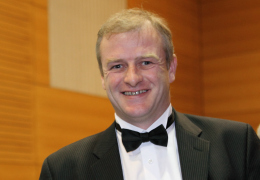
Paul O'Toole is a Professor of Microbial Genomics and Principal Investigator at the APC Microbiome Ireland, University College Cork. His research focuses on the gut microbiome's role in health, aging, and disease, particularly in the context of diet and probiotics. He leads projects like the ELDERMET study on elderly nutrition and the NU-AGE project exploring Mediterranean diets' anti-aging effects. He holds a BA (Mod.) from Trinity College Dublin and a PhD from Lund University, with postdoctoral training in Canada and New Zealand. Key grants include studies on dairy-derived microbiota, probiotic strain improvement, and microbiome analysis in aging populations. He has published extensively on Lactobacillus genomics, gut-brain interactions, and microbiome-driven health outcomes. His work bridges fundamental microbiology with clinical applications, emphasizing translational research. Scientific highlights include discovering microbiome links to cognitive decline, demonstrating dietary modulation of gut microbes to combat obesity, and identifying keystone species in healthy aging. He advocates for sustainability in conservation and food systems, reflecting his interdisciplinary approach to global health challenges.
Tim O'Sullivan is a Senior Lecturer in Pharmaceutical Chemistry at University College Cork (UCC), holding joint appointments in the School of Pharmacy and School of Chemistry. He specializes in medicinal chemistry, natural products synthesis, and drug development targeting parasitic, bacterial, and viral diseases. His research focuses on Chagas disease, cystic fibrosis-related biofilm inhibition, and anti-HIV therapies. Dr. O'Sullivan holds a BSc in Industrial Chemistry from the University of Limerick and a PhD in natural products synthesis from the Australian National University. His academic career includes postdoctoral roles at Trinity College Dublin and University College Dublin, followed by a research manager position at UCD before joining UCC in 2006. He has secured significant grants from bodies like the Irish Research Council and Horizon 2020, totaling over €1M. Notable recognitions include the SEFS Student-nominated Staff Award (2022) and the Tetrahedron Award (2008). Research interests span synthesizing bioactive compounds, developing novel antiparasitics (e.g., Plakortide P analogs), and disrupting bacterial quorum sensing to combat antibiotic resistance. Collaborations involve institutions like the Universitat Autònoma de Barcelona and the Leibniz Institute in Germany. He mentors multiple PhD students and teaches courses in pharmaceutical chemistry and organic synthesis.
Professor Bill Watson is a Full Professor of Cancer Biology at the University College Dublin, School of Medicine , where he serves as Head of Pathology and Director of the Biomedical Health and Life Science BSc program. With a PhD in Biochemistry (University College Cork, 1995) and post-doctoral training at the University of Toronto, he has led translational research in prostate cancer since returning to UCD in 1997. His work focuses on biomarker discovery, therapy resistance mechanisms, and clinical decision tools through the Prostate Cancer Research Consortium and iPROSPECT collaborations. Education: BSc (University College Dublin), PhD (Royal College of Surgeons in Ireland), Post-Doctoral Research Fellow (Toronto General Hospital) His research integrates genomic, epigenetic, and proteomic biomarkers to improve prostate cancer stratification and treatment selection, as demonstrated in the Movember Global Action Plan and ToPCaP initiatives. Recent studies include validating a six-gene MCRS signature for biopsy-based prognostics (2025) and developing beta mixture models for DNA methylation analysis (2024). Scientific Awards include the Alton Prize (2000), Presidents Awards for Teaching (2000, 1998), and Young Investigator Award (1995). He has received grants such as the UCD Equip Scheme (2021) and Molecular Therapeutics for Cancer (2009-2015) . Professional Leadership: Irish Association for Cancer Research (President 2014-2017), Cancer Trials Ireland (Chair of Translational DSSG 2014-present), and Royal Academy of Medicine in Ireland (Fellow since 2006)
Professor Aideen Sullivan is Head of the Department of Anatomy and Neuroscience at University College Cork (UCC). With a career spanning over two decades at UCC, she leads research on neuroprotective therapies for Parkinson's disease, focusing on growth factors, stem cell applications, and epigenetic mechanisms. She established Ireland's first BSc in Neuroscience and co-developed the cross-College BSc in Medical and Health Sciences (CK707). BSc (First Class Honours) in Pharmacology, University College Dublin (1992) PhD in Neuropharmacology, University of Cambridge (1995) Her research program investigates Parkinson's disease through five key themes: viral vector delivery of neurotrophic factors, molecular mechanisms of neuroprotection, biomarker discovery, neuronal degeneration models, and stem cell-based treatments. She has secured significant grants from Health Research Board, Enterprise Ireland, and the Wellcome Trust. Recent publications (2022-2020) emphasize epigenetic regulation (HDAC inhibitors), microbiome-gut-brain axis interactions, and novel neurotrophic strategies. Articles highlight GDF5's neuroprotective effects, miRNA modulation, and molecular pathways like BMP-Smad and p38-MAPK. Scientific awards include: Postgraduate Certificate in Teaching and Learning (UCC, 2006) FETAC Certificate in Peer-Mentoring (2010) Leadership Foundation Aurora Programme Scholarship (2015) Over €2 million in research grants She mentors undergraduate and postgraduate students, chairs UCC's Athena SWAN 'Flexible Working' group, and serves as Editor-in-Chief of Neuronal Signaling . Her work spans laboratory research, public engagement, and educational innovation.
Prof. Cormac Gahan is a Professor at the School of Microbiology, University College Cork (UCC), and a Principal Investigator at the APC Microbiome Institute. He holds editorial roles in journals like Journal of Pathogens and Microbiome . His research focuses on host-microbe interactions, microbial pathogenesis, and bacterial vaccine development. Prof. Gahan has published 167 peer-reviewed articles, with an h-index of 75 and over 19,000 citations. Education: PhD in Immunology and Microbiology from UCC (1996). Affiliations: APC Microbiome Institute, School of Pharmacy (UCC). Research Interests: Bile acid metabolism, bacterial pathogenesis (e.g., Listeria monocytogenes), live bacterial vaccine vectors, gut microbiota dynamics. His work bridges microbiology, immunology, and clinical therapeutics. Grants & Funding: Over €13.5M from SFI, EU, Health Research Board, and industry partnerships. Current grants include EU Horizon 2020 projects and APC Microbiome initiatives. Labs & Collaborations: Leads the Bile Research Group and collaborates with institutions like Cork Cancer Research Centre and Teagasc. Directs the UREKA summer school program for microbiology training.
Dr. Jamie O'Sullivan is a Lecturer and Principal Investigator at the Irish Centre for Vascular Biology, School of Pharmacy and Biomolecular Sciences, Royal College of Surgeons in Ireland (RCSI). Her research focuses on the bidirectional interactions between coagulation pathways and cancer metastasis, particularly involving von Willebrand Factor (VWF) in diseases like cancer, malaria, and inflammatory conditions. She holds a BSc in Biomedical Science from University College Cork and a PhD in Haematology from Trinity College Dublin, supported by an Irish Research Council scholarship. Notable awards include the 2018 Martin Villar Haemostasis Award and a Novartis Fellowship. Education: PhD in Haematology, Trinity College Dublin (2015) BSc Biomedical Science, University College Cork (Ireland) BSc Biomedical Science, Cork Institute of Technology (Ireland) Research Interests: Her work explores VWF's roles in cancer metastasis, thrombosis, and vascular biology. Key areas include VWF clearance pathways, endothelial-tumor interactions, and therapeutic targeting of VWF in diseases like multiple myeloma and breast cancer. Grants & Funding: Her lab is supported by grants from Science Foundation Ireland, the Irish Research Council, and industry collaborations. Ongoing projects include studies on the VWF-ADAMTS13 axis in cancer-associated thrombosis and the role of tinzaparin in breast cancer metastasis. Awards: 2018 Martin Villar Haemostasis Award Novartis Fellowship (2017–2019) Labs & Teams: The O'Sullivan Lab is part of the Irish Centre for Vascular Biology, collaborating with international groups like KU Leuven University. She also leads the StAR Programme in RCSI, training future researchers in vascular biology.
Prof. Noel G McElvaney is Head of the School of Medicine and Professor of Medicine at the Royal College of Surgeons in Ireland (RCSI). He holds a medical degree from University College Dublin (1982). His research focuses on cystic fibrosis (CF), alpha-1 antitrypsin deficiency (AATD), lung inflammation, and protease regulation. He has led translational research initiatives, including early clinical trials of therapies like Lomucin and AAT augmentation. In 2001, he founded the Alpha One Foundation of Ireland and established Europe’s first AATD detection program. Prof. McElvaney has secured extensive funding from organizations like HRB, SFI, and industry partners. His work bridges clinical practice and research, emphasizing gene therapy, lung defense mechanisms, and drug development. He has been awarded the HRB Impact Award (2021-2022) and holds leadership roles in medical councils and societies. His lab collaborations include Beaumont Hospital and global networks like the European Alpha-1 Research Collaboration (EARCO). Research interests include: protease-antiprotease balance in lungs, bronchial epithelium signaling, innate immunity, and CF/AATD therapies. He has supervised multiple research projects and mentored students in areas like CF microbiota and estrogen effects. His recent grants fund studies on COPD microbiome diversity, circadian rhythms in lung disease, and longitudinal biomarker analyses in AATD.
Professor Cormac Taylor is a Full Professor at the School of Medicine, University College Dublin, where he leads a research group at the UCD Conway Institute. His research focuses on hypoxia-mediated transcriptional regulation in epithelial cells, with applications in chronic inflammatory diseases. He holds a PhD in Pharmacology from University College Dublin (1996) and completed postdoctoral research at Harvard Medical School. His research investigates: Hypoxia-inducible factor (HIF) signaling pathways Metabolic reprogramming during oxygen stress Epithelial cell responses to inflammatory stimuli Therapeutic targeting of hypoxia pathways in disease Host-microbe interactions in gastrointestinal inflammation Research outputs demonstrate consistent focus on hypoxia-mediated metabolic adaptation, with recent work exploring HIF's role in cancer, diabetes, and infection biology. Articles show advanced techniques in metabolomics, transcriptomics, and molecular pathway analysis. Awards & Honors: Elected to Royal Irish Academy (2013) - Highest Irish academic honor Nature Award for Mentoring in Science (2014) Takeda Distinguished Researcher Award (2016) - First non-US recipient Research Leadership: Maintained continuous funding from Science Foundation Ireland since 2002 with additional grants from Wellcome Trust and NIH. Successfully supervised 16 PhD students. Serves as Managing Editor of Frontiers in Biosciences and Editorial Board Member for American Journal of Physiology. Laboratory: Leads hypoxia research group at UCD Conway Institute investigating therapeutic targeting of hypoxia pathways in chronic inflammation and cancer.
Dr. Melanie Föcking is a Senior Lecturer in the Department of Psychiatry at the Royal College of Surgeons in Ireland (RCSI), based at Beaumont Hospital, Dublin. She joined RCSI in 2004 as a Research Fellow and transitioned to Lecturer (2005–2023) before her current role. Her research focuses on psychiatric neuroscience, particularly proteomic investigations of schizophrenia, bipolar disorder, and psychosis biomarkers, with emphasis on complement/coagulation pathways and neuroinflammation. Föcking holds an MSc from the University of Giessen (1998), a PhD from the Max Planck Institute/University of Maastricht (2003), a postgraduate diploma in Health Professions Education (2019), and an HDip in Leadership (2008). She is fluent in German, English, and Dutch. Her research integrates proteomics, immunopsychiatry, and clinical neuroscience to identify biomarkers for psychosis transition and treatment response. Recent work explores inflammatory dysregulation (e.g., complement proteins, matrix metalloproteinases) in schizophrenia spectrum disorders, cannabis-related neuroinflammation, and omega-3 fatty acid mechanisms. A consistent theme is the transdiagnostic role of inflammation across psychiatric conditions. Föcking received the Investigator Prize (2018), Young Investigator Award (2013), and Travel Fellowship (2010). As Neuroscience Module Lead at RCSI, she oversees curriculum development for medicine and physiotherapy students, coordinates student research programs, and mentors PhD/MSc/summer students. She secured grants from the Health Research Board, Wellcome Trust, and Science Foundation Ireland for projects on postsynaptic density proteomics, psychosis biomarkers, and nutritional interventions.
Dr. Ricardo Segurado is an Associate Professor in Public Health Biostatistics at the School of Public Health, Physiotherapy and Sports Science , University College Dublin (UCD) . He is also the director of the UCD Centre for Support and Training in Analysis and Research (CSTAR) and a consultant biostatistician with extensive collaborative experience across medical, biological, and social sciences. Education: PhD in Molecular Genetics, Trinity College Dublin Postgraduate Diploma in Statistics, Trinity College Dublin BA (Mod) in Biochemistry, Trinity College Dublin Professional Diploma in University Teaching & Learning, University College Dublin Research Interests: Dr. Segurado’s research is centered on advanced biostatistical methodologies. He specializes in statistical genetics and genetic epidemiology , particularly in gene-mapping for rare diseases and non-additive genetic effects. He actively develops methods for longitudinal modeling , missing data imputation , meta-analysis , and the design and analysis of randomized controlled trials . His work has significant applications in public health, maternal and child health, and chronic disease research. Publications: His recent publications demonstrate a strong focus on public health biostatistics, with studies on childhood obesity trajectories , placental development , antimicrobial consumption , cardiac arrest outcomes , and chronic pain interventions . His methodological contributions are evident in the use of longitudinal mixed models , individual participant data meta-analyses , and complex regression techniques across diverse health domains. Awards and Professional Affiliations: Fellow, Royal Statistical Society Fellow Member, International Genetic Epidemiology Society Member, International Biometric Society Member, Irish Statistical Association Former Editorial Board Member, British Journal of Nutrition and Journal of Nutritional Science (2019–2021) Teaching and Supervision: Dr. Segurado is a dedicated educator, coordinating key modules such as Biostatistics II , Clinical Trials , Genetic Epidemiology , and Statistics for Human Genomics within the UCD Master in Public Health (MPH) and other programs. He is also involved in developing new initiatives in Health Data Analytics through the ADVANCE Centre. Grants and Leadership: He is a principal investigator on major grants, including the Irish Comparative Outcomes Study of CF (ICOS) and a Randomised Controlled Trial of Ketamine for Depression . As the founder of the Wales-Ireland Genetic Epidemiology Group , he plays a key role in fostering collaborative research networks.
Catherine Norton is an Associate Professor in the Department of Physical Education and Sport Sciences at the University of Limerick. She is a registered dietitian specializing in sport nutrition and healthy aging, with over 20 years of experience across academia, healthcare, and professional sport. Dr. Norton's research optimizes food knowledge and behaviors for health and performance across diverse populations including athletes, older adults, and university students. She leads investigations into nutrient supplementation efficacy for healthy aging and performance nutrition, especially milk-derived proteins. Research often examines how environmental factors influence dietary choices in different settings. Recent publications focus on sports nutrition practices, Mediterranean diet adherence in aging populations, bone health interventions for osteopenia, and nutritional strategies for chronic disease management. Her work demonstrates strong interdisciplinary connections between nutrition science, exercise physiology, and public health. Research Initiatives: Healthy Ageing and Performance Nutrition (HAPN) with Food for Health Ireland Nutritional interventions for musculoskeletal health Dietary assessment methodologies
Professor Niamh Moran is a leading academic at the Royal College of Surgeons in Ireland (RCSI), serving as a Professor in the School of Pharmacy and Biomolecular Sciences and a member of the Molecular & Cellular Therapeutics department. Her academic roles have included Academic Director of the HEA Postgraduate Training Programme (2001–2007) and Head of the School of Postgraduate Studies (2013–2017). She holds a BSc (1983) and PhD (1987) from University College Dublin. Her research focuses on thrombosis, platelet biology, and vascular diseases, with contributions to integrin activation mechanisms, bioactive peptide delivery systems, and platelet secretome analysis. Key areas include understanding arterial thrombosis, platelet modulation in clinical scenarios like stroke and pregnancy, and cancer-cell-induced platelet activation. Her work aligns with the UN Sustainable Development Goal 3 (Good Health and Well-Being). Recent studies explore platelet activation in COVID-19, vaccine-induced thrombocytopenia, and the role of platelets in cancer metastasis. Over 97 publications and numerous grants highlight her impact, including funded projects on platelet function in cardiovascular systems and collaborations across disciplines. Professor Moran has supervised multiple PhD theses, including projects on vitamin D’s role in platelet function and cancer-cell-induced platelet secretion. She has pioneered educational initiatives, such as a unique PhD program in Biomedical Sciences and a Science Art initiative. Her lab and teams are integral to RCSI’s research ecosystem.
Sreeraj Kuruppilakath Manikandan is a postgraduate researcher at South East Technological University (formerly Waterford Institute of Technology) within the Department of Science. As a PhD student in the Ocular Therapeutics Research Group under Dr. Sweta Rani, he investigates glatiramer acetate's role in retinal repair and immune modulation for wet age-related macular degeneration (AMD). Education: Bachelors in Biotechnology (Karunya University), Masters in Biotechnology (University College Dublin) Research Focus: AMD pathogenesis, neuro-immunology, inflammation regulation, and drug development His work spans ophthalmology , immunology , and nanomedicine , with publications analyzing AMD immune mechanisms and plant-based burn treatments. Collaborations include University of Birmingham (visiting researcher) and Experimentica Ltd (visiting scientist). Current projects funded by the Irish Research Council with industry partner Experimentica Ltd explore glatiramer's therapeutic potential in choroidal neovascularization. His research contributes to UN Sustainable Development Goal 3 (Good Health and Well-being) through ocular disease interventions.
Marcus Claesson is a Lecturer in the Department of Microbiology at University College Cork (UCC), Ireland. He is also a Principal Investigator and Funded Investigator at the Alimentary Pharmabiotic Center, managing the BioIT platform. His research focuses on microbiota analysis, particularly in inflammatory bowel disease (IBD) and the gut microbiome of elderly Irish subjects via metagenomics and 'omics' methods. Education: BSc in Chemical Engineering, Chalmers University of Technology MSc in Bioinformatics, Chalmers University of Technology PhD in Bioinformatics, University College Cork Marcus specializes in bioinformatics method development for analyzing gut microbiota composition and function. His work includes the ELDERMET project (metagenomic analysis of elderly microbiomes) and sequencing Lactobacillus salivarius and Bifidobacteria to identify probiotic traits. He has explored the role of flagellin proteins in inflammation and the impact of antibiotics on elderly microbiota. His peer-reviewed publications (15 most recent) reflect a strong focus on microbiome analysis , metagenomics , and probiotic discovery , with applications in human health and microbial ecology . Scientific Awards: UCC Early Stage Researcher of the Year (2012) Alimentary Pharmabiotic Centre Young Scientist of the Year (2010) Bioscience Institute PhD Student of the Year (2007) Marcus supervises doctoral students in microbiome research and teaches modules including Computational Biology , Computational Systems Biology , and Genomic Data Analysis . He coordinates the MSc program in Bioinformatics and Computational Biology.
Chiara De Santi is a Lecturer in Immunology at the School of Pharmacy and Biomolecular Sciences , Royal College of Surgeons in Ireland (RCSI), Dublin. She holds a PhD from the University of Siena and has held academic roles including Postdoctoral Researcher (2016–2020) and Research Fellow (2021–2022). Her research focuses on non-coding RNAs' therapeutic potential in lung diseases such as cystic fibrosis and pulmonary fibrosis, employing stem cell-derived organoids and ALI cultures for drug discovery. Education: BSc in Biological Sciences, University of Pisa (2007–2010) MSc in Molecular Biology, University of Pisa (2010–2012) PhD in Molecular Medicine, University of Siena (2012–2016) Research Interests: Non-coding RNAs (miRNAs, circRNAs) in lung pathologies Stem cell models for disease modeling Therapeutic modulation of inflammatory responses Cystic fibrosis and pulmonary fibrosis mechanisms Grants & Funding: RCSI Grant: The role of non-coding RNAs in alveolar epithelial damage (2023–2026) Vertex Pharmaceuticals: Target site blockers for CFTR mutation therapy (2024–2027) Irish Research Council: miRNA therapeutics in multiple sclerosis (2018–2020) Professional Activities: Athena Swan Champion for PBS (2023–present) RCSI EDI Committee and PPI in Research Committee member Chair of RCSI Postdoc Society (2021–2022) Teaching: Immunology modules for medical and biomedical science programs Leadership in Year 1 Prize Medal Dissertation Competition (Medicine) Contributions to MSc programs in Precision Medicine