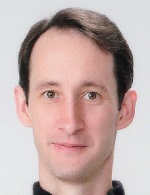
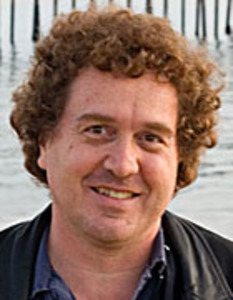
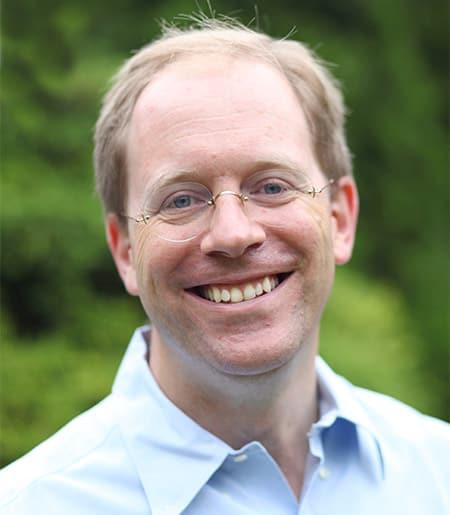
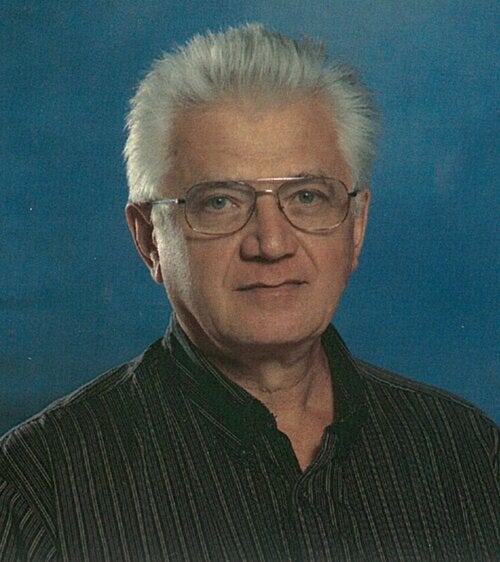
Professor Imre Leader is a distinguished mathematician at the University of Cambridge, where he serves as Professor of Pure Mathematics in the Department of Pure Mathematics and Mathematical Statistics (DPMMS), which is part of the Faculty of Mathematics. His office is located in room C2.02 at the DPMMS building. Professor Leader's research primarily focuses on Extremal Combinatorics and Ramsey Theory , two fundamental areas of discrete mathematics. His work explores deep connections between combinatorial structures, set theory, and algebraic properties. He has made significant contributions to understanding partition regularity, monochromatic structures, extremal set theory, and combinatorial geometry. His research often bridges the gap between pure combinatorics and applications in computer science and theoretical mathematics. Over his prolific career, Professor Leader has published numerous influential papers in top mathematical journals, collaborating with leading mathematicians worldwide. His work spans various aspects of combinatorics including hypergraph theory, geometric combinatorics, additive number theory, and combinatorial game theory. He has been particularly active in advancing our understanding of Ramsey-type phenomena in infinite structures and developing new techniques in extremal combinatorics. Research Group: Combinatorics Email: I.Leader@dpmms.cam.ac.uk Telephone: 01223 765902 Personal homepage: https://www.dpmms.cam.ac.uk/~ibl10
Peter Selinger is a Professor in the Department of Mathematics and Statistics at Dalhousie University , with a cross-appointment in Computer Science. He specializes in mathematical methods in computer science, particularly quantum computing and combinatorial game theory . His work on quantum programming languages like Quipper and foundational research in category theory has garnered international recognition. Education : Ph.D. in Mathematics (University of Pennsylvania, 1997), undergraduate studies in Mathematics (Technische Universität Darmstadt). Research Interests span quantum computing, category theory, and combinatorial game theory. He has pioneered formalisms for quantum programming languages, developed categorical models for quantum mechanics, and analyzed game-theoretic structures in games like Hex. His recent work includes linear dependent type theory , quantum circuit synthesis , and combinatorial game classification . Publications demonstrate expertise in quantum programming languages, categorical semantics, and game theory. Key trends include Hamiltonian simulation , Clifford+T circuits , and monotone game realization . Scientific Honors include the Killam Professorship (2017–2022), Faculty of Science Award for Excellence in Teaching (2023), and fellowships from the Alfred P. Sloan Foundation and German National Scholarship Foundation . Students he has supervised include PhD graduates Xiaoning Bian , Francisco Rios , and Neil J. Ross , along with MSc students like Fahimeh Bayeh and Seth Greylyn . He has advised 16 postdoctoral researchers.
David Croydon is an Associate Professor at the Research Institute for Mathematical Sciences (RIMS), Kyoto University. His research focuses on probability theory, particularly diffusions on random fractals and scaling limits of random walks on random graphs. He also investigates discrete integrable systems with random initial conditions. Dr. Croydon's primary research interests span several areas of probability theory and mathematical physics. His work centers on diffusions on random fractals and how these processes can be constructed as scaling limits of related random walks on random graphs. He has made significant contributions to understanding random walks on critical structures including Galton-Watson trees, uniform spanning trees, and percolation clusters. More recently, he has developed a growing interest in the behavior of discrete integrable systems such as the box-ball system, particularly when started from random initial conditions. His research often bridges theoretical probability with applications in statistical physics and mathematical physics. Dr. Croydon's recent publications demonstrate a dual focus on theoretical probability and mathematical physics. His work on random walks spans various structures including binary trees, critical percolation clusters, and uniform spanning trees. He has made significant contributions to understanding aging phenomena, heat kernel fluctuations, and scaling limits in random media. Simultaneously, his research on discrete integrable systems explores the connections between probability theory and soliton theory, particularly through the lens of the box-ball system and related models. These two research strands converge in his investigations of scaling limits and invariant measures for complex stochastic systems. Dr. Croydon's scientific contributions have been recognized through publications in top-tier journals across probability theory and mathematical physics, though specific awards are not mentioned in the available information. Dr. Croydon has supervised several doctoral students to completion, including Adam Bowditch (2017), George Andriopoulos (2019), Eleanor Archer (2020), and Takumu Ooi (2024). He has also served in advisory roles for other students including John Sylvester (2017). His collaborative research spans multiple international institutions, suggesting involvement in various research grants supporting his work in probability theory and mathematical physics. While specific lab names aren't mentioned, Dr. Croydon is part of the vibrant probability theory research group at the Research Institute for Mathematical Sciences (RIMS) at Kyoto University. His extensive collaborations with researchers worldwide, particularly in the UK, France, and Japan, indicate active participation in international research networks focused on stochastic processes, random media, and discrete integrable systems.
David Eppstein is a Distinguished Professor of Computer Science at the University of California, Irvine (UCI), affiliated with the Donald Bren School of Information & Computer Sciences. He holds academic leadership roles as director of the Center for Algorithms and Theory of Computation and associate director of the Center for Algorithms, Combinatorics, and Optimization. His research focuses on graph algorithms, computational geometry, discrete mathematics, and geometric graph theory. Eppstein earned a B.S. in Mathematics from Stanford University (1984) and a Ph.D. in Computer Science from Columbia University (1989). Research Interests: Graph drawing, information visualization, dynamic graph algorithms, mesh generation, optimal triangulation, K-shortest paths, subgraph isomorphism, data depth, exponential-time algorithms for NP-hard problems. Awards: ACM Fellow (2012), AAAS Fellow (2017), Distinguished Professor (2020), Best Paper Awards (2023, 2022), and SIAM recognition. Grants: Co-PI on a $1.2M NSF grant (2022) for geometric graph research, and previous NSF grants for algorithm studies (2016). His work bridges theoretical computer science and practical applications, including contributions to graph visualization, geometric algorithms, and combinatorial optimization. Notable recent achievements include resolving open questions in graph biplanarity and authoring the book Forbidden Configurations in Discrete Geometry (2018).
Marcin Jurdzinski is an Associate Professor (Reader) in the Department of Computer Science at the University of Warwick , UK. He has been a faculty member since 2004 and is a core member of the Foundations of Computer Science and Discrete Mathematics and its Applications research groups. University: University of Warwick School: Faculty of Science Department: Department of Computer Science Position: Associate Professor (Reader) Email: Marcin.Jurdzinski@warwick.ac.uk Office: CS2.19 His research lies at the intersection of algorithms, game theory, automata, and logic , with a strong emphasis on formal verification , model checking , and theoretical computer science . He is best known for his foundational work on parity games , including the development of small progress measures and discrete strategy improvement algorithms. The recent publications reveal a consistent focus on computational complexity in games and verification. Key themes include stochastic games, timed automata, bisimilarity, and quantitative analysis . His work often bridges theoretical insights with practical verification challenges, especially in real-time and probabilistic systems. He has supervised several PhD students and hosted postdoctoral researchers such as Laure Daviaud and Alexander Kozachinskiy. He has led EPSRC-funded projects including Solving Parity Games in Theory and Practice and Counter Automata: Verification and Synthesis . PhD Students: Aditya Prakash, Thejaswini K. S., Michail Fasoulakis, John Fearnley, Michal Rutkowski, Ashutosh Trivedi Postdocs: Laure Daviaud, Alexander Kozachinskiy He is actively involved in the academic community, serving on the steering committee of the Highlights of Logic, Games and Automata conference and on program committees for major venues such as CONCUR, ICALP, and LICS. He has also organized workshops including FORMATS and ICALP co-located events.
Timothy Riley is a Professor in the Department of Mathematics at Cornell University, affiliated with the College of Arts and Sciences. His research focuses on geometric group theory, studying infinite discrete groups through geometric lenses such as Riemannian manifolds, graphs, and cell complexes. Key interests include curvature, geometric features of group presentations, and algorithmic complexity. He holds a D.Phil. from Oxford University (2002). Research spans geometric aspects of the word problem, hyperbolic groups, Dehn functions, and applications to cryptography and topology. His work integrates algebraic, topological, and computational perspectives. Notable collaborations include studies on hydra groups, Cayley graphs, and asymptotic cones. Publications emphasize geometric topology and group theory, with contributions to understanding filling invariants and geometric algorithmic properties. His office is 403 Malott Hall, and he maintains an active personal web page. No explicit awards are listed in the provided text, though he was part of news items related to teaching honors in 2024.
Eugene Feinberg is a Distinguished Professor in the Department of Applied Mathematics and Statistics at Stony Brook University's College of Engineering and Applied Sciences. He is renowned for his extensive contributions to Markov Decision Processes (MDPs), stochastic optimization, and inventory control. Research Interests: His work spans theoretical and applied aspects of Markov Decision Processes , stochastic optimization , inventory control , healthcare decision-making , and machine learning . He has particularly focused on solving complex decision-making problems under uncertainty, with applications ranging from operations research to medical decision-making. Scientific Awards: He has been honored with the title of Distinguished Professor , recognizing his outstanding contributions to his field. Advising and Grants: While specific details on students and grants are not provided, his prolific publication record and faculty status suggest active involvement in advising and securing research funding. Contact and Resources: His university webpage can be accessed at http://www.ams.sunysb.edu/~feinberg/ , and his Google Scholar profile is available at https://scholar.google.com/citations?user=LLt--pgAAAAJ&hl=en .
Goulnara Arzhantseva is a full Professor at the Department of Mathematics within the Faculty of Mathematics at the University of Vienna. With an active research career spanning over a decade, she has established herself as a prominent figure in geometric group theory and related fields. Her work demonstrates continuous scholarly output with publications appearing consistently from 2011 through 2024. Professor Arzhantseva's research focuses primarily on geometric group theory, with particular emphasis on discrete groups, metric geometry, approximation properties of groups, small cancellation theory, expanders, and sofic groups. Her work bridges pure mathematics with applications in metric geometry and functional analysis. The breadth of her research is evident in her collaborations with numerous mathematicians across different institutions and countries. Her publication record shows a clear trajectory of increasingly sophisticated work in geometric group theory. The most recent publications (2022-2024) focus on metric approximations of discrete groups, spectral gap properties, origami expanders, and acylindrical hyperbolicity in cubical small cancellation groups. These works represent cutting-edge research at the intersection of group theory, geometry, and combinatorics. Scientific Awards: Prize mentioned in search results (4 total, specific names not provided) Prize mentioned in search results (4 total, specific names not provided) Prize mentioned in search results (4 total, specific names not provided) Prize mentioned in search results (4 total, specific names not provided) Professor Arzhantseva has been actively involved in numerous research projects, with records showing 7 projects between 2011-2024. Her collaborative approach is evident in her extensive publication record, which includes significant contributions to prestigious mathematics journals. While specific details about her advising activities are not provided in the available information, her substantial research output suggests active mentorship of graduate students in geometric group theory.
Sira Helena Gratz is an Associate Professor at the Department of Mathematics, Aarhus University. Her research focuses on advanced topics in algebra and category theory, particularly cluster algebras, singularity categories, and tilting theory. She has published extensively in leading journals such as the Journal of the London Mathematical Society and Mathematische Zeitschrift. Her work often involves collaborations with other mathematicians, including G. Stevenson and A. Zvonareva. Her recent publications explore cluster structures for infinite singularities, lattices of t-structures in discrete cluster categories, and homotopy invariants in singularity categories. These works intersect with subfields like representation theory, homological algebra, and noncommutative geometry. Contact: sira@math.au.dk | Phone: +45 87 15 17 98 | Address: Aarhus C, 1530-428
Alina Vdovina is a Professor of Mathematics at The City College of New York (CCNY) and a member of the doctoral faculty at the CUNY Graduate Center. Her office is located at North Academic Center 8/201, with an alternative listing showing MR 333, and she can be reached at (212) 650-5161 or via email at avdovina@ccny.cuny.edu. Dr. Vdovina's research focuses on Geometric Group Theory and its interactions with Dynamical systems, K-theory of C*-algebras, and Knot Theory. Her work bridges multiple mathematical disciplines, exploring the connections between algebraic structures, geometric representations, and topological properties. She has made significant contributions to the understanding of higher-rank graphs, cube complexes, and their applications in operator algebras. Her recent publications demonstrate a consistent focus on the interplay between geometric structures and algebraic properties, with particular attention to how group-theoretic concepts manifest in topological and combinatorial settings. Her work spans theoretical developments in group theory, applications to operator algebras, and connections to discrete mathematics. Dr. Vdovina is actively involved in mentoring students, with recent successes including Kadar He moving to the PhD program at CUNY's Graduate Center, Nicholas Videen transitioning from musician to CCNY mathematics graduate, and Joshua Bourne-Inniss advancing from community college to CCNY mathematics graduate degree. Her research presentations include "Groups acting on buildings and their subgroups" at GAGTA 2025 and "C*-algebras coming from buildings and their K-theory" at the Conference on Analytic Group Theory in Austin, Texas.
Professor Matthew Simpson is a leading figure in applied mathematics at the School of Mathematical Sciences, Faculty of Science, Queensland University of Technology (QUT). He holds the position of Professor of Applied Mathematics and is an Australian Research Council (ARC) Future Fellow, reflecting his sustained research excellence. His work bridges mathematical theory and biological applications, particularly in cell migration, tissue invasion, and multiscale modeling. BE (Environmental) Honours 1, University of Newcastle (1995–1998) PhD (with Distinction), Environmental Engineering, University of Western Australia (2000–2003) Research Fellow, Department of Mathematics and Statistics, University of Melbourne (2003–2006) ARC Postdoctoral Fellow, University of Melbourne (2006–2009) Lecturer (2010–2011) and Senior Lecturer (2011–2013), QUT Associate Professor (2013–2014), QUT Professor and ARC Future Fellow (2014–present), QUT Matthew Simpson’s research focuses on mathematical and computational modeling of biological systems , particularly collective cell motion, diffusion processes, and reaction-diffusion dynamics. His interests span multiscale modeling , random walk processes , cell biology , and numerical and computational mathematics . He develops and analyzes models to understand phenomena such as wound healing, cancer progression, and tissue engineering. His recent publications (2023–2025) demonstrate a strong trend toward integrating data-driven modeling , likelihood-based inference , and equation learning with traditional mechanistic models. These works emphasize parameter identifiability , uncertainty quantification , and prediction robustness in biological contexts. Themes include sharp-fronted wave propagation, mechanical cell interactions, tumor spheroid formation, and generalized diffusivity in food drying, showcasing the breadth and depth of his modeling expertise. Among his key accolades are: J.H. Michell Medal (2012) – Awarded by ANZIAM for distinguished research by an early-career applied mathematician in Australia and New Zealand. ARC Future Fellowship (2013–2017) – For the project 'New data-driven mathematical models of collective cell motion' (FT130100148). Professor Simpson has also played significant editorial and leadership roles, including: Executive Associate Editor, Journal of Engineering Mathematics Academic Editor, PLoS ONE Editorial Board Member, ANZIAM Journal Co-chair of the 2015 ANZIAM meeting He has supervised PhD students on topics such as moving boundary problems, first-passage times, stochastic simulations, and curvature-dependent growth in biological systems. His research projects have been funded by competitive Australian grants (ARC DP and FT schemes), including studies on 3D cell migration, ghrelin’s role in cell invasion, and epithelial-to-mesenchymal transition in cancer and wound healing. He is actively involved in developing computational tools for biological modeling and promoting best practices in scientific publishing.
C. Lanier Benkard is the Gregor G Peterson Professor of Economics at the Graduate School of Business, Stanford University. He is a prominent researcher in industrial organization, game theory, and econometrics, focusing on dynamic models of market competition and structural estimation. Research Interests: His work spans Dynamic games and equilibrium modeling Hedonic pricing and demand estimation Econometric tools for imperfect competition Computational methods for large-scale industries Publication Trends: His research emphasizes oblivious equilibrium approximations, strategic interactions in concentrated industries, and empirical analysis of markets with heterogeneous consumers. He frequently collaborates with scholars like Gabriel Weintraub and Patrick Bajari. Tools & Extensions: He has developed computational resources, including C++ and Matlab code, to analyze oblivious equilibrium. Current work includes extensions to Markov Perfect Industry Dynamics and aggregate shock modeling.
Professor Tim Rogers is affiliated with the University of Bath as a faculty member in the Department of Mathematical Sciences . He is actively involved in research spanning complex systems, network theory, and stochastic processes. PhD in Random Matrix Theory from King's College London (2010) His research focuses on emergent behavior in random systems , including: Collective Behavior : Crowd dynamics, lane formation, and noise-enhanced synchronization Epidemics & Networks : Spread prediction, node risk assessment, and misinformation impacts Ecology & Evolution : Trait emergence, species boundaries, and demographic noise effects Random Matrix Theory : Spectral analysis and applications to complex systems Publication trends reflect interdisciplinary work bridging Physics, Biology, and Mathematics , with a focus on network structures , stochastic modeling , and emergence phenomena . Scientific awards include: 2015 : Editor's Choice for Europhys. Lett. 109, 28005 2016 : Highlight of Journal of Physics A 2017 : Editor's Suggestion for Phys. Rev. E 92, 032708 He has supervised numerous PhD students and postdocs on projects related to stochastic dynamics , network modeling , and mathematical biology , with ongoing grants from agencies like EPSRC and The Leverhulme Trust .
Jan Draisma is a full professor of Mathematics at the University of Bern and a part-time full professor of Applied Algebra and Geometry at Eindhoven University of Technology (TU/e), where he is affiliated with the Department of Mathematics and Computer Science, specifically in Discrete Algebra and Geometry and Coding Theory and Cryptology. He obtained his Master's and Ph.D. degrees from TU/e cum laude and held a postdoctoral position at the University of Basel (2002–2005). He returned to TU/e as an assistant professor, later advancing to associate professor (2011–2016), and served as a part-time full professor at VU Amsterdam (2015–2016). His research focuses on the interplay between combinatorics, statistics, and algebraic geometry. Key areas include tropical geometry, algebraic statistics, symmetric systems of polynomial equations in infinitely many variables, and representation stability. His work often explores the structure of infinite-dimensional algebraic objects and their finite approximations. The most recent publications highlight trends in polynomial functors, topological Noetherianity, amoebas of linear spaces, and the geometry of tensor representations. These works reflect a deep integration of algebraic geometry with combinatorics and category theory, emphasizing stabilization phenomena and symmetry in algebraic structures. NWO Vici Award: Stabilisation in Algebra and Geometry (2015) NWO Vidi Award: Finite thanks to symmetry (2010) Draisma has received significant research funding, including the NWO Vidi and Vici grants, and two NWO Free Competition grants (2008, 2012). He has supervised 16 students and is actively involved in the academic community as an associate editor for Experimental Mathematics, SIAM Journal on Applied Algebra and Geometry, and Linear and Multilinear Algebra. He has held leadership roles in major conferences such as MEGA 2015 and SIAM AG 19. He is affiliated with the research groups in Discrete Algebra and Geometry and Coding Theory and Cryptology at TU/e and leads research activities centered on algebraic methods in discrete mathematics and statistics.
Professor Alexander Tumanov is a faculty member in the Department of Mathematics at the University of Illinois at Urbana-Champaign, affiliated with the College of Liberal Arts & Sciences. He holds the rank of Professor and has been active in research and teaching since at least 2000. His current teaching includes Math 220 Calculus in Fall 2025. Education & Affiliations: His academic career is deeply rooted at the University of Illinois, with no indications of former roles or retirement status. Research Interests: Tumanov specializes in Several Complex Variables, Differential Geometry, and Partial Differential Equations. His work explores topics such as CR mappings, stationary discs, pseudoholomorphic curves, symplectic geometry, and nonlinear PDEs. Notable contributions include studies on automorphism groups of bounded domains, boundary value problems, and applications of Gromov's methods in symplectic topology. Publications: His recent work (2025–2013) focuses on advanced topics like non-linear Lie groups, q-convex manifolds analysis, outer billiards dynamics, and symplectic non-squeezing in infinite dimensions. Earlier contributions include boundary regularity for elliptic equations and minimal energy configurations on spheres. Awards & Grants: No specific awards are listed in the provided materials, though his extensive publication record reflects sustained scholarly impact. No grants or advising data are explicitly mentioned. Labs & Teams: Tumanov collaborates extensively with researchers like A. Sukhov, L. Baracco, and B. Coupet, as evidenced by co-authored papers. His work intersects pure mathematics with geometric analysis and mathematical physics.