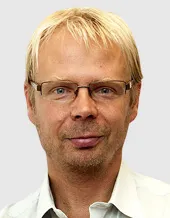
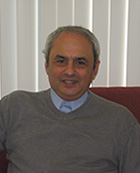
Mauro Bambi is an Associate Professor at Durham University Business School and an Associate Fellow at the Institute of Advanced Studies. His research focuses on Macroeconomic Theory, Endogenous Growth, Habit Formation, and Behavioral Economics. He earned his PhD from the European University Institute (2007) and held positions at ETH Zurich and the University of York. He directs the Centre for Macroeconomic Policy (CEMAP) and has been recognized with the 2008 Italian Association of Applied Mathematics award for his PhD thesis. Education: PhD in Economics (European University Institute, 2007); Postdoctoral Fellowships at Université Catholique de Louvain (Belgium) and ETH Zurich (Switzerland). Research Interests: Macroeconomic Theory and Policy Design Endogenous Growth and Fluctuations Habit Formation in Economic Models Behavioral Economic Preferences Mathematical Methods in Macroeconomics Key Contributions: His work on habit formation models, time-to-build frameworks, and policy design has influenced macroeconomic theory. Recent studies analyze post-COVID demand shifts and pandemic economic impacts. Awards: 2008 Graduate Prize for Best PhD Thesis (Italian Association of Applied Mathematics). Advising and Leadership: Supervised PhD students like Federico Bertoni and Xinyi Xu. Directed CEMAP from 2019–2022, fostering macroeconomic policy research. Active in interdisciplinary collaborations at the Institute of Advanced Studies. Labs/Teams: Leader of CEMAP, collaborating with global institutions on macroeconomic policy analysis.
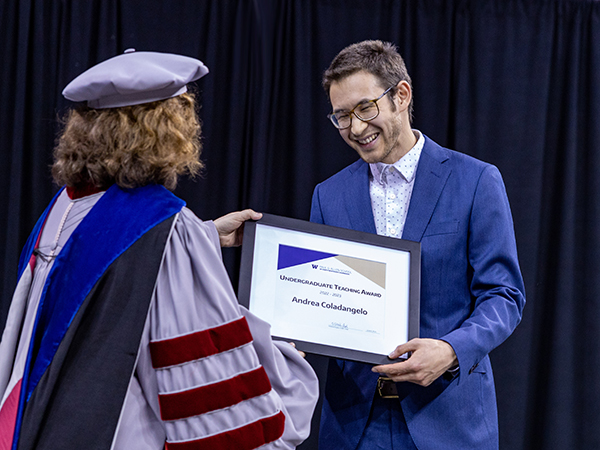
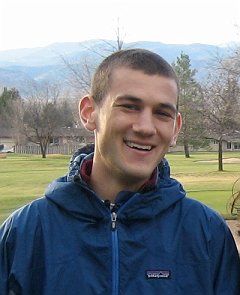
Andrea Coladangelo is an Assistant Professor at the Allen School of Computer Science & Engineering , University of Washington , co-leading the Quantum group and contributing to the Theory and Crypto groups. He coordinates the NSF-funded Quantum@UW REU program , fostering undergraduate research in quantum information. Previously, he was a postdoctoral researcher at UC Berkeley and the Simons Institute , advised by Umesh Vazirani , following a PhD in Computer Science at Caltech under Thomas Vidick . His academic journey began with a B.A. in Mathematics from Oxford and a Master in Mathematics from Cambridge . He co-founded qBraid , a platform for quantum computing education. Research Interests : Andrea explores the intersection of quantum computation and cryptography , focusing on foundational questions in entanglement , quantum correlations , and quantum learning theory . His work investigates quantum pseudorandomness , device-independent security , quantum algorithms , and quantum copy-protection , often leveraging computational assumptions to bridge quantum information theory with cryptographic applications. Scientific Awards : 2025 Google Research Scholar Program Award in Quantum Computing 2023 CSE Undergraduate Teaching Award for his course on quantum computation 2019 Best Student Paper Award at QIP Teaching & Outreach : Andrea designed and taught CSE 434: Intro to Quantum Computation (Spring 2023, 2024, 2025), CSE 534: Quantum Information and Computation (Autumn 2023), and CSE 599C: Quantum Learning Theory (Winter 2025). He also delivered lectures at the 22nd Bellairs Crypto Workshop (2024) and led a quantum programming tutorial using qBraid . Labs & Teams : As co-leader of the Quantum group at the Allen School, he collaborates with researchers in Theory and Crypto , advancing quantum computing through interdisciplinary projects and educational initiatives.
Nate Foster is a Professor of Computer Science at Cornell University and currently serves as the Associate Dean for Research in the Ann S. Bowers College of Computing and Information Science. He is also a Visiting Researcher at Jane Street and served as a Visiting Professor at École Polytechnique Fédérale de Lausanne during the 2023-24 academic year. His research uses ideas from programming languages to solve problems in networking, databases, and security. BA in Computer Science, Williams College (2001) MPhil in History and Philosophy of Science, University of Cambridge (2008, all work completed in 2003) PhD in Computer and Information Science, University of Pennsylvania (2009) Foster's research focuses on developing languages and tools that make it easy for programmers to build secure and reliable systems. His current work centers on the design and implementation of languages and tools for programmable networks, particularly using the P4 language. His past work includes bidirectional languages (also known as 'lenses'), database query languages, data provenance, type systems, mechanized proof, and formal semantics. His research group at Cornell has made significant contributions to network verification, software-defined networking, and formal foundations for programmable data planes. Analysis of Foster's recent publications reveals a strong focus on network verification and programming language foundations for networking. His work consistently applies formal methods to practical networking problems, with a particular emphasis on the NetKAT and P4 languages. Over the past five years, his research has evolved toward more complex network verification techniques, including infinite state verification, active learning of network models, and dependently-typed approaches to network programming. His work bridges theoretical computer science with practical networking systems, making formal methods accessible to network engineers. ACM Fellow (2025) ACM SIGPLAN Robin Milner Award (2023) ACM SIGCOMM Rising Star Award (2018) NSF CAREER Award (2013) Alfred P. Sloan Fellowship (2012) Multiple distinguished paper awards across top conferences including POPL, PLDI, and SIGCOMM Foster has advised numerous PhD and Master's students who have gone on to prominent positions in both industry and academia, with many continuing work in programming languages and networking. He has led multiple significant research grants including an NSF CAREER Award and has been involved in the P4 Language Consortium, serving as Chair of the P4 Language Governing Board. His work has been supported by various organizations including NSF, DARPA, and industry partners like Intel and Jane Street. Foster is also active in the programming languages research community, serving on numerous program committees and as Vice Chair of DARPA's Information Science and Technology (ISAT) study group. Foster leads a vibrant research group at Cornell focused on programming languages for networks, with collaborators from academia and industry. His group has developed several influential tools and frameworks including NetKAT, Petr4, and KATch. They maintain strong connections with the P4 community and work closely with industry partners to ensure their research has practical impact on real-world networking systems.
Kenneth McLaughlin is the Evelyn and John G. Phillips Distinguished Chair in Mathematics at Tulane University's School of Science & Engineering. He holds a Ph.D. and B.A. in Mathematics from New York University (1994 and 1989). Prior to Tulane, he served as faculty at the University of North Carolina, Chapel Hill, the University of Arizona, Universidade Federal de Brasília, and Colorado State University, where he also held leadership roles as Department Head and Chair. His research focuses on integrability, applying techniques across mathematics to study complex systems and phenomena. He has held visiting positions at institutions worldwide, including France, Italy, Brazil, Belgium, and the UK. McLaughlin’s research spans integrable systems, nonlinear dynamics, and asymptotic analysis. His work often involves the Riemann-Hilbert problem approach, orthogonal polynomials, and random matrix theory. Notable contributions include studies on soliton gases, the KdV equation, and universality in quantum operator dynamics. His recent articles explore topics such as asymptotic behavior of polynomials, soliton gas condensation, and hydrodynamic limits in integrable systems. McLaughlin’s academic career is marked by interdisciplinary collaboration and international research engagement.
Dr. Michael Mühlebach is a Lecturer at the Department of Information Technology and Electrical Engineering, ETH Zurich, and affiliated with the Max Planck Institute for Intelligent Systems in Tübingen, Germany. He holds a Bachelor's (2010) and Master's (2013) from ETH Zurich, recognized with awards for academic excellence in Robotics, Systems, and Control. His research focuses on multibody dynamics, nonlinear system control, and model predictive control, with applications in robotics and aerospace systems. His work spans theoretical advancements in variational integrators and practical implementations in systems like the Cubli (a reaction wheel-based 3D inverted pendulum) and flying platforms for ducted fan actuation. Publications highlight contributions to model predictive control schemes with stability guarantees, nonlinear analysis, and distributed event-based state estimation. Key awards include the Outstanding D-MAVT Bachelor Award and Willi-Studer Prize. His research integrates control theory with real-world applications, emphasizing both foundational mathematics and engineering implementations. No grants or lab affiliations are explicitly listed in the provided text.
Meng Cheng is an Assistant Professor of Physics at Yale University, specializing in condensed matter theory. He holds a B.S. from Nanjing University (2008) and a Ph.D. in Condensed Matter Theory from the University of Maryland (2013). After a postdoctoral position at Microsoft Research Station Q (2013–2016), he joined Yale in 2017. His research focuses on quantum criticality, fractonic phases, and symmetric topological phases, with a particular emphasis on classification and characterization of exotic quantum matter. He has received prestigious awards including the NSF CAREER Award (2019) and the Alfred P. Sloan Fellowship (2019). Key research interests include topological superconductivity, global symmetry interactions, and applications in quantum information. His work bridges theoretical frameworks with experimental implications, exploring topics like Wilson loop operators, disorder operators, and entanglement entropy in gapless systems. He has contributed to advancements in understanding symmetry-enriched topological phases and their surface topological order. Publications span high-impact journals and cover topics such as fractionalization in electronic insulators, quantum Hall effects, and topological stabilizer models. His talks highlight interdisciplinary approaches, including seminars at the Perimeter Institute and Université de Montréal on fractonic topological phases and infinite-component Chern-Simons theories. Awards and grants underscore his contributions to advancing theoretical physics, with a focus on fostering innovation in quantum materials and computational methods. Teaching and mentorship activities further his commitment to education within the Yale Physics Department.
Margaret P. Chapman is an Assistant Professor in the Department of Electrical and Computer Engineering at the University of Toronto's Faculty of Applied Science and Engineering. She leads the DATA Lab (Decision Analysis for Trustworthy Autonomy), focusing on risk-averse and stochastic control theory with applications to environmental and human health. Education: B.S. and M.S. in Mechanical Engineering from Stanford University (2012, 2014), Ph.D. in Electrical Engineering and Computer Sciences from UC Berkeley (2020, advised by Claire Tomlin) Her research bridges robust and stochastic optimal control via risk measure theory, emphasizing safety-critical applications in healthcare and sustainable cities. Key challenges include scalable risk-sensitive control methods, integrating physics-based and data-driven models for safety analysis, and promoting technologies that enhance planetary and human well-being. Recent publications focus on risk-averse autonomous systems, CVaR-based safety analysis, and multi-time-scale modeling for cancer treatment. She has advised students in both graduate and undergraduate research roles, including NSERC awardees and thesis participants. Awards: US National Science Foundation Graduate Research Fellowship, Berkeley Fellowship, Terman Engineering Scholastic Award, Leon O. Chua Award She teaches courses like ECE 557 (Linear Control Theory) and ECE 1643 (Risk-Averse Control with Learning). Her invited talks span institutions such as MIT, Princeton, and Georgia Tech, highlighting risk-sensitive analysis and control for trustworthy autonomy.
Cezary Kaliszyk is a Professor in Theoretical Computer Science at the University of Melbourne, previously affiliated with the University of Innsbruck. He is actively involved in research and leadership in formal methods, automated reasoning, and machine learning for theorem proving. Research Interests: Automated Reasoning and Interactive Theorem Proving Formalized Mathematics and Proof Automation Machine Learning for Logic and Theorem Proving Integration of AI with Proof Assistants (Coq, Isabelle) Dependent Type Theory and Higher-Order Logic His recent publications (2023–2025) span topics in dependently-typed logic, learning for proof guidance, formalization of surreal numbers, and blockchain-based formal methods. The works consistently bridge formal logic with machine learning, emphasizing automation, explainability, and cross-system integration. Scientific Leadership and Projects: Principal Investigator, ERC project FormalWeb3 Lead Developer, CoqHammer , Tactician , ProofWeb WG5 Leader, COST Action EuroProofNet (until 2024) Contributor to HOL(y)Hammer , Isabelle Enigma He supervises multiple PhD students and has mentored several graduates in formal methods and AI. He teaches courses in theoretical computer science, logic, and machine learning. There are no listed awards in the provided data, but his extensive publication record and project leadership indicate significant recognition in the field. Labs and Research Groups: He leads a research group focused on formal methods and learning-based reasoning, collaborating internationally on projects involving proof automation, formal libraries, and semantic technologies.
George Yin is a Professor in the Department of Mathematics at the University of Connecticut (since 2020). Previously, he held the position of Distinguished Professor at Wayne State University (2017–2020) and has been a faculty member there since 1988. He earned his Ph.D. in Applied Mathematics from Brown University in 1987, along with M.S. degrees in Applied Mathematics and Electrical Engineering, and a B.S. in Mathematics from the University of Delaware (1983). His research focuses on stochastic optimization, control theory, stochastic systems, and numerical methods, with applications to biology, finance, and engineering. He has held editorial roles at journals such as SIAM Journal on Control and Optimization and has received prestigious awards including SIAM Fellow (2015), IEEE Fellow (2002), and IFAC Fellow (2014–2017). Key funding includes continuous NSF support since 1989, grants from the Air Force Office of Scientific Research, and others. His work spans theoretical advancements in stochastic systems and practical applications in energy systems, control engineering, and data science. He has advised numerous students and maintains active collaborations internationally. Labs/Teams: Goldenson Center for Actuarial Research, Quantitative Learning Center. Grants: NSF, AFOSR, ARO, NSA, and multiple institutional grants.
Giancarlo Ferrari Trecate is an Adjunct Professor at the Swiss Federal Institute of Technology Lausanne (EPFL) , affiliated with the School of Engineering and the SCI-STI-GFT department. He is also involved in teaching and research through the STI-SGM and EDRS-ENS programs. Research Interests : Automatic control, state estimation, system identification, machine learning, distributed control, hybrid systems, microgrids, biochemical networks, voltage and frequency stabilization in AC/DC microgrids. Publications Trends : His recent work focuses on integrating Neural ODEs and Hamiltonian structures for stable control systems, regret minimization in distributed control, and robust state estimation under uncertainty. Applications include autonomous mobility-on-demand , power grid optimization , and secure microgrid control against cyber-attacks. Scientific Awards : No specific awards mentioned in the provided data. Teaching & Advising : He supervises PhD students in mechanical engineering and teaches courses on Multivariable control and Networked control systems . His lab, DECODE , specializes in Dependable Control and Decision systems.
Mingsheng Ying is a Distinguished Professor and Research Director of the Centre for Quantum Computation and Intelligent Systems (QCIS) at the Faculty of Engineering and Information Technology, University of Technology Sydney, Australia. He also holds the position of Cheung Kong Professor at the State Key Laboratory of Intelligent Technology and Systems, Department of Computer Science and Technology, Tsinghua University, Beijing, China. Professor Ying graduated from the Department of Mathematics, Fuzhou Teachers College, Jiangxi, China, in 1981. His primary research interests span quantum computation (particularly quantum programming and model-checking quantum systems), programming theory and formal methods, and the foundations of artificial intelligence (focusing on logic and uncertainty). As an author of the books "Foundations of Quantum Programming" (Elsevier - Morgan Kaufmann 2016) and "Topology in Process Calculus: Approximate Correctness and Infinite Evolution of Concurrent Programs" (Springer-Verlag, 2001), he has published over 100 papers in top international journals and conferences. His recent research publications demonstrate a strong focus on quantum programming languages, verification techniques for quantum systems, and the theoretical foundations of quantum computation. The trend in his work shows increasing emphasis on formal verification methods for quantum systems, particularly model-checking techniques for quantum Markov chains and quantum processes. His research bridges theoretical computer science with quantum information theory, creating frameworks for reliable quantum software development. Editorial Board, Artificial Intelligence, Elsevier, Amsterdam Editorial Board, Fuzzy Sets and Systems, Elsevier, Amsterdam Vice President, International Fuzzy Systems Association (elected in 2005) Program Chair, IFSA 2005, World Congress of International Fuzzy Systems Association Chairman, Chinese Association of Fuzzy Systems and Mathematics Professor Ying has secured significant research funding including multiple Australian Research Council Discovery Projects such as "Model-checking quantum Markov chains: towards verification techniques for quantum cryptographic systems" (2013-2015) and "Process algebra approach to distributed quantum computation and secure quantum communication" (2011-2013). His work has also received funding from the National Natural Science Foundation of China and Tsinghua University. At QCIS, he leads research in quantum software theory and methodology, with applications in quantum cryptography and secure communication.
Ravid Shwartz-Ziv is an Assistant Professor and Faculty Fellow at NYU's Center for Data Science, with a dual role as Senior Research Scientist at Wand AI. His research bridges theoretical foundations and practical applications in artificial intelligence, focusing on Large Language Models (LLMs), information theory, and neural network interpretability. Ph.D. in Computational Neuroscience, Hebrew University of Jerusalem (2021) B.Sc. in Computer Science and Computational Biology, Hebrew University of Jerusalem (2014) His research spans: Developing min-p sampling for LLM text generation Preventing representation collapse in Transformers Creating contamination-free LLM benchmarks like LiveBench Advancing information-theoretic frameworks for neural networks Exploring representation learning and model adaptation Recent publications demonstrate expertise in LLM efficiency, self-supervised learning, and multi-agent systems. Notable awards include the Google PhD Fellowship, Moore-Sloan Fellowship, and multiple best paper recognitions. He has led research initiatives at Intel and Google AI, focusing on neural network compression, XGBoost comparisons for tabular data, and innovative benchmarking frameworks.
Gerald Voorhees is an Associate Professor and Chair of Communication Arts at the University of Waterloo. He holds a Ph.D. from The University of Iowa (2008) and a B.S. in Speech Communication from the University of Texas at Austin, where he was a Senior Fellow in the Honors Program of the College of Communication. His research explores games and new media as platforms for identity and cultural construction, with a focus on public discourse around gaming and rhetorics of race and ethnicity. Dr. Voorhees has held significant academic roles, including Vice-President of the Canadian Game Studies Association and former membership on the Executive Board of the Digital Games Research Association. He previously taught at Oregon State University and developed the Game and Interactive Media Design track at High Point University. His teaching spans communication theory, media studies, and game design, with courses such as DAC 204 (Game Design) and COMMST 430 (Communication and Social Justice). His research integrates critical theory with digital media analysis, examining topics like gender representation in games, neoliberal masculinity in esports, and racial dynamics in gaming cultures. He has co-edited influential volumes such as Masculinities in Play (2018) and Feminisms in Play (2018), contributing to foundational discussions in game studies. His recent work addresses intersectional feminism in gaming and the cultural implications of shooter game genres. Dr. Voorhees actively engages with professional organizations and academic publishing, serving as co-editor of the Approaches to Game Studies book series (Bloomsbury) and managing editor of the Gender in Play trilogy (Palgrave Macmillan). His scholarship bridges theoretical frameworks with empirical analysis, shaping interdisciplinary dialogue on digital media's societal impact.
Örs Legeza is a physicist and scientific advisor at the Wigner Research Centre for Physics of the Hungarian Academy of Sciences in Budapest, leading the Strongly Correlated Systems Research Group. He holds a visiting professorship at Philipps University Marburg, Germany, and has held fellowships at institutions like ETH Zurich and LMU Munich. His research focuses on developing tensor network state (TNS) methods for strongly correlated quantum systems, with applications in condensed matter physics, quantum chemistry, and nuclear structure calculations. Education: PhD from Budapest University of Technology and Economics (1997). He has collaborated with European institutions such as FAU Erlangen-Nuremberg and has been an Alexander von Humboldt awardee. His work bridges quantum information theory and computational mathematics to advance simulations of complex quantum systems. Research interests include quantum phase transitions, magnetic properties in solids, and ultracold atomic systems. His methods push computational boundaries for larger systems, integrating techniques like density matrix renormalization group (DMRG) and matrix product states (MPS). Notable awards include the 2021 Academy Prize and 2018 Humboldt Research Award. Recent articles explore quantum crystal imaging, tensor network algorithms, and nuclear structure calculations. His work emphasizes interdisciplinary approaches to quantum many-body problems.
Eugene Feinberg is a Distinguished Professor in the Department of Applied Mathematics and Statistics at Stony Brook University's College of Engineering and Applied Sciences. He is renowned for his extensive contributions to Markov Decision Processes (MDPs), stochastic optimization, and inventory control. Research Interests: His work spans theoretical and applied aspects of Markov Decision Processes , stochastic optimization , inventory control , healthcare decision-making , and machine learning . He has particularly focused on solving complex decision-making problems under uncertainty, with applications ranging from operations research to medical decision-making. Scientific Awards: He has been honored with the title of Distinguished Professor , recognizing his outstanding contributions to his field. Advising and Grants: While specific details on students and grants are not provided, his prolific publication record and faculty status suggest active involvement in advising and securing research funding. Contact and Resources: His university webpage can be accessed at http://www.ams.sunysb.edu/~feinberg/ , and his Google Scholar profile is available at https://scholar.google.com/citations?user=LLt--pgAAAAJ&hl=en .