Prof. Vladimir Krasnov is a leading researcher in Experimental Condensed Matter Physics at Stockholm University , focusing on mesoscopic superconductivity, Josephson junctions, and nanoscale quantum phenomena. He heads the Experimental Condensed Matter Physics Group since 2005. Department: Department of Physics Lab: EKMF Lab (SU-KTH collaboration) Key Methodologies: Pulsed laser deposition, FIB nanofabrication, cryogenic measurements (0.25-300 K), THz spectroscopy Research Themes: His work bridges fundamental superconductivity studies (high-Tc cuprates, iron-pnictides) with applied quantum electronics. Notable contributions include Developing vortex-based cryogenic memory Controllable spin-triplet supercurrents in magnetic junctions THz emission from intrinsic Josephson stacks Quantum phase transitions via electrical doping Magnetic field effects on mesoscopic systems Scientific Trends: Analysis of 15 recent publications reveals strong emphasis on Josephson vortex dynamics, superconducting/ferromagnetic hybrid systems, THz applications, and non-equilibrium phenomena in quantum circuits. Facilities: Utilizes Nano-Fab clean-room for sample engineering and Low-T lab for high-field (17T), cryogenic experiments.
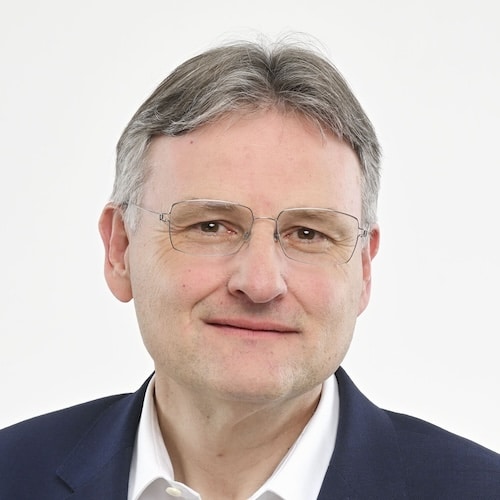
Andreas Kugi is the Scientific Director at the AIT Austrian Institute of Technology and a full professor of Complex Dynamical Systems at TU Wien (Vienna University of Technology) in the Faculty of Electrical Engineering and Information Technology, Institute of Automation and Control. He has held significant academic and leadership roles across Europe, including professorships at Saarland University and offers from TU Dresden and KIT. His research focuses on the modeling, control, and optimization of complex dynamical systems , with strong applications in mechatronics, robotics, and industrial automation . He has led major research centers such as the Christian Doppler Laboratory for Model-Based Process Control in the Steel Industry and the Center for Vision, Automation & Control at AIT. His work bridges theoretical control design and real-world industrial implementation. The recent publications reflect a consistent focus on nonlinear, hybrid, and distributed parameter systems , with applications in robotics, manufacturing, energy, and process industries. His research integrates advanced control theory with practical engineering challenges, emphasizing real-time optimization, robustness, and system efficiency. Scientific Awards: Mechatronic Systems Outstanding Investigator Award (IFAC, 2022) Goldene Stefan-Ehrenmedaille (OVE, 2023) 16 best paper awards Andreas Kugi has supervised over 50 completed PhD dissertations and has been deeply involved in research leadership, including serving as Editor-in-Chief of Control Engineering Practice (2010–2017) and Vice President of the OVE Austrian Electrotechnical Association (2017–2023). He has secured and led numerous research grants, particularly through industrial collaborations in automation and process control. He leads and contributes to major research initiatives, including the Center for Vision, Automation & Control at AIT and the Christian Doppler Laboratory , fostering interdisciplinary teams focused on industrial digitalization and smart systems.
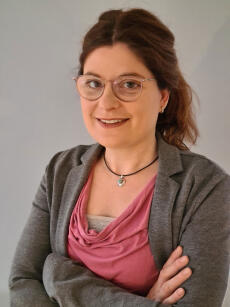
Professor Anne Remke leads the safety-critical systems group at the Faculty of Mathematics and Computer Science at Westfälische Wilhelms-Universität Münster since October 2014. She is also affiliated with the Design and Analysis of Communication Systems group at the University of Twente, where she served as assistant professor from June 2010 and became associate professor in March 2016. Her research focuses on dependability and security in critical infrastructures, particularly electrical power systems and telecommunication networks. Her educational background includes a PhD (2008) and MSc (2004) in Computer Science from the University of Twente and RWTH Aachen respectively. Her doctoral research focused on 'Model Checking Structured Infinite Markov Chains,' for which she publicly defended her thesis in June 2008. Professor Remke's research interests center on cyber-physical systems, with particular focus on evaluation of charging strategies for local energy storage in smart homes and security of control networks (SCADA) in smart grids. Her work bridges theoretical model checking techniques with practical applications in critical infrastructure protection. She has made significant contributions to the analysis of hybrid Petri nets, stochastic models, and the development of tools for dependability evaluation. Her recent publications demonstrate a strong trend toward integrating machine learning with formal verification methods for cyber-physical systems. The research spans stochastic hybrid systems, reachability analysis, and security evaluation of smart grid infrastructures, showing consistent growth in both theoretical foundations and practical applications of dependability analysis. Veni award from Dutch Science foundation (NWO) for 'Counting on a reliable water supply' GI/ITG MMB prize for best diploma thesis in computer and communication systems Best Paper Award at Valuetools 2023 conference Best Repeatability and Artifact Evaluation Award at QEST21 Teaching award from Fachschaft FB10 (2019) Professor Remke has successfully secured multiple research grants including the DFG project 'RealyST: Reachability Analysis for Stochastic Hybrid Systems' in collaboration with RWTH Aachen. She has supervised numerous students including Katharina Sichma, Pauline Blohm, Joanna Delicaris, Verena Menzel, Mathis Niehage, Jonas Stübbe, and Lisa Willemsen. Her research group actively participates in international collaborations and standardization efforts in critical infrastructure security. The safety-critical systems group maintains several research tools including HYPEG (for simulation and analysis of hybrid Petri nets), TimeNET (a GUI for modeling hybrid Petri nets), and a Smart Neighbourhood Simulation Tool for community energy storage and trading. These tools support their research in modeling and evaluating complex critical infrastructures through both analytical methods and simulation techniques.
David A. Goldberg is an Associate Professor and Director of Undergraduate Studies in the Operations Research and Information Engineering (ORIE) department at Cornell University's College of Engineering. His research bridges theoretical probability with practical applications in operations management, inventory systems, and queueing networks. Education: Ph.D. in Operations Research, MIT, 2011 B.S. in Computer Science, minors in Applied Math and Industrial Engineering / Operations Research, Columbia University SEAS, 2006 Professor Goldberg's research focuses on advancing theoretical understanding of stochastic systems while developing practical insights for operations management. His work spans applied probability, stochastic processes, queueing theory, inventory models, distributionally robust optimization, and combinatorial optimization. He has made significant contributions to understanding the behavior of complex systems under uncertainty, particularly in many-server queues and inventory management under demand variability. His publications reveal strong trends in asymptotic analysis of stochastic systems, particularly in the Halfin-Whitt regime for queueing systems and in inventory models with large lead times. His work consistently bridges theoretical probability with practical operations management applications, with a strong emphasis on developing models that account for real-world uncertainties while maintaining mathematical tractability. His recent work shows increasing focus on distributionally robust approaches that require minimal assumptions about underlying distributions. Scientific Awards: INFORMS Applied Probability Society Best Publication Award (2019) INFORMS Nicholson student paper competition first place (2019) INFORMS Nicholson student paper competition first place (2015) INFORMS Junior Faculty Interest Group paper competition second place (2015) Professor Goldberg has successfully advised multiple Ph.D. students who have gone on to prestigious academic and industry positions. His research is supported by significant NSF funding, including a CAREER award and a grant for stochastic comparison approaches to parallel server queues. He serves on editorial boards for leading journals including Operations Research and Stochastic Models, and has held leadership positions in the INFORMS Applied Probability Society including Vice-chair (2020-2022) and Council member (2015-2017).
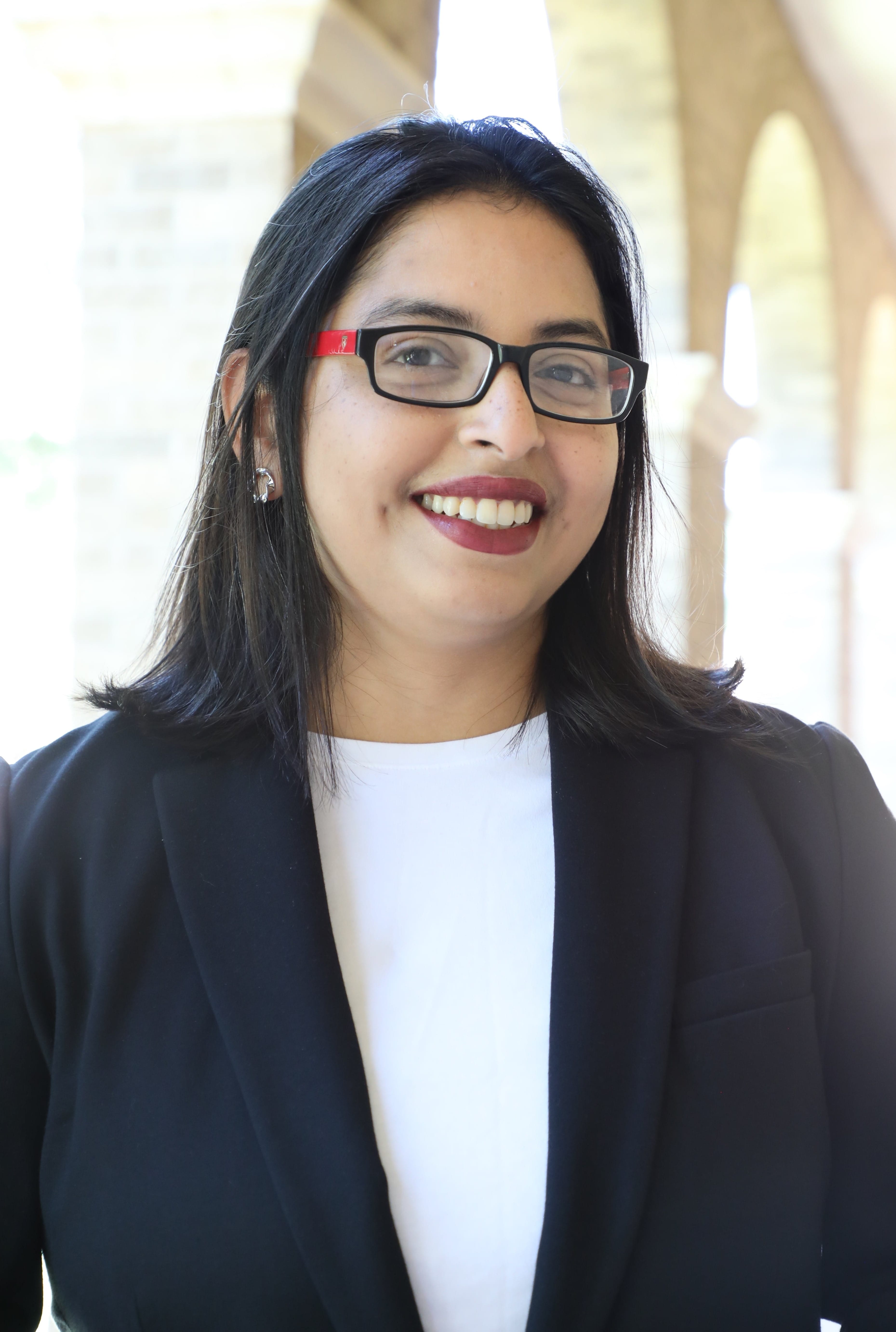
Dr. Tanushree Roy serves as an Assistant Professor in the Department of Mechanical Engineering at Texas Tech University's Whitacre College of Engineering and is an Affiliate Faculty member at the National Wind Institute. Her research pioneers resilient human-centric smart city infrastructures through the integration of control theory, mathematical modeling, and machine learning to address critical challenges in safety, security, and resource optimization for urban systems. Her academic foundation includes: Ph.D. in Mechanical Engineering from The Pennsylvania State University (2022) M.S. in Mathematics from University of Central Florida (2015) M.E. in Electrical Engineering from Indian Institutes of Engineering Science and Technology, India (2011) B.Tech in Applied Electronics and Instrumentation from Maulana Abul Kalam Azad University of Technology, India (2009) Dr. Roy's research centers on cybersecurity , fault diagnostics , and socio-technical systems with specialized applications in smart transportation networks and battery energy storage systems. She develops innovative frameworks that merge human-centric sensing with technical measurements to combat cyberattacks and physical faults in cyber-physical-social systems, emphasizing safety-critical resilience for urban citizens. Her methodology uniquely combines model-based control with data-driven machine learning to address challenges like social data integrity, human behavior modeling, and multi-scale anomaly characterization. Analysis of her 15 most recent publications (2021-2025) reveals dominant trends in cyberattack detection for connected vehicles, thermal fault tolerance in battery systems, and socio-technical traffic modeling. Key technical approaches include Koopman operator theory for secure estimation, control barrier functions for safety certification, and redundancy-based data fusion techniques. These works consistently bridge theoretical control systems with practical smart city implementation, demonstrating strong interdisciplinary connections between transportation engineering, energy systems, and cybersecurity. No scientific awards are documented in the provided information. Dr. Roy actively mentors three PhD students—Sanchita Ghosh (since 2022), Faysal Ahamed, and Soumyoraj Mallick (both since 2024)—alongside undergraduate researcher Mercedes Hernandez. Her research is executed through the Smart Human-centric Automation Resilience (SHARE) Lab, which has secured projects including the secure autonomous mobility testbed and participates in workforce development via Texas Tech's Engineering Research Internship Experience (ERIE) program for high school students. The SHARE Lab operates at the intersection of transportation and energy systems, maintaining two primary research thrusts: resilient human-centric transportation networks and safeguarding battery energy storage infrastructure. Current projects include SUMO-based cyberattack validation for connected vehicle platoons, self-learning voltage estimation under sensor attacks, and thermal fault-tolerant battery management. The lab maintains active collaborations with national conferences (ACC, CCTA) and industry partners to advance real-world implementation of resilient smart city technologies.
Bernard Kirtman is a Distinguished Professor in the Department of Chemistry & Biochemistry at the University of California, Santa Barbara (UCSB). He holds affiliations within the College of Letters and Science. His research focuses on theoretical and computational chemistry, particularly structural and spectroscopic properties of molecules and materials, including nano-materials, vibrational effects on optical properties, and density functional theory applications. Education: Dr. Kirtman earned his Ph.D. in Physical Chemistry from Harvard University in 1961. He completed postdoctoral studies at the University of Washington and joined UCSB in 1965, where he has remained ever since. Research Interests: His work spans nano-material fragment analysis, vibration-optical property interactions, infinite periodic systems' response to fields, density functional theory challenges, and doping effects on material properties. These areas reflect his expertise in bridging theoretical models with real-world material behavior. Publications: His recent works (2005–2010) emphasize computational methods in material science, with contributions to Phys. Rev. B , J. Chem. Phys. , and Solid State Comm. . These publications highlight advancements in electronic structure calculations and material property predictions. Awards: He received the 1983 UCSB Distinguished Teaching Award and the 2005 ICCMSE Prize for Theoretical and Computational Chemistry. A 2009 symposium in Rhodes, Greece, honored his contributions. Advising & Grants: While specific grants are not listed, his decades-long career at UCSB indicates sustained research support. His advising legacy includes mentorship reflected in collaborative publications with students and colleagues. Labs/Teams: Active within the Chemistry & Biochemistry Department, his work likely integrates with computational and theoretical research groups focused on materials and quantum chemistry.
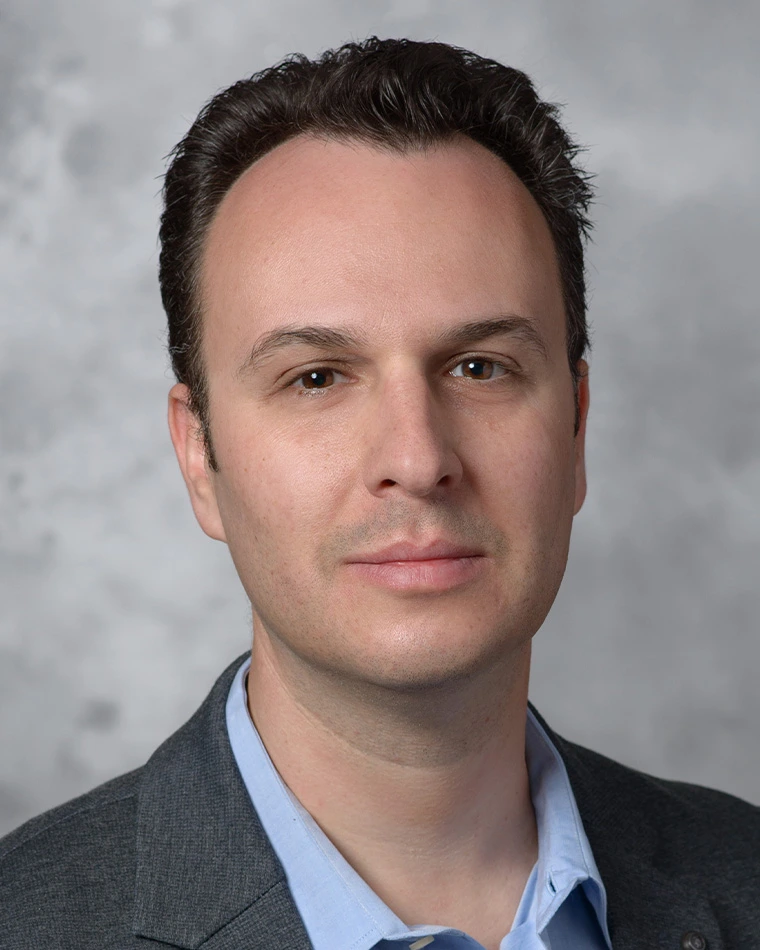
Christos Gagatsos is an Assistant Professor in the Department of Electrical and Computer Engineering and a member of the Wyant College of Optical Sciences at the University of Arizona. He joined the university in 2018 as a postdoctoral research associate, was promoted to Assistant Research Professor in 2020, and became an Assistant Professor in ECE in 2023. Prior to this, he was a postdoctoral research fellow at the University of Warwick, UK. His educational background includes: PhD in Engineering Sciences and Technology, Université Libre de Bruxelles and École Polytechnique, Belgium (2014) MSc in Physics of Elementary Particles, University of Athens, Greece (2010) BSc in Physics, University of Athens, Greece (2007) Christos Gagatsos's research lies at the intersection of quantum information, quantum sensing, and quantum communications, with a strong theoretical focus on bosonic systems. His work explores fundamental concepts such as entanglement, non-Gaussianity, and Bayesian estimation in quantum systems. He is particularly interested in pushing the limits of quantum-enhanced sensing, including optical phase and transmissivity estimation, and in developing theoretical frameworks for quantum detection and discrimination. His teaching interests include quantum information, quantum optics, probability theory, and applied mathematics. The recent trend in his publications reflects a deep engagement with Bayesian methods in quantum parameter estimation, quantum change point detection, and the characterization of quantum states through measures like Wigner entropy. His work spans both fundamental quantum theory and practical applications in sensing and communication, often bridging classical and quantum approaches. He advises several graduate students across departments, including Boyu Zhou (Physics), Ali Cox (Physics), Qipeng Qian (Mathematics), and Leo Bia (Optical Sciences). While no formal scientific awards are listed in the provided text, editorial recognition such as an Editor’s Pick in APL Quantum highlights the impact of his research. Christos Gagatsos leads a research group focused on theoretical quantum information, actively collaborating with quantum research groups across the University of Arizona, Arizona State University, and international institutions in the USA and Europe. His lab investigates quantum sensing, communications, and foundational aspects of quantum mechanics using bosonic platforms, fostering a collaborative and interdisciplinary research environment.
Gabriel Uzquiano is a Professor of Philosophy at the University of Southern California (USC), holding tenure in the Department of Philosophy. His academic journey includes roles as Lecturer at the University of Oxford (2006–2011), where he was also a Fellow and Tutor at Pembroke College. Previously, he served as Associate Professor at The Ohio State University (2005–2006) and Assistant Professor at the University of Rochester (1999–2005). He earned his Ph.D. from MIT’s Department of Linguistics and Philosophy in 1999. Uzquiano’s research focuses on Philosophical Logic , Philosophy of Logic and Mathematics , Metaphysics , and Philosophy of Language . His work explores topics such as mereology, modal systems, semantic paradoxes, and the foundations of mathematics. Notable contributions include addressing Russell’s paradox, analyzing plural quantification, and developing frameworks for modal metaphysics. His publications span prestigious journals like Philosophical Studies , Journal of Philosophical Logic , and Mind , with a monograph The Mereology of Classes (Cambridge, 2024) and co-edited volume Absolute Generality (Oxford, 2006). His articles often intersect formal logic with metaphysical questions, particularly in resolving paradoxes and clarifying ontological commitments. Uzquiano has held visiting appointments at institutions like the University of St Andrews (2014–2019). His work reflects a rigorous engagement with both technical logic and broader philosophical inquiries, emphasizing the interplay between formal systems and conceptual analysis.
Thomas Jordan is a Lecturer in the ergodic theory group within the Department of Mathematics at the University of Bristol. Previously, he worked as a research assistant at Warwick University and completed his PhD under Mark Pollicott. His research focuses on dimension theory of dynamical systems, particularly examining self-similar and self-affine sets, multifractal analysis, thermodynamic formalism, and Fourier transforms of measures. His primary research interests include: Dimension theory of dynamical systems Self-similar sets and fractals Self-affine sets Multifractal analysis Thermodynamic formalism Fourier transforms of measures Ergodic theory Thomas Jordan's publications reveal a consistent focus on geometric and measure-theoretic aspects of dynamical systems, with particular emphasis on dimensional properties of fractal sets. His work demonstrates strong collaborative relationships with researchers including Mark Pollicott, Michał Rams, Jonathan Fraser, and Henna Koivusalo across numerous publications spanning two decades. He has organized significant academic events including: Projection and Slicing Theorems in Fractal Geometry conference (Bristol, June 2014) Special session of the 2016 BMC on ergodic theory (Bristol, April 2016) Probability, Analysis and Dynamics workshops (2018, 2022) Thermodynamic formalism workshop at ICMS (June 2018) Workshop on affine and overlapping iterated function systems (Bristol, May 2022) Thomas Jordan serves as a key contact for the One Day Ergodic Theory Meetings series, a collaborative effort between multiple UK universities funded by the London Mathematical Society. He teaches first year analysis (Analysis A) and dynamical systems courses at the University of Bristol.
Ramavarapu S Sreenivas is a Professor in the Industrial and Enterprise Systems Engineering department at the University of Illinois at Urbana-Champaign , with research appointments at the Coordinated Science Laboratory (CSL) and the Information Trust Institute (ITI ). He holds a joint affiliation with the Electrical and Computer Engineering department and serves as the Arthur Davis Faculty Scholar since 2016. Ph.D. , Electrical and Computer Engineering, Carnegie Mellon University (1990) M.S.E.E. , Carnegie Mellon University (1987) B.Tech , Electrical Engineering, Indian Institute of Technology Madras (1985) His research focuses on Discrete-Event/Discrete-State (DEDS) systems , applying Coding Theory, Machine Learning, and Information Theory to develop near-optimal supervisory policies for applications in wireless networks, automated manufacturing, and healthcare systems . He leads the Center for Autonomous Construction and Manufacturing at Scale (CACMS) , established in 2023. Recent publications highlight advancements in liveness enforcement in Petri nets , fault-tolerant control , and IoT-based load scheduling . His work bridges theoretical rigor with practical implementations in Distributed Control, Network Coding , and Reinforcement Learning . UIUC Campus Award for Excellence in Graduate and Professional Teaching (2023) Arthur Davis Faculty Scholar (2016) Senior Member, IEEE (2002) James Franklin Sharp Outstanding Teaching Award in Industrial Engineering (2017, 2012) Sreenivas has taught graduate and undergraduate courses in Control Systems, Integer Programming, and Financial Computing since 1992. He co-instructed courses in Health Technology and contributed to the Master of Science in Financial Engineering (MSFE) program, which ranks 4th nationally.
Jürgen Giesl is a Professor at the Teaching and Research Area Computer Science 2 within the Department of Computer Science at RWTH Aachen University , Germany. He leads research in programming languages, formal verification, automated deduction, and term rewriting systems. Research Interests: Automated Termination and Complexity Analysis of Programs Dependency Pairs and Term Rewriting Systems Verification of Probabilistic and Integer Programs Static Analysis and Symbolic Execution Model Checking and Constrained Horn Clauses Development of Automated Tools (AProVE, LoAT) His recent research, reflected in the latest publications, focuses on termination and complexity analysis for probabilistic programs, polynomial loops, and integer programs, using advanced techniques such as dependency pairs, loop acceleration, and semiring semantics. He also contributes to SMT solving and transitive relation learning for infinite-state model checking. Scientific Awards: Best Tool Paper Award at iFM 2017 Silver Medal (Second Best Paper) at SEFM '16 Best Paper Honourable Mention at IJCAR 2024 Best Student Paper Honourable Mention at IJCAR 2024 Advising and Grants: Giesl has supervised numerous PhD and Master’s students, including prominent researchers such as Fabian Frohn, Jens Hensel, Nils Lommen, and Marcel Hark. He leads a large research group focused on automated verification and has contributed extensively to international verification competitions. His work is supported by ongoing research grants and collaborations with leading institutions in formal methods. Labs and Teams: He leads the Programming Languages and Verification research group at RWTH Aachen, which develops and maintains the AProVE and LoAT tools. These tools are central to automated termination and complexity analysis and are regularly submitted to international competitions such as TERMCOMP and VBS.
Alain Oustaloup is a Professor in the AUTOMATIC CONTROL research group at Université de Bordeaux , leading the CRONE team. His work focuses on fractional calculus , system identification , and control theory , with applications spanning thermal systems , epidemiology , and automotive engineering . Expertise : Fractional Order Modeling, CRONE Control, Thermal Diffusion Analysis Key Collaborations : Université de Lorraine, CNRS, STMicroelectronics His research includes fractional differentiation models for continuous-time system identification, non-integer power models for viral spread (e.g., COVID-19 ), and infinite state approaches for complex system representation. Recent publications emphasize thermal modeling and fractional prefilters for MIMO systems. Applications of his work extend to automotive suspensions (CRONE method), battery diagnostics , and medical device modeling . Collaborations with institutions like CRAN (Nancy) and IMS-Bordeaux highlight his interdisciplinary impact.
Dr. John Haslegrave is a Lecturer in Probability at Lancaster University's School of Mathematical Sciences, where he is an active member of both the Probability and Combinatorics research groups. Previously, he held positions at the University of Oxford (working with Peter Keevash), University of Warwick (with Agelos Georgakopoulos), and University of Sheffield (with Hong Liu and Chris Cannings). He completed his PhD at Trinity College, Cambridge under Béla Bollobás. His research focuses on: Random graphs and evolving network models (especially preferential attachment) Interacting particle systems and random walks on graphs Extremal problems in graph/hypergraph theory Percolation theory and geometric probability Combinatorial optimization and graph invariants Analysis of recent publications reveals strong emphasis on probabilistic combinatorics, with frequent exploration of: structural graph properties, asymptotic behavior of stochastic processes, geometric embeddings, and optimization problems. His work consistently bridges discrete mathematics with statistical physics concepts. Dr. Haslegrave welcomes PhD students interested in discrete probability and graph theory, with current supervision interests including preferential attachment models, interacting particle systems, planar percolation, and extremal problems. He teaches undergraduate courses in Graph Theory (MATH326) and Probability (MATH103), and organizes Lancaster's Pure Mathematics Seminar series.
Roman Frigg is Professor of Philosophy at the London School of Economics and Political Science (LSE) , affiliated with the Department of Philosophy, Logic and Scientific Method . He serves as Director of the Centre for Philosophy of Natural and Social Science (CPNSS) and Co-Director of the Centre for the Analysis of the Time Series (CATS) . Holding a PhD from the University of London and MScs in theoretical physics and philosophy from the University of Basel, his research spans philosophy of science , statistical mechanics , and climate modeling . Education : PhD (University of London), MSc (University of Basel: Theoretical Physics, Philosophy) His work addresses foundational questions in statistical mechanics and thermodynamics , including equilibrium theory, entropy interpretation, and relations between Boltzmannian and Gibbsian frameworks. Recent publications focus on probabilistic forecasts in chaotic climate models , culminating in the co-authored book The Fundamentals of Thermodynamics (Springer, 2025). Articles explore topics like the Ergodic Hierarchy , GRW quantum theory , and robustness analysis in climate science. Roman has made significant contributions to reconciling deterministic dynamics with objective probability via Humean interpretations. His collaborations with Charlotte Werndl, Carl Hoefer, and David Lavis have produced key insights into typicality , chaos-randomness relations , and non-equilibrium thermodynamics . Scientific Awards : Friedrich Wilhelm Bessel Research Award (Alexander von Humboldt Foundation) Roman supervises PhD students on topics ranging from scientific representation to quantum mechanics and climate policy uncertainty . His website provides access to his publications and teaching materials.
Toan T. Nguyen is a Professor in the Department of Mathematics at Pennsylvania State University, affiliated with the Eberly College of Science. He holds a Ph.D. from Indiana University (2009). His research focuses on Partial Differential Equations, Mathematical Physics, Fluid Dynamics, and Kinetic Theory, with contributions to boundary layer stability, inviscid limits, and plasma physics. Education: Ph.D. in Mathematics, Indiana University, 2009. Affiliations: Editorial Board member of Kinetic & Related Models and SIAM Journal on Mathematical Analysis. Grants & Support: Recipient of Simons Fellowship (2019), Centennial Fellowship (2018). His work bridges theoretical analysis and applications, including nonlinear wave dynamics, fluid-structure interactions, and quantum kinetic models. He has organized international conferences, such as the VIASM Summer School in Mathematical Physics (2023–2024), and advised Ph.D. students like Chanjin You and Trinh T. Nguyen. Awards: T. Brooke Benjamin Prize (2022), highlighting his contributions to nonlinear waves and Landau damping. His research also explores instabilities in boundary layers and the mathematical foundations of plasma physics. Nguyen collaborates internationally, contributing to journals like the Journal of the American Mathematical Society and Communications in Mathematical Physics. His teaching includes advanced graduate courses on PDEs and kinetic theory.