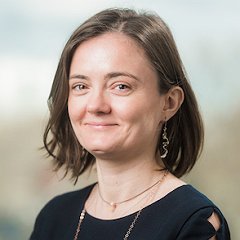
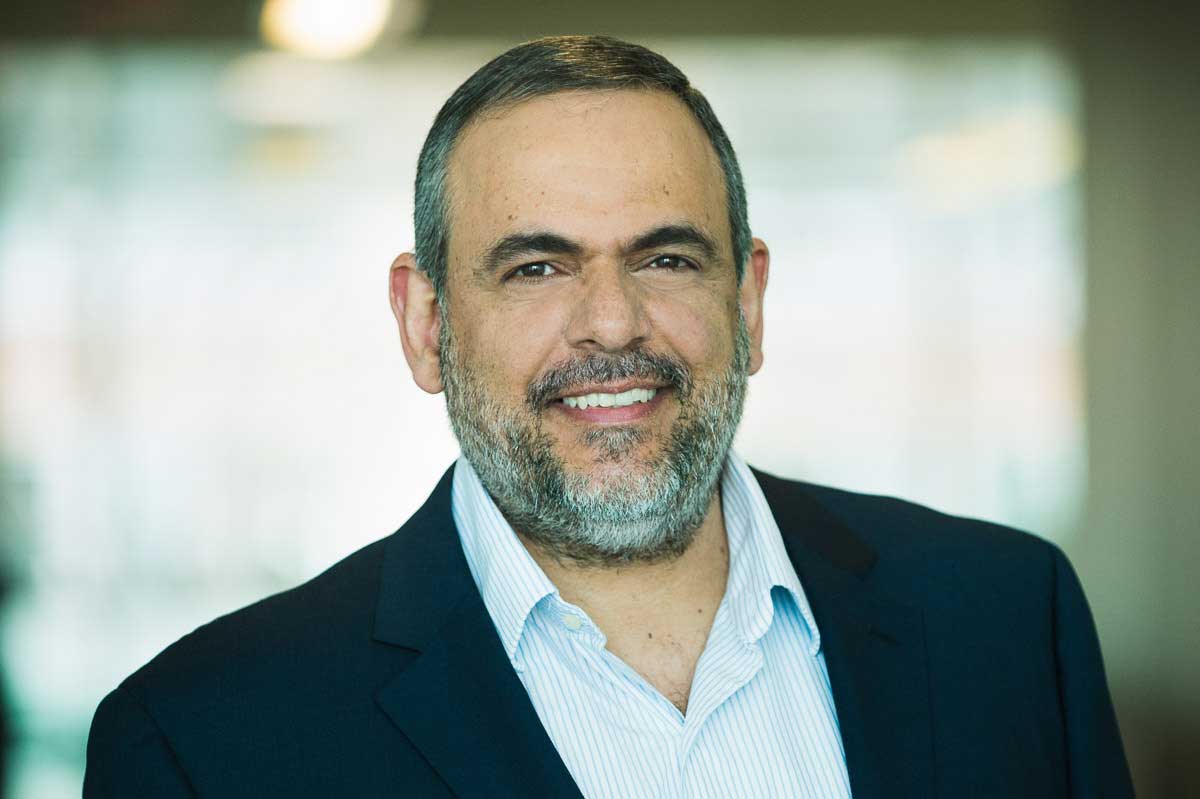
Hiroshi Unno is a Professor at Tohoku University 's Research Institute of Electrical Communication and a Visiting Professor at the National Institute of Informatics. He has served on program committees for major conferences like POPL , PLDI , ICFP , and CAV . Dr. Unno's research focuses on Programming Languages Software Verification Artificial Intelligence Higher-Order Model Checking Refinement Type Systems Temporal Logic His recent work (2023-2025) includes advancements in algebraic effects , probabilistic program verification , and prophecy-based type systems . Key contributions appear in POPL , PLDI , and ICFP journals. Scientific awards include Distinguished Paper Award at POPL 2024 Distinguished Paper Award at POPL 2023 PPL 2014 Best Paper Award He leads development of tools like RCaml , Thrust , and EffCaml for refinement type checking. Current projects involve Kakenhi grants 20H04162 and 25H00446 . Dr. Unno actively contributes to academic communities through Program Committee roles at AAAI, CAV, and SAS Editorial work for IPSJ Transactions Organizing PPL Summer School (2022)
Nate Foster is a Professor of Computer Science at Cornell University and a Visiting Researcher at Jane Street . During 2023-24, he also holds a Visiting Professor position at EPFL in the Data Center Systems Laboratory. His research focuses on Programming Languages and Networking , with significant contributions to formal verification of network data planes and domain-specific language design. Awarded NSF CAREER Award , Sloan Research Fellowship , ACM SIGCOMM Rising Star Award , and ACM SIGPLAN Robin Milner Award Active in program committees for conferences like POPL, PLDI, SPLASH, and ICFP Research Trends : His recent work explores intersections of programming language theory with networking, including symbolic verification tools like KATch , infinite-state network analysis with StacKAT , and active learning frameworks for network automata. He applies formal methods to practical challenges in software-defined networking and hypervisor verification. Scientific Awards : NSF CAREER Award Sloan Research Fellowship ACM SIGCOMM Rising Star Award ACM SIGPLAN Robin Milner Award Academic Leadership : Serves as Session Preview Co-Chair for POPL 2024 and organizes workshops like RPLS 2025. He has chaired tutorials on P4 programming and mentored researchers through PLMW programs.
Alexandra Silva is a Professor of Computer Science in the Department of Computer Science at Cornell University's College of Engineering. She joined Cornell as faculty in 2021 after previously serving as a Royal Society Wolfson Fellow and Professor of Algebra, Semantics, and Computation at University College London. Her research spans programming languages, formal verification, and theoretical computer science, with particular focus on Kleene Algebra with Tests (KAT), probabilistic programming, and automata theory. She has held numerous leadership roles in major programming languages conferences including POPL, PLDI, and ICFP. Dr. Silva completed her PhD at Centrum Wiskunde & Informatica (CWI) in Amsterdam under the supervision of Jan Rutten and Marcello Bonsangue, with her thesis entitled "Kleene coalgebra" defended in December 2010. Prior to her PhD, she was an undergraduate student at University of Minho in Portugal, where she completed a 5-year Mathematics and Computer Science degree in May 2006. Her research focuses on the modular development of specification languages and algorithms for models of computations, often from the unifying perspective offered by coalgebra. She has made significant contributions to Kleene Algebra with Tests, probabilistic programming semantics, network verification, and automata learning. Her work bridges theoretical foundations with practical verification tools, particularly in the domain of Software-Defined Networking where her NetKAT framework has gained significant attention. Analysis of her recent publications reveals a strong trend toward unifying frameworks for program verification, particularly through her development of Outcome Logic which provides foundations for both correctness and incorrectness reasoning. Her work increasingly integrates probabilistic and concurrent aspects of programming languages, with applications to network verification and security. The NetKAT ecosystem remains a central theme, with extensions to infinite state verification, symbolic execution, and learning-based approaches. Distinguished paper award for Guarded Kleene algebra with tests: verification of uninterpreted programs in nearly linear time (POPL 2020) Dr. Silva advises a large research group with numerous PhD students, postdocs, and undergraduate researchers. Her group has produced significant work in programming languages theory, verification, and applications to networking. She has secured substantial research funding through various grants that support her work on formal methods for network verification and probabilistic programming. Her mentoring approach emphasizes both theoretical depth and practical impact, with many of her students moving to prestigious academic and industry positions. Her research group, spanning both Cornell University and University College London, focuses on developing theoretical foundations for programming languages with practical applications in network verification, probabilistic systems, and program analysis. The group maintains active collaborations with researchers at CWI, University of Oxford, and other leading institutions in programming languages and formal methods.
Dr. Piotr Oleszczuk serves as a faculty member at the Department of Quantitative Methods in Management within the Faculty of Management at Lublin University of Technology. He holds a Ph.D. in Mathematics from Maria Curie-Skłodowska University in Lublin (2004) and a Master of Science in Mathematics from the same institution (1996). His research expertise lies in: Mathematical modeling Functional analysis Dr. Oleszczuk teaches Mathematics and Statistics courses to management students, bridging theoretical mathematics with practical business applications. His publication record spans from 2001 to 2020, with recent work applying mathematical models to understand the spread of Covid-19 in strategic state security management. His earlier research focused on specialized areas of functional analysis including differential operators, entire functions, and Sturm-Liouville theory. Students can consult with Dr. Oleszczuk on Fridays from 8:00-9:30 in room 20. He can be reached by phone at 81 538 4628 or by email at p.oleszczuk@pollub.pl.
Hiromi Nakai is a Professor at Waseda University, School of Advanced Science and Engineering, Department of Chemistry and Biochemistry. She holds a Doctorate in Engineering from Kyoto University and has been a leading researcher in theoretical and quantum chemistry for over three decades. Her academic career includes positions at Kyoto University as a Research Associate followed by a progression through the ranks at Waseda University from Assistant Professor to full Professor since 2004. She has also held concurrent positions at Kyoto University and as a Visiting Professor at Rice University. Dr. Nakai's research focuses on theoretical chemistry, quantum chemistry, electronic state theory, molecular simulation, and machine learning applications in chemistry. Her work has significantly advanced computational methods for large-scale quantum chemical calculations, relativistic effects in quantum chemistry, and the development of efficient algorithms for electronic structure calculations. She pioneered the divide-and-conquer method for linear-scaling quantum chemical computations, which has enabled calculations on systems with millions of atoms. Her recent publications demonstrate a strong emphasis on extending computational methods to handle larger systems, incorporating machine learning techniques, addressing relativistic effects, and applying computational chemistry to energy-related problems including battery materials and CO2 conversion. The research spans fundamental quantum chemical method development to practical applications in materials science and sustainable chemistry. Fukui Medal (2024) Member of International Academy of Quantum Molecular Science (2023) Asia-Pacific Association of Theoretical & Computational Chemists Award (2023) CSJ Award for Creative Work (2016) Fellow of Royal Society of Chemistry (2014) Pople Medal from Asia-Pacific Association (2011) Dr. Nakai serves on numerous editorial boards including the International Journal of Quantum Chemistry and has held leadership positions in professional societies including the Molecular Science Society and the Japan Society of Theoretical Chemistry, where she served as President. Her research has been supported by major Japanese funding agencies including JST CREST and PRESTO programs. She leads a research group that integrates theoretical development with practical applications in energy materials and sustainable chemistry.
Ayse Sahin serves as Professor and Dean of the College of Science and Mathematics at Wright State University in Dayton, Ohio, where she provides academic leadership while maintaining an active research program in pure mathematics. Her administrative role encompasses oversight of all academic departments and programs within the college. Her educational foundation includes: B.A. in Mathematics (1988) from Mount Holyoke College M.A. in Mathematics (1992) from University of Maryland at College Park Ph.D. in Mathematics (1994) from University of Maryland at College Park Dr. Sahin's research centers on ergodic theory and dynamical systems, with specialized expertise in actions of amenable groups. Her work investigates structural properties of multi-dimensional dynamical systems through combinatorial and geometric approaches, particularly examining recurrence phenomena, entropy characteristics, and equivalence relations in measure-preserving systems. She has made significant contributions to understanding Kakutani equivalence, directional dynamics in Z d actions, and tiling-based representations of group actions. Analysis of her publication trajectory reveals consistent focus on foundational aspects of dynamical systems, evolving from one-dimensional systems to higher-dimensional and continuous group actions. Her recent work increasingly incorporates geometric structures like Robinson tilings and Heisenberg group actions, demonstrating interdisciplinary connections between ergodic theory, combinatorics, and geometric group theory. As Dean, she bridges administrative responsibilities with scholarly contributions, maintaining an active research profile while shaping the academic direction of the College of Science and Mathematics.
Panagiotis (Pete) Manolios is a Professor in the Department of Computer Science within Northeastern University's College of Engineering in Boston. He leads the Northeastern University Formal Methods (NUFM) research group and maintains an active research program with multiple current PhD students. His primary affiliation is with the College of Computer Science (CCS) at Northeastern University, where he holds a tenured faculty position. Manolios' research focuses on formal methods with particular emphasis on program verification, theorem proving, and safety analysis of systems. His work spans several key areas including floating-point program analysis, resource-aware program verification, protocol verification, and safety-critical systems. He has developed significant tools and methodologies such as ACL2s (a powerful theorem prover) and pioneered approaches for analyzing numeric stability in compiler optimizations. His recent publications demonstrate substantial activity in formal verification, with particular focus on numeric stability analysis, invariant discovery through gamification, and model-based safety analysis of complex system architectures. These works reflect a consistent research trajectory toward making formal verification more practical and applicable to real-world systems, especially those with safety-critical requirements. Manolios has received recognition through multiple NSF grants including the SaTC: CORE: Medium collaborative project on bridging the gap between protocol design and implementation. His work on confidentiality and integrity of deep neural networks represents cutting-edge research at the intersection of formal methods and AI security. He has successfully mentored numerous PhD students who have gone on to positions at major technology companies including Google, Facebook, Intel, and MathWorks. His students' dissertations cover diverse topics within formal methods, from rank-polymorphic programming languages to resource-aware program analysis. Manolios directs several significant research projects including ACL2s (a powerful theorem prover), CID: Confidentiality and Integrity of Deep Neural Networks, Compilation-Dependent Security Properties of Software, and Platform Dependencies of Floating-Point Programs. These projects address fundamental challenges in making formal verification more practical and applicable to real-world systems.
Dr. Jiřina Malá (born February 9, 1957) is an active Associate Professor at Masaryk University's Department of German, Nordic and Dutch Studies within the Faculty of Arts. With academic qualifications including a PhDr. in Modern Philology (1983), CSc. (1987), and habilitation (2013), she has established herself as a prominent scholar in German linguistics. Her academic career began as an Assistant Professor in 1986, progressing to her current position as Associate Professor since 2013. Dr. Malá's research focuses on the intersection of phraseology, stylistics, and contrastive linguistics between German and Czech. Her work particularly examines how emotions are linguistically expressed through phraseological constructions in media and literary texts. She has conducted extensive research on basic emotions (joy, fear, sadness, anger, and love) and their manifestation in both languages, with special attention to culinary metaphors, pejorative expressions, and phraseological modifications in digital media. Her scholarly approach combines corpus linguistics with contrastive analysis to reveal cross-linguistic patterns and cultural differences in emotional expression. Dr. Malá's publications demonstrate a consistent research trajectory with over 50 scholarly outputs spanning phraseology, stylistics, and emotion research. Her recent work (2017-2024) shows increasing specialization in emotional phraseology, with particular focus on pejorative expressions, phraseological modifications in online media, and culinary phraseology. She frequently presents her research at international conferences across Europe and Latin America, demonstrating her active engagement with the global academic community. As an educator, Dr. Malá has supervised numerous bachelor's, master's, and doctoral theses (currently supervising five doctoral works), with an average of fifteen diploma candidates per year. She has served on examination boards for comprehensive and state final exams at multiple Czech universities and has contributed to academic governance through membership in program boards for German Language and Literature programs. Dr. Malá has participated in significant research projects including GAČR grants on emotional expression in German-Czech linguistic confrontation (2009-2013) and language integration (2007-2009). Her international academic mobility includes numerous research stays and conference participations across Germany, Poland, Lithuania, Argentina, and other European countries, reflecting her strong international scholarly network.