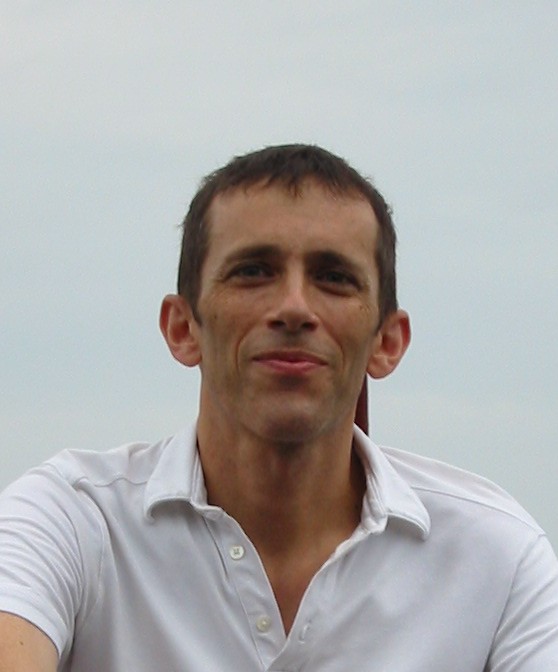
Donald Robertson is a Lecturer in Pure Mathematics at the University of Manchester, specializing in ergodic theory with applications to additive combinatorics. His work connects measurable dynamics with combinatorial number theory problems. Research explores ergodic properties of interval exchange transformations, sumset configurations in infinite sets, and equidistribution in homogeneous dynamics. Recent publications address Erdős' sumset conjecture (2022), saddle connection distributions (2023), and disjointness in measurable group actions. He teaches measure theory and ergodic theory courses, employing problem-based learning through weekly take-home tests. Coursework emphasizes Lebesgue integration, ergodic theorems, and connections between dynamics and combinatorics.
David M Evans holds the position of Chair in Pure Mathematics at the Department of Mathematics, Faculty of Natural Sciences, Imperial College London. His academic career spans several decades with continuous research contributions in mathematical logic and its interdisciplinary applications. Professor Evans' research focuses on the theoretical foundations and practical applications of Model Theory, with particular emphasis on: Stability theory and its generalizations within model-theoretic frameworks Hrushovski constructions and their geometric properties Interactions between model theory, algebra, and combinatorics Automorphism groups of infinite structures Ramsey properties in sparse graphs and metric spaces His publication record demonstrates consistent innovation in geometric model theory, with recent work exploring amalgamation properties in measured structures, simplicity of automorphism groups, and EPPA (Extension Property for Partial Automorphisms) in various mathematical structures. His research bridges abstract model-theoretic concepts with concrete combinatorial and algebraic applications, particularly in the study of homogeneous structures and their automorphism groups. Professor Evans has supervised numerous doctoral students including D. G. D. Gray, Reinhold Konnerth, Herwig Nuebling, Marco Antonio Semana Ferreira, Yibei Li, and Robert Sullivan. His research has been supported by grants such as 'Model theory of generic structures and simple theories' and the 'Workshop on Pure Model Theory,' reflecting the significance of his contributions to the field.
James Martin is a Lecturer at the Department of Statistics, University of Oxford . He is affiliated with St Hugh's College and has been actively involved in organizing probability seminars since 2018. Research Interests Probability theory Random graphs and percolation Interacting particle systems Models of random growth and coagulation-fragmentation Queueing networks Combinatorial games Teaching Courses: Prelims Probability , Part A Probability , Part B Statistical Lifetime Models , Part C Probabilistic Combinatorics His publications focus on probability theory , statistical physics , and combinatorial structures . Recent work includes studies on last-passage percolation, multispecies exclusion processes, and integrable probability models. James Martin collaborates with researchers from institutions such as Uppsala University, University of Cambridge, Imperial College London, and Kyoto University. He has been a key organizer for the Oxford Probability Seminar since 2018.
Blake Jackson is an Assistant Research Professor at the University of Connecticut's Department of Mathematics. His research focuses on algebraic and enumerative combinatorics, representation theory, and applications of machine learning to mathematical problems. He earned his Ph.D. from the University of Alabama under Kyungyong Lee and is currently mentored by Ralf Schiffler and Kyu-Hwan Lee at UConn. Education and Background: Bachelor's degree from Jacksonville State University, Alabama. Ph.D. in Mathematics from the University of Alabama (Tuscaloosa). Research Interests: Blake’s work spans cluster algebras, symmetric functions, quiver representations, and machine learning. Recent projects include geometric modeling of modules over path algebras, studying Banff/Louise quivers, c-vector geometry for mutation-infinite quivers, and using machine learning to explore quiver mutation-acyclicity. He is actively developing algorithms to find combinatorial bijections on Dyck paths related to q,t-Catalan numbers. Publications: His recent work combines theoretical mathematics with computational methods, focusing on geometric and algebraic structures in combinatorics. Machine learning techniques are increasingly central to his research, driven by promising results in quiver mutation analysis. Awards: No specific awards mentioned in the provided texts. Grants and Advising: While no grants are listed, Blake collaborates with leading researchers in algebraic combinatorics. He mentors students through his research projects, though no formal advisees are noted. Labs/Teams: His current work involves interdisciplinary collaborations, including machine learning applications in mathematical research.
Violetta Lonati is an Assistant Professor at the University of Milan 's Department of Computer Science since 2005. Her research spans Formal Languages and Automata (operator precedence languages, Wang automata, tiling systems) and Computer Science Education . She co-authored over 15 publications in theoretical computer science and education, focusing on 2D language recognition, logic characterization of automata, and pattern statistics in stochastic models. Education : PhD in Computer Science (2005) and Laurea in Mathematics (2001) from University of Milan Research Groups : ALaDDIn Lab for Didactics and Dissemination of Informatics, Bebras International Initiative Her work on Wang automata established their equivalence to tiling systems while introducing deterministic variants. In education, she designed workshops for schools and contributed to Italy's national computing curriculum proposal (2019). She held leadership roles at ACM ITiCSE (WG5 leader 2022), served as Associate Program Chair (2019-2022), and reviewed for top venues like ICER and SIGCSE TS. She received Google CS[4]HS and Informatics Europe awards for her educational contributions. Key Publications (2017-2001): Input-driven locally parsable languages (TCS 2017) Operator precedence logic characterization (SICOMP 2015) Snake-deterministic tiling systems (MFCS 2009) Graph fibrations and PageRank (RAIRO 2006) Pattern statistics in rational models (STACS 2005) Scientific awards include Google CS[4]HS (2011, 2017, 2019) and the Informatics Europe Best Practices in Education (2016). As part of ALaDDIn, she developed teacher training programs and graduate courses on computing education. Her teaching experience covers Algorithms & Data Structures (2013-2023), Computer Science Teaching (2014-2023), and courses for Biotechnology and Geological Sciences programs (2005-2007).
Robert D. Gray is a Professor of Mathematics at the School of Mathematics, University of East Anglia. His research focuses on combinatorial and geometric group and semigroup theory, algorithmic problems in algebra, decidability, homological finiteness properties, and group actions on graphs and topological spaces. EPSRC Research Fellow Editorial Board: International Journal of Algebra and Computation Available for PhD supervision in semigroup and inverse monoid theory His recent work explores: Topological finiteness properties of monoids Undecidability in one-relator inverse monoids Algorithmic properties of inverse monoids Maximal subgroups in special inverse monoids Key article trends include: Geometric and algorithmic aspects of inverse monoids Homological properties of semigroups Connections between group theory and semigroup theory Applications to graph theory and automata Scientific Awards: EPSRC Fellowship EP/V032003/1 EPSRC grant EP/N033353/1 EPSRC Postdoctoral Fellowship EP/E043194/1 Contact: Room S1.29, School of Mathematics, University of East Anglia, Norwich NR4 7TJ. Email: Robert.D.Gray@uea.ac.uk . Phone: +44 1603 591443.
Yizao Wang is a Professor in the Department of Mathematical Sciences at the University of Cincinnati. He holds a Ph.D. from the University of Michigan (2012) and specializes in Probability Theory, Stochastic Processes, and their applications, with a focus on extreme value theory, long-range dependence, and random fields. His research includes studies on asymmetric exclusion processes, fractional Brownian motion, and self-similar processes. Education : Ph.D. in Mathematics, University of Michigan, 2012. Research Interests : Probability theory, stochastic processes, extreme value theory, long-range dependence, random fields, limit theorems, and applications in finance and statistics. His work frequently explores the interplay between combinatorial structures and stochastic models, such as random partitions and operator-scaling processes. Grants : He has led and co-led multiple grants, including: DoD Army Research Laboratory: Advances in Extreme Value Theory with Long-Range Dependence ($84,229, 2020–2023) National Security Agency: From Random Partitions to Self-Similar Processes ($40,000, 2016–2018) National Science Foundation: Cincinnati Symposium on Probability Theory and Applications ($20,000, 2018–2019) Students and Advising : Mentored numerous graduate and undergraduate students in capstone projects and independent studies, focusing on topics like random walks, branching processes, and stochastic differential equations. Notable advisees include Connor McClellan, Yiyang Yu, and Weiqing Yu (recipient of the Charles Phelps Taft Senior Thesis Fellowship). Labs/Teams : Active in collaborative research groups within the department, contributing to interdisciplinary projects in stochastic modeling and mathematical finance. Teaches advanced courses in probability, stochastic processes, and financial mathematics.
Selcuk Koyuncu is an Associate Professor in the Department of Mathematics at the University of North Georgia. His work focuses on advanced matrix theory, topology, operator theory, and combinatorial mathematics. He holds a prominent role in the Mathematics academic programs, contributing to both research and education. His research interests include structural analysis of matrices (e.g., Toeplitz, centrosymmetric, doubly stochastic), topological properties of mathematical objects, and applications in fields like evolutionary biology and signal processing. He has published extensively in journals covering matrix theory, combinatorics, and operator theory. Recent work explores topics such as extreme points of matrix polytopes, sub-defect variations in substochastic matrices, and Lie group structures of Toeplitz operators. His contributions have addressed applications ranging from numerical methods to algebraic topology. Dr. Koyuncu has no listed scientific awards or grants in the provided information. He can be contacted at selcuk.koyuncu@ung.edu and is located in the Watkins Academic Building, Gainesville campus.
Bruno Duchesne is Professor of Mathematics at the Orsay Institute of Mathematics within Paris-Saclay University. His research specializes in topological and geometric aspects of group theory, particularly group actions on infinite-dimensional spaces, representation theory, and geometric structures. His work frequently explores the intersection of topology with dynamical systems, operator algebras, and geometric group theory. Recent publications investigate the topological properties of groups acting on dendrites, infinite-dimensional symmetric spaces, and Kazhdan's Property (T) in geometric contexts. His scholarship contributes to understanding the structural properties of infinite-dimensional geometric objects and their associated transformation groups.
Dr Colin Reid is an Honorary Lecturer at the School of Information and Physical Sciences, University of Newcastle. Previously, he held roles including ARC DECRA Fellow (2015-2017) and Postdoctoral Research Fellow (2018-2023) within the School of Mathematical and Physical Sciences. He has also been affiliated with institutions such as the University of Münster and École Normale Supérieure de Lyon. Reid’s research focuses on topological group theory, particularly totally disconnected locally compact groups, and he has contributed to advancements in profinite group theory. Education: PhD in Profinite Group Theory from Queen Mary, University of London (2010), Bachelor of Arts from the University of Cambridge (UK). Research Interests : - Structure and dynamics of totally disconnected locally compact groups - Profinite groups and their properties - Automorphisms of discrete structures - Applications of group theory in symmetry analysis Key Contributions : - Developed frameworks for analyzing chief factors in Polish groups - Explored local structure in t.d.l.c. groups via contraction groups and distal actions - Authored over 30 journal articles, including works in Groups, Geometry, and Dynamics and Journal of Group Theory Awards : - ARC Discovery Early Career Researcher Award (DECRA) for research on branching and self-similarity in group actions (2015-2017) Advising & Grants : - Supervised two PhD students and a Master’s student in topological group theory - Secured grants totaling $304,021, including DECRA support and a Discovery Project on symmetries of relational structures Collaborations & Leadership : - Organized international workshops like the 2016 'Winter of Disconnectedness' series - Key collaborator with researchers such as George Willis (Australia), Pierre-Emmanuel Caprace (Belgium), and Phillip Wesolek (USA)
Michael Pinsker is a full professor and head of the Research Unit Algebra at the Vienna University of Technology. He is a leading researcher in universal algebra, model theory, and theoretical computer science, with a strong focus on constraint satisfaction problems (CSPs), particularly over infinite domains. He is deeply involved in the Vienna School of Mathematics and serves on the steering committees of the Workshop on General Algebra and the CSP World Congress (CWC), which he regularly co-organizes. Principal Investigator, ERC Synergy Grant POCOCOP (2023–2029) Principal Investigator, FWF-NCN Project on Constraint Satisfaction (2022–2026) Associate Editor, Algebra Universalis (Springer) Member, Executive Board, Vienna School of Mathematics His research lies at the intersection of algebra, logic, and computation, emphasizing the algebraic and model-theoretic analysis of infinite structures to understand the complexity of CSPs. He investigates how symmetry, topology, and polymorphisms govern tractability and hardness. His work often connects Ramsey theory and homogeneous structures with computational problems. His recent publications reveal a sustained focus on infinite-domain CSPs, particularly through algebraic methods like polymorphisms, smooth approximations, and topological clones. Trends include collapsing width hierarchies, establishing hardness criteria for infinite digraphs, and developing new algorithms based on symmetry and consistency. His work bridges finite and infinite model theory, aiming to unify complexity classification frameworks. ERC Synergy Grant POCOCOP (2023) Distinguished Paper Award, LICS 2023 Pinsker actively mentors PhD students and postdoctoral researchers, including current advisees like Johanna Brunar, Moritz Schöbi, Roman Feller, and Christoph Spiess. He has advised former PhD students Clemens Schindler, Tomas Nagy, and Michael Kompatscher. He leads major research projects funded by the European Research Council and national science foundations, indicating significant grant leadership. His collaborative network includes Libor Barto, Manuel Bodirsky, and Marcin Kozik. He leads the Research Unit Algebra at TU Wien, which includes faculty, postdocs, PhD students, and project managers working on universal algebra and CSPs. He co-organizes major annual events like the CSP World Congress and the Early Student Award meetings of the Austrian Mathematical Society, fostering community and collaboration.
Ronald Cools is a Professor in the Department of Computer Science within the Science & Technology Group at KU Leuven (Katholieke Universiteit Leuven) in Belgium. His research spans numerical analysis, approximation theory, and computational mathematics, with a particular focus on lattice rules and quasi-Monte Carlo methods for high-dimensional problems. His work has significant applications in scientific computing, financial mathematics, and solving partial differential equations. Professor Cools' research interests center on developing efficient algorithms for high-dimensional integration and approximation. His work on lattice rules, component-by-component construction methods, and tent-transformed lattices has advanced the field of numerical analysis. He has made significant contributions to understanding the trigonometric degree of exactness, worst-case error analysis in various function spaces, and the development of practical algorithms for multivariate problems. His research bridges theoretical mathematical analysis with practical computational methods that address the curse of dimensionality in scientific computing. The analysis of his recent publications reveals a consistent focus on lattice-based algorithms for approximation and integration in high dimensions. His work demonstrates increasing sophistication in handling general weight parameters, extending methods to non-periodic settings, and developing faster construction algorithms. The research trajectory shows a progression from theoretical foundations to practical implementations with applications in PDEs, financial mathematics, and scientific computing. The publications exhibit strong international collaboration, particularly with researchers like Frances Kuo, Dirk Nuyens, and Ian Sloan. Professor Cools has supervised numerous PhD students, including Weiwen Mo, Laurence Wilkes, Yuya Suzuki, T. Nguyen, and Gowri Suryanarayana. His mentorship has produced significant contributions to the field of numerical analysis. While specific grant information isn't detailed in the provided text, his extensive publication record spanning multiple decades suggests sustained research funding supporting his work in computational mathematics. His research group at KU Leuven appears to be a hub for advanced computational mathematics, focusing on quasi-Monte Carlo methods, lattice rules, and high-dimensional approximation techniques. The collaborative nature of his publications indicates an active research team working on both theoretical aspects of numerical methods and their practical implementations.
Dr. Karel Casteels is a Lecturer at the University of California, Santa Barbara (UCSB), with a cross-appointment between the Department of Mathematics (College of Letters and Science) and the College of Creative Studies. He holds a PhD from Simon Fraser University (2010), supervised by Jason Bell. His career includes a Visiting Assistant Professorship at UCSB and a Marie Curie Research Fellowship at the University of Kent (2013-2015). His research focuses on quantum algebras, combinatorial models, and their intersections with algebraic structures and representation theory. He mentors undergraduate students through the UCSB Research Experience for Undergraduates (REU) program. Education: PhD in Mathematics, Simon Fraser University, Canada (2010) Research Interests: Dr. Casteels explores quantum matrices, algebraic combinatorics, and the combinatorial structure of quantum algebras. His work bridges noncommutative algebra, representation theory, and graph theory. Key Achievements: Marie Curie Research Fellowship (2013-2015) Advising & Grants: He advises undergraduate researchers via the REU program but has no listed formal advisees. Grants or funding details are not specified in the text. Labs/Teams: No specific lab or team affiliations mentioned.
Martyn Quick is a Senior Lecturer in Pure Mathematics at the University of St Andrews, affiliated with the School of Mathematics & Statistics and the Pure Mathematics Centre for Interdisciplinary Research in Computational Algebra. His research focuses on structural properties of groups and algebraic structures, including generating sets, probabilistic generation of finite/profinite groups, and topological-algebraic links in profinite groups. He has contributed to understanding groups arising from combinatorial transformations and has held roles in editorial boards, such as the Proceedings of the Edinburgh Mathematical Society . Education: D.Phil. (PhD) in Mathematics, University of Oxford (1995) Doctoral qualifying dissertation on identical relations in groups of exponent four (1992) Research Interests: Group theory, including finite and infinite groups Profinite groups and their topological structures Automorphism groups of ordered and algebraically closed structures Maximal subgroups and generating sets in Thompson's group V Applications of semigroup theory and wreath products Recent Trends in Publications: Recent work emphasizes Thompson's group V, maximal subgroups, wreath products of finite groups, and separability properties in semigroups. His studies bridge algebraic and combinatorial aspects, with applications to geometric group theory and computational algebra. Affiliations & Activities: Editorial board member for the Proceedings of the Edinburgh Mathematical Society (2018–2021) Co-Investigator on EPSRC-funded projects in algebra and computational algebra (2005–2014) Organizer and participant in international conferences like Groups St Andrews and British Mathematical Colloquium Labs/Teams: Collaborates with interdisciplinary teams at the Centre for Interdisciplinary Research in Computational Algebra, focusing on algebraic structures and computational methods.
Peter Symonds is a Professor of Mathematics at the University of Manchester's School of Mathematics. His research focuses on the intersection of algebra and geometry, particularly involving group actions, representation theory, and cohomology. He actively supervises postgraduate students, including Matthew Antrobus, Jiacheng Tang, and Greg Kendall. His work explores stable categories for infinite groups, group actions on rings and varieties, and cohomological properties of profinite groups. He contributes to academic communities through participation in the Manchester Algebra Seminar, Manchester Geometry, Topology, and Mathematical Physics Seminar, and the Transpennine Topology Triangle (TTT). His research has been published in leading journals such as the Journal of the American Mathematical Society and Advances in Mathematics. Peter's advising spans over two decades, with notable alumni including Rudradip Biswas (PhD 2021) and John MacQuarrie (PhD 2009). His research emphasizes theoretical frameworks with applications in algebraic geometry and representation theory.