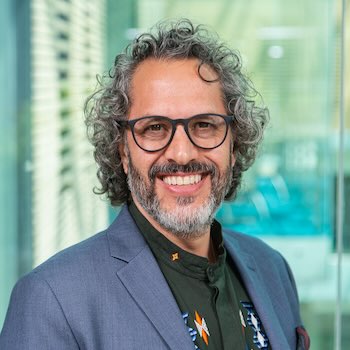
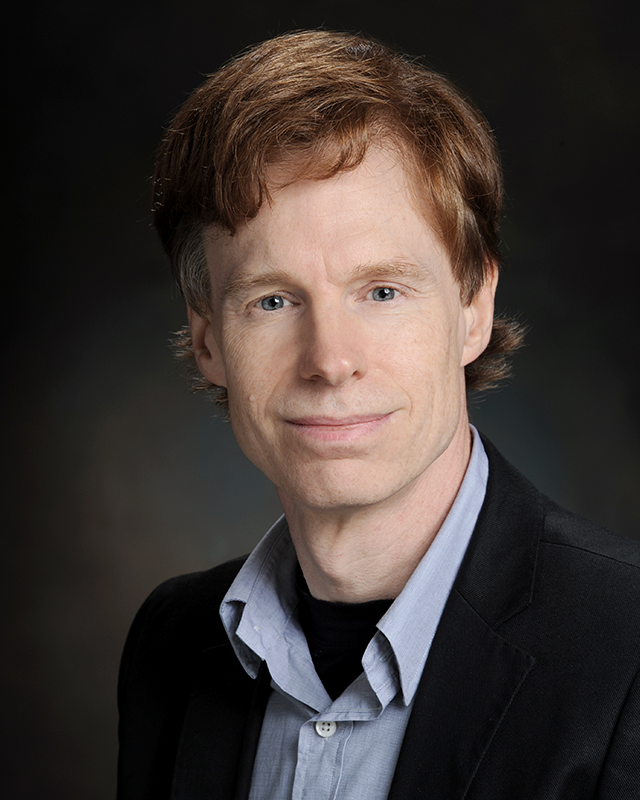
Ignacio Castillo is a Professor and Associate Dean of Business (Graduate Academic Programs) at the Lazaridis School of Business and Economics, Wilfrid Laurier University. His expertise spans facility location optimization, supply chain management, and sustainable operations. He holds a leadership role in graduate academic programming and teaches courses in operations and statistics. Research focuses on optimizing facility layouts, material handling systems, and closed-loop supply chains. He has developed frameworks for multi-objective facility design and advanced packing optimization algorithms. His work bridges theoretical models with real-world applications in manufacturing and retail sectors. Publications emphasize nonlinear optimization techniques, packing problems, and supply chain coordination strategies. Recent work explores irregular object configurations and retail category space optimization. His textbooks include Business Statistics for Contemporary Decision Making and Operations Management , emphasizing practical decision-making tools. Office: LH4001M | Languages: English, Spanish
Prosper Dovonon is Full Professor of Economics at Concordia University, Montréal, Canada, where he holds the Tier 1 Concordia University Research Chair in Econometrics of Large Datasets . He is concurrently Adjunct Professor at the University of Adelaide, Australia, and has previously served as Associate and Assistant Professor at Concordia, Visiting Professor at HEC Montréal, and Assistant Vice-President at Barclays Wealth in London. Education Ph.D. in Economics, Université de Montréal (2007) M.Sc. in Statistics and Economics, ENSEA, Abidjan, Côte d’Ivoire (2000) M.Sc. in Mathematics, Université Nationale du Bénin, Abomey-Calavi, Benin (1996) Research Interests Professor Dovonon’s research lies at the intersection of theoretical econometrics and financial data applications . He focuses on developing robust inferential procedures for moment-condition models, bootstrap techniques for high-frequency data, identification issues in GMM, and volatility modeling with factor structures that accommodate skewness and leverage effects. His work on large-dimensional datasets emphasizes scalable methods for estimation and testing in big-data environments. Scientific Awards & Recognition Concordia University Research Chair, Tier 1, in Econometrics of Large Datasets (2022–present) Collaborations & Affiliations Beyond Concordia and the University of Adelaide, he is affiliated with the Centre Interuniversitaire de Recherche en Économie Quantitative (CIREQ) in Montréal and has collaborated with leading scholars across North America, Europe, and Australia. His research is frequently cited in top econometrics and statistics journals, attesting to its broad impact.
Dr. John Nesbit is a Professor in the Faculty of Education at Simon Fraser University, specializing in educational psychology and learning sciences. His research focuses on self-regulated learning with multimedia resources, cognitive tools, log analysis, and argumentation. He has contributed to understanding how cognitive tools like concept maps and argument visualization enhance learning processes. Nesbit’s work often involves empirical studies on instructional efficacy and meta-analytic reviews of educational interventions. His research highlights include examining the impact of animated concept maps, verbal redundancy in multimedia environments, and the role of achievement goals in self-regulated learning. Nesbit has published extensively in top journals like the Journal of Educational Psychology and Metacognition and Learning , with a focus on bridging theory and practical educational design. His recent studies explore inquiry-based learning with simulations and the application of learning analytics to track student strategies. Nesbit has presented at major conferences such as the American Educational Research Association and contributed chapters to handbooks on educational data mining and metacognition. He advises graduate students in educational technology and learning sciences, though specific student names are not listed here. His work emphasizes evidence-based approaches to improving educational practices through cognitive and technological innovations.
Claudiu Gradinaru is an Interim Chair and Professor in the Department of Chemical and Physical Sciences at the University of Toronto Mississauga, part of the Faculty of Arts & Science. He holds a Ph.D. in Physics from VU University Amsterdam and has conducted postdoctoral research at Leiden University and Sandia National Laboratories. His research focuses on single-molecule biophysics, intrinsically disordered proteins (IDPs), and G protein-coupled receptors (GPCRs), leveraging advanced microscopy and computational techniques. Education: B.Sc. in Physics (University of Bucharest, 1995), Ph.D. in Physics (VU University Amsterdam, 2001). Roles: Interim Chair, Principal Investigator of the Gradinaru Biophysics Lab, and educator in molecular biophysics, optics, and classical mechanics. Research Interests: His lab employs ultrasensitive optical techniques (e.g., single-molecule fluorescence spectroscopy) to study conformational dynamics of IDPs and GPCRs in live cells. Key areas include: Structural ensembles of IDPs using NMR, SAXS, and smFRET. GPCR oligomerization and signaling dynamics. Development of computational methods for ensemble modeling. Advising: Gradinaru mentors numerous graduate and undergraduate students, including PhD candidates Xiaohan Zhou (GPCR dynamics) and Maria Shemeteva (GPCR signaling), and MSc students Aiyan Brown (smFRET analysis) and Xinge Liu (IDP complexes). His lab has produced over 40 publications since 2001, with recent work featured in Biophysical Journal , Journal of the American Chemical Society , and Nucleic Acids Research . Labs & Instruments: The Gradinaru Lab houses custom-built microscopes for multiparameter single-molecule fluorescence, fluorescence correlation spectroscopy, and TIRF microscopy. Collaborations span institutions in Canada, the U.S., the U.K., and Australia.
Professor Dave Campbell is affiliated with Carleton University's School of Mathematics and Statistics and School of Computer Science. He specializes in inferential data science, Bayesian algorithms, and computational statistics. His research interests include differential equation models, uncertainty quantification, and time-series analysis. He has advised multiple graduate students in areas like statistical language models and machine learning. Recent work includes studies on climate impacts on human conflict, forensic entomology, and NMR-based metabolite quantification. Active in open data initiatives, he maintains ShinyApps for ecological and educational datasets. Teaching includes Statistical Computing and Statistical Language Models courses.
Edward Kroc is an Associate Professor in the Department of Educational and Counselling Psychology, and Special Education at the University of British Columbia (UBC), Faculty of Education. He joined UBC in 2018 as part of the Measurement, Evaluation, and Research Methodology (MERM) program. His work bridges statistical theory, psychometrics, and ecological applications. Ph.D., Mathematics, University of British Columbia (2015) M.Sc., Applied Mathematics in Statistics, DePaul University (2007) B.Sc., Mathematics, DePaul University (2006) Kroc's research focuses on generalized measurement error, causal inference, and spatio-temporal modeling, with applications to urban ecology (e.g., gull populations) and psychometric validity. His methodological work challenges traditional assumptions in educational measurement and regression analysis. Recent publications highlight his interdisciplinary approach, combining statistics, ecology, and psychology. Key trends include the development of robust measurement frameworks, Bayesian methods for ecological data, and methodological critiques of reliability estimation techniques. Edward Kroc actively supervises graduate students in the Measurement, Evaluation and Research Methodology program and collaborates on interdisciplinary research projects and grants.
Claudiu Gradinaru is an Interim Chair and Professor in the Department of Chemical and Physical Sciences at the University of Toronto Mississauga. His research focuses on single-molecule biophysics, intrinsically disordered proteins (IDPs), and G protein-coupled receptors (GPCRs). He leads a lab equipped with advanced microscopes for fluorescence imaging and spectroscopy, enabling studies of protein dynamics at the molecular level. Gradinaru earned his Ph.D. in Physics from VU University Amsterdam in 2001, followed by postdoctoral work at Leiden University and Sandia National Labs. He has trained over 30 graduate students and postdoctoral researchers, many of whom have contributed to groundbreaking studies on protein conformational dynamics and receptor signaling. His research integrates experimental and computational methods to address questions about IDP interactions, GPCR activation pathways, and ensemble modeling. Key projects include studying the muscarinic M1 receptor’s behavior in live cells and developing computational tools to refine protein conformational ensembles from experimental data. Gradinaru teaches courses in molecular biophysics, classical mechanics, and optics, emphasizing interdisciplinary training in physics, chemistry, and biology. He collaborates widely with academic and clinical researchers across Canada, the U.S., UK, and Australia. Education: Ph.D. in Physics, VU University Amsterdam (2001) Bachelor’s degree in Physics, University of Bucharest (1995) Labs/Teams: Gradinaru Biophysics Lab at UTM, collaborating with groups in chemistry, biochemistry, and molecular biology. His work has led to novel insights into IDP-GPCR dynamics and their implications for drug development, particularly in cancer and neurodegenerative diseases.
Bruno D. Zumbo is a Distinguished University Scholar and Professor at the University of British Columbia (UBC), holding the Tier 1 Canada Research Chair in Psychometrics and Measurement. He is affiliated with the Faculty of Education, specifically within the Department of Educational and Counselling Psychology, and Special Education (ECPS), where he leads the Measurement, Evaluation, and Research Methodology (MERM) Program. Additionally, he is a member of the Institute of Applied Mathematics at UBC. Professor Zumbo is on sabbatical from September 1, 2025, to August 31, 2026. Professor Zumbo's scholarly work spans mathematical science, statistics, and psychometrics, with a focus on understanding the mathematical and conceptual nuances of measurement, test theory, and social surveys. His academic journey began as an Assistant Professor in 1990 at the University of Ottawa, with subsequent professorships at the University of Northern British Columbia before joining UBC in 2000. His educational background includes training in mathematical sciences, with his first peer-reviewed publication appearing in 1987. Dr. Zumbo's research interests center on psychometrics and statistical methods, with particular emphasis on validity theory and validation practices, measurement invariance and item bias, robustness of statistical methods to assumption violations, and development of nonparametric, Bayesian, and adaptive alternatives. His work bridges mathematical science with practical applications in international assessment, language testing, and quality of life research. His core research program explores mathematical formulations of mental test theory using measure theory, probability theory, and functional analysis, along with geometry of multivariate statistics, Bayesian analysis, and various test theories. Professor Zumbo's extensive publication record includes over 400 scholarly works, with recent research focusing on validity frameworks, measurement theory, statistical methods, and applications in health psychology and educational assessment. His work demonstrates a consistent integration of mathematical rigor with practical measurement concerns across diverse domains. Elected full member of Sigma Xi, The Scientific Research Honor Society (2022) Canada Research Chair in Psychometrics and Measurement – Tier 1 (2020) Paragon UBC Professorship in Psychometrics & Measurement (2015-2024) Centenary Medal of Distinction (2019) Pioneer in the Psychometrics of Quality of Life by the International Society for Quality of Life Studies (2018) Distinguished University Scholar, UBC (2017) Killam Research Prize, UBC (2017) UBC Killam Teaching Prize (2012) As director of the Edgeworth Laboratory for the Mathematical Sciences of Psychometrics and Measurement, Professor Zumbo leads research on cross-disciplinary topics in psychometrics. His grant funding totals approximately $9.9 million since 2000, with recent highlights including $2.8 million from the Canada Research Chairs Program and $3.3 million from the UBC-Paragon Research Agreement. His research has practical applications across education, health, and social sciences, with particular emphasis on ensuring measurement validity and fairness in diverse contexts.
Dr. Ann-Marie DiBiase is an Associate Professor and Concentration Leader in Educational Psychology at Brock University's Department of Educational Studies (Faculty of Education). Her research focuses on neuropsychiatry, neurobiology, and psychopathology in educational and mental health contexts, with expertise in biofeedback, neurofeedback, cognitive-behavioral therapy (CBT), and psychopharmacology. She teaches graduate courses including EDUC 5P92 (Educational Research) and EDUC 5P46 (Behavioral Disorders), as well as undergraduate courses like EDUC/CHYS 3F02 (Cognition and Learning). Her research interests span neurobiological underpinnings of mental disorders (e.g., ADHD, anxiety, schizophrenia) and interventions for at-risk youth. She has developed the EQUIP for Educators program, a psychoeducational initiative to address behavioral challenges in schools. Her work bridges clinical neuroscience with educational practice, emphasizing prevention and evidence-based treatments. Dr. DiBiase has presented at major conferences such as the American Psychiatric Association and Association for Psychological Science. Her publications explore topics like neuroplasticity in stress-related disorders, GABA receptor dynamics in schizophrenia, and the efficacy of CBT for youth mental health. While no formal scientific awards are listed, her contributions to translational research in education and mental health are significant. As an academic leader, she advises graduate students and oversees research projects in educational psychology. Her work emphasizes interdisciplinary collaboration between neuroscience, clinical practice, and pedagogy to improve mental health outcomes in educational settings.