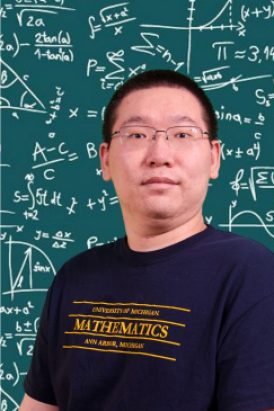
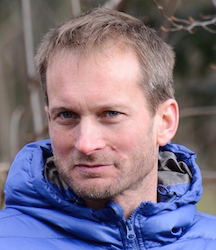
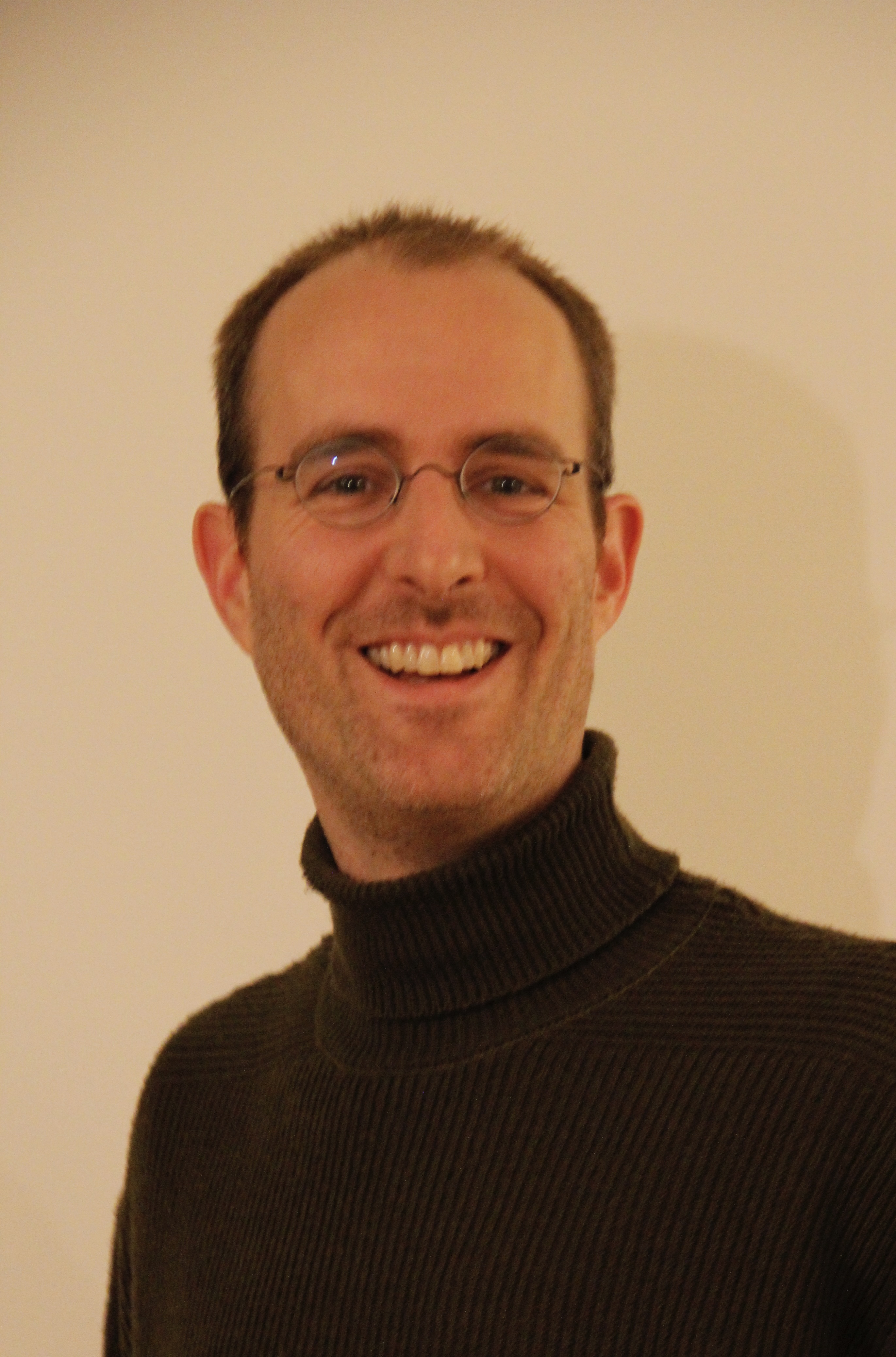
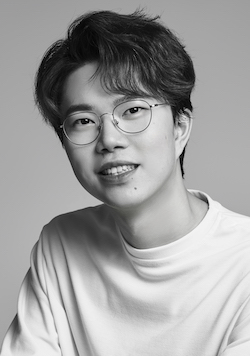
Prof. Dr. Thomas Hofmann is a Full Professor and Head of the Department of Computer Science at ETH Zurich since 2014. He also leads the Institute for Machine Learning. His research focuses on machine learning, deep learning, natural language understanding, and text understanding. Hofmann holds a Ph.D. from the University of Bonn (1997) and has held academic positions at Brown University (1999–2004) and TU Darmstadt. He transitioned to industry as Director of Engineering at Google (2006–2014), leading the Zurich R&D center, before returning to academia. He co-founded Recommind (2000) and 1plusX (Swiss marketing tech company), currently serving as Chief Scientist and board member at 1plusX. Education: Ph.D. in Computer Science, University of Bonn (1997) Postdoctoral Work: MIT (CBCL/AI Lab), UC Berkeley (EECS/ICSI) His research explores advanced machine learning techniques, including diffusion models, generative adversarial networks, and optimization dynamics. Hofmann’s entrepreneurial ventures reflect his focus on applying AI to real-world challenges, such as e-discovery and marketing technology. His work spans theoretical contributions (e.g., neural network training dynamics, continual learning) and applied innovations (e.g., image editing, portrait generation). Hofmann actively bridges academia and industry, influencing both research and commercial AI applications.
Pascal Frossard is a Full Professor at the Department of Electrical Engineering in the School of Engineering (STI) at EPFL, with a courtesy appointment in the School of Computer and Communication Sciences. He founded and directs the LTS4 laboratory since 2003, co-leads the EPFL AI Center and Swiss Data Science Center, and serves as Associate Dean for Research at STI. Research Focus: Machine Learning, Graph Signal Processing, AI Applications in Healthcare, Computer Vision Academic Leadership: IEEE Fellow, ELLIS Fellow, Conference Chair roles Key Projects: Digital Pathology for Oncology, Cardiac Digital Twins, Robust Machine Learning Research Interests: His work bridges signal processing, machine learning, and applied mathematics, emphasizing biomedical applications. Recent research includes adversarial robustness in classifiers, network representation learning, and 360-degree video analysis. Scientific Awards: IEEE Fellow ELLIS Fellow Leadership in IEEE technical committees Advising & Grants: Supervised 20+ PhD students and postdocs. Secured major grants from PHRT, Hasler Foundation, FNS-Sinergia, Armasuisse, Google, and Cisco.
Lior Wolf is a Professor at the School of Computer Science, Tel Aviv University. Previously, he was a postdoctoral researcher at MIT's Center for Biological and Computational Learning (CBCL) under Prof. Tomaso Poggio and earned his PhD from Hebrew University of Jerusalem with Prof. Amnon Shashua. His educational background includes: PhD in Computer Science, Hebrew University of Jerusalem Postdoctoral Research, MIT CBCL Prof. Wolf's research centers on artificial intelligence with seminal contributions to deep learning, computer vision, and natural language processing. His work bridges theoretical foundations (e.g., attention mechanisms, transformer analysis) with practical applications in medical imaging, speech processing, and sign language technology. He pioneered methods for neural network interpretability, efficient sequence modeling, and multimodal fusion. Analysis of his 2023-2025 publications reveals dominant trends in large language model optimization (neuron pruning, attention analysis), efficient video generation, and cross-modal learning. His work increasingly integrates medical applications (fMRI/EEG analysis) while maintaining theoretical rigor in model architecture design. His scientific achievements include: Best paper award at EMNLP 2024 for 'Backward Lens: Projecting Language Model Gradients into the Vocabulary Space' Best paper award at SCIA 2023 for 'Gradient Adjusting Networks for Domain Inversion' Best paper award at FG 2021 for 'Generating Master Faces for Dictionary Attacks' Prof. Wolf mentors graduate students in the School of Computer Science and leads research at the ICRC building laboratory. His team collaborates with 'the friends of TAU' on projects spanning biometric security, medical imaging, and generative AI. Current work focuses on efficient transformers, neural network interpretability, and multimodal medical diagnostics.
Ali H. Sayed is the Dean of the School of Engineering (Faculté des sciences et techniques de l'ingénieur - STI) at École Polytechnique Fédérale de Lausanne (EPFL), Switzerland, where he also directs the Adaptive Systems Laboratory (Laboratoire de systèmes adaptatifs). Previously, he served as an emeritus professor and chair of the Electrical Engineering Department at UCLA. He is a highly cited researcher and a member of the US National Academy of Engineering and the World Academy of Sciences. Sayed served as president of the IEEE Signal Processing Society in 2018 and 2019. Professor Sayed's research focuses on adaptation and learning theories, data and network sciences, statistical inference, multi-agent systems, adaptive networks, and optimization. His work bridges theoretical foundations with practical applications in signal processing, machine learning, and network science. He has made significant contributions to distributed learning algorithms, social learning over networks, and adaptive signal processing techniques that have influenced both academic research and practical implementations. His recent publications demonstrate a strong focus on multi-agent systems, distributed learning, privacy-preserving techniques, and social learning over networks. The research trends show increasing emphasis on federated learning with privacy guarantees, graph-based learning approaches, and the intersection of social dynamics with information processing. His work consistently addresses fundamental theoretical questions while maintaining relevance to practical applications in communication networks, social media analysis, and distributed artificial intelligence systems. Professor Sayed has received numerous prestigious awards throughout his career, including: IEEE Fourier Award (2022) Norbert Wiener Society Award (2020) IEEE Signal Processing Society Education Award (2015) Papoulis Award from the European Association for Signal Processing (2014) Technical Achievement Award from IEEE Signal Processing Society (2012) Terman Award from the American Society for Engineering Education (2005) IEEE Donald G. Fink Prize (1996) Multiple Best Paper Awards from IEEE and EURASIP Sayed has authored or co-authored over 570 publications and six monographs. He has mentored numerous PhD students and researchers in the fields of signal processing and adaptive systems. His editorial leadership includes serving as Editor-in-Chief of IEEE Transactions on Signal Processing (2003-2005) and EURASIP Journal on Advances in Signal Processing (2006-2007), as well as Founding Editor-in-Chief of the Open Access Book Series on Information and Learning Sciences. At EPFL, Professor Sayed leads the Adaptive Systems Laboratory, which focuses on developing theoretical frameworks and practical algorithms for adaptive systems, networked learning, and distributed signal processing. The lab's research encompasses both fundamental theoretical investigations and applications to real-world problems in communications, social networks, and computational biology.
Thomas Demeester is an Associate Professor at the Internet Technology and Data Science Lab (IDLab), Ghent University - imec, Belgium. Appointed as Assistant Professor in 2019, he leads an AI research group focused on health applications and drug design, co-directing the Text-to-Knowledge research cluster with Prof. Chris Develder. His educational background includes: M.Sc. in Electrical Engineering from Ghent University (2005), completed with thesis work at ETH Zurich Ph.D. in Computational Electromagnetics from Ghent University (2009), funded by Research Foundation - Flanders (FWO) Demeester's research spans artificial intelligence with emphasis on deep learning and neuro-symbolic methods. Current tracks include energy-based models (Hopfield Networks, Deep Equilibrium Models), diffusion models for drug design, and clinical reasoning systems. His work bridges NLP, healthcare informatics, and generative AI with strong industry partnerships. Recent publications (2023-2025) reveal strategic expansion from NLP into health-centric AI: BioLORD biomedical encoders (2023), synthetic medical data frameworks (UAI/NeurIPS 2024), and novel diffusion model guidance (ICLR 2025). This evolution demonstrates convergence of generative modeling, clinical data analysis, and protein design. He actively mentors 24 PhD students across diverse AI domains: Current Research: Conversational agents, emotion analysis, clinical reasoning, antibody design, and diffusion model optimization Recent Graduates: Interpretable language models, biomedical semantics, task-oriented dialogue, and social media knowledge extraction Research is supported by imec funding and collaborations with Flemish biotech companies, building on his post-doctoral experience securing media-sector projects. Within IDLab, he co-leads the Text-to-Knowledge cluster driving NLP innovations for healthcare, legal, and economic applications.
Jinjin Gu is a tenure-track Assistant Professor at Sofia University "St. Kliment Ohridski" 's INSAIT (Institute for Computer Science, Artificial Intelligence, and Technology), leading research on visual cognition and intelligence. Her work spans visual perception, processing, generation, and reasoning. Education: Ph.D. in Electrical and Computer Engineering (2024), University of Sydney B.Sc. in Computer Science and Engineering (2020), Chinese University of Hong Kong, Shenzhen Her research focuses on visual cognition , including agentic systems , diffusion models , GAN architectures , model interpretability , super-resolution , and multimodal vision-language systems . She has developed novel paradigms like HYPIR for diffusion-quality restoration at GAN speeds. Recent publications highlight advancements in image/video restoration , generative modeling , and visual reasoning . Her work addresses critical challenges in model generalization , causal interpretation , and real-world application robustness . Scientific Awards: Stanford University's World's Top 2% Scientists (2024) Yunfan Award at World Artificial Intelligence Conference (WAIC) (2023) She has advised students contributing to TPAMI, CVPR, and ICLR publications, and serves as Area Chair for ICLR 2026, NeurIPS 2025, and ICML 2025.
Christoph Stadtfeld is Associate Professor of Social Networks at ETH Zurich's Department of Humanities, Social and Political Sciences and co-director of the ETH Social Networks Lab. His research examines social network dynamics, focusing on tie formation processes, network effects on individuals, and advanced statistical methodologies for longitudinal network analysis. Education: PhD from Karlsruhe Institute of Technology (2011) Postdoctoral researcher and Marie-Curie fellow at University of Groningen, University of Lugano, and MIT Media Lab (2011-2014) His work bridges sociology, statistics, and computer science to address fundamental questions about how social structures evolve and influence behavior. Key interests include relational event modeling, co-evolution of networks and attributes, and applications in mental health, political polarization, and scientific collaboration. He develops innovative methods for analyzing dynamic networks using cutting-edge computational approaches. Recent publications reveal strong emphasis on methodological rigor in temporal network analysis, with significant contributions to relational event modeling and dynamic network actor frameworks. His work increasingly addresses societal challenges including political polarization, mental health impacts of social isolation, and innovation dynamics in healthcare. Scientific awards: Raymond Boudon Award of the European Academy of Sociology (2017) Freeman Award of the International Network for Social Network Analysis (2021) As co-director of the ETH Social Networks Lab, Stadtfeld leads interdisciplinary research teams developing novel network methodologies. His work has been supported by prestigious fellowships including Marie-Curie funding, and he actively mentors graduate students in network science methodology and applications across diverse domains. The ETH Social Networks Lab serves as a hub for advancing network theory and methodology, with ongoing projects examining student networks during crises, scientific collaboration dynamics, and innovation ecosystems through the lens of network science.
Reinhard Heckel is a Tenured Associate Professor (equivalent to Professor) of Machine Learning at the Department of Computer Engineering, Technical University of Munich (TUM), and Adjunct Faculty in Electrical and Computer Engineering at Rice University. He was previously an Assistant Professor at Rice (2017–2019), a postdoc in the Berkeley Artificial Intelligence Research (BAIR) Lab at UC Berkeley, and a researcher at IBM Research Zurich. Education: PhD, 2014 – ETH Zurich Visiting PhD student – Department of Statistics, Stanford University Research Interests: His work centers on machine learning and information processing with three major thrusts: (1) developing algorithms and theoretical foundations for deep learning, especially for accelerated magnetic resonance imaging ; (2) establishing rigorous mathematical and empirical underpinnings for modern machine-learning systems; and (3) leveraging DNA as a digital information-storage medium , including error-correction coding and system design for DNA-based storage. Across more than 100 peer-reviewed papers since 2017, Heckel’s research exhibits a strong interdisciplinary blend of computational imaging , machine-learning theory , and molecular data storage . Recent 2024–2025 publications show intensive focus on robust MRI reconstruction using diffusion priors, evaluation of bias in large web-text corpora, and state-of-the-art error-correcting codes for DNA storage channels. A forthcoming book, Deep Learning for Computational Imaging (Oxford University Press), consolidates his contributions to the field. Outreach & Media: Keynote and panel talks at DLD, TUM, and major ML conferences Op-eds in Frankfurter Allgemeine on ChatGPT and DNA storage Science features on Netflix, BBC, and German television (Galileo, “Gut zu Wissen”) Research Environment: At TUM he leads a group investigating theoretical and applied aspects of deep learning, compressed sensing, and coding for DNA storage. Open-source repositories on GitHub (e.g., dna_data_storage , supplement_deep_decoder ) provide code and data supplements accompanying his publications.
Franziska Boenisch is a tenure-track faculty member at the CISPA Helmholtz Center for Information Security , where she co-leads the SprintML lab for Secure, Private, Robust, Interpretable, and Trustworthy Machine Learning. Her research lies at the intersection of privacy-preserving machine learning and trustworthy ML , with a focus on differential privacy , model inversion attacks , and privacy risks in federated learning . She completed her PhD at Freie Universität Berlin and was a postdoctoral fellow at the Vector Institute for Artificial Intelligence under Prof. Nicolas Papernot. Her work has been recognized with awards such as the Academics Rising Start Award (3rd Prize) and the GI Junior-Fellow honor. Her research spans a wide range of topics including memorization in diffusion models , watermarking generative models , membership inference attacks , and privacy-preserving federated learning . She has published extensively in top-tier venues like ICML , NeurIPS , ICLR , and CVPR . She is actively involved in the academic community, serving as an Area Chair for NeurIPS , Track Chair for ACM AsiaCCS , and co-organizing workshops at ICML . She is currently hiring PhDs, postdocs, and research interns for her group.
Lorenzo Baraldi is an Associate Professor at the University of Modena and Reggio Emilia, where he leads research in deep learning, vision-language integration, and multimodal AI systems. He serves as an ELLIS Scholar and Coordinator of the Modena ELLIS Unit, and has held the position of deputy director at the Interdepartmental Center on Digital Humanities since 2021. Previously, he worked at Facebook AI Research laboratory in Paris in 2017, developing video-matching algorithms for content moderation. His research spans multiple areas including Vision-and-Language integration, Multimodal Retrieval, Image and Video Captioning, Visual-Semantic alignment, Large-Scale model development, High Performance Computing, and Embodied AI. With over 120 publications in international journals and conferences, his work demonstrates consistent contributions to advancing multimodal AI capabilities. He has served as an Associate Editor for Computer Vision and Image Understanding and Pattern Recognition, and as Area Chair for major conferences including ICCV, WACV 2026, and ACM Multimedia 2025. His recent publication record shows significant impact in the field, with multiple papers accepted to top-tier conferences in 2024-2025 including CVPR, ICCV, BMVC, ICLR, ECCV, and NeurIPS. Notably, his paper "Hyperbolic Safety-Aware Vision-Language Models" was selected as a highlight paper at CVPR 2025. His research often involves collaboration with Rita Cucchiara and other researchers at his institution. ELLIS Scholar and Coordinator of the Modena ELLIS Unit Associate Editor for Computer Vision and Image Understanding Area Chair for ICCV and major multimedia conferences Highlight paper at CVPR 2025 Professor Baraldi teaches courses in Computer Vision and Cognitive Systems, Scalable AI, and Computer Architecture for the Artificial Intelligence Engineering and Computer Engineering programs. His teaching spans both undergraduate and graduate levels, with a focus on providing students with both theoretical foundations and practical implementation skills. He has developed educational materials including Deep Learning tutorials for classroom instruction.
Dr. Daphné Chopard is a Researcher affiliated with the Professorship for Medical Data Science at ETH Zürich. Her work focuses on advancing medical data science through machine learning, clinical informatics, and multimodal learning applications in healthcare. She specializes in areas such as time-series analysis in critical care, generative models for medical data, and natural language processing for clinical texts. Her research emphasizes improving healthcare outcomes through innovative data-driven approaches, including projects like the SwissPedHealth pediatric data network and foundational work on multimodal variational autoencoders. Dr. Chopard’s contributions span clinical decision support systems, adverse event detection in trials, and acronym disambiguation in medical narratives. Her recent projects include studies on ventilation protocols in pediatric critical care and weakly-supervised learning applied to medical imaging datasets like MIMIC-CXR. She collaborates on initiatives to enhance representation learning in multimodal healthcare contexts, reflecting her commitment to bridging AI advancements with practical clinical applications.
Chen Liu is an Assistant Professor in the Department of Computer Science at City University of Hong Kong and the Principal Investigator (PI) of the Machine Learning and Optimization (MLO) group. His research focuses on building reliable machine learning models, particularly studying robustness and privacy properties of deep neural networks from an optimization perspective. University: City University of Hong Kong Academic Rank: Assistant Professor Students: Supervises multiple PhD, MPhil, and postdoctoral researchers. Education: Holds a Ph.D. (2022) and MSc (2017) in Computer Science from École Polytechnique Fédérale de Lausanne (EPFL), and a BSc (2015) in Computer Science from Tsinghua University. Research Interests: Adversarial robustness, privacy-preserving machine learning, optimization algorithms, dataset distillation, generative models, and theoretical analysis of loss landscapes. His work addresses challenges like catastrophic overfitting, architecture overfitting in distilled data, and stable adversarial training methods. Article Trends: Recent publications explore adversarial robustness under l0/l1 norms, gradient inversion for data reconstruction, evolutionary factor searching in finance, and meta-tuning for out-of-domain few-shot learning. These works emphasize optimization techniques to enhance model reliability and generalization. Scientific Awards: Microsoft Research Ph.D. Scholarship Programme (2017–2019) Advising and Grants: Supervises a diverse team of current and former students, with collaborations across institutions like George Mason University and Zhejiang University. Research supported by academic and industry grants. Labs and Teams: Leads the MLO group, which investigates fundamental ML theory and algorithms to improve system reliability. The group's work spans adversarial training, dataset distillation, and generative model optimization.
Ulrik Brandes serves as Full Professor and Head of the Department of Humanities, Social and Political Sciences at ETH Zurich, holding the Professorship for Social Networks. He actively teaches courses including Network Analysis and Applied Network Science: Sports Networks for Fall semester 2025, with office location at WEP J 14, Weinbergstr. 109, Zurich. His research spans Social Network Analysis, Graph Theory, and Network Science, with significant applications in sociology, sports analytics (particularly soccer and Australian Football League), and archaeological networks. As a longstanding member of the International Network for Social Network Analysis (since 2001) and the Academy of Sociology (since 2017), he bridges theoretical graph algorithms with practical interdisciplinary applications, recently expanding into sports analytics through the Football Scouting Association (2023). Analysis of his recent publications reveals strong thematic continuity in network centrality, temporal dynamics, and robustness, with increasing application diversity across sports analytics, archaeological trade networks, and decentralized social media platforms. His work consistently emphasizes efficient computational methods for real-world network problems. Honors: Simmel Award (2024) Prof. Brandes maintains active research leadership through departmental oversight and course development, though specific grant details and student advisement records are not publicly documented in available sources. His departmental role indicates substantial administrative responsibilities alongside research and teaching commitments.
Niklas Linde is a full professor at the University of Lausanne's Faculty of Geosciences and Environment, leading the Department of Earth Sciences. He holds a PhD in Geophysics from Uppsala University (2005) and has held roles including Assistant Professor (2008), Associate Professor (2013), and Full Professor (2019). His research focuses on transforming geophysical signals into realistic hydrogeological models with rigorous uncertainty quantification. Key areas include probabilistic inversion, Bayesian methods, and geostatistical modeling applied to environmental and subsurface processes. Education: PhD in Geophysics (Uppsala University, 2005), postdoctoral positions at Lawrence Berkeley National Lab (USA), CNRS-CEREGE (France), and ETH Zurich (Switzerland). He joined UNIL in 2008 as an Assistant Professor in Environmental Geophysics. Research interests span geophysical inversion techniques, subsurface heterogeneity characterization, and the integration of geophysical and hydrological data. Current projects emphasize Bayesian approaches for model selection and rare event estimation, supported by grants from the European Commission and Swiss National Science Foundation. Collaborations involve international teams addressing challenges in hydrogeology, rock fracture dynamics, and 4D hydrogeology. Publications reflect advancements in inverse problem solving, stochastic simulation, and machine learning applications. His work bridges theory and practice, with field studies in alpine environments, fractured media, and environmental monitoring. Students under his supervision have explored topics like deep generative networks and Bayesian hydrogeological inversion. Advising: Supervised over a dozen PhD students, including recent works on variational Bayesian methods and geophysical data fusion. Grants include projects on uncertainty quantification and experimental design. Active in scientific societies and editorial roles, contributing to methodological advancements in Earth sciences.
Saqib Javed is a doctoral researcher and Researcher at the Computer Vision Laboratory (CVLab) at EPFL, supervised by Prof. Pascal Fua and Dr. Mathieu Salzmann. His research focuses on energy-efficient deep networks, 3D reconstruction, quantization-aware training, and domain generalization. He holds a master’s degree from TU Munich and ETH Zurich. He is affiliated with the School of Computer and Communication Sciences (IC) and the Department of Computer Science at EPFL. His current projects include compressed Gaussian splatting for dynamic scenes, quantized diffusion models, and reducing inference time for vision-language models. He has been awarded the EPFL IC Distinguished Service Award and is a Global Leaders PhD Fellow. His work spans theoretical research and practical applications in low-power device optimization. Teaching roles include serving as a Teaching Assistant for courses like Introduction to Machine Learning (CS-233) and Probability and Statistics (MATH-232). He has supervised multiple students, including Chengkun Li and Ahmad Jarrar Khan, on projects related to quantization and 3D pose estimation. His research also involves collaborations with industry partners like BMW, Siemens, and Intel, focusing on hardware-friendly neural networks. Awards include the EPFL IC Distinguished Service Award (2024) and recognition for his contributions to efficient deep learning. His recent publications address domain generalization, Gaussian splatting, and modular quantization techniques, reflecting his interdisciplinary approach to advancing machine learning efficiency and applicability.