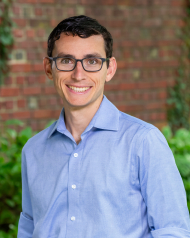
Benjamin Eysenbach is an Assistant Professor in the Department of Computer Science at Princeton University's School of Engineering and Applied Science since 2023. His research focuses on developing principled reinforcement learning (RL) algorithms that improve simplicity, scalability, and robustness in state-of-the-art systems, particularly through probabilistic inference techniques. Ph.D., Machine Learning, Carnegie Mellon University (2023) B.S., Mathematics, Massachusetts Institute of Technology Research interests center on reinforcement learning with emphasis on long-horizon reasoning, exploration strategies, and robustness. He explores intersections with probabilistic inference and self-supervised learning to enhance RL capabilities. Recent publications highlight trends in contrastive learning for goal-conditioned RL, temporal distance modeling , and hierarchical control . Key themes include reward-free learning, scalable architectures, and uncertainty quantification in decision-making systems. 2025: Junior Faculty Award for Excellence in Research and Teaching, Princeton School of Engineering and Applied Science Eysenbach's work bridges theoretical foundations with practical implementations in AI training frameworks, emphasizing performance optimization and safety mechanisms.
Gianni Franchi is an assistant professor at ENSTA Paris , affiliated with the Computer Science and Systems Engineering Unit (U2IS) . His work focuses on theoretical deep learning , with a strong emphasis on uncertainty quantification, robustness, and explainability in machine learning models. Current affiliation: ENSTA Paris (U2IS) Academic rank: Assistant Professor Key collaborators: David Filliat, Emanuel Aldea, Andrei Bursuc, Antoine Manzanera His research spans uncertainty quantification , explainable AI , and reliable machine learning . He investigates methods like Bayesian neural networks, ensemble approaches, and deterministic uncertainty models. His work also addresses domain adaptation , self-supervised learning , and autonomous systems , particularly in trajectory forecasting and semantic segmentation for autonomous driving. Recent publications analyze probabilistic modeling for robustness, symmetry-aware Bayesian methods , and multi-modal datasets like InfraParis. He develops frameworks like Torch-Uncertainty and benchmarks such as MUAD for uncertainty types in autonomous driving. Key themes: Uncertainty Quantification Deep Learning Theory Autonomous Systems Explainable AI Dataset Creation Bayesian Methods
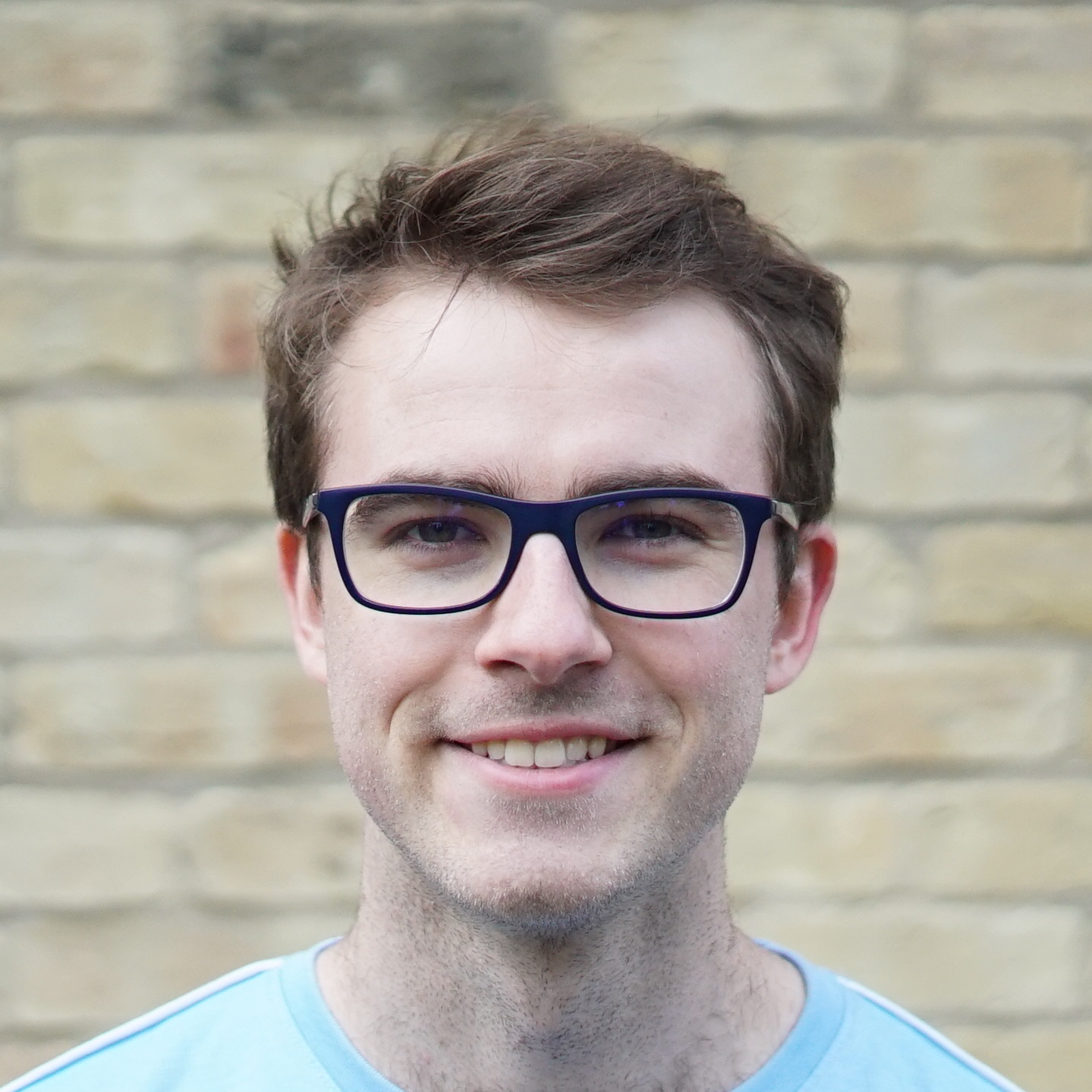
James Urquhart Allingham is a Research Scientist at Google DeepMind , working on the Gemini project. He completed his PhD in the Machine Learning Group at the University of Cambridge under the supervision of José Miguel Hernández-Lobato, with funding from EPSRC, the Michael E. Fisher Studentship in Machine Learning, and the Qualcomm Innovation Fellowship. He was also part of the ELLIS PhD program, advised by Eric Nalisnick at AMLab UvA. Current affiliation: Google DeepMind (Research Scientist) PhD: University of Cambridge (Machine Learning Group) Academic networks: ELLIS PhD program, Darwin College His research focuses on the intersection of Bayesian deep learning and probabilistic methods in deep learning. Key areas include deep generative models , zero-shot classification , prompt engineering , Monte Carlo gradient estimation , and applications to sustainability and climate change . His work has explored energy-based models , neural architecture search , and equivariance in convolutional networks . Selected scientific awards and grants include the Michael E. Fisher Studentship , Qualcomm Innovation Fellowship , and MPhil in Advanced Computer Science with Distinction . He has collaborated with institutions such as the Amsterdam Machine Learning Group (AMLAB) and University of the Witwatersrand .
Vincent Sitzmann is an Assistant Professor at the Massachusetts Institute of Technology (MIT), affiliated with the Computer Science and Artificial Intelligence Laboratory (CSAIL). He leads the Scene Representation Group and is part of the Visual Computing research community at CSAIL. His work focuses on advancing artificial intelligence's ability to perceive and interact with the physical world, particularly through neural fields, 3D scene representations, and robotics. His research bridges computer vision, machine learning, and robotics, aiming to create systems that emulate human perception and decision-making. He holds a dual role in the PI Core/Dual program at MIT and contributes to interdisciplinary efforts in AI & ML, Graphics & Vision, and Robotics. His recent projects include developing generative models for 3D avatars, robust camera pose estimation, and learning-based control for soft robots. He collaborates widely within MIT’s engineering ecosystem and has led initiatives such as the Collaborative Research grant on compositional implicit representations for 3D scene understanding (2022). His lab, the Scene Representation Group, emphasizes scalable 3D reconstruction, material estimation, and embodied AI. Notable technologies include Flowmap for camera calibration and Dittogym for soft robotics control. While no awards are explicitly listed, his work has been featured in top conferences like SIGGRAPH and IEEE Robotics.
Dr. João Henriques is a Research Fellow of the Royal Academy of Engineering (RAEng) at the Visual Geometry Group (VGG), University of Oxford. His research focuses on advancing computer vision, deep learning, and robotics, particularly in areas like 3D scene understanding, reinforcement learning, and multi-agent systems. He is renowned for developing the KCF and SiameseFC visual trackers, which won the VOT Challenge and are deployed in consumer hardware. His work spans 3D geometry, self-supervised learning, causal inference, and neuro-symbolic systems. Key contributions include methods for egocentric video analysis, unsupervised reconstruction, and robot navigation. He leads the VGG's research on neural feature fields, hierarchical scene understanding, and real-time 3D perception. Recent publications emphasize 3D-aware segmentation, universal place recognition, and neuro-symbolic world modeling for robotics. His research often bridges theoretical guarantees with practical applications, such as medical imaging and autonomous systems. Dr. Henriques collaborates with industry and academia on AI ethics, friendly AI, and interpretable learning. His lab hosts DPhil students advancing creative AI applications, such as generative models for gameplay design and LLM evaluations in real-world editorial workflows.
Judith Schoonenboom is a Professor at the University of Vienna and Deputy Head of the Department of Education. She teaches courses in quantitative and interpretive methodologies, research design, and PhD/master's thesis supervision, including seminars like 'Methodology and Research Design' and 'Quantitative Methodologies in Education Science'. Her academic responsibilities reflect a focus on advanced research methodologies in educational contexts. Schoonenboom's research centers on mixed methods and multimethod approaches in education science, emphasizing methodological innovation, data integration, and theoretical development. Key interests include the interplay between qualitative and quantitative research, design patterns in mixed methods, and strategies for enhancing inferential rigor in social science studies. Her work bridges epistemological frameworks with practical research applications. Her scholarly publications demonstrate a consistent focus on advancing mixed methods research, particularly through innovations in design, integration techniques, and theoretical reflection. Recent works explore causal inference in qualitative research, visualization of methodological interactions, and performative approaches, highlighting trends toward interdisciplinary synthesis and practical methodology refinement.
Professor Matthew Simpson is a leading figure in applied mathematics at the School of Mathematical Sciences, Faculty of Science, Queensland University of Technology (QUT). He holds the position of Professor of Applied Mathematics and is an Australian Research Council (ARC) Future Fellow, reflecting his sustained research excellence. His work bridges mathematical theory and biological applications, particularly in cell migration, tissue invasion, and multiscale modeling. BE (Environmental) Honours 1, University of Newcastle (1995–1998) PhD (with Distinction), Environmental Engineering, University of Western Australia (2000–2003) Research Fellow, Department of Mathematics and Statistics, University of Melbourne (2003–2006) ARC Postdoctoral Fellow, University of Melbourne (2006–2009) Lecturer (2010–2011) and Senior Lecturer (2011–2013), QUT Associate Professor (2013–2014), QUT Professor and ARC Future Fellow (2014–present), QUT Matthew Simpson’s research focuses on mathematical and computational modeling of biological systems , particularly collective cell motion, diffusion processes, and reaction-diffusion dynamics. His interests span multiscale modeling , random walk processes , cell biology , and numerical and computational mathematics . He develops and analyzes models to understand phenomena such as wound healing, cancer progression, and tissue engineering. His recent publications (2023–2025) demonstrate a strong trend toward integrating data-driven modeling , likelihood-based inference , and equation learning with traditional mechanistic models. These works emphasize parameter identifiability , uncertainty quantification , and prediction robustness in biological contexts. Themes include sharp-fronted wave propagation, mechanical cell interactions, tumor spheroid formation, and generalized diffusivity in food drying, showcasing the breadth and depth of his modeling expertise. Among his key accolades are: J.H. Michell Medal (2012) – Awarded by ANZIAM for distinguished research by an early-career applied mathematician in Australia and New Zealand. ARC Future Fellowship (2013–2017) – For the project 'New data-driven mathematical models of collective cell motion' (FT130100148). Professor Simpson has also played significant editorial and leadership roles, including: Executive Associate Editor, Journal of Engineering Mathematics Academic Editor, PLoS ONE Editorial Board Member, ANZIAM Journal Co-chair of the 2015 ANZIAM meeting He has supervised PhD students on topics such as moving boundary problems, first-passage times, stochastic simulations, and curvature-dependent growth in biological systems. His research projects have been funded by competitive Australian grants (ARC DP and FT schemes), including studies on 3D cell migration, ghrelin’s role in cell invasion, and epithelial-to-mesenchymal transition in cancer and wound healing. He is actively involved in developing computational tools for biological modeling and promoting best practices in scientific publishing.
Weiwen Jiang is a tenure-track Assistant Professor in the Department of Electrical and Computer Engineering at George Mason University (GMU), affiliated with the College of Engineering and Computing (CEC). He leads the JQub lab, focusing on hardware/software co-design for computing systems, spanning classical (FPGAs, ASICs) and quantum computing applications in AI-driven fields like medical imaging and geophysics. Prior to GMU, he held a postdoctoral position at the University of Notre Dame and earned his PhD in Computer Science from Chongqing University with a joint PhD in Electrical and Computer Engineering from the University of Pittsburgh. His research emphasizes quantum computing, AI accelerators, and domain-specific computing. Notable achievements include the 2025 NSF CAREER Award, ACM Sigda Meritorious Service Award (2024), and IEEE QuantumWeek Best Paper Award (2023). His work is funded by NSF, DoE, ARO, Meta, and Leidos. He co-chaired IEEE QuantumWeek (2023–2025) and created workshops like StableQ at ESWEEK 2023. Key contributions include developing frameworks like QuPAD for quantum learning and JQub's AI-driven geophysical and medical imaging tools. His lab graduated Dr. Yi Sheng (now at University of South Florida) and Dr. Zhepeng Wang (Amazon Applied Scientist). Current research explores quantum machine learning, noise mitigation, and fairness in AI for edge devices.
Daniel Hlubinka is an Associate Professor at the Department of Probability and Mathematical Statistics, Faculty of Mathematics and Physics, Charles University. He has been an academic staff member since 1999 and was promoted to associate professor in 2007. His teaching includes courses like Statistics for Financial Mathematicians 2 (NMFM332) and Proseminar in Probability and Mathematical Statistics (NMSA262). He supervises bachelor's, diploma, and doctoral theses, with over 30 bachelor's, 20 diploma, and 5 doctoral theses supervised to date, including former students now working as associate professors. Education: Mathematical Physics (1989-1994) at Charles University; Erasmus stay at Limburgs Universitaire Center (1994-1995); Doctorate (1995-1999) under Professor Josef Štěpán. Research Interests: Statistics, theoretical foundations, multivariate functional processes, nonparametric asymptotics, data depth, optimal transport, and mathematics of chance. Academic Affiliations: Member of the Union of Czech Mathematicians and Physicists, Czech Mathematical Society, Czech Statistical Society, European Mathematical Society, Bernoulli Society, and Institute of Mathematical Statistics. Hlubinka's recent research focuses on functional data analysis, multivariate quantiles, and nonparametric testing. His work applies optimal transport theory, empirical characteristic functionals, and permutation tests to functional statistical problems. He contributes to methodological advancements in depth-based classification, time reversibility testing, and regression models.
Dr. Hongsheng Hu is currently a Lecturer in the School of Information and Physical Sciences at the University of Newcastle, Australia, specializing in the Data Science and Statistics focus area. Prior to this position, he served as a Postdoc Research Fellow at CSIRO's Data61 from October 2022 to August 2024. His academic journey includes a Doctor of Philosophy in Computer Systems Engineering from the University of Auckland in New Zealand, establishing his foundation in advanced computing systems. Dr. Hu's research centers on enhancing the trustworthiness of machine learning systems, with particular emphasis on identifying critical privacy vulnerabilities within machine learning models and developing robust defensive strategies. His work spans several key domains including adversarial machine learning (30% focus), statistical data science (30% focus), and data and information privacy (40% focus). He investigates membership inference attacks, machine unlearning techniques, and privacy-preserving mechanisms in federated learning environments. His research addresses fundamental challenges in AI security, exploring how machine learning models can be compromised through sophisticated privacy attacks and developing methods to mitigate these vulnerabilities while maintaining model utility. Analysis of Dr. Hu's publication record reveals a strong research trajectory focused on machine learning security and privacy. His work consistently addresses vulnerabilities in machine learning systems, particularly examining membership inference attacks, machine unlearning mechanisms, and privacy-preserving techniques in federated learning. The research spans top-tier venues including IEEE Security & Privacy, USENIX Security, NDSS, NeurIPS, IJCAI, AAAI, and WWW, demonstrating both technical depth and recognition by the research community. His publications show an evolving focus from foundational privacy attacks to developing more sophisticated unlearning techniques and robust defense mechanisms, with increasing citation counts indicating growing impact in the field. Active Program Committee member for USENIX Security, NDSS, ICLR, IJCAI, WWW, ICDM, ECML, and PKDD Invited reviewer for IEEE Transactions on Information Forensics and Security (TIFS), IEEE Transactions on Dependable and Secure Computing (TDSC), IEEE Transactions on Pattern Analysis and Machine Intelligence (IPAMI), and ACM Computing Surveys (CSUR) Dr. Hu currently serves as Course Coordinator for STAT6020 and STAT2020 Predictive Analytics at the University of Newcastle. As an academic supervisor, he co-supervises one PhD student working on 'Identifying and Mitigating Vulnerability in Recommender Systems' at Macquarie University. His research collaborations span multiple countries, with significant publication counts in Australia (18), China (12), New Zealand (10), and the United States (7), reflecting an active international research network focused on AI security challenges.
Subhajit Dutta is an Associate Professor in the Department of Mathematics and Statistics at the Indian Institute of Technology Kanpur. He has established himself as a notable researcher in specialized statistical methodologies with publications in top-tier statistical journals. Dr. Dutta completed his PhD in Statistics from the Indian Statistical Institute (ISI), Kolkata in 2013 under the supervision of Prof. Probal Chaudhuri. His academic journey includes an M.Sc. in Statistics from IIT Kanpur (2007) and a B.Sc. in Statistics from Presidency College, University of Calcutta (2005). He also pursued post-doctoral research at KAUST with Prof. Marc G. Genton. His research focuses on advanced statistical methodologies, particularly in Discriminant Analysis, Inference based on Data Depth, Characterization of Multivariate Distributions, and Classification of Sequence Data. His work bridges theoretical statistics with practical applications, developing robust methods for complex data analysis problems across various scientific domains. Dr. Dutta's publication record shows consistent progression from foundational properties of statistical depth functions to practical applications in classification and sequence analysis, demonstrating both theoretical depth and practical relevance in his scholarly contributions. As a faculty member at IIT Kanpur, one of India's premier technical institutions, Dr. Dutta contributes to both teaching and research in the Department of Mathematics and Statistics, helping to advance statistical science education and methodology development.
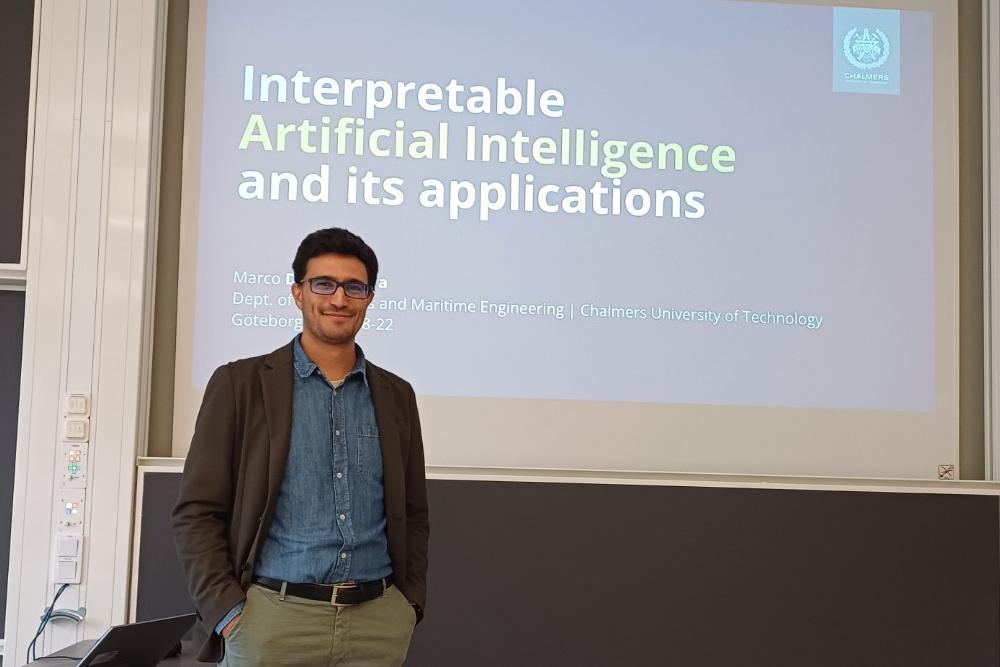
Marco L. Della Vedova is a Senior Lecturer in Applied Artificial Intelligence at Chalmers University of Technology, Sweden. He works in the Vehicle Engineering and Autonomous Systems division within the Department of Mechanics and Maritime Sciences, as part of Prof. Mattias Wahde's research group. Since 2025, he has served as Director of the Data Science and AI master's programme (MPDSC) at Chalmers, where he teaches courses including Introduction to Artificial Intelligence and Digitalization in Sports. Dr. Della Vedova earned his academic foundation at the University of Pavia, Italy, where he completed his BSc (2006), MSc (2009), and PhD (2013) in Computer Engineering. His doctoral research focused on "Real-Time Physical Systems and Electric Load Scheduling" under Prof. Tullio Facchinetti. During his PhD studies, he spent a year at U.C. Berkeley hosted by Prof. Francesco Borrelli at the Model Based Predictive and Distributed Control Lab. His research spans multiple AI domains with a strong emphasis on interpretability. Dr. Della Vedova develops interpretable methods for conversational AI, naturalness evaluation of forests using canopy height models, and geospatial applications. His work bridges theoretical AI with practical societal benefits, particularly in environmental monitoring, transportation systems, and orienteering. He has previously contributed to cloud computing, hate speech detection, and cyber-physical energy systems, demonstrating his interdisciplinary approach to AI research. Dr. Della Vedova's publication record reveals a consistent trajectory of impactful research across multiple domains of artificial intelligence. His recent work shows a strong focus on interpretability in AI systems, with significant contributions to natural language processing, geospatial analysis, and causal inference. The research demonstrates both theoretical depth and practical applications, particularly in environmental monitoring and social media analysis. His methodology often combines traditional machine learning approaches with novel interpretability techniques, creating bridges between complex AI systems and human understanding. Dr. Della Vedova has received several prestigious recognitions for his work: Best PhD thesis award from the Order of the Engineers of Bergamo (2013) Italian champion of Il Cervellone (2012) Top Italian performer in IEEEXtreme 6.0 programming competition (148th overall globally, 2012) Premio Arturo Schena award from Fondazione Credito Valtellinese (2010) With over 50 students supervised through bachelor's and master's theses, Dr. Della Vedova has established himself as a dedicated mentor in the AI community. His current PhD students include Minerva Suvanto working on interpretable NLP and Vivien Lacorre developing AI for railway infrastructure inspection. His supervision spans diverse topics from forest naturalness evaluation to hate speech detection and transportation optimization. Beyond formal supervision, he actively contributes to educational initiatives including serving as Director of Chalmers' Data Science and AI master's program and developing innovative teaching methods that connect theoretical concepts with real-world applications. Dr. Della Vedova is deeply embedded in both academic and professional communities. He leads the Applied Artificial Intelligence research group at Chalmers while maintaining strong connections with European research networks through projects like the ERASMUS+ EUrienteering initiative. His interdisciplinary approach is reflected in collaborations across computer science, environmental science, and social sciences. Notably, he applies his AI expertise to orienteering both as a researcher developing localization methods and as a licensed Event Advisor for the International Orienteering Federation, demonstrating how his professional and personal interests converge in innovative ways.
Rachel Bean is Jacob Gould Schurman Professor of Astronomy at Cornell University and Senior Associate Dean for Math and Science. Her cosmology research focuses on dark energy properties, gravitational physics, and the early universe using cosmic microwave background and galaxy survey data. As co-recipient of the Gruber and Breakthrough prizes, she contributed to precision cosmology through the WMAP mission. Research develops methods to extract cosmological information from large astrophysical datasets, including cross-correlation techniques between CMB experiments (Atacama Cosmology Telescope, Simons Observatory) and galaxy surveys (DESI, Rubin LSST). Current projects investigate modified gravity constraints using cluster abundances and novel statistical approaches to kSZ velocity reconstruction. Publication themes include precision cosmology, gravity tests, and multi-messenger astrophysics. Recent work advances machine learning applications for cosmological inference, while earlier research established foundations in semiconductor device physics. Articles consistently demonstrate innovative approaches to cosmological parameter estimation and physical theory testing. Awards: Gruber Prize (2012), Breakthrough Prize (2018), Presidential Early Career Award, and Cottrell Scholar Award. Leadership includes former chair of LSST Dark Energy Science Collaboration and service on the Astronomy and Astrophysics Advisory Committee.
Gert Zöller is an Associate Professor of Applied Mathematics at the University of Potsdam, specializing in statistical seismology and mathematical modeling of earthquake processes. He has held this position since 2018, following a period from 2008-2018 as a Research Associate and Lecturer at the Institute of Mathematics at the University of Potsdam. His research focuses on statistical and physical models for earthquakes and other natural disasters, seismic hazard assessment, and extreme value statistics. Dr. Zöller earned his Diploma in Physics from Rheinische Friedrich-Wilhelms-University Bonn in 1995, his Doctorate (Dr. rer. nat.) from the University of Potsdam in 1999, and completed his Habilitation (Dr. rer. nat. habil.) in 2006. His academic journey included visiting scholar positions at the University of Southern California and the University of California, Santa Barbara in 2005. He has been actively involved in several major research initiatives including the DFG Collaborative Research Center 1294 (Data Assimilation) since 2017 and the DFG Graduate School NatRiskChange (Natural hazards and risks in a changing world) from 2015-2024. His research centers on developing sophisticated statistical models for earthquake forecasting, particularly focusing on the Groningen gas field in the Netherlands where induced seismicity has been a significant concern. Dr. Zöller's work integrates physics-based models with statistical approaches to improve seismic hazard assessment, with recent publications exploring Bayesian methods, Gaussian process modeling, and spatio-temporal analysis of earthquake sequences. His publications span top journals including Journal of Geophysical Research, Geophysical Journal International, and Bulletin of the Seismological Society of America. Dr. Zöller serves as a reviewer for numerous prestigious scientific journals including Science, Geophysical Research Letters, and Journal of Geophysical Research. He was Associate Editor of Nonlinear Processes in Geophysics from 2006-2014 and served as Scientific Officer for 'Earthquake Hazards' in the European Geosciences Union from 2010-2014. His professional memberships include the Seismological Society of America, American Geophysical Union, and European Geosciences Union. Currently, Dr. Zöller teaches 'Mathematics II for Economists' and serves on the Mathematics Examination Board at the University of Potsdam. His ongoing research continues to contribute significantly to the field of statistical seismology and earthquake hazard assessment, with publications extending into 2025.
Lorenzo Strigini is a Professor of Systems Engineering at City St George's, University of London , where he has been affiliated since 1995 and served as Director of the Centre for Software Reliability from 2012–2024. His research focuses on dependability assessment , fault tolerance , and defense in depth for safety, security, and reliability in computer-based and socio-technical systems. He has also explored high-speed networking during his earlier career at the Italian National Research Council (IEI-CNR) and as a visiting scientist at UCLA and Bell Communications Research.