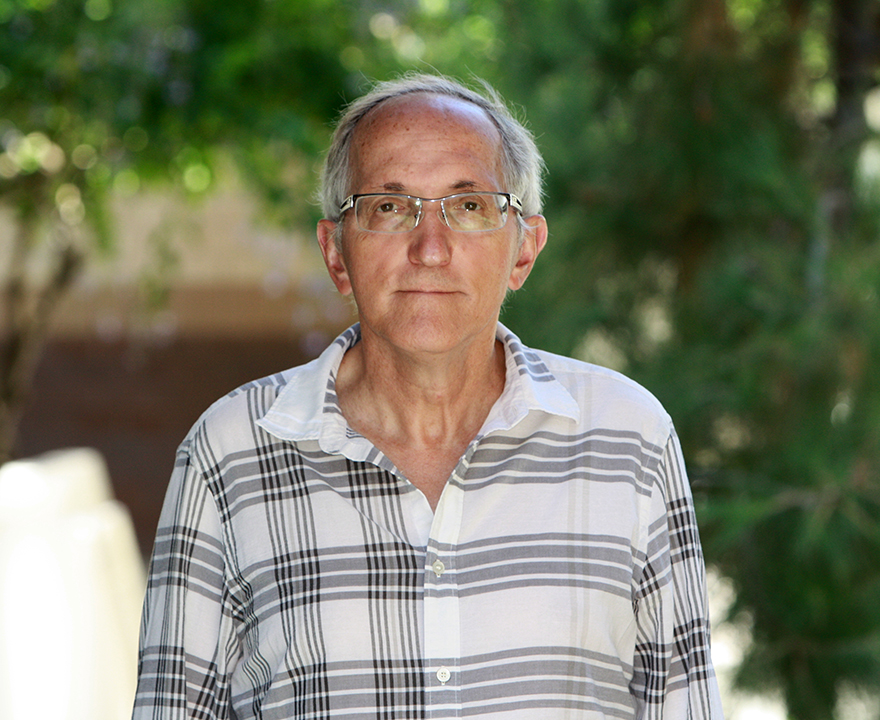
Hans-Georg Müller is a Distinguished Professor of Statistics at the University of California, Davis. His work focuses on functional data analysis, Fréchet analysis of random objects, and applications in longitudinal studies, brain imaging, and aging research. He has contributed to foundational methodologies such as Fréchet regression and Wasserstein-based statistical models. Key research interests include the statistical analysis of non-Euclidean data, covariance structures in high-dimensional spaces, and temporal dynamics of complex systems. Müller has published extensively in top-tier journals like the Annals of Statistics and IEEE Transactions on Information Theory. Awards: 2022 Rietz Lecture & Award (IMS), 2017 Humboldt Research Award, and multiple fellowships from prestigious societies. Advising: Recognized with the 2020 Graduate Program Advising & Mentoring Award at UC Davis. Publications: Over 200 papers, including influential works on Fréchet regression, Cox process regression, and longitudinal brain development studies. His research bridges theoretical statistics with applied domains, particularly in understanding neurodevelopmental processes and the statistical mechanics of aging biomarkers.
Øyvind Ryan is a Senior Lecturer at the Department of Differential Equations and Computational Mathematics at the University of Oslo. He specializes in computational mathematics, signal processing, and random matrix theory. His research integrates theoretical mathematics with practical applications in signal processing, image compression, and wireless communication systems. Research interests include wavelet analysis, numerical methods, statistical inference, and the asymptotic behavior of random matrices. His work often bridges pure mathematics and engineering challenges, such as optimizing channel capacity estimation and developing efficient compression techniques for low-bit-depth images. Key contributions span topics like Vandermonde matrices in cognitive radio systems, free probability theory applications, and runlength-based processing for map images. His articles frequently appear in top journals such as IEEE Transactions on Signal Processing and Acta Applicandae Mathematicae. Affiliated with the Computational Mathematics research group at the University of Oslo, Ryan collaborates on projects involving advanced signal processing methodologies. No specific advising roles or grants are explicitly listed in the provided materials, though his extensive publication record reflects sustained scholarly activity.
Gérard BIAU is a Professor at Sorbonne University, affiliated with the Laboratory of Probability, Statistics, and Modeling (LPSM). He serves as Director of the Sorbonne Center for Artificial Intelligence (SCAI). His research interests span statistical learning, machine learning, data analysis, and mathematical modeling, with a focus on theoretical foundations and applications in artificial intelligence. Key research areas include random forests, neural networks, Wasserstein GANs, and physics-informed machine learning. He has contributed to advancements in convergence analysis of neural networks, optimal transport methods, and statistical methodologies for time series and treatment regimes. His work bridges theoretical computer science and applied mathematics, emphasizing interdisciplinary applications. Notable awards include the Prix Marie-Jeanne Laurent Duhamel (2003), membership in the Institut Universitaire de France (2012–2017), and the Prix Michel-Montpetit-Inria (2018). Collaborations span international institutions like McGill University and industrial partners such as Criteo and EDF. His research output includes foundational studies on random forests, collaborative inference, and gradient boosting, alongside recent breakthroughs in PINNs and Wasserstein-based learning. Industrial partnerships highlight practical applications of his theoretical work in real-world scenarios.
Zygmunt Pizlo is a Professor and Falmagne Endowed Chair in Mathematical Psychology at the Department of Cognitive Sciences, University of California-Irvine. His research focuses on 3D shape perception, computational vision, and the principles underlying human and machine perception. He holds a Ph.D. in Psychology from the University of Maryland and prior degrees in Electrical Engineering from Poland. Pizlo’s work emphasizes symmetry, complexity, and veridicality in shape perception, proposing that the human visual system employs global constraints like symmetry to infer 3D structure from 2D images. His academic lineage traces back to notable mathematicians, and his contributions include pioneering theories on shape constancy, the Traveling Salesman Problem (TSP), and binocular vision models. He co-founded the ViPER Lab, where research explores 3D shape recovery and computational models of perception. Pizlo’s books, such as *3D Shape* (MIT Press, 2008) and *Making a Machine That Sees Like Us* (Oxford, 2014), synthesize his interdisciplinary approach. He collaborates with institutions like the Center for Theoretical Behavioral Sciences and organizes conferences on interdisciplinary vision research. Key themes in Pizlo’s research include the role of symmetry and a priori constraints in perception, the integration of global and local visual cues, and the application of psychological principles to AI. His work bridges cognitive psychology, mathematics, and engineering, aiming to create machines that emulate human visual capabilities.
Yaqing Chen is an Assistant Professor in the Department of Statistics at Rutgers, The State University of New Jersey. Her primary affiliation is with the School of Arts and Sciences (SAS). She holds a Ph.D. and M.S. from the University of California, Davis, and a B.S. from Peking University. Her research focuses on statistical methodologies for complex data structures, including metric space valued data, non-Euclidean objects, functional/longitudinal data, and distributional data. Applications span longitudinal studies, biological and medical sciences, and social sciences. Key areas of innovation include distance profile-based inference, gradient synchronization in brain connectivity analysis, and Wasserstein regression techniques. Recent work emphasizes neurodevelopmental applications, such as analyzing brain volume trajectories in children and their associations with maternal education. Methodological contributions include R packages like 'fdaconcur' and 'frechet' for functional data analysis and non-Euclidean statistics. Her research bridges theoretical advancements with practical tools for high-dimensional and non-standard data types. Dr. Chen has secured grant funding supporting her work on temporal dynamics of disease spread and neurodevelopmental modeling. She collaborates with interdisciplinary teams in neuroscience and public health. Her lab focuses on developing scalable statistical methods for high-dimensional biomedical data.
Larry Davis is a Professor affiliated with the University of Maryland, College Park. His research focuses on advanced topics in Computer Vision, Machine Learning, and Pattern Recognition, with a particular emphasis on video analysis, deep learning architectures, and applications in surveillance systems. His work spans multiple domains including adversarial machine learning, efficient video recognition frameworks, and object detection techniques. Key research areas include: Development of scalable video analysis models Advances in deep learning for computer vision tasks Optimization of neural network architectures Multi-camera person re-identification systems His publications reflect contributions to both foundational methods (e.g., truncated Cauchy matrix factorization) and applied systems (e.g., adversarial attack mitigation on video transformers). Collaborations with researchers like Zuxuan Wu and Ramani Duraiswami highlight his interdisciplinary approach to solving complex visual recognition challenges.
Shwai He is a PhD student and Affiliate Assistant Professor at the University of Maryland, advised by Ang Li. Their research focuses on advancing AI systems through innovative approaches in large language models (LLMs), fairness in machine learning, and efficient neural network architectures. Key areas include multi-agent systems, causal modeling for bias mitigation, and optimization techniques for mixture-of-experts models. Research interests span artificial intelligence, machine learning, and natural language processing with emphasis on practical applications like healthcare diagnostics and social pairing systems. Notable work includes developing GNWT-based multi-agent digital twins for social platforms and improving LLM transparency through token analysis. Publications highlight contributions to counterfactual fairness, dynamic-depth transformers, and parameter-efficient methods. Current efforts explore computational efficiency in vision-language models and bio-inspired antibody prediction systems. No scientific awards have been mentioned. Advising and grants: Currently a PhD student under Ang Li's supervision. Research involves collaborations across computer science and bioinformatics domains.
Dr. Steven W. McLaughlin serves as the Provost and Executive Vice President for Academic Affairs at Georgia Tech, overseeing all academic units. He is also a Professor in the School of Electrical and Computer Engineering. McLaughlin holds degrees from Northwestern University (B.S.E.E.), Princeton University (M.S.E.), and the University of Michigan (Ph.D.). His research focuses on communications and information theory, with contributions to error control coding, data security, and quantum key distribution. He co-founded CREATE-X, a program that has launched 72 student-led companies and engaged over 1,500 students in entrepreneurship. McLaughlin has authored over 250 publications, holds 36 U.S. patents, and is a Fellow of the IEEE. Awardees include the Chevalier dans l'Ordre National du Mérite (France’s second-highest civilian honor) and the Presidential Early Career Award for Scientists and Engineers (PECASE). His leadership roles include Dean of the College of Engineering and Vice Provost for International Initiatives. He has pioneered initiatives in global engagement and educational innovation, emphasizing interdisciplinary collaboration and technology-driven solutions.
Stefan Szeider is a full professor and chair of the Algorithms and Complexity Group at the Faculty of Informatics, Technische Universität Wien (TU Wien). He also serves as a visiting scientist at UC Berkeley's Simons Institute for the Theory of Computing. His academic journey includes positions at the University of Durham (UK) and the University of Toronto (Canada), and he earned his Mathematics PhD from the University of Vienna in 2001. Dr. Szeider's research focuses on designing efficient algorithms for problems in Artificial Intelligence, automated reasoning, and combinatorial optimization. He leads several initiatives, including the Vienna Center for Logic and Algorithms (VCLA), and has secured funding from the ERC, EPSRC, FWF, and others. His Erdős number is 2, reflecting his collaborative network in mathematics and computer science. Key achievements include the first ERC Starting Grant awarded to an Austrian computer scientist (2009), and awards such as the Highlighted Paper Award at SAT 2023 and Best Paper at CP 2020. He advises numerous PhD students and postdocs, fostering the next generation of researchers in algorithms and complexity. Notable contributions extend beyond academia to public outreach, including initiatives like the 'Algorithms Think Differently' educational program and the 'Algorithms in 60 Seconds' video competition. His work bridges theoretical foundations and practical applications, influencing both academic and real-world computational challenges.
George Karabatsos is a Professor at the University of Illinois at Chicago (UIC), affiliated with the Department of Educational Psychology. His research focuses on developing and applying Bayesian statistical models, computational methods, and psychometric frameworks for complex data analysis. He has contributed to areas such as Bayesian nonparametrics, meta-analysis, causal inference, and educational measurement. His work has been supported by grants from the National Science Foundation, the Spencer Foundation, and the National Institutes of Health. Karabatsos has authored a menu-based statistical software package for analyzing data using over 100 models and served as an Associate Editor for journals like Psychometrika and Computational Statistics and Data Analysis . Education: PhD in Measurement, Evaluation, and Statistical Analysis (MESA) from the University of Chicago, 1998. Research interests include Bayesian modeling, computational statistics, psychometrics, and applications in education and biostatistics. His recent work emphasizes Bayesian methods for addressing issues like hidden bias, sensitivity analysis, and local dependence in statistical inference. Publications span topics such as nonparametric mixture models, meta-analytic techniques, and software development. His articles reflect a focus on methodological advancements and their practical implementation in real-world problems. Grants and advising: Karabatsos has led numerous research projects funded by major institutions. While specific student advisees are not listed, his software contributions indicate involvement in training researchers through accessible tools. Labs/Teams: He is the lead developer of a Bayesian statistical software package, fostering collaboration in applied statistical research.
Jan Friso Groote is a Full Professor and Chair of the Formal System Analysis group in the Department of Mathematics and Computer Science at Eindhoven University of Technology (TU/e). He also holds professorial roles in the EAISI Foundational and EAISI High Tech Systems institutes. Since 2016, he has been working part-time at ASML, contributing his expertise in formal verification to industrial applications. Education: Born in 1965, studied Computer Science at Twente University of Technology (now University of Twente), 1983–1988. PhD in 1991 from the University of Amsterdam with thesis 'Process algebra and structured operational semantics', based on research at CWI (Centrum Wiskunde en Informatica). Jan Friso Groote is a leading researcher in formal methods and software verification. His work focuses on enabling the development of flawless software through rigorous formal analysis. Key research areas include structural operational semantics, model checking, branching bisimulation, protocol verification, and the development of the mCRL2 toolset. His current goal is to integrate formal techniques into complete software system design, improving both development speed and quality. His research has demonstrated that formal methods can reduce development time by a factor of three and increase quality tenfold, with potential for zero-defect software. His recent publications demonstrate sustained contributions in formal verification, including work on mutual exclusion algorithms, industrial control system modeling, probabilistic systems, and efficient bisimulation algorithms. The articles span topics such as tunnel control systems, simulation lower bounds, and formal methods for critical systems, reflecting both theoretical depth and practical application. Scientific Awards: Best Paper Award FACS 2018 FMICS-AVoCS Best Paper Award (2017) Jan Friso Groote has held significant leadership roles in education, including Director of Education for Computer Science (2000–2010) and for multiple bachelor’s and master’s programs. He has advised numerous researchers and supervised a large body of research output (over 320 publications). He leads the Formal System Analysis group and has been involved in projects such as 'Composable Embedded Systems for Healthcare'. His work bridges academia and industry, particularly through collaborations with ASML and Rijkswaterstaat, and he has been a visiting researcher at institutions across Europe and China. He is a key contributor to the mCRL2 toolset, which supports modeling and verification of software behavior with data, time, and probabilities. His research fingerprints highlight strong expertise in model checking, transition systems, software design, and process algebra. He teaches courses such as System Validation, Embedded Software, and Capita Selecta in Formal System Analysis.
Pascale Le Gall is an active researcher specializing in formal methods and computer science, with primary research conducted through the Mathematics and Computer Science for Complexity and Systems laboratory. Their work spans theoretical computer science, software engineering, and interdisciplinary applications in biological systems modeling. Le Gall's research focuses on formal verification techniques, particularly in conformance testing, symbolic execution, and graph transformations. Their work bridges theoretical computer science with practical applications in distributed systems verification, geometric modeling, and biological network analysis. Key research themes include developing frameworks for stochastic process discovery, feature interaction resolution, and topological operations in geometric modeling, demonstrating both theoretical depth and practical implementation value across multiple domains. Analysis of their recent publications reveals a strong trend toward interdisciplinary applications of formal methods, particularly in biological systems. Their work increasingly integrates statistical approaches with traditional formal verification techniques, as seen in Bayesian inference for process discovery and statistical model checking of biological pathways. The research shows consistent development of symbolic execution techniques applied to increasingly complex systems, from abstract data types to distributed biological networks. Pascale Le Gall maintains active collaborations with researchers including Christophe Gaston, Marc Aiguier, and Paolo Ballarini across multiple projects. Their publication record shows consistent output with significant contributions to model-based testing frameworks, geometric modeling using graph transformations, and formal analysis of biological systems. The researcher has contributed to both theoretical foundations and practical implementations of verification techniques, with numerous conference papers and journal articles spanning over 15 years of active research.
Roger Zimmermann is a Full Professor at the School of Computing, National University of Singapore (NUS), where he is also a Co-PI at the Grab-NUS AI Lab and leads the Location AI project. He previously served as Deputy Director of the NUS Smart Systems Institute (SSI) and Co-Director of the Centre of Social Media Innovations for Communities (COSMIC), both funded by Singapore’s National Research Foundation (NRF). Before joining NUS, he was a Research Area Director and Research Assistant Professor at the University of Southern California (USC). Ph.D. in Computer Science, University of Southern California (1998) M.S. in Computer Science, University of Southern California (1994) His research focuses on multimedia systems , spatio-temporal data management , streaming media architectures (especially DASH), machine learning applications , AR/VR , and location-based services . He leads the Media Management Research Lab (MMRL) at NUS, which conducts cutting-edge work in distributed multimedia and intelligent systems. His work combines theoretical depth with real-world applications in urban computing, smart mobility, and immersive media. The recent publications reflect a strong trend toward multimodal learning , spatio-temporal AI , adaptive streaming , and urban intelligence . His team explores zero-shot learning, 3D scene understanding, traffic forecasting, and open-vocabulary audio-visual segmentation, often leveraging foundational models and deep neural architectures. There is a clear emphasis on real-time, scalable systems for smart cities and immersive experiences. Dr. Zimmermann has received numerous accolades, including: DASH-IF Excellence in DASH Award (multiple years) Best Paper Awards at ACM SIGSPATIAL, IEEE ICME, and ACM MMSys Silver Award at ACM MMSys 2020 Grand Challenge IEEE Communications Society Best Editor Award (2017) ACM Distinguished Member (2017) Top 1% Publons Reviewer in Computer Science (2018) He has advised numerous students and led major research initiatives funded by MOE, NRF, A*STAR, NSF, and industry partners like Seagate, Intel, and HP. He has served as General Chair for IEEE MIPR 2023, ACM Multimedia 2020, and IEEE ISM 2015, and as TPC Co-Chair for several top-tier conferences. His editorial roles include Associate Editor for IEEE Transactions on Multimedia (TMM), ACM TOMM, and IEEE OJ-COMS. He leads the Media Management Research Lab (MMRL) , which focuses on intelligent multimedia systems, spatiotemporal data mining, and immersive media technologies. The lab develops scalable solutions for real-world challenges in urban computing, smart transportation, and interactive media.
Dr. Xingjie Wei is an Associate Professor in Business Analytics and Machine Learning at the Centre for Decision Research (CDR), Leeds University Business School, University of Leeds. Her research bridges data science and business management, focusing on understanding human behavior through unstructured data such as images, text, and digital footprints using machine learning and big data analytics. She leads and advises on multiple funded research initiatives and supervises PhD students in related areas. PhD in Computer Science, University of Warwick Research Associate, Psychometrics Centre, Cambridge Judge Business School, University of Cambridge Lecturer, University of Bath Visiting Researcher, National Lab of Pattern Recognition (NLPR), Chinese Academy of Sciences Her research interests include business analytics, unstructured data mining, social computing, human trait analysis, multimodal data, financial risk analytics, and initial coin offerings. She develops algorithms to extract psychological and behavioral insights from digital footprints, with applications in policy, finance, and public services. Her work emphasizes human-centered decision-making and service optimization. The recent publications reflect a strong trend in using machine learning to analyze human traits from visual and textual data, with applications in finance, marketing, and behavioral science. Topics include CEO image analysis, emotion from EEG, facial similarity in films, and tabular data visualization. Her work spans computer vision, affective computing, and behavioral finance, demonstrating interdisciplinary depth. Winner of the 2014 IGI Global's Excellence in Research Journal Award Published in Journal of Corporate Finance , IEEE Transactions on Affective Computing , Annals of Operations Research , and International Marketing Review Active editorial roles in Sensors and Discover Analytics Xingjie Wei has secured and led multiple research grants, including ESRC, Innovate UK, and LUBS Challenge Fund projects. She supervises PhD students and hosts postdoctoral researchers. Her collaborative work includes partnerships with SR Mailing, Katchr, KAIST, and interdisciplinary teams across Leeds. She actively mentors early-career researchers and contributes to academic service through reviewing, conference organization, and public engagement. She is involved in the Centre for Decision Research and leads projects on digital footprints for policy, climate change impacts, and AI-driven decision support. Her team includes current PhD students and research associates working on topics like credit risk, problem gambling, and life quality measurement. She promotes interdisciplinary collaboration and knowledge transfer between academia and industry.
Prof. Dr. Roland Langrock holds the Chair of Statistics and Data Analysis at the Faculty of Economics, University of Bielefeld . He is a spokesperson for the Center for Statistics and a subproject manager in the Transregio 212 NC³ collaboration. His research spans ecological statistics, sports analytics, and time series modeling. 2026–present: Principal investigator for "Data-based indication of fraud in live betting" (DFG) 2025–present: Subproject manager D06 in TRR 212 NC³ 2021–present: ERASMUS representative for Master of Statistical Sciences Research Interests: His work focuses on hidden Markov models for analyzing animal movement, sports performance, and commercial data. Key applications include marine predator behavior , football match dynamics , and fraud detection in betting . He develops flexible statistical frameworks for state-switching processes across domains. Scientific Awards: Multiple German Research Foundation grants (2017–2026) and participation in EU-funded projects. Notable publications in Journal of the Royal Statistical Society , Ecology Letters , and Science . Additional Roles: Member of the Bielefeld Graduate School in Theoretical Sciences, organizer of advanced statistical methods courses, and contributor to software packages like moveHMM . His collaborations extend to marine biology (blue whales), subterranean rodent studies, and retail demand forecasting.