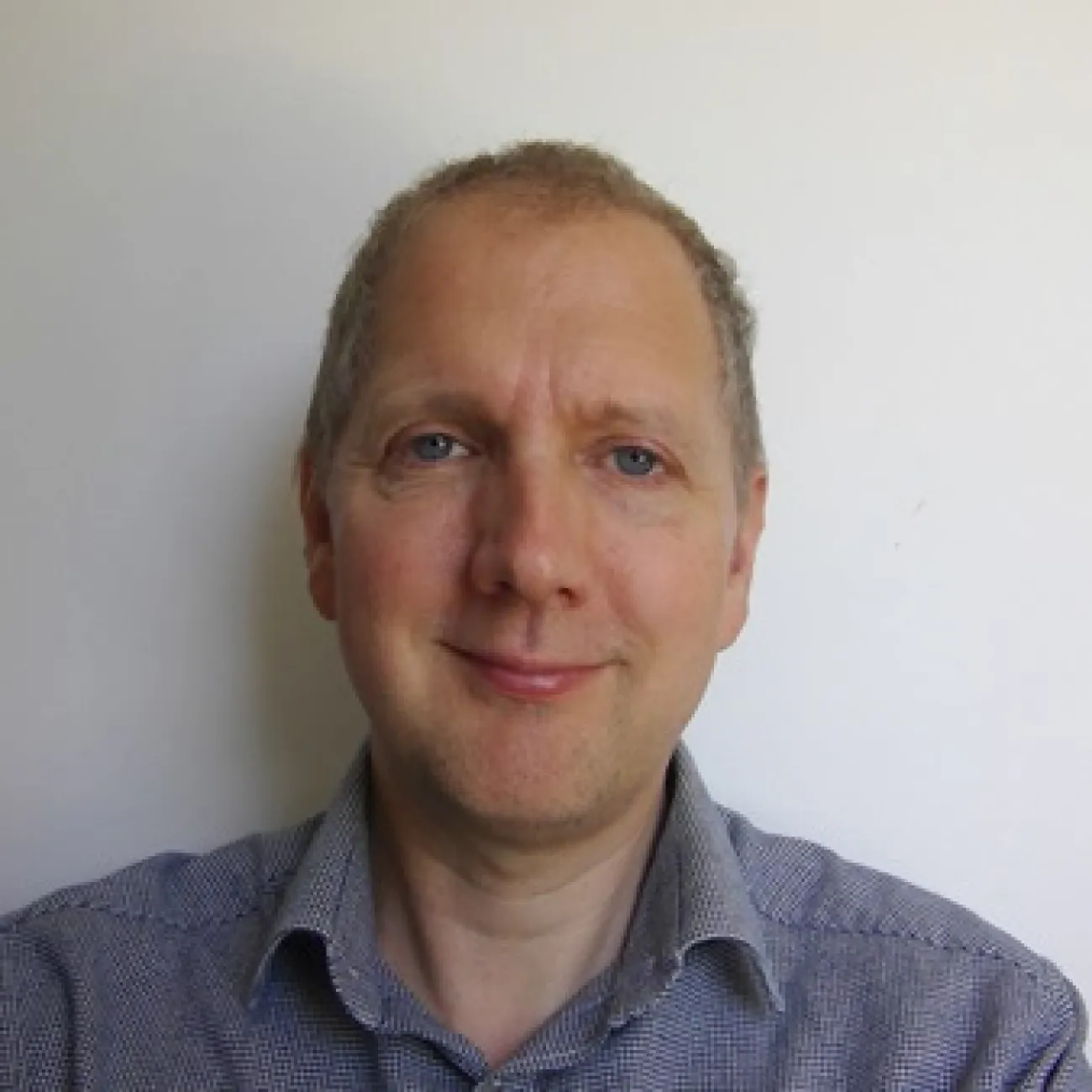
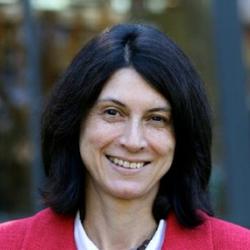
Nicolas Mathevon is a Professor at the University of Saint-Etienne, with a focus on Animal Behavior and Bioacoustics . He currently serves as Director of Studies at Ecole Pratique des Hautes Etudes and leads the ENES Team . His research explores acoustic communication across diverse species, including crocodiles, seals, penguins, and humans, with particular emphasis on vocal recognition, signal evolution, and neurobiological underpinnings. Major collaborations include Dr. T. Aubin (CNRS), Dr. I. Charrier (marine mammals), Dr. N. Grimault (crocodilian bioacoustics), and Prof. D. Reby (human communication). He also co-edits a new book, The Voices of Nature , published by Princeton University Press. His recent work spans ecoacoustic monitoring for conservation, multi-modal communication in crocodiles, and cross-species analysis of distress signals in bonobos, chimps, and humans. Neurobiological studies include brain activation patterns in response to vocalizations and sound localization mechanisms in reptiles. Scientific Awards include senior membership in the Institut universitaire de France .
Georgia Zellou is an Associate Professor in the Department of Linguistics at the University of California, Davis, where she co-directs the Phonetics Lab and conducts award-winning research at the intersection of phonetics, speech perception, and human-AI interaction. Her work investigates how phonetic detail is cognitively represented through variations in speech production, with significant contributions to understanding speech alignment with voice assistants, face-masked speech intelligibility, and cross-linguistic perception of synthetic voices. Her academic credentials include a Ph.D. in Linguistics from the University of Colorado at Boulder (2012), an M.A. in Linguistics from Stony Brook University (2007), and a B.A. in Linguistics & Anthropology from the University of Florida (2005, Cum Laude, Phi Beta Kappa). Ph.D., Linguistics, University of Colorado at Boulder (2012) M.A., Linguistics, Stony Brook University (2007) B.A., Linguistics & Anthropology, University of Florida (2005) Professor Zellou's research program centers on laboratory phonology approaches to real-world communication challenges, examining how acoustic-phonetic details influence speech perception across contexts. Her studies span speech alignment with voice-AI systems (e.g., Amazon Alexa), sociophonetic variation in bilingual speech, and the cognitive mechanisms underlying perceptual compensation for coarticulation. She employs experimental methods including eye-tracking, acoustic analysis, and perceptual testing to uncover how phonetic variation functions pragmatically in human communication and human-machine interaction. Analysis of her 15 most recent publications (2023-2025) reveals three dominant research trajectories: (1) human-AI voice interaction dynamics, including prosodic alignment and social evaluation of TTS voices; (2) intelligibility optimization in challenging contexts (face masks, clear speech for diverse listeners); and (3) cross-linguistic phonetic variation in vowelless words and consonant clusters. These works consistently bridge theoretical phonology with applied speech technology, demonstrating how fine-grained phonetic detail influences communication effectiveness in both human-human and human-machine contexts. Her scientific recognition includes: Fulbright Scholar (2022) for research in France Chancellor’s Award for Excellence in Undergraduate Mentoring (2019) Fellow of the Linguistic Society of America (2020) Amazon Faculty Research Award (2019) for Alexa-related speech studies Dean’s Fellow designation at UC Davis (2020-2023) Professor Zellou maintains an active mentoring practice recognized with the Chancellor’s Award, supervising undergraduate researchers in the Phonetics Lab while teaching core linguistics courses from introductory to advanced graduate levels. Her research program is supported by competitive grants including NSF funding, Amazon Research Awards, and UC Davis internal grants (Hellman Foundation, ISS Junior Faculty Grant), reflecting the translational value of her work for speech technology development. She has co-directed major initiatives including the 2019 LSA Linguistic Institute. The Phonetics Lab she co-leads serves as a hub for experimental phonetics research, focusing on speech production-perception relationships through projects investigating vocal accommodation to voice assistants, nasal coarticulation dynamics, and cross-linguistic prosody. Current collaborations with industry partners aim to implement human speech adaptation principles into voice assistant design to enhance naturalness and engagement.
Rachel Walker is a Professor of Linguistics at the University of California, Santa Cruz (UCSC), affiliated with the Department of Linguistics. Her research focuses on phonology, phonetics, and their intersections with morphology and psycholinguistics, particularly exploring segmental distribution patterns, harmony systems (vowel, consonant, nasal), and the articulatory basis of complex consonants like liquids. She collaborates on documenting the phonetics/phonology of Ladin varieties spoken in the Italian Central-Eastern Alps. Key research themes include: - Long-distance consonantal interactions - Vowel harmony transparency mechanisms - Articulatory phonetics of English liquids - Theoretical phonology (Optimality Theory, Harmonic Serialism) - Language documentation (Ladin, Kinyarwanda, Menominee) Her recent work (2020-2024) emphasizes consonant phonotactics in Ladin, privileged positions in vowel harmony, and articulatory coordination in consonant clusters. Over 80 peer-reviewed publications span journals like Journal of Phonetics , Phonology , and Language , along with influential books such as Vowel Patterns in Language (2011). She holds a PhD in Linguistics and has advised graduate researchers on phonological fieldwork and theoretical analysis.
Michael C. Frank is the Benjamin Scott Crocker Professor of Human Biology at Stanford University and Director of the Symbolic Systems Program. He leads the Stanford Language and Cognition Lab and has pioneered large-scale collaborative projects including Wordbank (open vocabulary data), MetaLab (developmental meta-analyses), ManyBabies (replication network), childes-db (language transcripts), and Peekbank (eye-tracking repository). His research examines children's language learning and its interaction with social cognition, utilizing computational modeling, large datasets, and open science frameworks. Key interests include: Mechanisms of early language acquisition Pragmatic inference in social contexts Cross-cultural variability in cognitive development Data-driven approaches to developmental science Reproducibility and meta-scientific innovation Recent publications (2022-2025) demonstrate strong emphases on: 1) Novel methods for measuring language environments and cognitive abilities, 2) Computational models of learning and perception, 3) Cross-cultural investigations of social cognition, and 4) Infrastructure for open developmental science. The majority employ multimodal data, meta-analytic techniques, and large-scale collaborations. He teaches courses including Experimental Methods, Developmental Psychology, and interdisciplinary seminars on language, cognition, and computation. His lab maintains active research teams across multiple continents through initiatives like ManyBabies and LEVANTE.
Dr. Angelina Vernetti is a Research Scientist at Yale University's Child Study Center, affiliated with the Social and Affective Neuroscience of Autism (SANA) Program. She holds a PhD in Developmental Neuropsychology from Birkbeck, University of London, and completed postdoctoral training at Yale. Her research focuses on social attention, reinforcement learning, and emotional regulation in children with autism, using advanced methodologies like eye-tracking and physiological recordings. Education: PhD in Developmental Neuropsychology, Birkbeck, University of London (2018) MSc in Neurosciences and Neuropsychology, University of Toulouse (2010) BSc in Cell Biology, University of Angers (2008) Research Interests : Dr. Vernetti investigates the neural and behavioral foundations of social difficulties in autism, including social attention mechanisms, emotional regulation abnormalities, and language processing deficits. Her work integrates experimental paradigms with neuroimaging and physiological measures to identify biomarkers for early intervention. Collaborations: She collaborates with prominent researchers like Katarzyna Chawarska and Suzanne Macari, focusing on neurodevelopmental mechanisms and translational research. Her team explores innovative approaches to autism assessment, including live eye-tracking and puppet-based interventions. Labs & Affiliations: Member of the Chawarska Lab and the Center for Brain & Mind Health. Active in training undergraduate, postgraduate, and doctoral students in autism research methodologies.
Diana Tamir is a Professor at Princeton University, where she directs the Princeton Social Neuroscience Lab. She earned her Ph.D. from Harvard University and specializes in the intersection of internal mental processes and external social cognition. Her research investigates: How minds predict others' emotions and mental states The cognitive consequences of self-disclosure and social media use Neural mechanisms of social prediction using fMRI and machine learning Effects of fiction reading on theory of mind Dynamics of spontaneous thought and social bonding Her recent publications (2024-2025) demonstrate strong focus on emotion prediction mechanisms, social interaction dynamics, neural signatures of psychological states, and developmental aspects of social cognition. Methodologically, she employs neuroimaging hyperscanning, ecological momentary assessment, and computational modeling across diverse populations. She currently advises graduate students including Faustine Corbani and Yeaju Diana Kim. Her lab focuses on empirical approaches to understanding how individuals navigate between internal experiences and external social environments.
Dr. Lauren Emberson (she/her/hers) is an Associate Professor in the Department of Psychology at the University of British Columbia, Faculty of Arts. She directs the Baby Learning Lab, which is part of UBC's Early Development Research Group, a consortium focused on infant and child development. Prior to her position at UBC, Dr. Emberson was an Assistant Professor at Princeton University where she co-founded and co-directed the Princeton Baby and Princeton Kid Labs. Education: Postdoctoral Associate, University of Rochester (PI Aslin) Ph.D, Cornell University (PIs Amso, Goldstein, Spivey) B.Sc, University of British Columbia Dr. Emberson's research focuses on learning, perception (audition, vision, crossmodal or multisensory), language development, face/object perception, and attention in infants. She investigates these capacities using behavioral and neuroimaging techniques, particularly fNIRS (functional near infrared spectroscopy), working primarily with very young infants (birth through 1 year) and preterm/premature infants. Her work examines how infants' learning capacities contribute to rapid development of perception in ecological contexts, with implications for understanding how early life experiences affect later outcomes. Analysis of Dr. Emberson's recent publications reveals a consistent focus on infant perception, learning mechanisms, and neuroimaging methodology. Her work increasingly incorporates advanced fNIRS techniques while maintaining focus on fundamental questions about how infants learn from their environment. There's a growing emphasis on individual differences, cross-cultural comparisons, and applications to infants facing developmental challenges. Dr. Emberson serves on the editorial board of Infancy (journal of the International Congress of Infancy Studies) and is a consulting editor for the Journal of Cognitive Neuroscience . Her research has been published in top journals including PNAS, Current Biology, Psychological Science, Cognition, Developmental Science, and the Journal of Neuroscience. Dr. Emberson has secured significant research funding from prestigious organizations including the Bill and Melinda Gates Foundation, James S. McDonnell Foundation, Natural Sciences and Engineering Research Council (NSERC), Canadian Institutes of Health Research (CIHR), and the National Institutes of Health (NIH). She collaborates with clinicians at BC Women's and Children's Hospitals to understand how different early life experiences impact learning and brain development. Dr. Emberson is currently accepting graduate students into her research program. The Baby Learning Lab, under Dr. Emberson's direction, is part of UBC's Early Developmental Research Group and collaborates with multiple institutions. The lab strives to provide interactive research experiences for infants and families while advancing scientific understanding of early cognitive development. The lab acknowledges that it operates on the traditional, ancestral, and unceded territory of the xʷməθkʷəy̓əm (Musqueam) people.
Sven Bölte is a Professor at Karolinska Institutet where he leads the research group focused on Autism, ADHD and other developmental neurological conditions as part of the Center for Neurodevelopmental Disorders (KIND). His work bridges clinical research, education, and practical implementation of evidence-based approaches for neurodevelopmental conditions. Professor Bölte's research spans multiple domains within neurodevelopmental disorders, with particular emphasis on implementing the International Classification of Functioning, Disability and Health (ICF) Core Sets for autism and ADHD using digital solutions. His group has developed and evaluated social skills training programs (KONTAKT, SKOLKONTAKT, iKONTAKT) for autistic children and adolescents, conducted twin research through the Roots of Autism and ADHD Twin Study in Sweden (RATSS), and advanced diagnostic instruments for autism, ADHD, social cognition, and adaptive behavior. His recent publications reveal a strong focus on translating research into practice, with significant work on strengths-based approaches, social inclusion, neurodiversity-affirmative assessment, and the development of practical tools for clinicians and educators. The research demonstrates increasing attention to adult experiences of autism, cross-cultural validation of interventions, and the integration of digital technology in assessment and intervention. Bölte's group also delivers extensive educational components for professionals through KI-Utbildning (Assignment Education), making it one of the largest providers of training on diagnosis and support for individuals with developmental neurological conditions within Karolinska Institutet. His work frequently addresses policy implications, as evidenced by participation in Swedish parliamentary discussions about autism and ADHD.
Kristine H. Onishi is an Associate Professor in the Department of Psychology at McGill University. Her research focuses on cognitive development and language acquisition in infants and adults, including studies on phonotactic learning and infants' understanding of social communication. She is affiliated with the McGill Infant Development Centre. Research interests include: Cognitive Neuroscience, Developmental Science, Language Acquisition, Infant Cognition, Phonotactic Learning, and Social Cognition. Her work examines how infants learn sound structures and evaluate others' linguistic capabilities. Selected publications highlight investigations into multilingualism perception in infants, the role of talker variation in phonetic learning, and the abstract understanding of speech communication in early childhood. No scientific awards or grants are explicitly listed in the provided text.
Drew Weatherhead is an Assistant Professor (part-time) in the Department of Psychology and Neuroscience at Dalhousie University, affiliated with the Faculty of Science. His research focuses on early language acquisition, sociolinguistic development, and how infants and children process accented speech and speaker characteristics such as race. Education : COGS-P-BCH, Queen’s University PhD, University of Waterloo Postdoctoral Fellow (PDF), University of British Columbia Research Interests : Dr. Weatherhead investigates mechanisms of language acquisition in infants and young children, using methods like eye-tracking and fNIRS. His lab explores how social factors (e.g., race, accent) influence linguistic perception and learning. Key areas include sociolinguistic variation, race-based expectations in word learning, and bilingualism. Publications : His work emphasizes the intersection of social cognition and language development, with recent studies on accent processing, speaker race, and contextual influences on word generalization. Outputs span journals like Developmental Science , Cognition , and Journal of Experimental Psychology . Advising & Labs : Dr. Weatherhead is currently not accepting new Clinical PhD, Honours, or Directed Research students (2026-2027). He leads the Cognition and Language Learning Research Group, focusing on experimental methods to decode early language mechanisms.
Greg Bryant is a Professor and Chair in the Department of Communication at the University of California, Los Angeles (UCLA). His research focuses on cognitive science, vocal communication, and social behavior, integrating acoustic analyses, perception experiments, and cross-cultural field studies. Key research areas include evolutionary psychology, nonverbal communication, verbal irony, music perception, and infant-directed speech. His recent publications explore volitional laughter, vocal features in social judgments, and the cultural evolution of music. Media coverage of his work highlights topics such as animal laughter, affiliation detection in colaughter, real vs. fake laughter perception, and vocal changes during ovulation. He teaches courses like the Evolution of Interpersonal Communication and Communication Theory.
Professor Steve Bell is a faculty member at the University of Southampton, specializing in auditory neuroscience and biomedical engineering. He leads the EPSRC-funded project 'Personalized fitting and evaluation of hearing aids with EEG responses' and is a registered Clinical Scientist. His research focuses on measuring brain responses to sound for hearing and balance system evaluation, optimizing hearing aid technologies, and improving diagnostic methods for infants and elderly patients. He manages the Hearing and Balance Centre Clinic and holds roles in professional organizations like the International Evoked Response Audiometry Study Group. Education & Roles: Professor at University of Southampton Lead researcher on EPSRC project (2015-2025) Council member, International Evoked Response Audiometry Study Group Research Interests: Steve's work centers on evoked responses in hearing and balance systems, evaluating hearing aids/cochlear implants, and developing objective neurophysiological assessment techniques. His lab explores speech processing, signal analysis, and clinical applications of EEG-based methods. Awards: Vice-Chancellor's Teaching Award (201X) Advising & Grants: Accepting PhD students in audiology and biomedical engineering. Principal investigator on EPSRC grant £X million. Collaborates with Prof. David Simpson and Dr. Ben Lineton in the Signal Processing Audio and Hearing Group. Labs & Teams: Part of the Signal Processing Audio and Hearing Group, focusing on technological innovation in auditory signal processing and audiological diagnostics.
Professor Usha Goswami is a leading academic in Cognitive Developmental Neuroscience at the University of Cambridge, serving as Professor of Cognitive Developmental Neuroscience and Director of the Centre for Neuroscience in Education. She is also a Fellow at St John's College, Cambridge. Her work focuses on understanding the neural and cognitive foundations of language acquisition, reading development, and developmental disorders such as dyslexia. Key areas of interest include the role of rhythm perception, speech processing, and EEG-based studies of neural entrainment in typical and atypical development. Her research integrates insights from neuroscience, cognitive psychology, and education, emphasizing translational approaches to improve literacy interventions. She has conducted longitudinal studies on infants and school-aged children, examining predictors of language outcomes and the impact of rhythmic training on executive function. Her work bridges developmental linguistics, auditory neuroscience, and educational policy, with a focus on universal speech structures in child-directed communication. Professor Goswami’s contributions include pioneering studies on the neural basis of phonological awareness and the application of machine learning to decode speech information from EEG data in infants. She has also explored cross-linguistic patterns in poetry and infant-directed speech, highlighting universal acoustic features underlying language acquisition. Her research has significant implications for understanding and remediating developmental disorders, particularly dyslexia and developmental language disorder. Her lab, the Centre for Neuroscience in Education, focuses on translating neuroscientific findings into practical educational strategies. Current projects include investigating rhythm-based interventions for children with language difficulties and analyzing the acoustic properties of speech in diverse linguistic contexts.
Nuria Sebastian Galles is a Full Professor at the Universitat Pompeu Fabra (UPF), affiliated with the Department of Engineering and the UPF Center of Studies in Natural and Artificial Intelligence. Her career includes roles as Associate Professor (University of Barcelona, 1988-2002) and Full Professor (since 2002). She leads the Speech Acquisition and Perception (SAP) Research Group and coordinates major projects such as the BRAINGLOT consortium on bilingualism and cognitive neuroscience. Dr. Galles has received notable awards including the James S. McDonnell Foundation Award and ICREA Academia Prize, and served on the European Research Council Scientific Council. Her research focuses on cognitive neuroscience, bilingualism, and infant language development, leveraging EEG, brain imaging, and behavioral studies. Education: PhD in Experimental Psychology (University of Barcelona, 1986), postdoctoral training at Max Planck Institute and LSCP-CNRS (Paris). Visiting scholarships include University of Pennsylvania, University College London, and University of Chicago. Research Interests: Bilingualism's impact on cognition, neurobiological foundations of language acquisition, infant speech perception, and social cognition. Current projects include ERC-funded studies on attention-language links and cognitive effects of walnut consumption in adolescents. Publications: Over 100 peer-reviewed articles in journals like Science , PNAS , and Developmental Science , with a focus on bilingualism, phonetic categorization, and social hierarchy processing in infants. Editor of Developmental Science and Language Learning and Development . Grants & Teams: ERC Advanced Grant (Under Control), Consolider-Ingenio 2010 (BRAINGLOT). Lab collaborations include multi-country studies on traffic pollution’s cognitive impact and walnut-based dietary interventions.
Eiling Yee is an Associate Professor in the Department of Psychological Sciences at the University of Connecticut. She holds a Ph.D. from Brown University (2005) and leads the Yee Lab, focusing on cognitive and neural representations of concepts. Her research explores semantic memory, spoken word recognition, and how perceptual experiences shape language processing. Research areas include the relationship between sensory input and conceptual processing, with emphasis on the anterior temporal lobe and angular gyrus roles in semantic networks. She employs neuroimaging and eyetracking methods to study abstract vs. concrete concepts, embodiment of knowledge, and lexical-semantic activation in aphasia. Her work bridges cognitive neuroscience, linguistics, and developmental psychology. Notable contributions include studies on manual experience shaping object representations, distributional semantics models, and autism-spectrum traits influencing embodied cognition. The lab's interdisciplinary approach addresses questions about how context and sensory experience shape meaning representation.