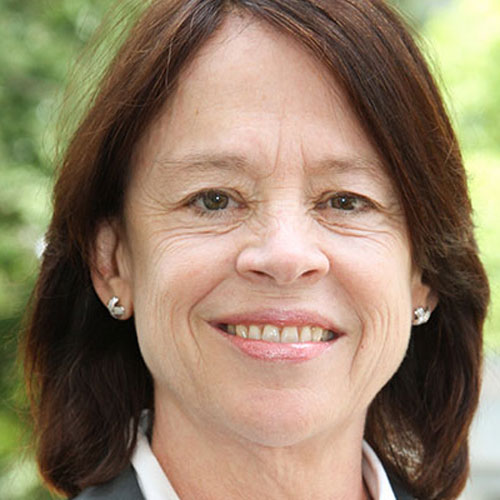
Catherine Mooney is a Professor in the School of Computer Science at University College Dublin (UCD), leading the Life Science Data Analytics Group (LiSDA). Her research focuses on applying machine learning to healthcare challenges, including biomarker development, clinical decision support systems, and addressing ethical and technical barriers in healthcare AI. Education: BSc in [field unspecified] from Trinity College Dublin PhD in Computer Science from UCD Prof Dip University Teaching & Learning from UCD Research Interests: Machine Learning applications in healthcare Biomarker discovery for neurological and metabolic conditions Explainable AI for clinical decision support Promoting diversity and inclusion in STEM education Her work bridges computational methods with medical challenges, emphasizing ethical AI and translational research. Notable Awards: Best Paper Award in Applied Biosciences (2023) UCD Long-Service Award (2022) Best Poster Award at ITiCSE ’20 (2020) Her research has led to impactful tools like LiSDA’s clinical decision support systems for epilepsy and pregnancy care. She also advocates for gender diversity in computing, serving in leadership roles like Vice Principal for EDI in UCD’s College of Science (2022–2024).
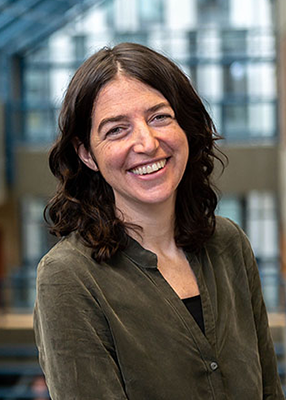
Marlen Fröhlich is a Research Fellow at the Department of Palaeoanthropology within the Faculty of Science at Eberhard Karls University of Tübingen. As a primatologist, she leads the Volkswagen Foundation-funded 'Pathways to Language' project (2022-2028) investigating communicative plasticity in joint action coordination. Her research examines the evolution of human language through comparative studies of great ape communication, with fieldwork conducted across multiple sites studying chimpanzees, bonobos, and orangutans. Her primary research explores: Multimodal communication development in primates Plasticity in gestural and vocal signaling Infant-directed communication patterns Cross-species comparisons of communicative behaviors Environmental influences on communication systems Analysis of her 15 most recent publications (2022-2025) reveals strong emphasis on: Individual variation in primate communication Multimodal signal integration Captive versus wild behavior comparisons Maternal investment strategies Evolutionary pathways to language Significant scientific awards include: Freigeist Fellowship, Volkswagen Foundation (2022-2028) DFG Research Fellowship (2018-2021) Christiane Nüsslein-Volhard Foundation Stipend (2020-2022) PhD Thesis Award, German Primate Center (2016) Erhard Höpfner Award for Master's thesis (2012) She coordinates the Palaeoanthropology lab's research activities and maintains collaborations with field sites studying wild populations of great apes. Current work focuses on understanding how communicative plasticity facilitates coordination in joint action tasks.
Inna Fishman, Ph.D., is a Research Associate Professor at San Diego State University's Department of Psychology within the College of Sciences. Her research investigates brain network organization in autism spectrum disorder (ASD) using multimodal MRI techniques, focusing on developmental trajectories from toddlerhood to adulthood. She directs studies on sensory processing, socioeconomic influences, and neural connectivity patterns in ASD. Research Focus: Dr. Fishman's work bridges social neuroscience and clinical neuropsychology, examining: Early biomarkers of ASD via functional/diffusion MRI Impact of bilingualism and socioeconomic factors on neurodevelopment Sleep disorders and sensory sensitivities in autistic children Aging-related neural changes in adults with ASD Publication Trends: Her recent articles (2021-2025) emphasize: 1) Advanced neuroimaging of ASD across lifespan stages, 2) Machine learning applications for diagnostics, 3) Socioeconomic and environmental modulators of brain development, and 4) Sleep/auditory processing comorbidities. Student Advising & Grants: She mentors doctoral candidates (Lindsay Olson, Jiwandeep Kohli, Bosi Chen) and leads NIH-funded projects including a clinical psychology fellowship for autism evaluation across ages. Laboratory Affiliation: Dr. Fishman co-directs the Brain Development Imaging Laboratories (BDIL), which investigates ASD manifestations through behavioral and neuroimaging approaches.
Dr. Kathryn A. Whitehead is a Professor in the Department of Chemical Engineering and holds a courtesy appointment in the Department of Biomedical Engineering at Carnegie Mellon University. She joined the faculty in 2012 after completing postdoctoral training at MIT. Her research focuses on engineering drug delivery systems for RNA therapeutics, maternal-infant health, and overcoming biological barriers to enhance drug efficacy. Key areas include lipid nanoparticle (LNP) design for mRNA delivery, intestinal permeation enhancement, and leveraging maternal milk cells for therapeutic applications. Education: H.B.Ch.E., University of Delaware (2002); Ph.D., University of California, Santa Barbara (2007); Postdoctoral Fellow, MIT (2008–2012). Research Interests: Drug delivery systems, RNA interference, bionanotechnology, personalized medicine, and translational nanomedicine for diseases such as cancer and diabetes. Her lab develops novel LNPs for targeted delivery to tissues like the liver, brain, and pancreas. Awards and Recognition: AIMBE Fellow, DARPA Young Faculty Award (2016), CMBE Young Innovator Award (2016), MIT Technology Review Innovator Under 35 (2014), and NIH Director’s New Innovator Award. Her work has been cited over 9,000 times, with patents in RNA delivery and permeation enhancers. Lab Members: Active researchers include Ph.D. students, postdocs, and undergraduates working on projects such as LNP formulation, maternal milk cell biology, and siRNA therapies. Notable alumni have advanced to roles at Moderna Therapeutics, Verve Therapeutics, and academic institutions. Grants and Funding: Supported by NIH, DARPA, and industry partnerships. Current projects include NIH grants on pregnancy-safe mRNA delivery and DARPA funding for maternal-infant therapeutics.
Moira Whyte serves as Sir John Crofton Professor of Respiratory Medicine and Head of Edinburgh Medical School at the University of Edinburgh, while directing the MRC University of Edinburgh Centre for Inflammation Research. Her leadership spans clinical academia and major research initiatives focused on respiratory pathophysiology. Her educational background includes a 1st Class B.Sc. (1981), M.B., B.S. (1984), and Ph.D. (1993) from the University of London, complemented by professional qualifications: M.R.C.P. (1987), F.R.C.P. (1998), and F.Med.Sci. (2005) from the Academy of Medical Sciences. Whyte's research centers on neutrophil biology, macrophage function, and hypoxia signaling pathways in respiratory diseases. Her work explores how oxygen-sensing mechanisms like HIF pathways regulate immune cell function in COPD, pulmonary fibrosis, and bacterial infections, with particular focus on cellular metabolism and inflammation resolution. Analysis of her 15 most recent publications reveals consistent focus on neutrophil and macrophage biology within respiratory diseases, with growing emphasis on metabolic regulation of immune responses. Her work bridges basic science (using zebrafish models) with clinical applications, particularly in COPD and pulmonary fibrosis. Her scientific recognition includes: 2014 OBE for Services to Respiratory Medicine 2014 Foundation Fellow of the European Respiratory Society 2005 Fellow, Academy of Medical Sciences 2002 Tudor Edwards Lecturer of the Royal College of Physicians 1994 Wellcome Trust Advanced Fellowship 1989 MRC Clinical Training Fellowship Whyte directs substantial research funding, including a £6.4M Wellcome Trust Clinical PhD Programme (ECAT-Plus) and multiple grants investigating macrophage function in COPD, hypoxia pathways in pulmonary fibrosis, and neutrophilic inflammation regulation. Her collaborative approach is evident in multi-institutional projects like the EME-TIPAC study on pulmonary fibrosis. As Director of the MRC Centre for Inflammation Research, she leads a multidisciplinary team investigating fundamental mechanisms of inflammation across multiple disease contexts, with particular strength in respiratory immunology and translational applications.
Dr. Rong-Hao Liang is an Assistant Professor at Eindhoven University of Technology (TU/e), affiliated with both the Future Everyday Group (Department of Industrial Design) and the Signal Processing Systems Group (Department of Electrical Engineering). His research bridges intelligent sensing systems and user interface technology for ubiquitous computing and embodied human-computer interaction . He co-organized international ACM conferences (CHI, UIST, DIS) and has over 70 peer-reviewed publications and 10 patents. PhD in Computer Science (2014) and MSc in Electrical Engineering (2010) from National Taiwan University Founded GaussToys Inc. in 2015, focusing on magnetic-field sensors Cross-appointed to Electrical Engineering in 2021 His research explores intelligent sensing systems , tangible user interfaces , and physiological sensors for real-world challenges. Key trends in his work include ubiquitous health monitoring (e.g., preterm infants), wearable technology , and innovative interaction design . Articles like GaussBits and NFCStack demonstrate his focus on magnetic and RFID-based tangible systems . Scientific awards include the ACM CHI 2013 Best Paper Award , 2014 Honorable Mentions , and the ACM SIGGRAPH Asia 2012 Emerging Technologies Prize . He mentors passion-driven projects in user interface design and embedded systems , emphasizing technical rigor and creativity. His STRAP project (2020–2025) addresses heart disease prevention via big data and AI . Labs and teams include the Future Everyday Group and Signal Processing Systems Group , with collaborations across healthcare , education , and technology startups . His work aligns with UN Sustainable Development Goals , particularly good health and well-being .
Daniel Hyde is an Associate Professor in the Department of Psychology at the University of Illinois Urbana-Champaign, affiliated with the College of Liberal Arts & Sciences and the Neuroscience Program. His research explores the nature and development of abstract conceptual knowledge through behavioral and neural measures. PhD in Psychology from Harvard University Hyde investigates cognitive development from infancy to adulthood, focusing on quantitative reasoning , spatial reasoning , and psychological reasoning using techniques like event-related brain potentials (ERPs) , functional near-infrared spectroscopy (fNIRS) , and behavioral assessments. His recent work examines how symbolic number knowledge builds on non-symbolic foundations and how neural sensitivity to mental states in infancy predicts later theory of mind abilities. Hyde's publications demonstrate a consistent focus on numerical cognition, multisensory integration, and developmental neuroscience. He leads the Brain and Cognitive Development Lab , participates in global initiatives like ManyNumbers and ManyBabies , and collaborates across disciplines to apply developmental insights to education and public health contexts.
Ashley J Thomas is an Assistant Professor at Harvard University, specializing in infant and child social cognition. Her research explores how young humans develop naive sociology, focusing on social hierarchy, intimacy perception, and moral judgments of parenting decisions. Education: PhD in Psychology (2018), MA in Psychology (2015) from UC Irvine, BA in Architecture (2008) from UC Berkeley. Her work reveals infants use caregiver interactions to evaluate social partners and demonstrates that saliva sharing serves as a key cue for relationship recognition. She examines how implicit theories of intelligence correlate with brain plasticity beliefs, showing that malleable intelligence theories align with environmental influence acceptance. Scientific awards include the NIH National Research Service Award and multiple fellowships. She has organized symposia on social cognition at the Cognitive Development Society and Society for Research on Child Development conferences.
Dustin Scheinost is an Associate Professor at Yale School of Medicine, affiliated with the Department of Radiology & Biomedical Imaging, Yale Child Study Center, Department of Statistics, and Yale Biomedical Imaging Institute. His research focuses on connectomics , machine learning , and neuroinformatics through the Multi-modal Imaging, Neuroinformatics, & Data Science (MINDS) Lab. Radiology & Biomedical Imaging (Primary) Child Study Center (Secondary) Statistics (Secondary) Wu Tsai Institute Yale Stress Center Research Interests include developing novel statistical and machine learning methods for functional connectivity in big neuroscience data, leading the BioImage Suite Web (BISWeb) platform, and advancing early life neuroimaging through the Fetal, Infant, Toddler Neuroimaging Group (FIT’NG). His work is supported by grants from NIMH, NIAA, NIDA, and NHLBI. Selected Scientific Contributions span functional connectivity in laterality preferences, anti-racist AI governance in psychiatry, self-citation trends in neuroscience, and predictive modeling of mood disorders. He collaborates extensively with Todd Constable and others on multimodal neuroimaging studies.
Diana Tamir is a Professor at Princeton University, where she directs the Princeton Social Neuroscience Lab. She earned her Ph.D. from Harvard University and specializes in the intersection of internal mental processes and external social cognition. Her research investigates: How minds predict others' emotions and mental states The cognitive consequences of self-disclosure and social media use Neural mechanisms of social prediction using fMRI and machine learning Effects of fiction reading on theory of mind Dynamics of spontaneous thought and social bonding Her recent publications (2024-2025) demonstrate strong focus on emotion prediction mechanisms, social interaction dynamics, neural signatures of psychological states, and developmental aspects of social cognition. Methodologically, she employs neuroimaging hyperscanning, ecological momentary assessment, and computational modeling across diverse populations. She currently advises graduate students including Faustine Corbani and Yeaju Diana Kim. Her lab focuses on empirical approaches to understanding how individuals navigate between internal experiences and external social environments.
Dr. Michelle Lampl is the Charles Howard Candler Professor at Emory University and Director of the Emory Center for the Study of Human Health. She holds leadership roles in the Emory-Georgia Tech Predictive Health Initiative and the Center for Health Discovery & Well Being. Her academic career spans over three decades, with a focus on human growth and development from an interdisciplinary perspective. Dr. Lampl earned her PhD (1983) and MD (1989) from the University of Pennsylvania. Her research revolutionized understanding of growth patterns through her discovery of saltatory growth (spurt-based growth cycles). Current studies investigate genetic/environmental interactions influencing growth, including hormonal, nutritional, and immunological networks. Her research portfolio includes collaborations with international institutions like the University of Southampton (UK) and NIH-funded projects through NICHD. Over 100 peer-reviewed publications highlight her contributions to developmental origins of health and disease (DOHaD), fetal programming, and pediatric growth mechanisms. Dr. Lampl pioneered the undergraduate College programs in human health and co-developed Emory’s Predictive Health strategic plan. She launched the Predictive Health & Society minor and contributes to the Molecules to Mankind graduate program. Her awards include AAAS Fellowship (2010) and Emory’s top teaching honor. Key areas of impact: Established growth chart limitations through saltation theory Linked maternal nutrition to fetal growth trajectories Advocated for interdisciplinary health education
Dr. Kelley Gabriel is a Professor and Associate Dean in the School of Public Health at the University of Alabama at Birmingham (UAB), with a primary appointment in the Department of Epidemiology. She holds additional roles as a Senior Scientist in multiple UAB research centers, including the Nutrition Obesity Research Center (NORC) and the Integrative Center for Aging Research. Her research focuses on optimizing physical activity and sedentary behavior measurement in large epidemiological studies, with a particular emphasis on cardiorespiratory fitness, chronic disease prevention, and life-course health trajectories. Dr. Gabriel earned her PhD in Public Health (Epidemiology) from the University of Pittsburgh, an MS in Exercise Physiology from Northeastern University, and a BS in Athletic Training and Sports Medicine from Ithaca College. Her research interests include developing methodological strategies for precise physical activity measurement, examining the timing of physical fitness and disease risk, and leveraging cohort studies like CARDIA and SWAN. She has secured grants from NIH, NHLBI, and other agencies to support studies on the 24-hour movement paradigm, cognitive health, and cardiovascular outcomes. Key collaborations involve large-scale epidemiological cohorts such as the Coronary Artery Risk Development in Young Adults (CARDIA) and the Multi-Ethnic Study of Atherosclerosis (MESA). Her over 200 peer-reviewed publications and four book chapters reflect expertise in physical activity epidemiology and translational research. Grants include NIH-funded projects on cognitive resilience to Alzheimer’s disease, cardiovascular health trajectories, and the role of activity patterns in aging populations. Her work emphasizes translational strategies to improve public health through evidence-based lifestyle interventions. Dr. Gabriel leads multidisciplinary teams at UAB, contributing to initiatives like the Osteoporosis in Men (MrOS) Study and the Cooper Center Longitudinal Study. Her research integrates wearable technologies, biomarker analysis, and advanced statistical methods to address global health challenges related to physical activity and chronic disease.
Andrew Perfors is a Professor of Psychology at the University of Melbourne, leading the Computational Cognitive Science Lab and directing the Complex Human Data Hub. His research focuses on quantitative approaches to higher-order cognition, including concepts, language, decision-making, and misinformation dynamics. He holds a PhD from MIT and degrees from Stanford University. Education: PhD in Brain & Cognitive Sciences, Massachusetts Institute of Technology (2008) MA in Linguistics, Stanford University (2000) Bachelor of Science in Symbolic Systems, Stanford University (1999) Research Interests: He investigates computational models of cognition, cultural and social evolution, and the spread of misinformation. Recent work emphasizes the cognitive mechanisms underlying inductive reasoning, sampling assumptions, and trust in information. Key Projects: Understanding Information and Trust: From the Individual to the Population (2018–2025) Bridging the Meaning Gap: Computational Approach to Semantic Variation (2023–2027) Awards: Recipient of multiple best paper awards for contributions to cognitive science and computational linguistics. Labs & Groups: Leads the Complex Human Data Hub and co-leads the Computational Cognitive Science Lab, focusing on interdisciplinary research in human behavior and data science.
Anne-Mette Hvas is Professor and Dean at the Faculty of Health, Aarhus University, Denmark, where she leads academic and administrative initiatives in health sciences. Her role places her at the forefront of institutional strategy, research development, and interdisciplinary collaboration within clinical and translational medicine. Research Interests: Her work spans hematology, coagulation, platelet biology, neonatal hemostasis, and endocrinology. She investigates thrombotic and bleeding disorders in clinical contexts such as nephrotic syndrome, pregnancy, cancer surgery, and stroke. Her research integrates physiological, pharmacological, and clinical perspectives to improve patient outcomes. The recent publications reflect a strong focus on thrombin generation, platelet reactivity, endothelial dysfunction, and red blood cell behavior in acute and chronic conditions. These studies often involve multicenter collaborations and contribute to evidence-based practices in thromboprophylaxis, surgical safety, and stroke management. Scientific Contributions: Active research in hemostasis and thrombosis across diverse patient populations Leadership in clinical studies on anticoagulation, HIPEC, and neonatal platelet function Investigations into hormonal and cardiovascular aspects of Turner syndrome Advising and Grants: While specific advisees are not listed, her leadership in multiple funded research projects suggests mentorship of junior researchers and clinicians. She has led projects on platelet function in preterm neonates and coagulation in surgical oncology, indicating grant acquisition and team coordination capabilities. Labs and Teams: Though specific lab names are not mentioned, her work implies collaboration with clinical research teams in hematology, neonatology, oncology, and obstetrics at Aarhus University Hospital and affiliated centers.
Dr. Lauren Emberson (she/her/hers) is an Associate Professor in the Department of Psychology at the University of British Columbia, Faculty of Arts. She directs the Baby Learning Lab, which is part of UBC's Early Development Research Group, a consortium focused on infant and child development. Prior to her position at UBC, Dr. Emberson was an Assistant Professor at Princeton University where she co-founded and co-directed the Princeton Baby and Princeton Kid Labs. Education: Postdoctoral Associate, University of Rochester (PI Aslin) Ph.D, Cornell University (PIs Amso, Goldstein, Spivey) B.Sc, University of British Columbia Dr. Emberson's research focuses on learning, perception (audition, vision, crossmodal or multisensory), language development, face/object perception, and attention in infants. She investigates these capacities using behavioral and neuroimaging techniques, particularly fNIRS (functional near infrared spectroscopy), working primarily with very young infants (birth through 1 year) and preterm/premature infants. Her work examines how infants' learning capacities contribute to rapid development of perception in ecological contexts, with implications for understanding how early life experiences affect later outcomes. Analysis of Dr. Emberson's recent publications reveals a consistent focus on infant perception, learning mechanisms, and neuroimaging methodology. Her work increasingly incorporates advanced fNIRS techniques while maintaining focus on fundamental questions about how infants learn from their environment. There's a growing emphasis on individual differences, cross-cultural comparisons, and applications to infants facing developmental challenges. Dr. Emberson serves on the editorial board of Infancy (journal of the International Congress of Infancy Studies) and is a consulting editor for the Journal of Cognitive Neuroscience . Her research has been published in top journals including PNAS, Current Biology, Psychological Science, Cognition, Developmental Science, and the Journal of Neuroscience. Dr. Emberson has secured significant research funding from prestigious organizations including the Bill and Melinda Gates Foundation, James S. McDonnell Foundation, Natural Sciences and Engineering Research Council (NSERC), Canadian Institutes of Health Research (CIHR), and the National Institutes of Health (NIH). She collaborates with clinicians at BC Women's and Children's Hospitals to understand how different early life experiences impact learning and brain development. Dr. Emberson is currently accepting graduate students into her research program. The Baby Learning Lab, under Dr. Emberson's direction, is part of UBC's Early Developmental Research Group and collaborates with multiple institutions. The lab strives to provide interactive research experiences for infants and families while advancing scientific understanding of early cognitive development. The lab acknowledges that it operates on the traditional, ancestral, and unceded territory of the xʷməθkʷəy̓əm (Musqueam) people.