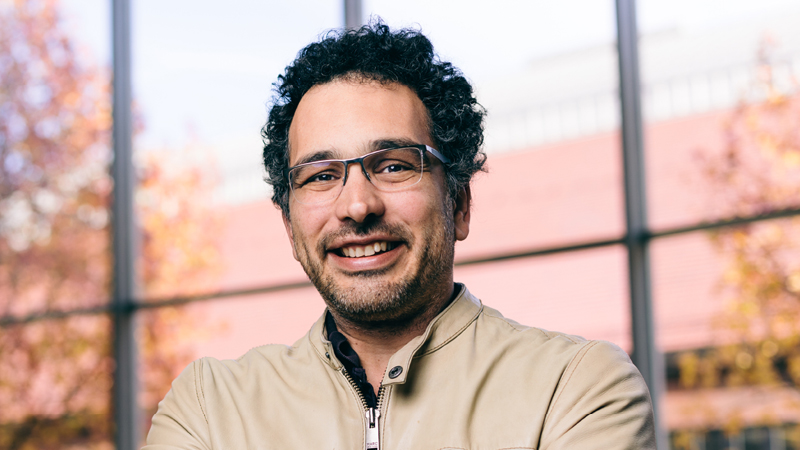
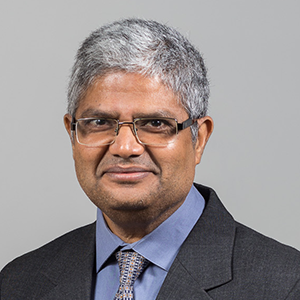
Hadi Esmaeilzadeh is an Associate Professor at the University of California, San Diego in the Department of Computer Science and Engineering . He previously served as an Assistant Professor at Georgia Tech (2013-2017) and holds the Halicioğlu Chair in Computer Architecture . As founder/director of the Alternative Computing Technologies (ACT) Laboratory and associate director of UCSD's Center for Machine Integrated Computing and Security (MICS) , his research drives cross-stack solutions for next-generation computer systems. Early tenure recipient at UCSD Coined the term "dark silicon" in computer architecture Developed Tabla/DnnWeaver open-source frameworks Research Interests span: Approximate Computing Neural Acceleration FPGA/ASIC Hardware Design Machine Learning Systems Dark Silicon Challenges Security/Privacy in Accelerated Systems Scientific Recognition : 4 CACM Research Highlights 4 IEEE Micro Top Picks Distinguished Paper Award (HPCA 2016) Inducted to ISCA Hall of Fame (2018) Teaching : Developed courses on accelerator design (CSE 240D) and alternative computing (CS 8803 ACT) Advocates for hands-on FPGA-based learning in Processor Design with FPGAs courses
Yiping Lu is an Assistant Professor in the Department of Industrial Engineering and Management Sciences at Northwestern University's McCormick School of Engineering. His research focuses on developing interdisciplinary approaches combining domain knowledge (differential equations, stochastic processes), machine learning, and experiments. Key interests include scientific machine learning (AI4Science), stochastic simulation, and robust machine learning. Education: Ph.D. in Applied and Computational Mathematics, Stanford University (2023) B.S. in Computational Mathematics, Peking University (2019) Research Highlights: Hybrid research integrating ML with scientific domains like PDEs and inverse problems Development of Physics-Informed Learning frameworks Contributions to deep learning theory (ResNets, neural collapse) Advances in kernel operator learning and adversarial robustness Awards: CPAL Rising Star Award (2024) University of Chicago Data Science Rising Star (2022) Stanford Interdisciplinary Graduate Fellowship (2021) Labs/Teams: SCALE Lab (Scientific Computation and Learning at Northwestern) Collaborations with NYU's Courant Institute and Stanford
Dr. Lingpeng Kong is an Assistant Professor in the Department of Computer Science at the University of Hong Kong (HKU), affiliated with the School of Computing and Data Science. He obtained his PhD from Carnegie Mellon University in 2017, co-advised by Noah Smith and Chris Dyer. Previously, he was a research scientist at Google DeepMind (2017–2020). His research focuses on natural language processing (NLP), machine learning, and deep learning, particularly in structured prediction and representation learning. He co-directs the HKU NLP Lab. Notable contributions include work on syntactic parsing, neural architecture design, and lifelong learning. He has received an Outstanding Paper Award at EACL 2017. Dr. Kong teaches courses such as Natural Language Processing (COMP3361/COMP7607) and Machine Learning (COMP3314), and has advised multiple research projects at HKU.
Jason Eisner is a Professor in the Department of Computer Science at Johns Hopkins University's Whiting School of Engineering, with a secondary joint appointment in Cognitive Science. He is affiliated with the Center for Language and Speech Processing (CLSP), the Human Language Technology Center of Excellence, and leads JHU's cross-departmental machine learning group. His research focuses on developing probabilistic modeling, inference, and learning techniques for linguistic structure. Eisner has authored over 100 papers in computational linguistics, particularly in parsing, grammar induction, machine translation, computational phonology, computational morphology, and weighted finite-state methods. He is the lead designer of Dyna, a declarative programming language for AI research that allows concise programs backed by efficiency tricks. Eisner's work centers on novel methods in NLP and machine learning, with emphasis on probabilistic modeling and inference in complex, structured settings. His research program combines computer science with statistics and linguistics to create statistical models that capture linguistic structure and develop efficient algorithms for applying these models to data with minimal supervision or through large pre-trained models. As an ACL Fellow, Eisner has made significant contributions to the field. His recent work (2023-2025) shows a strong focus on large language models, semantic parsing, controlled text generation, model interpretability, and privacy-preserving techniques, continuing his long-standing interest in the intersection of probabilistic modeling and linguistic structure. ACL Fellow He teaches courses including Natural Language Processing (601.465/665), Machine Learning: Linguistic and Sequence Modeling (601.765), Declarative Methods (601.325/425/625), and Selected Topics in Natural Language Processing (601.865). His advising focuses on research students through the Argo research group, with emphasis on fundamental research questions in NLP rather than immediate applied engineering.
Josef Urban is a leading researcher at the Czech Institute of Informatics, Robotics and Cybernetics (CIIRC) , Czech Technical University in Prague, heading the ERC Consolidator project AI4REASON . Previously, he held positions as a postdoc at Radboud University Nijmegen and assistant professor at Charles University in Prague, where he co-founded the Prague Automated Reasoning Group. Education Ph.D. in Computer Science (2004), Charles University, Prague M.S. in Mathematics (1998), Charles University, Prague B.S. in Economics (1995), Charles University, Prague Research Interests Urban specializes in automated reasoning over large formalized knowledge bases, combining deductive theorem proving and inductive machine learning . His work aims to realize "strong AI" through formalized mathematics, particularly using systems like Mizar and the AI/TP Challenges . He advocates for computer-verifiable mathematics as a foundation for AI progress. Article Trends Urban's publications focus on integrating machine learning with automated theorem proving in systems like ENIGMA and BliStr . Key trends include semantic guidance for ATPs, premise selection in formal libraries, and automated proof compression via concept invention. Scientific Contributions Head of ERC Consolidator project AI4REASON Marie-Curie Fellow at University of Miami Co-founder of Prague Automated Reasoning Group Editor for Formalized Mathematics Advising and Grants Urban has advised numerous PhD and MSc students including Daniel Kuehlwein, Krystof Hoder, and Yutaka Nagashima. He has secured grants like the ERC Consolidator Grant and Marie-Curie Fellowship . Labs and Collaborations Urban leads the AI4REASON team at CIIRC and collaborates with the Foundations Group at Radboud University. He contributes to projects like Mizar TWiki and XML-based API for Mizar , aiming to create a semantic AI ecosystem for formal knowledge.
Caroline Lemieux is an Assistant Professor at the Department of Computer Science, University of British Columbia (UBC), with research focused on advancing software correctness, security, and performance through innovative testing and synthesis techniques. Her work bridges Programming Languages and Software Engineering , particularly in fuzz testing, specification mining, and program synthesis. PhD from University of California, Berkeley (2021), advised by Koushik Sen Postdoctoral researcher at Microsoft Research, NYC (2021-2022) Key contributions: FuzzFactory , CodaMOSA , Arvada , and Gauss Her research integrates machine learning with traditional testing methods, exemplified by projects like RLCheck (reinforcement learning for test generation) and AutoPandas (neural synthesis for dataframes). Recent publications analyze generator-based fuzzing challenges and propose hybrid strategies combining coverage feedback with AI-driven insights. Scientific Awards : ACM/SIGSOFT Best Paper Award (ESEC/FSE 2019) ACM/SIGSOFT Tool Demonstration Award (ISSTA 2019) ACM/SIGSOFT Distinguished Artifact Award (ISSTA 2019) NSERC Postgraduate Scholarship-Doctoral (PGS D) UBC Governor General's Silver Medal (2016) Teaching roles include: 2025W2: CPSC 539L - Topics in Programming Languages 2024W2: CPSC 410 - Advanced Software Engineering 2023W2: CPSC 410 (with Alex Summers) She supervises graduate and undergraduate researchers working on projects like ExploTest (automated unit test generation) and GRIMOIRE (grammar extraction from pseudo-rules). Her research team collaborates with institutions including Microsoft Research, Google, and academic partners in systems security and AI-driven testing.
Rex Ying is an Assistant Professor in the Department of Computer Science at Yale University's School of Engineering & Applied Science. He leads research in graph neural networks, geometric representation learning, and explainable AI, with applications spanning physical simulations, biology, knowledge graphs, and recommender systems. His lab actively recruits PhD students interested in geometric deep learning, graph neural networks, and trustworthy AI. Dr. Ying received his PhD in Computer Science from Stanford University under Jure Leskovec, with a thesis titled "Towards Expressive and Scalable Deep Representation Learning for Graphs." Prior to that, he graduated from Duke University in 2016 with highest distinction, majoring in Computer Science and Mathematics. His research focuses on three interconnected areas: advancing graph neural network architectures for improved expressiveness, scalability, and interpretability; innovating in geometric representation learning for data with diverse characteristics; and developing real-world applications across scientific domains. He has pioneered influential algorithms including GraphSAGE, PinSAGE, and GNNExplainer, and developed the first billion-scale graph embedding services at Pinterest as well as graph-based anomaly detection algorithms at Amazon. His recent publication trends show a strong focus on hyperbolic geometry for foundation models, non-Euclidean representation learning, and multimodal applications in computational biology. The research demonstrates increasing integration of geometric deep learning with large language models and foundation model architectures. KDD 2022 Dissertation Award 2019 Baidu Scholarship in Artificial Intelligence Dr. Ying actively serves the research community as a committee member for major conferences including AAAI, ICML, NeurIPS, ICLR, KDD, and WebConf for over seven years, and as area chair for LoG 2022. He co-leads the open-source PyTorch Geometric project and has organized numerous workshops on graph learning. His industry collaborations include Pinterest, Amazon, Facebook AI Research, DeepMind, Siemens, SLAC National Accelerator Laboratory, and Saudi Aramco. He teaches "Deep Learning for Graph-Structured Data" at Yale and mentors students in developing cutting-edge graph learning algorithms. His research lab collaborates with both academic institutions and industry partners to advance the state-of-the-art in graph representation learning, with particular emphasis on geometric deep learning and its applications to scientific discovery and real-world systems.
George J. Mailath is the Walter H. Annenberg Professor in the Social Sciences and Professor of Economics at the University of Pennsylvania, and an Honorary Professor at the Research School of Economics, Australian National University. He specializes in microeconomics, noncooperative game theory, repeated games, and the theory of reputations. His research explores pricing strategies, evolutionary game theory, and social norms. Mailath is a Fellow of prestigious institutions including the American Academy of Arts & Sciences and the Econometric Society. He served on the Econometric Society Council (2013-2015, 2020-2023), Game Theory Society Council (2005-2011), and co-founded Theoretical Economics . His editorial roles include editorships at Econometrica , Review of Economic Studies , and others. His 2019 book Modeling Strategic Behavior provides graduate-level insights into game theory and mechanism design. Mailath’s articles focus on strategic interactions, reputation effects, and dynamic game theory. Notable works include analyses of trust in risk-sharing mechanisms and coalition-proof strategies under frictions. His research emphasizes long-term strategic behavior and institutional design.
Robert Dick is a Professor in the Department of Electrical Engineering and Computer Science at the University of Michigan, part of the College of Engineering. He previously held roles as Associate Professor at Northwestern University and Visiting Professor at Tsinghua University. He earned his Ph.D. from Princeton University and a Bachelor's degree from Clarkson University. His research focuses on Embedded Systems, Learning Dynamics, Efficient Machine Learning, Privacy, and Censorship Resistance. Key themes include defining problems with correct costs/constraints, broadening access to information technology, mitigating negative tech impacts, and solving inference problems with limited resources. He leads the Embedded Systems Graduate Program and is a member of the Michigan Integrated Circuits Laboratory (MICL). His work spans thermal management, energy-efficient computing, and low-power wireless networks. Notable contributions include innovations in embedded system design, machine vision frameworks, and sensor networks. Courses taught include EECS 507 (Embedded Systems Research), EECS 373 (Embedded System Design), and ENGR 100 (Autonomous Systems). His recent publications emphasize AI model analysis, energy-efficient networks, and environmental sensing. Projects include MemX (attention-aware wearable tech) and LoRa-based LPWAN protocols. Dick co-founded Stryd, a company commercializing embedded systems innovations.
Cezary Kaliszyk is a Professor in Theoretical Computer Science at the University of Melbourne, previously affiliated with the University of Innsbruck. He is actively involved in research and leadership in formal methods, automated reasoning, and machine learning for theorem proving. Research Interests: Automated Reasoning and Interactive Theorem Proving Formalized Mathematics and Proof Automation Machine Learning for Logic and Theorem Proving Integration of AI with Proof Assistants (Coq, Isabelle) Dependent Type Theory and Higher-Order Logic His recent publications (2023–2025) span topics in dependently-typed logic, learning for proof guidance, formalization of surreal numbers, and blockchain-based formal methods. The works consistently bridge formal logic with machine learning, emphasizing automation, explainability, and cross-system integration. Scientific Leadership and Projects: Principal Investigator, ERC project FormalWeb3 Lead Developer, CoqHammer , Tactician , ProofWeb WG5 Leader, COST Action EuroProofNet (until 2024) Contributor to HOL(y)Hammer , Isabelle Enigma He supervises multiple PhD students and has mentored several graduates in formal methods and AI. He teaches courses in theoretical computer science, logic, and machine learning. There are no listed awards in the provided data, but his extensive publication record and project leadership indicate significant recognition in the field. Labs and Research Groups: He leads a research group focused on formal methods and learning-based reasoning, collaborating internationally on projects involving proof automation, formal libraries, and semantic technologies.
Harish Ravichandar is an Assistant Professor at the School of Interactive Computing , Georgia Institute of Technology, and a core faculty member of the Institute for Robotics and Intelligent Machines (IRIM) . He leads the Structured Techniques for Algorithmic Robotics (STAR) Lab , focusing on structured computational frameworks and learning algorithms with inductive biases to enhance robot efficiency, reliability, and self-sufficiency in human-robot collaboration and complex applications like dexterous manipulation and multi-agent coordination. His research bridges robot learning , human-robot interaction , and multi-agent systems , emphasizing stable, frugal, and safe skill acquisition from human demonstrations. Key themes include intention inference , trajectory optimization , and heterogeneous team coordination , often leveraging Koopman operators , hypernetworks , and graph-based methods . Scientific recognition includes the NSF CAREER Award , IEEE MRS Best Paper Award , and Georgia Tech’s College of Computing Outstanding Post-Doctoral Research Award . His work also received the ASME DSCC Best Student Paper Award and P&W Institute Graduate Fellowship . Harish’s educational background includes a Ph.D. in Electrical and Computer Engineering from the University of Connecticut (2018) , an M.S. from the University of Florida (2014) , and a B.E. in Instrumentation and Control Engineering from Anna University (2012) . He previously held postdoctoral and research scientist roles at Georgia Tech before his current position.
Nathaniel D. Daw serves as the Huo Professor in Computational and Theoretical Neuroscience and Professor of Neuroscience and Psychology at Princeton University, based at the Princeton Neuroscience Institute. His research integrates computational modeling with experimental neuroscience to investigate fundamental mechanisms of learning and decision-making. Daw's research focuses on computational and theoretical neuroscience, specializing in reinforcement learning, memory systems, and decision-making processes. He examines how neural circuits represent value, update beliefs through experience, and balance model-based versus model-free control strategies. His work frequently bridges theoretical frameworks with behavioral and neural data to explain phenomena ranging from habitual behavior to flexible cognitive control. Analysis of his 2025 publications reveals dominant themes in neural replay mechanisms, individual differences in learning trajectories, and clinical applications to eating disorders. His work increasingly incorporates large language models for psychological assessment while maintaining core focus on interpretable cognitive architectures and hierarchical planning. Daw maintains active research operations through the Princeton Neuroscience Institute, an interdisciplinary hub fostering collaboration between computational modelers, neuroscientists, and psychologists to advance understanding of neural mechanisms underlying cognition.
Bruno Felisberto Martins Ribeiro is an Associate Professor of Computer Science at Purdue University, joining the department in Fall 2015. His research focuses on endowing machine learning algorithms with robust invariant representations for relational and temporal data, emphasizing causal and associational tasks. Key research areas include Networking and Operating Systems, Artificial Intelligence, Machine Learning, and Natural Language Processing. He holds a Ph.D. in Computer Science from the University of Massachusetts Amherst (2010). Education: Ph.D., Computer Science, University of Massachusetts Amherst, 2010 Research Interests: Explores invariances in mathematics and machine learning to improve model robustness. Key topics include graph and tensor invariances, causal relationships, adversarial robustness, and applications in recommendation systems, robotics, and drug discovery. His lab’s work has advanced counterfactual task frameworks and causal reasoning in machine learning. Recent Contributions: Recent publications address zero-shot generalization in graph neural networks, causal discovery methods, and defenses against adversarial attacks. His work spans conferences like ICML, NeurIPS, and SIGCOMM. Awards: Best Paper Award at ACM CODASPY 2021 Best Paper Award at SIGMETRICS 2016 Best Paper Award at IEEE NetSciCom 2014 Advising & Students: Supervises current PhD students Beatrice Bevilacqua, Jincheng Zhou, and Yucheng Zhang, along with MSc student Ipsit Mantri. Notable former students include S Chandra Mouli (Meta), Yangze Zhou (Spotify), and Jianfei Gao (Vector Institute). Labs & Teams: Leads research in invariant representations and causal ML, collaborating with institutions like Stanford during his sabbatical. His work bridges theory and practice, impacting areas like network analysis and AI-driven healthcare.
Sanjay Jain is a Provost's Chair Professor in the Department of Computer Science at the School of Computing, National University of Singapore (NUS). His research focuses on theoretical computer science with particular emphasis on inductive inference, recursion theory, complexity theory, and computational learning theory. Education: B.Tech. in Computer Science from Indian Institute of Technology Kharagpur, India (1986) M.S. in Computer Science from University of Rochester, USA (1988) Ph.D. in Computer Science from University of Rochester, USA (1990) Professor Jain's research spans multiple areas of theoretical computer science. His primary contributions are in computational learning theory, where he has made significant advances in understanding the intrinsic complexity of language identification and the limits of inductive inference. His work on recursion theory explores fundamental questions about computability and complexity, while his research in complexity theory addresses structural aspects of computational problems. A notable achievement was his work on "Deciding Parity Games in Quasipolynomial Time," which won the prestigious STOC 2017 best paper award and later the EATCS-IPEC Nerode Prize. Professor Jain's publication record shows a consistent focus on theoretical foundations of computer science, particularly in learning theory and computational complexity. His recent work has expanded into automatic structures, semiautomatic models, and connections between computational learning and algebraic structures. There is a clear progression from foundational work on language identification to more complex models involving automatic functions, transducers, and connections to mathematical logic. Scientific Awards: STOC 2017 Best Paper Award for "Deciding Parity Games in Quasipolynomial Time" EATCS-IPEC Nerode Prize (2021) Professor Jain has served on the editorial board of Information and Computation and has been actively involved in the academic community through program committee memberships for major conferences including COLT, ALT, LATA, TAMC, and PRICAI. He has held leadership roles as program co-chair for ALT 2000 and ALT 2013, and conference chair for ALT 2005. His work has been supported by various research grants, though specific details are not provided in the available materials. Professor Jain leads research in theoretical computer science at NUS, where he has built a strong research group focused on computational learning theory and related areas. His work often involves collaborations with researchers from around the world, particularly with Frank Stephan, with whom he has co-authored numerous papers. His research group has made significant contributions to understanding the fundamental limits and possibilities of computational learning models.
Henry Hoffmann is a Professor and Liew Family Chair in the Department of Computer Science at the University of Chicago. His research focuses on self-aware computing systems that adapt to meet goals like power efficiency, performance, and security. He leads the SEEC project and has contributed to advancements in computer architecture, embedded systems, and quantum computing. Hoffmann received the PECASE (2019), DOE Early Career Award (2015), and was inducted into the Samsung Hall of Fame for discovering vulnerabilities in SmartTVs. He holds a PhD from MIT (2013) and has co-founded Config Dynamics (2019). His work bridges control theory, machine learning, and traditional computer systems to create adaptive solutions for modern computing challenges. Education: PhD in Electrical Engineering and Computer Science from MIT (2013), SM (2003), and B.S. (1999) with highest honors from UNC Chapel Hill. Professional experience includes roles at Tilera Corporation and MIT Lincoln Laboratory. Research Interests: Self-aware systems, adaptive resource management, quantum computing optimization, and cybersecurity. His SEEC framework enables systems to autonomously adapt to constraints like energy and performance. Recent work explores applying adaptive techniques to AI/ML models for energy-efficient inference and security. Awards: Over $19M in research funding, 100+ publications, and leadership roles in NSF Expedition EPiQC (quantum computing). Named Chair of UChicago CS Department (2023-2024). Labs/Teams: Systems Group, EPiQC (quantum computing), and CERES (unstoppable computing systems). Current students include Jerry Ding and Ryien Hosseini. Notable alumni include Yi Ding (now faculty at Purdue) and Nikita Mishra.