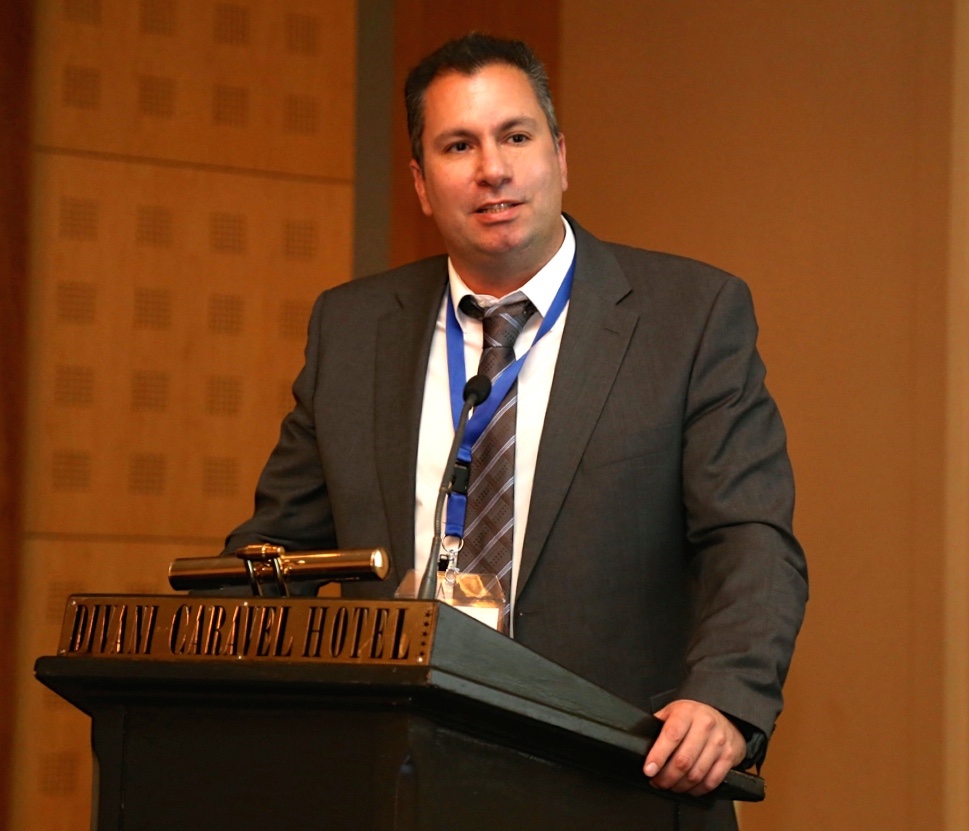
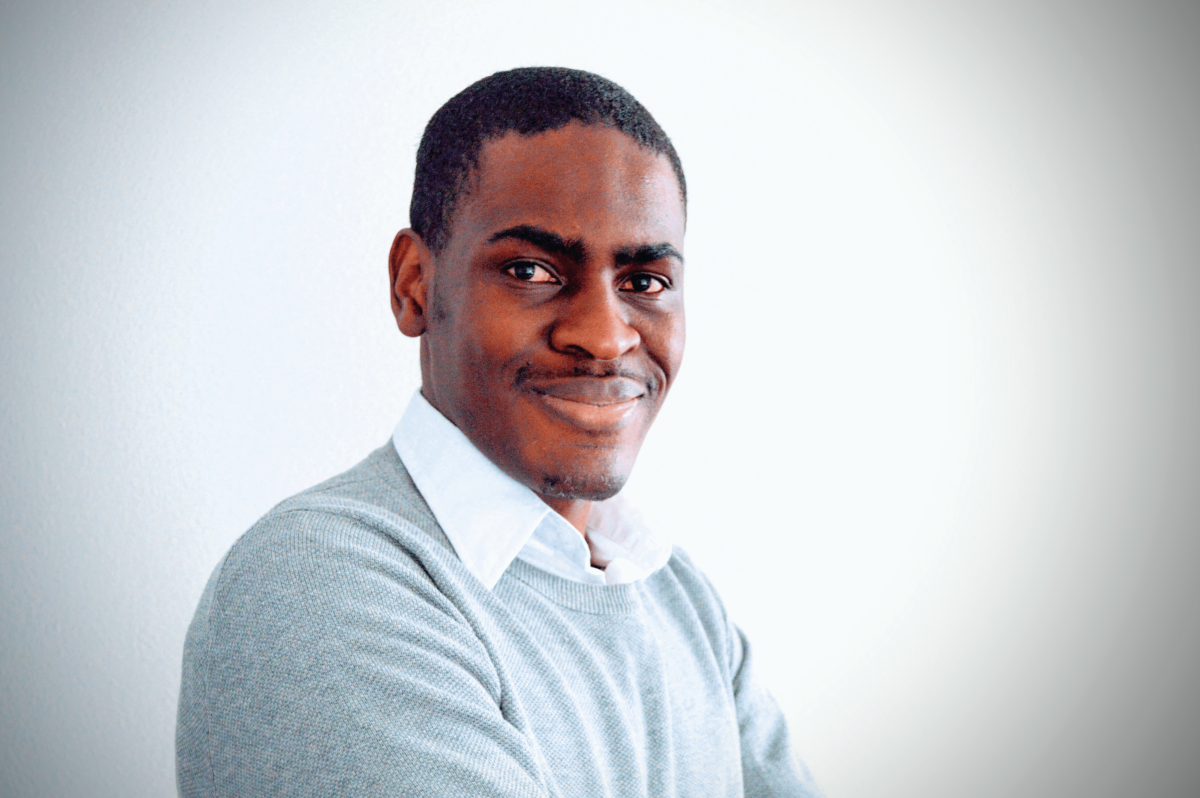
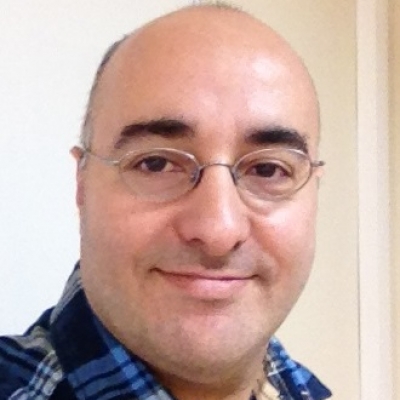
Professor Ilias Maglogiannis is a leading academic in Computational Biomedicine at the University of Piraeus , directing its Computational Biomedicine Laboratory. He holds a PhD from the National Technical University of Athens and has held faculty positions at the University of the Aegean and University of Thessaly before joining the University of Piraeus in 2013. He has served as Dean and Department Chair, leading large-scale EU projects like AI4WORK and MELIORA . His research focuses on AI in Healthcare , including medical imaging, wearable devices, and telemedicine systems. He has published over 400 papers (h-index 46), three books, and serves on editorial boards of journals like IEEE JBHI and Personal and Ubiquitous Computing . Key Awards: Fellow of EAMBES, Senior IEEE Member Leadership: IFIP WG12.5 President (AI Applications) Current Projects: MedSecurance (IoMT security), E-Prevention (mental health monitoring) His teaching includes courses on Pattern Recognition , Telemedicine , and Digital Image Processing . He actively promotes AI ethics and human-centric digital twin technologies in healthcare and education sectors.
Zhigang Zhu is the Herbert G. Kayser Professor of Computer Science at The City College of New York (CUNY), affiliated with the Grove School of Engineering. He holds academic roles in the Computer Science PhD Program and M.S. Program in Cognitive Neuroscience at the CUNY Graduate Center. As Director of the City College Visual Computing Laboratory (CCVCL) and Co-Director of the Master’s Program in Data Science and Engineering, he focuses on advancing assistive technologies, computer vision, and human-computer interaction. His research emphasizes accessibility solutions for visually impaired individuals, leveraging AR/VR, machine learning, and multimodal perception. Education: Ph.D. (Computer Science, with honor) from Tsinghua University (1997), M.E. (1991), B.E. (1988) Affiliations: Department of Computer Science, CCNY; CUNY Graduate Center Research interests include assistive technology applications, augmented reality systems, and energy efficiency analysis. Notable projects include the BLV App Arcade for visually impaired navigation and MAC-U-Vision+ for AMD patients. He has received awards such as the President’s Award for Excellence (2013) and the CUNY Salute to Scholars recognition. His work integrates AI, computer vision, and IoT to address urban accessibility challenges, with contributions to sidewalk material analysis, real-time indoor navigation, and emotion recognition systems. Ongoing projects explore multimodal data fusion and energy-efficient building systems.
Helena Leppäkoski is a Senior Research Fellow specializing in Automation Technology and Mechanical Engineering, with expertise in privacy-preserving indoor localization, GNSS systems, and inertial sensor applications. Her work intersects engineering, signal processing, and security, contributing to advancements in location-based services and mobile object prediction. Education: Doctor of Science (Technology) in Information Technology (2015) Master of Science (Technology) in Electrical Engineering (1990) Research Trends: Helena’s publications focus on privacy-preserving technologies (2019, 2021), GNSS clock offset prediction (2019), and inertial sensor integration (2018–2019). Her work addresses security, accuracy, and scalability in localization systems. Peer Review Activities: Active reviewer for journals including Sensors , IET Signal Processing , and Journal of Navigation (2018–2019).
Kevin Jiokeng is an Assistant Professor in Computer Science at Ecole Polytechnique, working in the Epizeuxis team (Networks research team of LIX laboratory). His research focuses on wireless networks, ubiquitous computing, and their applications in localization technologies, mobile healthcare, and smart environments. Current affiliations: Ecole Polytechnique (since 09/2024), INRIA Lille (03/2022-08/2022), Toulouse INP (PhD, 10/2018-01/2022) Research interests: Wireless networks, ubiquitous computing, localization, mobile healthcare, and smart environments. His recent work involves AI-based network intrusion detection, wireless sensing generalizability, and machine learning applications in smart networking. Scientific achievements: Best student paper award at CoRes 2020 Second prize (ex æquo) of PhD Dissertation Award (GDR RSD & ASF, 2023) 200k€ ANR Young Researcher Program grant (2024) Advising and service: Co-advises two PhD students (Stanislas Lucinski and Lucien Dikla) and serves as reviewer/committee member for IEEE INFOCOM, ACM IMWUT, IEEE WiMob, IEEE CSCN, IEEE SMARTCOMP, ACM SIGCOMM, ACM CoNEXT, and AlgoTel/CoRes conferences.
Muhammad Salman Bashir is a Lecturer in Electrical and Electronic Engineering at the School of Computing and Engineering, University of Huddersfield. He holds a Ph.D. and M.S. in Electrical and Computer Engineering from Purdue University. His research focuses on applying signal processing, information theory, and optimization theory to optical wireless communication, aerial communication systems (UAVs, HAPs, satellites), and target tracking. He has published extensively on topics like UAV relay optimization, LiDAR-assisted acquisition, and beam tracking in turbulent environments. Recent publications highlight his work on trajectory optimization for UAVs, photodetector design, and energy-efficient solutions for non-terrestrial communication networks. He is a Senior Member of IEEE and received the International Fulbright Science and Technology Award for his graduate studies. Key scientific contributions include advancements in free-space optical communication, angle-of-arrival estimation, and GPS-denied navigation techniques. He serves as an Associate Editor for IEEE Communication Letters and collaborates with institutions like Purdue University and King Abdullah University of Science and Technology.
Tiantian Liu is an Assistant Professor in the Department of Computer Science at Aalborg University, under the Technical Faculty of IT and Design. Her research focuses on data engineering and systems, particularly in the context of indoor location-based services and data science. Research Interests: Her work spans data management, indoor positioning, spatiotemporal databases, and scalable systems. She applies techniques from data science and computer science to solve challenges in real-time data processing, data quality, and context-aware applications. The publication trend from 2020 to 2024 shows a consistent focus on data engineering, with topics including indoor LBS, query optimization, distributed systems, and data integration. Her research combines theoretical database principles with practical system implementations. Scientific Awards: Prize (1) Advising and Grants: While no formal students are listed, she has participated in externally funded research projects. She was a project participant in Data Management Foundations for Indoor LBS (2019–2021), contributing to foundational work in indoor data systems. Labs and Teams: She is a member of the Data Engineering, Science and Systems research group at Aalborg University, collaborating on data-intensive systems and applications.
Federico Bergenti is an Associate Professor in Computer Science at the University of Parma, affiliated with the Department of Industrial Systems and Technologies Engineering (DISTI) and the Department of Mathematics, Physics, and Computer Science. He serves as Chair of the AI Lab since 2015 and is actively involved in teaching Artificial Intelligence, Software Engineering, and related courses across multiple degree programs. His educational background includes a Laurea degree (M.Sc.) in Electronic Engineering from the University of Parma (1998) and a Ph.D. in Information Technologies from the same institution (2002). Prior to his academic career, he worked at CSELT S.p.A. (1998-1999) and CNIT (2000-2006). Bergenti's research primarily focuses on Artificial Intelligence and Software Engineering, with special emphasis on multi-agent systems. His work spans agent communication languages, architectures for agent-based middleware, reusability in agent systems, and more recently, agent programming languages based on constraint logic programming. He is among the founders of the JADE initiative and remains active in the Agent-Oriented Software Engineering research community. Analysis of his recent publications reveals a consistent research trajectory centered on agent-oriented programming (particularly JADEScript), indoor positioning systems, neural-symbolic integration, and mathematical modeling of multi-agent dynamics using kinetic theory approaches. His work demonstrates strong interdisciplinary connections between computer science, mathematics, and engineering applications. Professionally, Bergenti has coordinated various scientific initiatives, served on the Senior Program Committee of the AAMAS international conference since 2006, hosted the IEEE WETICE conference in Parma in 2014, and served as Program Chair for WETICE 2016. He has participated in numerous European Commission-funded research projects under the 5th and 6th Framework Programmes. He leads the AI Lab at the University of Parma, where his team develops practical applications of agent-based systems, including indoor localization technologies, health assistance systems, and social network modeling. His research combines theoretical foundations with real-world implementations, particularly through the JADE multi-agent framework.
Huacheng Zeng is an Associate Professor in the Department of Computer Science and Engineering (CSE) at Michigan State University (MSU), part of the College of Engineering. His research focuses on computer networking, wireless communication systems, and sensing technologies with applications in IoT security, signal processing, and machine learning. He received his Ph.D. in Computer Engineering from Virginia Tech in 2015 and was awarded the NSF CAREER Award in 2019. Dr. Zeng’s work spans innovative areas such as radar-based human motion tracking (e.g., RadEye), acoustic emotion decoding, and mmWave network optimization. His recent publications address challenges in device localization, vehicular communication, and secure RFID systems. His research often integrates machine learning techniques with traditional signal processing to enhance system performance and security. Education: Ph.D., Computer Engineering, Virginia Tech (2015) Awards: NSF CAREER Award (2019) His contributions to interference management, jamming-resilient communications, and distributed inference frameworks have advanced both theoretical and applied aspects of wireless networks. While no specific grants or advising details are listed, his extensive publication record reflects active collaboration in cutting-edge research domains.
Santiago Marco Colás is a Full Professor in the Department of Electronics and Biomedical Engineering at the University of Barcelona and leads the Signal and Information Processing for Sensing Systems group at IBEC. His research focuses on advanced computational methods for chemical sensor arrays, gas chromatography-ion mobility spectrometry (GC-IMS), mass spectrometry, and NMR data analysis in metabolomics, biomedical diagnostics, and environmental monitoring. Developed open-source tools like GCIMS R-package for untargeted IMS data analysis Innovated drone-based chemical sensing systems for indoor/outdoor odor mapping Created IoT-enabled respiratory impedance devices with mobile app control Explored machine olfaction algorithms for biomarker discovery in colorectal cancer and COPD Investigated dielectric excitation methods for metal oxide semiconductor sensors His recent work addresses real-time odor quantification in wastewater plants, predictive modeling for postoperative complications, and low-cost IoT respiratory monitoring. Publications span sensor signal processing, calibration transfer techniques, and collaborative STEM education initiatives.
Ali Taylan Cemgil is an Associate Professor at Bogazici University's Department of Computer Engineering, College of Engineering. His research focuses on Bayesian statistics, machine learning, and audio/music processing within the Perceptual Intelligence Laboratory (PILAB). PhD in Computer Science from Radboud University Nijmegen (2004) Postdoctoral research at University of Amsterdam (Intelligent Autonomous Systems Lab) and University of Cambridge (Signal Processing and Communications Lab) Research Interests: Bayesian modeling and time series analysis Audio signal processing and source separation Human-AI collaboration frameworks Probabilistic methods in AI reliability and fairness Scientific Contributions: Recent work explores conformal prediction for model calibration, adversarial robustness in deep learning, and fairness-aware medical AI systems. His research spans theoretical foundations in Bayesian statistics and practical applications in indoor localization and capsule robotics. Academic Service: Current faculty member with extensive publications in AI/ML, signal processing, and probabilistic modeling.
Markus Watzko is a Researcher at the Institute of Geodesy, Graz University of Technology, specializing in positioning systems for underground and indoor environments where GNSS signals are unavailable. His work directly addresses emergency response and military operational challenges through advanced localization technologies. He holds a BSc and Dipl.-Ing. (Master's equivalent) in Engineering. Watzko's research centers on underground navigation and tunnel engineering , utilizing optical radar , mobile robotics , and wireless sensor networks to solve GNSS-denied positioning challenges. His methodology emphasizes factor graph optimization and multi-sensor fusion of inertial data, UWB ranging, and 3D environmental models for real-time tracking in complex subterranean structures. Publication analysis (2022-2025) reveals progressive development from foundational pedestrian positioning systems to collaborative emergency task force solutions. The NIKE BLUETRACK project dominates his output, evolving from basic underground tracking to integrated real-time capabilities with UWB/IMU fusion. His work consistently bridges theoretical algorithm development with practical implementation in operational environments. No scientific awards are documented in available sources. Watzko maintains active research collaborations including a 2025 visit to Czech Technical University in Prague. While student supervision details are absent, his conference presentations indicate knowledge dissemination to scientific audiences. Grant specifics remain undisclosed in public profiles. His research operates within the Institute of Geodesy framework, focusing on the NIKE BLUETRACK system development team. This interdisciplinary group combines geodetic expertise with robotics and wireless communications to deliver operational tracking solutions for underground military and emergency applications.
Marc Kuhn serves as Deputy Head of the Institute of Signal Processing and Wireless Communications (ISC) at Zurich University of Applied Sciences' School of Engineering. He holds dual roles as Lecturer for Wireless Communication/Communications Engineering and Digital Signal Processing while leading applied research in next-generation wireless systems. His educational credentials include: Doctoral degree (Dr.-Ing.) in Communications Engineering from Saarland University (2002) Diplom-Ingenieur (Dipl.-Ing.) in Electrical Engineering from Saarland University (1998) Certificate of Advanced Studies (CAS) in Higher & Professional Education from ZHAW (2022) Marc Kuhn's research focuses on wireless signal processing challenges across multiple domains. His work addresses critical gaps in: Indoor positioning systems using UWB/WiFi/Bluetooth MIMO-OFDM for mobile networks Cooperative communication in MANETs under mobility Timing synchronization for distributed radar QoS optimization in vehicular networks Powerline communication resilience His publication trajectory (2022-2024) reveals concentrated innovation in cooperative MANET techniques, with 60% of recent work tackling synchronization imperfections through SDR implementations. Key patterns include distributed MIMO architectures for aerial systems and UWB-based localization frameworks that bypass traditional infrastructure constraints. At ZHAW's ISC institute, Kuhn leads the Communication Technology Lab's wireless group while managing the collision avoidance system project for UAVs using embedded SDR technology. His industry experience includes mobile network benchmarking at Wittneben Consult and foundational research at ETH Zurich's Communication Technology Lab spanning 12 years.
Dr. Idongesit Ekerete (FHEA, IEEE/IPEM member) is a Lecturer in Computing Science at the School of Computing , Ulster University. He serves as Lab Manager for the Pervasive Computing Research Centre and co-investigator in a £3.3M Advanced Research and Engineering Centre project focused on FinCrime. His academic background includes a B.Eng. (First Class) in Electrical/Electronic Engineering from University of Uyo (2011), M.Sc. in Biomedical Engineering from University of Strathclyde (2017), and a PhD in Unobtrusive Sensing from Ulster University (2021). Current role: Lecturer in Computing Science (Ulster University, since 2021) Past role: Lecturer in Electrical/Electronic Engineering (University of Uyo, 2011–2021) Professional: Vice-Chair of IEEE SMC UK-Ireland Chapter His research focuses on privacy-preserving home monitoring systems using unobtrusive sensing , sensor fusion , and AI activity modeling . Recent publications explore thermal sensor applications for mood detection, federated learning for financial crime detection, and gait analysis for elderly wellbeing. Key themes include human-computer interaction , digital twins , and control systems engineering applied to healthcare contexts. Scientific contributions include: Learning and Teaching Award 2024 for student support UNIUYO Best Graduating Student Award Prof. Hilary’s Academic Excellence Award He has authored 20+ research outputs and led collaborations across biomedical engineering, pervasive computing, and financial crime detection domains.
Prof. Dr. Didier Stricker is a leading academic in computer science, serving as Scientific Director at the German Research Center for Artificial Intelligence (DFKI) and Professor at the University of Kaiserslautern-Landau (RPTU). His career spans over two decades, including leadership roles at Fraunhofer IGD and founding the Augmented Vision research unit at DFKI/RPTU, which now includes ~30 researchers. Education: Electrical Engineering (Technical University of Grenoble, Karlsruhe) PhD: Computer Vision-based Calibration and Tracking Methods for Augmented Reality (2002, TU Darmstadt) His research focuses on virtual and augmented reality , computer vision , human-computer interaction , and on-body sensor networks . He leads major EU/national projects like LUMINOUS (Language-Augmented XR) and SHARESPACE (Ethical Hybrid Shared Spaces), with industrial partnerships including Sony, Google, and John Deere. Recent publications emphasize 3D reconstruction , neural network optimization , and XR systems . Key trends include event camera processing , scene flow estimation , and multimodal AI for industrial applications . He holds patents in AR tracking and has received the 2006 Innovation Prize from the German Society of Computer Science. Scientific Awards : Innovation Prize (2006) Best Paper/Demonstration Awards at ISMAR, EUSIPCO, CVPR, and ICRA As a reviewer for journals and conferences in VR/AR and computer vision, he contributes to shaping research standards. His lab ( AG Augmented Vision ) combines academic and industrial collaborations to advance cognitive interfaces and extended reality systems.
Dr. Yulong Yan is a Professor in the Department of Radiation Oncology at UT Southwestern Medical Center, where he serves as Director of Computational Physics and faculty in the Division of Medical Physics & Engineering. His career spans academic, clinical, and technical domains in radiation oncology and biomedical engineering. Bachelor's & Master's: Nanjing University of Aeronautics and Astronautics Ph.D.: Biomedical Engineering, Southeast University, Nanjing Fellowship/Residency: Stanford University School of Medicine Dr. Yan's research focuses on Medical Physics , Adaptive Radiotherapy , and Deep Learning applications in clinical oncology. Key areas include: Functional lung avoidance techniques (FWAS, virtual bronchoscopy) Deep learning for synthetic CT generation and tumor segmentation Dose verification platforms (ART2Dose) Radiation toxicity modeling for brain and lung treatments Bluetooth-based localization systems for clinical applications MR-only radiotherapy workflows His publications demonstrate expertise in Image-Guided Radiotherapy , Treatment Planning Optimization , and Radiation Dose Modeling , with a 2013–2024 publication record showing sustained contributions to Medical Physics , Radiotherapy and Oncology , and PLOS One . Dr. Yan has served as Associate Editor for Medical Physics and Journal of Clinical Medical Physics , while chairing the Southwest Chapter AAPM Communications and IT Committee since 2014. As an educator since 2013, he mentors medical physics residents and postdoctoral fellows while delivering lectures in the Medical Physics Certificate Program.