Oscar Gonzalez is an Associate Professor of Quantitative Psychology in the L. L. Thurstone Psychometric Laboratory at the University of North Carolina at Chapel Hill. His research focuses on integrating psychometrics with machine learning and addressing measurement challenges in statistical mediation analysis. He holds a BA from the University of Notre Dame (2012) and a PhD from Arizona State University (2018), supported by an NSF Graduate Research Fellowship. Education Background: Bachelor of Arts, University of Notre Dame, 2012 Doctor of Philosophy, Arizona State University, 2018 Key Research Interests: Psychometric applications of machine learning for assessment Impact of measurement quality on mediation conclusions Validation of screening tools and construct overlap evaluation Teaching: Machine Learning in Psychology Advanced Test Theory Statistical Mediation Analysis Grants/Awards: National Science Foundation Graduate Research Fellowship Laboratory Affiliation: L. L. Thurstone Psychometric Laboratory
Espen Moen Eilertsen is a Postdoctoral Fellow at the Department of Psychology, University of Oslo. His research focuses on understanding the genetic and environmental influences on developmental and psychiatric outcomes, leveraging large-scale genomic and family data. Key areas of interest include genome-wide association studies (GWAS), behavioral genetics, and the interplay between genetic predispositions and environmental factors in shaping child and adolescent development. His work integrates advanced statistical methods, including structural equation modeling and polygenic score analyses, to disentangle direct and indirect genetic effects within families. Notable contributions include studies on the genetic architecture of motor development milestones, socioeconomic status, and intergenerational transmission of mental health traits. Recent publications highlight his expertise in investigating assortative mating patterns, gene-environment interactions, and the role of extended family structures in moderating genetic risks. Eilertsen’s research has implications for understanding complex traits and informing preventive strategies in public health.
Dr. Glen Satten is a Professor in the Department of Biostatistics and Bioinformatics at Emory University, with secondary appointments in the Departments of Human Genetics and Biostatistics and Bioinformatics. He is affiliated with the Division of Research in the Department of Gynecology and Obstetrics within the Emory University School of Medicine. His work focuses on developing statistical methods for analyzing microbiome, genetic, and epidemiologic data. Education: Ph.D. in Biostatistics from Harvard University (1985), M.A. in Biostatistics from Harvard (1981), and B.A. from Oberlin College (1979). Research interests include Genetic Epidemiology, Microbiome Research, Genomics, and the development of novel statistical methodologies for high-dimensional biological data. His contributions span computational tools for microbiome analysis (e.g., LDM and MIDASim), bias correction in compositional data, and improving statistical efficiency in genetic association studies. He has also contributed to studies on maternal health outcomes and HIV in pregnancy. His recent publications highlight advancements in microbiome data analysis, including bias detection in mock communities and integrating multiple sequencing modalities. Collaborative work extends to public health surveillance and methodological improvements for case-control studies. No scientific awards are explicitly listed in the provided materials. His research has been applied to clinical settings, such as optimizing embryo transfer protocols using national surveillance data. He advises on statistical methodologies but no student names are provided in the text. Labs/Teams: While not explicitly named, his work suggests involvement in interdisciplinary teams focused on bioinformatics, genetic epidemiology, and clinical data analysis.
Bonsoo Koo is an Associate Professor at Monash University's Department of Econometrics and Business Statistics within the Faculty of Business and Economics. He holds a PhD from the London School of Economics and Political Science. His research focuses on financial econometrics, econometric theory, macroeconometrics, and superannuation, emphasizing economic modelling, estimation, forecasting, and policy analysis. Dr. Koo has secured four Australian Research Council grants, including projects on superannuation sustainability, yield curve dynamics, and state-dependent fiscal multipliers. Recent collaborations span institutions globally, addressing topics like insurance market dynamics, pension planning, and macroeconomic policy impacts. He leads teams in projects such as 'High-frequency Estimation of Term Structure Models' and 'SETAR-Tree Forecasting', demonstrating interdisciplinary expertise in finance and statistics. His work contributes to UN Sustainable Development Goals through retirement income optimization and economic scenario modelling. Publications span journals like Journal of Computational and Graphical Statistics and Insurance: Mathematics and Economics , focusing on Bayesian methods, nonlinear dynamics, and stochastic pricing mechanisms.
Dr. Jessie De Naeghel is a researcher at Ghent University specializing in educational psychology with focus on reading motivation in elementary education. Her work is conducted within collaborative frameworks involving Ghent University's educational research community. Dr. De Naeghel completed her PhD at Ghent University in 2013 with the dissertation Students' autonomous reading motivation: A study into its correlates and promotion strategies in late elementary classrooms , establishing her expertise in self-determination theory applications. Her research examines how teacher autonomy support influences reading motivation, engagement, and comprehension in primary students. Using multilevel modeling approaches, she analyzes hierarchical classroom data to identify student and class-level predictors of motivation. A significant contribution is her development of teacher training protocols that demonstrably enhance autonomous reading motivation through self-determination theory principles. Analysis of her publication trajectory (2009-2016) reveals methodological maturation from descriptive case studies to statistically sophisticated intervention research. Her work consistently bridges theoretical frameworks with practical classroom applications, particularly in teacher professional development contexts. Dr. De Naeghel maintains extensive collaborative networks within Ghent University, particularly with Hilde Van Keer on reading motivation measurement and Maarten Vansteenkiste on self-determination theory applications. Her research demonstrates sustained engagement with both theoretical development and practical implementation in elementary reading education.
Prof. Dr. Judith Tonhauser is a full professor in the Department of English Linguistics at the University of Stuttgart, where she also serves as Vice Rector for Early Career Researchers and Diversity. She previously held positions at The Ohio State University and was a fellow at the Zentrum für Allgemeine Sprachwissenschaft in Berlin and the Center for Advanced Study in the Behavioral Sciences at Stanford University. Her research focuses on natural language meaning, particularly semantics and pragmatics, investigating how meaning arises from linguistic expressions and how listeners interpret communicative intent. She specializes in: Projective content and presupposition phenomena Cross-linguistic studies of English and Paraguayan Guaraní Social meaning including irony and discourse structure Prosody-meaning interfaces Her publications show consistent focus on experimental approaches to linguistic theory, with recent work emphasizing cross-linguistic comparisons, prosodic interfaces, and computational methodologies. The trajectory demonstrates increasing sophistication in experimental design and theoretical modeling. She has received several prestigious awards including: Linguistic Society of America's Early Career Award (2016) Best Paper in Language Award (2014) Humboldt-Forschungsstipendium (2013) Frederick Burkhardt Fellowship (2013) At Stuttgart, she teaches semantics, pragmatics, sociolinguistics and psycholinguistics courses, and advises theses in these areas. She leads research projects involving experimental methodologies and collaborates with international teams investigating language processing and interpretation.
Kristin Nelson is an Assistant Professor in the Department of Epidemiology at Emory University's Rollins School of Public Health. Her research focuses on respiratory infections, particularly tuberculosis and COVID-19, utilizing dynamic modeling, causal inference, and pathogen genomics to understand transmission patterns and intervention impacts. Education: BS (University of Arizona), MPH (Emory University), PhD (Emory University) Her work prioritizes reducing the global burden of respiratory infections through: Quantitative analysis of disease transmission networks Vaccine efficacy and demand creation strategies Causal inference methods for intervention evaluation Genomic epidemiology of drug-resistant pathogens Public health response modeling Global health equity in low-resource settings Dr. Nelson's recent research trends include: Modeling post-vaccination contact behavior changes (2025) Comparative social mixing analysis in rural/urban Mozambique (2025) Workforce transmission dynamics during pandemics (2023-2022) Drug-resistant TB transmission networks in South Africa (2023-2017) Home testing accessibility and serological surveillance (2023)
Veronika CZELLAR is a Professor in Econometrics and Data Science at SKEMA Business School, France. She holds a PhD in Econometrics and Statistics from the University of Geneva (2006) and has held academic positions at institutions including EDHEC, EM Lyon, HEC Paris, and the University of Washington. Her research focuses on simulation-based estimation, financial econometrics, and robust statistics, with publications in top journals such as the Journal of Financial Economics and Journal of Econometrics . She teaches courses on Portfolio Management, Financial Econometrics, and Data Science. Education: PhD in Econometrics and Statistics, University of Geneva, 2006 Master in Econometrics, University of Geneva, 2002 Research Interests: Her work spans simulation-based estimation, financial econometrics, robust statistics, and applications in asset pricing and M&A analysis. Recent studies include multifractal cryptocurrency dynamics and the impact of M&A rumors on transaction values. Key Contributions: Her methods address challenges in indirect inference and robust filtering, with applications in volatility modeling and market participation analysis. She actively presents at conferences such as the Society for Financial Econometrics and SKEMA Finance Seminars. Teaching & Mentorship: Courses include Portfolio Management, Financial Econometrics, R/VBA Programming, and Data Science. While her profile does not explicitly list students, her academic roles suggest involvement in PhD/Master’s advising.
Marco Bee is a Full Professor at the Department of Economics and Management, University of Trento. His expertise spans applied econometrics, computational statistics, finance, and risk modeling. He focuses on methodologies for handling heavy-tailed distributions, extreme value theory, and machine learning applications in financial risk assessment. Education details are available in his CV (CVeng.pdf). His research interests include developing statistical models for operational risk, volatility forecasting, and credit scoring, often employing mixture models, copula-based approaches, and indirect inference techniques. He has contributed significantly to the analysis of spatial econometrics and the application of extreme value theory to financial crises and insurance analytics. His recent work emphasizes tail risk estimation, with over 150 publications since 2006. Notable contributions include methodologies for Value-at-Risk (VaR) forecasting, distribution fitting for skewed data, and the use of machine learning to predict defaults in small businesses. His research bridges theoretical statistics and practical financial applications, with a focus on high-frequency data and scenario-based risk analysis. Awards and grants are not explicitly listed in the provided data, but his extensive publication record reflects recognition in quantitative finance and econometrics. He advises students on topics related to computational econometrics and risk modeling, though specific advisee names are not documented here.
Joachim Grammig is a Professor in the Department of Statistics and Econometrics at the School of Business and Economics, University of Tübingen, Germany. His research lies at the intersection of econometrics and empirical finance, with a focus on asset pricing, financial market microstructure, high-frequency data, and international financial markets. His research interests span Econometrics , Empirical Finance , Asset Pricing , Financial Market Microstructure , High Frequency Data , and International Financial Markets . He develops and applies advanced statistical models to understand price formation, risk, and information flow in financial markets. His recent publications show a strong trend toward integrating structural economic models with modern econometric techniques such as indirect inference, simulation-based estimation, and machine learning. His work frequently addresses long-standing puzzles in asset pricing, including the equity premium, rare disasters, and information asymmetry. He also contributes to methodological advances in duration modeling and specification testing. Diverging Roads: Theory-Based vs. Machine Learning-Implied Stock Risk Premia (2024) Estimating the SARS-CoV-2 Infection Fatality by Data Combination (2022) Empirical Asset Pricing with Multi-Period Disasters (2021) Creative Destruction and Asset Prices (2016) Tell-Tale Tails: A New Approach to Estimating Unique Market Information Shares (2013) He advises PhD students and junior researchers, including Jantje Sönksen and Franziska Julia Peter. His research is supported by access to high-frequency financial data and computational tools, and he emphasizes reproducibility by sharing programs and data. He has collaborated extensively with scholars across Europe and the U.S. He leads a research team in econometrics and empirical finance at Tübingen, fostering a collaborative environment for graduate students and visiting scholars.
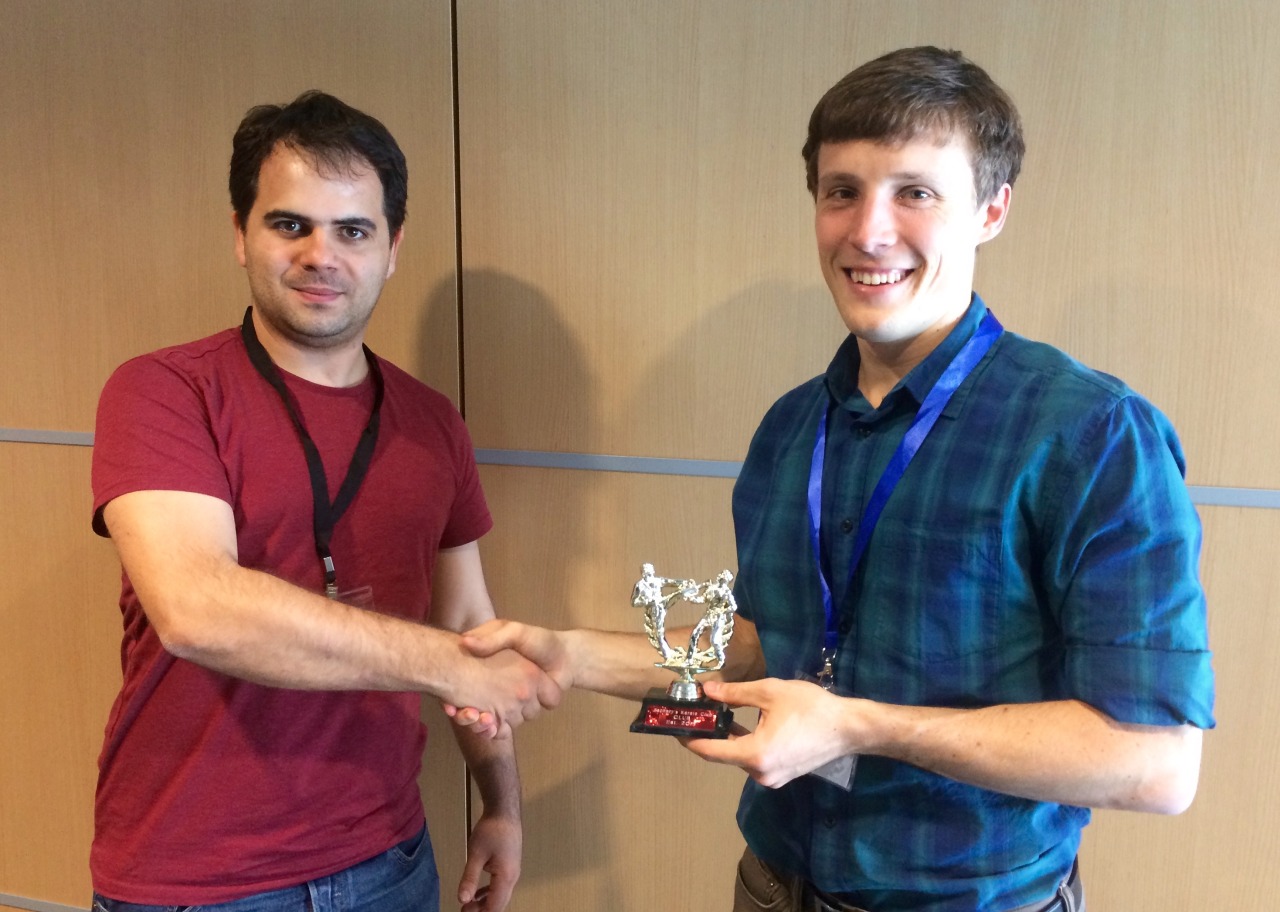
Tiago de Paula Peixoto is a Professor of Complex Systems and Network Science at the Institute of Science and Technology Austria (IT:U), where he leads the Inverse Complexity Lab. He has previously held faculty positions at Central European University (2019–2024) and the University of Bath (2016–2019), and conducted postdoctoral research at the University of Bremen and Technical University of Darmstadt. He holds a PhD in Physics from the University of São Paulo (2008) and a habilitation in Theoretical Physics from the University of Bremen (2017). His research lies at the intersection of statistical physics, computational statistics, information theory, Bayesian inference, and machine learning , with a central focus on inverse problems in network science . His group develops principled mathematical and computational models to infer the local interaction rules of complex systems from observed macroscopic behavior. Key research themes include statistically sound pattern detection in networks, network reconstruction from indirect data, uncertainty quantification, generative modeling of modular hierarchies and latent spaces, and scalable inference algorithms. His recent publications (2020–2025) reflect a consistent focus on advancing the theoretical and algorithmic foundations of network inference. A major theme is the development of Bayesian and information-theoretic frameworks for robust network reconstruction, moving beyond simplistic heuristics like correlation thresholding. He has pioneered methods for posterior sampling to quantify uncertainty and for minimum description length to prevent overfitting. His work also addresses scalability, with algorithms achieving subquadratic time complexity. Applications span diverse domains, including social systems (migration flows), political networks, and biological systems. Erdős–Rényi Prize from the Network Science Society (2019) Alexander von Humboldt Foundation Fellowship (2008) Karate Club Club Prize (6th recipient) Peixoto advises a vibrant group of PhD students and postdoctoral researchers, including Thomas Robiglio, Sebastian Kusch, Martina Contisciani, and Bukyoung Jhun. His former students include Felipe Vaca, Lizhi Zhang, and Silvia Guerrini. He has not received any specific grant mentions in the text, but his group’s sustained activity suggests successful funding. His lab is strongly committed to open science, with most of their methods implemented in the widely used graph-tool library, which is extensively documented and freely available. The lab organizes events like the annual Inverse Complexity Retreat and participates in major conferences such as NetSci and STATPHYS. The group is actively recruiting new PhD candidates and postdocs, indicating ongoing expansion and research momentum.
Rodrigo Adao is an Associate Professor of Economics at the University of Chicago Booth School of Business, where he teaches courses in international commercial policy, international macroeconomics and trade, and workshop in macro and international economics. He also serves as a Faculty Research Fellow at the National Bureau of Economic Research and as an associate editor for the Journal of International Economics. His educational background includes a PhD in economics from MIT, as well as a BA and MA in economics from Pontifical Catholic University of Rio de Janeiro (PUC-Rio). Prior to joining Chicago Booth, he held positions as a research scholar at the Becker-Friedman Institute and an IES Research Fellow at Princeton University. Adao's primary research field is international trade, with a focus on the effect of globalization on welfare and inequality. His work spans theoretical and empirical approaches to understanding trade policy, trade elasticities, and the distributional consequences of international trade. He has developed novel methodologies for analyzing trade protection, firm heterogeneity in trade models, and the spatial implications of trade shocks. His research consistently addresses how trade policies affect different segments of society, with particular attention to inequality patterns and welfare distribution across sectors and regions. His publication record reveals a strong methodological focus, with contributions to econometric techniques for testing trade models, measuring the impact of trade shocks, and analyzing spatial economic relationships. A notable trend in his recent work involves developing more sophisticated approaches to understanding the political economy of trade protection and evaluating the accuracy of quantitative trade models against real-world data. As a Faculty Research Fellow at the National Bureau of Economic Research, Adao contributes to one of the most prestigious economic research organizations in the United States. His role as associate editor for the Journal of International Economics places him at the forefront of scholarly discourse in his field. Adao has contributed significantly to academic discourse through his research publications in top journals including the American Economic Review and The Quarterly Journal of Economics. His work has been supported by research institutions including the National Bureau of Economic Research, and he has been featured as a speaker on the Review of Economic Studies Tour. While specific laboratory or dedicated research team information isn't provided in the available text, Adao's extensive publication record across multiple specialized areas of international trade suggests active collaboration with other economists and likely supervision of research assistants working on his various projects.
Prof. Dr. Holger Brandt serves as Professor of Psychometrics at the Methods Center within the Department of Social Sciences, Faculty of Economics and Social Sciences, Eberhard Karls University of Tübingen since August 2021. Previously, he held Assistant Professor positions at the University of Zurich (2019-2021) and University of Kansas (2016-2019), following a postdoctoral fellowship at Tübingen's Hector Institute for Empirical Educational Research (2013-2016). His educational background includes a PhD (Promotion) from Goethe University Frankfurt's Institute of Psychology in 2013. Brandt's research pioneers advanced methodological frameworks at the intersection of psychometrics, statistics, and machine learning. He specializes in developing dynamic models for intensive longitudinal data, Bayesian estimation techniques, causal mediator analysis, and identification of inattentive response behaviors in surveys. His work rigorously addresses challenges in measurement invariance, structural equation modeling, and handling complex dependencies in social science data. Analysis of his recent publications reveals a dominant focus on Bayesian approaches for latent variable modeling, particularly spike-and-slab priors and latent class methods. His research consistently targets data quality issues in survey methodology while advancing causal inference techniques that relax traditional no-unmeasured-confounder assumptions. Applications span educational research, psychological assessment, and therapeutic alliance dynamics. As a core member of Tübingen's Methods Center, Brandt provides critical methodological infrastructure for social science research across the university, supporting researchers through statistical consulting and advanced methodology development.
Trang Nguyen is an Associate Research Professor in the Department of Mental Health at the Johns Hopkins Bloomberg School of Public Health, with a joint affiliation in Biostatistics. She is a member of the Stuart Lab and focuses on advancing causal inference methods for public health research, particularly in mental health, HIV/AIDS, and social justice. Her educational background includes a PhD and MHS from Johns Hopkins Bloomberg School of Public Health (2021, 2014), an MS from Harvard School of Public Health (2001), and a BA from Ha Noi Foreign Trade University (1995). Her training was guided by prominent advisors including Karen Bandeen-Roche, Liz Stuart, Betsy Ogburn, Constantine Frangakis, Amy Knowlton, and Renee Johnson. Nguyen's research centers on causal inference, with key interests in mediation analysis, treatment effect heterogeneity, missing data, measurement error, sensitivity analysis, and generalizability. She develops and applies rigorous statistical methods to address data limitations and complex causal questions in observational studies. Her recent publications (2019–2025) show a strong trend in applying machine learning and advanced statistical models—such as causal forests and principal stratification—to real-world public health problems, especially in HIV care, substance use treatment, and health disparities. The articles reflect interdisciplinary collaboration and methodological innovation. Application of Causal Forest Model to Examine Treatment Effect Heterogeneity in Substance Use Disorder Psychosocial Treatments Practical challenges in mediation analysis: a guide for applied researchers Comparison of methods that combine multiple randomized trials to estimate heterogeneous treatment effects Depression and associated factors among HIV-positive smokers receiving care at HIV outpatient clinics in Vietnam Estimation of place-based vulnerability scores for HIV viral non-suppression She has contributed to open science through R packages such as mediationClarity , PIsens , and latentMAR , which implement estimators for mediation, sensitivity analysis, and latent missingness models. These tools support transparent and reproducible causal inference. Nguyen was originally from Vietnam, where she worked in public health and community development before pursuing advanced training in the U.S. She continues to apply her expertise to global health challenges, particularly in low-resource settings.
Joakim Edsjö is a Professor of Theoretical Physics at the Department of Physics (Fysikum) , Stockholm University , focusing on astroparticle physics and dark matter research. He actively participates in both research and education, serving as section dean for the mathematical-physical section at the Faculty of Science since 2024. Research Interests: Dark Matter, Supersymmetry, Neutrino Detection, Gamma-Ray Astronomy, Computational Physics Teaching: Quantum Mechanics Summer Course (FK5033) Projects: Co-developer of DarkSUSY , WimpSim , and GAMBIT software packages Research Trends: His publications focus on dark matter annihilation signals across multiple astrophysical contexts, including solar neutrino analysis, gamma-ray phenomenology, and computational tool development for beyond-standard-model physics. Key methodologies involve Monte Carlo simulations, cross-experiment data fitting, and neutrino oscillation modeling. Leadership: Previously chaired the Natural Sciences Area's undergraduate education committee (2016-2023) and leads pandemic-era teaching transformation studies comparing global university responses.