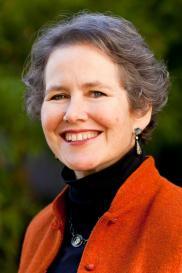
Mariane C. Ferme is a Professor in the Department of Anthropology at the University of California, Berkeley. Her research focuses on sociocultural dynamics in West Africa, particularly Sierra Leone, with expertise in political anthropology, legal studies, and material culture. She holds a PhD in Anthropology from the University of Chicago and has taught at prestigious institutions including the University of Cambridge and École des Hautes Études en Sciences Sociales. Education : PhD in Anthropology (University of Chicago), MA in Political Science (University of Milano), BA in Anthropology (Wellesley College). Ferme’s research spans the political imagination in conflict zones, agrarian transformations, and the interplay between humanitarian law and local justice systems. Her work has been supported by major grants from the National Science Foundation and the France-Berkeley Fund. She has published extensively on Sierra Leone’s post-war societies and the socio-cultural dimensions of the Ebola outbreak. Scientific awards include funding from the National Science Foundation, Hellman Family Faculty Fund, France-Berkeley Fund, Harvard Academy for International and Area Studies, and the Carter Woodson Institute for African and African-American Studies.
Margaret Robinson is an Associate Professor at Dalhousie University, holding dual appointments in the Department of English and Department of Sociology and Social Anthropology within the Faculty of Arts and Social Sciences. She is a bisexual two-spirit scholar from Eski'kewaq, Nova Scotia, and a member of the Lennox Island First Nation. Her interdisciplinary work bridges Indigenous studies, queer theory, and intersectional feminism, with a focus on decolonizing methodologies and Indigenous oral traditions. Robinson’s research explores representation of Indigenous peoples and sexual/gender minorities in creative works, including fanfiction and popular culture. She holds a Tier 2 Canada Research Chair in Reconciliation, Gender, & Identity (2019-2023) and leads the Mi’kmaw Cultural Research Lab funded by the Canadian Foundation for Innovation (2021-2024). Her education includes a BA from Saint Mary’s University and MA/PhD from the University of Toronto. Key research areas include Indigenous New Wave literature, Mi’kmaw spirituality, and Two-Spirit feminism. Recent grants focus on reconciliation frameworks and LGBTQ2S+ health equity. She has published widely on topics like queer mental health, animal personhood in Mi’kmaw cosmology, and decolonizing pedagogies.
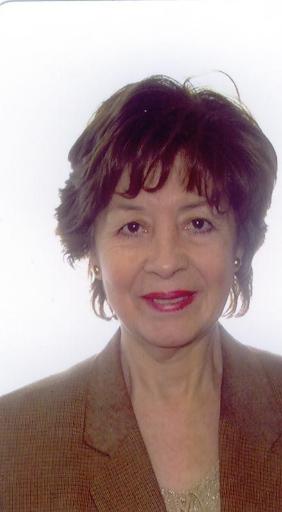
Lady Rojas Benavente is an Associate Professor in the Department of Classics, Modern Languages and Linguistics at Concordia University, where she has been teaching since her appointment as Assistant Professor in 1996, with promotion to Associate Professor in May 2003. Prior to joining Concordia, she served as an Assistant Professor at the University of Ottawa and as a lecturer at the Faculty of Education at The University of Western Ontario, where she taught second language methodology, French and Spanish. Dr. Rojas Benavente received her PhD in Hispanic Literature from the University Laval in 1991, following an MA in Spanish Literatures (Cum Laude, 1985) and BA in History and Spanish (1983), both from the University of Ottawa. She also holds a Diploma qualifying as a Secondary School teacher specializing in Spanish Language and Literature, Psychology and Philosophy from the National Pedagogic University of Women in Lima, Peru (Cum Laude, 1968). Her research focuses on Critical Feminism in Peruvian & Latin-American Women Writers, with special emphasis on contemporary Peruvian and Mexican narrative, drama, poetry and essay. Her work encompasses Cultural Studies and Literary and Critical Theories, Latin American History, Post-colonialism, Human Rights, Women Studies, Feminist Theories, Gender Issues, Latin America Black History, Indigenous and Minorities Studies, and Comparative Studies in Education. She has published nine books (two poetry collections and seven critical interpretations) and over 50 refereed papers in Latin American Women's literary work, particularly focusing on Peruvian and Mexican authors. Dr. Rojas Benavente's scholarly output demonstrates consistent engagement with themes of gender, ethnicity, and power structures in Latin American literature. Her recent publications explore the works of contemporary Peruvian women writers, examining how they address issues of violence, racism, and gender in post-independence national contexts. Her research trajectory reveals a deepening focus on decolonial perspectives, indigenous resistance, and the intersection of gender with other social categories. Hispanic Literary and Cultural Institute's Honor Diploma (2010) Publication Award from the University of New Brunswick for the Anthology, Constructing Memory: Latino-Canadian Women Writers in the New Millennium Recognition by Mouvement Desjardins in celebration of International Women's Day (2008) As president of the Society for Literary Criticism of Spanish American Women Writers' work (CCLEH), Dr. Rojas Benavente has facilitated connections between Concordia colleagues, local artists, international writers, and the Latino-Montreal community. She serves on the editorial boards of Alba de America, a literary magazine from the United States, and Voces, a Peruvian cultural magazine. Her leadership extends to organizing numerous conferences on Latin American women writers across Canada, Latin America, and Montreal, including multiple meetings of Hispano-Canadian Women Writers and events commemorating significant figures in Latin American literature.
Professor Kurt Iveson is a Professor of Urban Geography in the School of Geosciences at the University of Sydney. He is affiliated with the Sydney Environment Institute and Sydney Southeast Asia Centre. His research focuses on urban equity, public space governance, and the democratization of urban processes. Notable projects include studies on multicultural urban planning, pandemic-era mutual aid networks, and climate adaptation strategies. He has authored influential books such as Publics and the City (2007) and Everyday Equalities (2019). Iveson’s work often bridges theory and practice, addressing issues like affordable housing activism, graffiti policies, and the spatial implications of digital media. His recent research emphasizes community-led disaster resilience, people power strategies, and the geopolitics of urban infrastructure. Grants include studies on informal accommodation in Sydney and international comparisons of urban alliances. Media engagements include ABC discussions on outdoor advertising, vertical transport, and post-pandemic urban recovery. His work advocates for inclusive urban policies that balance equity, sustainability, and civic participation.
Professor Libby Porter is a leading academic and researcher in urban planning and human geography at RMIT University, Australia. As Director of the Centre for Urban Research (CUR) and Professor in the School of Global, Urban and Social Studies (GUSS), her work focuses on critical urban governance, decolonising planning practices, Indigenous rights, and urban displacement. She holds a prestigious position as a Fellow of the Higher Education Academy and has contributed extensively to international policy debates through her role as Assistant Editor for Planning Theory and Practice . Her research examines settler-colonial dynamics in urban development, public housing policy, and the intersection of planning with Indigenous sovereignty. Notable publications include Unlearning the Colonial Cultures of Planning (2010) and Planning in Indigenous Australia (2018). Libby has held academic roles in the UK and Australia and previously worked in urban planning policy for Victorian Government departments. She supervises students in Honours, Masters, and PhD programs, focusing on topics like Indigenous housing, urban displacement, and environmental policy. Her work has been featured in The Conversation , BBC News, and academic journals. Libby also leads the Critical Urban Governance Research Program and oversees the Bachelor of Urban and Regional Planning at RMIT. Awards: Fellow of the Higher Education Academy Key Roles: Director, Centre for Urban Research; Co-founder, Planners Network UK; Member, Expert Advisory Panel for Melbourne 2030 Research Themes: Property rights, urban sustainability, decolonisation, Indigenous planning, gentrification
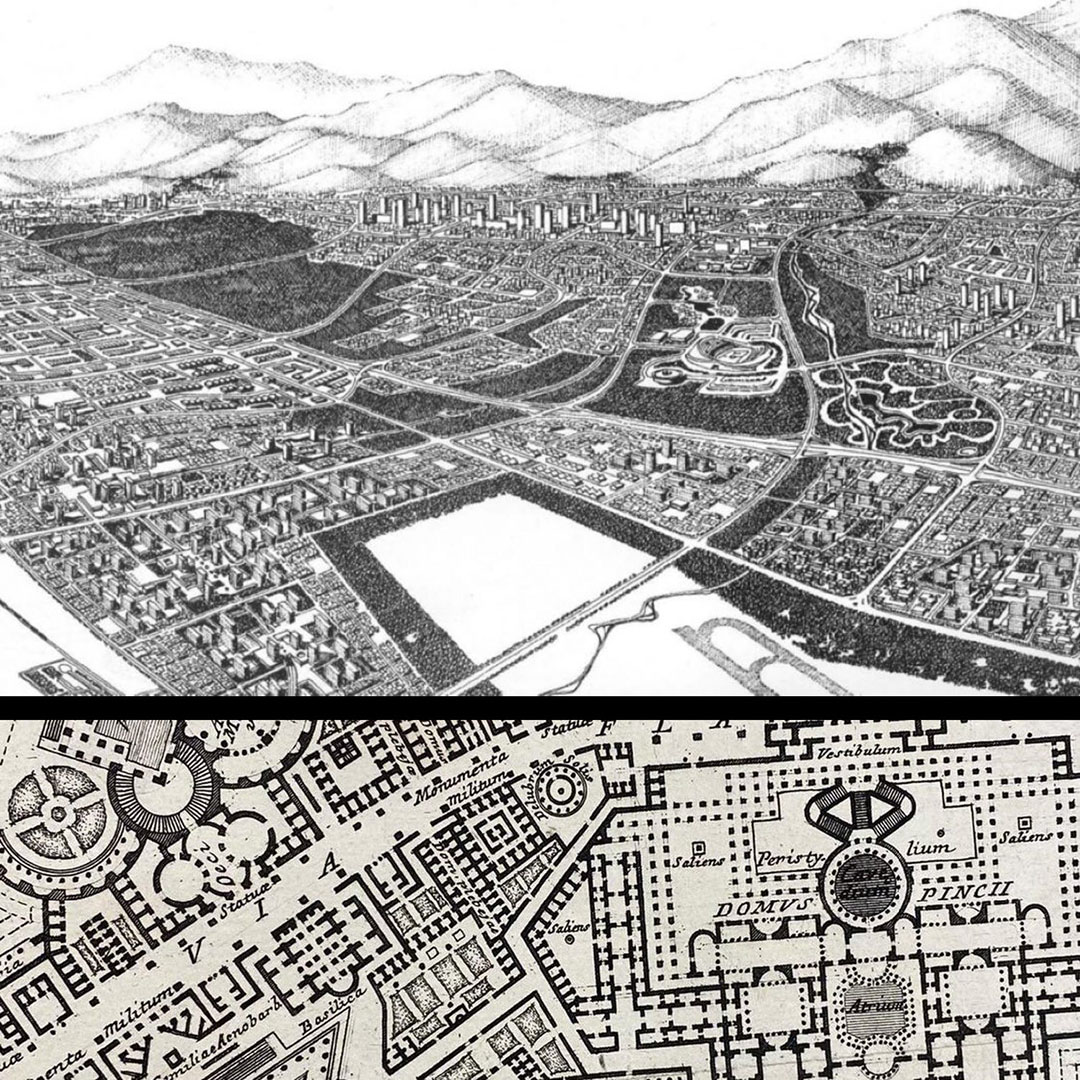
Asma Mehan, Ph.D. , is an Assistant Professor at the Huckabee College of Architecture, Texas Tech University , with a Ph.D. in Architecture, History, and Project from Politecnico di Torino (2017). Her work bridges architectural humanities and critical urban studies , focusing on urban inclusivity, heritage preservation, and climate justice. She authored two books— Tehran: From Sacred to Radical (2022) and Kuala Lumpur: Community, Infrastructure, and Urban Inclusivity (2020)—and leads the Coordination Team of the AESOP Young Academics network. Education: Ph.D. in Architecture, History, and Project, Politecnico di Torino (2017) Her research spans spatial justice , feminist placemaking , and heritage studies , addressing issues like oil urbanism , digital citizen participation , and resilient housing . Articles highlight her interdisciplinary approach to urban resilience, AI integration, and socio-environmental equity. She has held fellowships including the FCT Scientific Employment Stimulus and NIAS-KNAW Urban Citizenship Fellowship. Scientific Awards: AESOP Young Academics Award European Architectural History Network (EAHN) Fellowship Society of Architectural Historians (SAH) Grant ZK/U Berlin Researcher-in-Residence SAHGB Award Dr. Mehan has taught at TU Delft and Politecnico di Torino, guest lectured at TU Munich and Deakin University, and conducted visiting research in Switzerland, Australia, and Berlin. Her work appears in over 50 publications across English, Persian, and Italian, emphasizing critical pedagogy , collaborative design , and policy toolkits for urban inclusivity.
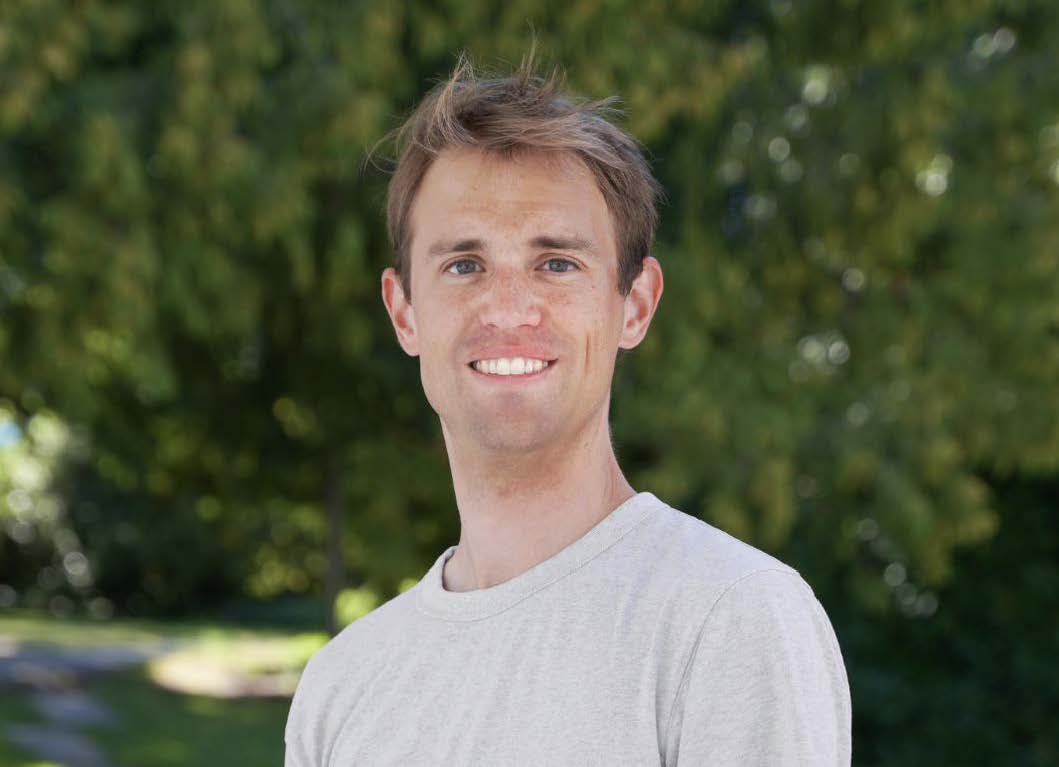
Julian Weideman is a SSHRC Postdoctoral Fellow in the Department of History at the University of Toronto , focusing on the modern Middle East and North Africa . His research intersects themes of universities, political economy, Islamic thought , and colonialism . He holds a Ph.D. in History from Princeton University , an M.Phil. in Modern Middle Eastern Studies from the University of Oxford (Distinction), and a B.A. Honours in History with International Relations from the University of British Columbia . His scholarly work analyzes the interplay between colonialism and Islamic institutions in Tunisia, particularly through studies of student housing reforms , gender politics , and intellectual memory . Recent articles explore the French Empire's limits , Zaytuna University politics, and Tahar Haddad's legacy under post-independence regimes. Scientific Awards: SSHRC Postdoctoral Fellowship Julian's publications reveal consistent engagement with colonial frameworks , Islamic modernity , and political reform discourses in North Africa. His work bridges micro-histories of institutions with macro-historical analysis of empire-building and decolonization.
Moisés Arce is a Professor and the Scott and Marjorie Cowen Chair in Latin American Social Sciences at Tulane University's Department of Political Science, School of Liberal Arts. He holds a Ph.D. in Political Science from the University of New Mexico (2000), with prior academic roles at the University of Missouri and Louisiana State University. His research focuses on environmental politics, conflict processes, democratic governance, and comparative political economy, with a regional emphasis on Latin America. He has conducted fieldwork in Peru, Argentina, Bolivia, and South Africa. Education: Ph.D., Political Science, University of New Mexico, 2000 M.A., Political Science, University of New Mexico, 1995 B.A., Political Science, Indiana University, South Bend, 1992 Research Interests: Arce examines the interplay between resource extraction, environmental governance, and social mobilization. His work analyzes protest dynamics, democratic institutions, and the political economy of development in Latin America. Key themes include artisanal mining conflicts, legislative authoritarianism, and the socio-environmental impacts of extractive industries. Awards: He received the Shared Governance Award (2017-2018) from the University of Missouri Faculty Council and the Award for Excellence in Political Science (1992) from Indiana University. His research is funded by the National Science Foundation and the Social Science Research Council. Advising & Grants: While specific student names are not listed, Arce has advised on projects related to resource conflicts and democratic governance. His grants include NSF-funded studies on environmental politics and protest dynamics. Affiliations: Arce is affiliated with the Stone Center for Latin American Studies, the Center for Inter-American Policy and Research (CIPR), and served as a Visiting Fulbright Lecturer at Peru's Pontificia Universidad Católica and Visiting Professor at the University of Tokyo's Department of Area Studies.
Dr. Ali Kassem is a Lecturer in Sociology and Anthropology at the National University of Singapore (NUS), Faculty of Arts and Social Sciences. His academic work spans multiple disciplines, focusing on decolonial approaches to understanding power dynamics, knowledge production, and social formations across the Arab-majority world and beyond. Dr. Kassem received his PhD from the School of Law, Politics, and Sociology at the University of Sussex. He completed postdoctoral research at the Institute for Advanced Studies at the University of Edinburgh and was an early career fellow with the Arab Council for Social Sciences funded by the Carnegie Corporation of New York. His academic journey includes teaching and research positions at Ludwig-Maximillian University in Munich, EHESS in Paris, American University of Beirut, and Lebanese American University. Dr. Kassem's research examines contemporary coloniality across questions of power and knowledge. His work spans anti-Muslim racism within Arab-majority contexts, transformations in Islamic educational institutions, dehumanization of Syrian refugees, and urban transformations in Lebanon. His transdisciplinary approach engages ethnic and racial studies, sociology of religion, social psychology, migration studies, and urban studies, working alongside anticolonial thinkers including Frantz Fanon, Ali Shariati, and James Baldwin. His recent publications reveal a strong focus on decolonial theory applied to education, urban studies, and Islamic contexts. Dr. Kassem's work consistently challenges Eurocentric frameworks while exploring alternatives emerging from the Global South. His research demonstrates particular attention to Lebanon and the eastern Mediterranean region as sites for theorizing global coloniality. Dr. Kassem has authored the book "Islamophobia and Global Coloniality: the Lived Erasure of Visibly Muslim Women in Lebanon" (Bloomsbury Academic, February 2023) and is currently editing "Decoloniality and Arabo-Islamicate Worlds" (Bristol University Press, 2025). His scholarly contributions appear in journals including Ethnic and Racial Studies, Globalizations, Contemporary Religion, and Review of Middle East Studies.
Carl-Gösta Ojala serves as Senior Lecturer at Uppsala University's Department of Archaeology, Ancient History and Cultural Preservation, where his research bridges archaeological practice with critical examinations of colonial history and indigenous heritage. His academic profile demonstrates deep engagement with Sámi communities across historical periods, from Bronze Age material culture studies to contemporary issues of cultural preservation and indigenous rights. Dr. Ojala's research program centers on decolonizing archaeological methodologies through rigorous analysis of how colonial frameworks have shaped archaeological knowledge production in Northern Europe. His work particularly examines the historical collection of Sámi material culture and human remains, the impact of colonial infrastructure projects like hydroelectric dams on indigenous heritage sites, and the political dimensions of archaeological interpretation in Sápmi. He investigates how archaeological narratives have been constructed within colonial contexts and how contemporary practice can better incorporate indigenous perspectives. An analysis of his recent publications reveals evolving scholarly attention from historical colonial practices to their contemporary implications for indigenous self-determination and cultural heritage management. His 2023-2025 works demonstrate increasing focus on Sámi mobilities, dammed heritage, and the politics of archaeological representation, reflecting a trajectory toward more applied, community-engaged scholarship that addresses ongoing colonial legacies in cultural heritage institutions. Dr. Ojala has established himself as a critical voice in Nordic archaeological discourse through numerous book chapters, journal articles, and edited volumes including 'Archaeologies of "Us" and "Them": Debating History, Heritage and Indigeneity' (2017). His scholarship consistently challenges conventional archaeological paradigms while offering constructive frameworks for more ethical, collaborative research practices with indigenous communities in Northern Europe.
Roxane de la Sablonnière is a Full Professor in the Department of Psychology at the University of Montreal, affiliated with the Faculty of Arts and Sciences. She directs the CSI—Laboratory on Social Change and Identity and is a member of the CÉCD—Centre for the Study of Democratic Citizenship and the CIRCA—Interdisciplinary Research Centre on the Brain and Learning. Her research focuses on social change, cultural identities, intercultural relations, and the psychological impacts of crises like the COVID-19 pandemic. She has advised over 20 graduate students and led numerous research projects funded by agencies such as the Fonds de recherche du Québec (FRQ) and the Social Sciences and Humanities Research Council (SSHRC). Education & Research Focus : Her work examines how rapid societal changes affect individuals, particularly in contexts of immigration, policy shifts (e.g., multiculturalism, secularism), and Indigenous communities. Recent studies include longitudinal analyses of pandemic-related behaviors, identity integration processes, and the role of cognitive strategies in managing conflicting identities. Grants & Collaborations : She leads projects like "S'engager pour mieux aller!" (FRQS-funded) and contributes to strategic networks such as the Centre pour l'Étude de la Citoyenneté Démocratique (CÉCD). Her research integrates psychology with sociology, leveraging mixed methods (e.g., text mining, longitudinal tracking) to address societal challenges. Labs & Teams : As CSI director, she oversees projects on social change dynamics and identity reconstruction. Her work bridges academic and applied domains, influencing policy debates on integration, public health, and community resilience.
Kelly Askew is a Professor of Anthropology and Afroamerican & African Studies at the University of Michigan’s College of Literature, Science, and the Arts. She holds a PhD in Anthropology (Harvard, 1997) and a BA in Music and Anthropology (Yale, 1997), with over three decades of fieldwork in Tanzania and Kenya. Education PhD in Anthropology, Harvard University (1997) BA in Music and Anthropology, Yale University Key Roles Chair of the Department of Anthropology Niara Sudarkasa Collegiate Professor Her research bridges three primary domains: Postsocialist transitions (e.g., property rights formalization and land conflicts), art and political aesthetics (e.g., Swahili music, African visual arts, ethnographic filmmaking), and indigenous political movements (e.g., Maasai and Parakuyo pastoralists). She has produced award-winning documentaries like The Chairman and the Lions (2013) and Maasai Remix (2019), which examine cultural resilience and land rights. Scientific awards include being a finalist for the African Studies Association Herskovits Award (2002). Recent publications analyze land dispossession mechanisms, postsocialist cultural production, and media’s role in political identity. She has secured grants from the National Science Foundation, National Endowment for the Humanities, and Ford Foundation.
Gustavo Verdesio serves as an Associate Professor of Spanish within the Department of Romance Languages & Literatures at the University of Michigan. He maintains significant interdisciplinary affiliations as a faculty member of the Program in Native American Studies and as a Faculty Associate for Latina/o Studies. His academic credentials include: Ph.D. in Hispanic Studies or Latin American Studies from Northwestern University (1992) Verdesio's research critically engages with Colonial Studies, Native American Studies, and Material Culture, focusing on Indigenous materialities in Uruguayan history. His current project examines the re-emergence of Indigenous groups previously declared extinct in Uruguay and non-Indigenous responses to Indigenous bodies within settler colonial structures. He investigates objects, agricultural practices, monumentality, and the political implications of Indigenous bodily recognition. Analysis of his 2018-2021 publications reveals consistent thematic focus on settler colonialism in Latin America, Indigenous rights frameworks, and decolonial approaches to archaeology and historical knowledge, with concentrated attention on Southern Cone nations including Uruguay and Argentina. Scientific Awards: No awards, fellowships, or medals were documented in available materials No information regarding graduate student advising, dissertation supervision, or specific research grants was provided in the source documentation. His academic activities appear centered on independent research and interdisciplinary collaboration rather than directed mentorship or externally funded projects as described. The available texts contain no references to laboratories, research centers, or formal collaborative teams associated with Professor Verdesio's work.
Jeff Sayer is a Professor in the Department of Forest and Conservation Sciences at the University of British Columbia (UBC) Faculty of Forestry . His research focuses on applied conservation science and the human dimensions of environmental change , with fieldwork spanning Indonesia, West and Central Africa, and Southeast Asia. Current projects include sustainable landscapes in Indonesia (since 2010), forest transitions in Ghana and the Congo Basin (since 2000), and new approaches to conservation science (since 2000). Research emphasizes integrated natural resource management, landscape-scale decision-making, and reconciling agriculture with biodiversity conservation. Key research themes: Integrated landscape approaches for multifunctional landscapes Forest governance and tenure conflicts Policy coherence for Sustainable Development Goals Human-environment interactions in tropical regions Recent publication trends show interdisciplinary focus on deforestation-free trade policies, agroforestry systems, forest governance challenges, and transdisciplinary science applications across tropical Asia, Africa, and Canada.
Amanda Giang serves as Assistant Professor at the University of British Columbia's Faculty of Applied Science, Department of Mechanical Engineering, holding a Canada Research Chair in Environmental Modelling for Policy. She maintains a joint appointment with the Institute for Resources, Environment and Sustainability (IRES). Her educational background includes a B.A.Sc. from the University of Toronto, followed by M.S. and Ph.D. degrees from MIT, with postdoctoral training at MIT and Harvard. Dr. Giang's research employs interdisciplinary approaches to develop modeling tools for environmental policy analysis, focusing on pollution assessment, environmental injustice, and the intersection of air quality, decarbonization, and equity. Her work emphasizes action-oriented partnerships with community organizations and government health/environment agencies. Current projects address freight transport decarbonization equity, cumulative impact assessment methodologies for overburdened communities, and holistic environmental impact evaluation in technology design. Her recent publications demonstrate expertise across environmental modeling, policy analysis, and justice frameworks, with significant contributions to understanding spatial inequities in environmental risk distribution and developing community-engaged research methodologies. UBC Killam Research Prize, 2023 Dr. Giang actively collaborates with community groups and government authorities through her LEAP (Learning, Environmental Assessment, and Policy) research group. Her work integrates technical modeling with real-world policy applications, particularly in urban environmental planning contexts where equity considerations are paramount. She has developed innovative frameworks for cumulative impact assessment and environmental justice analysis that directly inform regulatory decision-making processes. Her research laboratory focuses on developing open-source modeling tools for environmental policy analysis while maintaining strong community partnerships that ensure research addresses pressing local environmental justice concerns.