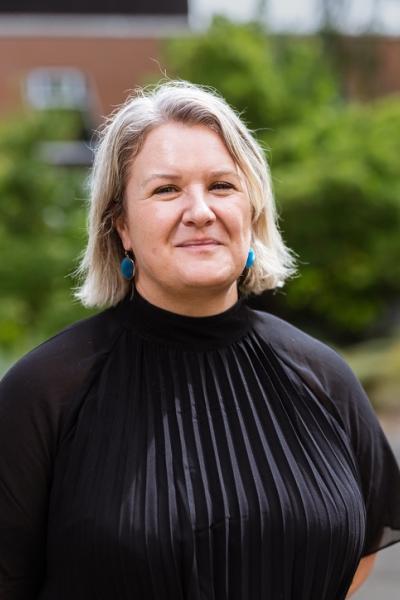
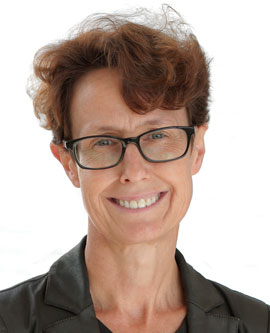
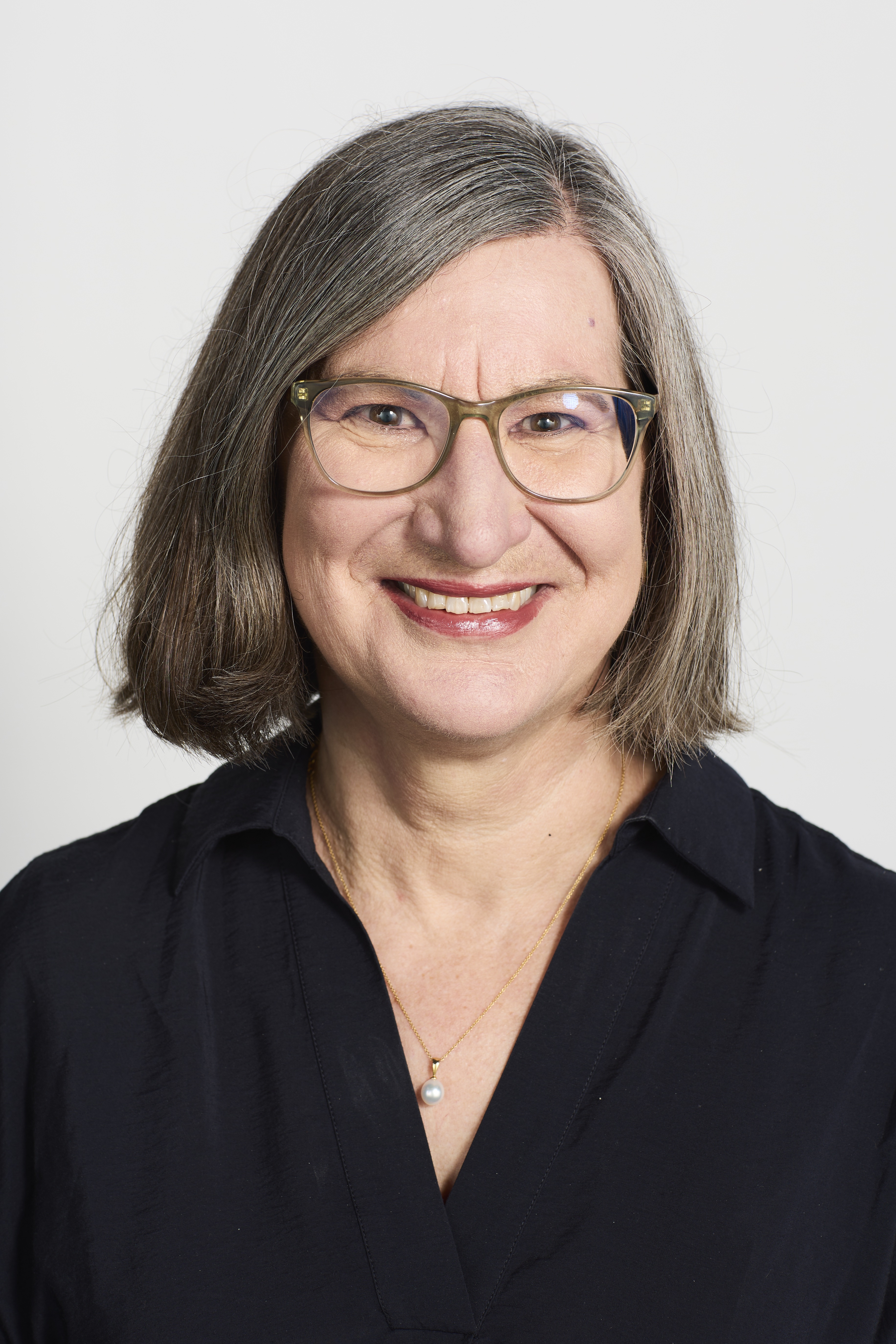
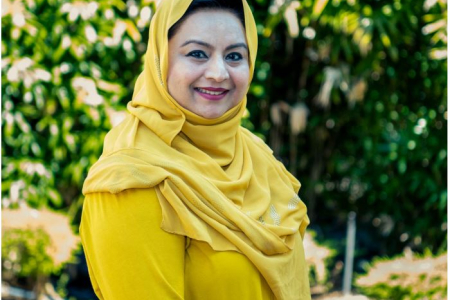
Felicity Meakins is a Professor of Linguistics at the University of Queensland, affiliated with the School of Languages and Cultures. She specializes in documenting First Nations languages in northern Australia, focusing on language contact processes, revitalization, and the impact of English on Indigenous languages. Her work bridges academic research and community engagement, including consulting on Native Title claims and language revitalization programs. Education: She studied at the University of Queensland between 1995–2001, completing her PhD in 2008. Prior to her academic career, she worked as a community linguist with Diwurruwurru-jaru Aboriginal Corporation (2001–2004) and as a PhD researcher with the Aboriginal Child Language Project (2004–2008). Research Interests: Meakins explores language contact, mixed languages, and Indigenous knowledge systems. Her projects include the 'Dingo Lingo' study tracing canine terminology across Australia and co-authored works like Tamarra: A Story of Termites on Gurindji Country (2023) and Understanding Linguistic Fieldwork (2018). She has compiled dictionaries and grammars for languages such as Gurindji, Bilinarra, and Mudburra. Grants & Recognition: Recipient of the Eureka Award (2021), LSA’s Hale Award (2021), and a Fellow of FASSA/FAHA. She led the UQ node of the ARC Centre of Excellence for the Dynamics of Language (2022). Labs/Teams: Collaborates with the Language Data Commons of Australia (LDaCA) and Indigenous communities in Northern Territory projects like the Wave Hill Walk-Off documentation.
Janine O'Flynn is the Director of the Crawford School of Public Policy at the Australian National University (ANU) since 2023. Previously, she held the position of Professor of Public Management at the University of Melbourne and served as a visiting professor at institutions like City University Hong Kong and Fudan University. Her research focuses on public management reform, governance relationships, and ethical policy-making. Notable contributions include work on public value creation, performance management systems, and positive public administration. She has authored over 75 publications, including Pathways to Positive Public Administration (2024) and co-edited the Research Handbook on Public Management and COVID-19 (2024). O'Flynn has received prestigious awards such as the National Academy of Public Administration Fellowship (2022) and the Best Book Award at the Academy of Management (2013). She actively advises governments globally and chairs research committees for organizations like the Centre for Public Impact. Education: PhD (Melbourne), Bachelor of Commerce (Hons., Melbourne). Key Roles: Editorial Board Member: Public Administration , Public Management Review , and others Board of Directors, Public Management Research Association Advisory Board, Victorian Public Sector Commission Research Focus: Public sector reform, governance ethics, policy complexity, and agile government frameworks.
Professor Maria Craig is a distinguished academic and researcher at the University of New South Wales, Faculty of Medicine & Health, specializing in childhood diabetes research. She holds a prominent position as a Professor with extensive contributions to the field of pediatric endocrinology and diabetes, particularly focusing on type 1 diabetes in children. Professor Craig's educational background includes: MB BS from the University of Melbourne MMedSc(ClinEpid) from the University of Newcastle PhD from the University of Sydney FRACP (Fellow of the Royal Australasian College of Physicians) Professor Craig's research primarily focuses on childhood diabetes, with special emphasis on prediction and prevention of type 1 diabetes. She has a significant interest in the association between viruses and type 1 diabetes, collaborating with the Virology Research Group at Prince of Wales Hospital (POWH). Together with Professor Bill Rawlinson, she leads the viral theme for the multicentre ENDIA study (endia.org.au). As principal investigator for the CoRD trial, she is conducting a world-first phase 1 study using autologous cord blood for prevention of type 1 diabetes in children with islet autoimmunity. Additionally, she serves as principal investigator for the Australasian Diabetes Data Network (ADDN). Her research portfolio also encompasses the epidemiology of various forms of childhood diabetes (type 1, type 2, cystic fibrosis related diabetes and monogenic diabetes) and diabetes complications, in collaboration with Professor Kim Donaghue at the Children's Hospital at Westmead. Professor Craig's extensive publication record, including over 361 journal articles, demonstrates her leadership in advancing our understanding of childhood diabetes. Her recent work shows increasing focus on early detection methods, risk prediction models, technological interventions for diabetes management, and the complex interplay between viral infections and autoimmune diabetes development. She has been instrumental in developing clinical practice guidelines through her role as co-editor of the International Society for Pediatric and Adolescent Diabetes (ISPAD) guidelines. Professor Craig has received numerous prestigious awards recognizing her contributions to pediatric endocrinology and diabetes research: Australian Paediatric Endocrine Group Young Investigator's Award (1997) Asia Pacific Paediatric Endocrine Society Clinical Teaching Award (2008) Lifetime Honorary Member, Caring and Living as Neighbours (2013) Australian Diabetes Society Jeff Flack Diabetes Data Award (2019) Australian Paediatric Endocrine Group Norman Wettenhall Award for Research and Innovation (2019) Throughout her career, Professor Craig has demonstrated exceptional leadership in professional societies, having served as former president/treasurer of the Australasian Paediatric Endocrine Group (APEG) and currently as Scientific Convenor of the Asia Pacific Paediatric Endocrine Society Fellows school. Her work with the ENDIA study and Australasian Diabetes Data Network represents significant collaborative research efforts involving multiple institutions across Australia and internationally. Her principal investigator roles for major studies indicate substantial research funding support. Professor Craig leads several important research initiatives including the ENDIA study, the CoRD trial, and the Australasian Diabetes Data Network. These programs involve multidisciplinary teams of researchers, clinicians, and support staff working collaboratively to advance understanding and treatment of childhood diabetes. Her work at the intersection of virology and diabetes represents a unique and innovative approach to understanding the environmental triggers of type 1 diabetes.
Dr. Gavin Morris is a Lecturer in Education at Charles Darwin University's College of Education, with over two decades of teaching experience in Australian schools. His academic qualifications include a PhD from Charles Darwin University (2019), Master of Education from University of Sydney (2016), and Bachelor of Education from James Cook University (2000). Morris specializes in Indigenous research methodologies, Health & Physical Education, and Sport Science. His qualitative work focuses on trauma healing, truth-telling, and decolonization practices in Aboriginal communities, particularly using Dadirri (deep listening) methodologies. Recent research explores digital platforms for cultural preservation and community resilience. As a registered postgraduate research supervisor, Morris contributes to undergraduate and postgraduate programs while maintaining active fieldwork in remote Northern Territory communities like Nauiyu at Daly River.
Professor Kathy Bowrey is a leading academic in Intellectual Property Law at UNSW Sydney's Faculty of Law. Her work explores laws shaping knowledge creation, technology, and culture, with expertise in IP, Indigenous rights, and open research advocacy. She holds a Doctor of Juridical Studies from the University of Sydney and a BA LLB from Macquarie University. Her research focuses on historical and contemporary IP frameworks, including their impact on creators, Indigenous communities, and global innovation systems. Notable projects include the ARC-funded 'Producing, Managing and Owning Knowledge in the 21st Century University' (2019–2022), which shaped Australia's open research policies. Awards include the 2022 ANZLHS Book Prize for *Copyright, Creativity, Big Media & Cultural Value* and fellowships at the State Library of NSW and Museum of Applied Arts and Sciences. She co-authored *Adventures in Childhood* (2023), examining IP in toy and media industries, and *David Unaipon* (2023), exploring Indigenous innovation. Professor Bowrey co-leads the International Society for the History and Theory of Intellectual Property (ISHTIP) and advises on national research policies. Her grants include ARC Discovery Projects on Australian copyright history and IP commercialization.
Marcus Smith is an Associate Professor in Law at the Charles Sturt University , where he teaches LAW222 Technology Law and directs the Bachelor of Laws program. He holds advanced degrees from the Australian National University (PhD, LLM) and the University of Cambridge (MPhil). His research spans technology law and regulation , focusing on genomic data governance biometric identification AI ethics blockchain policy cybersecurity surveillance law He leads the Contemporary Threats to Australian Security research group and serves as Chief Investigator on an NHMRC-funded project (MRF2015531) addressing genomic dataset governance. His recent work analyzes algorithmic bias in facial recognition AI in healthcare blockchain's regulatory challenges post-pandemic cybercrime surveillance ethics data security frameworks He actively supervises PhD and honours students in technology law and contributes to law reform through submissions to international bodies like the UN Human Rights Council .
Dr. Michael R. Griffiths is a Senior Lecturer in English Literatures at the University of Wollongong, where he has been teaching since 2014. He serves as the Internationalisation Director in the School of the Arts, English and Media, managing global collaborations including UOW's campuses in Hong Kong and Dubai. Previously, he was a Postdoctoral Fellow at Columbia University's Institute for Comparative Literature and Society from 2012-2014. His educational background includes: PhD in English from Rice University (2012) Griffiths's research focuses on postcolonial literary theory, settler colonial studies, and Indigenous literatures, with a growing emphasis on decolonial thought. His work critically examines representations of Aboriginal people and culture in Australian literature, the politics of authorship in anticolonial thought, and intersections between critical animal studies and ecocriticism. In his scholarship, Griffiths explores how literature engages with questions of identity, difference, and belonging in settler colonial contexts, often challenging conventional approaches to cultural appropriation and representation. His recent publications demonstrate a clear trajectory toward examining the intersections between poststructuralist literary theory and anticolonial thought. The publication of his 2025 book The Death of the Author and Anticolonial Thought represents a significant contribution to understanding how thinkers like Edward Said and Édouard Glissant responded to Roland Barthes's "death of the author" thesis. His earlier work, particularly his 2018 monograph The Distribution of Settlement: Appropriation and Refusal in Australian Literature and Culture , established him as a scholar examining representations of Aboriginal people by non-Indigenous writers in Australian literature. Griffiths serves as Chair of the South Pacific Association for Commonwealth Literature and Language Studies (SPACLALS) and is on the editorial advisory board of Australian Literary Studies . He has also co-edited special issues of Continuum on freedom of speech debates, which received notable attention and was reprinted as a book titled Unsettled Voices . As a supervisor, Griffiths has mentored numerous PhD and Master's students through projects examining diverse topics including Indigenous Trinidadian theatre, hauntings in Chinese-Australian literature, and cosmopolitanism in Indian English fiction. His grant history shows consistent funding support for research on Australian literature, settler colonial studies, and international academic collaborations, particularly with Wuhan University in China. Griffiths contributes to several research networks focused on postcolonial studies and settler colonialism, including the South Pacific Association for Commonwealth Literature and Language Studies, which he chairs, and maintains active engagement with global scholarly conversations through his academic profiles and social media presence.
Robyn Fox is an Associate Lecturer in the School of Education and Tertiary Access at the University of the Sunshine Coast (UniSC), Australia, teaching in Bachelor of Education (Secondary)/Bachelor of Recreation and Outdoor Environmental Studies programs with emphasis on foundational outdoor studies and paddling-based engagement methods. Her educational qualifications are: MAIntEd, Endicott College MA, DipEd, LaTrobe University BA, LaTrobe University Her research centers on sustainability integration and ecological literacy in outdoor education, driven by her planned PhD investigating embedded sustainable practices. She champions experiential learning through natural environments to foster environmental consciousness and climate-responsive pedagogy. Analysis of her 2022-2025 publications reveals dominant themes in climate change education within outdoor contexts, featuring innovative approaches like near-peer teaching and nature journaling while addressing eco-anxiety and Indigenous knowledge systems. Her scholarship consistently advocates for curriculum transformation toward ecological stewardship and climate action. Robyn actively involves students in community initiatives: Collaborated with Thai army and Regent’s School students to rebuild tsunami-damaged homes in Thailand (2004) Established sports programs between Khartoum International Community School and local institutions in Sudan Coordinated orphanage library setup with Luanda International School in Angola Current participant in Alexandra Headland Community Association’s foreshore regeneration projects
Michelle Arrow is a Professor at Macquarie University's School of Humanities and Centre for Media History. Her research focuses on cultural history, post-war Australia, and feminist movements. She holds a PhD from the University of Sydney (1999), with notable works including Upstaged (2002), Friday on Our Minds (2010), and The Seventies (2019), which won the Ernest Scott Prize. Her work explores how culture shapes identities and responds to political shifts. She has led projects like 'Public Intimacy: A Biography of Anne Deveson' and contributed to media initiatives such as ABC TV's Rewind . Awards include Fellowships from the Academy of the Social Sciences (2023) and the Royal Historical Society (2025). Her current projects include a biography of Anne Deveson and studies on gender citizenship and LGBTQIA+ activism. Michelle has been a media commentator on topics like historical representation and social policy. Education: PhD in History, University of Sydney (1999) Thesis: Social and cultural history of Australian women playwrights (published as Upstaged ) Research Interests: 1970s Australia, Royal Commissions, feminist politics Popular culture and its political dimensions Historical representation in media and film Awards: Ernest Scott Prize (2020) NSW Premiers' Multimedia History Prize (2014) Elected Fellowships (2023, 2025) Grants/Projects: ARC-funded projects on women's refuges and children's rights Audio-visual archive prototyping (2017) Biography of Anne Deveson (2020–2023) Media Engagement: ABC TV presenter ( Rewind ) Contributions to The Conversation and public talks
Dr. Farha Sattar is a Lecturer in Education (Mathematics) at the Faculty of Arts and Society, Charles Darwin University. With over thirty years of teaching experience in Mathematics, Science education, GIS, Remote Sensing, and e-Learning technologies at undergraduate and postgraduate levels, Dr. Sattar brings extensive expertise to her academic role. She holds a PhD in Geospatial Science from Charles Darwin University, focusing on Spatial Mathematical Modelling for 3D Gully Mapping and Erosion Quantification. Her educational background includes: PhD in Geospatial Science (Three Dimensional Gully Mapping and Erosion Quantification within a Geoinformatics Framework), Charles Darwin University (2012) Prior academic experience at several Asian and European universities Dr. Sattar's research spans multiple interdisciplinary fields with a strong focus on the intersection of education and technology. Her primary research interests include Mathematics Education, STEM Education, Geoscience Education, Spatial Mathematical Modelling, Drone Technology, Remote Sensing, Geographic Information Systems, and Innovative Pedagogies such as experiential learning and inquiry-based approaches. She has developed expertise in cognitive development, particularly in fostering critical and creative thinking skills through iSTEM approaches. An analysis of Dr. Sattar's recent publications reveals a consistent trajectory toward integrating emerging technologies like drones, augmented reality, and geospatial artificial intelligence into educational contexts. Her work demonstrates a progression from foundational geospatial research on erosion mapping to innovative applications in STEM education. Recent publications increasingly focus on drone technology for educational purposes, spatial data infrastructure for policy development, and computational thinking development through technology-enhanced learning. Dr. Sattar has received numerous accolades for her contributions to education and research: NT Science Week Awards – Inspired NT STEM Hero of the Year award (2021) Long Service Recognition Award (2023) Finalist, CDU Alumni Award (2023) Multiple Best Presentation Awards (2008, 2010, 2017) Australian College of Educators - 2021 College Medal Nominee As a supervisor, Dr. Sattar mentors postgraduate research students including Ayesha Farhan, who is working on "A Framework for Cognitive Development: Fostering Critical and Creative Thinking Skills, Using iSTEM Approach." She actively secures research funding through various projects such as "DBELaSTEM: Drone-Based Experiential Learning and STEM Education," "STEM_D & VR: Youth STEM Learning and Empowerment with Drones and VR," and "CodProg Drone Lab." Her research is supported by grants from NT Government projects and other external funding sources. Dr. Sattar leads the CodProg Drone Lab, an innovative research space exploring drone technology applications in education. She is a certified drone pilot and aeronautical radio operator, which enables her to bridge theoretical knowledge with practical applications. Her work with the "Flying Forward: Drones, STEM Equity, and Indigenous Empowerment" initiative demonstrates her commitment to community engagement and addressing educational disparities through technology.
Tracy Charlotte Young is a Senior Lecturer at the Faculty of Education, Southern Cross University (SCU), serving as Course Coordinator for Early Childhood Programs at the Melbourne Campus. With over 30 years of experience as an environmental educator, early childhood teacher, and tertiary educator in Initial Teacher Education, her career bridges research, pedagogy, and advocacy. Education: PhD (2019), Master of Education (2010), Bachelor of Education (1998), Graduate Diploma of Child Development (1991). Research: Focuses on child-animal relations, multispecies education, and environmental education through critical posthuman and post-qualitative lenses. Teaching: Covers philosophy (ecological ethics, Indigenous perspectives), ecology (sustainability pedagogies), and leadership in early childhood education. Supervision: Available for Masters and Doctoral projects in early childhood education, multispecies inquiry, and posthuman theories. Contact: Located at 108 Lonsdale Street, Melbourne 3000; email tracy.young@scu.edu.au. Research Impact: Her work integrates early childhood education with multispecies interactions, challenging traditional human-centric pedagogies and expanding ecological ethics in educational frameworks.
Professor Peter Billings is a Professor at the School of Law, The University of Queensland, and a Fellow of the Higher Education Academy. His expertise spans Administrative Law, Immigration and Refugee Law, Social Welfare Law, and Human Rights Law. He has received numerous awards, including the Australian Award for University Teaching (2016) and the Vice Chancellor's Equity and Diversity Award (2011). His research focuses on crimmigration, refugee protection, and the corrosive effects of immigration detention laws. Professor Billings has published extensively on topics such as refugee law, preventive justice, and the intersection of criminal and immigration law. Education: Bachelor of Law and Doctor of Philosophy from the University of Southampton. Research Interests Immigration and Refugee Law Crimmigration (intersection of criminal and immigration law) Administrative Justice and Law Social Welfare Law Aboriginal and Torres Strait Islander Legal Issues Media Expertise Regular contributor to The Guardian and ABC Radio National, providing expert commentary on immigration detention, refugee policies, and human rights. Grants and Funding Building research capacity for quantitative analysis of Indigenous poverty (2011–2013) Critical evaluation of administrative rules (2011–2013) Aboriginal protection laws study (2008–2009) Supervision Currently supervising PhD projects on refugee employment integration, immigration detention governance, and international law on migrant smuggling. Key Contributions Authored Regulating Refugee Protection through Social Welfare (2023) and contributed to pivotal discussions on immigration detention's societal impacts. His work informs policy reforms and legal frameworks in Australia.
Dr Luke Hespanhol is a Senior Lecturer in Design and Computation at the University of Sydney's School of Architecture, Design and Planning. He is affiliated with the Sydney Southeast Asia Centre and Sydney Nano Institute, and previously served as a guest researcher at Aarhus University's Department of Aesthetics and Communication. His work focuses on interactive media installations that foster reflection on human-environment relationships, blending urban design, technology, and social engagement. He holds a PhD in interactive media architecture from the University of Sydney's Design Lab, with research exploring user-centred hybrid urban environments. His doctoral work laid the foundation for his current interests in digital placemaking, urban informatics, and smart cities. Research Interests: - Designing technology-infused public spaces - Media architecture as a tool for inclusive urban development - Ethical implications of AI and blockchain in cultural contexts - Temporal and spatial dimensions of urban interaction design - HCI methodologies for multiperspectival cultural heritage interpretation - Antifragile city frameworks integrating citizen participation His recent publications highlight trends in reimagining urban futures through speculative design, ethical AI systems, and autonomous vehicle interaction paradigms. While no specific scientific awards are listed, his work often addresses critical societal issues like decolonization in technology and climate-resilient infrastructure. Grants and Collaborations: - 2025: 'Waste to Resilience: Sanitation Against Stunting and Climate Vulnerability in Informal Coastal Areas' (Sydney Southeast Asia Centre) - 2022: 'The Metaverse as Vehicle for Aboriginal Digital Inclusion, Wellness and Self-Determination' (Facebook Research) Dr Hespanhol is actively involved in the Media Architecture Institute and contributes to cross-disciplinary initiatives uniting technology, art, and urban planning. His research emphasizes co-creation processes with communities to ensure equitable technological integration in urban systems.
Associate Professor Madeline Taylor is an Australian Research Council (ARC) Early Career Industry Fellow at Macquarie Law School and Co-Lead of the Energy, Communities, and Market Regulation Stream at the Transforming Energy Markets Research Centre. She specializes in socio-legal aspects of energy transition, focusing on regulatory frameworks, energy justice, and land-use conflicts between energy developers and communities. Her work bridges property law, commercial law, and comparative law to address challenges in renewable energy integration and resource governance. Affiliations: Honorary Associate at Sydney Environment Institute, Member of Sydney Institute of Agriculture Industry Partners: NSW Department of Primary Industries and Spark Renewables (FAARM Project) Research Interests: Energy law and policy, agricultural-legal synergies, renewable energy siting, and just transition principles. She co-edits the Oil, Gas and Energy Law Journal and contributes to the LexisNexis Energy and Resources Law in Australia . Recent Articles Highlight Key Themes: Offshore wind governance, agrivoltaics regulatory systems, hydrogen licensing, and energy justice frameworks. These works emphasize interdisciplinary approaches to balancing economic, environmental, and social dimensions of energy transitions. Awards: 2023 Lawyers Weekly Women in Law Academic/Researcher of the Year, 2024 AFR Higher Education Awards Finalist, Clean Energy Council Transformational Leadership Scholarship Teaching and Engagement: Embeds climate justice in commercial law education; advises governments and NGOs on energy policy. Active in RE-Alliance Management Committee and IUCN Climate Change Law initiatives.
Laura Robinson is a Senior Lecturer at the School of Psychology , University of Wollongong. She holds a Doctor of Philosophy in Psychology and extensive teaching experience in behavioral sciences, statistics, and applied psychology. Education : PhD in Psychology (2017), Postgraduate Diploma in Psychology (2010), Bachelor of Psychology (2009), and Bachelor of Aviation (2004) Her research focuses on vulnerable populations, particularly women and youth, with expertise in substance use disorders, eating disorders, mental health comorbidity, and health equity. She has published extensively on residential treatment outcomes, continuing care interventions, and stigma reduction in mental healthcare. Recent publications highlight longitudinal analyses of psychological distress, weight stigma, and integrated approaches to substance use and physical health. She supervises PhD students on topics like veterans' mental health, methamphetamine use, and suicide prevention. Laura has received funding from internal and external sources, including grants for stimulant use interventions and health literacy studies. She serves on committees like the Australasian Professional Society for Alcohol and Drugs and contributes to peer-reviewed journals as a reviewer.