
Professor Patricia Murrieta-Flores is a faculty member at Lancaster University's School of Global Affairs and Co-Director of the Digital Humanities Centre. Her research focuses on the intersection of Digital Humanities, Artificial Intelligence, and Spatial Humanities to study Latin American colonial history, particularly 16th–18th century New Spain. She employs GIS, NLP, Computer Vision, and Machine Learning to analyze epidemics, economic systems, and indigenous spatial epistemologies. Research Grants : TAP/ESRC: Digging into Early Colonial Mexico AHRC/NEH: Unlocking the Colonial Archive ESRC: The Fleets of New Spain (2024–) Scientific Awards : Fellow, Royal Historical Society Fellow, Centre for Apocalyptic and Postapocalyptic Studies (Heidelberg) PhD Supervision : Katherine Bellamy Edward Moore Collaborative Networks : Cross-institutional projects with University of Lisbon, LLILAS Benson, and others Interdisciplinary teams combining Computer Science, History, and Archaeology
جستوجوی استاد و پژوهشگر
استاد راهنما، استاد دانشگاه یا پژوهشگر مناسب برای مسیر پژوهشیتان را پیدا کنید و با او ارتباط بگیرید.
نمایش ۷۰۶-۷۲۰ از ۳٬۰۴۷ استاد راهنما
اطلاعات این پروفایلها از صفحات عمومی دانشگاهها جمعآوری شده و ممکن است بهروز نباشد.
Anders Urbasمشاهده پروفایل
مدرس ارشد
Anders Urbas is a Senior Lecturer at the School of Education, Humanities and Social Sciences , Halmstad University. His work bridges science education , sustainability pedagogy , and democratic citizenship , focusing on tensions between individual responsibility and systemic political engagement in educational contexts. Research trends from his 15 most recent publications (2014–2025) emphasize curriculum design for sustainability , environmental literacy , and ethical dimensions of public health education . He explores paradoxes in assigning responsibility to students versus institutions, while integrating interdisciplinary and holistic approaches to address social-ecological challenges . Scientific awards : No awards explicitly mentioned in the text. Advising and grants : No students or grants listed in available records. Labs and collaborations : No specific team or lab affiliations documented in the scraped data.
Megan Freundمشاهده پروفایل
پژوهشگر
Dr. Megan Freund is a Research Academic with the Health Behaviour Research Collaborative at the School of Medicine and Public Health, Faculty of Health and Medicine, University of Newcastle. With over 20 years of experience in health behaviour research, Dr. Freund completed her PhD at the University of Newcastle in 2008 and has held significant research fellowships including the HMRI and Newcastle Institute of Public Health Post-Doctoral Research Fellowships (2007-2013) and the NHMRC Translation Research into Practice (TRIP) Fellowship (2018-2019). Dr. Freund's research focuses on translational health behaviour interventions, particularly examining the adoption of efficacious health behaviour interventions into routine practice by service delivery organizations. Her work spans several critical areas including Aboriginal and Torres Strait Islander health, dementia care, gambling behaviors, and health service delivery for vulnerable populations. She has published 78 peer-reviewed papers and secured over $1 million in nationally competitive grant funding from NHMRC and ARC schemes. Her recent research demonstrates a strong focus on Indigenous health, with multiple studies examining mental health and substance use co-occurrence, diabetes management technologies, and dementia care for Aboriginal and Torres Strait Islander communities. She also conducts significant research on social determinants of health, particularly examining health outcomes for people residing in social housing and older adults living in manufactured home villages. NHMRC Translation Research into Practice (TRIP) Fellowship (2018-2019) HMRI Post-Doctoral Research Fellowship (2007-2013) Newcastle Institute of Public Health Post-Doctoral Research Fellowship (2007-2013) Dr. Freund currently supervises one PhD student and has successfully guided six PhD, two master's, and four honors students to completion. She serves as a grant reviewer for multiple national and international funding bodies including NHMRC, ARC, and NIH. Her collaborative work extends to partnerships with Hunter New England Health Service, Centre for Behavioural Research in Cancer Victoria, National Drug and Alcohol Research Centre, and Home in Place social housing provider.

Samantha Grayمشاهده پروفایل
پژوهشگر
Dr. Samantha Gray is a Researcher at the University of Newcastle embedded within the Hunter New England Local Health District , affiliated with the School of Medicine and Public Health under the College of Health, Medicine and Wellbeing . PhD in Experimental Medicine (2022), University of British Columbia MSc in Kinesiology (2017), University of Victoria Her research focuses on implementation science , health equity , and health promotion for aging populations. She specializes in mixed methods , knowledge translation , and behavior change psychology , particularly in UN SDG aligned contexts. Recent publications analyze virtual health interventions (e.g., Choose to Move ), scaling health programs , and equity in pandemic-era delivery . She contributes to systematic reviews and methodological frameworks for sustainable program implementation. Dr. Gray actively mentors junior researchers, collaborates with international teams, and leads workshops on academic writing and grant applications . Her work acknowledges Indigenous lands in Canada and Australia, with a focus on culturally responsive methods for Aboriginal communities.
Carter Huntمشاهده پروفایل
دانشیار
Carter Hunt is an Associate Professor at Pennsylvania State University , jointly appointed in the Department of Recreation, Park, and Tourism Management (College of Health and Human Development) and the Department of Anthropology . He directs the Dual-title Graduate Program in Transdisciplinary Research on Environment and Society (TREES) and the Intercollegiate Minor in Sustainability Leadership (SUSLD) , and holds affiliations with the Latin American Studies Program , Charles Darwin Foundation , and Universidad de Monterrey . Research interests include Biodiversity conservation Nature-based tourism Environmental anthropology Conservation psychology Community development in biodiverse regions Biocultural restoration Key article trends focus on tourism's role in Conservation and development Pro-environmental behavior Latin American and African case studies Decolonization and ethical tourism Regenerative landscape design Scientific awards include 2024: Faculty Fellow, Rock Ethics Institute 2024: Penn State Emerging Academic Leader (PSEAL) 2023: HHD Faculty Sustainability Award 2020-2022: Fellowship in Sustainability Research (Charles Darwin Foundation) 2019: Fulbright Scholar 2017: Emerging Faculty Outreach Award for Engaged Scholarship Teaching emphasizes Social and environmental sustainability Qualitative research methods Nature-based tourism Community development Field courses in Tanzania, Fiji, and South Africa
Jamie Bryantمشاهده پروفایل
پژوهشگر ارشد
Dr. Jamie Bryant is a behavioral scientist and Research Fellow at the University of Newcastle within the School of Medicine and Public Health . Her work focuses on Indigenous health , cancer prevention (particularly smoking and alcohol use), and dementia research . She has received over $9 million in competitive research funding and published more than 151 peer-reviewed manuscripts. PhD in Behavioral Science (University of Newcastle) Bachelor of Psychology (Honours) (University of Newcastle) Her research spans multiple disciplines including public health ethics , advance care planning , and health systems improvement . Recent studies examine Indigenous health research governance , cultural safety in healthcare , and smoking cessation interventions . She collaborates extensively with Aboriginal community organizations and healthcare providers. Key scientific awards include the NHMRC-ARC Dementia Research Development Fellowship (2017-2021) and an Australian Postdoctoral (Industry) Fellowship . Her work addresses critical gaps in Indigenous health outcomes , health service quality improvement , and behavioral interventions for vulnerable populations.
Chris Jacobsonمشاهده پروفایل
دانشیار مدعو
Dr Chris Jacobson is an Adjunct Associate Professor and Principal Research Fellow at the University of Queensland's Centre for Policy Futures. She specializes in international development, focusing on resilience and adaptation, particularly in agriculture policy and implementation across Southeast Asia and the Pacific Islands. Bachelor of Science, Lincoln University Canterbury Doctor of Philosophy in Environmental Management, Lincoln University Canterbury Her research bridges policy and action to enhance food security and sustainability, emphasizing agrarian change dynamics and monitoring/evaluation for adaptation. She has led projects in Cambodia, Vietnam, Solomon Islands, and Pacific nations like Kiribati and Fiji, culminating in a current focus on knowledge brokering for Environmental and Human Health (One Health) in Cambodia. Chris's recent publications analyze coastal management laws in Australia and Brazil, climate resilience in Cambodia, and water management in socio-ecological landscapes. While her formal scientific awards are not explicitly listed, her contributions to policy development for smallholder livelihoods and environmental sustainability are significant. Scientific Planning Group member, Asia Pacific Network for Global Change Research Contributor to UN Satoyama Initiative Principal researcher for Pacific Community (SPC) Extension Strategy She remains available for supervision, with a history of advising on climate migration and land cover change. Her work integrates Indigenous perspectives and cross-cultural approaches to environmental research and management.
Bradley Barrمشاهده پروفایل
استاد پژوهشی
Bradley Barr is an academic researcher currently serving as an Affiliate Research Professor at the School of Marine Sciences and Ocean Engineering at the University of New Hampshire. He also holds the title of Visiting Professor at the University Center of the Westfjords in Iceland and is a Senior Advisor in the NOAA Office of National Marine Sanctuaries’ Maritime Heritage Program. B.S., University of Maine M.S., University of Massachusetts Ph.D., University of Alaska Bradley Barr specializes in maritime cultural landscapes, whaling history, and Arctic maritime heritage preservation. His work extends to marine protected area (MPA) science and management, emphasizing the identification and management of ocean wilderness. His research integrates cultural heritage with ecological frameworks to address global conservation challenges. Bradley Barr's scholarly work focuses on maritime archaeology, heritage conservation, and MPA governance. His publications explore the intersection of historical preservation, environmental ethics, and policy development, particularly in Arctic and marine environments. Fulbright-NSF Arctic Research Scholar (2017-2018) Bradley Barr has no identified students or grants in the provided materials. His academic collaborations span international institutions, including the Stefansson Arctic Research Institute and Coastal Zone Canada Association.

Phoebe Friesenمشاهده پروفایل
استادیار
- Medical Ethics
- Psychiatry
- Philosophy of Science
- +۸ مورد دیگر
Phoebe Friesen is an Assistant Professor at McGill University , jointly appointed in the Department of Equity, Ethics and Policy and the Department of Social Studies of Medicine . She holds an Associate membership in the Departments of Philosophy and Psychiatry. With a PhD in philosophy from the CUNY Graduate Center and an MA from Western University, she was a Postdoctoral Fellow at the Ethox Centre, University of Oxford (2018–2019). Fields: Medical ethics, psychiatry, philosophy of science, research ethics Current research: Placebo effect challenges, psychedelics in psychiatry, race disparities in pain research Grants: SSHRC, FRQ-S Teaching : Graduate Bioethical Theory, 4th-year medical elective on Placebo Effect, Medical Ethics & Health Law components. Community Engagement : Leads network for service user/survivor research capacities , advocates for consent in educational pelvic exams (21 US laws passed since 2021).

Daphne Nashمشاهده پروفایل
پژوهشگر ارشد
Daphne Nash is a Research Fellow at the Aboriginal Environments Research Centre within the School of Architecture, Design and Planning at The University of Queensland. She specializes in interdisciplinary cross-cultural research focused on Indigenous Australians, with expertise in people-environment relationships and cultural heritage. Her academic credentials include: PhD in Interdisciplinary Cross-cultural Research from the Australian National University (ANU) MA and BLitt (with merit) in Human Sciences from ANU's School of Archaeology & Anthropology Graduate Certificate in Applied Science (Cultural Heritage Management) from the University of Canberra BA in Human Sciences and Philosophy from ANU Graduate Diploma of Education from Sydney Teachers’ College Nash's research bridges Indigenous Studies, Environmental Anthropology, and Health Architecture, examining how cultural contexts shape housing, healthcare design, and climate adaptation in Indigenous communities. Her ethnobotanical work explores traditional ecological knowledge, while her social research addresses homelessness and governance through cross-cultural frameworks that prioritize Indigenous perspectives and methodologies. Her publication portfolio reveals a clear trajectory toward health-centered architectural solutions, with recent work focusing on hospital design, housing conditions, and climate resilience in remote Indigenous communities. These studies consistently demonstrate how culturally responsive environments can improve health outcomes and reduce infectious disease transmission. Her scientific recognition includes: Fellow of the Australian Anthropological Society Nash provides graduate student supervision and currently serves as co-investigator on the ARC Discovery Project 'Health Architecture: Understanding Indigenous experiences of architectural settings to improve Indigenous health outcomes.' Her collaborative work with Aboriginal organizations in Queensland and the Northern Territory focuses on enhancing cultural competency in service delivery and governance structures. She operates primarily through the Aboriginal Environments Research Centre, where she contributes to policy-oriented research addressing Indigenous housing precarity, environmental management, and healthcare infrastructure.
Robert Costanza is Professor of Ecological Economics at the Institute for Global Prosperity, University College London . He is concurrently Honorary Professor at the Australian National University (Crawford School of Public Policy), Affiliate Fellow at the Gund Institute for Environment (University of Vermont), deTao Master of Ecological Economics (Shanghai), Senior Research Fellow at the Stockholm Resilience Centre, and Overseas Expert of the Chinese Academy of Sciences. A 2024 Blue Planet Prize laureate, he co-founded the International Society for Ecological Economics and served as founding editor of Ecological Economics and Solutions , and is Editor-in-Chief of The Anthropocene Review . Fellowships include the Academy of Social Sciences in Australia (FASSA) and the Royal Society of Arts (FRSA). Education Ph.D. in Systems Ecology, University of Florida, 1974–1979 Research Interests Professor Costanza’s transdisciplinary research integrates human and natural systems to address policy and management challenges across scales—from local watersheds to the globe. Core themes include: Ecological Economics & Ecosystem Services: quantifying and valuing benefits provided by nature to inform sustainable decision-making. Landscape Ecology & Socio-Ecological Modelling: linking spatial patterns with ecological and economic processes. Energy & Material Flow Analysis: tracking resource inputs, transformations, and environmental impacts. Environmental Policy & Governance: designing incentive structures and institutions that avoid social traps and societal addictions. Well-being & Sustainability Indicators: developing alternatives to GDP such as the Genuine Progress Indicator (GPI) and SDG-aligned metrics. Recent Publication Trends Across his latest 15 peer-reviewed articles (2024-2025), Professor Costanza advances cultural ecosystem services valuation using online deliberation, explores Antarctic governance and tipping points , critiques GDP-centric economics, and proposes wellbeing-centred policy frameworks. Studies span diverse geographies—China, Australia, Antarctica, Latin America—and integrate participatory methods, Indigenous perspectives, and future-scenario analysis. Scientific Awards & Recognition 2024 Blue Planet Prize (premier global environmental award) Fellow of the Academy of Social Sciences in Australia (FASSA) Fellow of the Royal Society of Arts (FRSA) Overseas Expert, Chinese Academy of Sciences Co-founder & Past-President, International Society for Ecological Economics Founding Editor, Ecological Economics Founding Co-Editor-in-Chief, Solutions Editor-in-Chief, The Anthropocene Review Grants & Collaborative Projects Professor Costanza leads or co-leads several multi-million-dollar initiatives: Integrated Farm Modelling for Resilience & Sustainable Prosperity – ARC Linkage project with National Australia Bank & GIZ (2022-2025) Economics of Land Degradation (ELD) Initiative – global science-policy platform hosted by GIZ with UNEP, European Commission, BMZ Genuine Progress Indicator (GPI) – applied in Vermont, Maryland, Oregon, Australia Overcoming Societal Addictions – scenario-planning and motivational interviewing analogues for societies Future Visions & Scenarios for Policy – participatory envisioning across scales (Australia, Iowa, New Orleans, LAC 2050) Valuing Natural Capital in Agro-ecosystems – partnership with National Australia Bank Ecosystem Services Gaming Platform – integrating research, education, and entertainment Laboratories & Teams Although no single “lab” name is specified, Professor Costanza’s work is anchored in the Institute for Global Prosperity at UCL and supported by an extensive international network spanning the Stockholm Resilience Centre, Gund Institute, Crawford School, and multiple UN and NGO partners. These collaborations provide interdisciplinary teams for modelling, scenario development, and policy engagement.
- Comparative Histories of Indigenous Schooling
- Colonial Schooling in Imperial Japan - Ainu Education
- Minority, Immigrant and Colonial Education
- +۲ مورد دیگر
Christopher J. Frey serves as Associate Professor at Bowling Green State University's School of Counseling, Higher Education, Leadership and Foundations, where he coordinates the Master's in Cross-Cultural and International Education program. He holds dual affiliations with the Asian Studies Program and Higher Education and Student Affairs initiatives, contributing to interdisciplinary academic leadership through roles including Faculty Senate Chair (2020-2022) and University Graduate Council membership. His educational background includes: Ph.D. in History, Philosophy and Policy Studies (Indiana University-Bloomington, 2007) M.A. in East Asian Studies (Indiana University-Bloomington, 2006) M.S. in Comparative Education (Indiana University-Bloomington, 2003) Frey's research examines colonial education systems with particular focus on Ainu schooling in Imperial Japan, comparative indigenous education frameworks, and adolescent ethnic identity development. His work bridges historical analysis with contemporary multicultural education challenges, emphasizing decolonizing methodologies and cross-cultural pedagogical approaches. Key themes include the intersection of geography and educational access, minority language preservation, and policy transfer dynamics in international contexts. His 14 recent publications reveal consistent engagement with comparative education policy, indigenous knowledge systems, and identity formation. The body of work demonstrates methodological diversity spanning longitudinal quantitative studies of adolescent development, historical archival research on Japanese colonialism, and critical analysis of global citizenship frameworks. Recurring geographical foci include Japan's northern territories, Navajo Nation communities, and international student mobility patterns. Scientific recognition includes: Japan Ministry of Education (Monbukagakusho) Graduate Research Fellowship Frey directs significant externally funded projects including a $150,000 U.S. Department of State Mandela-Washington Fellowship and Spencer Foundation-supported longitudinal studies of adolescent achievement. His grant portfolio reflects expertise in international program development, with emphasis on civic leadership training and cross-cultural research methodology. As thesis advisor for EDFI 6990, he mentors graduate students in qualitative and comparative research design while leading the Navajo Nation Immersion Trip to contextualize classroom learning within indigenous communities. His scholarly leadership extends to Faculty Senate governance, Peace Corps Coverdell Fellows programming, and the Inclusive and Culturally Responsive Educators student group, demonstrating commitment to translating research into community-engaged practice.

Kenneth Walkerمشاهده پروفایل
دانشیار
- Environmental Justice Rhetorics
- Ecological Rhetorics
- Transdisciplinary Environmental Humanities
- +۴ مورد دیگر
Dr. Kenneth Walker is an Associate Professor in the Department of English at the University of Texas at San Antonio (UTSA). His scholarship focuses on environmental justice rhetorics , transdisciplinary environmental humanities , and critical-cultural approaches to digital storytelling . He leads the #UrbanBirdProject , a community-engaged initiative integrating Avian Ecology, Mexican American Studies, and Indigenous Studies. Ph.D., Rhetoric and Composition, University of Arizona (2015) M.A., English, University of Nevada, Reno (2009) B.A., Nature and Culture, University of California, Davis (2005) His research examines borderlands rhetorical ecologies , climate justice movements , and user experience in technical communication . He has published extensively on uncertainty frameworks in science communication, resilience rhetorics, and transdisciplinary pedagogies. His recent work includes a monograph on Climate Politics on the Border (University of Alabama Press, 2022). Dr. Walker has secured over $1.5 million in external funding, including a Mellon Foundation grant (2023) for the #UrbanBirdProject. He advises students in areas like racial rhetorical criticism and ecocriticism , and collaborates with teams across environmental science, community organizations, and citizen science initiatives.
Lindah Kotutمشاهده پروفایل
استادیار
- Human-Computer Interaction
- Privacy
- Cybersecurity
- +۵ مورد دیگر
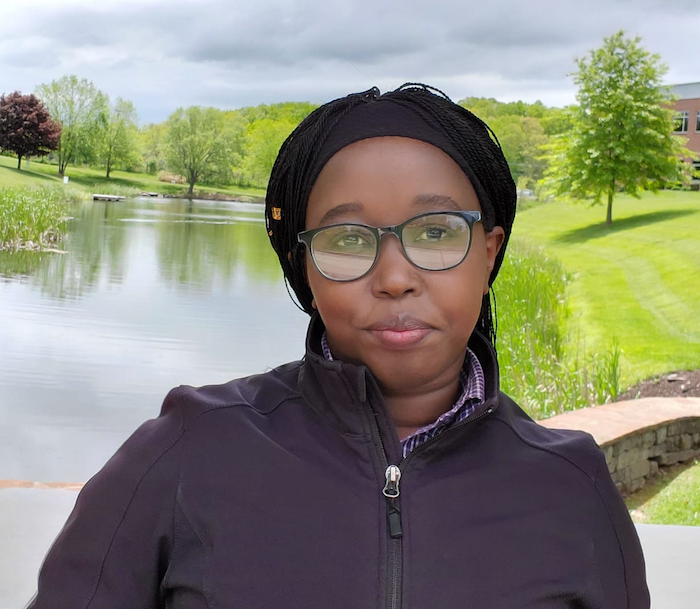
Lindah Kotut is an Assistant Professor at the University of Washington's Information School, where she investigates the convergence of Human-Computer Interaction (HCI), Indigenous Knowledge systems, and privacy/cybersecurity. Her work centers on amplifying marginalized voices through technology design, particularly focusing on communities with limited access to storytelling tools and those facing systemic inequities in digital spaces. Her research explores how unwritten stories and indigenous knowledge can reshape ethical technology development, addressing critical gaps in privacy frameworks, cybersecurity practices, and algorithmic accountability. Kotut employs community-centered methodologies like Griot-Style research to co-design tools that empower marginalized groups while challenging dominant narratives in computing. Current projects examine financial technology disparities, climate action AI, and bodily autonomy in surveillance contexts. Recent publications reveal a consistent trajectory toward socio-technical justice , with work spanning mobile financial services, social media surveillance, and indigenous knowledge preservation. Her 15 most recent articles demonstrate interdisciplinary reach across CHI, GROUP, and CSCW venues, with growing emphasis on climate technology and stakeholder-driven AI governance. Best Paper, Honorable Mention Award (ACM GROUP 2023) Best Paper, Honorable Mention Award (ACM CHI 2022) Best Poster Award (ACM GROUP 2020) Outstanding STEM Dissertation Award (2021) Kotut actively mentors PhD and masters students through the iSchool program, with current advisees including NSF Graduate Research Fellow Amelia Lee Doğan. Her lab recruits students with technical programming skills or qualitative research expertise for projects at the HCI-privacy-indigenous knowledge intersection. Funding supports undergraduate summer internships via CRA DREU and DUB REU programs, with recent work examining AI for sustainability and financial technology ethics. She leads a research lab focused on contextual canaries and speculative design for marginalized communities, with ongoing projects examining smartphone sharing ethics, indigenous knowledge preservation, and algorithmic fairness. Recent keynote engagements include the MHCI+D Immersion Studio on 'Stories of Agency and Power.'
Linda J. Graham serves as Professor and Director of The Centre for Inclusive Education (C4IE) at Queensland University of Technology within the Faculty of Creative Industries, Education and Social Justice. Her leadership spans multiple externally funded research initiatives focused on inclusive educational practices and policy reform. Her educational background includes a PhD in Education from QUT (2007), Master of Education from Macquarie University, and Bachelor of Arts in English Literature & Modern History from Macquarie University. Graham's research centers on education policy's role in disruptive student behavior development and responses to challenging students. She investigates ADHD diagnosis patterns, school suspension practices, and systemic barriers to inclusion. Her work consistently emphasizes student voice as fundamental to educational equity, examining how inclusive assessment design and wellbeing frameworks can transform learning environments. Current projects explore Indigenous student representation in disciplinary actions and accessible assessment methodologies. Her research portfolio reveals strong thematic continuity across publications: critical analysis of exclusionary practices, longitudinal studies on student trajectories, and evidence-based inclusive interventions. Recent work increasingly integrates Indigenous perspectives and systemic reform frameworks. Spencer Foundation Mentorship Excellence Award (2021) Royal Commission Expert Witness on Disability (2020) Chair of South Australian Suspension/Exclusion Inquiry (2020) ASSA Paul Bourke Award (2011) AARE Early Career Researcher Award (2011) Macquarie University Early Career Researcher of the Year (2011) Graham actively supervises doctoral candidates across inclusive education topics while leading major ARC-funded projects including the $1.2M Accessible Assessment initiative. Her research collaborations span Australia, Canada, Finland, and the UK, generating significant policy impact through government inquiries and international networks. She directs C4IE's longitudinal studies tracking student outcomes from prep through grade 5, with findings informing Queensland's education reforms. The Centre for Inclusive Education operates as her primary research hub, coordinating projects across three thematic areas: Engagement and Learning, Inclusion and Exclusion, and Health and Wellbeing. Graham's leadership extends to the AARE Inclusive Education Special Interest Group and Queensland government advisory roles.