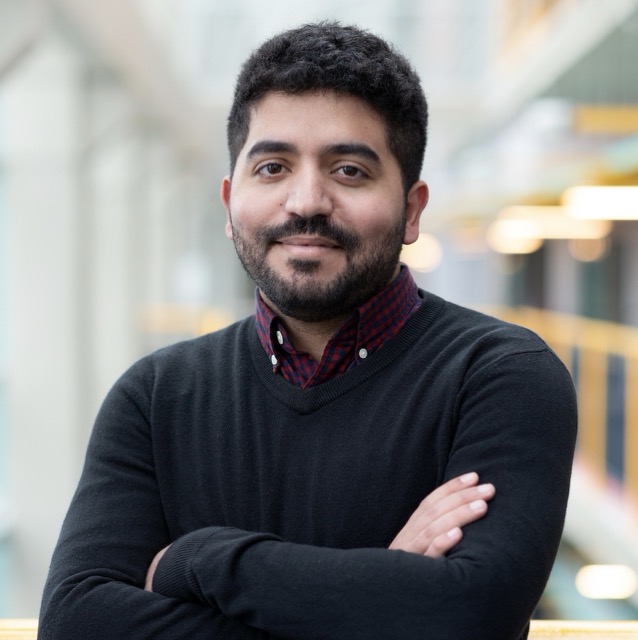
Schloss Dagstuhl - Leibniz Center for InformaticsGermany
Anastasia Ailamaki is a Professor at the Swiss Federal Institute of Technology in Lausanne (EPFL), renowned for her work in database systems and data management . Her research focuses on optimizing query processing for modern hardware, particularly GPUs and heterogeneous systems, and advancing cloud data analytics with serverless architectures like PixelDB . She has co-authored influential frameworks for adaptive query optimization , hardware-conscious database engines , and model-relational data management . Key research areas: GPU acceleration , HTAP , query approximation , spatial data processing , and cloud-native databases . Recent work emphasizes cross-task optimizations in distributed environments, efficient sampling , and context-aware joins integrating vector embeddings. In 2023, she contributed to adaptive recursive query optimization and speculative K-means clustering, while 2024 publications addressed proportional caching (HPCache) and model-relational systems . Her collaborations span institutions such as MIT, Microsoft, and ETH Zurich, with publications in top venues like SIGMOD , VLDB , and ICDE .
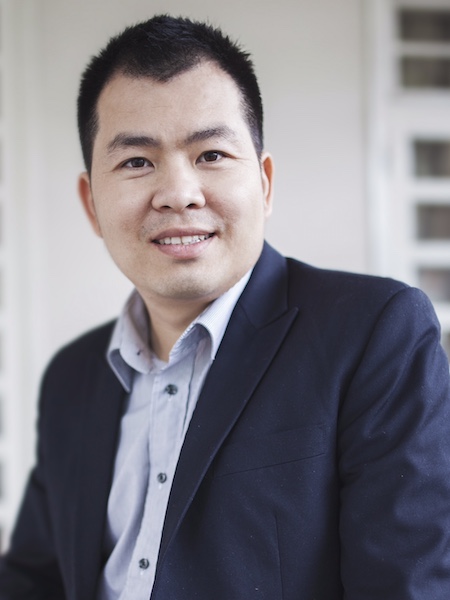
Schloss Dagstuhl - Leibniz Center for InformaticsGermany
Amine Mhedhbi is an Assistant Professor at Polytechnique Montréal , where he leads the Data & AI Systems Lab . He earned his PhD in 2023 from the University of Waterloo. His work bridges data management , graph databases , and AI systems , with a focus on performance, debuggability, and user interface design for data applications. Education : PhD (University of Waterloo, 2023) Research Interests center on modern analytical data systems , including multimodal data management , language model integration , and graph query optimization . His projects like FLockMTL and GraphflowDB aim to combine semantic analysis, AI, and traditional database operations. Scientific Awards include the NSERC Discovery Grant , the Cheriton School Distinguished Dissertation Award , the VLDB Best Paper Award , and fellowships from Microsoft and Meta . Key Collaborations : Semih Salihoğlu, Jimmy Lin, Elena L. Glassman Labs & Teams : Affiliated with DAIS Lab , IVADO , and co-founded the applied research team at Distyl AI in 2023.
Danh Le Phuoc is a Principal Computer Scientist at Technical University of Berlin, leading research at the PICOM.AI lab where his team develops autonomous information systems for robotics, autonomous vehicles, and IoT systems through pervasive intelligence in complex networks. With over 70 publications and significant academic impact (6811 citations, H-index 31), he has established himself as a notable researcher in semantic technologies. His educational background isn't explicitly detailed in the provided text, but his research expertise spans multiple domains requiring advanced technical knowledge. Le Phuoc's research focuses on bridging theoretical concepts with practical system implementation, particularly in RDF Stream Processing, Semantic Web technologies, and IoT middleware. His work emphasizes building real-world systems that process linked streams and data in real-time, enabling applications in intelligent transportation systems and connected vehicles. His research trajectory shows consistent innovation from foundational work on semantic mashups (2009) through to advanced stream processing frameworks (2017). His publications reveal strong trends toward processing real-time semantic data streams, with increasing focus on scalability, performance optimization, and integration of IoT systems with knowledge graphs. The progression shows movement from basic semantic web pipes to complex, elastic cloud-based stream processing systems. 22 Awards, Honours, Fellowships and Grants 10+ awards for innovative Semantic Web applications Multiple honors for IoT applications As an obsessive builder, Le Phuoc has developed numerous influential systems including The Graph of Things, CQELS (Continuous Query Evaluation over Linked Streams), Semantic Web Pipes, and Linked Sensor/Stream Middleware. His current focus is on ASAP (Autonomous Semantic Stream Processing), a platform for connected vehicles and intelligent transportation systems. His lab appears to maintain active GitHub repositories for several of these systems, suggesting ongoing development and community engagement.
Mohamed Sarwat is an Associate Professor at Arizona State University specializing in databases , spatial data management , and recommender systems . His research focuses on GeoSpark —a cluster computing framework for spatial data—and its extensions like GeoSparkViz for visualization and GeoSparkSim for traffic simulation. Key Contributions: LARS* (Location-Aware Recommender System), Horton* (Graph Reachability), Sindbad (GeoSocial Platform), and Riso-Tree (Graph Database Indexing) Research Themes: Integration of spatial/temporal data with machine learning, efficient indexing for big geospatial datasets, and scalable frameworks for mobility data science His work spans collaborations with 23+ co-authors across institutions like University of Minnesota, University of Melbourne, and University of Salzburg. Current projects emphasize GeoTorchAI —a spatiotemporal deep learning system—and mobility data science infrastructure.
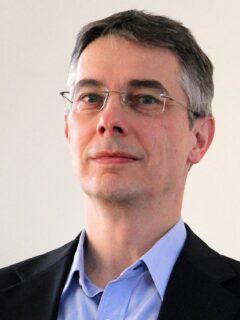
Schloss Dagstuhl - Leibniz Center for InformaticsGermany
Volker Markl is a Professor at Technische Universität Berlin in the Institute of Software Engineering and Theoretical Computer Science, with additional affiliations at the Berlin Institute for the Foundations of Learning and Data (BIFOLD) and the German Research Center for Artificial Intelligence (DFKI). His research spans database systems, stream processing, and distributed data management with significant contributions to both theoretical foundations and practical implementations. Markl's research interests focus on next-generation data management systems, particularly for streaming and IoT environments. His work addresses critical challenges in distributed query processing, system integration, and performance optimization. He has pioneered approaches for stream processing in volatile infrastructures and developed innovative techniques for GPU-accelerated database operations. His NebulaStream project represents a major contribution to distributed stream processing systems. His publication record demonstrates consistent impact across top database venues including VLDB, SIGMOD, and ICDE. Recent work shows increasing focus on machine learning integration with database systems, privacy-preserving query processing, and educational approaches for teaching large-scale data management. Markl has mentored numerous researchers who have become prominent in the database community, with frequent collaborators including Steffen Zeuch, Tilmann Rabl, and Philipp Grulich. His leadership extends to major research initiatives and collaborations across European institutions.
Surajit Chaudhuri is a Researcher at Microsoft , with a career spanning decades in database systems and data management . He has received the prestigious SIGMOD Edgar F. Codd Innovations Award (2011) for his contributions to query optimization , index tuning , and data lakes . Research Interests : His work focuses on database tuning , approximate query processing , fuzzy similarity joins , automated data transformations , and machine learning integration for scalable data systems. Recent Publications : In 2025, his research includes Auto-Test for unsupervised error detection in tables, Esc for budget-aware index tuning, and MMTU for multi-task table understanding benchmarks. Earlier works in 2024–2023 address spreadsheet formula recommendation , low-overhead index filtering , and time-series pattern recognition . Scientific Impact : He has co-authored influential papers in SIGMOD , VLDB , and IEEE Transactions , shaping practices in cloud databases , query optimization , and self-service BI . His collaborations span institutions like Microsoft, MIT, and ETH Zurich.
Jan Kossmann is a researcher affiliated with the Hasso Plattner Institute at the University of Potsdam, Germany. His work focuses on database systems, query optimization, and autonomous database management. He earned his PhD in 2023 with a thesis on unsupervised database optimization, including efficient index selection and data dependency-driven query optimization. His research explores topics like workload-aware indexing, reinforcement learning applications in database systems, and the development of frameworks for evaluating autonomous database technologies. Key collaborations include projects with Rainer Schlosser, Thorsten Papenbrock, and others, emphasizing experimental evaluations and system design. Notable contributions include the SWIRL reinforcement learning-based index selection framework and the 'Magic Mirror' tool for comparing index selection approaches. His publications span venues like VLDB, EDBT, and ICDE, reflecting his deep engagement with database theory and practical system implementation.
Prof. Dr. Bernd Witzigmann serves as Chair Holder at the Friedrich-Alexander University Erlangen-Nürnberg (FAU) within the Department of Electrical-Electronic-Communication Engineering and the Institute of Optoelectronics. His research focuses on advanced optoelectronic device modeling, particularly III-nitride semiconductors for ultraviolet applications, THz sensing, and photonic crystal technologies. Research Areas: Optoelectronic Device Physics, III-Nitride Semiconductors, THz Sensing, Quantum Well Modeling Key Projects: DUV AlGaN LEDs, InP/InAsP Nanowire Photodetectors, Germanium Fano-Resonators His work emphasizes computational simulation of carrier transport, polarization-induced doping effects, and optical gain mechanisms, particularly in ultraviolet light-emitting diodes and quantum disc structures. Collaborative studies span CMOS-compatible sensor fabrication and biofunctionalized THz antenna systems. Recent publications highlight advancements in aluminum nitride trenchFETs, multi-color DUV LEDs, and superparamagnetic label detection using micromagnetic models. His team explores subwavelength field effects in photonic crystal cavities and bandwidth optimization for photogated nanowire photodetectors. Located in Raum 01.045 at Konrad-Zuse-Strasse 3/5, Erlangen, Prof. Witzigmann leads research at the intersection of semiconductor physics and nanophotonic applications through both theoretical and experimental approaches.
André Brinkmann is a full professor at the Department of Computer Science, Johannes Gutenberg University Mainz, leading the Efficient Computing and Storage Group. He previously served as head of the university's data center (2011–2021) and was an assistant professor at Paderborn University (2008–2011). He holds a Ph.D. in Electrical Engineering from Paderborn University (2004) and managed the Paderborn Centre for Parallel Computing (PC²). His research focuses on algorithm engineering for data center management, cloud computing, storage systems, and high-performance computing (HPC). Notable projects include: Development of ad hoc file systems like GekkoFS and IO-SEA for exascale architectures Optimization of storage systems (e.g., hybrid RAID, SSD garbage collection) Quantum computing compiler research for trapped-ion architectures Leadership in initiatives like the I/O Trace Initiative and BINARY (Big Data in Atmospheric Physics) He serves as Senior Associate Editor of ACM Transactions on Storage and co-chairs major conferences like FAST 2026 and ARCS 2026.
Prof. Dr.-Ing. Joachim Denzler is a Professor leading the Chair for Digital Image Processing (Lehrstuhl für Digitale Bildverarbeitung) at Friedrich-Schiller-Universität Jena. His research spans computer vision, machine learning, medical imaging, and remote sensing applications across diverse domains including biomedical analysis, environmental monitoring, and facial recognition systems. His research interests focus on explainable AI, causal discovery, physics-informed neural networks, and bias mitigation in deep learning models. He has made significant contributions to fine-grained classification, concept activation vectors, and privacy-preserving techniques in facial recognition. His work often bridges theoretical computer vision with practical applications in medical diagnostics, environmental science, and infrastructure monitoring. His recent publications demonstrate a strong trend toward causal discovery methods, physics-informed neural networks, and addressing bias in machine learning systems. His work spans both theoretical advancements in model interpretability and practical applications in medical imaging, environmental monitoring, and infrastructure safety. The interdisciplinary nature of his research is evident from collaborations with ecologists, neuroscientists, and civil engineers. Best Paper Award at International Conference on Pattern Recognition (ICPR) 2024 Prof. Denzler actively mentors numerous PhD students and postdoctoral researchers, with frequent co-authors including Maha Shadaydeh, Niklas Penzel, Gideon Stein, and Tim Büchner appearing as first authors on significant publications. His laboratory has secured research funding across multiple domains including medical imaging, environmental monitoring, and AI safety. His work on CausalRivers represents a major contribution to benchmarking causal discovery methods with real-world time series data. The Chair for Digital Image Processing maintains strong industry and clinical partnerships, particularly in medical imaging applications for facial palsy analysis and neonatal care. Prof. Denzler's team has developed novel techniques for dam deformation monitoring using remote sensing data and created advanced methods for analyzing plant diversity effects on ecosystem functioning.
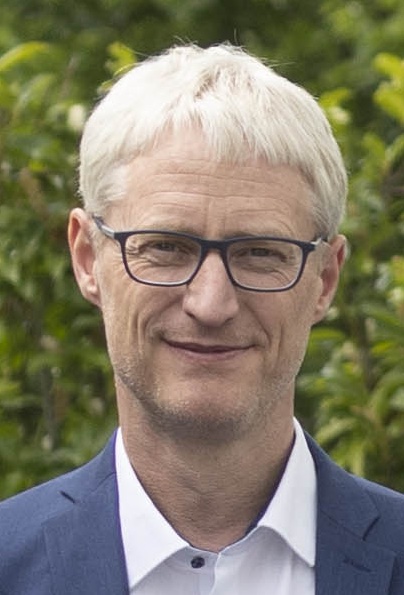
Schloss Dagstuhl - Leibniz Center for InformaticsGermany
Tilmann Rabl is a Professor affiliated with the Hasso Plattner Institute (HPI) at the University of Potsdam, Germany. His research focuses on database systems, distributed computing, and scalable data processing. He leads projects exploring serverless cloud infrastructure, stream processing, and machine learning integration with databases. Key areas of research include optimizing GPU-based data processing, developing benchmarks like TPCx-IoT and TPCx-AI, and advancing techniques for distributed systems, including RDMA and NVLink-based architectures. His work emphasizes practical systems, such as Skyrise (serverless data processing), Rhino (distributed state management), and PROTEUS (scalable machine learning). Rabl has contributed to foundational tools like BlockJoin for matrix partitioning and has explored performance trade-offs in persistent memory and CXL device memory. His collaborative projects address challenges in real-time data analytics, sensor data coherence, and interoperable data science workflows.
Weierstrass Institute for Applied Analysis and StochasticsGermany
Dr. Sven Burger is a leading Researcher at the Zuse Institute Berlin (ZIB) within the Modeling and Simulation of Complex Processes department. His work focuses on Nanophotonics , Quantum Technologies , and Optical Resonance Computation , particularly in photonic crystals, plasmonic systems, and quantum light sources. Key projects: NanoLab GRIPS 2024 , MATH+ TES QT , MATH+ PaA-1 (perovskite solar cells), Colour Impression of Solar Cells Collaborations: MATH+ , BIFOLD , Research Campus MODAL His research spans Bayesian optimization for quantum systems, quasinormal mode expansions , chiral plasmonics , and terawatt-scale photovoltaics . Recent work emphasizes RPExpand software for resonance analysis and AAA algorithm applications in photonic design. He contributes to quantum key distribution via plug&play single-photon sources, hot carrier dynamics in plasmonic nanocrystals, and high-efficiency light extraction for deep-UV LEDs. His computational methods address non-Hermitian systems , exceptional points , and self-interference nanoparticle tracking .
Dr. Sarahjasmin Finkelmeyer is a Researcher at the Leibniz Institute of Photonic Technology (Leibniz-IPHT) , affiliated with the Work group Organic Thin Films and Interfaces under the Research Department Photonics and Quantum Detection . Her work focuses on the interfacial engineering of organic thin films and nanomaterials for optoelectronic and energy-related applications. Her research interests involve Electrochemical behavior of catalyst-coordinated graphene nanoribbons Stabilization of organic solar cells through amphiphilic additives Tuning optical properties via intermolecular interactions Defect-free Langmuir-Blodgett film fabrication Micro-optical devices from hybrid glasses Controlling frontier orbital energies in layered thin films Recent studies highlight her contributions to Hydrogen evolution reaction (HER) catalyst immobilization Morphology stabilization in polymer solar cells Thermal imprinting of ZIF-62 hybrid glasses Quantifying surface-to-bulk interactions in organic semiconductors She collaborates with researchers such as Martin Presselt, Ksenija Glusac, and Jordi Cabana across interdisciplinary projects bridging materials science, electrochemistry, and optical engineering. Her workgroup specializes in Langmuir-Blodgett techniques, spectroscopic analysis, and atomic force microscopy for thin film characterization.
Professor Klaus Berberich is a faculty member at htw saar (Saarland University of Applied Sciences), where he serves as Professor in the Databases & Information Systems department within the Faculty of Engineering. He is the Laboratory manager of the software laboratory (SWL) and Chairman of the examination boards for Practical Computer Science, Communication Informatics and Production Informatics. His research focuses on Information Retrieval, Machine Learning, Data Mining, and Web Archives, with significant contributions to knowledge graphs, temporal information retrieval, and neural information retrieval models. Professor Berberich has developed innovative approaches for quantity extraction from web tables, structuring text into tables, and knowledge graph querying. His publication record shows a consistent trend toward increasingly sophisticated neural approaches to information retrieval, evolving from traditional temporal search techniques to modern deep learning models. Recent work demonstrates strong integration of knowledge graphs with neural information retrieval systems, particularly in handling quantities and temporal aspects of information. Professor Berberich has received numerous prestigious awards throughout his career: 2020: Test of Time Award, ECIR 2020 2018: Honorable Mention for Best Poster Award, WWW 2018 2017: Prominent Paper Award, Artificial Intelligence Journal 2014: Highly Commended Poster Presentation Award, IIiX 2014 2013: Honorable Mention for Best Paper Award, CIKM 2013 2011: Best Demo Award, WWW 2011 2009: Best Late-Breaking Result Award, WSDM 2009 As an active researcher and educator, Professor Berberich serves on numerous program committees for major conferences including WSDM, CIKM, SIGIR, and ICTIR. He has been a consistent reviewer for prestigious journals in the field and is a member of the executive committee of the Information Retrieval specialist group of the German Informatics Society. His teaching portfolio includes courses in Databases, Information Retrieval, Data Science, Machine Learning, and Deep Learning. Professor Berberich leads the software laboratory (SWL) at htw saar and has been instrumental in developing research infrastructure for knowledge-centric tasks, including the GYANI indexing infrastructure. His research group has made significant contributions to temporal information retrieval, particularly in the context of web archives and news archives.
Anton Dignös is an Associate Professor at the Free University of Bozen-Bolzano, Italy. His research focuses on temporal databases, time series analysis, and database system optimization. He has co-authored numerous papers in top venues such as VLDB, ICDE, and ACM Computing Surveys, with a strong emphasis on query processing, indexing techniques, and benchmarking tools for database systems. Notable contributions include the SEER toolkit for time series benchmarking and foundational work on temporal anomaly detection in healthcare systems. His work spans theoretical advancements in join algorithms and practical applications in manufacturing and monitoring systems. He has collaborated extensively with researchers like Johann Gamper and Michael H. Böhlen, contributing to projects like TSM-Bench and the development of efficient interval join methods optimized for modern hardware.