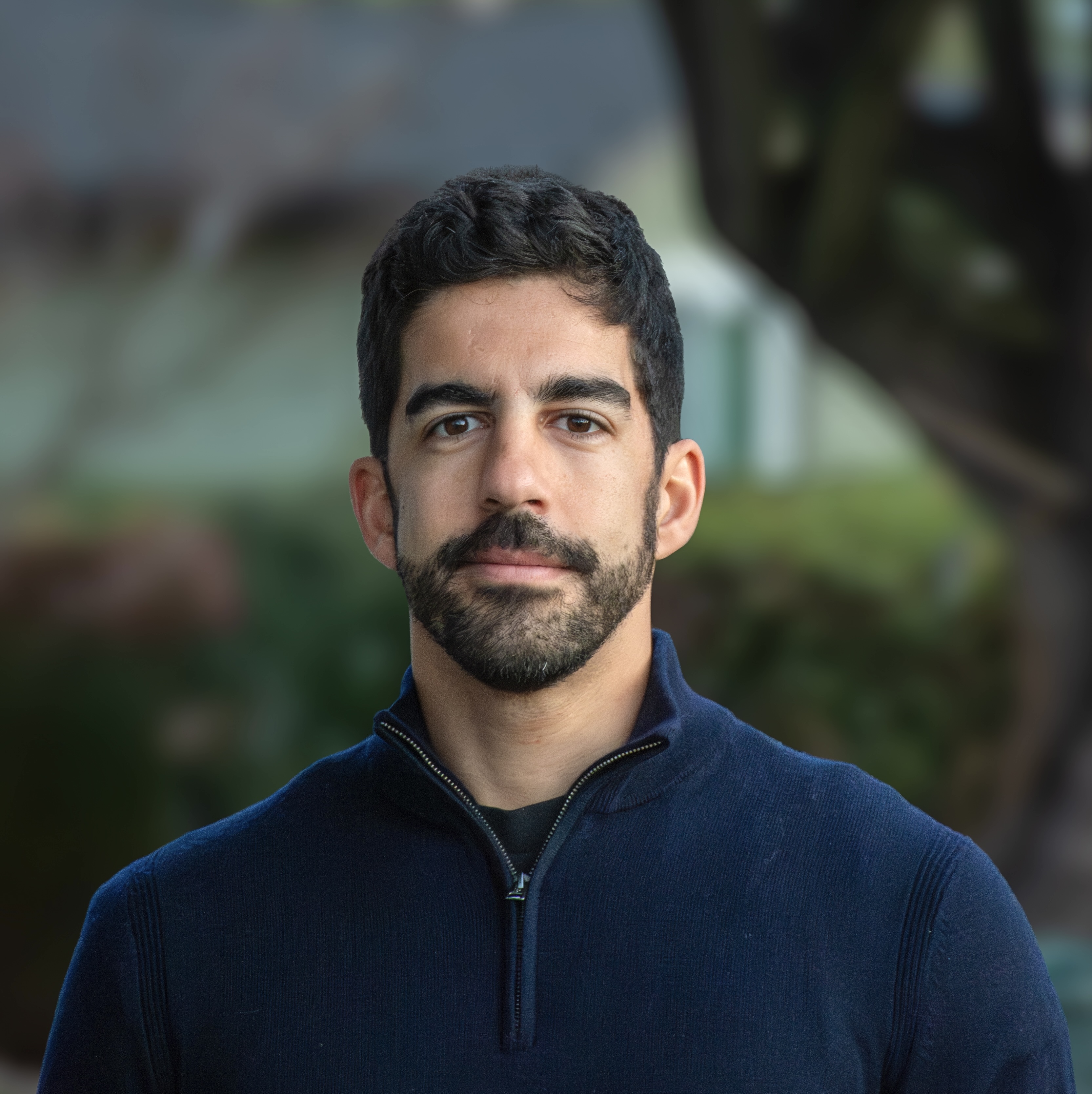
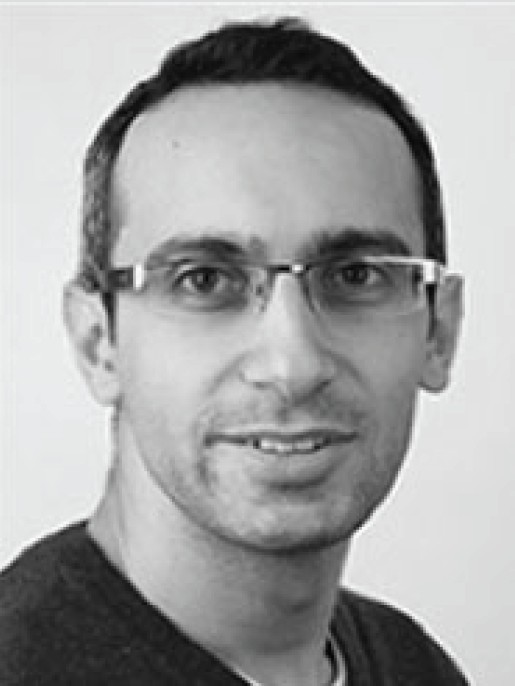
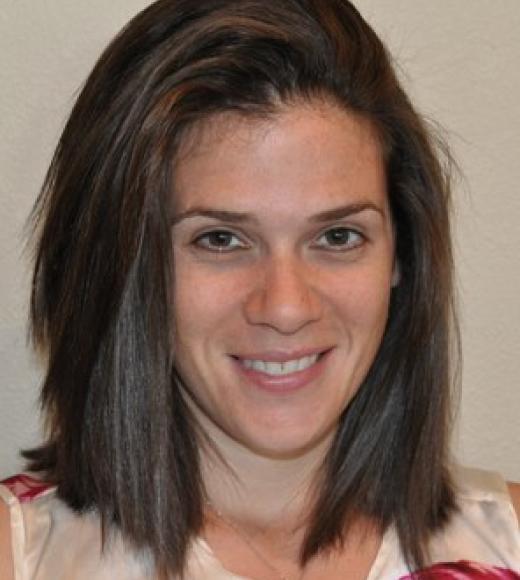
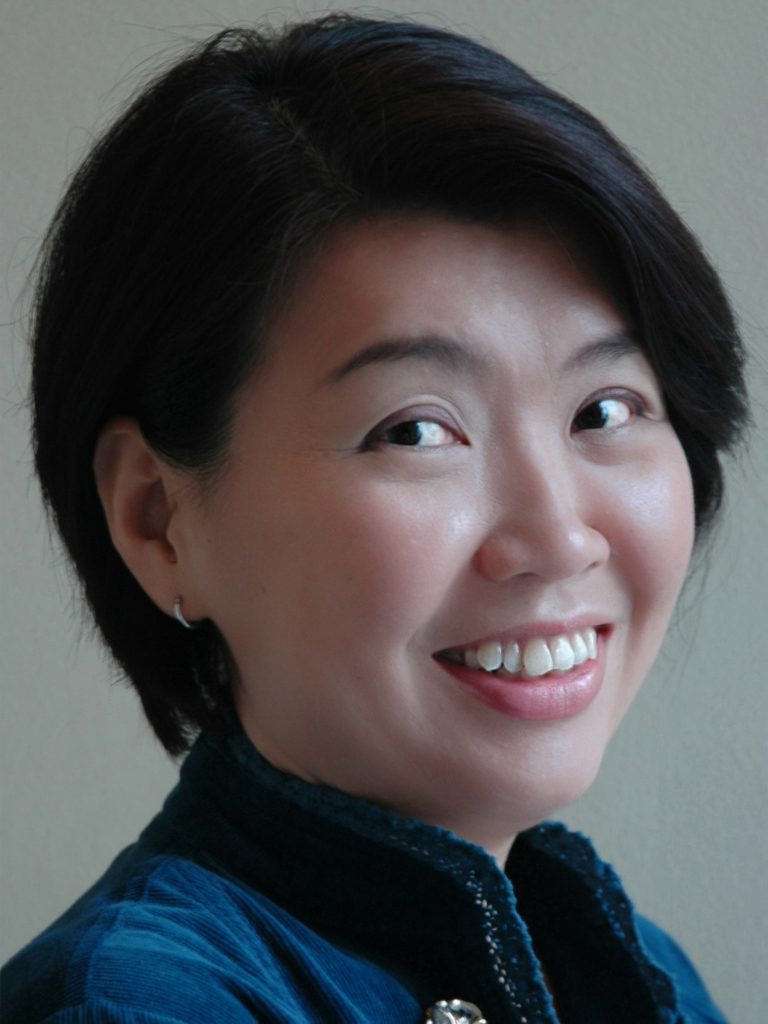
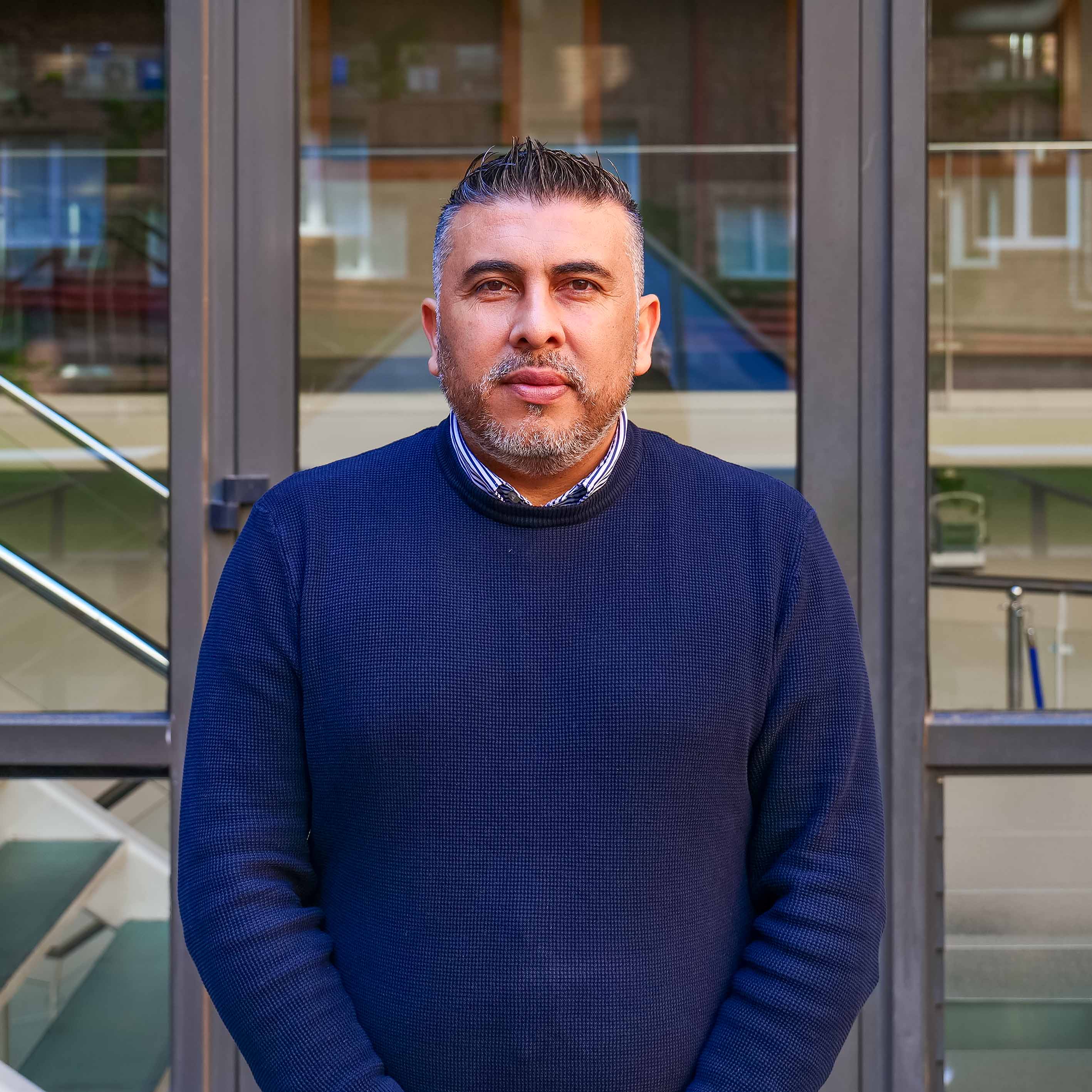
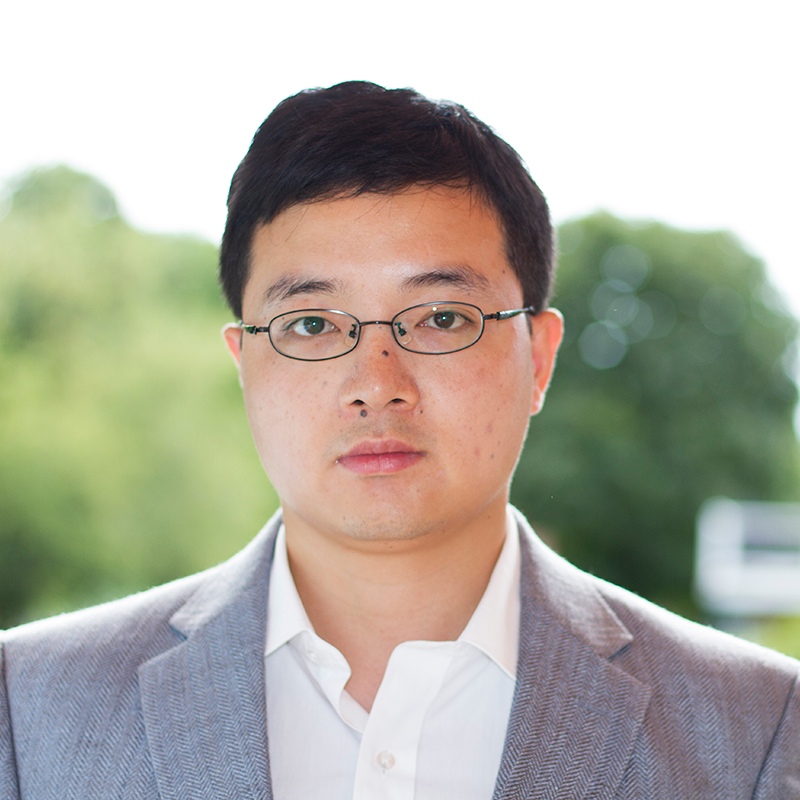
Yannis Chronis is an incoming Assistant Professor at the Department of Computer Science , ETH Zurich (starting August 2025), where he will join the ETH Systems Group . Prior to this, he spent 3 years as a Systems Researcher at Google's Systems Research Group in Sunnyvale, USA. He holds a Ph.D. in Computer Science from the University of Wisconsin-Madison (advised by Prof. Jignesh Patel) and a Bachelor's/Master's from the University of Athens, Greece (advised by Prof. Yannis Ioannidis). His research focuses on optimizing databases and data processing for modern hardware through software-hardware co-design. Key areas include database efficiency in memory-centric architectures, learned query optimizers, and cloud resource management. His work is supported by a Facebook Fellowship and has been recognized with the EDBT 2016 Medal for best paper. Teaching: Taught CS 564 - Database Management Systems at UW-Madison (Spring 2022). Service: Served on program committees for SIGMOD, VLDB, CIDR, and others, and chairs the CIDR Proceedings Committee. Key Publications: His recent work includes studies on memory-centric computing for databases, cardinality estimation benchmarks, and adaptive query processing techniques.
Dr. Aytaç Kubilay is a Senior Researcher at the Chair of Building Physics, Department of Mechanical and Process Engineering, ETH Zurich. His research focuses on urban microclimate modeling, particularly wind-flow analysis, thermal comfort optimization, and vegetation-based climate mitigation strategies. Institution: ETH Zurich Department: Mechanical and Process Engineering Research Scope: Urban climate, CFD modeling, heat island mitigation Research interests include computational fluid dynamics (CFD) applications for urban environments, with emphasis on heat island effects, wind-driven rain analysis, and porous media heat transfer. His work combines numerical simulations and experimental validations to assess thermal comfort and climate adaptation strategies in cities. Recent publications analyze vegetation impacts on urban microclimates, including tree cooling potential, street-level thermal comfort dynamics, and high-rise building wind mitigation. Studies employ custom solvers like urbanMicroclimateFoam and OpenFOAM for integrated flow-heat-moisture modeling. Key collaborations include researchers from ETH Zurich (Jan Carmeliet, Dominique Derome) and international institutions, focusing on sustainable urban planning and climate resilience frameworks.
Clark Olson is a Professor in the Division of Computing & Software Systems at the University of Washington Bothell, part of the School of Science, Technology, Engineering & Mathematics. He earned his Ph.D. in Computer Science from UC Berkeley (1994), M.S. in Electrical Engineering (1990), and B.S. in Computer Engineering (1989) from the University of Washington, Seattle. Education: Ph.D. in Computer Science (2017) from University of California, Berkeley M.S. in Electrical Engineering (1990) from University of Washington, Seattle B.S. in Computer Engineering (1989) from University of Washington, Seattle His research focuses on computer vision, robot navigation, and clustering algorithms. He has developed techniques for Mars rover terrain mapping, subspace clustering, and geometric feature matching. His work bridges theory and application in autonomous systems and image analysis. Analysis of his publications reveals expertise in computer vision (8 papers), clustering algorithms (4 papers), and robotics (5 papers). Key subtopics include Mars exploration (3 papers), Hough transforms (3 papers), and probabilistic methods (3 papers). Professor Olson teaches courses ranging from introductory programming (CSS 161-162) to advanced topics in computer vision (CSS 487-587) and algorithm design (CSS 549). He also advises on the CSSE Capstone (CSS 497) projects requiring rigorous prerequisites and structured evaluation criteria.
Ahmed Eldawy is an Associate Professor in the Department of Computer Science at the University of California, Riverside. He leads groundbreaking research in databases, big data management, and spatial data processing, with a focus on scalable exploratory analytics through systems like Beast , UCR-Star , Raptor , and Spider . His work spans geospatial data infrastructure, distributed computing, and computational geometry. Research Interests : Databases, big data management, spatial data processing, geospatial analytics, distributed systems, computational geometry. Awards : NSF CAREER award (2021), 10-year Influential Paper Award (ICDE 2025), Best Demo award (SIGSPATIAL 2020). Grants : NSF (IIS-2046236, IIS-1954644, CNS-1924694), USDA (USDA NIFA 2020-69012-31914), UC Office of the President (M21PL3368). Labs & Centers : RAISE@UCR, Data Science Center, Center for Robotics and Intelligent Systems (CRIS), Affiliate of Center for Geospatial Sciences and Winston Chung Global Energy Center. His recent publications focus on LLM-driven geospatial visualization (LASEK), distributed raster analytics (RDPro), learned spatial query optimization, and scalable spatiotemporal systems. He advises numerous PhD and Master’s students, many of whom now work at top tech companies like Amazon, Microsoft, and Meta.
Atsuo Takanishi is a distinguished Professor at Waseda University's Faculty of Science and Engineering, School of Creative Science and Engineering, with appointments in both the Department of Bioscience and Biotechnology and the Department of Modern Mechanical Engineering. With over 700 publications, 10,399 citations, and an h-index of 47, Professor Takanishi has established himself as a leading figure in robotics research. His work spans multiple institutions, including visiting positions at Showa University School of Dentistry and KDDI Research, Inc. Professor Takanishi received his Doctor of Engineering degree from Waseda University in 1985, following his undergraduate studies in the Faculty of Science and Engineering at the same institution, which he completed in 1980. His academic journey began with positions as an Assistant at Waseda University (1985-1988), Lecturer (1988-1990), and Associate Professor (1990-1997) before achieving his current Professor status. Professor Takanishi's research interests center around robotics and intelligent systems, with particular expertise in humanoid robotics, surgical dentistry applications, and biomechatronics. His work demonstrates a unique integration of mechanical engineering principles with biological systems, resulting in innovative robotic platforms that mimic human capabilities. Notably, his laboratory has developed the Waseda Anthropomorphic Saxophonist Robot series and various medical training simulators that have significantly advanced the field of human-robot interaction. His research in experimental psychology complements his robotics work, particularly in human-robot interaction studies. Analysis of Professor Takanishi's recent publications reveals a strong focus on practical applications of robotics technology, particularly in assistive devices for elderly mobility, medical training simulators, and agricultural robotics for Synecoculture environments. His work consistently bridges theoretical robotics with real-world implementation, with recent papers emphasizing reinforcement learning approaches, haptic feedback systems, and computer vision techniques for complex environments. The Waseda Anthropomorphic Saxophonist Robot series represents a culmination of decades of research in humanoid robotics and musical expression. IEEE Fellow (2020-present) Robotics Society of Japan Fellow (2012-present) Japan Society of Mechanical Engineers Fellow (2007-present) Multiple Best Paper Awards from IEEE conferences (ICRA, IROS, ROMANSY) BusinessWeek Asia's Stars Bloomberg (2001) IFToMM Award of Merit (2010) Professor Takanishi has maintained extensive collaborations with research institutions worldwide, particularly with Italian institutions through the Italy-Japan Workshop series. His laboratory has secured substantial funding from Japanese government agencies including the Japan Science and Technology Agency, with particular emphasis on projects bridging robotics with medical applications and human-centered technologies. His international recognition is evidenced by his numerous visiting professorships and collaborative projects across continents. Professor Takanishi leads the Takanishi Laboratory at Waseda University, which maintains specialized facilities for humanoid robotics development, medical robotics research, and human-robot interaction studies. The laboratory has developed several notable robotic platforms including the WABIAN series of bipedal humanoid robots, the WASEDA FLUTIST ROBOT, and various medical training simulators used in clinical education settings. His work on the WASEDA SAXOPHONIST ROBOT represents a unique fusion of musical artistry and robotics engineering.
Dr. Timothy Hresko is a Professor of Orthopedic Surgery at Harvard Medical School and serves as an Orthopedic Surgeon in the Orthopedics and Sports Medicine Department at Boston Children's Hospital. He also holds the position of Director of Spine Research and Quality Improvement in the Department of Orthopedic Surgery. Dr. Hresko received his medical degree from Columbia University, College of Physicians and Surgeons in 1981. He completed his internship at New England Deaconess Hospital in 1982, followed by residency at New England Medical Center in 1987, and a fellowship at Boston Children's Hospital in 1988. He is certified by the American Board of Orthopedic Surgery. His research focuses on orthopedic surgery, particularly spine surgery and pediatric orthopedics. Dr. Hresko's work centers on scoliosis treatment, spinal deformity correction, and outcomes of pediatric spinal fusion surgeries. He has conducted extensive research on surface topography measurements for scoliosis assessment, bracing techniques for adolescent idiopathic scoliosis, and surgical outcomes for various spinal conditions. His recent work explores the biomechanical effects of thoracolumbosacral orthosis design and the relationship between spinal deformity and patient self-image. Dr. Hresko's recent publications demonstrate a strong emphasis on technological advancements in spine surgery, including robotic pedicle screw placement and computer vision algorithms. His work also explores the relationship between socioeconomic factors and surgical outcomes, as well as innovative approaches to non-surgical management of scoliosis. Scoliosis Research Society (SRS) Pediatric Orthopaedic Society of North America (POSNA) American Academy of Orthopaedic Surgeons (AAOS) American Board of Orthopaedic Surgery As Director of Spine Research and Quality Improvement, Dr. Hresko leads initiatives to enhance patient outcomes and optimize care pathways for children with spinal conditions. His work emphasizes evidence-based approaches to pediatric spine care, with particular attention to quality improvement and research translation into clinical practice.
Dr. Lucas Pahl is a Lecturer in Economics at the University of Sheffield, School of Economics since 2024. His research specializes in mathematical game theory, particularly in equilibrium refinements, fixed point theory, and real algebraic geometry. He holds a PhD in Economics from the University of Rochester, an MSc in Mathematics from IMPA (Brazil), and a BSc in Social Sciences from the University of São Paulo. Previous positions: Postdoctoral Scholar at Hausdorff Institute for Mathematics and Institute for Microeconomics, University of Bonn His research interests include advanced topics like fixed point theory applications in game theory, algebraic topology intersections with economic models, and equilibrium refinement methodologies. Recent work explores information spillover in zero-sum games and polytope-form game structures. Key publications focus on O’Neill’s theorem extensions, sustainable equilibria analysis, and finite characterizations of perfect equilibria. He serves as a reviewer for top journals including Econometrica and Games and Economic Behavior. No scientific awards explicitly mentioned. His advisory and grant activities remain unspecified in current records. Labs/teams: No lab affiliations explicitly stated in provided information.
Georgia Zellou is an Associate Professor in the Department of Linguistics at the University of California, Davis, where she co-directs the Phonetics Lab and conducts award-winning research at the intersection of phonetics, speech perception, and human-AI interaction. Her work investigates how phonetic detail is cognitively represented through variations in speech production, with significant contributions to understanding speech alignment with voice assistants, face-masked speech intelligibility, and cross-linguistic perception of synthetic voices. Her academic credentials include a Ph.D. in Linguistics from the University of Colorado at Boulder (2012), an M.A. in Linguistics from Stony Brook University (2007), and a B.A. in Linguistics & Anthropology from the University of Florida (2005, Cum Laude, Phi Beta Kappa). Ph.D., Linguistics, University of Colorado at Boulder (2012) M.A., Linguistics, Stony Brook University (2007) B.A., Linguistics & Anthropology, University of Florida (2005) Professor Zellou's research program centers on laboratory phonology approaches to real-world communication challenges, examining how acoustic-phonetic details influence speech perception across contexts. Her studies span speech alignment with voice-AI systems (e.g., Amazon Alexa), sociophonetic variation in bilingual speech, and the cognitive mechanisms underlying perceptual compensation for coarticulation. She employs experimental methods including eye-tracking, acoustic analysis, and perceptual testing to uncover how phonetic variation functions pragmatically in human communication and human-machine interaction. Analysis of her 15 most recent publications (2023-2025) reveals three dominant research trajectories: (1) human-AI voice interaction dynamics, including prosodic alignment and social evaluation of TTS voices; (2) intelligibility optimization in challenging contexts (face masks, clear speech for diverse listeners); and (3) cross-linguistic phonetic variation in vowelless words and consonant clusters. These works consistently bridge theoretical phonology with applied speech technology, demonstrating how fine-grained phonetic detail influences communication effectiveness in both human-human and human-machine contexts. Her scientific recognition includes: Fulbright Scholar (2022) for research in France Chancellor’s Award for Excellence in Undergraduate Mentoring (2019) Fellow of the Linguistic Society of America (2020) Amazon Faculty Research Award (2019) for Alexa-related speech studies Dean’s Fellow designation at UC Davis (2020-2023) Professor Zellou maintains an active mentoring practice recognized with the Chancellor’s Award, supervising undergraduate researchers in the Phonetics Lab while teaching core linguistics courses from introductory to advanced graduate levels. Her research program is supported by competitive grants including NSF funding, Amazon Research Awards, and UC Davis internal grants (Hellman Foundation, ISS Junior Faculty Grant), reflecting the translational value of her work for speech technology development. She has co-directed major initiatives including the 2019 LSA Linguistic Institute. The Phonetics Lab she co-leads serves as a hub for experimental phonetics research, focusing on speech production-perception relationships through projects investigating vocal accommodation to voice assistants, nasal coarticulation dynamics, and cross-linguistic prosody. Current collaborations with industry partners aim to implement human speech adaptation principles into voice assistant design to enhance naturalness and engagement.
Ian Horrocks is a Professor of Computer Science at the University of Oxford and a Fellow of Oriel College. His research focuses on knowledge representation, description logics, automated reasoning, and semantic web technologies. He has held academic positions at the University of Manchester (2003–2007) and served as Chief Scientist at Cerebra Inc. (2001–2006). Horrocks earned his BSc (1st class), MSc, and PhD in Computer Science from the University of Manchester (1981–1997). His work includes foundational contributions to ontology languages (e.g., OWL) and reasoning systems such as HermiT and ELK. He has supervised over twenty doctoral students and postdoctoral researchers. His honors include Fellowships from the Royal Society (2011), ECCAI (2009), and the British Computer Society (2005). He serves as Editor-in-Chief of the Transactions on Graph Data and Knowledge and leads initiatives in semantic web standards and knowledge graph applications. Key Roles: Editor-in-Chief (Journal of Web Semantics), Co-Chair (W3C OWL Working Group) Grants: EPSRC Senior Research Fellowship (2005), numerous international collaborations Labs: Oxford Semantic Technologies, involvement in projects like RDFox and PAGOdA
ONG Soh Khim is a Professor in the Department of Mechanical Engineering at the National University of Singapore (NUS) and a member of the NUS Graduate School. She is a Fellow of CIRP (International Academy for Production Engineering), the first Asian and fourth female Fellow globally. Her research focuses on augmented reality (AR) and digital twins in manufacturing, with applications in assistive technology and sustainable design. She has authored/co-edited 6 books, over 300 journal/conference papers, and holds an H-index of 66 (Google Scholar) and 52 (Scopus). She has held leadership roles, including serving as a Nominated Member of the Singapore Parliament (2005–2006) and on multiple NUS governance boards. Her honors include the Singapore Youth Award (2004), M. Eugene Merchant Award (2004), and the 2021 Long Service Medal. She advocates for gender diversity in STEM, leading initiatives like the Girls2Pioneers program. Her current roles include Senior Principal Investigator at NUS Research Institutes in Suzhou and Guangzhou, and Visiting Professorships at Chinese universities.
Dr. Christopher M. Wolverton is a Professor of Materials Science and Engineering at Northwestern University , where he leads the Wolverton Research Group . His work focuses on computational materials science with applications in energy sustainability , particularly in batteries , hydrogen storage , and thermoelectrics . PhD in Physics from University of California, Berkeley BS in Physics (summa cum laude) from University of Texas, Austin His research leverages first-principles quantum mechanical simulations and machine learning to enable virtual materials synthesis before laboratory testing. The group specializes in hybrid computational methods integrating Density Functional Theory (DFT) , Monte Carlo simulations , and phase-field microstructural models . The article portfolio shows leadership in energy storage materials , with recent work on data-driven nanoparticle facet control , mixed-anion semiconductors , and machine learning-accelerated discovery . Publications span top journals including Nature Energy , Nature Materials , and Science . 2006 Ford Motor Company Technical Achievement Award 2005 Ford Patent & Publication Awards 2003 Ford Environmental/Physical Sciences Recognition As advisor to PhD candidates Zhenpeng Yao , Shiqiang Hao , and Shane Patel , he fosters interdisciplinary research connecting materials informatics with experimental validation . The group maintains active collaborations with Argonne National Lab and MIT/Harvard teams.
Horacio Rostro González is an Associate Professor in the Department of Industrial Engineering at IQS School of Engineering, Universitat Ramon Llull (URL), Barcelona, Spain. He is an active researcher with a strong international academic background and current affiliations in both research and teaching. Education: PhD in Control and Signal and Image Processing (2011, INRIA & University of Nice – Sophia Antipolis, France) Master’s in Electrical Engineering (2007, University of Guanajuato, Mexico) Electronic Engineer (2003, National Technological Institute of Mexico) His research interests lie at the intersection of Artificial Intelligence, Computational Neuroscience, Neuromorphic Computing, Embedded Systems, and Robotics. He applies advanced techniques in neural networks, machine learning, and control systems to solve complex engineering problems in robotics, biomedicine, and industrial design. His work emphasizes biomimetic approaches, such as spiking neural networks for robot locomotion and AI-driven analysis of physiological signals like ECG and facial expressions. The recent publications highlight a strong trend in interdisciplinary research, combining AI with photonics, robotics, cardiovascular diagnostics, and emotional recognition in children. His work spans from theoretical algorithm development to practical industrial applications, particularly in additive manufacturing and smart systems. Scientific Projects: Offshore Wind Farms: Data analysis using machine learning and power generation prediction (2023–2024) GEPI: Grup Enginyeria de Productes Industrials (2022–2025) He is actively involved in research grants and collaborative projects, with no mention of formal student advising in the provided text. He is a member of the GEPI (Industrial Products Engineering Group), which focuses on additive manufacturing, reverse engineering, and material characterization. His scientific output is robust, with consistent publication activity from 2005 to 2025, including numerous articles in indexed journals.
Xavier Brusset is a Professor in Supply Chain at SKEMA Business School since 2016, where he also serves as Director of the PRISM Research Center since 2017. Previously, he held professorial positions at Toulouse Business School (2015-2016) and ESSCA School of Management (2009-2015), where he was responsible for the Master 2 in Purchasing and Supply Chain Management program. His academic journey includes a PhD in Management Sciences from Université Catholique de Louvain (2010) and a Habilitation à Diriger des Recherches from Université Paris Ouest Nanterre La Défense (2016). His research spans multiple critical areas in supply chain management, with particular focus on supply chain resilience, blockchain applications, weather risk management, and pandemic impacts on supply chains. Brusset has developed innovative approaches to understanding how supply chain partners interact, how information affects their behavior, and how external disruptions like weather anomalies and pandemics impact operational efficiency. His work bridges theoretical models with practical applications, often developing decision-support tools for managers facing complex supply chain challenges. Brusset's publication record shows a clear evolution of research interests, beginning with foundational work on supply chain contracts and information sharing, then expanding to weather risk management, and most recently focusing on pandemic disruptions and blockchain applications. His 15 most recent publications (2018-2025) demonstrate increasing sophistication in modeling complex supply chain phenomena, with particular emphasis on network effects, ripple effects, and multi-echelon optimization under disruption scenarios. Editorial board member of Logistics Research Editor of International Journal of Retail and Distribution Management (2022-2023) Recognized EU expert for CINEA research projects evaluation Organizer of the Colloquium on European Research in Retailing (CERR) Reviewer for multiple top journals including International Journal of Production Economics As an advisor, Brusset has supervised doctoral students including R. Alkhudary (co-director, Université Paris 2 Panthéon-Assas) and V. Capocasale (rapporteur). His professional experience extends beyond academia to include industry roles in financial markets and logistics technology, having co-founded WebLogistix, a platform for sharing logistics information in Argentina. His research has practical applications across multiple sectors, particularly in retail, food supply chains, and manufacturing, where he develops tools to help managers mitigate risks and optimize operations under uncertainty.
Lin Ma is currently an Assistant Professor at the University of Michigan, Ann Arbor in the Department of Electrical Engineering and Computer Science (College of Engineering). Previously, they served as a Post Doctoral Fellow at Carnegie Mellon University (2021-2022) and as a Software Engineer at Databricks, Inc. (2022-2023). Research Interests focus on the intersection of database systems and machine learning, particularly in developing self-driving database management systems . Key areas include workload forecasting , automated index optimization , query execution acceleration , and machine learning integration for database automation. Their work explores GPU-accelerated analytics, memory optimization, and transactional consistency models. Academic Contributions span 15+ publications in top venues like VKDB , SIGMOD , and CIDR , including recent 2025 papers on Vortex (GPU memory optimization) and Scompression (workload compression). Earlier work introduced QueryBot 5000 , a workload forecasting framework, and explored anti-caching for storage optimization in OLTP systems. Teaching includes courses like EECS 584: Advanced Database Management Systems and EECS 484: Database Management Systems at the University of Michigan (2023-2025), and 15-445/645 Database Systems at Carnegie Mellon University. Service involves program committee roles for SIGMOD (2023-2025), VLDB (2022-2025), and CIDR (2024-2025). They also served on admissions and search committees at both institutions. Advising includes supervising PhD and MS students: Siyuan (Doug) Dong , Zhongwei Xu , and Haotian (Jack) Gong (co-advised with Barzan Mozafari), among others.
Qing Li is an Associate Professor in the Department of Electrical and Computer Engineering at Carnegie Mellon University (CMU), part of the College of Engineering. He holds a B.E. in Electronics Engineering from Tsinghua University (2006) and a Ph.D. in Electrical and Computer Engineering from Georgia Institute of Technology (2013). Prior to CMU, he worked as a postdoctoral researcher at the National Institute of Standards and Technology (NIST), where he developed quantum frequency conversion and microresonator-based optical systems. His research focuses on light-matter interactions in integrated photonics, emphasizing nonlinear optics and quantum information processing. He has pioneered silicon carbide and aluminum nitride platforms for chip-scale quantum technologies and optical metrology. Dr. Li has been recognized with prestigious awards including the Darpa Young Faculty Award (2019), OSA Paul F. Forman Team Engineering Excellence Award (2020), and Sigma Xi Best Ph.D. Thesis Award (Georgia Tech). His work bridges classical and quantum information systems, with applications in secure communication, atomic systems interrogation, and high-precision frequency synthesis. He actively contributes to the Pittsburgh Quantum Institute (PQI), advancing regional quantum engineering initiatives. His research group’s key projects include developing compact optical frequency synthesizers, soliton microcombs for communication grids, and entangled photon pair sources for quantum networks. Grants and collaborations support his exploration of novel photonic materials and devices, targeting advancements in both fundamental science and applied technologies.